2kVA Solar System Price in Kenya
Looking for a 2kVA solar system price in Kenya? You’re in the right place. A 2kVA system is the ideal mid-range solar solution for 1-2 bedroom apartments and small offices — powerful enough to run your fridge, TV, lights, laptop, and WiFi router, but affordable enough that it won’t break the bank.
In this guide, we break down exactly what a 2kVA solar system costs in Kenya in 2026, what components are included, what appliances it powers, and how to get the best value for your money.
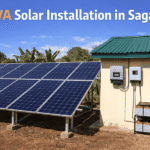
Complete 2kVA solar system kit with panels, inverter, battery, accessories & professional installation
What’s in This Guide
2kVA Solar System Price Breakdown · What’s Included in the Kit · What Appliances Can It Power? · 1kVA vs 2kVA vs 3kVA Comparison · What Affects the Price? · How Much Will You Save? · Installation Process · Frequently Asked Questions
2kVA Solar System Price Breakdown (2026)
Here’s a detailed component-by-component breakdown of what a complete 2kVA solar system costs in Kenya right now:
| Component | Specification | Price (KSh) |
|---|---|---|
| Solar Panels | 3× 550W Monocrystalline (JA Solar / Jinko / Risen) | 39,000 – 48,000 |
| Hybrid Inverter | 2kVA / 24V MPPT (Must / Growatt / Solis) | 28,000 – 38,000 |
| Lithium Battery | 24V 100Ah / 2.56kWh LiFePO4 | 42,000 – 55,000 |
| Mounting Structure | Aluminium rails, clamps, end brackets | 8,000 – 12,000 |
| Accessories | DC breakers, AC breakers, solar cables, MC4 connectors, combiner box | 6,000 – 10,000 |
| Installation | Professional installation by certified technician (1 day) | 10,000 – 18,000 |
| Total (Fully Installed) | KSh 145,000 – 195,000 | |
What’s Included in a 2kVA Solar System Kit?
1. Solar Panels (3× 550W = 1,650W Total)
A 2kVA system typically uses 3 monocrystalline solar panels rated at 550W each, giving you 1,650W of peak generation capacity. On a typical sunny Kenyan day (5-6 peak sun hours), these panels will generate approximately 8-10 kWh of electricity — more than enough to charge your battery and power your appliances during the day.
We use N-type monocrystalline panels from tier-1 manufacturers like JA Solar, Jinko, and Risen. These panels come with a 25-year performance warranty and maintain over 80% efficiency after 25 years.
2. Hybrid Inverter (2kVA / 24V with MPPT)
The inverter is the brain of your solar system. A 2kVA hybrid inverter converts the DC power from your panels and battery into AC power for your appliances. The “hybrid” part means it can seamlessly switch between solar, battery, and grid power — so if your battery runs low at night, it automatically switches to the grid (if connected).
Key features to look for in a 2kVA inverter: built-in MPPT charge controller (60A minimum), pure sine wave output, overload protection, and WiFi monitoring capability. Popular brands in Kenya include Must, Growatt, and Solis.
3. Lithium Battery (24V 100Ah / 2.56kWh)
The battery stores energy for use at night and during cloudy days. A 24V 100Ah LiFePO4 lithium battery gives you approximately 2.56kWh of usable storage. This is enough to power your lights, TV, router, and phone chargers for 6-8 hours overnight.
Why lithium over lead-acid? Lithium batteries last 10+ years (vs 3-4 years for lead-acid), weigh 70% less, charge 3× faster, and deliver 95% of their rated capacity. The upfront cost is higher, but the total cost over 10 years is actually lower.
4. Mounting & Accessories
Every installation includes aluminium mounting rails, middle and end clamps, DC circuit breakers, AC circuit breakers, solar cables (4mm² and 6mm²), MC4 connectors, and a combiner box. These aren’t glamorous, but they’re essential for safety and performance.
What Appliances Can a 2kVA Solar System Power?
A 2kVA system delivers 2,000 watts of continuous output power. Here’s what you can comfortably run:
What a 2kVA System Cannot Power
High-draw appliances like electric water heaters (2,500W+), electric cookers/ovens (2,000W+), air conditioning units (2,000W+), and washing machines during the heating cycle exceed the 2kVA output. If you need these, consider a 3kVA or 5kVA system.
1kVA vs 2kVA vs 3kVA: Which Do You Need?
| Feature | 1kVA | 2kVA ⭐ | 3kVA |
|---|---|---|---|
| Best For | Bedsitter / studio | 1-2 bedroom apartment | 2-3 bedroom house |
| Output Power | 1,000W | 2,000W | 3,000W |
| Solar Panels | 2× 440W | 3× 550W | 6× 555W |
| Battery | 12V 100Ah | 24V 100Ah (2.56kWh) | 5.12kWh LiFePO4 |
| System Voltage | 12V | 24V | 24V / 48V |
| Powers Fridge? | Small fridge only | Yes — standard fridge | Yes — large fridge + freezer |
| Microwave? | No | Brief use only | Yes |
| Monthly Savings | KSh 2,000-4,000 | KSh 4,000-7,000 | KSh 6,000-10,000 |
| Price Range | KSh 75,000-120,000 | KSh 145,000-195,000 | KSh 250,000-350,000 |
| ROI Period | 2-3 years | 2-3.5 years | 3-4 years |
The 2kVA system sits in the sweet spot — it’s significantly more capable than 1kVA (powers a fridge, more lights, CCTV) but costs 40-45% less than a 3kVA. If you live in a 1-2 bedroom apartment or a small office and your monthly electricity bill is KSh 4,000-8,000, the 2kVA is your best match.
What Affects the 2kVA Solar System Price?
Panel Quality & Brand
Tier-1 panels (Jinko, JA Solar, Longi, Risen) cost 15-25% more than no-name imports but deliver better efficiency, longer lifespan, and genuine warranties. We only stock tier-1 panels because the savings from cheap panels evaporate when they degrade faster.
Battery Type: Lithium vs Lead-Acid
A lead-acid battery kit might save you KSh 20,000-30,000 upfront, but you’ll need to replace those batteries every 3-4 years. Over a 10-year period, lithium is actually 40% cheaper than lead-acid when you factor in replacements. We recommend lithium for all new installations.
Inverter Brand
Budget inverters (KSh 18,000-22,000) work but often lack MPPT efficiency, WiFi monitoring, and reliable surge protection. Mid-range brands like Must and Growatt (KSh 28,000-38,000) offer the best balance of price and reliability for the Kenyan market.
Installation Complexity
A straightforward rooftop installation in Nairobi costs KSh 10,000-15,000. Ground-mounted systems, multi-storey buildings, or remote locations may cost more due to additional materials and labour. Our installation cost is always negotiable — WhatsApp us to discuss.
How Much Will You Save with a 2kVA Solar System?
| Metric | Value |
|---|---|
| Average monthly KPLC bill (before solar) | KSh 5,000 – 8,000 |
| Estimated monthly savings | KSh 4,000 – 7,000 (60-85%) |
| Annual savings | KSh 48,000 – 84,000 |
| System cost (mid-range) | KSh 165,000 |
| Payback period | 2 – 3.5 years |
| System lifespan | 25+ years (panels) / 10+ years (battery) |
| Total 25-year savings | KSh 1,000,000 – 1,800,000 |
Put another way: for every KSh 1 you invest in a 2kVA solar system today, you’ll get back KSh 6-10 in electricity savings over the system’s lifetime. That’s a better return than almost any investment in Kenya.
Installation Process: How It Works
Our installation process is straightforward and typically completed in a single day:
Step 1 — Free Consultation (WhatsApp/Phone)
Tell us about your appliances and electricity usage. We’ll recommend the right system size and give you an exact quote. No obligations.
Step 2 — Delivery
We deliver all components to your doorstep. Delivery is available nationwide across all 47 counties.
Step 3 — Professional Installation (1 Day)
Our certified technicians mount your panels, install the inverter and battery, run all wiring, and test the complete system. Installation takes 4-6 hours for a standard 2kVA system.
Step 4 — Handover & Training
We walk you through how to monitor your system, what the inverter lights mean, and how to maximise your solar savings. You also get our WhatsApp number for ongoing after-sales support.
Frequently Asked Questions
How much does a 2kVA solar system cost in Kenya?
Can a 2kVA solar system power a fridge?
What’s the difference between 2kVA and 2kW?
How long does the battery last at night?
Is a 2kVA system good for a 2-bedroom house?
Do you deliver outside Nairobi?
Can I upgrade from 2kVA to a bigger system later?
What warranty do you offer?
Ready to Go Solar?
Complete kit with panels, inverter, battery & installation. Free consultation. Nationwide delivery.
* Prices are estimates based on current market rates. Labour/installation costs are negotiable. Contact us for an exact personalised quote.