
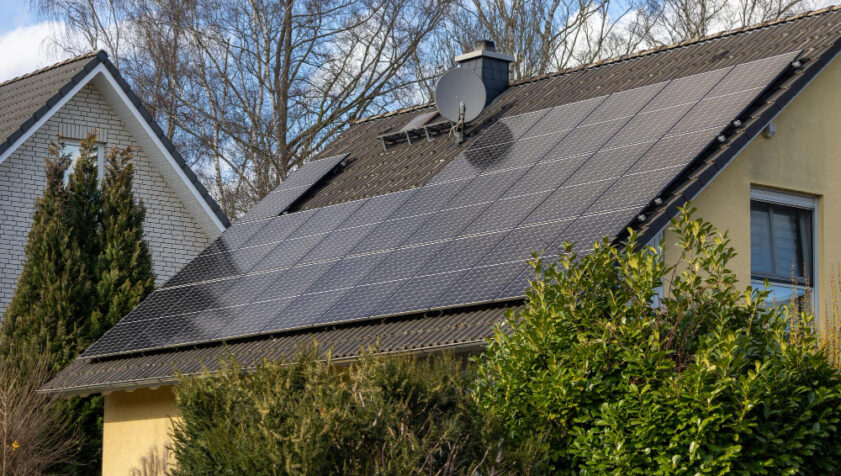
Solar Panel System for House — The Room-by-Room Sizing Guide for Kenyan Homes
Most guides tell you to “calculate your load.” This one walks you through every room in your house, totals everything up, and shows you exactly which system size you need — with no guesswork and no overselling.
Every solar company in Kenya will tell you the same thing: “How big is your house? How much is your electricity bill?” Then they’ll quote you a system.
The problem with that approach is that your bill doesn’t tell the whole story. A family of two in a four-bedroom house uses vastly less electricity than a family of six in the same house. A house with an electric cooker draws three times more peak power than one with gas. And an upcountry home that runs a borehole pump needs a completely different system architecture than a Nairobi apartment that never touches a pump.
This guide takes a different approach. Instead of starting with your bill, we start with your rooms. Walk through each one, list what’s plugged in, add up the numbers, and let the maths tell you what size solar panel system your house actually needs. No guesswork, no oversizing, no undersizing.
Step 1: The Room-by-Room Load Audit
Grab a piece of paper and walk through your house. For each room, write down every appliance you use and how many hours per day it runs. Here’s a template based on a typical Kenyan home.
Kitchen
| Appliance | Wattage | Typical Hours/Day | Daily Wh |
|---|---|---|---|
| Refrigerator (standard 200L) | 150W (runs ~8 hrs via compressor cycling) | 8 | 1,200 |
| Microwave | 1,200W | 0.25 (15 min) | 300 |
| Electric kettle | 1,800W | 0.15 (9 min, two boils) | 270 |
| Blender | 400W | 0.1 | 40 |
| Kitchen LED lights (3×) | 30W total | 5 | 150 |
Kitchen subtotal: approximately 1,960 Wh/day
Notice something important: the kettle and microwave draw enormous peak wattage (1,200–1,800W each) but run for minutes, not hours. Their daily energy contribution is modest. Your peak wattage matters for inverter sizing; your daily Wh matters for panel and battery sizing. These are two separate calculations, and confusing them is where most sizing mistakes happen.
Living Room
| Appliance | Wattage | Typical Hours/Day | Daily Wh |
|---|---|---|---|
| LED TV (43-inch) | 80W | 6 | 480 |
| Satellite decoder / streaming box | 30W | 6 | 180 |
| Wi-Fi router | 15W | 24 | 360 |
| Phone chargers (2×) | 20W total | 3 | 60 |
| Ceiling fan | 70W | 6 | 420 |
| Living room LED lights (4×) | 40W total | 5 | 200 |
Living room subtotal: approximately 1,700 Wh/day
Bedrooms (×3 typical)
| Appliance | Wattage | Typical Hours/Day | Daily Wh |
|---|---|---|---|
| LED lights (2 per room × 3 rooms) | 60W total | 4 | 240 |
| Laptop (1 room) | 65W | 4 | 260 |
| Bedside phone chargers (3×) | 30W total | 3 | 90 |
Bedrooms subtotal: approximately 590 Wh/day
Bathroom & Laundry
| Appliance | Wattage | Typical Hours/Day | Daily Wh |
|---|---|---|---|
| Bathroom lights (2×) | 20W total | 2 | 40 |
| Washing machine (front-load) | 500W | 0.5 (3 washes/week ÷ 7) | 250 |
| Iron | 1,200W | 0.15 (10 min every other day) | 180 |
Bathroom & laundry subtotal: approximately 470 Wh/day
Outdoor & Security
| Appliance | Wattage | Typical Hours/Day | Daily Wh |
|---|---|---|---|
| Security lights (2× LED floods) | 40W total | 10 | 400 |
| CCTV system (4 cameras + NVR) | 50W | 24 | 1,200 |
| Electric gate motor | 300W | 0.1 (6 open-close cycles) | 30 |
Outdoor subtotal: approximately 1,630 Wh/day
CCTV is a silent energy thief that most sizing calculators ignore. A four-camera NVR system runs at 50W around the clock. Over 24 hours, that’s 1,200 Wh — more than your refrigerator. If you have security cameras, factor them in or your battery will drain overnight.
Optional High-Draw Appliances
These are the items that can double or triple your system size. Be honest about whether you use them:
| Appliance | Wattage | Typical Hours/Day | Daily Wh |
|---|---|---|---|
| Electric water heater (geyser) | 2,000–3,000W | 2 | 4,000–6,000 |
| Air conditioning (9,000 BTU) | 900W | 8 | 7,200 |
| Electric cooker / oven | 2,000–4,000W | 1 | 2,000–4,000 |
| Borehole pump (0.75kW) | 750W | 2 | 1,500 |
A house with an electric geyser and air conditioning can consume more than three times the energy of the same house without them. This is why “how many bedrooms” is the wrong first question. The right first question is: “What are your highest-draw appliances, and can any of them be replaced with non-electric alternatives?”
Switching from an electric geyser to a solar water heater saves 4,000–6,000 Wh/day — enough to downsize your entire solar system by one tier. Switching from an electric cooker to gas does the same. These decisions save you far more money than chasing the cheapest panel.
Step 2: Add It All Up
Here’s what our typical three-bedroom Kenyan home audit looks like, depending on lifestyle:
| Scenario | Description | Daily Energy (Wh) | Peak Demand (W) |
|---|---|---|---|
| Basic | LED lights, TV, router, phone charging, small fridge, no CCTV, gas cooking | ~3,500 Wh | ~1,500W |
| Moderate | Above + microwave, kettle, washing machine, CCTV, laptop, ceiling fans | ~6,350 Wh | ~3,500W |
| Full | Above + iron, larger fridge, borehole pump | ~8,500 Wh | ~5,000W |
| Premium | Above + electric geyser + AC in one room | ~16,000 Wh | ~8,000W+ |
Write your number down. You’ll use it in the next step.
Step 3: Convert Your Load to System Size
Kenya receives approximately 5.5 peak sun hours per day in most populated areas (Nairobi, Central, Rift Valley highlands). The coast gets closer to 5.0, and western Kenya averages 4.5–5.0. We’ll use 5.5 as the baseline for this calculation.
The formula:
Solar Array Size (Watts) = Daily Energy (Wh) ÷ Peak Sun Hours ÷ System Efficiency (0.80)
Inverter Size (VA) = Peak Demand (Watts) × 1.25 safety margin
Battery Size (kWh) = Daily Energy (Wh) × Autonomy Days ÷ 1000 ÷ Depth of Discharge (0.80 for LFP)
The 0.80 system efficiency accounts for real-world losses: inverter conversion, cable resistance, temperature derating, dust on panels, and battery charge/discharge losses. Ignore any guide that sizes systems at 100% efficiency — you’ll end up undersized.
Worked Example: Moderate 3-Bedroom Home
Daily energy: 6,350 Wh. Peak demand: 3,500W.
| Component | Calculation | Result |
|---|---|---|
| Solar array | 6,350 ÷ 5.5 ÷ 0.80 | 1,443W → round to 1,500W (3 × 545W panels) |
| Inverter | 3,500 × 1.25 | 4,375VA → round to 5kVA |
| Battery (1 night autonomy) | 6,350 × 1 ÷ 1000 ÷ 0.80 | 7.9 kWh → 10 kWh battery bank |
That moderate three-bedroom house needs roughly a 5kVA solar system with three panels and a 10 kWh lithium battery bank.
Step 4: Match Your Load to a System Tier
Based on the calculations above, here’s how common Kenyan house types map to system sizes:
| House Type | Daily Energy | Recommended System | What It Runs |
|---|---|---|---|
| Bedsitter / 1-bedroom | 1,500–2,500 Wh | 1kVA System | Lights, TV, phone charging, router |
| 2-bedroom (basic) | 2,500–4,000 Wh | 2kVA System or 3kVA System | Above + small fridge, fan, laptop |
| 3-bedroom (moderate) | 4,000–7,000 Wh | 5kVA System | Full kitchen (kettle, microwave), washing machine, CCTV, multiple TVs |
| 3-bedroom (heavy use) | 7,000–10,000 Wh | 8kVA System | Above + borehole pump, iron, larger fridge-freezer |
| 4-bedroom / family compound | 10,000–15,000 Wh | 10kVA System | Full household with multiple high-draw appliances |
| Large home / villa / compound | 15,000–25,000 Wh | 15kVA System or 20kVA System | Full household + AC + electric geyser + pool pump + staff quarters |
If your total lands between two tiers, always round up. Batteries degrade over time, panels accumulate dust between cleanings, and you’ll probably buy a new appliance within the first year that wasn’t in your original audit.
Step 5: Understand What’s Inside a Solar System Kit
A complete solar panel system for a house includes five core components. Buying them together as a kit ensures compatibility and simplifies installation.
Solar Panels
These convert sunlight to DC electricity. For residential systems, 545W–580W monocrystalline panels offer the best balance of output and roof space. A 5kVA system typically uses 3–4 panels; a 10kVA system uses 6–8. Browse our range of Jinko and Canadian Solar panels.
Hybrid Inverter
The brain of the system. A hybrid inverter handles three jobs simultaneously: converting DC from panels to AC for your appliances, managing battery charge/discharge, and switching seamlessly between solar, battery, and utility grid power. Our Jinko, Solis, and Vestwood inverters offer hybrid functionality from 3.6kW to 20kW.
Lithium Battery Bank
Stores energy for nighttime use and utility outages. Lithium iron phosphate (LFP) batteries are the standard for residential solar: they’re safe, last 6,000+ cycles, and maintain capacity far better than older lead-acid technology. Our Vestwood, Jinko, and Renergy LFP batteries range from 5 kWh to 20 kWh per unit, and multiple units can be paralleled for larger homes.
Mounting Structure
Secures panels to your roof. The correct structure depends on your roof type — tin/corrugated mabati roofs use L-foot brackets with aluminium rails, tile roofs use hook mounts, and flat concrete roofs use angled tilt brackets. See our mounting structures.
Protection Devices
Every properly installed system needs DC circuit breakers between panels and inverter, AC circuit breakers between inverter and distribution board, and surge protection on both DC and AC sides. These are non-negotiable safety components — any installer who skips them is cutting corners that could damage your equipment or cause a fire.
Step 6: Three Mistakes That Waste Your Money
Mistake 1: Sizing by bedrooms instead of by load
A three-bedroom house with gas cooking, a solar water heater, and LED lights throughout might need only a 3kVA system. The same house with an electric cooker, geyser, and air conditioning might need 15kVA. The bedrooms are identical; the loads are completely different. Always do the room-by-room audit above before accepting a quote.
Mistake 2: Buying panels without matching the inverter
Solar panels must be matched to your inverter’s MPPT voltage window. If you buy panels first and inverter second (or from different suppliers), you risk a mismatch where the inverter can’t harvest full power from the panels. Every inverter has a minimum and maximum MPPT voltage — your panel string voltage must fall within that range. This is why buying a complete system kit is safer than piecing components together from multiple vendors.
Mistake 3: Skipping the battery or undersizing it
Kenya experiences utility outages regularly. A grid-tied system without batteries gives you zero power during an outage — your panels are producing electricity, but without the grid signal, the inverter shuts down for safety. A hybrid system with an undersized battery gives you a few hours of backup that runs out at 2am. Size your battery for at least one full night of autonomy (your daily Wh total ÷ 0.80 depth of discharge).
Step 7: What Happens After You Buy
A reputable installer will follow this sequence:
- Site visit: Inspect your roof structure, measure available space, check electrical panel capacity, and confirm shading from trees or neighbouring buildings.
- System design: Produce a wiring diagram showing panel layout, string configuration, cable routing, breaker placement, and battery location.
- Installation: Mount panels, run DC cabling, install inverter and batteries, wire to distribution board, install all protection devices. Typical residential installation takes 1–2 days.
- Commissioning: Power up the system, verify all safety devices, configure the inverter’s operating modes (solar priority, battery backup thresholds, grid interaction settings), and walk you through the monitoring app.
- Handover: You receive a commissioning certificate, equipment warranties, and a system manual. Your monitoring app should show real-time solar generation, battery state-of-charge, and daily energy production.
If an installer can’t show you a wiring diagram before starting work, or can’t explain why they chose specific cable sizes and breaker ratings, find a different installer.
The Bottom Line
Don’t let anyone size your solar panel system by counting your bedrooms. Walk through every room, list every appliance, multiply watts by hours, and let the numbers decide. A properly sized system pays for itself faster because it generates exactly what you need — no more, no less.
Not sure where your numbers land? Use our free solar calculator or send your load list via WhatsApp to 0794 917 789 and we’ll size it for you within 24 hours.
Frequently Asked Questions
How many solar panels does a house in Kenya need?
It depends entirely on your daily energy consumption, not your house size. A moderate three-bedroom home consuming 6,000 Wh/day needs approximately 1,500W of solar panels — that’s three 545W panels. A heavier-use home at 12,000 Wh/day needs about six panels. Do the room-by-room audit above for your specific number.
Can a solar panel system run my entire house?
Yes, if it’s sized correctly. A hybrid solar system with adequate battery storage can power every appliance in your house, including during utility outages. The key is matching the inverter’s peak output to your highest simultaneous demand and the battery bank to your overnight energy requirement. Houses with electric geysers or air conditioning need larger systems (8kVA to 20kVA), while houses with gas cooking and solar water heating can often run entirely on a 5kVA system.
What is the difference between off-grid and hybrid solar for a house?
An off-grid system has no connection to the utility grid at all — your panels and batteries are your only power source. A hybrid system stays connected to the grid but prioritises solar and battery power, only drawing from the grid when solar and battery are insufficient. For most Kenyan homes, hybrid is the better choice: you get solar savings during the day, battery backup during outages, and the grid as a safety net on cloudy days. Off-grid makes sense for rural properties with no grid access.
How long do the batteries last at night?
Battery runtime depends on your overnight load and battery capacity. A 10 kWh lithium battery powering a moderate overnight load (fridge, CCTV, router, security lights — roughly 500W average) lasts approximately 16 hours. The same battery powering a heavy overnight load that includes air conditioning (1,500W average) lasts about 5 hours. Size your battery to cover your realistic overnight consumption, not your entire daily load.
Is it cheaper to buy a solar system kit or individual components?
A complete system kit is almost always cheaper and safer. Kits are pre-matched for compatibility — the panels, inverter, and batteries are designed to work together within the correct voltage and current ranges. Buying components individually risks mismatches that reduce performance or void warranties. Our solar system kits range from 1kVA to 20kVA and include every component needed for a complete installation.
How long does a residential solar system last?
Solar panels are warrantied for 25–30 years and typically outlast their warranty. Hybrid inverters last 10–15 years. Lithium iron phosphate batteries are rated for 6,000+ cycles, which translates to roughly 15 years of daily cycling. The mounting structure is aluminium and lasts as long as the panels. Cables and breakers last 20+ years with proper installation. The first major replacement cost is usually the battery bank at the 12–15 year mark.
Do I need permission to install solar panels on my house in Kenya?
For a standard hybrid or off-grid residential system, no formal permit is required. If you plan to export excess power back to the utility grid (net metering), you need approval from EPRA (Energy and Petroleum Regulatory Authority) and a bi-directional meter from your utility provider. Your installer should handle this paperwork as part of the commissioning process. Most residential customers opt for a hybrid system without grid export, which requires no permitting.
Where can I buy a complete solar panel system for my house in Kenya?
Bicity Solar Energy Suppliers provides complete solar panel systems for houses across all Kenyan counties. Our solar system kits include panels, inverter, batteries, mounting structure, protection devices, and cabling. Contact us via WhatsApp at 0794 917 789 or visit our quote request page for a free system sizing consultation.
Ready to Size Your System?
Send us your load list or monthly electricity bill. We’ll size the right solar panel system for your house — no obligation, no overselling.