Description
Two Energy Surfaces, One Module
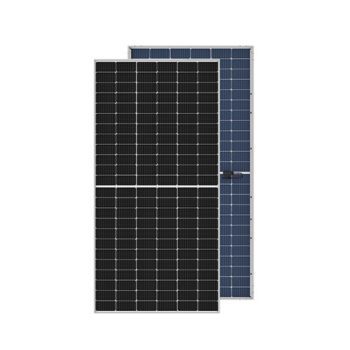
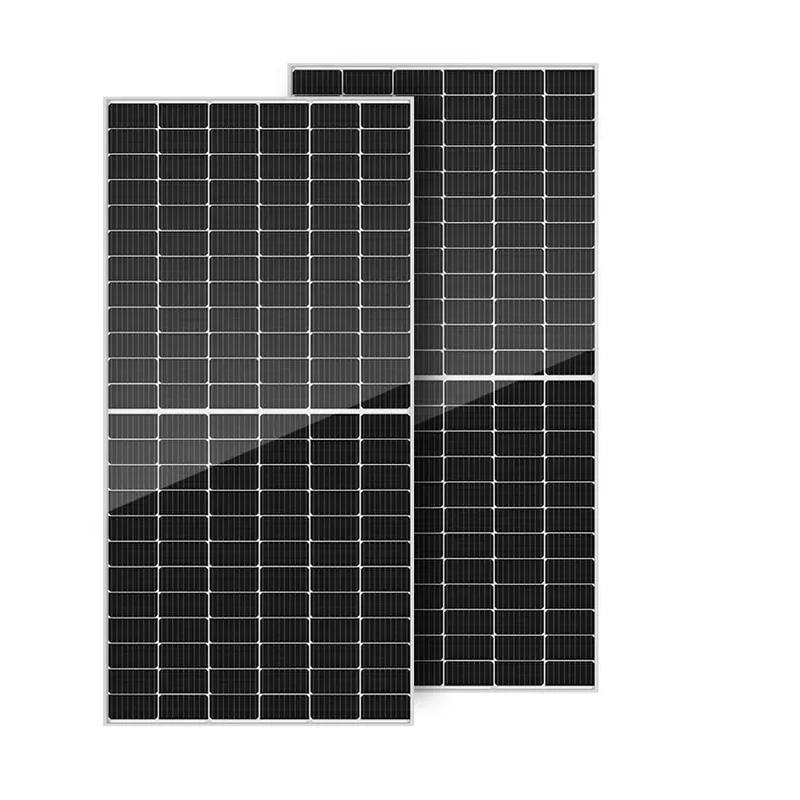
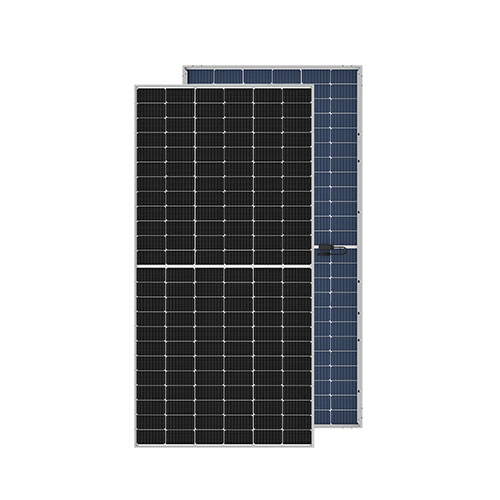
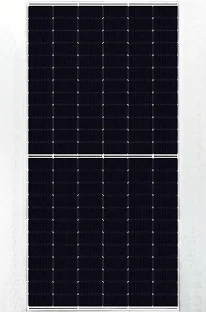
The TOPBiHiKu6 585W is the only panel in Canadian Solar’s mainstream Kenya catalogue that captures sunlight from both sides simultaneously. Replace the opaque polymer backsheet of a conventional module with a second sheet of tempered glass, and you transform a single-faced collector into a two-faced one. Light that would otherwise bounce off the surface beneath the panel and be wasted is instead converted into additional electricity.
This isn’t theoretical efficiency. The 585W rating refers only to the front side of the panel. Under standard conditions, the rear side adds another measurable contribution depending on what’s beneath the module — anywhere from a single percentage point on a flush-mounted dark roof to a quarter of the front-side rating on a well-designed elevated installation over light-coloured surfaces.
The Glass-Glass Construction
Conventional panels sandwich the silicon cells between front glass and a polymer backsheet. The backsheet is the weakest link. Polymers degrade in UV light, crack in temperature cycling, delaminate in humid conditions, and lose their dielectric properties over decades. In tropical climates, this is the single most common cause of premature panel failure.
The TOPBiHiKu6 eliminates the polymer backsheet entirely. The cells sit between two sheets of 2mm anti-reflective tempered glass, with a transparent encapsulant on both sides. The result is a structurally symmetrical module that resists moisture ingress, withstands ammonia exposure (relevant for rooftop installations near livestock), tolerates salt mist (coastal regions), and carries a higher fire safety rating than glass-backsheet panels.
The N-Type TOPCon Cells Inside
The bifacial capability sits on top of Canadian Solar’s premium N-type TOPCon cell technology. This means you get every performance advantage of the standard 580W TOPHiKu6 — 22.6% front efficiency, -0.29%/°C temperature coefficient, 0.40% annual degradation, 30-year performance warranty — plus the bifacial gain. There is no trade-off; the bifacial design is purely additive.
How Bifacial Gain Actually Works in Practice
The rear side of the TOPBiHiKu6 has a bifacial factor of up to 80%, meaning it converts incoming light at up to 80% of the front-side efficiency. The catch is that the rear only “sees” reflected and diffuse light, which is a small fraction of what hits the front. The amount of useful rear-side energy depends on three factors:
- Surface albedo — what’s beneath the panel. White concrete (~0.55), light gravel (~0.35), and weathered iron sheet (~0.30) reflect much more than dark tile (~0.10) or asphalt (~0.05).
- Mounting clearance — the gap between the panel and the surface below. Less than 10cm gives almost no bifacial benefit. 30cm captures most of the available rear light. 1+ metre is optimal but rarely practical for residential installations.
- Diffuse light fraction — overcast conditions and morning/evening hours boost rear-side contribution because diffuse light scatters more uniformly than direct sunlight.
Suitable System Designs
- Family home with elevated mounting: 4–5 panels (2.34–2.925kW front rating) with a Vestwood 6kW hybrid inverter and 10kWh battery
- Larger home with carport installation: 6–8 panels mounted as the carport roof itself, with a Vestwood 8kW inverter
- Small ground-mount solar farm: 10–25 panels on a tilted ground frame over light-coloured gravel, with a Vestwood 10kW or 15kW three-phase inverter
- Agricultural greenhouse: Panels above translucent roofing capture front sunlight while the rear catches sky-diffused light
Front-Side Electrical Characteristics
- Pmax (front): 585W
- Voc: 51.7V
- Isc: 14.48A
- Vmp: 43.6V
- Imp: 13.42A
- Front efficiency: 22.6%
- Bifacial factor: up to 80%
- Maximum system voltage: 1500V DC
Inverter Sizing
The bifacial gain is treated by the inverter as additional current. Make sure the MPPT input current rating accommodates the boosted output — most Vestwood Hybrid Inverters handle 18–25A per MPPT, which is comfortable for the TOPBiHiKu6’s nominal 13.42A Imp even with 25% bifacial gain. Combine with the Vestwood Lithium Battery bank for night-time backup.
Use the Solar Calculator or request a custom quote.