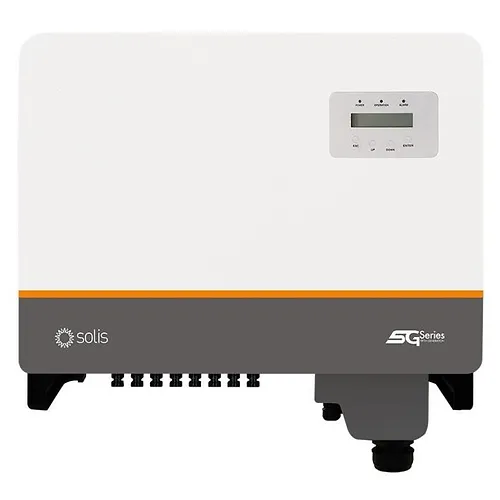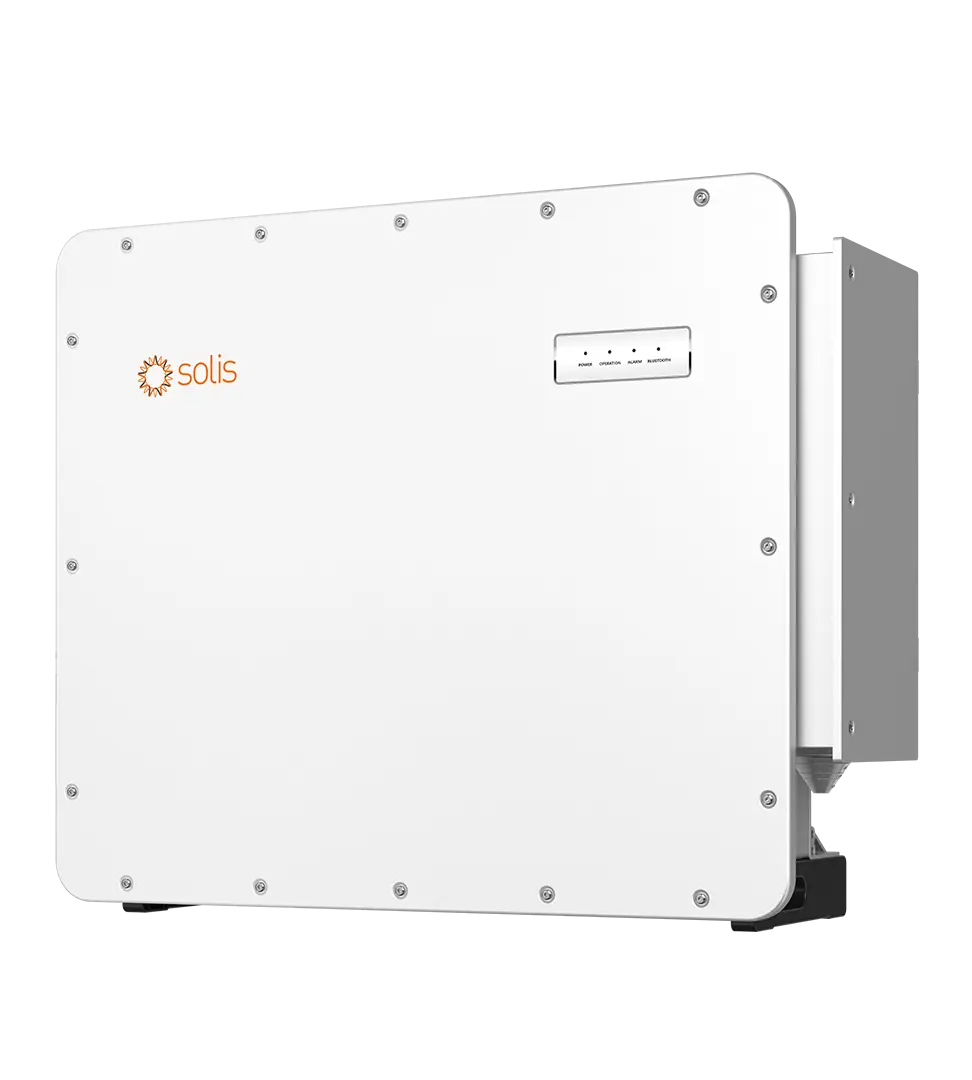
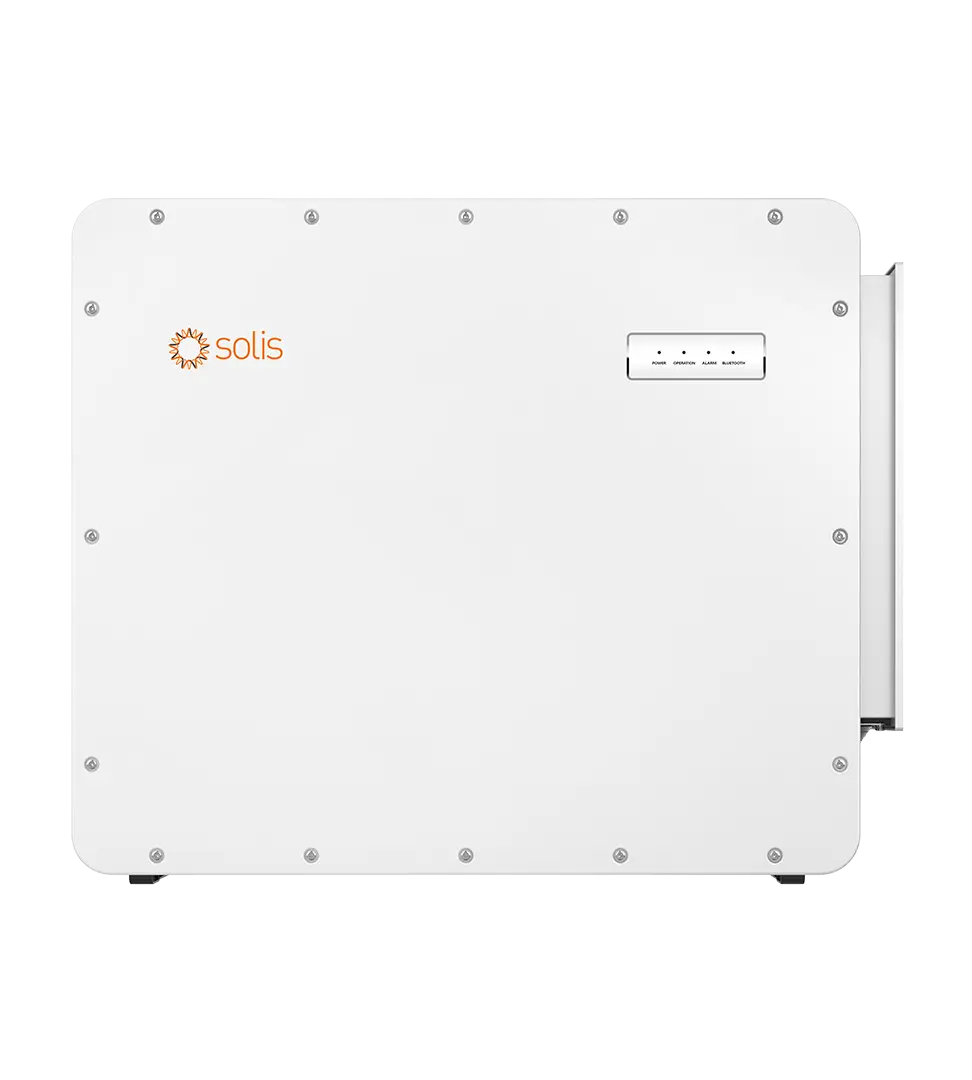
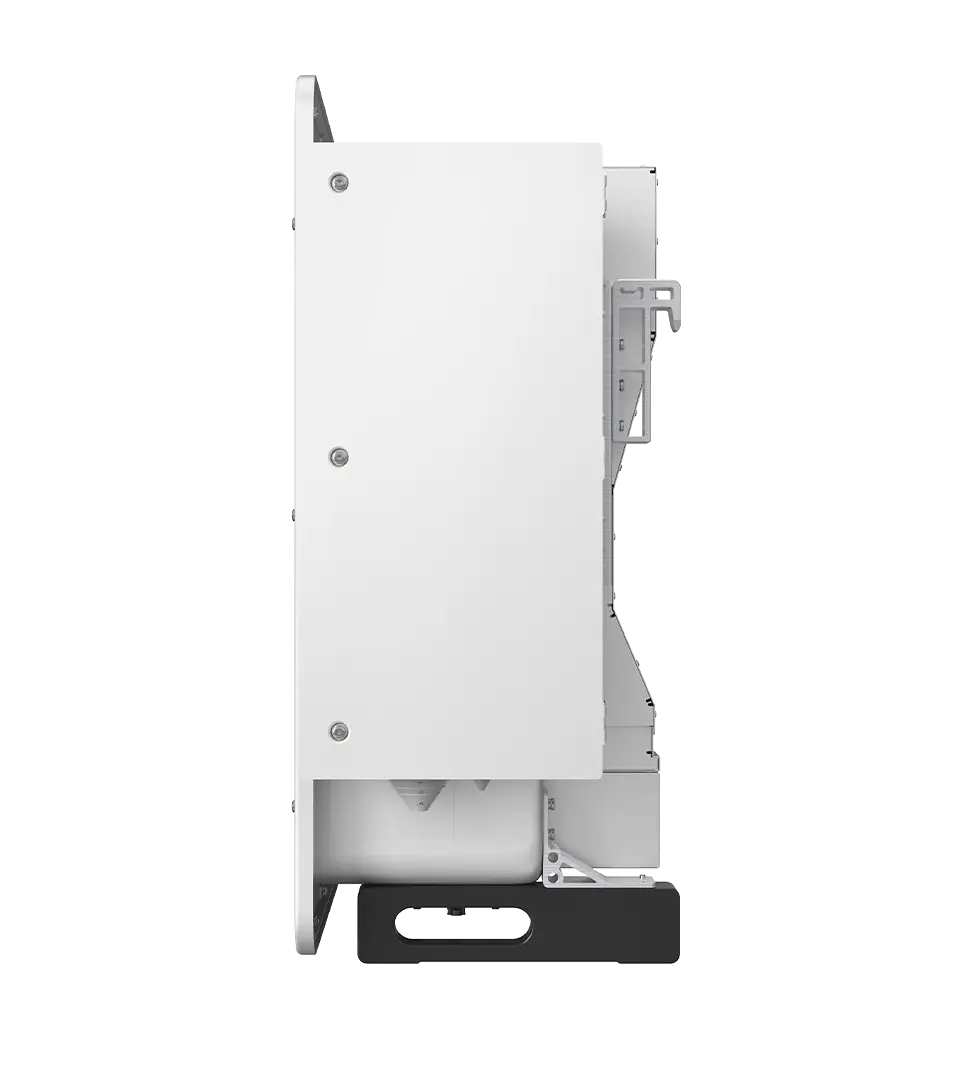
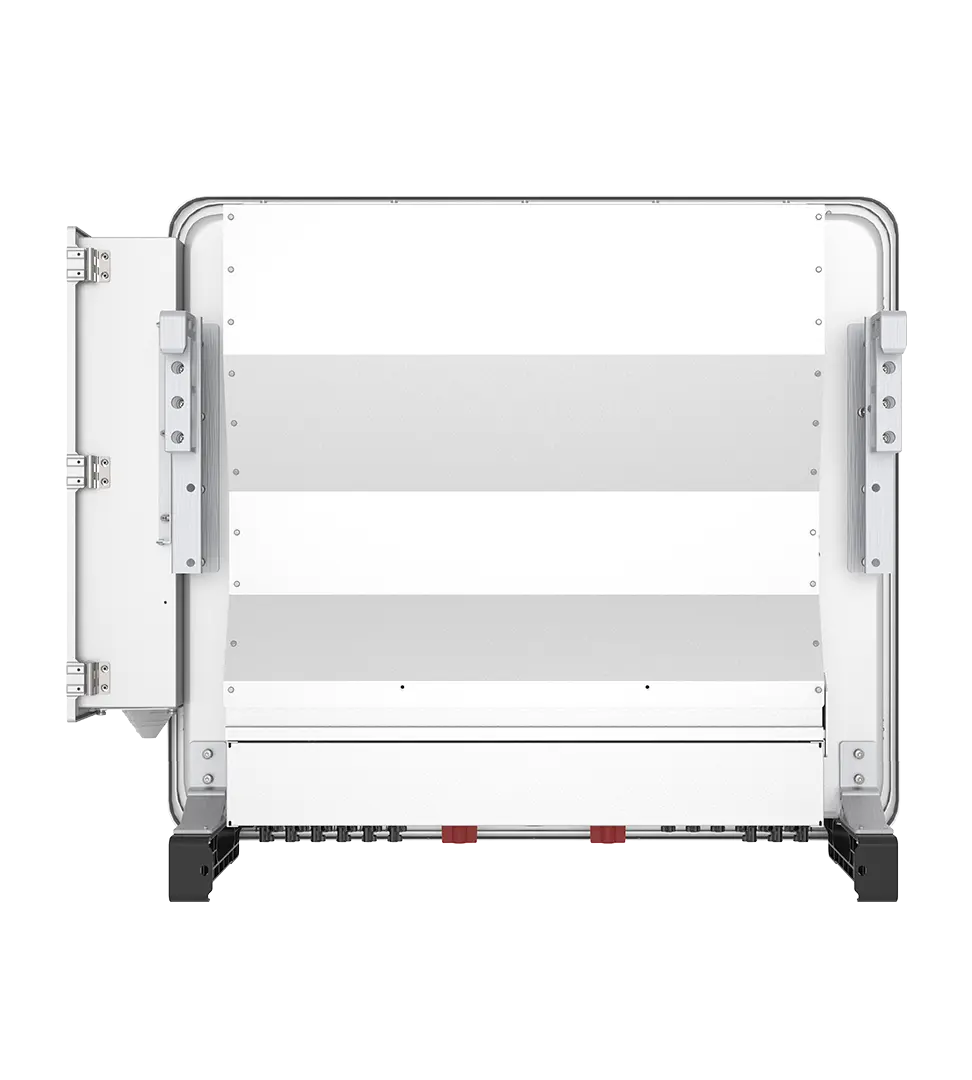
Description
Where String Inverters Meet Industrial-Scale Solar Generation
At 100kW, solar generation crosses into industrial territory. A 100kW inverter with its 150kW solar array can offset over 600 kWh of utility consumption per day — enough to power a substantial manufacturing operation, a large warehouse complex, or an industrial park’s common services. At this scale, the inverter platform itself transforms: ten independent MPPT trackers replace the three or four found on smaller commercial inverters, smart features previously reserved for utility-scale equipment become standard, and the engineering focus shifts from “commercial” to “industrial-grade reliability.”
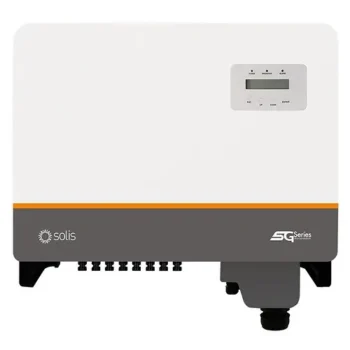
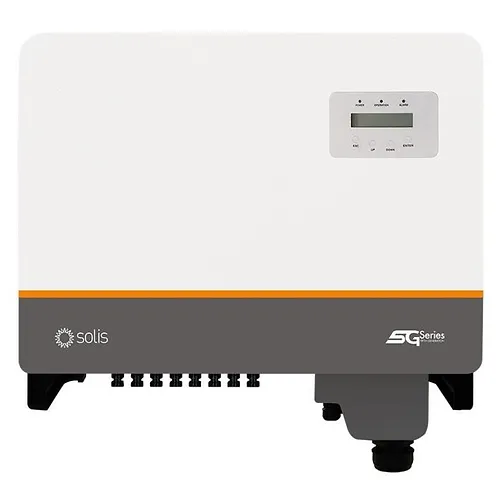
The Solis-100K-5G represents this transition. It’s still a string inverter (not a central inverter), which means it retains the installation simplicity and modular reliability of string-inverter design — but the feature set rivals utility-scale equipment.
10 MPPTs Changes Everything About Industrial Solar Design
Most commercial inverters have 3–4 MPPTs. The Solis-100K-5G has 10. This isn’t an incremental upgrade; it fundamentally changes how industrial solar arrays are designed:
- True multi-orientation flexibility on industrial rooftops: Large industrial buildings rarely have uniform roof orientations. Manufacturing plants, warehouses, and distribution centres typically have multiple roof sections at different angles, plus rooftop equipment (HVAC, exhaust stacks, skylights) creating shading complications. Ten MPPTs let installers route strings independently around obstacles and across orientations without performance compromise.
- Granular fault isolation: A traditional 3-MPPT inverter loses ~33% of generation visibility when one MPPT has a problem. With 10 MPPTs, a single MPPT issue affects only 10% of the array — and the smart monitoring identifies which specific string is the problem, often before manual inspection is needed.
- Phased installation flexibility: Industrial solar projects often install in phases as budget allows. Ten MPPTs accommodate phased rollout — install 5 MPPTs (50kW PV) initially, add the remaining 5 MPPTs (additional 100kW PV) over subsequent phases without rewiring or replacing equipment.
- Mixed-array installations: Industrial sites sometimes combine main rooftop arrays with secondary ground-mount arrays, carport-mounted panels over staff parking, and possibly arrays on adjacent buildings. Ten MPPTs handle all these as independent sections.
What the Solis-100K-5G Targets
- Manufacturing operations and industrial parks: Production lines, machine tools, compressors, pumps, ventilation, lighting, and office space. Daytime industrial loads achieve excellent direct self-consumption ratios.
- Large warehouses and distribution centres: Cold storage facilities, lighting, conveyor systems, forklift charging, office space, and HVAC. Roof areas typically large enough for substantial PV deployment.
- Hospitals and large healthcare campuses: Substantial baseline loads (medical equipment, sterilisation, HVAC, lighting, kitchen, laundry) operating continuously. Solar offsets daytime grid consumption while critical loads are separately backed.
- Hotel groups and resort properties (100+ rooms): Full hospitality infrastructure with kitchens, laundry, pool/spa, conference facilities, and room operations.
- Universities and large educational campuses: Multi-building campuses with extensive infrastructure across teaching, research, residential, and administrative facilities.
- Commercial agriculture at scale: Large packhouses, dairy processing operations, grain handling facilities, and agro-industrial processing.
- Tea factories and similar agricultural processing: Substantial daytime power loads matching solar generation profiles.
- Shopping malls and large retail complexes: Multi-tenant retail with substantial common-area loads, refrigeration, AC, and lighting.
Night SVG: Earning Revenue After the Sun Sets
This is the feature that distinguishes the Solis-100K-5G from smaller commercial inverters. SVG stands for Static Var Generator — a function that compensates for reactive power on the grid even when the inverter isn’t generating active power from solar.
For commercial users on Kenyan utility tariffs that include reactive power (kVAr) charges or power factor penalties, this matters significantly. Many large commercial and industrial connections in Kenya are subject to power factor requirements — utilities charge penalties when building power factor falls below specified thresholds (typically 0.95). Industrial loads with substantial inductive equipment (motors, compressors, fluorescent lighting ballasts) often have natural power factors of 0.75–0.85, triggering penalty charges.
The Night SVG function in the Solis-100K-5G acts as an automatic power factor correction system that operates 24 hours a day:
- During the day: The inverter generates active solar power AND simultaneously corrects reactive power.
- At night: The inverter switches to pure SVG mode — no solar generation, but actively injecting or absorbing reactive power as needed to maintain optimal building power factor.
For commercial users currently paying reactive power penalties, this feature alone can save substantial monthly charges — often enough to noticeably accelerate the payback period of the entire solar installation.
Smart String Monitoring at Industrial Scale
With 20 strings of solar panels potentially connected across 10 MPPTs, traditional troubleshooting becomes impractical. The Solis-100K-5G’s smart string monitoring is essentially mandatory at this scale:
- Each string’s voltage, current, and power are monitored independently in real-time
- SolisCloud displays per-string performance comparisons — instantly showing which strings are underperforming
- Smart I-V curve scanning periodically tests each string and identifies fault types (degraded panels, partial shading, soiling, connector issues, ground faults)
- Performance alerts route to system owner and installer with specific string identification
- Maintenance teams arrive on-site knowing exactly which string needs inspection
For an industrial system with 20 strings and 250+ panels, this remote diagnostics capability reduces ongoing maintenance costs substantially over the system’s 25-year lifespan.
Bifacial Module Compatibility and Aluminium Wire Support
Two specifications matter specifically for industrial solar economics:
Bifacial module support: The Solis-100K-5G is designed to handle the increased current outputs from bifacial solar modules (panels that generate from both sides). Bifacial panels typically deliver 5–25% additional generation versus monofacial panels of the same nameplate rating, depending on installation albedo. For industrial ground-mount installations on light-coloured surfaces, bifacial panels can be cost-effective despite their price premium — and the inverter is designed to capture their full output.
Aluminium wire access support: AC cabling for a 100kW inverter requires 50–95mm² conductors. Copper at this size is expensive. The Solis-100K-5G supports aluminium AC conductors, which cost roughly 70% less than equivalent copper cabling. For industrial installations with long AC cable runs from the inverter to the building distribution panel, this can save substantial cabling costs.
Three Realistic 100kW Industrial Installations
Profile A — Manufacturing facility: 259 × Canadian Solar 580W TOPHiKu6 panels (150.22kW DC) split across 10 MPPT trackers + Solis-100K-5G grid-tied inverter. Powers production machinery, compressors, paint booths, ventilation, lighting, and office. Heavy daytime industrial loads consume nearly all solar generation directly. Night SVG corrects power factor to eliminate utility penalty charges.
Profile B — Tea factory or agricultural processor: 273 × Jinko Tiger Neo 550W panels (150.15kW DC) + Solis-100K-5G. Covers withering troughs, CTC machines, fermentation processes, drying, packaging, and ancillary loads. Bifacial panels considered if installation is on light-coloured roofing. Smart string monitoring critical for managing 20-string array remotely.
Profile C — Large warehouse with cold storage: 224 × Canadian Solar 670W HiKu7 panels (150.08kW DC) + Solis-100K-5G. Powers cold storage compressors, lighting, conveyor systems, forklift charging, office, and HVAC. Industrial-scale roof permits straightforward array layout across 10 MPPTs.
Specifications
PV Input (DC Side)
| Parameter | Value |
|---|---|
| Recommended Max. PV Power | 150,000 W |
| Max. DC Input Voltage | 1,100 V |
| Rated DC Voltage | 600 V |
| Start-up Voltage | 195 V |
| MPPT Voltage Range | 180 – 1,000 V |
| Max. Input Current per MPPT | 26 A |
| Max. Short-Circuit Current per MPPT | 40 A |
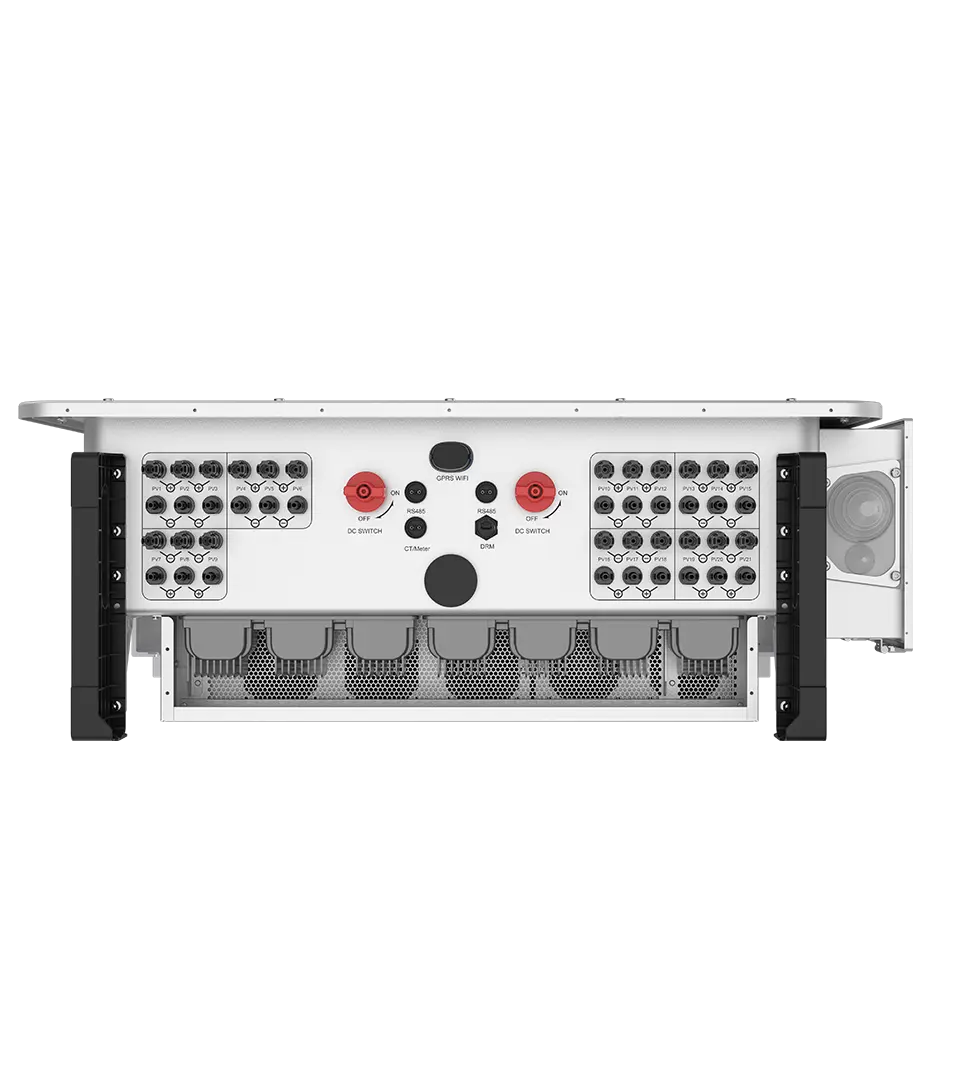
| Number of MPPTs / Strings | 10 MPPTs / 20 strings |
| DC/AC Ratio | 1.5× |
| PV Connection | MC4 connectors (Y-connector supported) |
| Integrated DC Switch | Yes |
AC Output (Grid Side)
| Parameter | Value |
|---|---|
| Rated Output Power | 100,000 W |
| Max. Output Power | 110,000 W |
| Max. Apparent Output Power | 110 kVA |
| Rated Grid Voltage | 3/N/PE, 220V/380V or 230V/400V |
| Rated Grid Frequency | 50 Hz / 60 Hz |
| Rated Output Current per Phase | 152.0 A / 144.3 A |
| Max. Output Current | 167.1 A |
| Power Factor | >0.99 (adjustable 0.8 leading – 0.8 lagging) |
| THDi | <3% |
| DC Injection Current | <0.5% In |
| Aluminium Wire Support | Yes (cost reduction) |
Efficiency
| Parameter | Value |
|---|---|
| Max. Efficiency | 98.7% |
| European Efficiency | 98.5% |
| MPPT Efficiency | 99.9% |
Smart Industrial Features
| Feature | Status |
|---|---|
| Night SVG (Reactive Power Compensation) | Yes (24-hour power factor correction) |
| AFCI (Arc-Fault Detection) | Yes (industrial fire safety) |
| Smart String Monitoring | Yes (per-string real-time) |
| Smart I-V Curve Scanning | Yes (automated fault diagnosis) |
| Bifacial Module Support | Yes |
| PID Recovery (Optional) | Yes (nighttime panel restoration) |
| Power Line Communication (PLC) | Optional |
| Export Power Control | Yes (with optional EPM/meter) |
| Remote Firmware Updates | OTA via SolisCloud |
Protection & Safety
| Feature | Status |
|---|---|
| Anti-islanding Protection | Yes (mandatory grid safety) |
| Output Over-current Protection | Yes |
| Short-circuit Protection | Yes |
| DC Reverse-polarity Protection | Yes |
| Insulation Resistance Detection | Yes |
| Residual Current Protection | Yes |
| Surge Protection | DC Type II / AC Type II |
| Integrated DC Switch | Yes |
| Over-temperature Protection | Yes |
| Ground Fault Protection | Yes |
Communication & Monitoring
| Parameter | Value |
|---|---|
| Standard Communication | RS485 |
| Optional Communication | Wi-Fi, Ethernet, Cellular, PLC |
| Display | LCD + indicator LEDs |
| Remote Monitoring Platform | SolisCloud (web + mobile) |
| Per-String Performance Tracking | Real-time via SolisCloud |
Physical & Environmental
| Parameter | Value |
|---|---|
| Ingress Protection | IP66 |
| Cooling Method | Intelligent fan cooling |
| Operating Temperature | -25°C to +60°C |
| Topology | Transformerless |
| Mounting | Wall-mounted vertical |
What’s Required for a 100kW Industrial Installation
You’ll need solar panels (typically 224–273 modules of 550W–670W class), commercial DC string protection rated for 1100V+, three-phase AC switchgear sized for 200A+, professional earthing and surge protection, industrial-grade mounting hardware (rooftop or ground-mount), an export power manager and meter where utility connection requires it, and EPRA-licensed installation by a contractor experienced specifically with industrial-scale grid-tied systems.
This is a grid-tied (not hybrid) installation — there is no battery storage and no role for our Jinko, Renergy, or Vestwood battery products in this configuration. Industrial sites needing backup typically combine grid-tied solar with separate standby diesel generation or AC-coupled battery storage on critical-load circuits only.
At this scale, professional engineering review is essential before procurement. Request a commercial quote or WhatsApp 0794 917 789 to arrange site consultation with our commercial team.
Solis 100kW Grid-Tied: Industrial Buyer Questions
Why does the 100kW have 10 MPPTs when the 50kW has only 4?
Industrial-scale solar arrays (150kW+ panel installations) require granular tracking flexibility for several reasons: complex industrial roof layouts with multiple orientations and obstructions, the practical need to isolate faults to small array sections rather than losing 25-33% of monitoring visibility per fault, support for phased installation across multiple project budgets, and ability to handle mixed-array configurations (rooftop + ground-mount + carport). Ten MPPTs make all of these standard rather than compromised.
What is Night SVG and how does it benefit my business?
Night SVG (Static Var Generator) is automatic power factor correction that operates 24 hours a day. During the day the inverter generates solar power AND corrects reactive power simultaneously. At night it switches to pure power factor correction mode without solar. For commercial and industrial users on Kenyan utility tariffs that include reactive power charges or power factor penalties (common above 50kVA contracted demand), this can save substantial monthly charges. Industries with heavy inductive loads (motors, compressors, fluorescent lighting) typically benefit most.
Can this inverter accept bifacial solar panels?
Yes. The Solis-100K-5G is designed to handle the increased current outputs of bifacial modules (panels that generate from both front and rear surfaces). Bifacial panels typically deliver 5–25% additional generation depending on installation albedo. For industrial ground-mount installations on light-coloured surfaces, bifacial panels can deliver superior energy economics despite their price premium. The inverter’s high MPPT current rating (26A per MPPT) supports the increased current outputs.
Why is aluminium wire support important?
AC cabling for a 100kW inverter requires 50–95mm² conductors. Copper cabling at this size is expensive — and for industrial sites with the inverter mounted at distance from the main building distribution panel, total AC cable costs can be substantial. Aluminium conductors cost roughly 70% less than equivalent copper. The Solis-100K-5G’s aluminium-compatible AC terminals let installers specify aluminium AC cabling without needing copper-to-aluminium transition fittings, saving substantial installation cost.
Can multiple Solis 100kW units be installed on one site?
Yes. Many industrial sites install multiple 100kW inverters in parallel to reach total system sizes of 200kW, 300kW, 500kW, or larger. Each inverter operates independently with its own SolisCloud monitoring profile. The string inverter approach (multiple smaller units) provides better fault tolerance than central inverter approaches at this scale — if one inverter has an issue, the rest of the system continues operating at its full capacity.
How does smart I-V curve scanning work?
Periodically the inverter performs an automated electrical sweep on each PV string, recording the current-voltage relationship from short-circuit current to open-circuit voltage. The resulting “I-V curve” reveals specific fault signatures: gradual degradation patterns indicate panel ageing, sharp dips indicate partial shading or soiling, irregularities indicate connector or junction box problems, baseline shifts indicate ground faults. SolisCloud analyses the curves and alerts maintenance teams to specific issues before they significantly impact generation.
What’s the realistic payback period for a 100kW industrial system?
Highly site-specific, but typical Kenyan industrial 100kW installations achieve payback in 2.5–3.5 years where daytime operation aligns with solar generation hours. Industries with continuous operation (cold storage, manufacturing) and those subject to reactive power penalties (where Night SVG provides additional savings) can achieve payback under 3 years. After payback, the system continues generating substantially free electricity for another 20+ years.
How much space does a 100kW solar installation need?
For 150kW of panels, plan for 700–900 square metres of clear, well-oriented mounting area. Industrial buildings typically have sufficient roof area; ground-mount or carport-mount supplement where roof constraints exist. The 10-MPPT design accommodates splitting the array across multiple roof sections, ground-mount areas, and carport structures without performance compromise.
What backup options work alongside this scale of grid-tied solar?
Industrial sites typically use one of three approaches: (1) traditional standby diesel generators with automatic transfer switches — most common at this scale; (2) AC-coupled battery storage on critical-load circuits only (not the entire facility); (3) full uninterruptible power supply (UPS) systems for sensitive equipment. The grid-tied solar handles bulk daytime offset; the backup system handles outage continuity for the loads that genuinely need it.
Warranty and where to buy in Kenya?
Solis provides a 5-year standard manufacturer warranty on the Solis-100K-5G, extendable to 10 years through Solis-certified channel programs. Bicity Solar Energy Suppliers stocks this inverter with delivery to all 47 counties. Industrial-scale projects benefit from direct engineering consultation. WhatsApp 0794 917 789 or request a commercial quote for current pricing and project consultation.