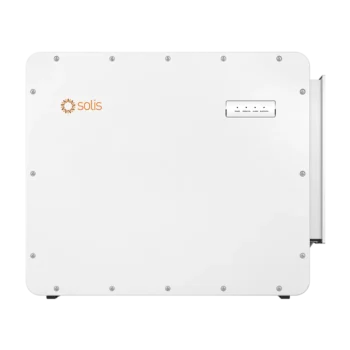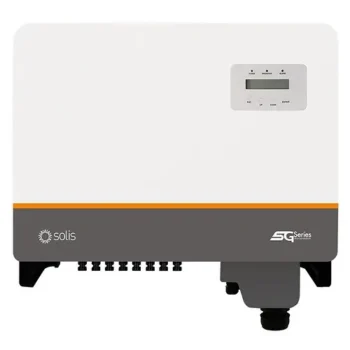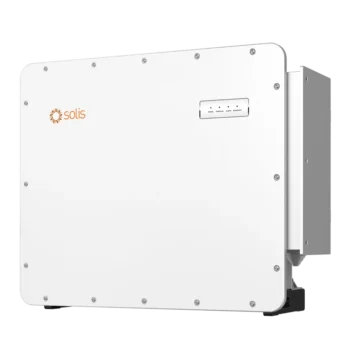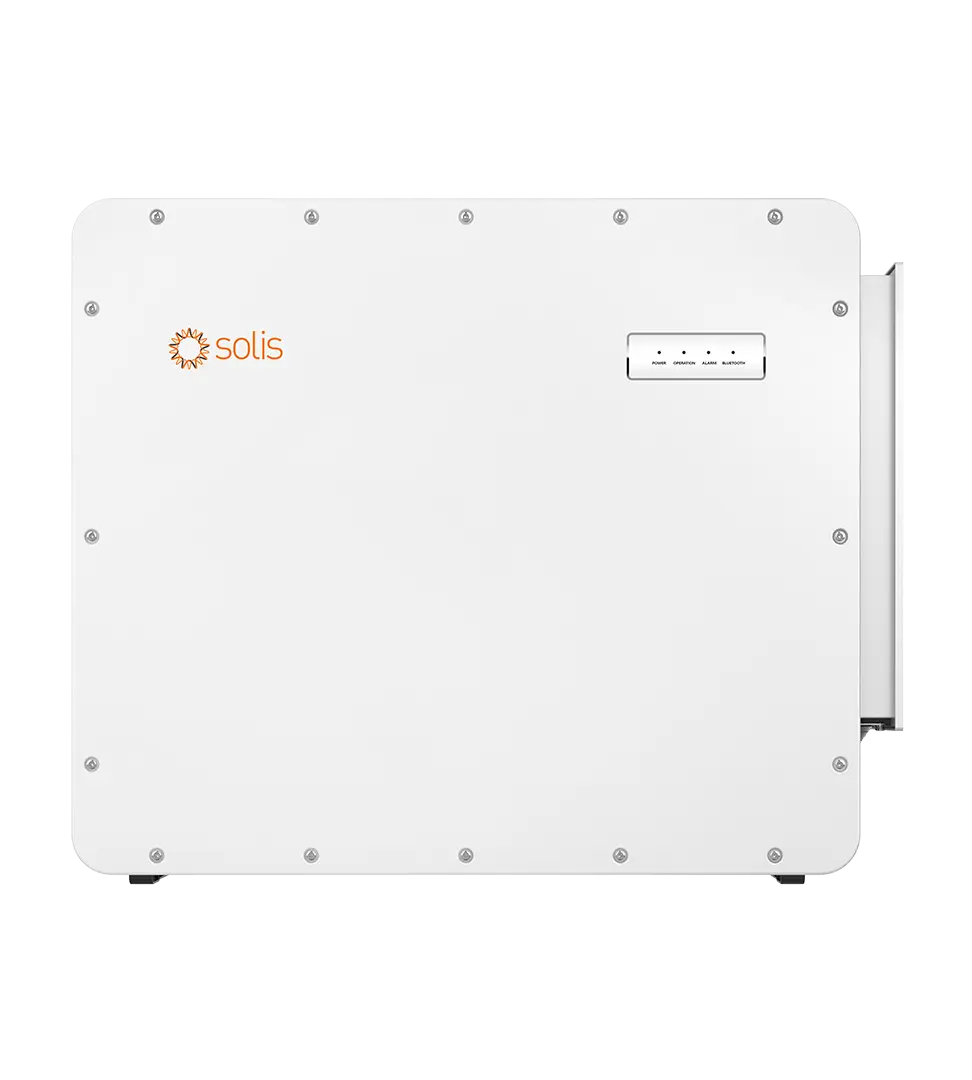
Description
Where Commercial Solar Starts Paying Back in Months Instead of Years
The Solis-30K-5G sits at a specific economic threshold in Kenyan solar. Below 20kW, solar is essentially a residential or small-commercial decision — meaningful savings, but the system pays back over 5–7 years and the absolute shilling savings are modest. Above 30kW, solar genuinely transforms the cost structure of a business — payback periods compress to 3–4 years and the absolute savings become substantial enough to fund significant operational investments.
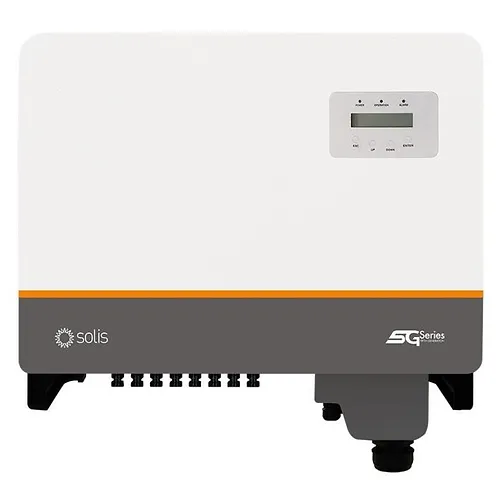
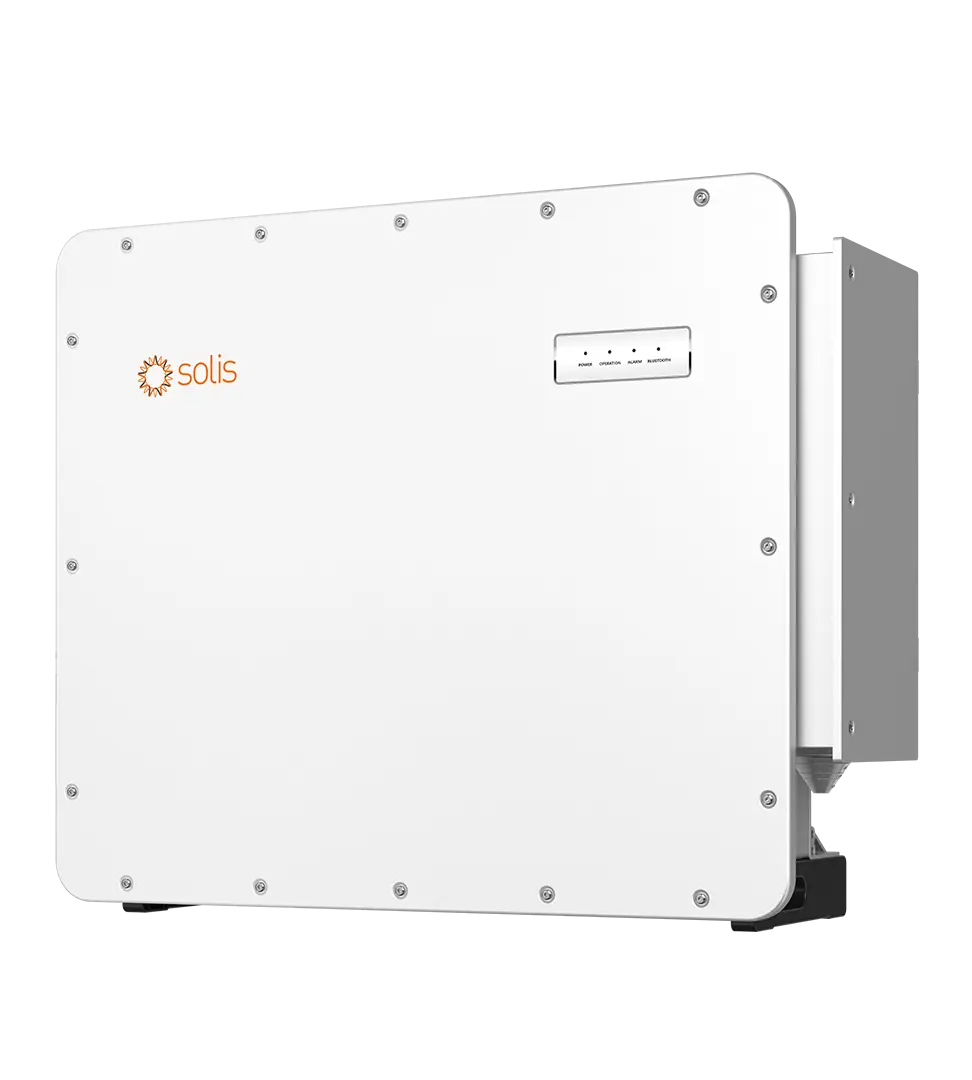
The 30kW size class is where this transformation begins. It’s the entry-point to commercial-scale solar in Kenya, and the Solis-30K-5G is one of the most widely deployed inverters at this scale globally because of its specific design choices: 1.5× DC/AC oversizing capacity, a fan-less convection-cooled chassis with no moving parts to fail, and IP66 weatherproofing for outdoor commercial installation.
This Inverter Has No Battery — Here’s Why That’s the Right Choice
The Solis-30K-5G is a pure grid-tied inverter. It accepts solar panel input, converts it to grid-compatible AC, and feeds that AC into your building’s electrical system to displace utility consumption. There is no battery storage, no backup function, and no UPS capability. During a grid outage, the inverter automatically shuts down for safety (anti-islanding, mandated by international standards).
This is deliberately the right architecture for many commercial applications, for three reasons:
- Battery storage at 30kW commercial scale is expensive and often unnecessary. A battery bank capable of meaningful backup at 30kW continuous load would cost more than the inverter and panels combined. Most commercial buildings can simply tolerate occasional grid outages during business hours.
- Self-consumption economics are excellent without batteries. Commercial buildings consume substantial power during daylight hours when the solar is generating. Direct self-consumption typically reaches 70–95% of solar generation without any storage — meaning batteries would only displace 5–30% of the existing solar value.
- Maintenance simplicity. No batteries means no electrolyte top-ups, no thermal management concerns, no end-of-life battery replacement costs, and a much longer system lifespan with lower operating costs.
If your specific commercial application genuinely requires backup power — cold storage, healthcare, hospitality with overnight guests, security-critical operations — you need a hybrid inverter instead. Our Solis hybrid range covers 8kW through 20kW. But if your business simply needs to displace daytime grid consumption, the grid-tied approach delivers more solar generation per shilling invested.
The Specific Buyer Profile for 30kW Grid-Tied
- Day schools and educational institutions: Classrooms, computer labs, administrative offices, kitchen, and water pumping. Daily consumption typically 100–180 kWh, almost entirely during daylight hours. Holiday periods provide additional grid-export opportunities where regulations permit.
- Mid-sized retail and shopping arcades: Multiple shop units, common-area lighting, refrigeration, AC, and CCTV. Three-phase supply standard. Daytime consumption matches solar generation profile almost perfectly.
- Light manufacturing and small workshops: Production machinery, compressors, lighting, and office space. Operations typically run during daylight hours. Solar directly offsets the most expensive operational input.
- Office complexes and SACCOs: Multi-tenant office buildings, computers, networking, HVAC, and lighting. Self-consumption matches solar generation closely.
- Religious institutions with large facilities: Churches, mosques, and temples with substantial buildings, sound systems, kitchens, and community infrastructure.
- Healthcare facilities (non-critical loads): Daytime clinic operations where critical loads (cold chain, ventilators) are separately backed by smaller hybrid systems or generators, and the grid-tied solar offsets the bulk daytime consumption.
- Commercial agriculture facilities: Greenhouses, packhouses, irrigation pump houses, and dairy operations with substantial daytime three-phase loads.
The 1.5× DC/AC Ratio: Why You Install 45kW of Panels for a 30kW Inverter
The Solis-30K-5G accepts up to 45kW of solar panel input — substantially more than its 30kW AC output rating. This deliberate “oversizing” follows global commercial solar best practice. The reasoning:
- Panels rarely produce their nameplate rating. Manufacturer-rated panel output is measured at standard test conditions (25°C cell temperature, 1000 W/m² irradiance, AM1.5 spectrum). In real Kenyan operating conditions, panels typically produce 75–85% of nameplate output due to temperature, dust, and angle losses. A 45kW panel array typically delivers 34–38kW peak — closely matching the 33kW max output of the inverter.
- Inverter clipping is minimal. Even at noon on a perfect day, the inverter spends only 1–2 hours at its maximum output limit. The rest of the day, the oversized array pushes the inverter closer to full output for far more hours than a properly-sized array would.
- Total daily energy yield increases by 10–18% compared to a system sized at 1:1 DC/AC ratio. This is “free” energy from oversizing — no additional inverter cost, just slightly more panels.
The Solis-30K-5G is designed for this oversizing approach with built-in clipping protection that simply caps output at 33kW without harming the inverter or array.
Fan-Less Cooling: Why It Matters for Commercial Lifespan
Most commercial inverters at this size use cooling fans — mechanical components that wear out, accumulate dust, and eventually fail. Fan failures account for a meaningful percentage of inverter warranty claims globally.
The Solis-30K-5G uses natural convection cooling with no fans. This design choice has three practical consequences:
- Longer expected lifespan: No mechanical wear from spinning components. The inverter typically outlasts the rest of the system.
- Silent operation: No fan noise. Important for installations near offices, classrooms, or hospitality spaces where ambient sound matters.
- Lower maintenance: No fan filters to clean, no fan bearings to lubricate, no fan replacement in year 7–10 of operation.
The trade-off: the inverter chassis is larger than a fan-cooled equivalent because more surface area is needed for passive heat dissipation. For most commercial installations this is acceptable — the inverter is mounted outdoors or in a dedicated equipment room where physical size isn’t constrained.
Three Realistic 30kW Commercial Installations
Profile A — Day school (300 students): 78 × Canadian Solar 580W TOPHiKu6 panels (45.24kW DC) split across 3 MPPT trackers + Solis-30K-5G grid-tied inverter. Powers classroom lighting and electronics, computer lab, administrative offices, kitchen, water pumping, security. Typical school operations align almost perfectly with solar generation hours. School holiday periods feed surplus to the grid where regulations permit.
Profile B — Mid-sized retail with multiple shops: 75 × Jinko Tiger Neo 580W panels (43.5kW DC) + Solis-30K-5G. Covers all shop tenant lighting and AC, common-area lighting, refrigeration on the food-service tenants, CCTV, and security. Tenants benefit from substantially reduced common-area service charges.
Profile C — Light manufacturing workshop: 82 × Canadian Solar 550W HiKu6 panels (45.1kW DC) split across 3 MPPT trackers + Solis-30K-5G. Powers welders, compressors, production machinery, lighting, and office. Manufacturing operations during daylight hours achieve 80%+ direct self-consumption of solar generation.
Specifications
PV Input (DC Side)
| Parameter | Value |
|---|---|
| Recommended Max. PV Power | 45,000 W |
| Max. DC Input Voltage | 1,100 V |
| Rated DC Voltage | 600 V |
| Start-up Voltage | 180 V |
| MPPT Voltage Range | 180 – 1,000 V |
| Max. Input Current per MPPT | 32 A |
| Max. Input Current per String | 16 A |
| Number of MPPTs / Strings | 3 MPPTs / 6 strings |
| DC/AC Ratio | 1.5× |
| PV Connection | MC4 connectors |
| Integrated DC Switch | Yes |
| Fuse-Free Design | Yes |
AC Output (Grid Side)
| Parameter | Value |
|---|---|
| Rated Output Power | 30,000 W |
| Max. Output Power | 33,000 W |
| Max. Apparent Output Power | 33 kVA |
| Rated Grid Voltage | 3/N/PE, 220V/380V or 230V/400V |
| Rated Grid Frequency | 50 Hz / 60 Hz |
| Rated Output Current per Phase | 45.6 A / 43.3 A |
| Max. Output Current | 50.2 A |
| Power Factor | >0.99 (adjustable 0.8 leading – 0.8 lagging) |
| THDi | <3% |
| DC Injection Current | <0.5% In |
Efficiency
| Parameter | Value |
|---|---|
| Max. Efficiency | 98.8% |
| European Efficiency | 98.5% |
| MPPT Efficiency | 99.9% |
Protection
| Feature | Status |
|---|---|
| Anti-islanding Protection | Yes (mandatory grid safety) |
| Output Over-current Protection | Yes |
| Short-circuit Protection | Yes |
| DC Reverse-polarity Protection | Yes |
| Insulation Resistance Detection | Yes |
| Residual Current Protection | Yes |
| Surge Protection | DC Type II / AC Type II |
| Integrated DC Switch | Yes |
| Over-temperature Protection | Yes |
Communication & Monitoring
| Parameter | Value |
|---|---|
| Standard Communication | RS485 |
| Optional Communication | Wi-Fi, Ethernet, Cellular, PLC |
| Display | LCD + indicator LEDs |
| Remote Monitoring Platform | SolisCloud (web + mobile) |
| Remote Firmware Updates | OTA via SolisCloud |
| Export Power Control | Supported (with optional EPM/meter) |
Physical & Environmental
| Parameter | Value |
|---|---|
| Ingress Protection | IP66 |
| Cooling Method | Fan-less natural convection |
| Operating Temperature | -25°C to +60°C |
| Topology | Transformerless |
| Mounting | Wall-mounted vertical |
| Noise Level | <25 dB(A) (silent operation) |
What You Need for a Complete 30kW Commercial Installation
You’ll need solar panels (typically 75–82 modules of 550W–580W class), commercial DC protection rated for 1000V+, three-phase AC breakers sized for 60A, proper earthing and surge protection, commercial mounting hardware, an export power manager and meter (if grid export needs to be limited), and EPRA-licensed installation by a contractor experienced with commercial-scale grid-tied systems.
This is not a battery system — there is no role for our Jinko, Renergy, or Vestwood battery products in a grid-tied installation. If you need both grid-tie economics AND battery backup, we can quote a hybrid system instead using one of our Solis hybrid inverters.
Request a commercial quote or WhatsApp 0794 917 789 for site-specific consultation. We strongly recommend a site visit before procurement at this commercial scale.
Solis 30kW Grid-Tied: Commercial Buyer Questions
What’s the difference between a grid-tied inverter and a hybrid inverter?
Grid-tied inverters convert solar to AC and feed it into your building’s electrical system to offset utility consumption — no battery, no backup. Hybrid inverters do the same but also charge batteries and provide UPS-grade backup during grid outages. Grid-tied inverters are simpler, cheaper per watt, more efficient, and longer-lasting because they have fewer components. Hybrid inverters add backup capability at higher cost. Choose grid-tied if your commercial operation can tolerate occasional grid outages during business hours.
Why would I choose Solis over other 30kW commercial inverters?
Solis (Ginlong Technologies, Stock Code 300763.SZ) is one of the world’s largest and longest-established commercial inverter manufacturers — operating since 2005 with deployments in 150+ countries. The Solis-30K-5G specifically offers fan-less cooling (rare at this size, important for longevity), 1.5× DC/AC ratio for energy yield optimisation, transformerless topology for highest efficiency (98.8%), and the SolisCloud monitoring platform that’s widely used by Kenyan commercial installers. The 5-year standard warranty (extendable to 10 years) provides commercial-grade peace of mind.
Can I install batteries with this inverter later?
Not directly to this inverter — the Solis-30K-5G is purely grid-tied with no battery interface. However, you can later add AC-coupled battery storage by installing a separate hybrid inverter that supports AC coupling. The grid-tied Solis continues handling solar generation while the hybrid manages battery charge/discharge. This is a common upgrade path for commercial sites starting with grid-tied solar and later adding storage.
What happens during a grid outage?
The inverter automatically shuts down within milliseconds and stops feeding power into your building. This is a mandatory international safety requirement (anti-islanding) — preventing the solar from energising power lines that utility workers might be repairing. When grid power returns, the inverter automatically restarts after a brief stability check. Grid-tied solar does not provide backup power during outages.
Can I sell surplus solar back to the grid in Kenya?
Net metering and feed-in tariff frameworks have been in development under EPRA regulations. Current commercial practice for most Kenyan installations is to size solar systems for direct self-consumption, with export power management to limit any backfeed to the grid. The Solis-30K-5G supports export power control via an optional EPM (Export Power Manager) that throttles inverter output to prevent grid backfeed entirely if your local utility doesn’t accept exports.
How many panels can I install on this inverter?
Up to 45,000W recommended PV array size. That’s approximately 78 × 580W panels, 82 × 550W panels, or 67 × 670W panels distributed across 3 MPPT trackers (6 strings total, 2 per MPPT). The 1100V max DC input and 180–1000V wide MPPT range allow flexible string lengths suited to most commercial roof layouts.
What’s the realistic payback period for a commercial 30kW solar system in Kenya?
Highly site-specific, but typical Kenyan commercial 30kW installations achieve payback in 3–4 years based on direct self-consumption displacement of utility electricity at commercial tariffs. Schools and businesses operating primarily during daylight hours achieve faster payback than evening-operation businesses. After payback, the system continues generating effectively free electricity for another 20+ years (panels typically warranted 25 years, inverter lifespan 15+ years with proper maintenance).
How much roof or ground space do I need?
For 45kW of solar panels, you need approximately 200–280 square metres of clear, well-oriented mounting area. Roof-mount on commercial buildings is most common. Ground-mount or carport-mount are alternatives where roof space is constrained. The 3-MPPT design lets you distribute panels across multiple roof orientations or mounting locations without performance compromise.
What about generator integration?
Grid-tied inverters do not interact with generators directly. If your site has a backup generator, the inverter sees the generator output as “grid” and can feed solar into it (with caveats — many generators don’t accept reverse power flow well). The standard configuration uses a transfer switch that disconnects the solar inverter when the generator is running. For sites needing solar + battery + generator integration, a hybrid inverter is required instead.
What warranty does Solis provide and where do I buy in Kenya?
Solis provides a 5-year standard manufacturer warranty on the Solis-30K-5G, extendable to 10 years through Solis-certified channel programs. Bicity Solar Energy Suppliers stocks this inverter with delivery to all 47 counties. WhatsApp 0794 917 789 or request a commercial quote for current pricing and engineering consultation.