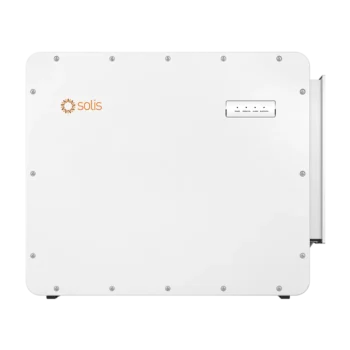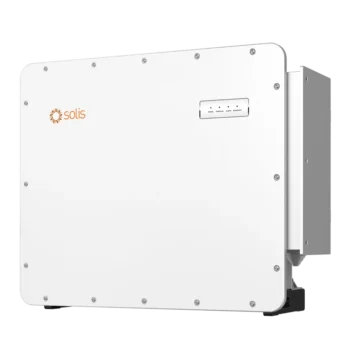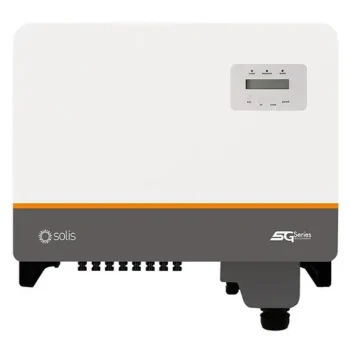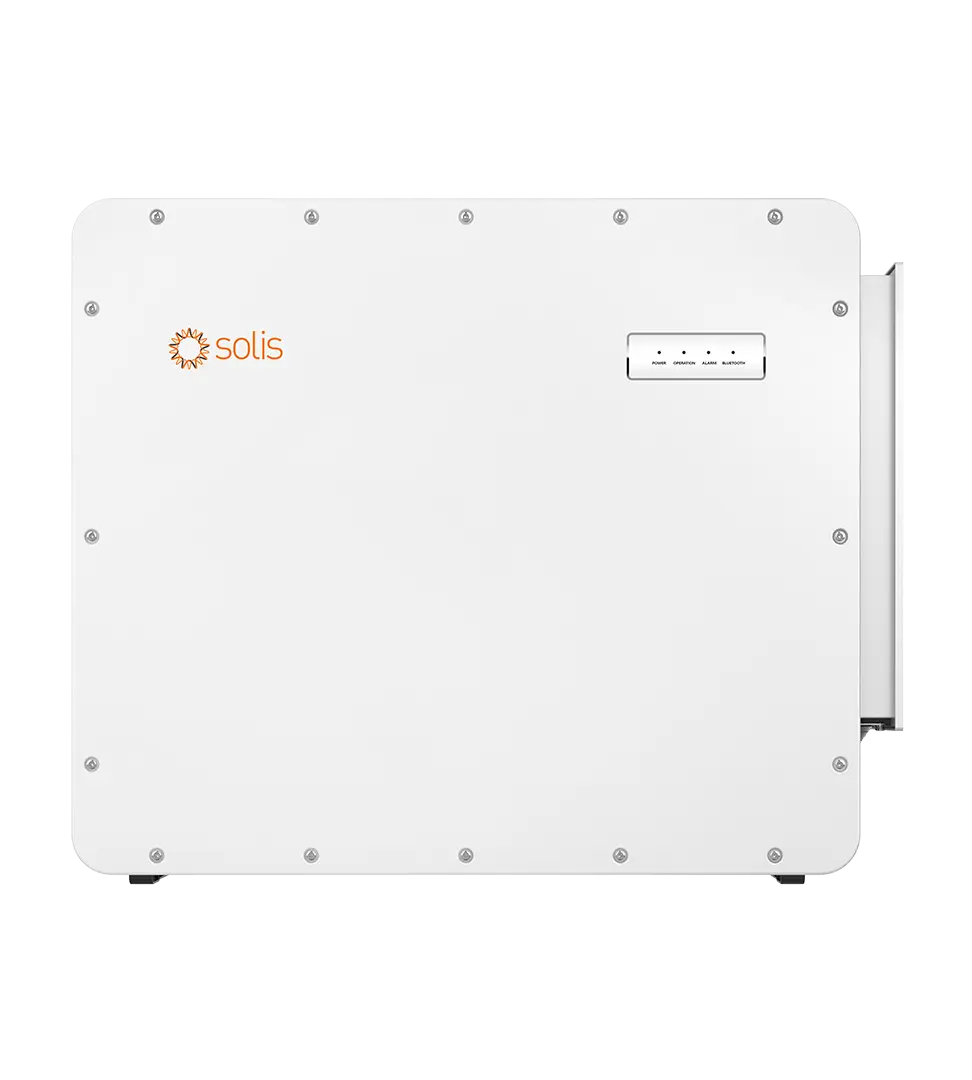
Description
The Sweet Spot of Commercial Solar — Big Enough to Matter, Simple Enough to Run
At 50kW, commercial solar enters territory where the absolute shilling savings genuinely fund expansion, hiring, and reinvestment for a Kenyan business. A well-designed 50kW system can offset 200–300 kWh of utility consumption per day — savings that compound into substantial annual cash flow improvements for the businesses that operate at this scale.
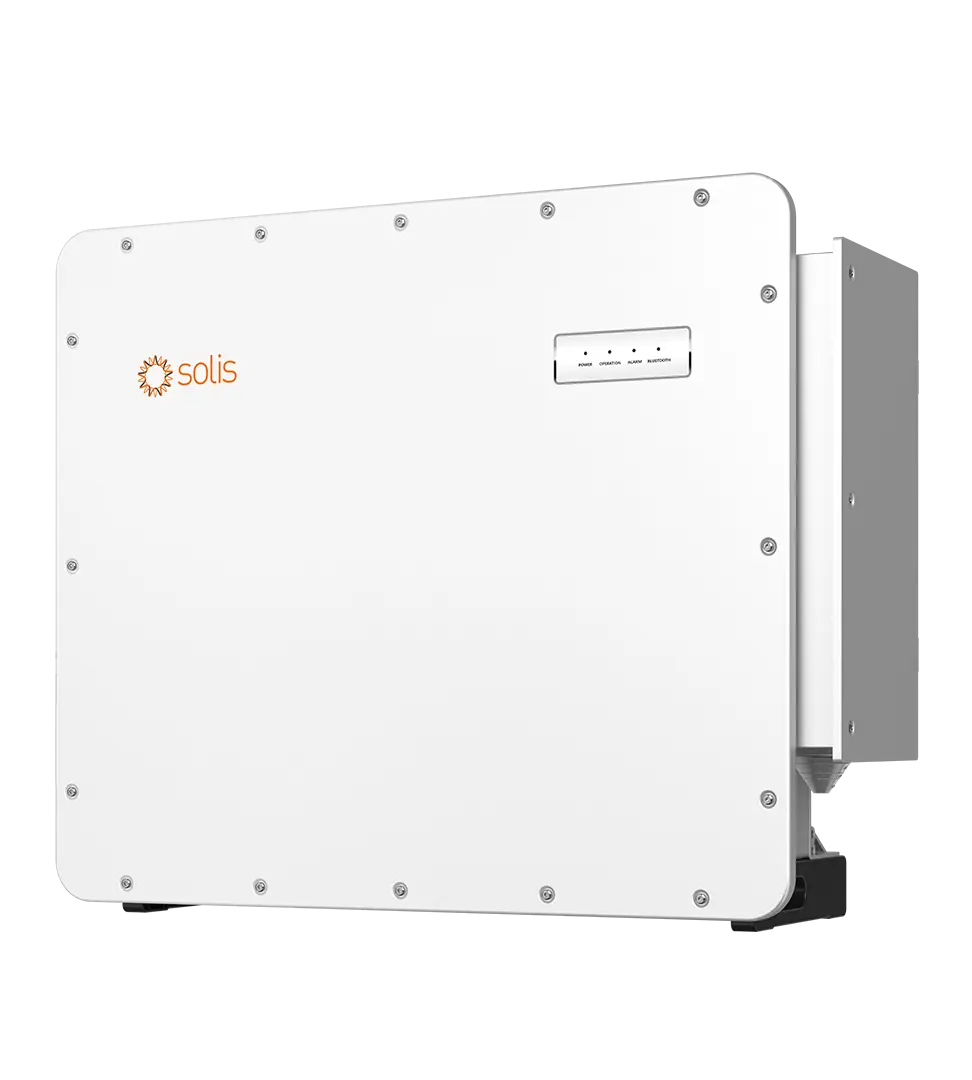
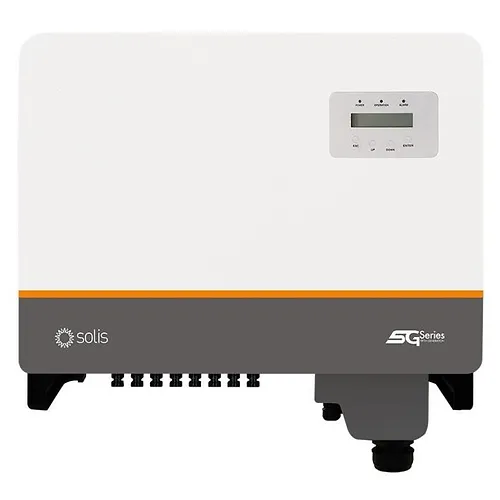
The Solis-50K-5G is engineered specifically for this midsize commercial bracket. It’s large enough to handle serious operational loads, but compact enough to install as a single-inverter solution rather than the multi-inverter arrays needed for systems above 100kW. That matters: one inverter means one set of DC and AC connections, one monitoring system, one warranty contract, and one piece of equipment for your maintenance team to learn.
Different From the 30kW: The Step-Up to “Real” Commercial Scale
The Solis-50K-5G isn’t just a bigger version of the Solis-30K-5G. The hardware moves to a more substantial commercial platform:
- 4 MPPTs vs 3 (33% more independent tracking): Better suited to complex commercial roof layouts with multiple orientations, parapets, HVAC obstructions, or carport-mounted arrays.
- Active fan cooling vs natural convection: The 50kW power level generates more heat than passive cooling can dissipate efficiently, so intelligent variable-speed fans manage thermal performance. The fans only run when needed, which keeps noise and wear minimal.
- AFCI (Arc-Fault Circuit Interrupter) protection built in: At 75kW of panel input, DC arc faults from damaged cables or loose connections are a real fire risk. Built-in AFCI continuously monitors for arc signatures and trips the inverter offline if detected — critical for commercial buildings where insurance often requires arc-fault detection.
- Smart string monitoring with I-V curve scanning: The inverter independently monitors each PV string for performance degradation, partial shading, soiling, or panel failures. SolisCloud alerts identify specific underperforming strings so maintenance teams can troubleshoot precisely instead of inspecting the whole array.
- Heavier-duty AC and DC connectors: Designed for the higher current ratings of midsize commercial systems.
Who Specifically Needs the 50kW Class
- Mid-sized supermarkets and grocery stores: Multiple refrigeration banks, freezer aisles, full shop lighting, AC zones, kitchen, bakery, and back-office. Daily consumption typically 250–400 kWh aligned with daylight operating hours.
- Manufacturing operations: Production machinery, compressors, welders, ventilation, lighting, and office space. Industrial daytime loads match solar generation almost perfectly.
- Hospitals and large medical facilities: Substantial baseline loads (medical equipment, sterilisation, HVAC, lighting, kitchen, laundry) that operate continuously. Solar offsets daytime grid consumption while critical loads are separately backed by generators or hybrid systems.
- Boarding schools and large educational campuses: Multi-building campuses with classrooms, dormitories, dining halls, kitchens, and water systems. Daylight loads match solar generation; surplus during holidays exports to grid where regulations permit.
- Hotel groups and resort properties: Mid-sized hotels (40–80 rooms) with full hospitality infrastructure — kitchens, laundry, pool/spa, common areas, and back-of-house operations.
- Distribution centres and logistics warehouses: Large floor-area buildings with cold storage, lighting, conveyor systems, office space, and significant ventilation loads.
- Commercial agriculture and packhouse operations: Cold storage, packing equipment, grain processing, irrigation pumping, and dairy operations — typically with daytime peak loads matching solar generation.
- Tertiary educational institutions: Universities, colleges, technical training institutions with substantial building infrastructure.
Why AFCI Protection Specifically Matters at 50kW
Arc-Fault Circuit Interruption (AFCI) is a fire-safety technology that detects the electrical signature of arc faults in DC wiring — the kind of faults caused by damaged cable insulation, loose connections, rodent damage, or aging connectors. DC arcs are particularly dangerous because they don’t self-extinguish like AC arcs do; they can sustain for hours, generating intense heat that ignites surrounding materials.
At residential solar scale (under 10kW), DC arc fires are statistically rare and the consequences relatively contained. At 50kW commercial scale with 75kW of panels and substantial DC cabling running across rooftops, the probability of arc faults rises significantly and the consequences become catastrophic — commercial roof fires from solar arc faults have caused major insurance losses globally.
The Solis-50K-5G’s built-in AFCI protection continuously monitors every string for arc signatures and trips the entire inverter offline within milliseconds of detection. Many commercial property insurers in Kenya now either require AFCI protection on commercial solar installations or charge significantly higher premiums without it.
Smart String Monitoring: How It Saves You Maintenance Time
A 50kW solar array typically has 8 strings of panels (this inverter supports up to 8 strings across 4 MPPTs). When something goes wrong with one string — a panel failure, partial shading from a new tree growth, dust accumulation on a particular section, a connector issue — the inverter’s overall output drops slightly but it’s not obvious which string is the problem.
The Solis-50K-5G monitors each string independently and reports per-string performance to SolisCloud. When a string underperforms expectations:
- SolisCloud sends an alert to the system owner and installer
- The dashboard shows which specific string is affected (string 3 of MPPT 2, for example)
- Maintenance teams know exactly where to inspect — eliminating the wasted hours of climbing roofs and testing every string
- Smart I-V curve scanning can sometimes identify the type of fault (dirt vs panel failure vs connector issue) before site inspection
For commercial system owners, this saves substantial maintenance time and labour cost over the system’s 25-year operational life.
Three Realistic 50kW Commercial Installations
Profile A — Mid-sized supermarket: 130 × Canadian Solar 580W TOPHiKu6 panels (75.4kW DC) split across 4 MPPT trackers + Solis-50K-5G grid-tied inverter. Powers refrigeration, freezers, full shop lighting, AC, bakery, kitchen, and POS systems. Strong daytime self-consumption; minimal grid export needed.
Profile B — Manufacturing facility: 137 × Jinko Tiger Neo 550W panels (75.35kW DC) + Solis-50K-5G. Covers production machinery, compressors, welders, lighting, ventilation, and office. Manufacturing daytime loads achieve excellent direct self-consumption ratios.
Profile C — Boarding school campus: 112 × Canadian Solar 670W HiKu7 panels (75.04kW DC) + Solis-50K-5G. Powers classroom blocks, dormitories, dining hall, kitchen, water pumping, and admin buildings. School term-time loads consume solar directly; holiday surplus exports to grid where regulations permit.
Specifications
PV Input (DC Side)
| Parameter | Value |
|---|---|
| Recommended Max. PV Power | 75,000 W |
| Max. DC Input Voltage | 1,100 V |
| Rated DC Voltage | 600 V |
| Start-up Voltage | 195 V |
| MPPT Voltage Range | 180 – 1,000 V |
| Max. Input Current per MPPT | 32 A |
| Max. Input Current per String | 16 A |
| Number of MPPTs / Strings | 4 MPPTs / 8 strings |
| DC/AC Ratio | 1.5× |
| PV Connection | MC4 connectors |
| Integrated DC Switch | Yes |
AC Output (Grid Side)
| Parameter | Value |
|---|---|
| Rated Output Power | 50,000 W |
| Max. Output Power | 55,000 W |
| Max. Apparent Output Power | 55 kVA |
| Rated Grid Voltage | 3/N/PE, 220V/380V or 230V/400V |
| Rated Grid Frequency | 50 Hz / 60 Hz |
| Rated Output Current per Phase | 76.0 A / 72.2 A |
| Max. Output Current | 83.6 A |
| Power Factor | >0.99 (adjustable 0.8 leading – 0.8 lagging) |
| THDi | <3% |
| DC Injection Current | <0.5% In |
Efficiency
| Parameter | Value |
|---|---|
| Max. Efficiency | 98.7% |
| European Efficiency | 98.4% |
| MPPT Efficiency | 99.9% |
Protection & Safety
| Feature | Status |
|---|---|
| AFCI (Arc-Fault Detection) | Built-in (commercial fire safety) |
| Anti-islanding Protection | Yes (mandatory grid safety) |
| Output Over-current Protection | Yes |
| Short-circuit Protection | Yes |
| DC Reverse-polarity Protection | Yes |
| Insulation Resistance Detection | Yes |
| Residual Current Protection | Yes |
| Surge Protection | DC Type II / AC Type II |
| Integrated DC Switch | Yes |
| Over-temperature Protection | Yes |
Smart Features
| Feature | Status |
|---|---|
| Smart String Monitoring | Yes (per-string performance tracking) |
| Smart I-V Curve Scanning | Yes (fault diagnosis) |
| Bifacial Module Compatibility | Yes |
| PID Recovery Function | Optional (nighttime potential-induced degradation reversal) |
| Export Power Control | Yes (with optional EPM/meter) |
Communication & Monitoring
| Parameter | Value |
|---|---|
| Standard Communication | RS485 |
| Optional Communication | Wi-Fi, Ethernet, Cellular, PLC |
| Display | LCD + indicator LEDs |
| Remote Monitoring Platform | SolisCloud (web + mobile) |
| Remote Firmware Updates | OTA via SolisCloud |
| Per-string Fault Alerts | SolisCloud notifications |
Physical & Environmental
| Parameter | Value |
|---|---|
| Ingress Protection | IP66 |
| Cooling Method | Intelligent variable-speed fan |
| Operating Temperature | -25°C to +60°C |
| Topology | Transformerless |
| Mounting | Wall-mounted vertical |
Building a Complete 50kW Commercial Installation
You’ll need solar panels (typically 112–137 modules of 550W–670W class), commercial DC string protection rated for 1100V+, three-phase AC breakers sized for 100A, professional earthing and surge protection, commercial mounting hardware, an export power manager and meter (if grid export must be limited), and EPRA-licensed installation by a contractor experienced specifically with midsize commercial grid-tied systems.
This is a grid-tied (not hybrid) installation — there is no role for our Jinko, Renergy, or Vestwood battery products in this configuration. If your operation needs both grid-tie economics AND backup capability, we can quote a hybrid system using one of our Solis hybrid inverters, or a hybrid configuration combining grid-tied solar with separate AC-coupled battery storage.
Given the scale and complexity, a site visit before procurement is essential. Request a commercial quote or WhatsApp 0794 917 789 to arrange engineering consultation.
Solis 50kW Grid-Tied: Commercial Buyer Questions
Why step up from 30kW to 50kW — what’s the practical difference?
The 50kW class targets businesses with daily electricity consumption above 250 kWh and three-phase commercial supply. Beyond raw capacity, the Solis-50K-5G adds 4-MPPT design (vs 3 on 30kW) for complex roof layouts, AFCI fire-safety protection (commercial insurance often requires this), smart string monitoring for maintenance efficiency, and active fan cooling for sustained thermal performance under heavier loads. It’s a more substantial commercial platform, not just a bigger 30kW.
Why is AFCI important for my commercial property?
Arc-Fault Circuit Interrupter protection detects the electrical signature of DC arc faults — typically caused by damaged cables, loose connections, or aging connectors. DC arcs don’t self-extinguish like AC arcs and can ignite roof fires. At 75kW of solar panels with extensive DC cabling, the risk is significant enough that many commercial property insurers in Kenya now require AFCI protection or charge premium uplifts without it. Built-in AFCI saves you the cost of adding external arc-fault detection separately.
Can I install batteries with the Solis 50kW?
Not directly — the Solis-50K-5G is purely grid-tied with no battery interface. For commercial sites needing backup, the typical approach is AC-coupled storage: install this grid-tied solar inverter for daytime self-consumption, and separately install a hybrid inverter with batteries for backup of critical loads. The two systems coexist on the same building electrical system without conflict.
How does smart string monitoring save me money?
Traditional commercial solar systems require on-site electrical testing to identify which specific PV string is underperforming. This means climbing roofs, disconnecting strings, testing each individually with handheld meters — typically a half-day’s labour per fault investigation. Smart string monitoring identifies the specific affected string remotely via SolisCloud, eliminating the troubleshooting time. Over a 25-year system life, this can save tens of thousands of shillings in maintenance labour costs.
What’s the realistic payback period for 50kW commercial solar in Kenya?
Highly site-specific. Manufacturing operations and supermarkets with strong daytime consumption alignment typically achieve 3.0–3.5 year payback. Schools and offices with predictable daytime loads achieve similar timelines. Businesses with heavy evening consumption have longer payback because solar generation must be exported (if regulations permit) at lower value than self-consumption. After payback, the system continues generating effectively free electricity for another 20+ years.
How many panels and how much space do I need?
For 75kW of panels, plan for 350–450 square metres of clear, well-oriented mounting area — typically commercial roof, parking carport, or ground-mount configurations. The 4-MPPT design lets you split the array across multiple roof orientations or mounting locations. Approximately 130 panels of 580W, 137 of 550W, or 112 of 670W class.
What if my utility doesn’t allow grid export?
The Solis-50K-5G supports export power control via an optional EPM (Export Power Manager) device that monitors grid current at the building service point and throttles inverter output to prevent any backfeed to the utility. This lets you install the full 50kW capacity for self-consumption while ensuring zero grid export — meeting utility requirements without sacrificing daytime offset benefits.
Does the inverter need maintenance?
Minimal but not zero. Annual visual inspection of cabling and connections, periodic cleaning of the fan air intake (the fan-cooled chassis attracts more dust than the fan-less 30kW model), and firmware updates via SolisCloud. The inverter itself has no consumable parts — fans typically last 10+ years before replacement. Most commercial maintenance is on the panels (cleaning) rather than the inverter.
What backup options work alongside this inverter?
Three approaches: (1) traditional standby diesel generator with automatic transfer switch — most common; (2) AC-coupled hybrid inverter with battery storage for critical loads only; (3) full UPS system for sensitive equipment (servers, medical devices) with the grid-tied solar offsetting general daytime consumption. The right choice depends on your operation’s specific backup requirements and budget.
Warranty and where to buy in Kenya?
Solis provides a 5-year standard manufacturer warranty on the Solis-50K-5G, extendable to 10 years through Solis-certified channel programs. Bicity Solar Energy Suppliers stocks this inverter with delivery to all 47 counties. Given the commercial complexity, we strongly recommend contacting us directly. WhatsApp 0794 917 789 or request a commercial quote for current pricing and engineering consultation.