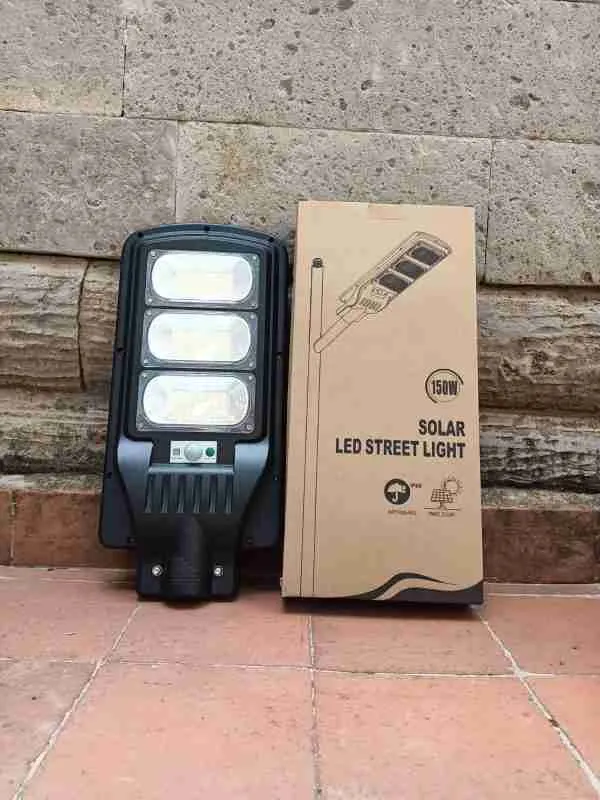
Description
Your First Solar Street Light, Done Right
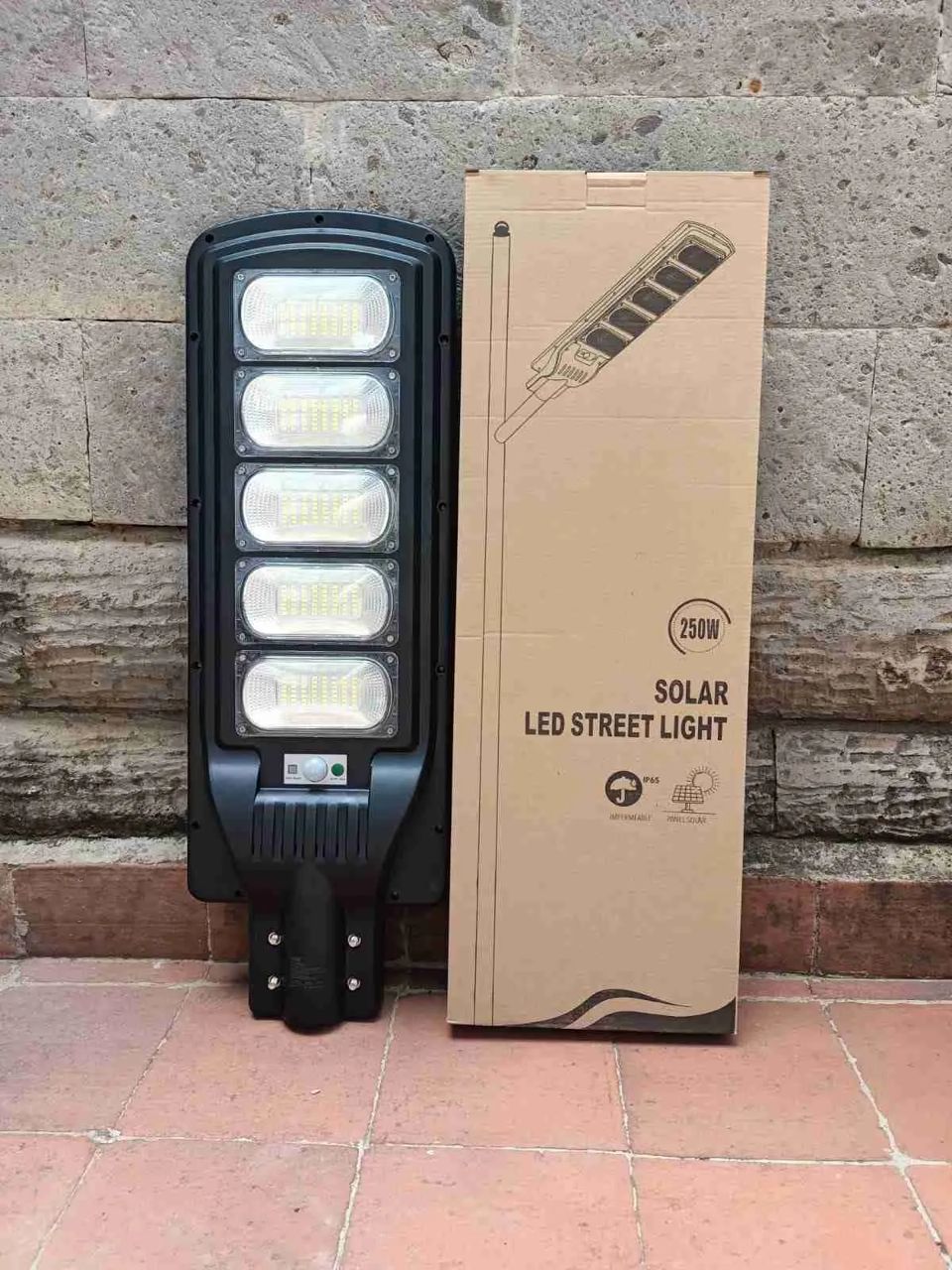
The Bicity Solar 150W Solar Street Light is built for one specific buyer: someone considering a solar street light for the first time. Maybe you’re replacing a single mains-powered security bulb that drives up the electricity bill. Maybe you want to add some security lighting to a gate without paying an electrician to run a cable. Maybe you’ve heard about solar lighting from a neighbour and want to test the concept on a small scale before committing to bigger units. Whatever brought you here — this is the right tier to start with, and we built it specifically with the first-time buyer in mind.
What that means in practical terms: every component on this unit is sized correctly for genuine 150W operation, not just labelled “150W” to chase a marketing tier. The LiFePO4 battery has the capacity to actually run the LED at full brightness from dusk to dawn through normal Kenyan weather. The monocrystalline solar panel can actually recharge that battery within typical Kenyan daylight hours. The IP66 housing actually survives the long rains. The 2-year warranty actually covers the components that fail first. These sound like obvious requirements, but most budget units at this wattage tier compromise on at least one of these areas.
Technical Specifications
| Specification | Detail |
|---|---|
| Product Type | Integrated all-in-one solar street light, entry-level |
| Rated Wattage | 150W system rating |
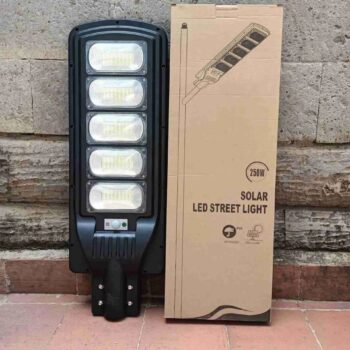
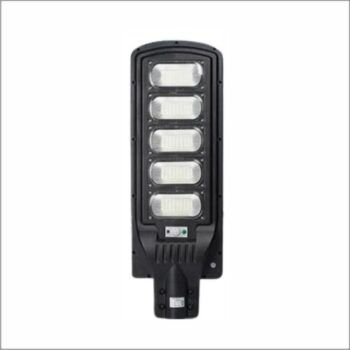
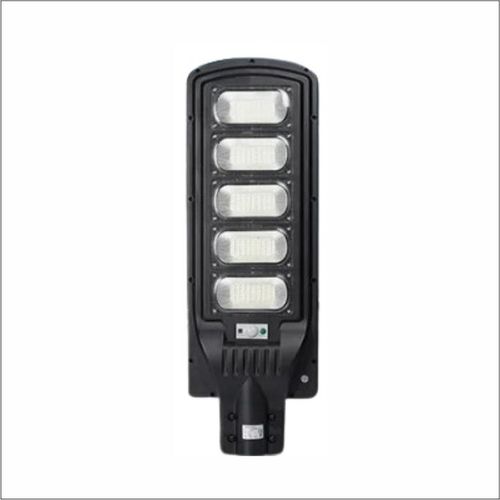
| LED Configuration | 3 LED pods, ~80 SMD chips total |
| Luminous Flux | 15,000 lumens at full brightness |
| Colour Temperature | 6000K cool white daylight |
| Luminous Efficiency | 150 lm/W |
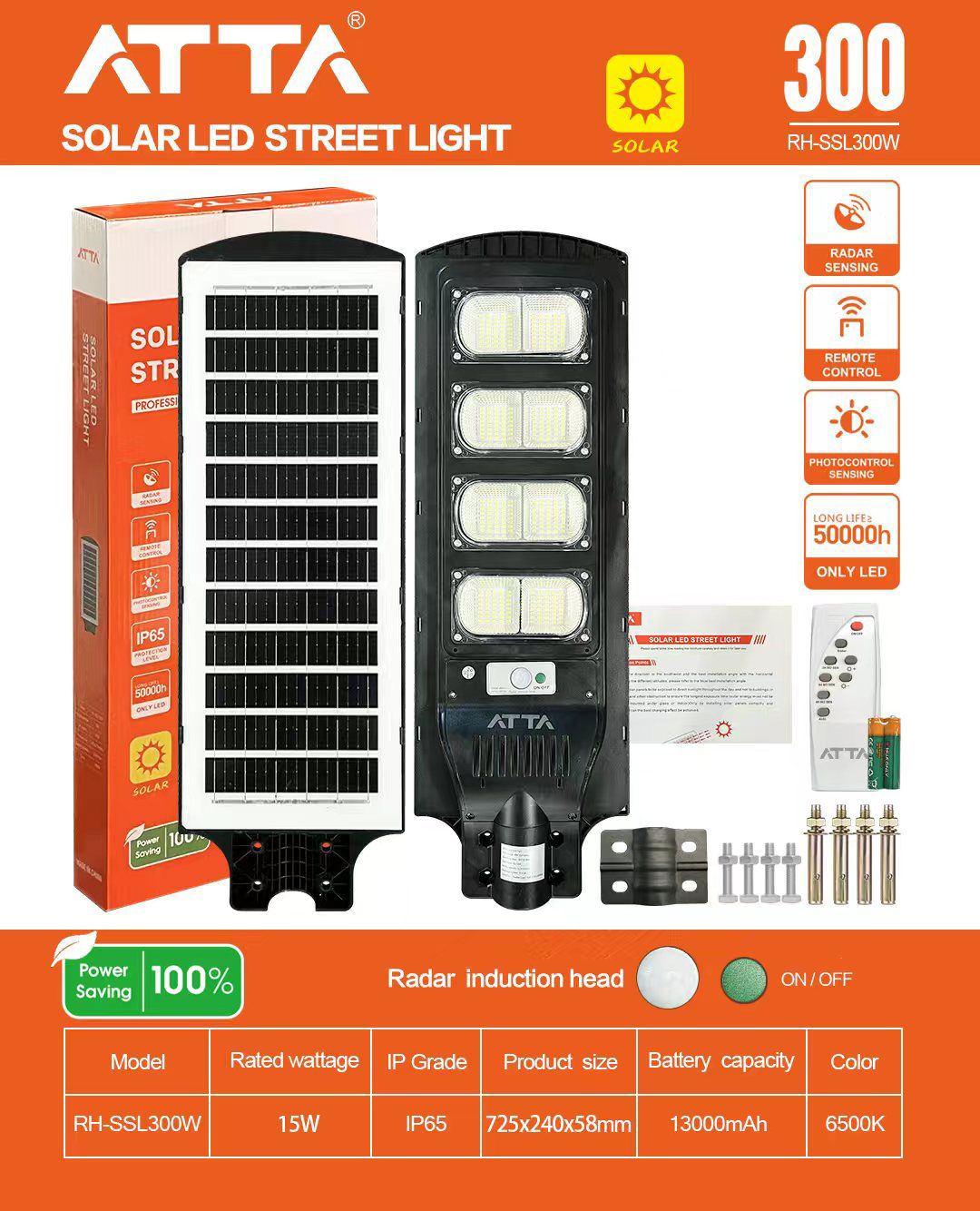
| Solar Panel | 18W monocrystalline, 12V |
| Panel Adjustment | 180° tilt |
| Battery | LiFePO4 lithium iron phosphate, 3.2V 22Ah |
| Battery Cycle Life | 2,000+ deep cycles (5+ years typical service) |
| Charging Time | 6–8 hours full sunlight |
| Working Time (Full Charge) | Up to 12 hours (lab spec) / 9–11 hours (real-world Kenyan conditions) |
| Motion Sensor | PIR, 6m radius, 180° detection arc |
| Ambient Light Sensor | Photocell — auto dusk-to-dawn activation |
| Operating Modes | 4 modes — auto dusk/dawn, motion sensor, timer, manual |
| Remote Control | Included |
| Ingress Protection | IP66 — dust-tight and rain-resistant |
| Housing Material | Aluminium alloy with PMMA optical lens |
| Operating Temperature | -20°C to +60°C |
| Installation Height | 4–6 metres recommended |
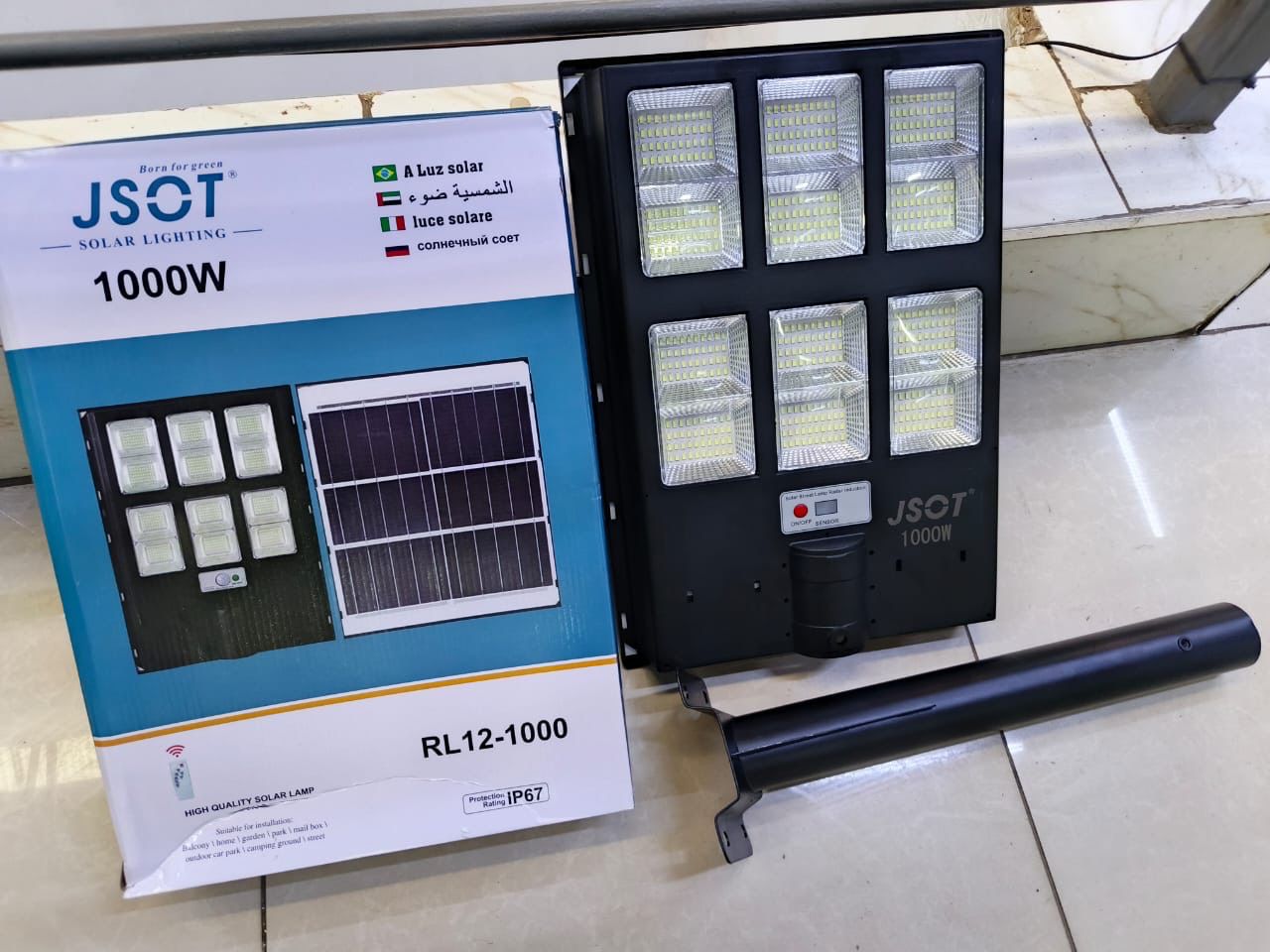
| Pole Diameter Compatibility | 50–80mm (also wall-mountable) |
| Net Weight | Approximately 3.2 kg |
| Product Dimensions | Approximately 510 × 230 × 75 mm |
| Warranty | 2 years |
What You Get vs What Cheap 150W Units Skip
If you’ve been browsing 150W solar street lights on Kenyan marketplaces, you’ve probably noticed the same product photo appearing at wildly different prices — sometimes a 3x or 4x gap. They look identical. They claim identical specifications. So what actually differs? The components inside the housing — and the consequences of those differences over the next 24 months.
| Component | What We Use | What Cheap Units Use | The Practical Difference |
|---|---|---|---|
| Battery | LiFePO4 22Ah | Lead-acid 7Ah or Li-ion 10Ah | 5+ year life vs 12–18 months before dim/dead |
| Solar panel | Monocrystalline 18W | Polycrystalline 9–12W | Charges fully in 6–8hr vs taking all day to half-charge |
| Housing | Aluminium IP66 | ABS plastic IP54 or unmarked | Handles long rains vs cracks/leaks within first wet season |
| LED chips | SMD 5730 at 150 lm/W | Generic 2835 at 80–100 lm/W | 15,000 lumens vs 8,000–10,000 lumens despite same “150W” label |
| Motion sensor | PIR 6m range, IP-sealed | Cheap PIR, exposed | Works after dust season vs fails to trigger within 6 months |
| Warranty | 2 years | 30 days / “no warranty” | Free replacement vs no recourse |
| Remote control | Included, 4 modes | Often not supplied | You can choose how it operates |
This is why a properly-built unit is genuinely cheaper than a deeply-discounted cheap unit when you measure over 24 months. The cheap unit fails or significantly degrades within the first year; you buy another. Over two years your cumulative spend exceeds what the quality unit would have cost outright — and you’ve spent the second year with a dim or dead light during the months when the replacement is being sourced.
Where Your 150W Will Cover Best
This unit is engineered for coverage of approximately 80–120 square metres, which maps to specific small-scale outdoor lighting tasks. Most first-time buyers in Kenya install their 150W in one of these situations:
- Small residential gate — single vehicle entry, pedestrian sidegate, security illumination for the immediate gate area
- Driveway — single-vehicle drive from gate to house entrance, typical 20–30 metre length
- Garden path lighting — primary footpath through a garden, particularly during evening events
- Front door / porch area — security lighting plus welcoming illumination for visitors
- Kiosk frontage — small retail business that operates into the early evening
- Market stall — open-air vendor space at small rural or peri-urban markets
- Rural homestead entry — main gate to a smallholding, livestock yard entrance, grain store
- Workshop / garage exterior — small artisan workspace operating after dark
If your needs are larger than this — multiple gates, full compound perimeter, parking for 2+ vehicles, or commercial frontage — the 150W will leave parts of your area in shadow. For those situations our 200W, 250W, or 300W units are correctly sized.
The Four Modes Explained Simply
Your 150W unit comes with a small handheld remote control that switches between four operating modes. These modes confuse many first-time solar buyers, so here’s the practical explanation:
- Auto Dusk-to-Dawn: The light comes on automatically when the sun sets and goes off at sunrise. Runs at full brightness all night. Easiest mode for first-time users. Use this if your area has regular nighttime activity or if security visibility matters all night.
- Motion Sensor: The light idles at low brightness all night. When someone or something moves within 6 metres of the sensor, it ramps to full brightness for 30 seconds, then returns to low brightness. Saves battery and extends runtime through cloudy weeks. Use this if your gate or area is mostly quiet overnight.
- Timer Mode: The light runs at full brightness for a set time period after sunset (3 hours / 5 hours / 8 hours selectable on the remote), then shuts off. Good for businesses with defined closing hours — once you’ve closed up shop, the light shuts itself off later.
- Manual: Override the automatic operation using the remote. Useful for special events, maintenance, or when you want to turn the light on briefly during daytime.
If you’re new to solar lighting and not sure which mode to pick, start with Auto Dusk-to-Dawn for the first week. It’s the simplest and gives you a baseline. After a week of seeing how the light performs at your specific location, switch to Motion Sensor if you want longer cloudy-day reserve, or stay on Auto if you prefer consistent illumination.
Easy Installation in Under an Hour
One of the reasons 150W is the right entry-level wattage is that the unit is small enough to be installed by anyone with basic DIY skills. No electrician required, no cabling to run, no specialised tools beyond a drill and spanner. The complete installation process:
- Pick your mounting location — wall, gate post, or pole at 4–6 metre height. The location must have direct sunlight on the solar panel for at least 6 hours during the day.
- Mark the mounting bracket holes on the wall or pole. Use the included template.
- Drill the holes — masonry bit for walls, regular bit for steel poles. Insert M8 wall anchors (included).
- Bolt the mounting bracket to the wall. Tighten firmly.
- Slide the light fixture onto the bracket. Tighten the locking screws on the side.
- Tilt the solar panel slightly toward the sun’s mid-day direction.
- Press the switch on the side of the unit. The light tests itself for 5 seconds, then enters auto mode.
- That’s it. Your light will activate at the next dusk.
Total time for an average DIY installation: 30–45 minutes. We provide professional installation if you prefer — pricing depends on whether you need wall anchoring, a pole, or special mounting hardware. Request via the quote form.
What to Expect in Year One
First-time solar light buyers often have anxiety about whether the unit will actually perform as advertised. To set realistic expectations, here’s what most customers experience in the first 12 months:
- Week 1: Light comes on every evening at sunset, runs through the night, switches off at dawn. You realise you can read a number plate at 8 metres distance. You’re impressed.
- Months 1–2: Performance is consistent. You experiment with the four modes and find your preferred one. You ask us about adding a second unit for a different area.
- Months 3–4 (typically rainy season): You notice the light goes off earlier some mornings — maybe at 4am instead of 6am — after stretches of cloudy weather. This is normal. Sunny days restore full runtime.
- Months 5–8: You might need to wipe dust off the solar panel surface once or twice during the dry season. Takes 2 minutes with a damp cloth.
- Months 9–12: Performance still essentially identical to month 1. You start thinking about replacing other parts of your outdoor lighting with solar.
This is what a properly-specified 150W unit delivers. If you experience anything significantly worse than this in year one — frequent dim-outs, sensor failures, water ingress, charging problems — that’s a warranty case and we handle it under the 2-year cover.
Cross-Sell Components
- Mounting accessories: Standard mounting bracket included. Galvanised steel poles (4m or 5m) available as add-on for ground-mount installations.
- Step up to bigger: If 150W doesn’t cover your area, compare our 200W, 250W, and 300W units.
- Whole-property solar: Combine outdoor lighting with solar panels, hybrid inverters, and lithium batteries for off-grid living.
- Sizing help: Use our solar calculator to confirm the 150W is right for your space.
- Custom quote: Request a quote for multi-unit pricing or installation services.