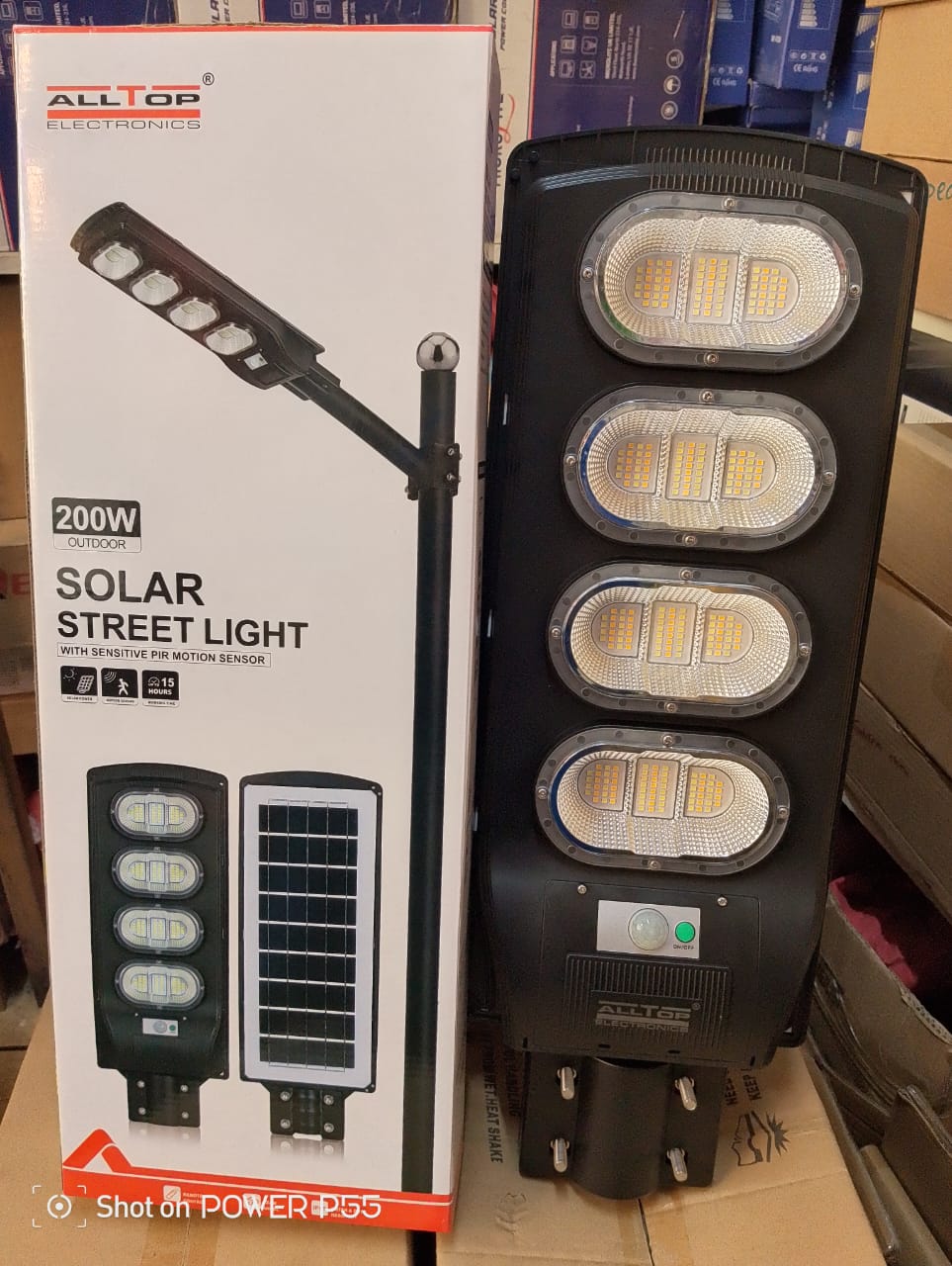
Description
Bright, Reliable Outdoor Lighting Without the National Grid
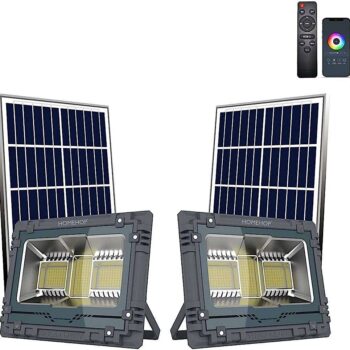
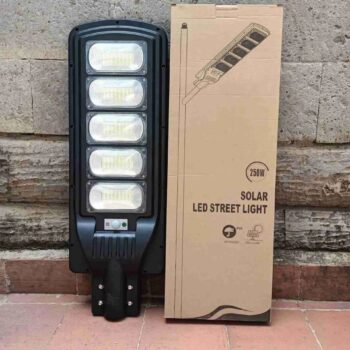
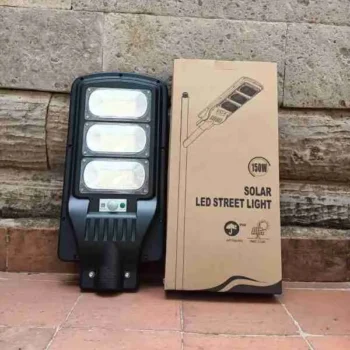
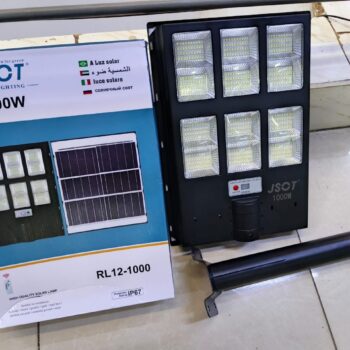
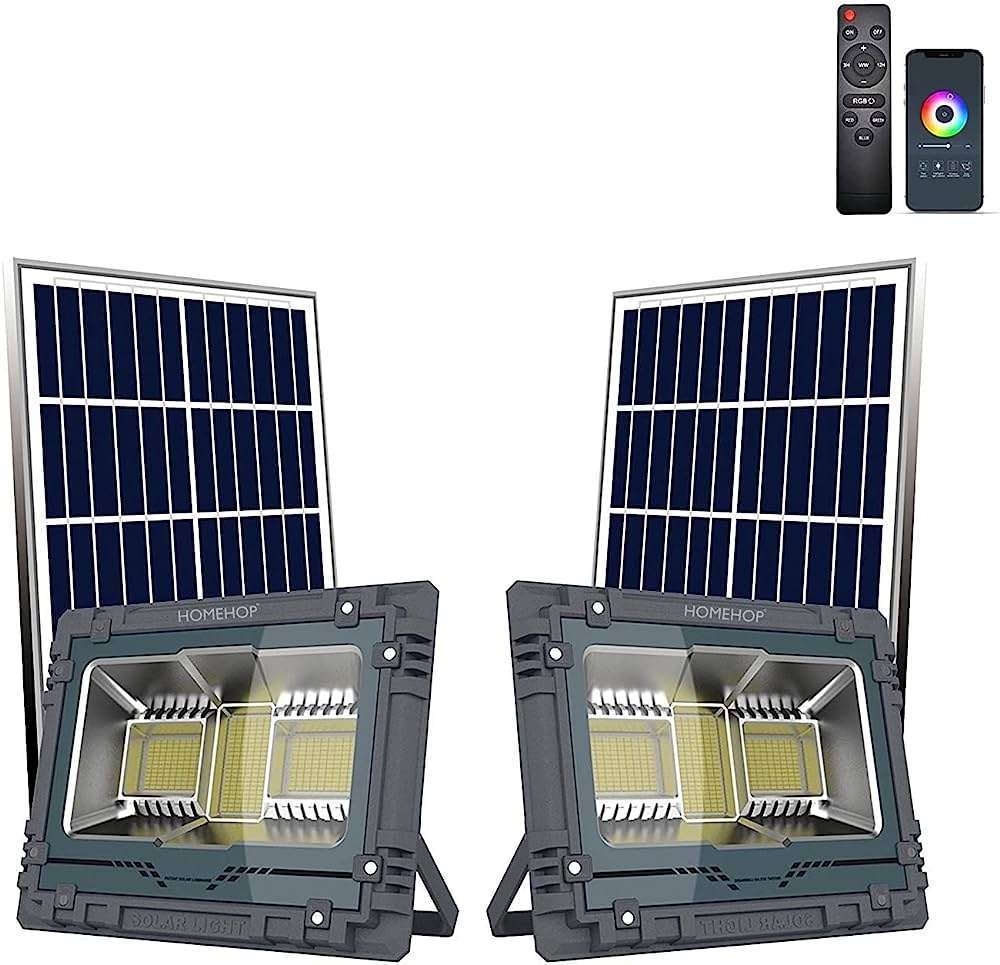
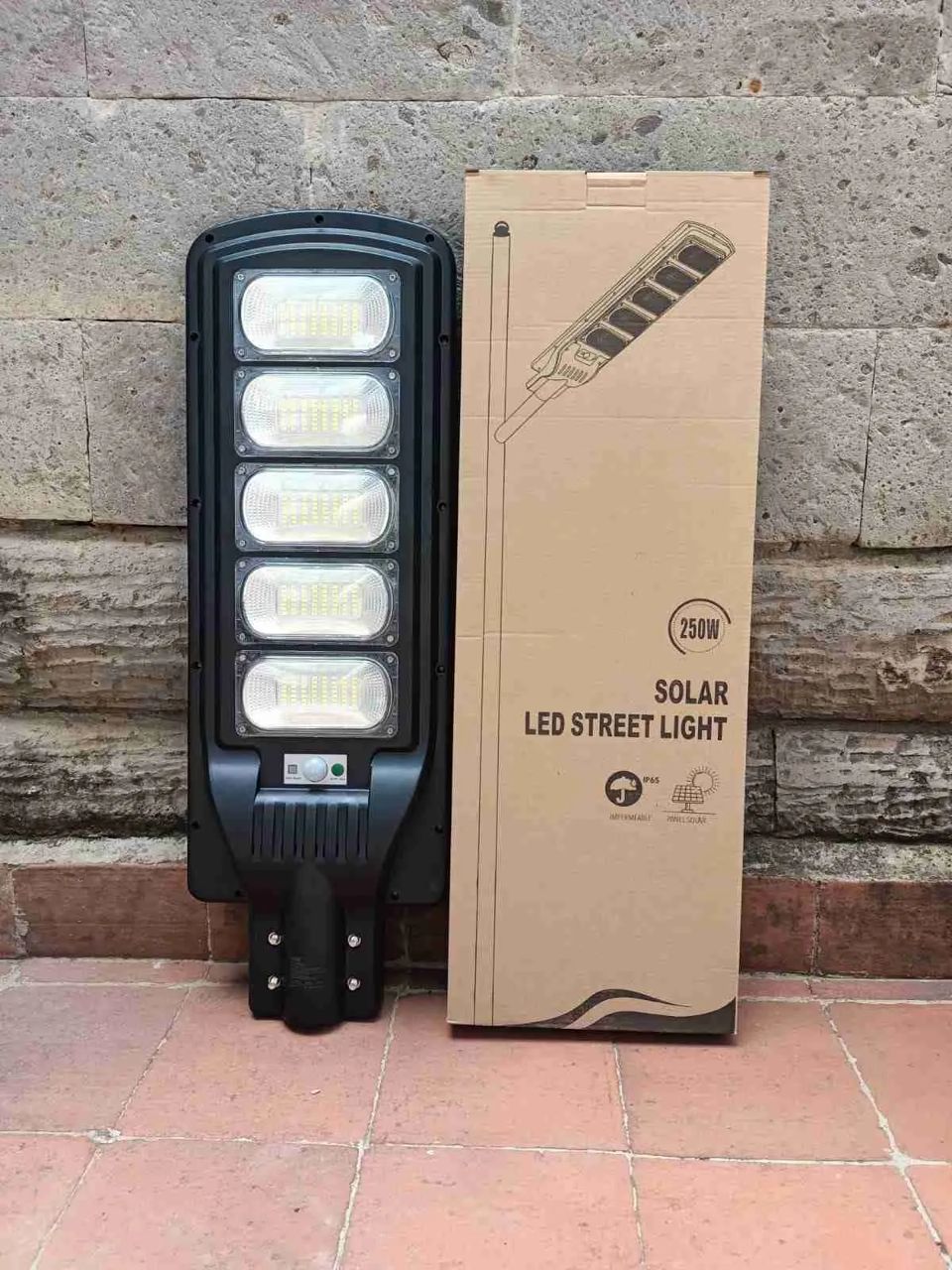
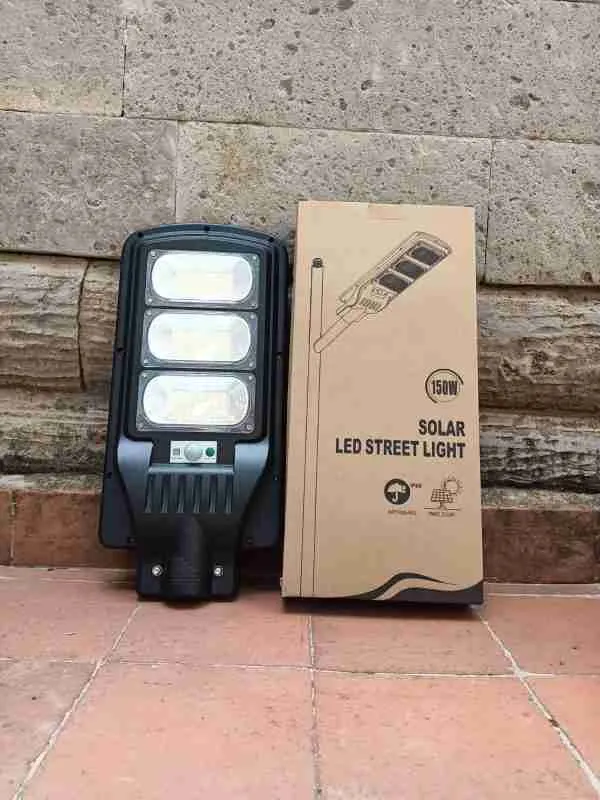
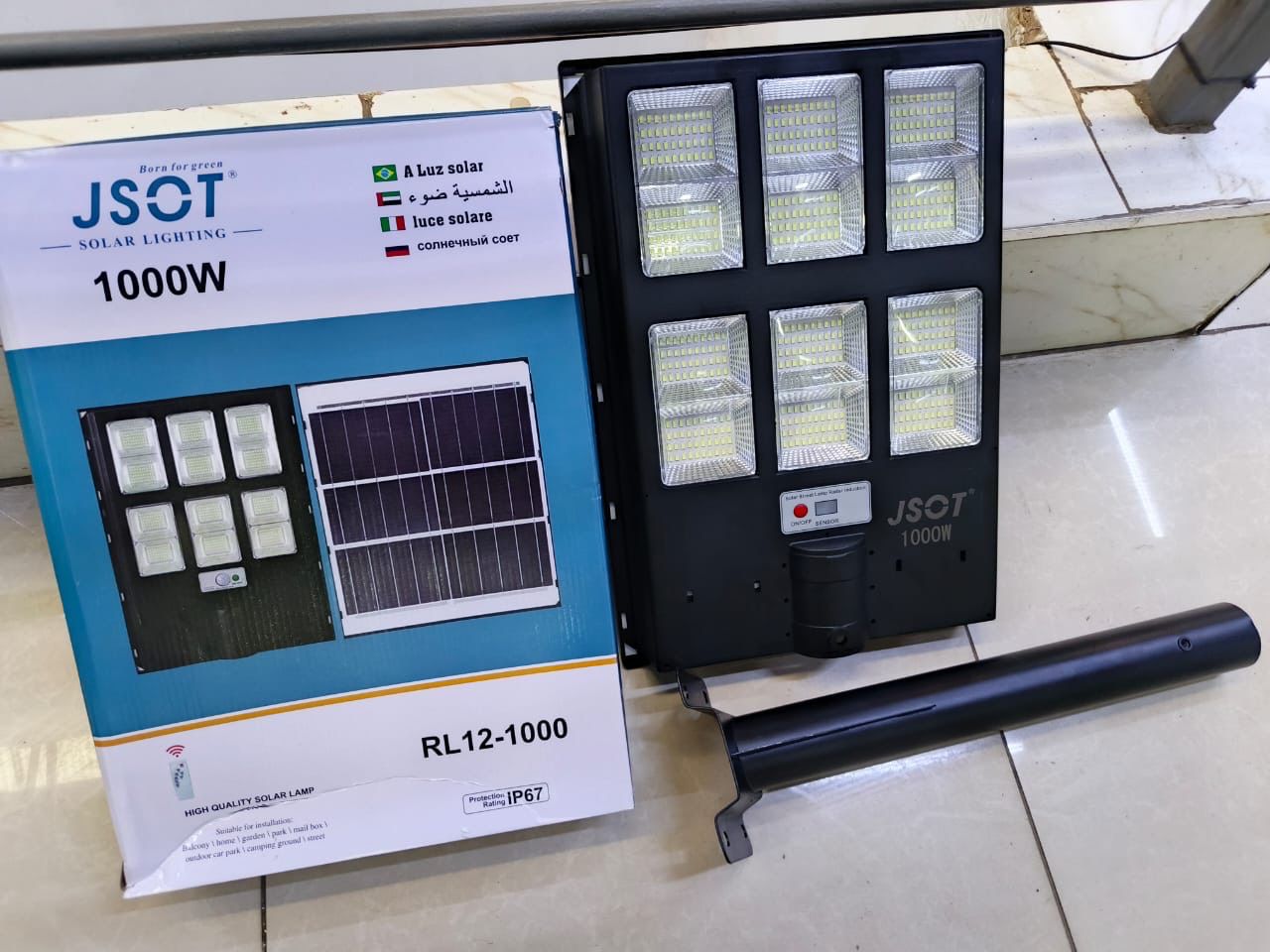
The Bicity Solar 200W Solar Street Light delivers powerful, dusk-to-dawn outdoor illumination without any wiring to the national grid, without monthly electricity bills, and without the risk of electrocution during installation. It’s a complete all-in-one fixture — solar panel, lithium battery, LED array, motion sensor, and smart controller integrated into a single rugged aluminium housing — designed for the realities of Kenyan outdoor use, from coastal salt air in Mombasa to dusty plains in Maasai Mara, from highland rain in Nyeri to scorching sun in Turkana.
This product solves the four problems we hear most often from customers: (1) compound security after sunset, (2) gate and driveway visibility for vehicles, (3) church or school grounds needing safe pedestrian access at evening events, and (4) commercial premises wanting a permanent lighting solution without the wiring cost of a grid connection. One 200W unit covers 100–150 square metres effectively at standard 6-metre mounting height, making it ideal for residential compounds and small commercial sites.
Technical Specifications
| Specification | Detail |
|---|---|
| Product Type | Integrated all-in-one solar street light |
| Rated Wattage | 200W system rating |
| LED Configuration | 360 × high-brightness SMD chips |
| Luminous Flux | 20,000+ lumens at full brightness |
| Colour Temperature | 6000K cool white daylight |
| Solar Panel | 25W monocrystalline, 12V |
| Panel Adjustment | 180° tilt — optimise for Kenyan sun angle |
| Battery | LiFePO4 lithium iron phosphate, 3.2V 30Ah |
| Battery Cycle Life | 2,000+ deep cycles (5+ years typical service) |
| Charging Time | 6–8 hours full sunlight |
| Working Time (Full Charge) | 10–12 hours dusk-to-dawn |
| Motion Sensor | PIR, 8m radius, 180° arc |
| Operating Modes | 4 modes — auto dusk/dawn, motion sensor, timer, manual |
| Remote Control | Included |
| Ingress Protection | IP66 — dust-tight and rain-resistant |
| Housing Material | Aluminium alloy with PMMA optical lens |
| Operating Temperature | -20°C to +60°C |
| Installation Height | 4–8 metres recommended |
| Pole Diameter Compatibility | 60–80mm (also wall-mountable) |
| Net Weight | Approximately 4.5 kg |
| Product Dimensions | Approximately 630 × 280 × 80 mm |
| Warranty | 2 years |
The Four Smart Modes Explained
The remote control gives you four ways to use this light depending on what you actually need:
- Auto Dusk-to-Dawn (default). The light’s photocell sensor detects darkness automatically, switches on at sunset, runs at full brightness through the night, and switches off at sunrise. Best for security lighting where you want consistent illumination all night.
- Motion Sensor (energy-saving). The light runs at 30% brightness as ambient lighting, then ramps to 100% when motion is detected within 8 metres. Stays bright for 30 seconds after motion ends. This mode extends battery life through cloudy weeks because most of the night is at low brightness. Best for compound gates, driveways, and walkways.
- Timer Mode. Set the light to run for a specific number of hours after sunset (3, 5, or 8 hours common settings) then automatically shut off. Best for commercial premises that only need late-evening lighting, not all-night.
- Manual On/Off. Override the automatic logic using the remote — useful for events, security incidents, or maintenance access.
What 20,000 Lumens Actually Means in Kenyan Conditions
Lumens are a measurement of total light output. To put 20,000 lumens in context:
- A standard 100W incandescent bulb produces about 1,600 lumens
- A grid-powered street light produces 6,000 to 12,000 lumens
- This 200W solar street light produces 20,000 lumens at full brightness — comparable to a small commercial flood light
At a 6-metre installation height, this output illuminates roughly 100–150 square metres at usable brightness — enough to cover a typical residential compound entry, a 2-vehicle driveway with surrounding parking, a school gate area, or a small shop frontage. For larger areas (factories, parking lots, perimeter fencing) you’d install multiple units at intervals of 12–15 metres along the perimeter.
Why LiFePO4 Battery Matters
The battery is the most important component in any solar street light, and the difference between LiFePO4 and the cheaper lithium-ion or lead-acid batteries determines whether your light lasts 5 years or 18 months. The LiFePO4 (lithium iron phosphate) chemistry used in this product has three major advantages:
- Cycle life: 2,000+ deep discharge cycles versus 500–800 for lithium-ion and 300–500 for lead-acid. In real terms: 5+ years of nightly cycling versus 2–3 years before replacement.
- Heat tolerance: LiFePO4 doesn’t suffer the thermal runaway risk that affects lithium-ion in hot environments. Kenyan rooftops and pole-tops can exceed 55°C in direct sun — LiFePO4 handles this without degradation.
- Depth of discharge: Safely uses 90% of nominal capacity versus 50% for lead-acid. You get more usable runtime from the same nameplate Ah rating.
Most cheap “200W solar street lights” on the Kenyan market use the older lithium-ion chemistry to keep cost down. They look identical, work fine for the first year, then start dimming and dying after 18–24 months. The LiFePO4 specification on this unit is what justifies its mid-market price point.
Installation Made Easy
The integrated all-in-one design eliminates the complex wiring of older solar street light setups (separate panel, separate battery box, separate light fixture, separate controller). Installation is a single-step mount:
- Choose your mounting location — wall, fence post, or pole at 4–8 metre height
- Attach the universal mounting bracket using the included anchor bolts (works on concrete, brick, steel pole, timber pole)
- Slide the light fixture onto the bracket and tighten the locking screws
- Tilt the solar panel toward the sun’s typical mid-day position (north-facing in southern Kenya, slightly tilted)
- Switch the unit on using the side switch — that’s it
For pole installation, the bracket fits poles 60–80mm in diameter. For wall installation, the same bracket repositions for vertical surfaces. Total installation time for one experienced technician: 30–45 minutes per unit. We can also include professional installation in your order — request via the quote form.
Built for Kenyan Weather
The IP66 ingress protection rating means this light is sealed against dust ingress (the “6” rating — highest in the IP scale for solids) and resistant to heavy rain and high-pressure water spray from any direction (the second “6” rating). What this translates to in actual Kenyan conditions:
- Coastal use (Mombasa, Malindi, Kilifi, Diani): Salt-laden humid air handled by the sealed housing and aluminium-alloy body. Annual visual inspection recommended.
- Highland rain (Nyeri, Meru, Kericho, Limuru): Heavy rainfall during the long rains is fully tolerated.
- Dusty environments (Maasai Mara, Kajiado, Turkana, Marsabit): Sealed housing prevents dust ingress that destroys cheaper lights within 1–2 dry seasons.
- Tropical heat (Garissa, Mandera, Lodwar): LiFePO4 chemistry plus aluminium heat sink rated for sustained 60°C ambient.
Cross-Sell Components
- Mounting poles: Galvanised steel poles 4m, 6m, 8m available — request with quote
- Bulk discount: Order 5+ units for compound perimeter lighting at reduced per-unit pricing
- Full home solar: Browse solar panels, hybrid inverters, and lithium batteries for whole-house off-grid systems
- Compound electrification: Request a quote for combined street lighting + indoor solar + battery backup