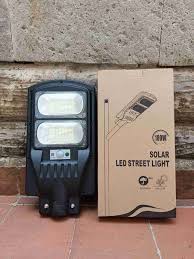
Description
The Right Light for One Specific Spot
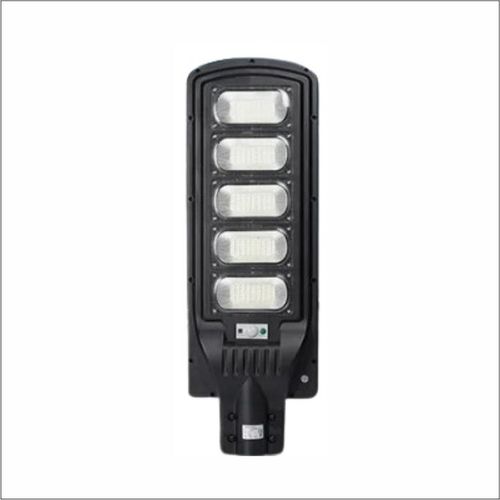
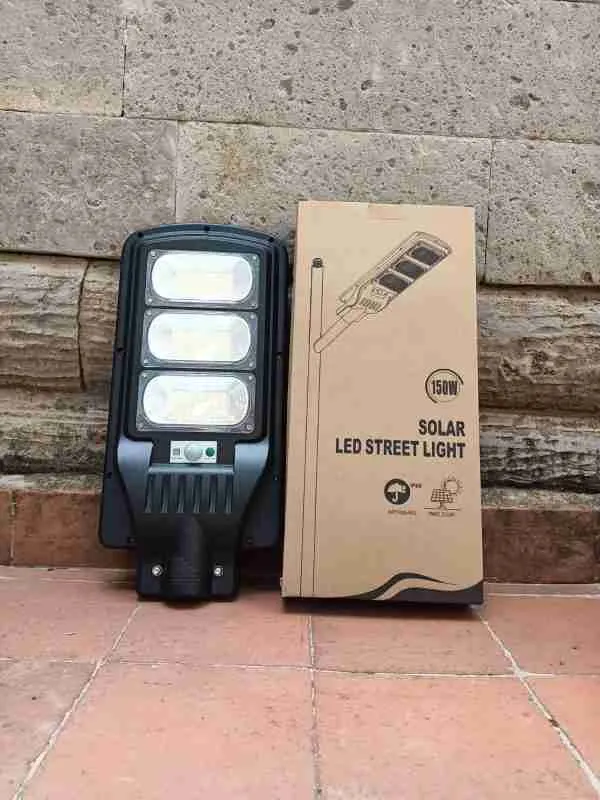
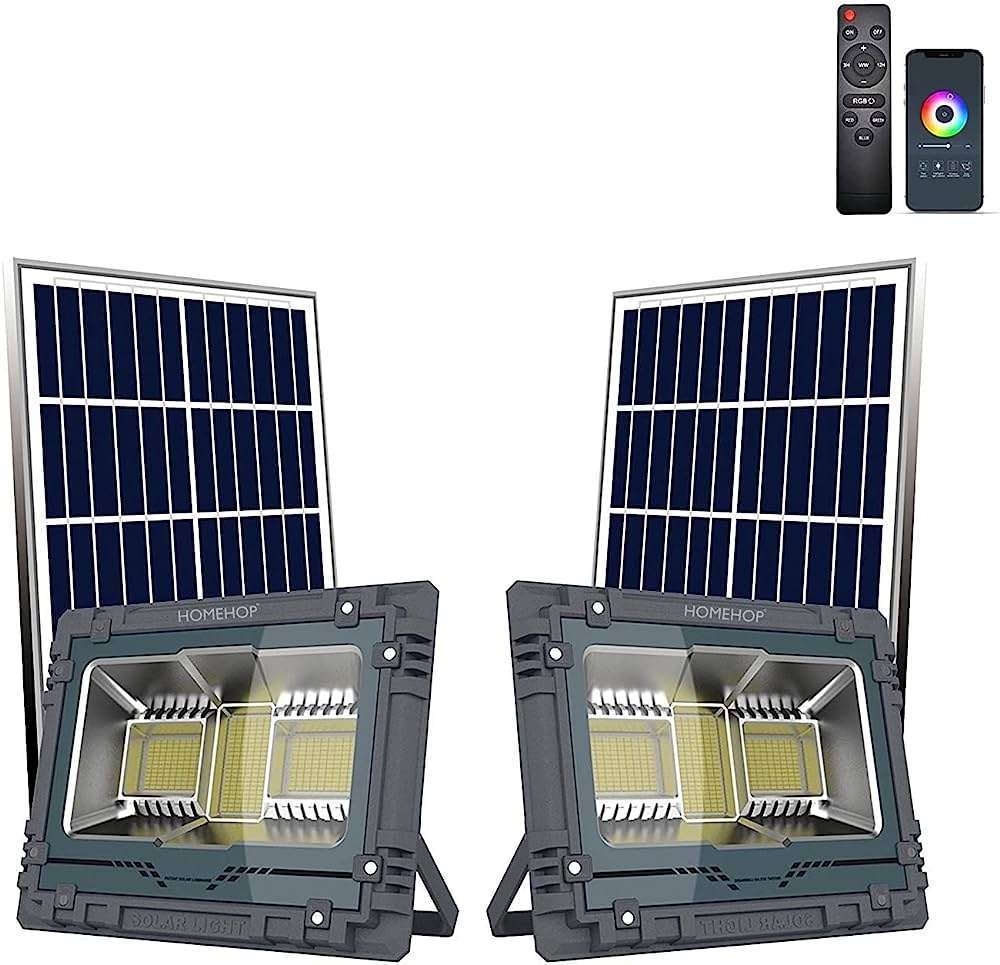
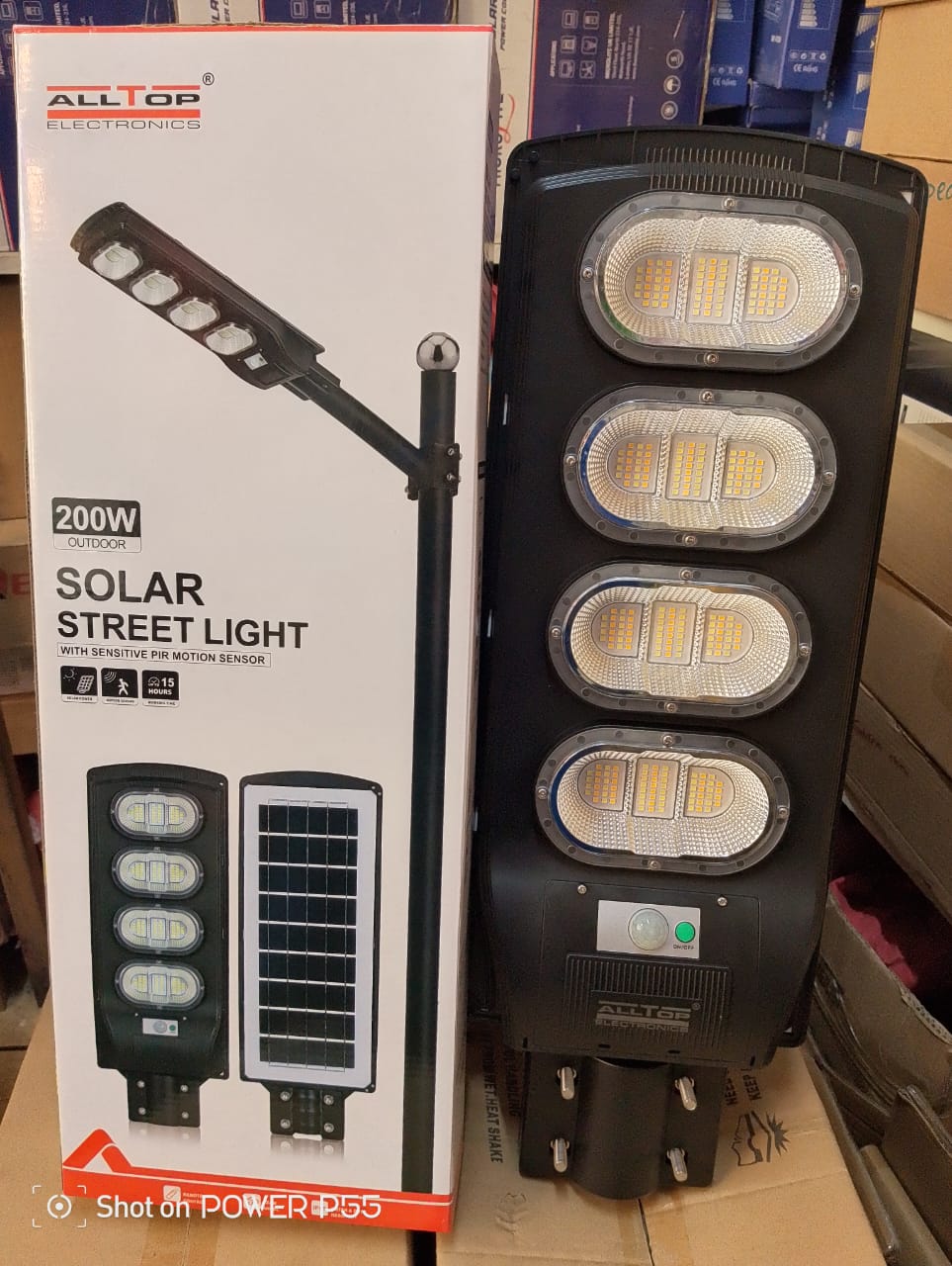
The Bicity Solar 100W Solar Street Light exists for a very specific purpose: lighting a single targeted location that’s currently dark and shouldn’t be. Maybe it’s a side gate at the back of your compound that nobody can see from the main house. Maybe it’s the corner behind the water tank where intruders could climb the fence unnoticed. Maybe it’s the door to a hen house, a garage, a workshop, or a market stall that operates after sunset. This unit is purpose-built for that single-point coverage task, not for whole-compound illumination.
That focused design philosophy changes what we put inside the housing. Smaller LED pods (because you don’t need 30,000 lumens to light an 8 m² door area). A smaller solar panel and battery (because the power budget is smaller, so the unit can be physically smaller and more discreetly mounted). A shorter motion-sensor range (because you want to detect movement at the spot, not 10 metres away). A 3–5 metre install height range (because that’s what side-gate and back-door applications actually need). Everything about this unit is right-sized for the focused task. Trying to use a 250W or 300W unit for the same job would mean a much bigger fixture mounted in a place where you’d rather it stayed visually understated — and you’d pay nearly double for capability you don’t use.
Technical Specifications
| Specification | Detail |
|---|---|
| Product Type | Integrated all-in-one solar street light, compact tier |
| Rated Wattage | 100W system rating |
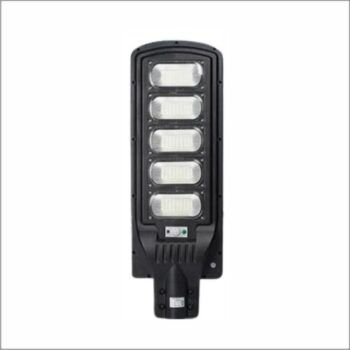
| LED Configuration | 2 LED pods, ~60 SMD chips total |
| Luminous Flux | 10,000 lumens at full brightness |
| Colour Temperature | 6000K cool white daylight |
| Luminous Efficiency | 150 lm/W |
| Solar Panel | 12W monocrystalline, 6V |
| Panel Adjustment | 180° tilt |
| Battery | LiFePO4 lithium iron phosphate, 3.2V 15Ah |
| Battery Cycle Life | 2,000+ deep cycles (5+ years typical service) |
| Charging Time | 5–7 hours full sunlight |
| Working Time (Full Charge) | Up to 11 hours (lab spec) / 8–10 hours (real-world Kenyan conditions) |
| Motion Sensor | PIR, 5m radius, 180° detection arc |
| Ambient Light Sensor | Photocell — auto dusk-to-dawn activation |
| Operating Modes | 4 modes — auto dusk/dawn, motion sensor, timer, manual |
| Remote Control | Included |
| Ingress Protection | IP66 — dust-tight and rain-resistant |
| Housing Material | Aluminium alloy with PMMA optical lens |
| Operating Temperature | -20°C to +60°C |
| Installation Height | 3–5 metres recommended |
| Pole Diameter Compatibility | 50–80mm (also wall-mountable) |
| Net Weight | Approximately 2.4 kg |
| Product Dimensions | Approximately 390 × 200 × 70 mm |
| Warranty | 2 years |
How “Single-Point” Differs From “Compound” Lighting
Most Kenyan compound owners think about outdoor lighting as a single coverage problem — light the whole space so everything is visible. But experienced security practitioners know that approach is both expensive and less effective. The smarter strategy is layered, single-point illumination at the specific places where security incidents tend to start: blind corners, secondary entry points, dark voids next to perimeter walls. A single 100W unit at each of those points delivers more meaningful security value than one giant central light blanketing the whole compound.
| Lighting Approach | Coverage | Per-Unit Cost | Strategic Value |
|---|---|---|---|
| One central 300W unit | Whole compound, uniform | Highest | Visible but predictable — intruders learn the shadow patterns |
| Two perimeter 200W units | Two halves with overlap | High | Better coverage but expensive shadow management |
| Multiple 100W single-point units | Specific corners and gates | Lower per unit | Targeted at actual risk locations, harder for intruders to predict |
The 100W is what makes this distributed strategy affordable. Three single-point 100W units placed at a back gate, behind the water tank, and at the garage door together cost less than one 300W central unit — but they protect specifically the three locations where unwanted activity is statistically most likely to occur. This is how commercial premises and high-end residential properties think about outdoor lighting; the 100W gives ordinary Kenyan homeowners the same strategic capability.
Where 100W Earns Its Place
The 100W is correctly specified for any application where you need to illuminate about 50–80 square metres of focused space. Real Kenyan deployments where customers consistently report excellent value:
- Side gates and pedestrian gates — secondary entries that don’t get the same attention as the main vehicle gate
- Back doors of houses — kitchen entrances, servant-quarter doors, laundry-area doors
- Dark corners against perimeter walls — voids behind water tanks, beside compost heaps, next to outbuildings
- Garage and workshop doors — mechanic shops, small artisan workshops, home garages
- Livestock enclosures — chicken coops, goat pens, dairy cattle shelters that need night-time visibility for animal welfare checks
- Bus stops and matatu stage shelters — small infrastructure that government and SACCOs are increasingly equipping with solar lighting
- Market stalls and mama-mboga stands — small vendor positions operating into evening hours
- Mosque, church, or temple side entrances — secondary doors used by clergy or staff
- School staff quarters entries — boarding school teacher accommodation, dispensary clinical officer housing
- Petrol station kiosks and back-of-yard areas — supporting positions outside the main forecourt
- Bore-hole pump rooms and water-tank platforms — small infrastructure positions needing checks at night
For larger areas — full driveways, main gates with parking, full compound perimeters — step up to our 150W entry-level residential unit or our 200W standard residential unit.
What Makes the Compact Tier Honest
The 100W wattage tier in Kenya is dominated by deeply-discounted imports that are often dishonestly specified — labelled “100W” but delivering only 4,000–6,000 lumens, using sealed lead-acid batteries with a 12-month life, and housed in cheap ABS plastic that cracks during the first long-rains season. The price gap between those imports and a properly-specified unit isn’t enormous in absolute shilling terms, but the lifecycle difference is significant.
| Component | Bicity 100W Spec | What Cheap Imports Use |
|---|---|---|
| Battery type | LiFePO4 15Ah | Sealed lead-acid 7Ah, or unbranded “lithium” |
| Solar panel | Monocrystalline 12W | Polycrystalline 5–8W |
| LED chips | SMD 5730 at 150 lm/W | Generic chips at 80–100 lm/W |
| Housing | Aluminium IP66 | ABS plastic IP44 or unmarked |
| Motion sensor | PIR sealed, 5m range | Cheap PIR, often disabled by dust |
| Remote control | Included, 4 modes | Not supplied or non-functional |
| Warranty | 2 years | 30 days or none |
| Realistic lifespan | 5+ years | 12–18 months before dim or dead |
For a single-point installation, this matters even more than for a central compound light. If your central 300W unit dims, you still have other lighting that lets you cover the gap while you organise a replacement. But if your single 100W unit at the back gate fails, that location goes completely dark — and security incidents tend to happen in exactly the places that suddenly become unguarded.
Installation in Under 30 Minutes
The compact form factor (about 2.4 kg, dimensions roughly 39 × 20 × 7 cm) makes this the easiest unit in our solar street light range to install. The complete process:
- Pick your mounting location. The unit needs direct sunlight on the solar panel for at least 5 hours per day; the LED face needs a clear sightline to the area you want illuminated.
- Mark the mounting bracket holes using the included template. The bracket suits wall, pole, or fence-post mounting.
- Drill the holes — masonry bit for walls, regular drill bit for steel surfaces. Insert M6 or M8 expansion anchors (appropriate to your wall material).
- Bolt the mounting bracket securely. Light pull-test it before proceeding.
- Slide the light fixture onto the bracket and lock with the side screws.
- Tilt the integrated solar panel slightly toward the sun’s typical mid-day position.
- Press the test switch. The light flashes 3 times to confirm operation, then enters auto mode.
Total time for an average DIY installation: 20–30 minutes. The unit is light enough that a single person on a ladder can complete the entire installation without assistance. Professional installation is available for elderly customers, high mounting positions, or multi-unit deployments — request via the quote form.
Cross-Sell and Step-Up Options
- Step up if you need more coverage: Browse our 150W (entry residential), 200W (residential standard), 250W (sweet spot mid-tier), or 300W (commercial scale).
- Multi-unit packages: Bulk pricing on 3+ unit orders — typical for distributed single-point security deployments.
- Anti-theft brackets: Security-screw mounting hardware available as add-on for high-risk locations.
- Full home solar: Combine outdoor lighting with solar panels, hybrid inverters, and lithium batteries for whole-property off-grid living.
- Project sizing help: Request a quote with photos or a sketch of your property’s dark zones — we’ll recommend the right unit count and locations.