Description
Growatt SPE 12000 ES: Why the Battery, Not the Inverter, Decides This Installation
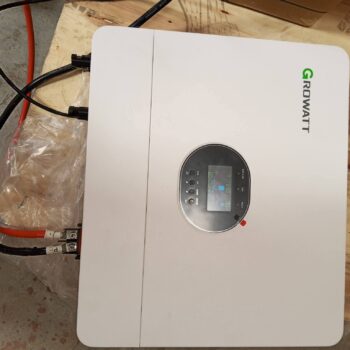
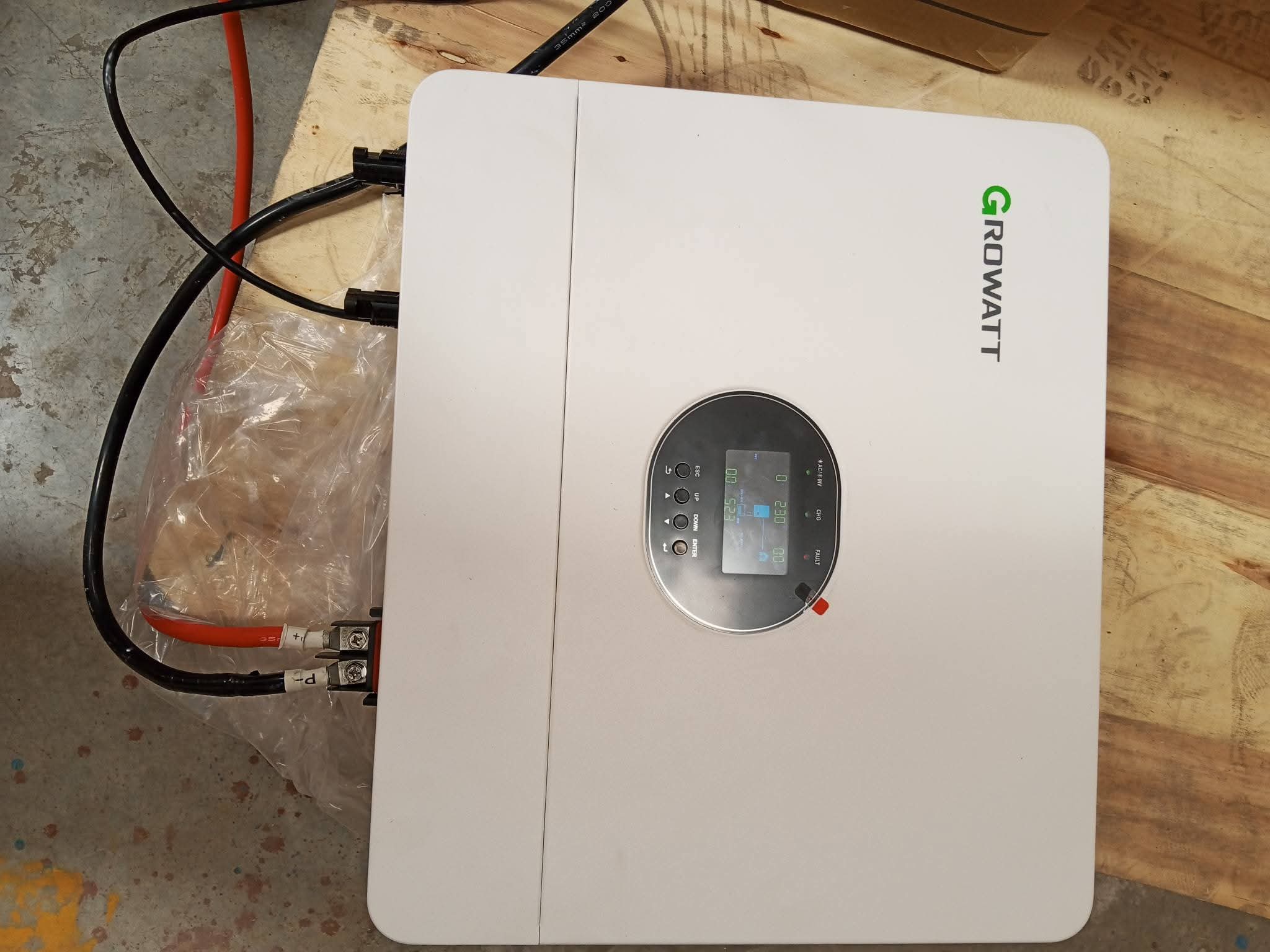
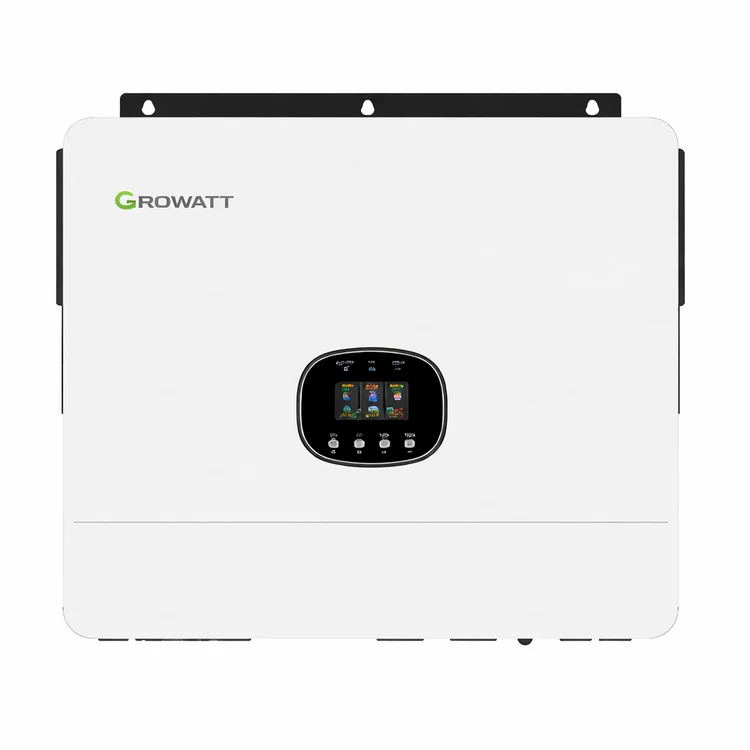
The Growatt SPE 12000 ES delivers 12kW from a single phase, which is twice what most Kenyan homes ever draw at once and enough to run a small commercial premises without compromise. It carries two MPP trackers, accepts 15kW of solar, reaches 96.5% efficiency, and parallels to nine units for 108kW.
None of that is the thing that will shape your installation. The figure that does is quieter and sits further down the datasheet: 250A charging and 280A discharging.
Twelve kilowatts drawn from a 48V battery means roughly 250A flowing, rising toward 280A as the battery voltage falls through the evening. Most lithium batteries sold in Kenya are rated for 100A continuous discharge. One of them cannot feed this inverter at anything like its rated output, and buyers who pair a 12kW inverter with a single battery discover that the battery’s own protection shuts the system down long before the inverter is troubled. The inverter is not the expensive part of this decision.
This review works through that properly, along with the dual input and dual output arrangement that is the SPE’s real advantage, how to string panels to it, and where it falls short.
The battery sizing, with the arithmetic shown
Start from the current. Power divided by voltage gives amps, and a 48V nominal bank sits lower than its name through most of a discharge.
| At full 12kW output | Battery voltage | Current drawn |
|---|---|---|
| Battery full, resting high | 51.2V | Around 234A |
| Battery at nominal | 48V | Around 250A |
| Battery low, approaching cut-off | 44V | Around 273A |
Growatt’s own 280A discharge rating lines up exactly with that bottom row, which tells you the figure was derived the same way. Now compare it against what batteries actually deliver.
| Battery | Typical continuous discharge | Units needed for 280A | Resulting bank |
|---|---|---|---|
| 51.2V 100Ah, 5.12kWh | Around 100A | Three in parallel | Around 15.4kWh |
| 51.2V 314Ah, 16kWh | Around 150A | Two in parallel | Around 32kWh |
| 51.2V 314Ah, higher rated | Around 200A | Two in parallel | Around 32kWh |
Two consequences follow, and both are worth knowing before anyone quotes you.
The minimum viable bank is large. Three 5kWh batteries or two 16kWh batteries, not because you need that much stored energy, but because you need that much current. On this inverter, capacity arrives as a side effect of buying enough discharge rating.
Check the discharge spec, not just the capacity. Two batteries of identical kWh can differ substantially in continuous discharge current, and that figure is what matters here. It appears on the datasheet, usually as a continuous current rating in amps, and it is the number to ask any supplier for.
If 12kW of simultaneous draw is not genuinely required, a smaller inverter paired with the same battery money usually produces a better system. Bicity Solar will say so rather than sell up.
Two AC inputs and two AC outputs, which is the real feature
Most inverters at this size give you one AC input and one AC output. The SPE 12000 ES gives two of each, and both pairs do something useful.
Two AC inputs with an integrated transfer switch. Grid on one, generator on the other, both wired permanently, with the inverter choosing between them. On a site that keeps a generator for the long rains, this removes the manual changeover switch and the person who has to go and operate it. It also means the generator can charge the battery directly while running, rather than only serving loads.
Two AC outputs for load separation. This is the one installers underuse. Essential loads go on one output, everything else on the other. When the battery falls to a set threshold, the inverter drops the non-essential output and keeps the essential one running. In practice that means the water heater, the pool pump and the air conditioning stop, while the lights, the fridge, the router and the security system carry on for several more hours.
Specifying that split properly at installation is the difference between a system that runs out at two in the morning and one that still has the fridge cold at dawn. It costs nothing extra in hardware and it is decided entirely by how the distribution board is wired.
What “hybrid” means on this unit, and what it does not
Growatt describes the SPE as a hybrid with a grid-tied function for peak shaving. Both halves of that need unpacking, because the word hybrid is used loosely across the Kenyan market.
What it certainly does: runs from solar, stores in a battery, draws from grid or generator when needed, switches between all of them automatically, and works with or without a battery connected. Peak shaving means it can reduce the amount drawn from the grid at times of high demand by covering the peak from solar and battery, which is useful anywhere a tariff or a supply limit penalises high draw.
What we are not claiming: full export or net metering. Peak shaving reduces what you take from the grid. It is not the same as selling surplus back, and the sources available to us describe the former rather than the latter. If exporting to the grid is specifically part of your plan, confirm that capability with the supplier before ordering rather than assuming the word hybrid covers it.
For most Kenyan installations this distinction is academic, since the value sits in self-consumption and outage cover rather than export. It matters only if you have a specific export arrangement in view.
96.5% efficiency, and why that number is worth paying for
Conversion efficiency is the share of your solar energy that survives the trip from panel to socket. The SPE 12000 ES reaches 96.5% at peak.
For comparison, the off-grid SPF series in the same brand peaks at 93%. On a 12kW array that difference, three and a half percent, is roughly 420W at full production. Across a year it is a meaningful quantity of electricity that simply never becomes heat inside the inverter.
Efficiency is also one of the few specifications where the number is directly comparable between brands, since everyone measures it the same way. It is worth checking on any inverter quote, and worth being suspicious of when it is absent.
Stringing the panels
Four limits govern the array: an MPPT window of 60V to 480V, a 550V absolute DC ceiling, 27A per tracker with one string each, and 15000W total.
The wide window is generous and the 120V start voltage means the inverter begins working early in the morning. The constraint that bites is the 550V ceiling, because panel voltage climbs as temperature drops and a string sits at its highest in the first clear minutes after a cold dawn.
| Panels in series | Operating voltage | Open circuit at standard test | Likely on a cold dawn | Two strings total | Verdict |
|---|---|---|---|---|---|
| 8 x 620W | Around 336V | Around 400V | Around 440V | 9,920W | Safe, leaves capacity unused |
| 9 x 620W | Around 378V | Around 450V | Around 495V | 11,160W | Good balance of headroom and yield |
| 10 x 620W | Around 420V | Around 500V | Around 550V | 12,400W | At the ceiling, only with verified panel figures |
| 11 x 620W | Around 462V | Around 550V | Around 605V | 13,640W | Exceeds the limit when cold |
Nine panels per string, eighteen in total, is the configuration we would specify for most installations. It reaches 11.2kW against the 15kW ceiling with real voltage margin, and current per string sits near 15A against a 27A tracker limit, so there is no current concern at all.
Ten per string is available if the panels’ actual open circuit voltage and temperature coefficient are checked on their own datasheet rather than assumed. Eleven is not, because a cold highland dawn will take it past 550V and that is the limit that destroys equipment rather than merely disappointing it.
Where it falls short
The battery bank is the expensive part. Covered above, and worth repeating because it is routinely underestimated. Budget for the battery before falling in love with the inverter.
Single phase only. Twelve kilowatts on one phase is a lot of current, 52.2A at the output, which has implications for the main breaker and the incoming supply. A property already on three phase is usually better served by a three phase inverter.
IP20, indoors only. No water protection whatsoever. It needs an equipment room or a sheltered utility space, and at 21.5kg it needs a solid wall.
One string per tracker. With two trackers that caps the array at two strings. The 15kW ceiling is generous but it can only be reached through longer strings rather than more of them, and string length is bounded by the 550V limit.
Export is not confirmed. Peak shaving is documented, full export is not. Ask before ordering if that matters.
Rated altitude is below 2000m. Thinner air carries heat away less effectively, and this unit is fan cooled, so the derating matters. Nairobi, Nakuru, Kisumu and Mombasa are all comfortably inside it. Eldoret, Kericho, Limuru, Nyahururu and Molo are not. On a highland site, raise this with the supplier before committing rather than discovering it in a warranty conversation later.
Published warranty figures disagree. One source states five years, another two years on parts with five years of service. Bicity Solar confirms the applicable warranty in writing at the point of sale rather than repeating a figure from someone else’s listing.
Source figures for size and weight vary. Most give 550 x 465 x 150mm at 21.5kg, which is what we publish. One gives considerably larger figures that appear to describe the shipping carton. We measure stock on arrival.
Where it is the right choice
- Large homes with heavy simultaneous load. Several air conditioners, electric water heating, cooking and a borehole, all potentially running at once.
- Guest houses and small hospitality. Where guest comfort cannot be rationed and the load profile is unpredictable.
- Clinics and small institutions. Dual outputs let critical circuits run far longer than the rest when the battery gets low.
- Workshops and light industrial. Motor loads, welding and machinery on a single phase supply.
- Sites running a generator. Two AC inputs mean grid and generator both wire in permanently with automatic selection.
- Installations expected to grow. Nine units in parallel reaches 108kW, so a property can start at 12kW and scale a long way.
- Properties with a demand charge or supply limit. Peak shaving directly reduces what is drawn at the worst moments.
Full specifications
| Specification | Value |
|---|---|
| Brand | Growatt, Shenzhen Growatt New Energy Technology |
| Model | SPE 12000 ES, part of the SPE 8000 to 12000 ES series |
| Type | Single phase hybrid, high frequency |
| AC nominal power | 12000W |
| Maximum apparent power | 12000VA |
| Nominal AC voltage | 230V |
| Output current | 52.2A |
| Grid frequency | 50Hz or 60Hz |
| Output waveform | Pure sine wave |
| Total harmonic distortion | Under 5% |
| Adjustable power factor | 0.8 lagging to 0.8 leading |
| Peak efficiency | 96.5% |
| European efficiency | 95.5% |
| Maximum recommended PV power | 15000W |
| Maximum DC voltage | 550V |
| Start voltage | 120V |
| MPP voltage range | 60V to 480V |
| MPP trackers | 2 |
| Strings per tracker | 1 |
| Maximum input current per tracker | 27A |
| Maximum short circuit current per tracker | 34A |
| Battery nominal voltage | 48V |
| Battery types | Lithium or lead acid |
| Maximum charging current | 250A |
| Maximum discharging current | 280A |
| Recommended battery capacity, single unit | 400Ah |
| Recommended battery capacity, two units in parallel | 800Ah |
| AC inputs | 2, with integrated transfer switch |
| AC outputs | 2, for smart load management |
| Grid function | Peak shaving |
| Operation without battery | Supported |
| Transfer time | Under 20ms single unit, under 30ms in parallel |
| Parallel capability | Up to 9 units, 108kW, battery required |
| Communication | WiFi standard, 4G optional, ShineServer monitoring |
| Cooling | DC fan |
| Maximum altitude | Below 2000m |
| Certification | CE, NRS097 |
| Protection degree | IP20, indoor use only |
| Dimensions | 550 x 465 x 150mm |
| Net weight | 21.5kg |
Installation notes
Size the battery cable for 280A, not for 12kW. This is the single most common sizing error on inverters of this class. At that current, 95mm squared conductors and a correspondingly rated DC breaker are the starting point, with the run kept as short as physically possible. Undersized battery cable on a 12kW inverter is a fire risk, not an efficiency question.
Decide the dual output split before wiring the board. Essential circuits on one output, discretionary on the other. Retrofitting this later means reworking the distribution board.
Connect the BMS. With lithium batteries, letting the inverter read the battery management system directly gives it true state of charge rather than a voltage estimate, which matters far more at 280A than at low currents.
Check panel figures before finalising string length. The 550V ceiling is absolute and the difference between nine and ten panels per string depends on your specific panels’ open circuit voltage and temperature coefficient.
Mount indoors with clearance. IP20, 21.5kg, and a unit that sheds real heat at full output.
Wire both AC inputs if a generator exists. Leaving the second input unused wastes the feature most likely to matter during a long outage.
Before specifying a 12kW inverter, the question worth answering is whether you need 12kW at once, or simply a lot of energy across a day. They call for very different systems.
Send us the largest realistic combination of loads running together, and we will tell you whether this is the right size, what battery bank the discharge current actually demands, and how to split the dual outputs for your building. To work the whole property through from scratch, start with the Solar Calculator. For this inverter with a matched battery bank and array, send your requirements through My Quote.