Description
Growatt SPF 6000 ES Plus: A 6kW Off-Grid Inverter Judged on What It Actually Does
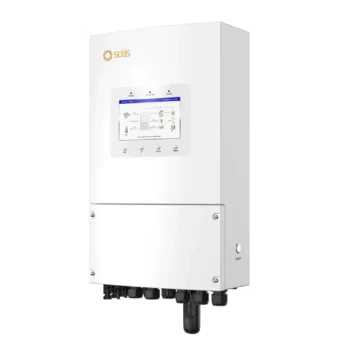
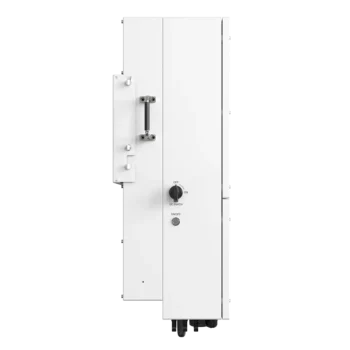
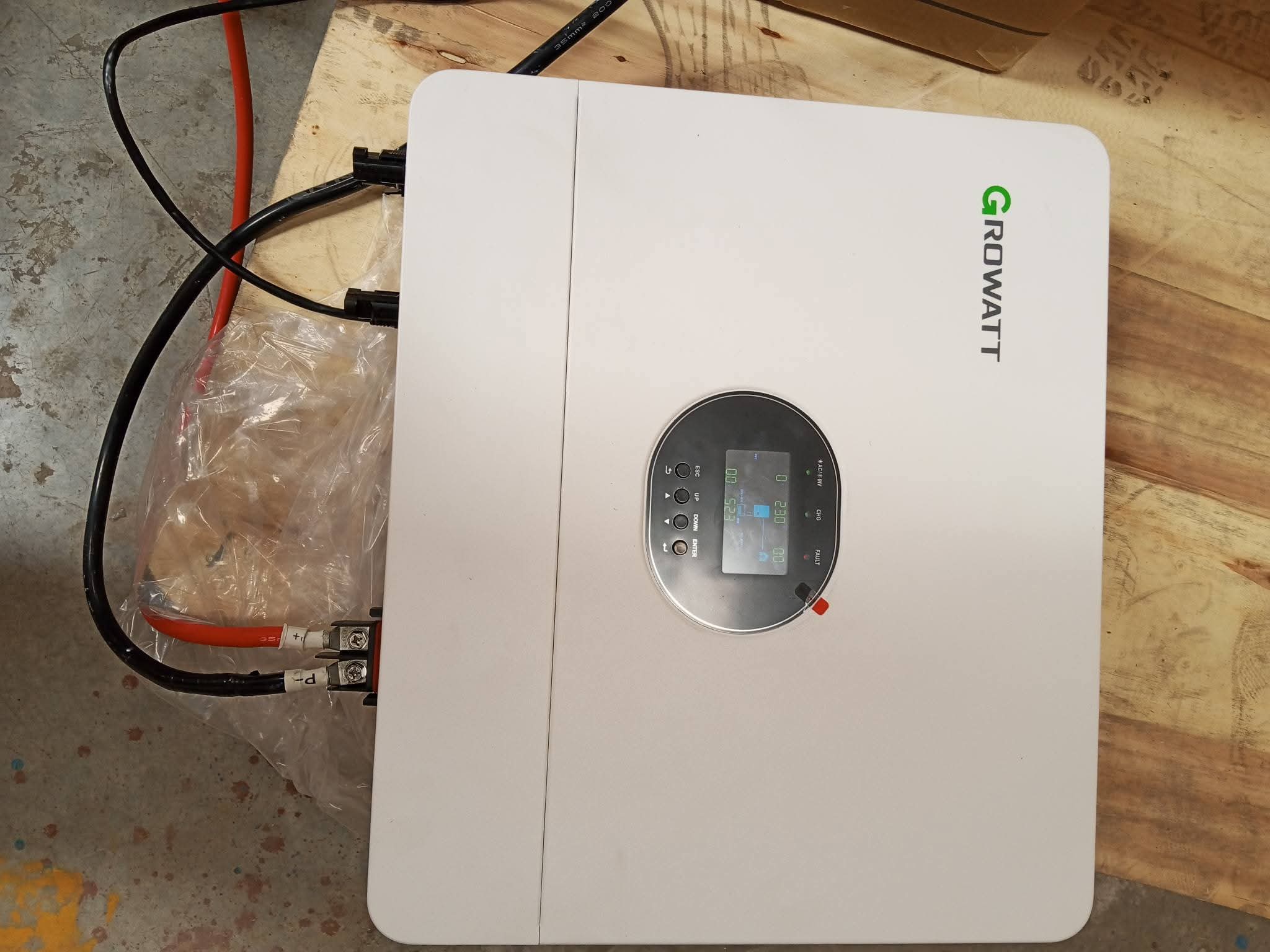
The Growatt SPF 6000 ES Plus is a 6kW single phase off-grid inverter built around a 48V battery, with two MPP trackers, an 8000W solar input ceiling and the ability to run six units in parallel. On paper it reads like a straightforward step up from the 5000 ES that most Kenyan installers already know. In practice there are four things about it that decide whether it suits a given site, and only one of them appears in the headline figures.
This review covers all four, along with how to string panels to it correctly, what it will and will not run, and where it falls short. Bicity Solar Energy Suppliers publishes the limitations of everything it sells, because a buyer who understands the ceiling before purchase stays satisfied afterwards.
First, clear up what “off-grid” means on this unit
This is the single most common confusion around the SPF series, and listings in the Kenyan market make it worse by labelling these inverters as hybrid, off-grid, or both at once.
The SPF 6000 ES Plus is an off-grid inverter in the strict sense: it never exports power to the grid. There is no feed-in, no net metering, no selling back. Whatever your panels produce is used in the building or stored in the battery, and nothing leaves the property.
What confuses people is that it does accept a grid connection. There is an AC input, an internal transfer switch, a mains battery charger, and a setting that lets you choose whether solar or grid takes priority. So in daily use it behaves much like a hybrid: solar runs the house, the battery covers the evening, and the grid steps in when both are exhausted. The difference is purely that surplus is never exported.
For Kenyan buyers that distinction is less of a loss than it sounds. Export arrangements are not something most residential customers here are set up to benefit from, so an inverter that simply uses everything it makes is well matched to the market. But it does mean that if your plan involves selling power back, this is the wrong product and a grid-tied or true hybrid inverter is what you need.
The four things that actually decide suitability
One, the 48V battery architecture. This is a low voltage inverter. It works with 48V nominal battery banks, which in practice means the 51.2V lithium iron phosphate batteries that dominate the Kenyan market, or traditional lead acid banks of four 12V units in series. It will not work with high voltage stacked battery systems. If you already own batteries, this is the first compatibility check to make.
Two, the 8000W solar ceiling against 6000W of output. That ratio, around 1.33 to 1, is deliberate oversizing and it is a genuine strength. An array larger than the inverter’s output rating spends more of the day at full production, particularly in the early morning and late afternoon, and on overcast days. The inverter simply limits output when the array would exceed it.
Three, two MPP trackers but one string each. Two trackers lets you run panels on two different roof faces, east and west for instance, and have each tracked independently so the shaded or weaker face does not drag the other down. The constraint is one string per tracker, capped at 16A. That shapes the array design and is covered in detail below.
Four, 93% peak efficiency. This is the figure worth being honest about. 93% is the peak, reached under ideal conditions, and high frequency transformerless designs in this class commonly quote higher. It means roughly 7% of your solar energy is lost in conversion at best, and more at partial load. Against the price position this inverter occupies that is a reasonable trade, but it should be a known trade rather than a surprise.
What 6kW continuous and 12kVA surge actually runs
| Load | Typical draw | On this inverter |
|---|---|---|
| Whole house lighting, LED | 30W to 80W | Yes |
| Fridge and chest freezer together | 200W to 400W running | Yes, surge well covered |
| Television, router, computers | 150W to 400W | Yes |
| Electric kettle | 1500W to 2200W | Yes |
| Clothes iron | 1000W to 2000W | Yes |
| Microwave | 800W to 1500W | Yes |
| Washing machine with heating | 300W to 2000W | Yes |
| Borehole pump, 1hp | 750W running, 3000W starting | Yes, this is what the surge is for |
| Borehole pump, 2hp | 1500W running, 6000W starting | Yes, within the 12kVA surge |
| Air conditioner, 1.5hp | 1100W running | Yes |
| Welding machine, small inverter type | 3000W to 5000W | Usually yes, check duty cycle |
| Instant shower | 3000W to 5500W | Yes alone, not alongside other heavy loads |
| Electric cooker with oven | 3000W to 8000W | Smaller models only |
| Several heating appliances at once | Above 6000W combined | No, this is the real ceiling |
The honest summary: at 6kW this inverter will run a Kenyan household completely, including cooking and water heating, provided those loads are not all running simultaneously. The 12kVA surge is generous and comfortably handles borehole pumps, which is the capability that matters most on farms and rural properties.
How to string panels to it, with the arithmetic shown
Four limits govern the array, and installers routinely satisfy three and miss the fourth.
- MPPT operating window: 120V to 450V. Below 120V the tracker will not work.
- Maximum open circuit voltage: 500V. Never to be exceeded, including on a cold morning when panel voltage peaks.
- Maximum current per tracker: 16A, with one string per tracker.
- Total array power: 8000W across both trackers combined.
That last limit is the one that bites, because the voltage window alone would allow far more panels than the power ceiling permits.
| Panel | Per string | Operating voltage | Open circuit | Both strings | Verdict |
|---|---|---|---|---|---|
| 620W | 5 panels | Around 210V | Around 250V | 6,200W | Comfortable |
| 620W | 6 panels | Around 252V | Around 300V | 7,440W | Best fit, near the ceiling with margin |
| 620W | 7 panels | Around 294V | Around 350V | 8,680W | Voltage fine, exceeds the 8000W limit |
| 550W | 7 panels | Around 294V | Around 343V | 7,700W | Best fit for this panel size |
| 450W | 8 panels | Around 328V | Around 392V | 7,200W | Comfortable |
| 450W | 9 panels | Around 369V | Around 441V | 8,100W | Marginally over the power limit |
Two practical notes. Solar panels produce more voltage when they are cold, which means the riskiest moment for the 500V ceiling is not midday but the first clear minutes after dawn in the highlands, when the glass is still chilled and the sun has just reached it. Design for that moment and the limit is never approached. Second, because each tracker accepts a single string capped at 16A, panels in the 450W to 620W class draw somewhere between 11A and 15A each, which fits comfortably, but it does rule out doubling up a second string on the same tracker to push more current through.
Twelve panels at 620W, split six and six across the two trackers, is the configuration we would specify for most installations. It reaches 7,440W against the 8000W ceiling, leaves voltage headroom at both ends, and gives two independently tracked roof faces.
Charging, and a limit worth understanding
The inverter charges the battery from two sources: up to 100A from solar, and up to 80A from the AC input. On a 48V bank those work out to roughly 4.8kW and 3.8kW respectively.
The AC input range is selectable and the choice matters in Kenya. The wider setting, 90V to 280V, is intended for general appliances and keeps the inverter accepting mains through the voltage sags common at the end of long distribution feeders during evening peak. The narrower setting, 170V to 280V, is intended where sensitive equipment is connected and you would rather the inverter reject poor quality supply than pass it through. For most Kenyan homes and small businesses the wider setting is the right choice, because supply here droops often enough that the narrow window would leave the inverter idle at exactly the hours you want it charging.
It also accepts a generator on the AC input, which matters for off-grid sites that keep one for the long rains. Transfer between sources takes 10ms typically and 20ms at worst, fast enough that lighting and most appliances never notice. Desktop computers without their own UPS may occasionally blink at the upper end of that range.
Where it falls short
IP20 means indoors. Protected against solid objects larger than 12mm and against water not at all. It belongs in an equipment room, a utility cupboard or a sheltered store, never on an exposed wall. This catches people out on farms, where the obvious mounting point is often a pump house wall with weather blowing onto it.
93% peak efficiency is modest. Stated plainly above, and worth repeating because it compounds. On a 7,440W array, roughly 500W is lost in conversion at peak, and the figure worsens at partial load.
Rated altitude is below 2000m. Thinner air carries heat away less effectively, so manufacturers derate electronics above a stated height. That covers Nairobi, Nakuru, Kisumu, Mombasa and most of the country, but Eldoret, Kericho, Limuru, Nyahururu and Molo all sit above it. Installing there does not fail on day one, but it runs the unit hotter than designed and is worth raising with the supplier before committing on a highland site.
No export, as covered above. If selling surplus is part of the plan, this is the wrong inverter.
One string per tracker. A minor constraint, but it means array expansion is capped by panel count per string rather than by adding strings, so plan the final array size at the outset.
Published warranty figures disagree. Across the distributor listings we checked, the stated warranty for this model ranges from one year to ten. That spread is too wide to publish as fact, so Bicity Solar confirms the applicable warranty in writing at the point of sale rather than quoting a figure from someone else’s page.
Where it is the right choice
- Off-grid homes and farms. Its core purpose. Solar and battery with a generator on the AC input as a long rains fallback.
- Borehole and irrigation pumping. The 12kVA surge starts single and two horsepower pumps without strain, which is the usual failure point on undersized inverters.
- Rural businesses and institutions. Schools, dispensaries, lodges and workshops where the grid is distant, unreliable or absent entirely.
- Grid properties wanting genuine independence. Where outages are frequent and the aim is to stop noticing them rather than to sell power back.
- Installations that will grow. Six units in parallel reaches 36kW, so a property can start at 6kW and scale without replacing the first inverter.
- Sites with split roof orientation. Two independent trackers make east and west faces work properly rather than averaging them.
Where to look at something else
If you intend to export surplus to the grid, you need a grid-tied or true hybrid inverter. If your battery system is high voltage rather than 48V, this is incompatible at an architectural level. If the property needs three phase, this is single phase only. And if total load regularly exceeds 6kW at once, either plan for two units in parallel from the start or move up the range.
Full specifications
| Specification | Value |
|---|---|
| Brand | Growatt, Shenzhen Growatt New Energy Technology |
| Model | SPF 6000 ES Plus |
| Inverter type | Off-grid, high frequency, transformerless |
| Phase | Single phase |
| Rated power | 6000VA / 6000W |
| Surge power | 12000VA |
| Output waveform | Pure sine wave |
| AC output voltage | 230VAC plus or minus 5% |
| Output frequency | 50Hz or 60Hz |
| Peak efficiency | 93% |
| Transfer time | 10ms typical, 20ms maximum |
| Battery voltage | 48VDC |
| Battery types | Lithium or lead acid |
| Maximum PV array power | 8000W |
| MPPT operating range | 120VDC to 450VDC |
| Maximum PV open circuit voltage | 500VDC |
| MPP trackers | 2, one string per tracker |
| Maximum input current per tracker | 16A |
| Maximum solar charge current | 100A |
| AC charge current | 80A |
| AC input voltage | 230VAC |
| Selectable AC input range | 170V to 280V for sensitive equipment, 90V to 280V for general appliances |
| AC input frequency | 50Hz or 60Hz, auto sensing |
| Parallel capability | Up to 6 units |
| Communication | WiFi or GPRS module, RS485, CAN, BMS port, USB, dry contact |
| Input priority | Configurable, solar or grid first |
| Equalisation charging | Supported, for lead acid banks |
| Protection degree | IP20, indoor use only |
| Dimensions (W x H x D) | 460 x 395 x 132mm |
| Net weight | 13.5kg |
| Operating temperature | 0C to 55C |
| Storage temperature | -15C to 60C |
| Humidity | 5% to 95%, non condensing |
| Maximum altitude | Below 2000m |
Installation notes
Mount it indoors, with clearance. IP20 and a high frequency design that sheds heat both point the same way. Allow space above and below for air movement and keep it off the floor.
Size the battery cable to the full current. At 6kW output a 48V bank delivers around 130A, rising as the battery discharges. That calls for 35mm squared cable and a DC breaker rated accordingly, not the cable left over from a smaller system.
Set the AC input range deliberately. The wide setting for general use, the narrow one only where sensitive equipment justifies rejecting poor supply.
Use the BMS port with lithium batteries. Connecting the battery management system lets the inverter read actual state of charge rather than inferring it from voltage, which materially improves charging behaviour and battery life.
Check the array against a cold dawn, not a warm afternoon. The 500V open circuit figure is a hard ceiling, and chilled panels push closer to it than warm ones ever do.
Set input priority to match the site. Solar priority for off-grid independence, grid priority where mains is reliable and the battery is there purely for outages.
Working out whether 6kW is the right size, or how many panels your roof can actually feed into this inverter?
Tell us what needs running, whether a borehole pump is involved, and which panels you are considering, and we will confirm the string design against their actual datasheet figures rather than typical values. To size a whole property from scratch, begin with the Solar Calculator. For this inverter, a matched battery and array, or installation anywhere in Kenya, send your requirements through My Quote.