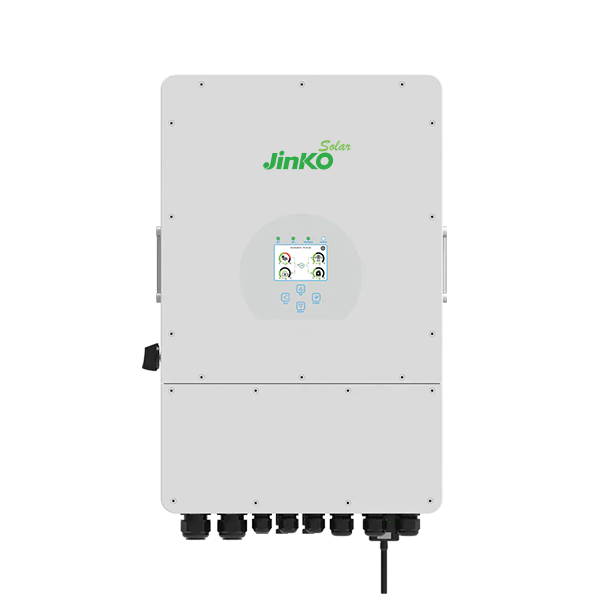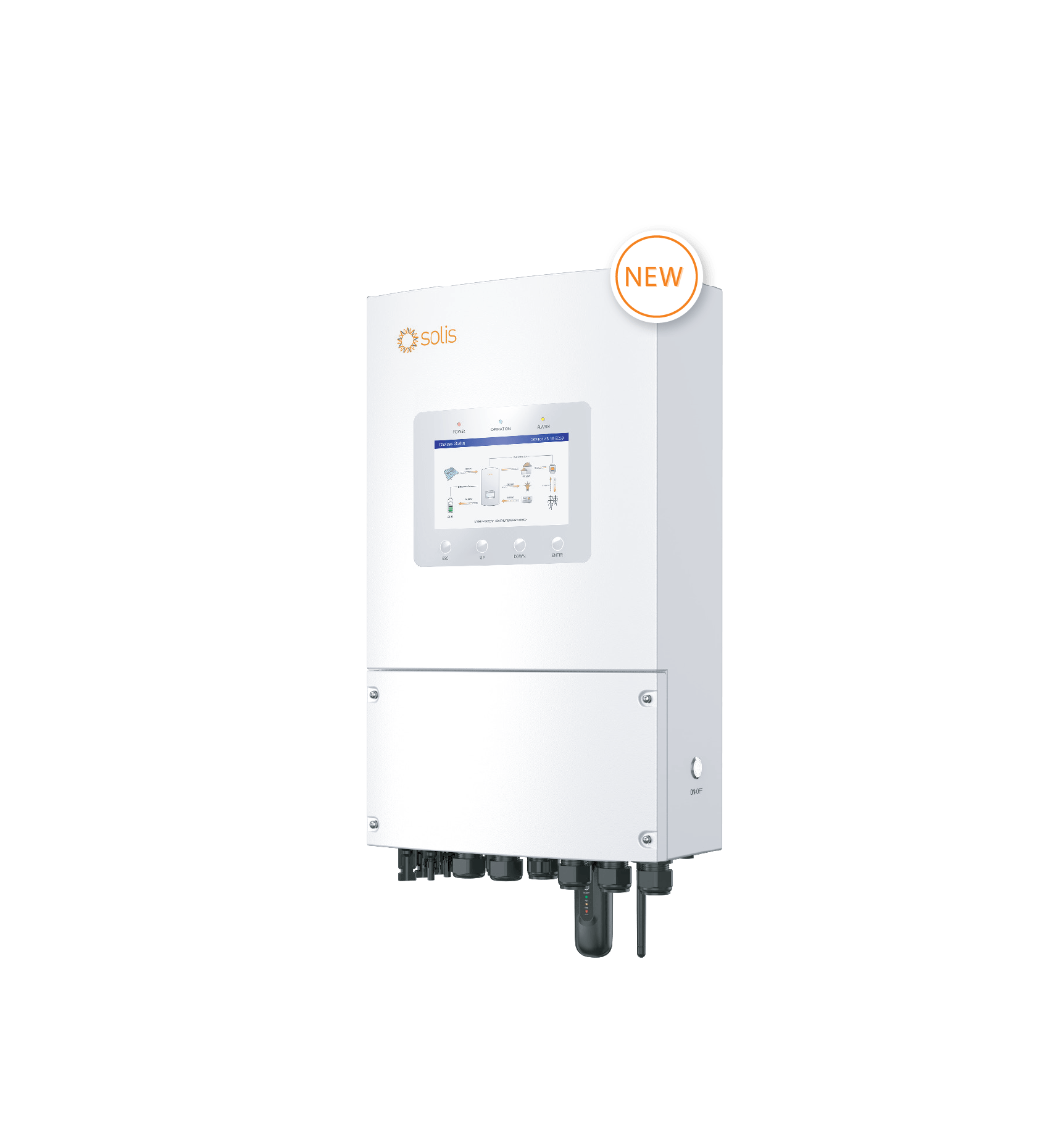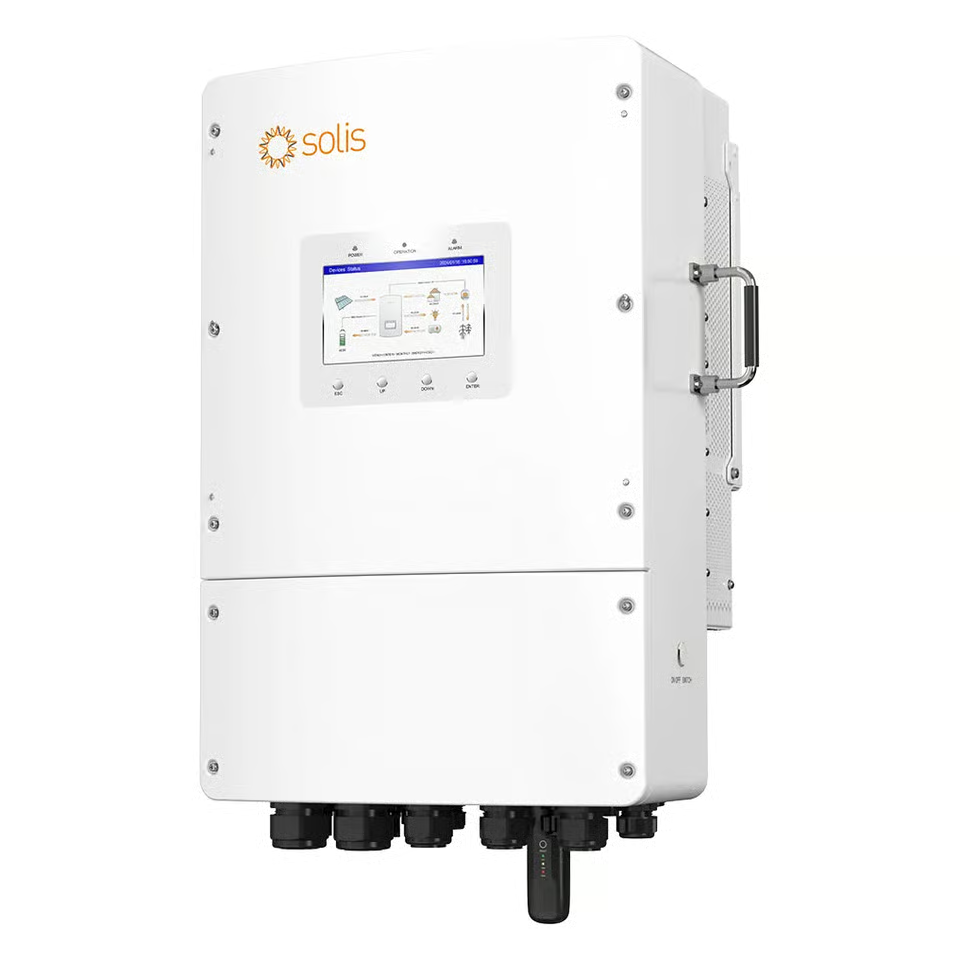
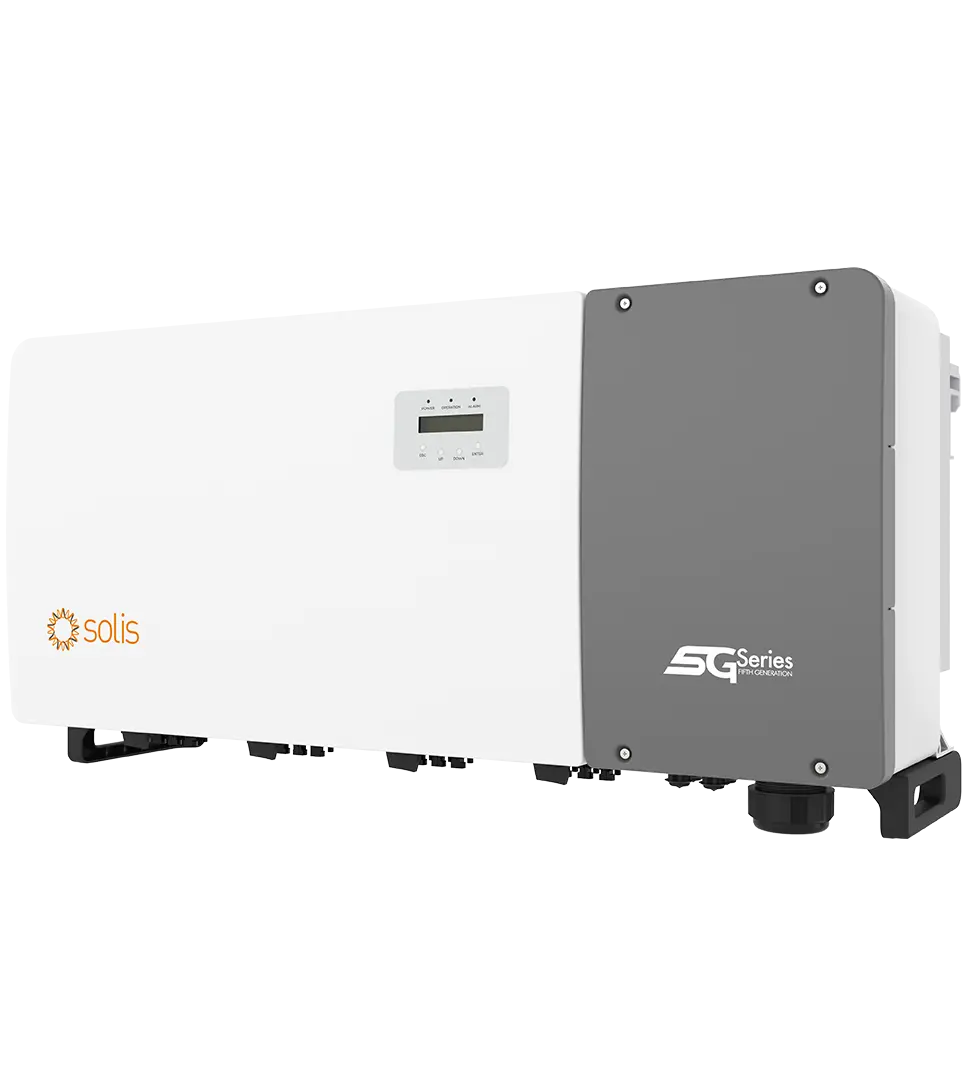
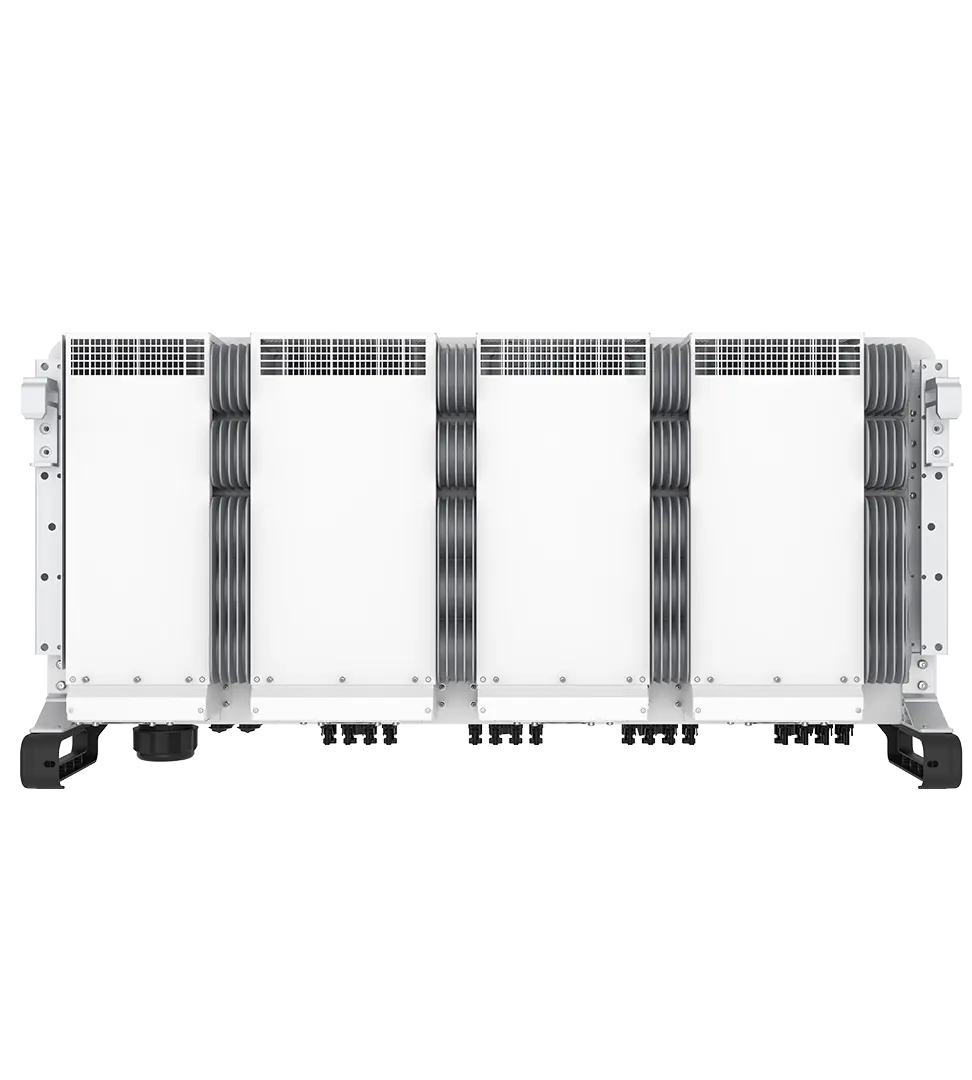
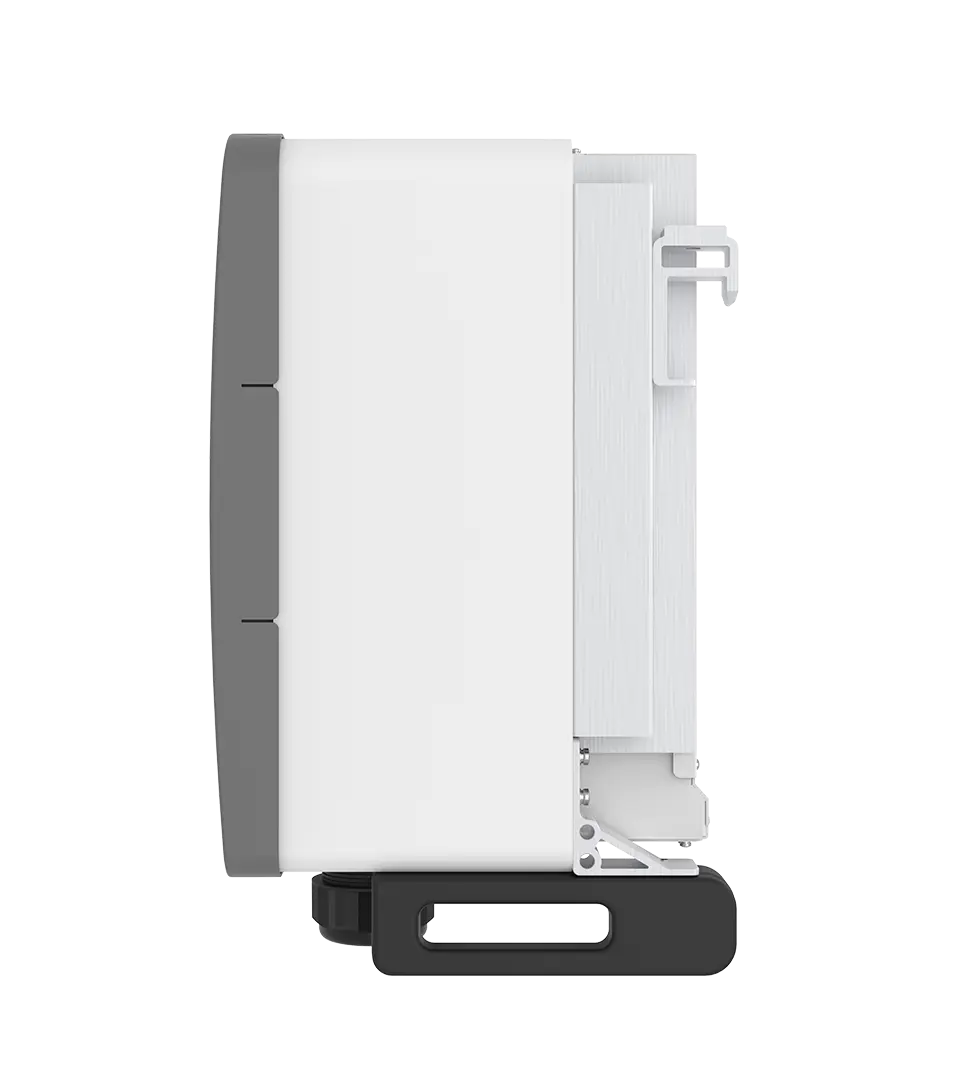
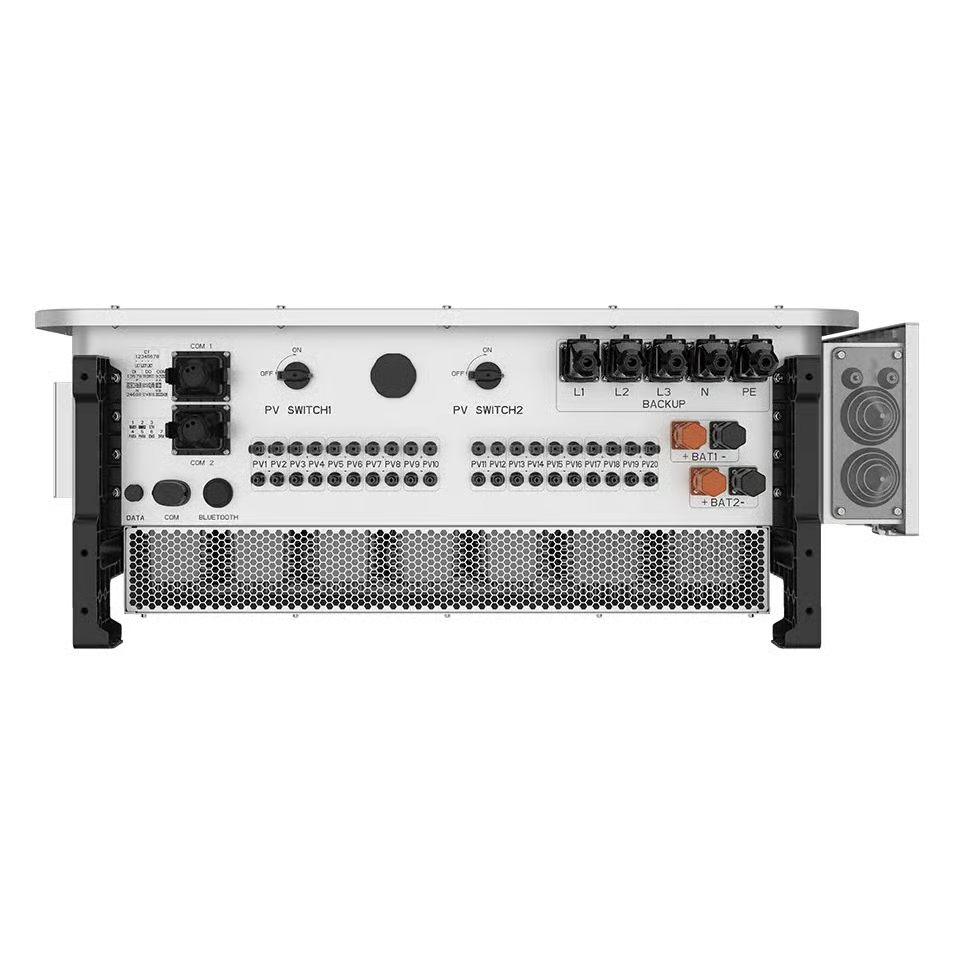
Description
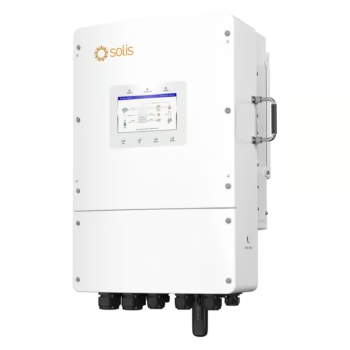
The Solis S6-EH3P80K10-NV-YD-H delivers 80kW across three phases and accepts 160kW of solar array behind it. It is commercial and industrial equipment: factories, processing plants, large institutions, hospitals, hotels, cold stores and irrigation schemes with their own substation.
One figure on its specification sheet looks like a misprint and is not. It is the reason to choose this machine.
The recommended array size and the usable input power are the same number: 160kW. On every smaller hybrid those two figures differ, and the gap between them is energy clipped away at midday. A 32kW array on a 16kW machine converts 25.6kW at most, so the brightest hours get a flat top and the surplus is simply never harvested.
Here nothing is thrown away, because the surplus has somewhere to go. The grid side takes 80kW. The battery takes the rest: at its 600V rated voltage, 200 amperes of charge current absorbs around 120kW. Eighty kilowatts out and a hundred and twenty into storage is 200kW of capability standing behind a 160kW array, so the whole array is usable rather than merely installed. Twice the array against the output, with no clipping.
Three other things set it apart, and one of them is a gap you should know about before ordering.
It tolerates completely uneven phases. Each phase carries up to 26.66kW, which is exactly its even share, and any distribution between the three is permitted. One phase loaded and two idle is an allowed condition rather than a fault. The smaller three phase models cap a single phase at 40% or 50% of rating, so this is a genuine step up in flexibility for a site whose single phase loads refuse to balance.
Ten independent trackers carry twenty strings. On a large industrial roof with north, south, east and west faces, sheds at different pitches and a sawtooth section, ten trackers mean each group works at its own optimum instead of being dragged to a compromise.
No generator port is published for this model. The smaller three phase range has a dedicated generator input with its own rating and automatic start control. This datasheet has no generator section at all. If a generator is part of your plan, that needs settling with the distributor before you commit, and section ten covers it.
Solis 80kW Three Phase Hybrid Inverter Specifications and Array Design
1. System Architecture and Configuration
Three Phase Output
- 80kW rated and 80kVA apparent, on three phases with neutral and earth
- 220V per phase and 380V across, or 230V and 400V
- 121.6 amperes per phase at 380V, 115.5 at 400V
- Up to 26.66kW on any one phase, in any combination across the three
- Uneven phase loading permitted in full, on both grid and backup
- Power factor beyond 0.99, shiftable 0.8 in either direction
- Injected current distortion under 3%, backup waveform under 2%
Solar Charging System
- Ten independent trackers sharing twenty strings
- 42 amperes of input and 60 of fault current on every tracker
- 160kW of array permitted, and 160kW genuinely converted
- Strings allowed to 1000V, nominal 600V, tracked across 150V to 950V
- About 381V needed before the full conversion figure is reachable
- Production beginning from 180V
- An isolating switch for the DC side housed internally
Battery Integration
- High voltage lithium only, from 300V up to 950V
- 200 amperes of charge current, which is roughly 120kW at the rated voltage
- Discharge delivered as 100 amperes on each of two ports
- Both ports needed to reach the full discharge figure
- Rated output held while the bank sits above roughly 400V
- Pack data arriving over CAN or RS485
- Charge and discharge scheduled against time of use tariffs
Protection and Cooling
- Fan cooling under intelligent control
- Anti islanding, dropping the connection when the supply fails
- Overcurrent on the output and short circuit conditions both covered
- Reverse polarity on the DC side guarded against
- Type II surge protection on the DC side and on the AC side alike
- Arc fault sensing available as an option across twenty strings
- IP66, rated for an exposed position
2. Technical Specifications
| Parameter | Value |
|---|---|
| Rated output power | 80kW |
| Maximum apparent output power | 80kVA |
| Maximum power on one phase | 26.66kW |
| Allowable phase imbalance | 100%, on grid and backup |
| Operation phase | Three phases, neutral and earth |
| Rated output voltage | 220V and 380V, or 230V and 400V |
| Rated frequency | 50Hz or 60Hz |
| Rated output current | 121.6A at 380V, 115.5A at 400V |
| Power factor | Above 0.99, adjustable 0.8 leading to 0.8 lagging |
| Current distortion | Under 3% |
| Maximum AC input current | 250A |
| Backup rated output power | 80kW |
| Backup overload, 1.2 times rating | 96kW for 10 minutes |
| Backup overload, 1.4 times rating | 112kW for 100 seconds |
| Backup overload, 1.6 times rating | 128kW for 10 seconds |
| Backup overload, 2 times rating | 160kW for 200 milliseconds |
| Backup switch time | Under 10ms |
| Backup voltage distortion at linear load | Under 2% |
| Recommended maximum array | 160kW |
| Maximum usable PV input power | 160kW |
| Maximum PV voltage | 1000V |
| Rated PV voltage | 600V |
| Start-up voltage | 180V |
| MPPT voltage range | 150V to 950V |
| Voltage needed for full conversion | Around 381V |
| Maximum input current | 42A on each of ten trackers |
| Maximum short circuit current | 60A on each of ten trackers |
| Trackers and strings | 10 trackers, 20 strings |
| Integrated DC switch | Yes |
| Battery type | Lithium ion only |
| Battery voltage range | 300V to 950V |
| Maximum charge current | 200A |
| Maximum discharge current | 100A on each of two ports |
| Battery ports | 2 |
| Current per battery port | 100A |
| Battery communication | CAN or RS485 |
| Maximum efficiency | 97.6% |
| European weighted efficiency | 97.2% |
| Battery charged and discharged to AC | 97.0% |
| Anti islanding protection | Yes |
| Output overcurrent and short circuit protection | Yes |
| DC reverse polarity protection | Yes |
| Surge protection | Type II on DC and Type II on AC, both fitted |
| Integrated arc fault detection | Optional |
| Protection class and overvoltage category | Class I, category II |
| Protection rating | IP66 |
| Topology | Transformerless |
| Cooling | Intelligent fan cooling |
| Operating temperature | -25C to +60C |
| Maximum altitude | 3000m |
| Dimensions and weight | 1174 x 814 x 400mm, 170kg |
| Solar and battery connection | MC4 plugs on solar, terminal connector on battery |
| Display | 7 inch LCD with Bluetooth and app |
| Communication | CAN, RS485 at 115200, Ethernet, with WiFi, cellular or LAN available |
| Standards | NRS 097-2-1, G99, VDE-AR-N 4105, EN 50549, CEI 0-21, IEC 62116, IEC 61727, IEC and EN 62109, IEC and EN 61000, EN 55011 |
3. Key Features
- An array twice the output rating, with all of it converted rather than clipped
- Ten trackers, enough for a roof broken into many planes
- Any imbalance across the three phases tolerated in full
- A graded overload curve rather than a single surge figure
- High voltage storage, which keeps battery cable and current modest
- Two hundred amperes of charge current, filling a large bank quickly
- Charge and discharge scheduled automatically against tariff periods
- Backup handover under 10 milliseconds with distortion under 2%
- Surge protection to Type II standard on the array side and the mains side alike
- DC isolation integrated, so no external switch is needed
- Capacity expandable by paralleling and by AC coupling
- Compatibility with mainstream lithium and with the manufacturer’s own commercial battery range
- Array and phase loading planned by Bicity Solar before quotation
4. Applications and Use Cases
- Factories and processing plants: machinery load met while the roof earns
- Cold stores and ice plants: compressors carried by the graded overload
- Hospitals and large clinics: handover fast enough that equipment never notices
- Hotels and lodges at scale: laundry, kitchens and pumps carried through the day
- Universities, colleges and large schools: consumption aligned with generation
- Irrigation schemes with their own substation: pumping moved into daylight
- Tea and coffee factories: large roofs and heavy, uneven single phase loads
- Sites with very unbalanced phases: the imbalance tolerance is the reason to pick it
- Premises intending to grow: paralleling and AC coupling both supported
5. Installation and Engineering Notes
This is lifting equipment territory
At 170kg in a body measuring 1174 by 814 by 400mm, this is not a unit two technicians carry up a ladder. It needs mechanical lifting, a mounting arrangement engineered for the load, and access planned before delivery day. Budget for that at design stage rather than discovering it when the crate arrives.
- Confirm the mounting structure is rated for 170kg plus a working factor
- Plan the route in, including door widths and any turns
- Arrange lifting equipment, not additional people
- Leave clearance for airflow and for the cable entries on a body this size
- Keep it away from offices and wards, since cooling is by fan
Why the whole 160kW array is usable
The array allowance and the conversion figure are both 160kW, which is unusual and worth understanding, because it changes how the system should be designed.
| Where the solar goes | Capacity | Condition |
|---|---|---|
| Out through the grid side | 80kW | Always available |
| Into the battery | Around 120kW | At the 600V rated bank voltage, 200A of charge |
| Both together | Around 200kW | Which is why a 160kW array is fully usable |
The practical consequence is that the battery is not an optional extra on this machine, it is what makes the array ratio work. A 160kW array with a small bank behind it will clip at midday exactly as a smaller hybrid would. Size the storage so it can absorb the surplus during the hours the array exceeds 80kW, and the oversizing pays in full.
String design on a 1000V platform
Tracking opens at 150V and production starts from 180V, but moving the full 160kW across 420 amperes of combined tracker capacity needs roughly 381V. Long strings suit this platform, and with ten trackers there is room to vary them by roof face.
| Modules at 620W | Working voltage | Cold dawn, open circuit | Twenty strings | Verdict |
|---|---|---|---|---|
| 10 | Around 420V | Around 550V | 124,000W | Clears the threshold, under the allowance |
| 13 | Around 546V | Around 715V | 161,200W | Lands on the 160kW allowance, the usual choice |
| 15 | Around 630V | Around 825V | 186,000W | Past the array allowance |
| 17 | Around 714V | Around 935V | 210,800W | Near the voltage ceiling and well over the allowance |
| 18 | Around 756V | Around 990V | 223,200W | At the 1000V edge, too close |
Thirteen modules on each of twenty strings reaches about 161kW and sits comfortably inside both the voltage ceiling and the tracking window. Two strings share each tracker, and at roughly 14.8 amperes per 620W module a pair draws about 29.6 amperes against a 42 ampere tracker limit, so there is headroom for higher current modules as they appear.
The battery sets a floor on full output
Producing 80kW from storage calls for 200 amperes, and 200 amperes is the rating. Divide one by the other and the bank has to sit above roughly 400V for the full figure to be available, against a published range reaching down to 300V.
| Bank voltage | Power at 200A | Against the 80kW rating |
|---|---|---|
| 950V, at the top of the range | Around 190kW | Far above the rating, no constraint |
| 600V, rated | Around 120kW | Comfortably above |
| 400V | 80kW | Exactly at the rating |
| 300V, at the bottom | Around 60kW | Short of the rating by a quarter |
Specify the bank so its working range sits above 400V for the periods when full output matters. Note too that discharge is delivered as 100 amperes on each of two ports, so both ports must be wired and working to reach 200 amperes at all.
Circuit sizing
Each device is selected a quarter above its circuit’s continuous current, then taken to the nearest manufactured size. Three phase circuits take four poles. Measured runs, grouping and ambient temperature all move the result, and at this scale the design should be calculated rather than taken from a table.
| Circuit | Design current | Device | Cable, short run |
|---|---|---|---|
| Solar, each string | Around 19A | 25A DC, rated beyond 1000V | 4mm² solar cable |
| Battery, each of two ports | 125A | 160A DC, rated beyond 950V | 35mm² |
| AC output | 152A | 160A, 4 pole | 70mm² |
| Grid input | 313A | 315A, 4 pole | 150mm², or paired runs |
- High voltage storage keeps the battery cable modest, which is one of its advantages at this scale
- DC protection must be rated beyond 1000V on the array and beyond 950V on the battery
- Because the DC switch is internal, no standalone array isolator is required
- A 250 ampere AC input implies a supply and a transformer sized to match
- Twenty strings make arc fault detection worth specifying rather than skipping
- Set to work by licensed engineers, against a design calculated for the site
6. Care, Maintenance and Operations
- Keep the cooling intakes clear, which matters more on a fan cooled machine this size
- Log the fan behaviour, since a change in note is the usual warning of wear
- Check both battery port currents in the monitoring, as a divergence means one path is working harder
- Review the tariff schedule whenever the electricity tariff structure changes
- Track the phase loading as equipment is added, even though imbalance is tolerated
- Wash the array on a planned cycle, because at 160kW soiling is expensive
- Compare generation month on month to catch a failing string among twenty
- Check that the reserve held back for outages still suits the site’s pattern
- Keep a maintenance record, which commercial insurers increasingly ask for
7. Do’s and Don’ts
Do
- Size the battery to absorb the solar surplus, which is what makes the 160kW array work
- Use all ten trackers where the roof has several planes
- Wire both battery ports, since each carries only half the discharge current
- Keep the bank working above 400V where full output matters
- Build strings long enough to clear 381V under load
- Arrange lifting equipment and a structural mount before delivery
- Specify DC protection rated beyond 1000V on the array side
- Read the whole overload curve, not only its headline figure
Don’t
- Install a 160kW array behind a small battery and expect nothing to be clipped
- Plan on lead acid, because this platform takes lithium only
- Assume twice the rating is available for seconds, since that tier lasts 200 milliseconds
- Load the whole bank onto a single port while a second sits idle
- Take a string close to 1000V, since the number that counts is the dawn reading
- Exceed 26.66kW on any single phase, even though imbalance itself is permitted
- Treat it as a wall hung unit, because it weighs 170kg
- Assume a generator can be connected until the distributor confirms it
8. Compatibility
- High voltage lithium banks between 300V and 950V
- Mainstream lithium chemistries, and the manufacturer’s own commercial battery range
- Packs reporting over CAN or RS485
- Arrays to 160kW on twenty strings across ten trackers
- Three phase supplies at 220V and 380V, or 230V and 400V
- Existing solar on site, through AC coupling
- Further units in parallel as the site grows
- Tariff scheduling, and third party aggregation platforms where a market exists for them
- Ethernet, CAN and RS485 as standard, with WiFi, cellular or LAN as options
- Sites anywhere in Kenya, given the 3000m rating
Note that lead acid is not supported on this platform. Every smaller model in the catalogue accepts it; this one does not, and a 300V to 950V lithium bank is a different procurement exercise with a different lead time.
9. Performance Table
The overload curve, which is graded rather than a single figure.
| Overload | Power | Held for | What it covers |
|---|---|---|---|
| 1.2 times | 96kW | 10 minutes | A sustained peak, such as a shift starting up |
| 1.4 times | 112kW | 100 seconds | Several motors brought up in sequence |
| 1.6 times | 128kW | 10 seconds | A large direct on line motor start |
| 2 times | 160kW | 200 milliseconds | The inrush spike at the instant of switching |
These tiers describe off grid operation. The useful reading is the ten minute figure rather than the headline: a machine that holds 96kW for ten minutes handles a real industrial load profile, whereas twice the rating for a fifth of a second only covers the switching instant. Smaller models in the Solis range publish twice the rating for a full ten seconds, so comparing the headline figures alone across the range would mislead in both directions.
10. Where It Sits, and the Generator Question
This is the largest single machine in the Solis hybrid range that Bicity stocks, and it sits on the high voltage battery platform shared with the 30kW and 50kW three phase models rather than the 48V platform used up to 18kW.
| Consideration | Up to 18kW three phase | 30kW and 50kW | This 80kW |
|---|---|---|---|
| Battery platform | 40V to 60V | High voltage | 300V to 950V |
| Lead acid accepted | Yes | No | No |
| Trackers | 2 | Fewer than ten | 10 |
| One phase limit | 40% or 50% of rating | Varies by model | 26.66kW, with any imbalance |
| Array against output | Twice, with clipping | Varies by model | Twice, without clipping |
| Generator port | Published and rated | Published | Not published |
| Altitude | 4000m | Varies by model | 3000m |
| Weight | 42kg | Heavier | 170kg |
The generator gap deserves a straight answer. The smaller three phase range publishes a dedicated generator input with its own power and current ratings, and sells automatic start and stop control as a headline feature. This model’s specification has no generator section, and its feature list does not mention one. We are not going to tell you it supports a generator on the strength of the rest of the range doing so. If a generator is part of your scheme, we raise it with the distributor and get an answer in writing before you order, and if the answer is no, the 50kW is where a generator backed design belongs.
Choose this one where the roof can carry 160kW, where the load genuinely wants 80kW, where the phases will never balance neatly, and where a high voltage lithium bank is within reach.
Choose the 50kW or 30kW where the scale is smaller, where a generator has to be integrated, or where the project needs a model that has been in the field longer.
11. Mini FAQ
Can it really use a 160kW array without clipping?
Yes, provided the battery is sized to absorb the surplus. The grid side takes 80kW and charging takes roughly 120kW at the rated bank voltage.
Does it take lead acid batteries?
No. Lithium only, between 300V and 950V. Every smaller model in the catalogue accepts lead acid; this one does not.
Can I put 80kW on one phase?
No. Each phase carries up to 26.66kW. What is permitted is any imbalance between the three, including loading one and leaving two idle.
Is the overload really 200%?
For 200 milliseconds. Sustained overload is 1.6 times for ten seconds and 1.2 times for ten minutes, which is the more useful figure.
Will it work with a generator?
No generator port is published for this model, unlike the smaller three phase range. We confirm it with the distributor before you order.
Why two battery ports?
Because discharge is 100 amperes on each. Both must be wired to reach the full 200 amperes.
How many people does it take to mount?
None, in the sense that matters. At 170kg it wants lifting equipment and an engineered mounting structure.
What altitude is it rated for?
Three thousand metres, which clears every inhabited place in Kenya. Note the smaller three phase models reach 4000m.
12. Why Buy From Bicity Solar
- Battery sized to absorb the array surplus, which is what the 160kW allowance depends on
- Strings laid out across all ten trackers by roof face, not in one block
- Both battery ports wired, since each carries only half the discharge
- Bank specified to work above 400V where full output is needed
- Phase loading reviewed, even though any imbalance is permitted
- The generator question settled with the distributor in writing before you order
- Lifting and mounting arranged in advance for a 170kg unit
- DC protection specified for a 1000V array and a 950V bank
- Every unit comes with certification bearing the same serial as the chassis
- Installed and signed off under a valid EPRA licence
- Any warranty claim is chased down by us at the distributor
- Delivered countrywide, with parts and technical help thereafter
The 160kW array allowance is the reason to buy this machine, and it only works if the battery is sized to take what the grid side cannot. Get that right and you install twice the array with nothing thrown away. Get it wrong and you have paid for panels that clip every sunny midday.
Send us the roof area and its planes, your three phase supply and transformer rating, your tariff, and how the load sits across the phases. We size the storage against the array surplus, spread twenty strings over ten trackers, check the bank’s working voltage against the 400V floor, and get you a written answer on the generator question before anything is ordered. Model the loads in the Solar Calculator, or hand us the site through My Quote.