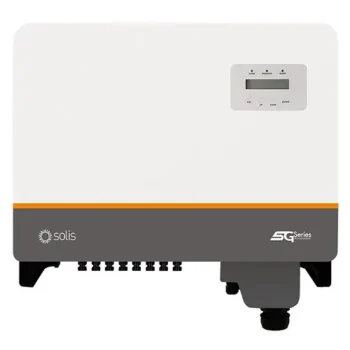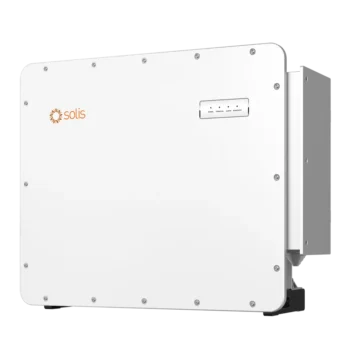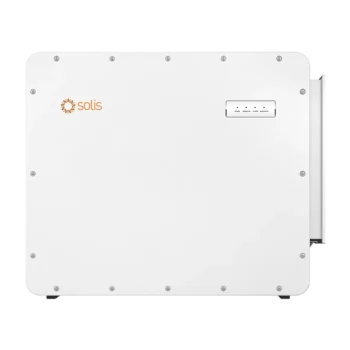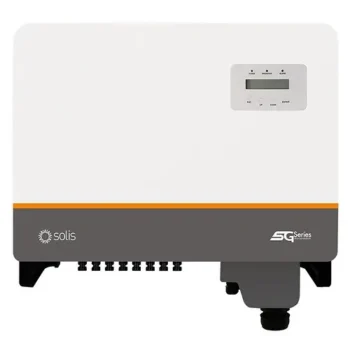
Description
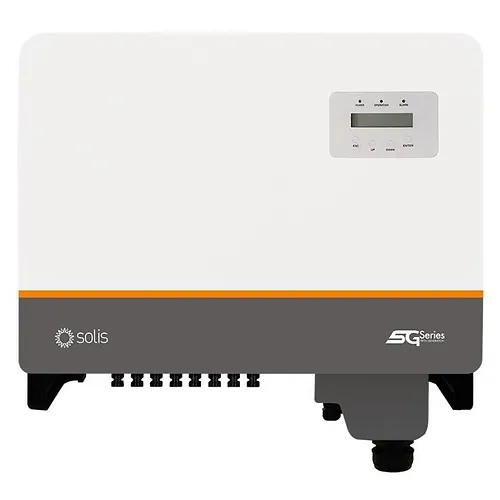
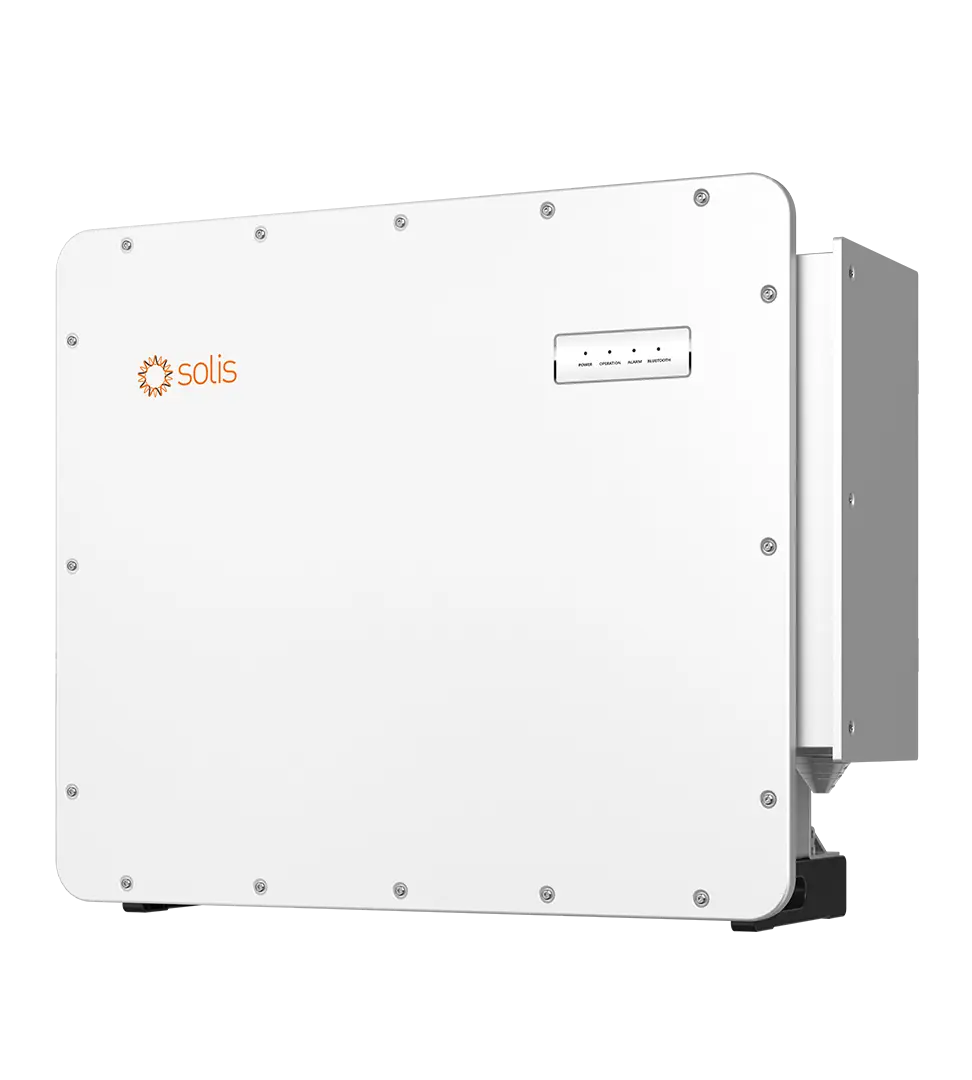
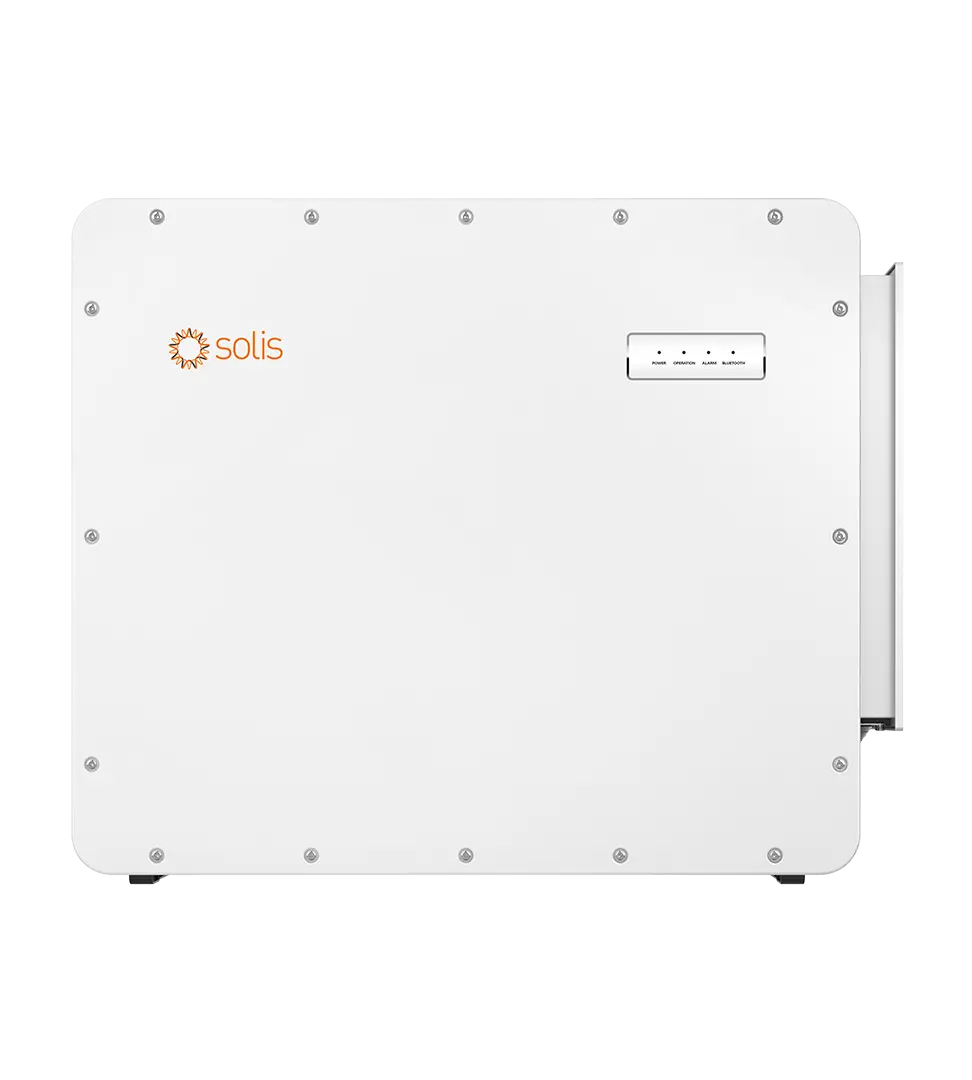
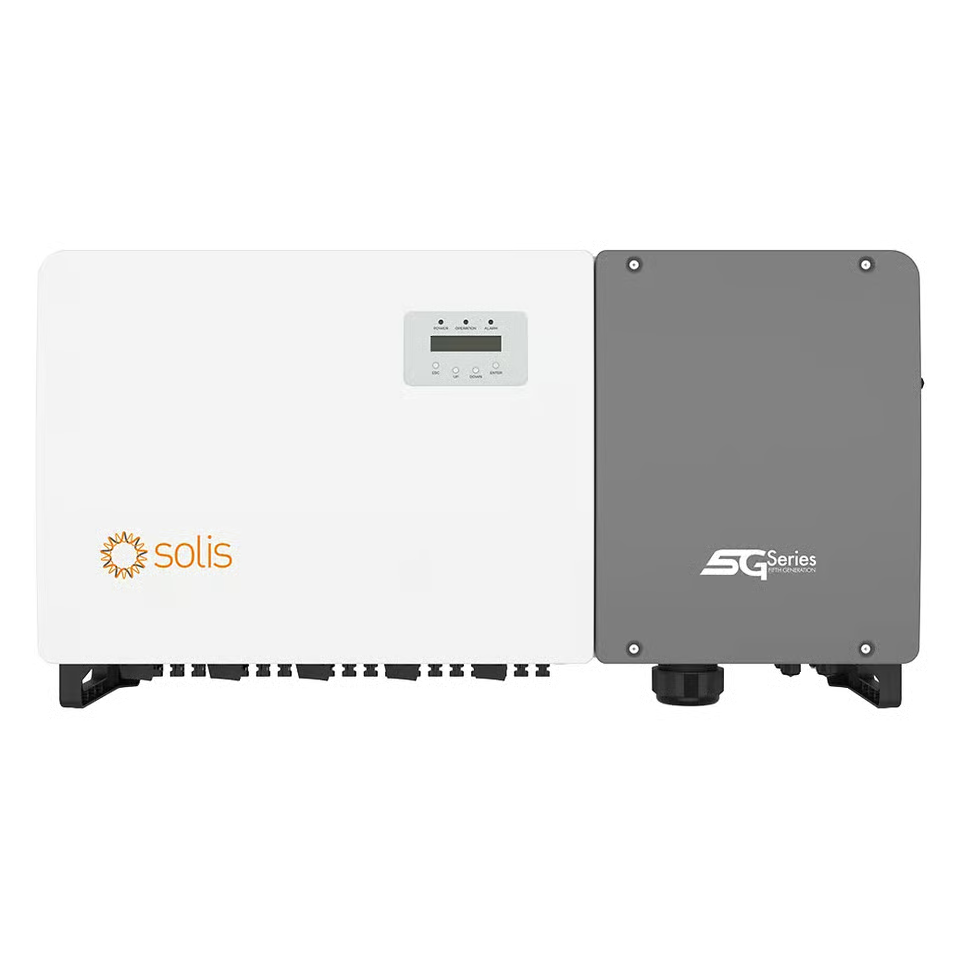
The Solis S5-GC110K-SA converts up to around 165kW of solar array into 110kW of three phase power at 380V or 400V. It is built for commercial and industrial roofs: factories, warehouses, packhouses, campuses, retail parks and processing plants.
It is a grid tied inverter, which means it has no battery and no backup output. That is the first thing to be clear about. It reduces the bill you pay while the sun is up and it does nothing at all during an outage. If riding through power cuts is the reason for the project, this is the wrong machine and the hybrid models are where to look. If the reason is a large daytime electricity bill, this is the more efficient and considerably cheaper way to attack it.
One number on its specification decides the whole design, and it is not the one people check.
Each string is limited to 16 amperes, and that caps which modules you can use. Voltage, which is usually the binding constraint on a large array, has room to spare here: strings reach 1100V and even eighteen large modules in series sits comfortably inside that. Current is the tight one. A 620W module drawing around 14.8 amperes at maximum power leaves barely over an ampere of headroom, and many higher wattage modules draw more than 16 amperes outright.
Module current depends on cell format and internal wiring rather than wattage alone, so some high power panels are low current designs and fit perfectly well. The point is that on this inverter you check the module’s current first and its wattage second. Doing it the other way round produces a specification that has to be redone.
Two other things are worth knowing before comparing it against anything else.
Its DC side carries Type I surge protection as standard. Type I is rated for the partial energy of a direct lightning strike, where Type II handles only the induced surges that arrive down a cable from a strike some distance away. Most inverters in this class, including every hybrid we stock, carry Type II on the DC side. On an exposed roof in a country with Kenya’s lightning incidence, that is a real difference rather than a specification detail.
It converts at 98.7%, the highest figure in anything we sell. That is not clever engineering so much as a structural advantage: there is no battery stage for energy to be lost in. A hybrid of comparable size manages about 97.5%. Over a year on a 165kW array that gap is worth having, and it is one of the reasons a grid tied system beats a hybrid on pure bill reduction per shilling spent.
Solis 110kW Grid Tied Inverter Specifications and Module Selection
1. System Architecture and Configuration
Three Phase Output
- 110kW rated, 121kVA apparent and 121kW at maximum
- Three live conductors plus neutral and earth, on either nominal system
- Fifty hertz, with no sixty hertz option on this edition
- 167.1 amperes per phase at 380V, 158.8 at 400V
- Up to 183.8 amperes at maximum output
- Beyond 0.99 on power factor, settable from 0.8 lagging to 0.8 leading
- Injected current distortion held under 3%
- Reactive compensation available overnight through the standby function
Solar Input
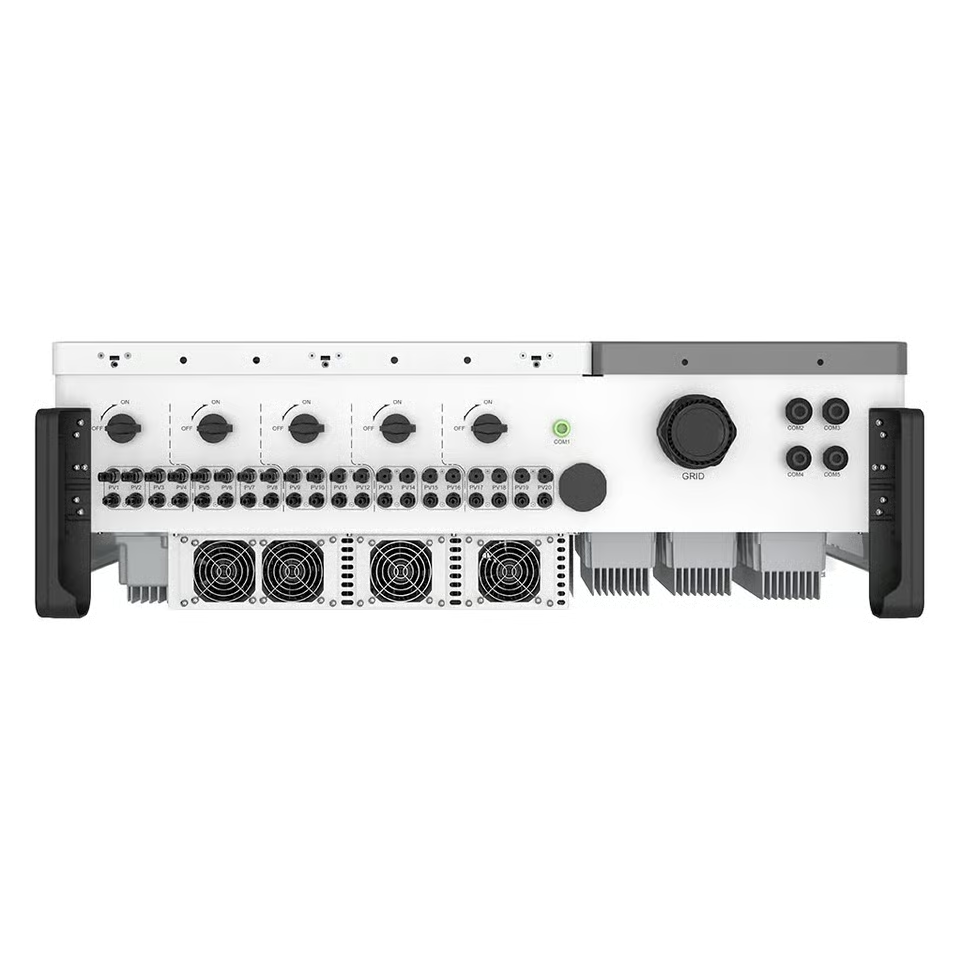
- Ten trackers between them carrying twenty strings
- 32 amperes on each tracker, 16 amperes on each string
- Each tracker tolerating 40 amperes of short circuit current
- Strings allowed to 1100V, nominal 600V, tracked from 180V to 1000V
- Generation beginning once a string passes 195V
- Around 378V needed to push the full 121kW through
- More than 150% of rated power accepted in array, roughly 165kW
- The array isolator housed inside, and an AC isolator orderable too
- Branch connectors supported on the DC side
Monitoring and Diagnostics
- Every string monitored individually rather than as a block
- Current voltage curve scanning, which finds a failing string without a site visit
- Grid conditions watched continuously
- Firmware updated remotely
- RS485 as standard, with wireless, cellular or power line options
- Local reading from an LCD panel on the unit
Protection and Cooling
- Type I surge protection on the DC side, rated for direct strike energy
- Type II on the AC side, upgradable to Type I
- Arc fault sensing offered as an extra, which twenty strings make sensible
- Reverse polarity, short circuit and output overcurrent all protected
- Anti islanding, which disconnects the inverter when the supply drops
- Temperature protection, derating rather than tripping as it warms
- Overvoltage load reduction and leakage current suppression built in
- Night time potential induced degradation recovery, as an option
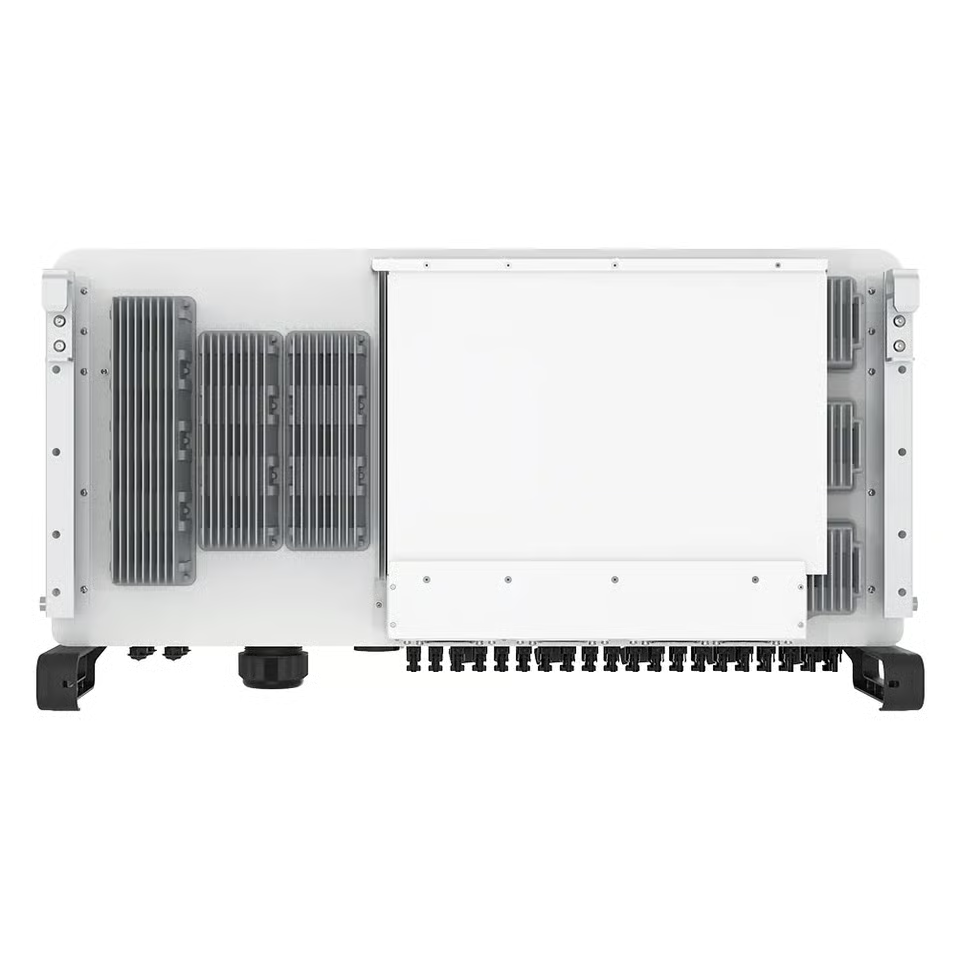
- IP66, and under two watts drawn overnight
2. Technical Specifications
| Parameter | Value |
|---|---|
| Inverter type | Grid tied, with no battery or backup capability |
| Rated output power | 110kW |
| Maximum apparent output power | 121kVA |
| Maximum output power | 121kW |
| Operation phase | Three phases, neutral and earth |
| Rated grid voltage | 220V and 380V, or 230V and 400V |
| Rated grid frequency | 50Hz |
| Rated output current | 167.1A at 380V, 158.8A at 400V |
| Maximum output current | 183.8A |
| Power factor | Above 0.99, adjustable 0.8 leading to 0.8 lagging |
| Current distortion | Under 3% |
| Maximum input voltage | 1100V |
| Rated input voltage | 600V |
| Start-up voltage | 195V |
| MPPT voltage range | 180V to 1000V |
| Voltage needed for maximum output | Around 378V |
| Maximum input current | 32A on each of ten trackers |
| Maximum current per string | 16A |
| Maximum short circuit current | 40A on each of ten trackers |
| Trackers and strings | 10 trackers, 20 strings |
| Array against rated output | More than 150%, roughly 165kW |
| Maximum efficiency | 98.7% |
| European weighted efficiency | 98.3% |
| Surge protection | Type I on DC, Type II on AC with Type I available |
| DC reverse polarity protection | Yes |
| Short circuit protection | Yes |
| Output overcurrent protection | Yes |
| Grid monitoring | Yes |
| Anti islanding protection | Yes |
| Temperature protection | Yes |
| String monitoring | Yes |
| Current voltage curve scanning | Yes |
| Integrated DC switch | Yes |
| Integrated AC switch | Optional |
| Integrated arc fault detection | Optional |
| Potential induced degradation recovery | Optional |
| Protection rating | IP66 |
| Topology | Transformerless |
| Overnight self consumption | Under 2W |
| Cooling | Intelligent fan cooling |
| Operating temperature | -30C to +60C, 0 to 100% humidity |
| Maximum altitude | 4000m |
| Dimensions and weight | 1065 x 567 x 344.5mm, 91kg |
| Solar connection | MC4 plugs |
| AC connection | Ring terminal, taking up to 185mm² |
| Display | LCD panel |
| Communication | RS485, with wireless, cellular or power line options |
| Grid connection standard | NRS 097-2-1 |
| Safety and compatibility standards | IEC 62109, IEC 61000 |
3. Key Features
- 98.7% peak conversion, the highest figure in our range
- Ten trackers across twenty strings, a high tracking density for this size
- Type I surge protection on the DC side as standard, not an upgrade
- Every string monitored on its own, so one failure is visible
- Curve scanning that diagnoses a weak string without climbing the roof
- A DC isolating switch built in, and an AC switch available
- Strings to 1100V, which keeps cable sizes down on long roof runs
- Array allowance above 150% of rating
- Under two watts drawn overnight
- Operating from -30C, and rated to 4000m
- Overvoltage reduction and leakage suppression, aimed at reliability
- Remote firmware updates, so a fleet stays current
- 91kg, which is an ordinary two person mount at this output
- Module current checked against the string limit by Bicity Solar before quotation
4. Applications and Use Cases
- Factories on a large daytime tariff: the clearest case for grid tied solar
- Warehouses and distribution centres: big roofs, steady daylight load
- Packhouses and flower farms: grading, cooling and pumping in daylight
- Shopping centres and retail parks: air conditioning tracking the sun
- Campuses and institutions: consumption aligned with generation
- Processing plants: machinery running through the solar window
- Sites with a sound grid connection: where backup is not the objective
- Lightning exposed roofs: Type I DC protection is the reason to prefer it
- Existing hybrid sites adding generation: as an AC coupled addition
5. Installation and Engineering Notes
Check the module current before anything else
This is the calculation that decides the design, and it runs opposite to the one most installers are used to on a large array. Voltage has headroom here. Current does not.
| Module class | Typical current at maximum power | Against the 16A string limit | Verdict |
|---|---|---|---|
| 550W | Around 13.2A | Nearly 3A of headroom | Comfortable |
| 620W | Around 14.8A | Just over 1A of headroom | Fits, but check carefully |
| 700W and above | Often 16.5A or more | Frequently over the limit | Must be verified individually |
Those currents are indicative of the class, not of any particular panel. Module current follows cell format and internal wiring rather than wattage alone, so some high wattage modules are deliberately low current designs and fit without difficulty. The rule is simply to read the module’s own figure for current at maximum power and compare it against 16 amperes before comparing anything else.
Bifacial modules need a second look. Rear side illumination adds current, and on a module already drawing close to 15 amperes there is little room left to absorb it. Where bifacial gain is part of the yield assumption, the string current has to be assessed with that gain included rather than from the front side figure alone.
String length, where there is room to spare
Strings may reach 1100V, tracking runs from 180V to 1000V, and pushing the full 121kW across 320 amperes of combined tracker capacity needs only about 378V. That is an easy threshold to clear.
| Modules at 620W | Working voltage | Cold dawn, open circuit | Twenty strings | Verdict |
|---|---|---|---|---|
| 12 | Around 504V | Around 660V | About 149kW | Clears the threshold comfortably |
| 13 | Around 546V | Around 715V | About 161kW | On the 150% ratio, a sound choice |
| 14 | Around 588V | Around 770V | About 174kW | Slightly above the ratio, still sensible |
| 18 | Around 756V | Around 990V | About 223kW | Inside the voltage ceiling but far past the ratio |
Thirteen or fourteen modules per string across twenty strings brackets the array a 150% ratio implies. Note that the voltage ceiling would permit far longer strings than the array allowance wants, which is unusual and is why current rather than voltage is the constraint to work from on this machine.
Circuit sizing
Each device is chosen a quarter above its circuit’s continuous current, then taken to the next manufactured size. Three phase circuits take four poles, and at this scale the design should be calculated for the installation.
| Circuit | Design current | Device | Cable, short run |
|---|---|---|---|
| Solar, each string | Around 19A | 25A DC, rated beyond 1100V | 4mm² solar cable |
| AC output | 230A | 250A, 4 pole | 120mm² |
- Size the AC side on the 183.8 ampere maximum, not the 167.1 rated figure
- The AC terminal accepts up to 185mm², which is ample for this current
- DC devices must be rated beyond 1100V, a step up from a 1000V platform
- The internal DC switch means no separate array isolator is needed
- An AC switch can be ordered inside the unit rather than fitted alongside
- There is no battery circuit, no generator circuit and no backup board to build
- At 91kg this is an ordinary two person mount on masonry or fixed steel
- Arc fault sensing is worth the cost once twenty strings share one inverter
- Commissioned and certified by licensed engineers
6. Care, Maintenance and Operations
- Use the string level monitoring rather than watching the total, since one string in twenty hides easily
- Run a curve scan when output drifts, which often identifies the fault without a roof visit
- Keep cooling intakes clear of dust and nesting
- Apply firmware updates as they are published, which can be done remotely
- Clean the panels to a schedule, since dirt across this much array adds up
- Check the surge protection indicators after any severe electrical storm
- Compare generation month against month to catch slow decline
- Confirm the DC switch still operates cleanly at each service
7. Do’s and Don’ts
Do
- Read the module’s current at maximum power and check it against 16 amperes first
- Include bifacial rear side gain when assessing string current
- Build strings of thirteen or fourteen large modules to land on the array ratio
- Size the AC protection on the 183.8 ampere maximum output figure
- Specify DC protection rated beyond 1100V
- Take advantage of the string monitoring at commissioning, by recording a baseline
- Keep the Type I DC protection rather than substituting a cheaper device
- Be clear with the client that this does nothing during an outage
Don’t
- Choose the module on wattage and check its current afterwards
- Assume a high wattage module fits simply because the voltage works
- Sell it as backup, because it has no battery and no backup output
- Build strings to the voltage ceiling, since the array ratio binds long before it
- Use 1000V class DC gear on an 1100V platform
- Expect sixty hertz operation, since this edition is fifty hertz
- Ignore the surge indicators after a storm
8. Compatibility
- Solar modules whose current at maximum power sits inside 16 amperes per string
- Bifacial modules, provided rear side gain is counted in that figure
- Arrays above 150% of rated output, around 165kW
- Twenty strings across ten independent trackers
- Branch connectors on the DC side where string counts need combining
- Either nominal three phase system, running at fifty hertz
- An existing hybrid or storage system, through AC coupling
- RS485 monitoring, extendable to wireless, cellular or power line carrier
- Sites anywhere in Kenya, given the 4000m rating
There is no battery compatibility to consider, because the unit has no battery connection. Where storage is wanted alongside it, that is a separate hybrid or battery inverter AC coupled to the same board, and we would quote it as such rather than implying this machine can take a bank later.
9. Performance Table
What the efficiency advantage is worth against a hybrid of comparable size.
| Measure | This grid tied unit | A comparable hybrid |
|---|---|---|
| Peak conversion | 98.7% | About 97.5% |
| Weighted conversion | 98.3% | About 97.2% |
| Loss at full output | Around 1.4kW | Around 2.8kW |
| Battery round trip loss | None, there is no battery | A further few percent on stored energy |
| Output during a power cut | None | Full rating from storage |
The loss figures are worked at 110kW of output against each weighted efficiency, so they indicate scale rather than predicting a particular installation. The point is structural: a grid tied inverter has one conversion stage where a hybrid has several, so it keeps more of what the roof produces. What it cannot do is keep anything for later, and that single row at the bottom of the table is the whole basis for choosing between the two.
10. Grid Tied or Hybrid: Which of Our Pages Do You Want
We publish large inverters in both categories and the output figures overlap, so this is worth settling before comparing anything else.
| Consideration | This 110kW grid tied | Our 80kW and 125kW hybrids |
|---|---|---|
| Battery connection | None | High voltage lithium, 300V to 950V |
| Output during an outage | None | Full rating from storage |
| Generator port | None | Dedicated, at the full rating |
| Weighted efficiency | 98.3% | 96.9% to 97.2% |
| Binding design constraint | String current, 16A | String voltage, and the battery |
| DC surge protection | Type I as standard | Type II |
| Trackers | 10 | 10 |
| Weight | 91kg | 170kg |
| Altitude | 4000m | 3000m |
Choose this one where the objective is a smaller daytime electricity bill, the grid connection is sound, and nobody needs the lights to stay on during a cut. It converts more of what the roof makes, weighs half as much, protects better against lightning and costs considerably less for the same generation.
Choose a hybrid where outages are the problem being solved, where a generator has to be integrated, or where evening consumption is the expensive part of the bill. Storage is what you are buying there, and this machine has none.
The two can also work together. This unit AC couples alongside an existing hybrid, so a site that already has storage can add generation without disturbing it.
11. Mini FAQ
Does it work with a battery?
No. It has no battery connection and no backup output. For storage, look at the hybrid models or AC couple a battery inverter beside it.
Will it run anything during a power cut?
No. A grid tied inverter shuts down when the supply fails, as the anti islanding protection requires.
What panels can I use?
Any whose current at maximum power fits inside 16 amperes per string. Read that figure before considering wattage.
Can I use 700W modules?
Only if that particular module draws under 16 amperes. Many in that class draw more, so it must be checked individually.
How much array can it take?
More than 150% of its rating, so around 165kW.
What is Type I surge protection worth?
It is rated for direct strike energy rather than only induced surges, which matters on an exposed Kenyan roof.
Why is it more efficient than your hybrids?
There is no battery conversion stage to lose energy in. That is a structural advantage, not a tuning one.
Does it run at 60Hz?
This edition is fifty hertz, which is what Kenya uses.
12. Why Buy From Bicity Solar
- Panel current verified against the 16 ampere string ceiling ahead of ordering
- Bifacial gain counted into that figure rather than left out of it
- Strings built to the array ratio instead of to the voltage ceiling
- The twenty strings allocated to ten trackers according to orientation
- Told plainly that this does nothing in an outage, before you buy rather than after
- AC protection sized on maximum output, not rated output
- The Type I DC protection kept rather than quietly substituted
- String monitoring baselined at commissioning, so later decline is measurable
- Documentation matched to the serial number on the delivered unit
- Certified on completion under a valid EPRA licence
- Any warranty issue taken up with the distributor on your behalf
- Transported to any county, with parts and assistance afterwards
Two questions settle this one. Is a smaller daytime bill the objective, rather than staying on through outages? And does the module you intend to use draw under 16 amperes? If both answers are yes, this converts more of your roof than anything else we stock.
Send us the module datasheet, the roof area and its faces, and your three phase supply rating. We check the panel’s current against the string limit, count in any bifacial gain, lay out twenty strings to the array ratio rather than the voltage ceiling, and tell you outright if a hybrid would serve the site better. Work the numbers yourself in the Solar Calculator, or send the site to us through My Quote.