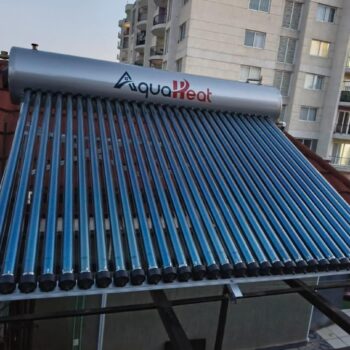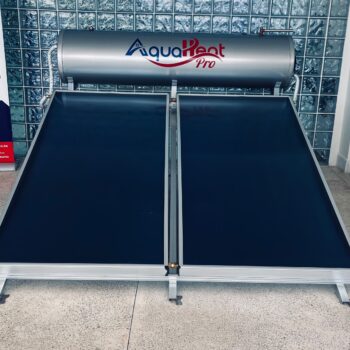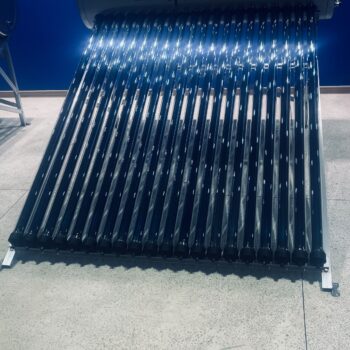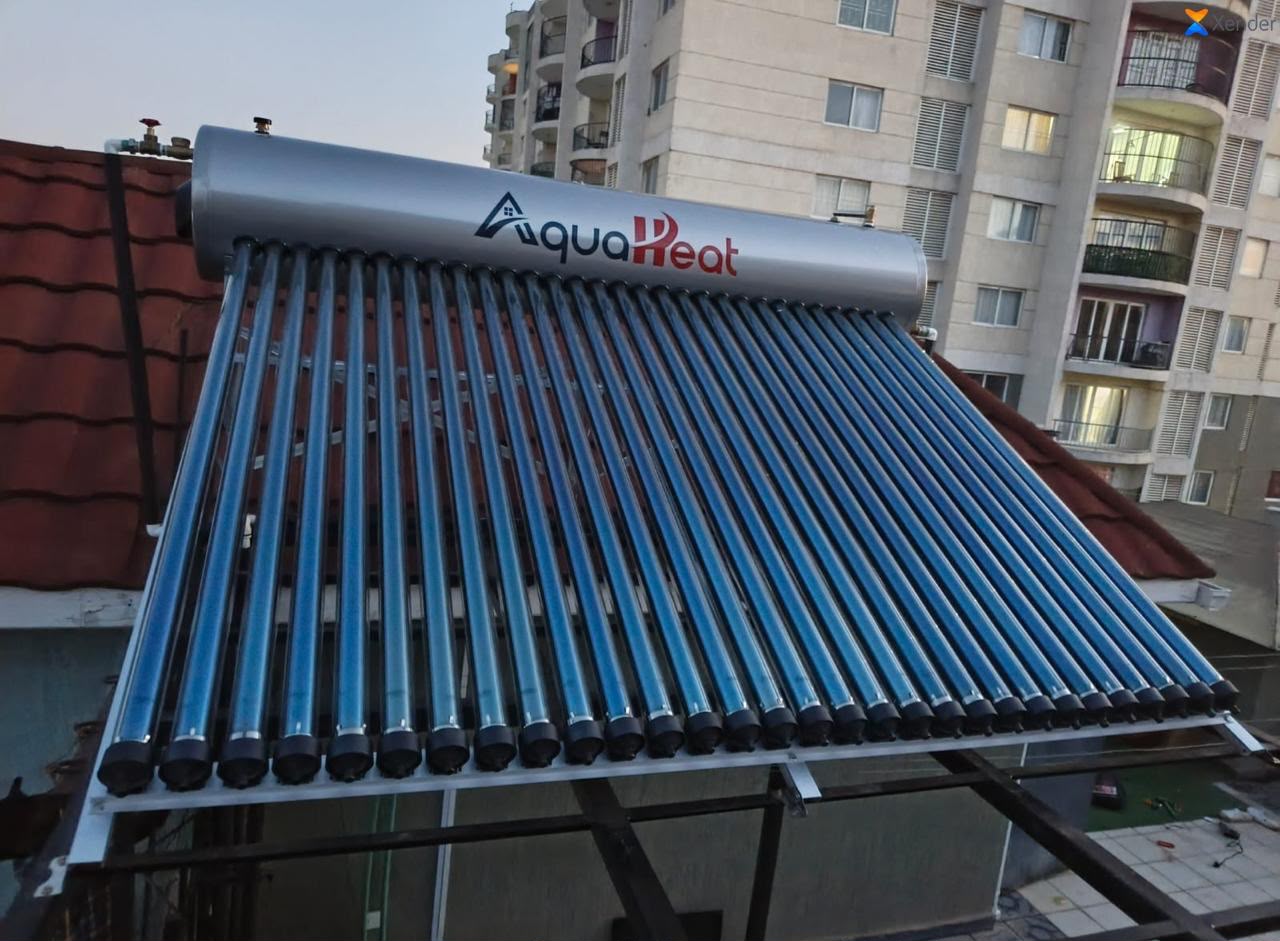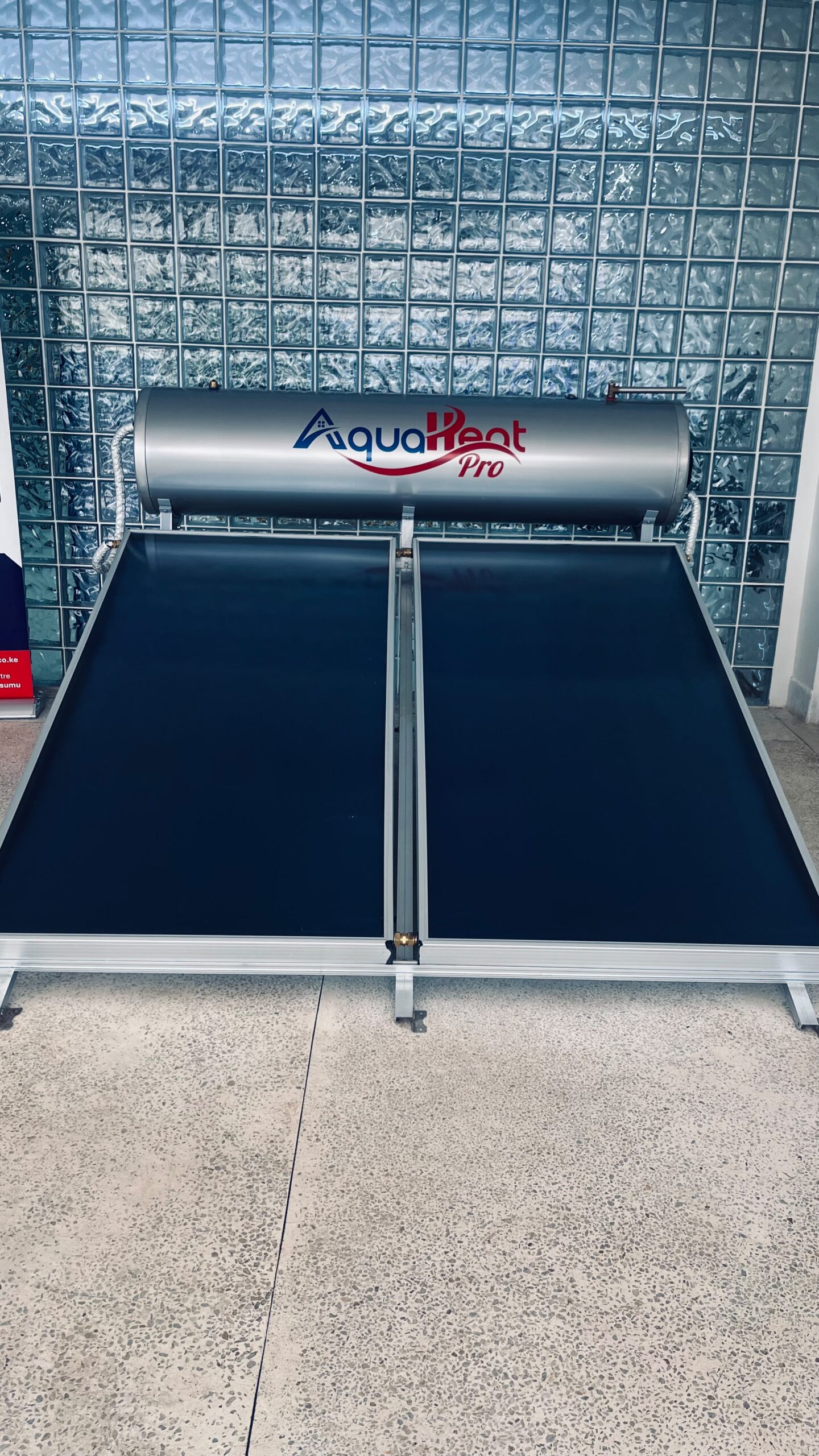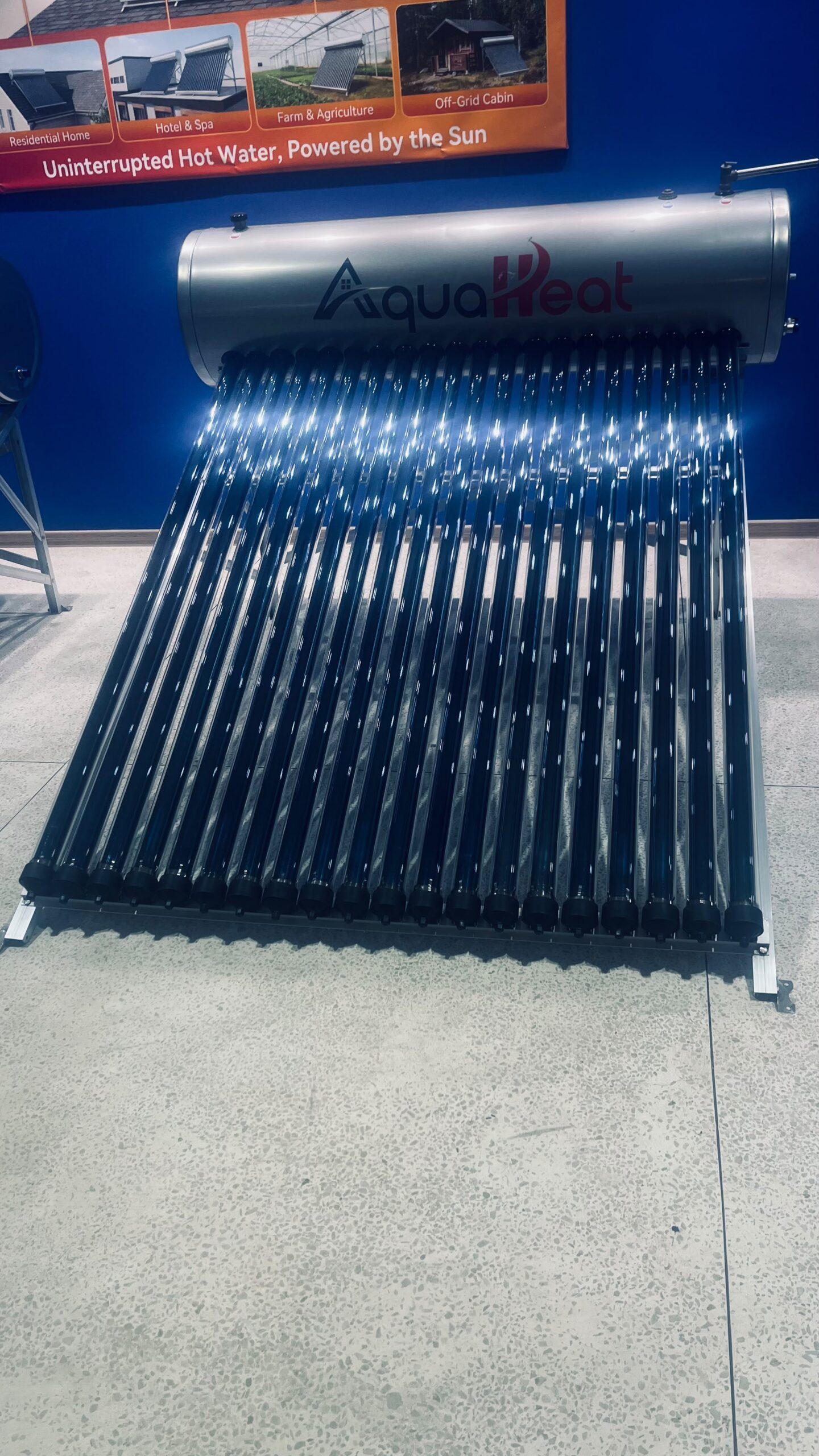
Description
The Aquaheat AH-N-T200L is a different animal from the pressurized models in the same range, and the difference is not the capacity. It is a coil system, which is a genuinely distinct way of building a solar water heater and one that almost every listing in this market describes incorrectly.
Here is what the stainless coil is actually for. The tank holds 200 litres of water that the vacuum tubes heat, and that water is not under pressure. Running through the middle of it is a coiled stainless steel pipe. Your mains water flows through that coil, collects heat on the way past, and arrives at the tap still at mains pressure.
So the tank is not pressurized, but the water you shower in is. The coil is what bridges the two, and your drinking water never touches the water in the tank.
That explains a contradiction you will meet while shopping. Listings for this model describe it as a pressurized system while also listing its coil heat exchanger. Both halves cannot be true of a tank: if the tank were pressurized, the coil would have nothing to do. A pressurized tank already delivers mains pressure. The coil exists precisely because the tank does not.
- The tank is a vented thermal store, not a sealed pressure vessel
- The coil carries your supply through that store and out to the taps
- Pressure at the outlet comes from your mains, not from the tank
- Tank water quality never reaches a tap, because the two circuits are separate
- The cost saving is real, since the tank need not be built to hold pressure
Because the coil’s letter in the model code is the thing that distinguishes this product, order against the full code. We would also ask your supplier to confirm the architecture in writing before you commit, since the whole plumbing design depends on it and the published descriptions are not reliable.
Aquaheat AH-N-T200L: How A Coil System Works And What Limits It
1. The Architecture, And Why It Gets Described Wrongly
Three ways a solar water heater can be built
| Arrangement | Tank holds pressure? | Pressure at the tap | Your water sits in the tank? |
|---|---|---|---|
| Gravity fed, open tank | No | From tank height only | Yes |
| Pressurized tank | Yes | Mains | Yes |
| Coil in an open tank | No | Mains | No |
The third row is this product, and it is the one people struggle to categorise. It behaves like a pressurized system at the tap while being built like an open one on the roof, which is why sellers reach for the word pressurized and then mention a coil in the same sentence.
What follows from the separation
- Water standing in the tank is never drunk, so its condition matters less
- A tank left unused for weeks does not contaminate the supply
- Scale from the tank side cannot reach your outlets
- The tank can be built more cheaply, having no pressure to contain
- But heat must now cross a metal wall, which section five explains
2. Technical Specifications
As with the rest of this range, no manufacturer datasheet could be located and reseller descriptions are inconsistent. The rows below separate what is reasonably established from what your supplier must confirm.
| Parameter | Value |
|---|---|
| Model | AH-N-T200L |
| Thermal store | 200 litres |
| Heat exchange | Stainless steel coil within the tank |
| Pressure at the outlet | Mains, delivered through the coil |
| Tank construction | Stainless steel inner, stainless or coated outer |
| Collector | Borosilicate glass vacuum tubes |
| Circulation | Thermosiphon, tank mounted above the collector |
| Installation | Roof mounted |
| Heat for a full store at a 40 degree rise | About 9.3 kilowatt hours |
| Water weight when full | 200 kilograms, before the equipment |
| Tank pressure rating | Vented, not a pressure vessel. Confirm. |
| Coil surface area | Confirm with supplier. This is the key figure. |
| Coil material and wall thickness | Confirm with supplier |
| Tube type, water filled or heat pipe | Confirm with supplier |
| Tube count and size | Confirm with supplier |
| Insulation thickness | Confirm with supplier |
| Electric backup and controller | Confirm whether included or optional |
| Warranty term | Confirm in writing |
The coil surface area is the row that decides how this system performs in daily use, and it is the one no seller publishes. Ask for it. A quotation that cannot tell you the coil area cannot tell you what the system will deliver.
3. Key Points
- A coil system, not a pressurized tank, despite how it is usually advertised
- The tank is vented and holds no pressure at all
- Mains pressure reaches the tap through the coil instead
- Your supply and the tank water stay completely separate
- No header tank is needed to give the hot supply pressure
- Output is governed by how fast you draw, not only by what is stored
- Two outlets running together is the condition that defeats it
- Delivery temperature falls as the store cools, even with litres remaining
- Recovery is slower than a direct system, because heat crosses the coil
- In hard water, scale forms inside the coil from your own supply
4. Flow Rate, The Limit Nobody Mentions
This is the most important section on the page and you will not find it on a competing listing.
A coil can only move so much heat per second. The figure depends on its surface area and on how much hotter the store is than the water passing through. Draw gently and the water has time to warm. Draw hard and it comes out part heated, however full the tank is.
What that looks like in practice
| Store temperature | Smaller coil | Medium coil | Larger coil |
|---|---|---|---|
| 70 degrees, freshly heated | About 6 litres a minute | About 12 | About 19 |
| 60 degrees | About 4 | About 9 | About 13 |
| 50 degrees | About 2 | About 5 | About 7 |
Set those against what fittings actually use: an efficient shower head draws around seven litres a minute, an ordinary one nine, a powerful one twelve, and two showers together about eighteen.
So a well specified coil serves one good shower, and a modest one struggles even with that. Two outlets at once is where this architecture gives up, and it does so regardless of how much hot water is sitting in the tank.
The second pattern in that table matters just as much. As the store cools through the evening, the sustainable flow falls away even though the litres remain. A pressurized tank does not behave like that: it gives you hot water until it is empty and then stops. A coil system fades instead, delivering steadily cooler water as the store drops.
Those figures are worked from heat transfer principles using a range of plausible coil sizes, because the actual coil area is not published for this model. They show how the design behaves rather than what this unit is certified to do. Ask the supplier for the coil area if precision matters to you.
5. Who This Suits, And Who It Does Not
A good fit where
- The cold supply is already on mains pressure and gravity hot water would be unacceptable
- There is no roof space or structural capacity above the bathrooms for a header arrangement
- One bathroom is in use at a time, which describes most households
- Tank water quality is a concern, perhaps on a rural or borehole supply
- The property stands unused for stretches and stale tank water would otherwise be an issue
- Budget matters and the cheaper tank construction is worth the trade
A poor fit where
- Two bathrooms are regularly used at the same time
- A rain shower head or similarly heavy fitting is installed
- Hot water is wanted at the kitchen while someone is showering
- A guest house or hostel has several rooms drawing together
- The supply is very hard and descaling a coil would be awkward
- Fast recovery after a heavy draw is important
For a family bathroom used in sequence it works perfectly well. For simultaneous demand it is the wrong tool, and a pressurized tank at the same capacity will serve you better.
6. Hard Water And The Coil
The separation between circuits changes where deposits form, and it is worth understanding properly rather than assuming the design solves the problem.
- Tank water is static or rarely replaced, so deposits there are limited and harmless
- Your mains supply passes continuously through the coil, so scale forms on its inner wall
- Scale inside the coil insulates it, which reduces the flow rate it can sustain
- That shows up as showers growing cooler over the years rather than as a failure
- A coil is more awkward to descale than an accessible manifold
- On very hard or borehole supply, treatment upstream protects the coil
This is the significant difference from a heat pipe system, where the potable water passes through an accessible manifold and the collector itself stays dry. Where your supply is genuinely hard, that distinction is worth more than the pressure arrangement.
7. Installation
Mounting and the tank itself
- The tank sits above the collector, as circulation depends on it
- A vent is required, because the store is open to atmosphere
- A float or feed arrangement maintains the store level
- Elevation is no longer needed to create tap pressure, which widens the siting options
- Filled weight is 200 kilograms of water before the structure is counted
- Fixings transfer load into rafters or purlins rather than sheeting
Pipework and protection
- The coil connects into the cold main and runs on to the hot distribution
- Isolation on both coil connections makes future servicing far simpler
- Tempering at the outlets protects against scalding
- Hot runs are insulated, since bare pipe undoes the collection
- The vent must discharge safely and must never be capped
- An immersion element, where fitted, gets a dedicated circuit and a proper earth
Capping the vent to make the tank hold pressure is dangerous and must never be attempted. A vented store is not built for it.
8. This Or The Pressurized 200 Litre
Both are sold at 200 litres and the choice between them is architectural rather than a matter of size.
| Consideration | This coil system | Pressurized heat pipe |
|---|---|---|
| Tank holds pressure | No | Yes |
| Pressure at the tap | Mains, via the coil | Mains, direct |
| Two outlets at once | Struggles | Handled |
| Behaviour as the store cools | Delivery cools gradually | Hot until exhausted |
| Your water in the tank | Never | Yes |
| Where scale forms | Inside the coil | Manifold and tank, not the tubes |
| Tank cost | Lower, no pressure vessel | Higher |
| Recovery speed | Slower, across the coil | Faster |
| A broken tube | Depends on tube type, confirm | System keeps running |
Our page on the 200 litre pressurized heat pipe system covers that alternative in full, including how it handles hard water and what the regulations entitle you to receive on any solar water heating installation.
9. Care And Operations
- Keep the vent clear and never allow it to be blocked or capped
- Check the store level at service visits, since an open tank loses water slowly
- Watch for showers running cooler over time, which suggests scale in the coil
- Have the coil connections isolated and inspected when the system is serviced
- Wash dust off the tubes when the dry season coats them
- Keep the store topped from a clean source, since sediment settles in an open tank
- Ask whether the tank benefits from occasional draining, which depends on your water
- Record the coil area and connection sizes in the handover file for future reference
10. Do’s And Don’ts
Do
- Get the architecture confirmed in writing before ordering
- Ask for the coil surface area, which decides the flow it will support
- Ask whether the tubes carry water or sealed heat pipes
- Measure your shower flow with a bucket before deciding this will suit
- Fit isolation valves either side of the coil for future servicing
- Treat very hard supply upstream to protect the coil
- Plan for sequential rather than simultaneous bathroom use
Don’t
- Cap the vent in an attempt to pressurise the tank
- Expect two showers to run together at full temperature
- Assume a full tank means hot water, since flow rate decides that
- Specify this where a guest house has several rooms drawing at once
- File it alongside the pressurized models as though it were the same thing
- Accept a quotation that cannot state the coil area
11. What The Regulations Require
Every solar water heating installation in Kenya now falls under rules that took effect in July 2025, whatever the architecture. In outline, the installer must hold a current EPRA licence of the appropriate class, you should receive a system design declaration before work starts, and a documentation pack with warranty terms at completion. Our 200 litre pressurized page sets all of that out in full.
One point bears on this product specifically. A design declaration that assesses your hot water demand should account for how many outlets will run at once, not merely how many litres you use in a day. On a coil system those are different questions, and the second one is the one that determines satisfaction.
Treat this as orientation for a purchaser rather than a legal opinion. Put anything that a project depends on to EPRA or to your own adviser.
12. Why Buy From Bicity Solar
- Written confirmation of how the tank is built, obtained before any quotation
- Coil area requested rather than left as an unknown
- Your actual shower flow measured, not estimated from a brochure
- Told plainly if two bathrooms in use together will defeat this design
- Honest advice when the pressurized version is the better buy
- Water hardness weighed, since the coil is where deposits land here
- Isolation valves fitted either side of the coil as a matter of course
- The vent installed correctly and explained at handover
- Tempering valves fitted rather than treated as optional
- Structure checked for the filled weight before ordering
- Missing figures pursued upstream rather than filled in with guesswork
- Your declaration of design handed over in advance of the first site visit
- Serviced countrywide afterwards under a current EPRA licence
Before ordering, settle two things. Confirm that the tank is vented rather than pressurized, because every listing describes this product the other way and the plumbing design depends on it. Then ask for the coil surface area, because that, not the 200 litres, decides how much hot water actually reaches your shower.
Tell us how many bathrooms you have, whether any of them get used at the same time, what your shower heads deliver and how hard your water is. We will say plainly whether a coil system suits the household or whether the pressurized version at the same capacity is the better answer. The Solar Calculator covers the wider system, and My Quote is where to send your details.