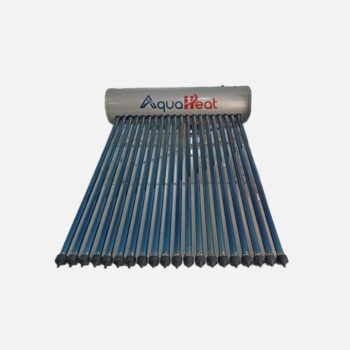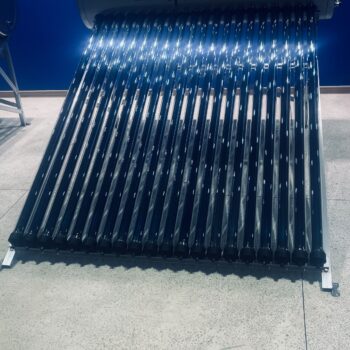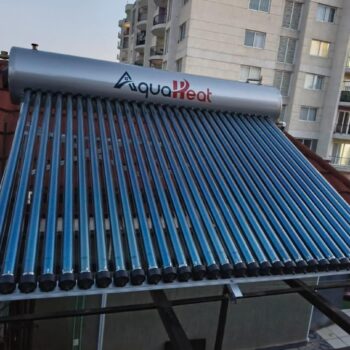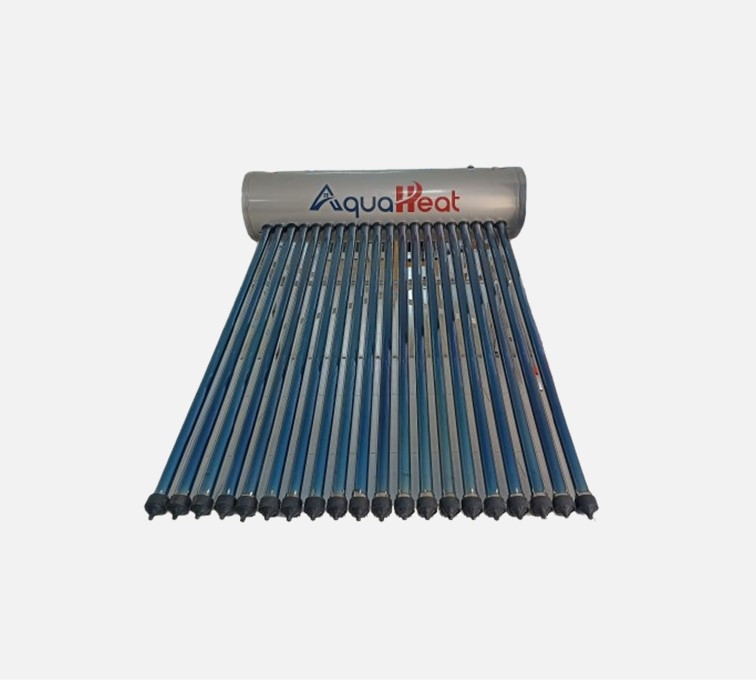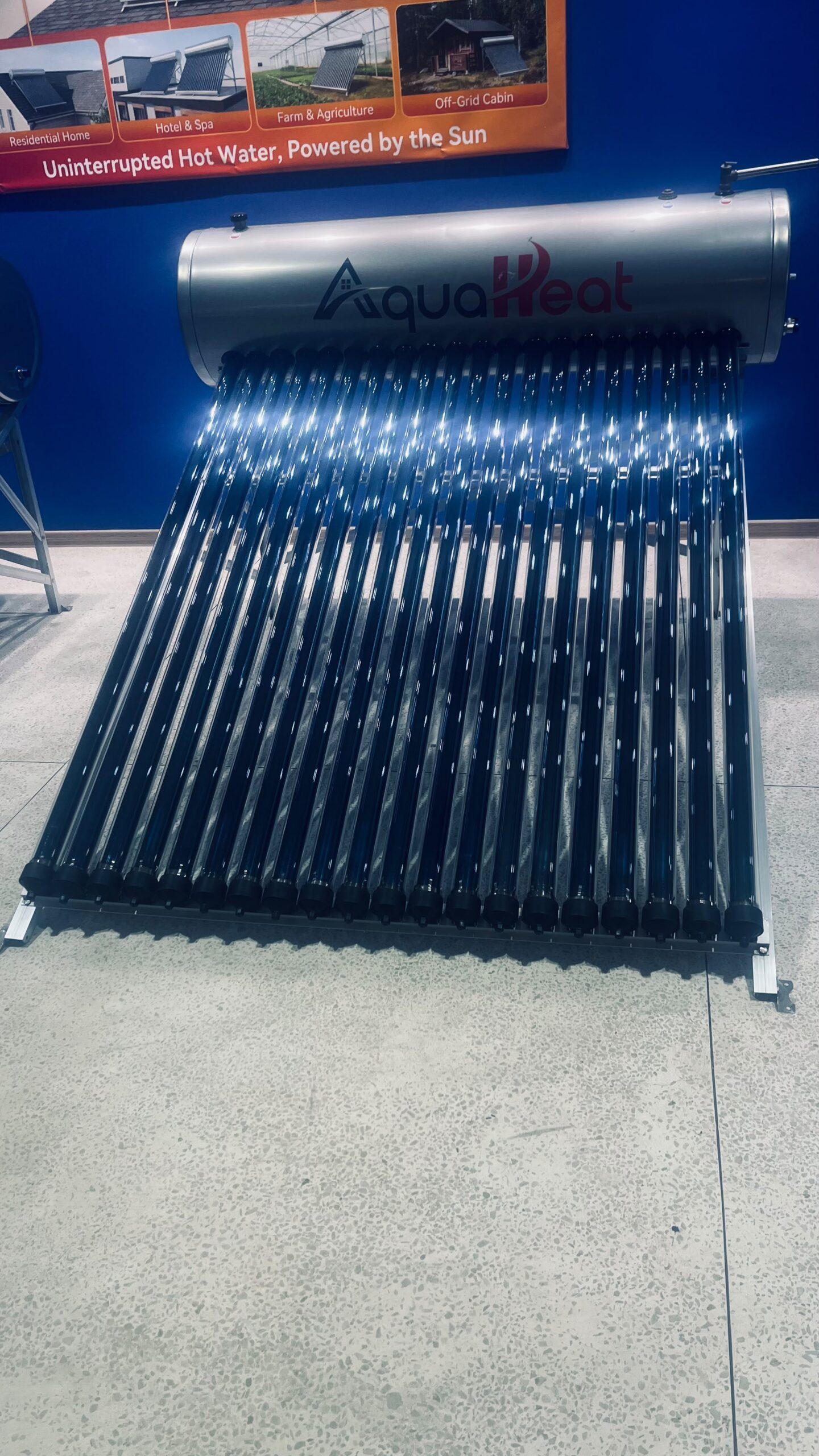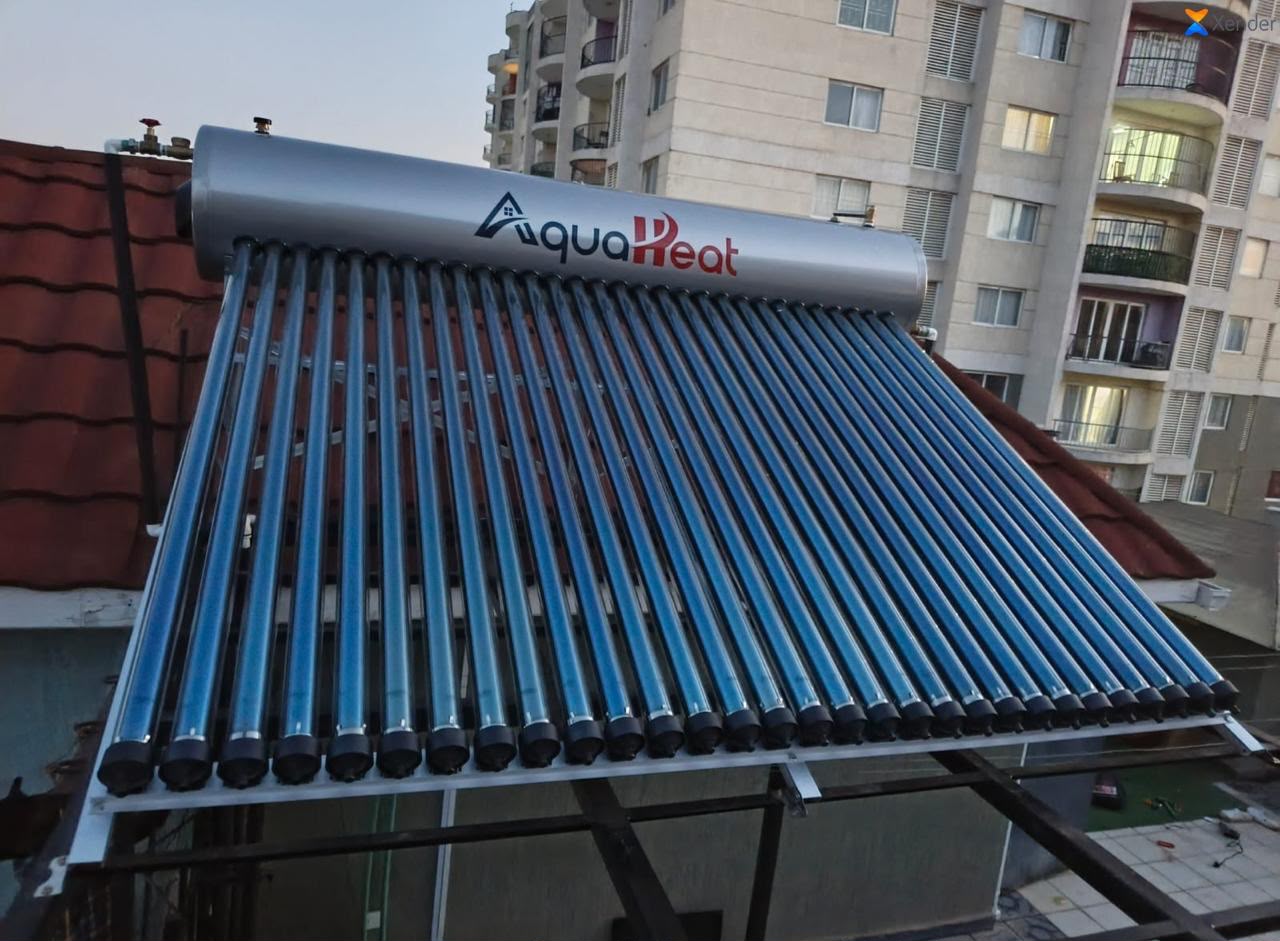
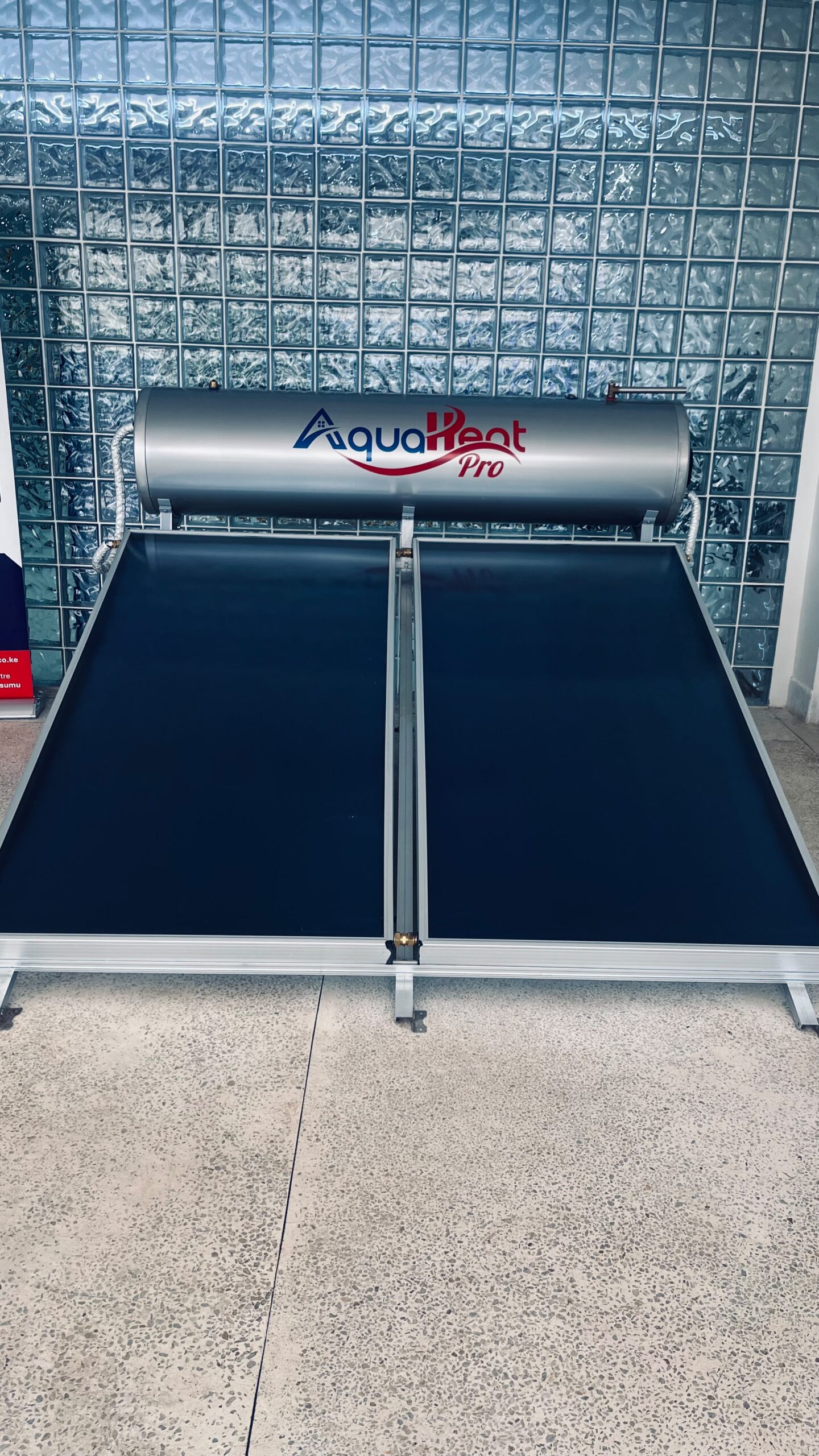
Description
The Aquaheat AH-P-F300L is the flat plate member of Aquaheat’s 300 litre pressurized range. Instead of a bank of evacuated glass tubes, it uses glazed collector panels with an absorber plate inside, which is the older and in many ways the more rugged approach to solar water heating.
The F in the code is doing a lot of work. Aquaheat also build an AH-P-T300L, where the T denotes evacuated tubes. Same brand, same 300 litres, same word pressurized in the name, and a genuinely different machine. If you are comparing quotations, make sure everyone is quoting the same letter.
Flat plate is not the inferior choice. It is the better choice in some places and the worse one in others, and where you are building decides which. Section two sets that out properly rather than claiming one technology beats the other everywhere.
Before any of that, though, there are two questions to put to whoever is selling it, because published listings for this product routinely leave both blank.
- How many collectors come with it? A 300 litre tank needs roughly four to six square metres of absorber. Fewer than that and it never reaches temperature on solar alone.
- Does the water you drink pass through the absorber? That single detail decides how the system copes with hard water and with cold nights.
Neither question is difficult. Both are routinely unanswered, and both decide whether you are satisfied in five years.
Aquaheat AH-P-F300L: Collector Count, Water Path and Where Flat Plate Wins
1. The Two Questions To Ask Before Ordering
Question one: how many collectors
Storage and collection are separate things, and a large tank fed by a small collector simply leans on its electric element. The rule of thumb for a thermosiphon system in good sun is one square metre of absorber for every 50 to 75 litres stored.
| Absorber area | Typical panel count | Heat gathered on a good day | Share of a full 300L tank |
|---|---|---|---|
| 3 square metres | Around 1 and a half | About 7 to 9 kWh | Roughly half |
| 4 square metres | Two | About 9 to 12 kWh | Two thirds to most |
| 5 square metres | Two and a half | About 11 to 15 kWh | Most or all |
| 6 square metres | Three | About 13 to 18 kWh | All, with headroom |
Warming a full 300 litre tank by 40 degrees takes roughly 14 kilowatt hours. Read the table against that figure and the conclusion is plain: two panels is the practical minimum and three is comfortable. A 300 litre tank sold with a single collector is a 300 litre electric geyser with a solar ornament attached.
Question two: direct or indirect
Flat plate systems come in two arrangements and the difference is invisible from the outside.
- Direct. The water you draw flows through the absorber itself. Simple, efficient, cheaper, and it means your supply meets the hottest surface in the system.
- Indirect. A sealed loop carries fluid through the absorber and passes its heat to the tank through an exchanger. Your water never leaves the tank.
That choice decides two important behaviours. In hard water, a direct absorber scales up internally and cannot be cleaned out. In cold conditions, a direct absorber full of water can freeze and split, while a sealed loop can carry antifreeze.
You will see listings advising antifreeze protection for cold climates without stating which arrangement the system uses. The two statements do not sit together: you cannot put antifreeze into a circuit carrying your drinking water. Get the answer in writing before ordering.
2. Flat Plate Or Evacuated Tube, Decided By Where You Are
Sellers of each technology tend to claim theirs is more efficient. Both claims are true under different conditions, and the condition that matters is how far the collector has to lift the water above the surrounding air.
An evacuated tube is surrounded by vacuum, which almost eliminates heat escaping to the air. A flat plate sits in a glazed box and loses more. The bigger the temperature gap, the more that matters, and the gap depends on your morning air temperature.
| Where | Typical morning air | Rise needed to reach 60 degrees | Better suited |
|---|---|---|---|
| Coast and warm lowlands | Around 26 degrees | About 34 degrees | Flat plate does very well |
| Nairobi and mid altitude | Around 17 degrees | About 43 degrees | Either, on cost and roof |
| Highlands such as Limuru or Timau | Around 11 degrees | About 49 degrees | Evacuated tube earns its premium |
What flat plate genuinely does better
- No glass tubes to break, which matters on an exposed or walked on roof
- The whole panel is absorber, where round tubes leave gaps between them
- Cleaning is one flat surface rather than many curved ones
- Generally simpler and less costly for each square metre of collection
- A proven, long established design with few things to go wrong
What it gives up
- More roof area for the same stored volume
- Heavier panels, so lifting and fixing deserve more thought
- Performance falls away faster in cold air or strong wind
- On a direct system, scale builds inside the absorber over the years
- Damage means replacing a whole panel rather than one tube
3. Technical Specifications
Published listings for this model are unusually poor, with several leaving their specification fields unfilled. The rows below state only what can be relied upon, and mark clearly what must come from your supplier.
| Parameter | Value |
|---|---|
| Model | AH-P-F300L |
| Tank capacity | 300 litres |
| System type | Pressurized flat plate solar water heater |
| Collector | Glazed flat plate with absorber |
| Circulation | Thermosiphon, tank mounted above the collectors |
| Inner tank | Stainless steel |
| Outer casing | Stainless or coated steel |
| Mounting | Roof mounted frame |
| Electric backup | Immersion element included |
| Absorber area required | About 4 to 6 square metres for 300 litres |
| Panels implied by that | Two or three, depending on panel size |
| Heat to warm a full tank 40 degrees | About 14 kilowatt hours |
| Water weight when full | 300 kilograms, before the equipment |
| Number of collectors supplied | Confirm with supplier |
| Absorber material and coating | Confirm with supplier |
| Glazing | Confirm with supplier |
| Direct or indirect circuit | Confirm with supplier |
| Insulation thickness | Confirm with supplier |
| Maximum operating pressure | Confirm with supplier |
| Stagnation temperature | Confirm with supplier |
| Warranty term | Confirm with supplier, in writing |
We would rather print the words confirm with supplier than fill a table with numbers we cannot stand behind. If a competing listing shows a figure in one of those rows, ask where it came from before trusting it.
4. Key Points
- The F in the model code means flat plate, not evacuated tube
- A 300 litre tank wants four to six square metres of absorber
- That means two panels at minimum and three for comfort
- Whether your water passes through the absorber is worth asking
- Hard water and freezing both hinge on that answer
- Flat plate suits warm lowland and coastal sites particularly well
- Evacuated tube earns its premium in the cold highlands
- No glass tubes means less to break on an exposed roof
- More roof area is needed than the tube equivalent
- Around 14 kilowatt hours of heat warms a full tank by 40 degrees
5. Stagnation, Which Matters For Lodges And Second Homes
A solar collector in full sun with nobody drawing hot water keeps collecting. The system reaches a standstill temperature and sits there, which is normal and designed for, but it is harder on components than daily use and it deserves a question when a building stands empty for stretches.
- Holiday houses and lodges between seasons are the common case
- Schools over long holidays are another
- Repeated cycles into standstill age seals, fluids and coatings
- On an indirect system, the loop fluid has a service life of its own
- Ask what the standstill temperature is and what maintenance follows it
- Shading or covering a collector during long closures is sometimes advised
This is not a reason to avoid the technology. It is a reason for a guest house to ask the question that a family home does not need to.
6. Roof Area, Weight And Layout
- Two or three panels need noticeably more roof than a single tube array
- The panels must sit together, facing the same way, feeding one tank
- Flat plate panels are heavy individually, so lifting is planned, not improvised
- The filled tank alone is 300 kilograms before panels and frame
- Fixings go into rafters or purlins, never into roof sheeting
- The tank sits above the collectors for circulation to work
- A long low roof suits this layout better than a small steep one
Where roof space is genuinely tight, that constraint alone may point you to the tube model, which gathers a similar amount in a more compact footprint. Where there is plenty of roof, the area requirement costs nothing.
7. The Energy It Replaces
Warming 300 litres by 40 degrees takes about 14 kilowatt hours of heat, so a household emptying a tank daily is asking for roughly 419 units a month or near 5,090 across a year.
How much of that the sun actually carries depends almost entirely on the collector area discussed in section one. With two or three panels correctly oriented, a well built flat plate system in Kenya covers the large majority of it through the year, because our sunshine barely varies by season. With too little collector, the element makes up the shortfall and the bill never falls as promised.
8. What The Regulations Entitle You To
Solar water heating in Kenya has been regulated since July 2025, and the part worth knowing on a product like this concerns paperwork rather than hardware.
- Written confirmation of the design is owed to you by a licensed contractor at the outset
- That declaration assesses your hot water demand and states the specification
- It should also set out an installation timeline
- Your entitlement includes twelve months minimum cover on the labour
- Component warranties run up to five years
- A documentation pack should be handed over at completion
- Whoever installs it must hold a current EPRA licence of the right class
That matters particularly here. Where a seller publishes a warranty field that has never been filled in, you are being offered a product without the documentation the law says you should receive. Ask for the declaration and the warranty terms before money changes hands, not afterwards.
Treat this as orientation for a purchaser rather than a legal opinion. Where compliance carries weight on a project, put the question to EPRA or to your own adviser.
9. Installation Notes
Getting the collectors right
- All panels face the same direction, broadly towards the equator
- Tilt is retained so that circulation runs and dust sheds
- Panels are plumbed so flow divides evenly between them
- An uneven split leaves one panel working and another idling
- Pipe runs between panels are kept short and insulated
- Shadows are traced across a full day, not glanced at once
Safety and protection
- Temperature and pressure relief fitted, discharging where nobody can be scalded
- A non return valve to stop hot water tracking back into the cold main
- Blending at the outlets, which also makes the stored volume go further
- Insulation on every hot run, since bare pipe undoes the roof’s work
- The element on its own protected circuit, properly earthed
- Freeze precautions appropriate to the circuit type and the site altitude
10. Care And Operations
- Wash the glazing when dust films it, as a dirty panel collects noticeably less
- Inspect the glazing seals, since a failed seal lets moisture into the box
- Look for condensation inside the glass, which signals exactly that
- Have the anode rod checked and renewed when it has been consumed
- Work the relief valve by hand each service instead of taking it on faith
- On an indirect system, have the loop fluid checked at the stated interval
- Watch for a slow decline in performance, which in a direct system means scale
- Keep the handover documents somewhere you can find them
11. Do’s And Don’ts
Do
- Ask how many collectors are included, and get the number on the quotation
- Ask whether your water passes through the absorber
- Quote and purchase against the complete code, letter included
- Verify it against the packaging and the vessel plate when goods arrive
- Choose by your altitude and morning temperatures, not by brochure claims
- Allow the roof area two or three panels genuinely need
- Get the warranty term in writing before paying
Don’t
- Accept a 300 litre tank fed by a single collector
- Trust a specification table with blank or placeholder fields
- Assume antifreeze can go into a system carrying drinking water
- Fit a direct flat plate system on hard borehole supply without advice
- Let a supplier swap the tube model for this one, or the reverse
- Mount panels where a growing tree will shade them in three years
12. Why Buy From Bicity Solar
- Collector area calculated for your tank rather than left unstated
- The number of panels written on your quotation, every time
- The water path established with the supplier before we quote
- Technology chosen for your altitude and water, not for our stock position
- Honest advice when the tube model suits your site better
- Roof area and structure assessed for the panels the system actually needs
- Specification gaps chased with the supplier instead of guessed at
- Warranty terms confirmed in writing before you commit
- The declaration of design put in your hands before anyone climbs the roof
- Safety, check and tempering valves treated as part of the job, not extras
- Panels plumbed so flow divides properly between them
- Servicing available afterwards, including seals, rods and loop fluid
- Installed countrywide under a current EPRA licence
Two questions decide whether this system performs. How many collectors are included, and does your drinking water pass through them? A 300 litre tank needs four to six square metres of absorber, and the water path decides how it copes with hard water and cold nights. Any quotation that leaves either blank is not yet a quotation.
Tell us where the building is and how high, what your morning temperatures are like, how much roof you have facing the right way, and whether your supply is mains or borehole. We will work out the collector area, confirm the water path with the supplier and tell you plainly if the tube model would serve you better. The Solar Calculator handles the wider system, and My Quote is where to send the details.