Description
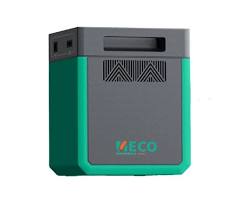
MECO 2kWh Portable Power Station: 1200W From Two Large Cells
At 1200W of output and 2009.6Wh of storage, the MECO 2kWh Portable Power Station sits at the point where a battery unit stops being an electronics backup and becomes a household one. The 1kWh model in the same range keeps lights, a router and a laptop alive. This one adds the fridge, a washing machine on a cold cycle, a rice cooker, and briefly a one horsepower air conditioner.
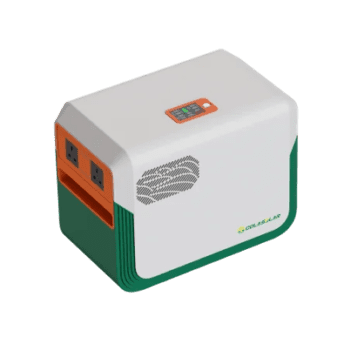
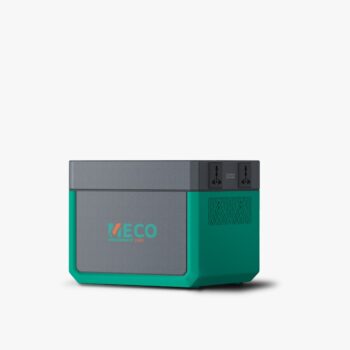
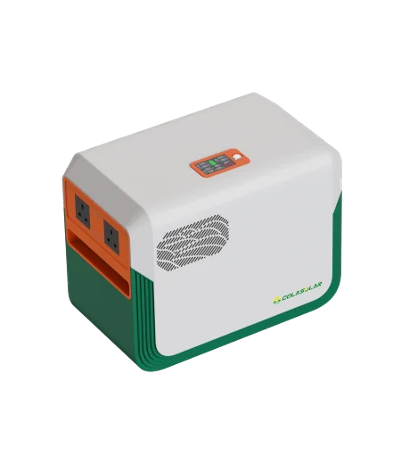
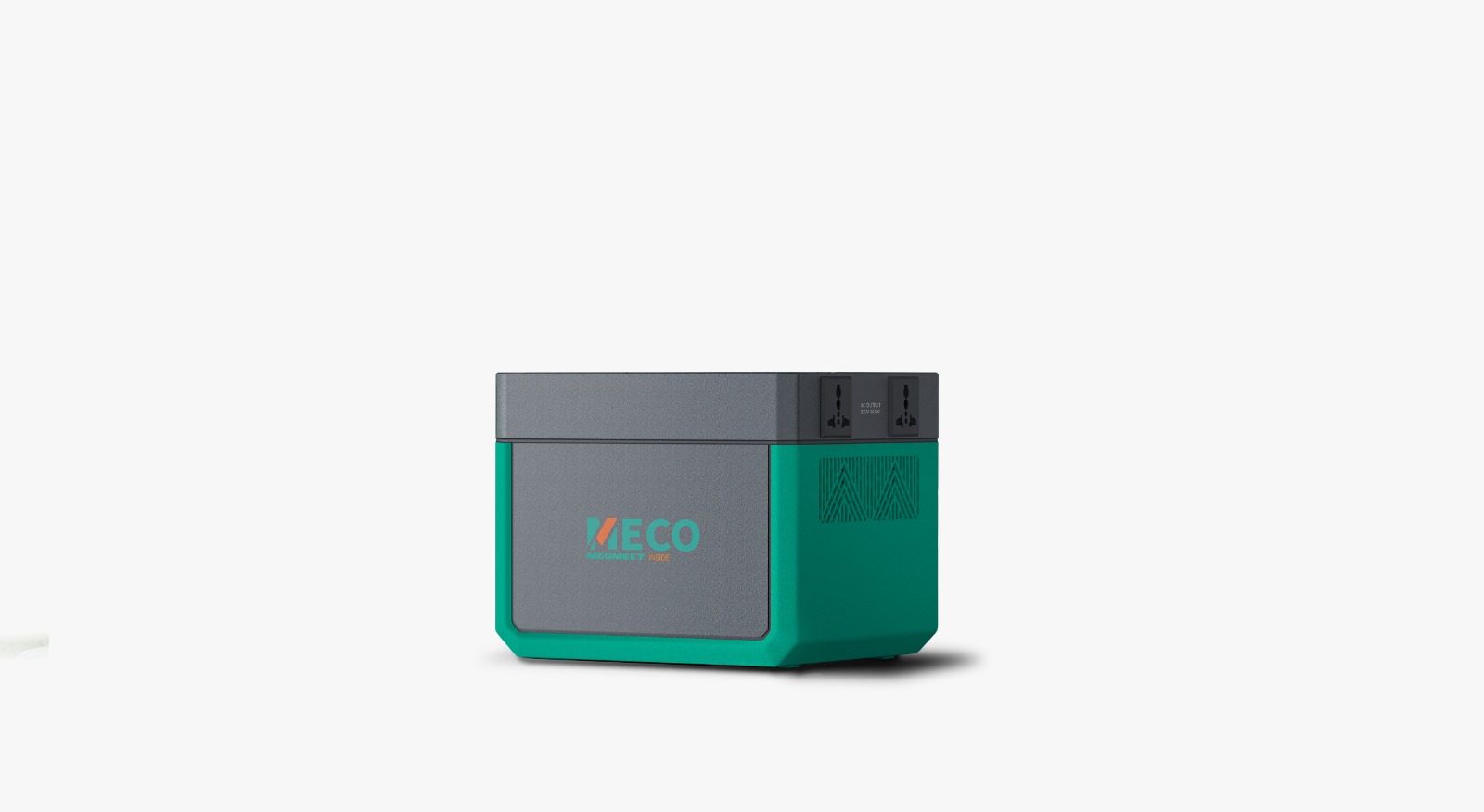
It is made by Shenzhen MECO New Energy and built on Megmeet core technology, packaging an MPPT solar controller, an inverter, the battery and a battery management system into a single plug and play box with no installation and no wiring.
Bicity Solar Energy Suppliers publishes what a unit cannot do alongside what it can. Two things here need saying early, because both cost buyers money when missed. It is rated IP20, which means strictly indoors. And the runtime figures the manufacturer publishes appear to be calculated without conversion losses applied, so the real numbers are lower. Both are covered below, with our own recalculation shown.
The 1200W ceiling, in Kenyan appliances
Capacity is how much energy is stored. Output is how fast it can be delivered. At 1200W this unit reaches further up the household than most people expect at this size, but the boundary still falls where it always does, on appliances that work by making heat.
| Appliance | Typical draw | On this unit |
|---|---|---|
| LED lighting, whole house | 30W to 60W | Yes, easily |
| Router and modem | 10W to 20W | Yes, easily |
| Laptop | 45W to 90W | Yes |
| Television | 40W to 100W | Yes |
| Fridge or freezer | 100W to 200W running | Yes |
| Desktop computer and monitors | 150W to 350W | Yes |
| Washing machine, cold cycle | 300W to 500W | Yes |
| Rice cooker | 500W to 700W | Yes |
| Blender, mixer, small power tools | 300W to 900W | Yes |
| Microwave | 800W to 1200W | Yes at the smaller end, marginal above 1000W |
| Air conditioner, one horsepower | Around 850W running | Yes, though startup surge varies by model |
| Clothes iron | 1000W to 2000W | Only the smallest, most exceed the limit |
| Electric kettle | 1500W to 2200W | No |
| Electric hotplate or cooker | 1000W to 2500W | No |
| Instant shower or water heater | 3000W to 5500W | No |
The rice cooker line is worth pausing on, because it is where this unit separates itself from smaller ones. Heating appliances are normally out of reach at this size, but at 500W to 700W most rice cookers fit inside 1200W. That single capability changes what a long outage feels like in a Kenyan household.
How long it lasts, with the arithmetic shown
MECO publishes runtime figures on its own product page. We have recalculated them, and here is why.
Turning stored direct current into the alternating current appliances use costs energy, given up as heat. MECO states its own conversion efficiency at 92%, achieved using gallium nitride electronics. Applying that figure to 2009.6Wh of storage gives roughly 1,850Wh actually delivered to appliances. The published runtimes appear to be calculated from the full 2009.6Wh without that loss applied, which makes them optimistic by around 7 to 9%.
This is not a complaint about MECO. It is the convention across nearly every manufacturer in the category. We publish both figures so you can size against the realistic one.
| Load | Draw | MECO published | Recalculated at 92% |
|---|---|---|---|
| Fan | 30W | 66 hours | About 61 hours |
| Laptop | 60W | 33 hours | About 31 hours |
| Television | 100W | 20 hours | About 18 hours |
| Fridge, if it ran continuously | 150W | 13 hours | About 12 hours |
| Hair dryer, low setting | 200W | 10 hours | About 9 hours |
| Washing machine | 300W | 6.6 hours | About 6 hours |
| Rice cooker | 600W | 3 hours | About 3 hours |
| Large television | 700W | 2.85 hours | About 2.6 hours |
| Air conditioner, one horsepower | 850W | 2.4 hours | About 2.2 hours |
| At full rated output | 1200W | Not published | About 1.5 hours |
The fridge figure is the one MECO understates
Having just argued that the published numbers run optimistic, here is the case where the opposite holds, and it matters because the fridge is why most people buy this size.
The 13 hour figure for a 150W fridge assumes the fridge draws 150W continuously. Fridges do not work that way. A fridge cools to its set temperature, switches off, and stays off until the interior warms past a threshold. That duty cycle typically runs between a quarter and a half of the time, depending on room temperature, how full the appliance is, and how often the door opens.
A 150W fridge at a one third duty cycle averages around 45W to 50W of real consumption. Against 1,850Wh delivered, that is roughly 35 to 40 hours, not 13. Even sharing the unit with lights, a television and a router, a full night and the following day is realistic.
The other half of the fridge question is startup. A compressor briefly draws several times its running current the instant it kicks in, so a 150W fridge may pull 600W or more for a fraction of a second. Connect the fridge first, on its own, before adding other loads, so it has the most headroom for that first start.
IP20 means indoors, and this one catches people out
This is the most important limitation on the page and it deserves stating without softening.
The unit is rated IP20. The 2 means protection against solid objects larger than 12mm, essentially fingers. The 0 means no protection against water whatsoever. Not rain, not splashes, not spray, not damp.
The reason this causes expensive mistakes is the category’s own vocabulary. It is sold as a portable power station and a solar generator, and both phrases suggest outdoor equipment. It is not. It belongs indoors, in a vehicle, in a tent, or under solid cover. A sudden shower while it sits in a yard is enough to ruin it, and water damage is not a warranty matter.
If your use genuinely involves exposed conditions, dust, sites or farms, tell us and we will point you at equipment rated for it rather than sell you this one and watch it fail.
Two large cells, not a pack of small ones
MECO describes itself as a pioneer of large cell home energy storage, and the construction of this unit is the clearest expression of that.
Look at how a conventional battery is put together and the contrast is stark. Dozens of small cells are stacked up and tied together electrically, and because no two cells behave identically, supervising electronics must sit on top watching each one, shuffling charge between them, and shutting the whole pack down if any single cell steps out of line. The wall mounted battery in a home solar installation works exactly this way, with sixteen cells and a management system policing them.
This unit uses two 314Ah LiFePO4 cells. Two, not dozens. Three consequences follow.
Almost nothing can drift out of balance. The gradual divergence between cells that limits multi cell packs, where total capacity ends up dictated by the weakest cell in the group, has very little room to develop between two. That is part of why an 8000 cycle rating is credible here.
Fewer internal connections means fewer failure points. In a product that gets carried, set down and moved between rooms, that is a real reliability benefit.
It cannot be expanded. The capacity in the box is the capacity you have. Outgrow it and you buy a larger unit rather than adding to this one.
Gallium nitride, and why 92% is worth noticing
MECO specifies gallium nitride electronics delivering 92% conversion efficiency. That is an engineering choice rather than a marketing word, and it has consequences you can feel.
Gallium nitride switches faster and wastes less energy as heat than the silicon components used in cheaper units. Less waste heat means more of your stored energy reaches your appliances, which is where the 92% comes from. It also means less cooling is required, allowing a more compact enclosure for the same output.
For comparison, conversion in budget units often sits closer to 85%. On 2009.6Wh of storage, the gap between 85% and 92% is around 140Wh, which is roughly three extra hours of television on every charge.
Charging, and the one solar detail to get right
From the grid, the unit charges at up to 1200W and accepts 90V to 280V at 45Hz to 65Hz. That wide window matters in Kenya, where supply at the end of a long distribution feeder sags well below nominal during evening peak, and equipment with a narrower input range stops charging at exactly the times you most want it topped up. A full charge from empty takes under two hours.
From solar, it accepts up to 600W through the built in MPPT controller, within a panel voltage window of 12V to 60V.
That 60V ceiling is the detail to get right, and it is what installers most often get wrong on units of this class. A single modern large panel, of the 550W to 620W class, typically operates around 42V and sits comfortably inside the window. Two of those in series would roughly double the voltage and exceed 60V, which the unit will not accept. So: one large panel, or several smaller panels wired in parallel rather than in series, up to the 600W ceiling.
Matched correctly, the unit recharges fully in about four hours of good Kenyan light, at which point outage length stops being the constraint. It becomes a small standalone power system rather than an emergency reserve.
Protections and certification
MECO publishes an unusually detailed protection list for this class of product: over and under voltage protection on the mains input, over current protection on the AC output, reverse polarity protection and power limiting on the solar input, over charge and over discharge protection, cell level high and low temperature protection, over temperature protection, and short circuit protection.
The unit is certified to UN38.3, the United Nations standard covering safe transport of lithium batteries, and IEC62368, the international safety standard for audio, video and information technology equipment.
Certification is worth asking about on any imported battery product, and it is routinely absent from listings in this category. A cell meeting UN38.3 has passed altitude simulation, thermal cycling, vibration, shock, external short circuit, impact and overcharge testing. Where a seller cannot tell you what a unit is certified to, that absence is itself informative.
Honest limitations
It cannot boil a kettle. At 1200W, kettles, hotplates, instant showers and most irons stay out of reach. If cooking and heating water through outages is the requirement, the answer is a permanent installation rather than a bigger power station.
IP20, indoors only. Covered above, and worth repeating because it is the mistake that destroys units.
Operating range starts at 0C. Comfortable across virtually all of Kenya. Worth noting only for the coldest highland nights, where the unit should be indoors anyway.
MECO’s own documents disagree on weight. The downloadable datasheet says 19kg, the product page says 16.5kg. Either way it is transportable rather than genuinely portable: it moves between rooms and into a vehicle, but it is not something to carry any distance. We are asking the supplier to settle the figure.
No UPS function is published. MECO does not list automatic switchover on either the product page or the datasheet, and we will not print a feature the manufacturer has not stated. If uninterrupted switchover is the reason you are buying, for a desktop or a CCTV recorder, ask us and we will confirm with the supplier first.
The socket count is not published either. MECO specifies the outlet type as universal, meaning it accepts several plug types, but does not state how many outlets there are. Assume you will want an extension strip, and remember everything connected must still total under 1200W.
Warranty terms should be confirmed at purchase. MECO does not publish a warranty period on this product page. Bicity Solar confirms current warranty terms in writing at the time of sale.
Choosing between the 1kWh and the 2kWh
| Decision factor | 1kWh model | 2kWh model, this product |
|---|---|---|
| Stored energy | 1004.8Wh | 2009.6Wh |
| Cells | One 314Ah cell | Two 314Ah cells |
| Rated output | 500W | 1200W |
| Runs a fridge | Marginal | Yes, comfortably |
| Runs a rice cooker | No | Yes |
| Runs a washing machine on cold | No | Yes |
| Solar input | 300W | 600W |
| Grid charge power | 500W | 1200W |
| Protection rating | IP20 | IP20 |
| Weight | 11kg | Around 19kg |
| Best suited to | Electronics, lights, connectivity | Running a household including the fridge |
Both are indoor units. The decision is about how much of the house has to keep running. If the answer stops at lights, internet and devices, the 1kWh does it for less. If the fridge has to stay cold and you would like to cook rice and run a wash, this is the one.
Who this suits
- Households wanting a normal evening through an outage. Fridge, lights, television, internet and charging together, for a full night.
- Anyone with a freezer holding stock. Small butcheries, shops selling cold drinks, households buying meat in bulk. One spoiled freezer often covers the cost of the unit.
- Small businesses. Salons, cyber cafes, tailoring shops, pharmacies with cold storage. Enough output to keep trading through an outage.
- Clinics and dispensaries. Lighting, a fridge for temperature sensitive supplies, and device charging.
- Off grid properties. With a matched panel on the solar input, this operates as a small standalone system rather than only as backup.
- Home offices. A desktop, monitors, router and lighting through a full working day.
- Households that cook simply. The rice cooker capability genuinely changes what a long outage feels like.
Full specifications, as published by the manufacturer
| Specification | Value |
|---|---|
| Brand | Meco Power, Shenzhen MECO New Energy Co., Ltd |
| Model | Meco 2kWh, listed on the datasheet as 2kWh/1200W |
| Battery chemistry | LiFePO4 (lithium iron phosphate) |
| Cell configuration | Two 314Ah large cells |
| Rated battery capacity | 2009.6Wh |
| Battery lifespan | 8,000 cycles |
| Rated output power | 1200W |
| Output waveform | Pure sine wave |
| AC output voltage | 220V, range 200V to 240V |
| Operating frequency | 50Hz or 60Hz |
| AC outlet | Universal |
| AC input voltage | 220V, range 90V to 280V |
| AC input frequency | 45Hz to 65Hz |
| AC charging power | 1200W |
| PV input voltage | 12V to 60V |
| Maximum PV input power | 600W |
| Conversion efficiency | 92%, gallium nitride electronics |
| Integrated components | MPPT controller, inverter, battery, BMS |
| Dimensions | 252 x 226 x 311mm |
| Weight | Around 19kg, see the note on manufacturer figures above |
| Ingress protection | IP20, indoor use only |
| Operating temperature | 0C to 40C |
| Humidity | Up to 90% |
| Operating altitude | Up to 3000m |
| Shelf time when fully charged | 1 year |
| Certification | UN38.3 and IEC62368 |
| Protections | Mains over and under voltage, AC output over current, PV over and under voltage, PV reverse polarity, PV input power limiting, over charge, over discharge, cell high and low temperature, over temperature, short circuit |
Getting the most out of it
Add up your loads first. Read the wattage from the rating plate of everything you want running at once. Under 300W gives a long, comfortable night. Approaching 1200W gives about an hour and a half.
Start the fridge on its own. Connect it before other loads so the compressor has full headroom for its first start.
Match the panel to the 60V window. One large panel, or several smaller ones in parallel. Two large panels in series will exceed the input limit.
Keep it indoors. IP20, with no exceptions for a quick job outside.
Pre cool before a planned outage. Turning the fridge or freezer colder for a few hours beforehand builds a cold store, so the compressor runs far less once you are on battery.
Allow airflow. Gallium nitride electronics run cooler than silicon, but the unit still wants space around it rather than a tight cupboard.
Not sure whether the 1kWh or the 2kWh fits, or which solar panel suits the 12V to 60V input?
Send us what needs running during an outage and for how long, and we will tell you plainly which unit covers it, which panel matches the input window, or whether your situation is better answered by a permanent installation. To size a whole property system, start with the Solar Calculator. For this unit, a matched panel, or delivery to your county, send your requirements through My Quote and we will come back with a costed package.