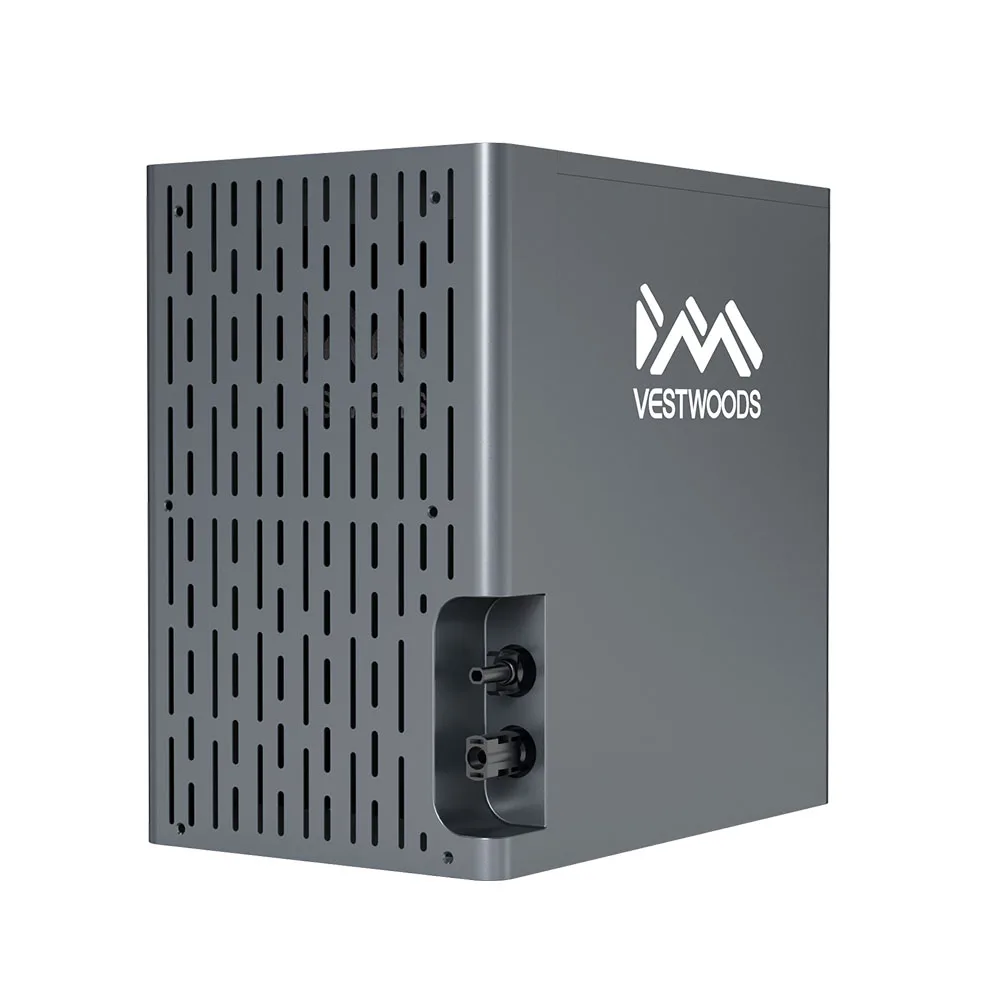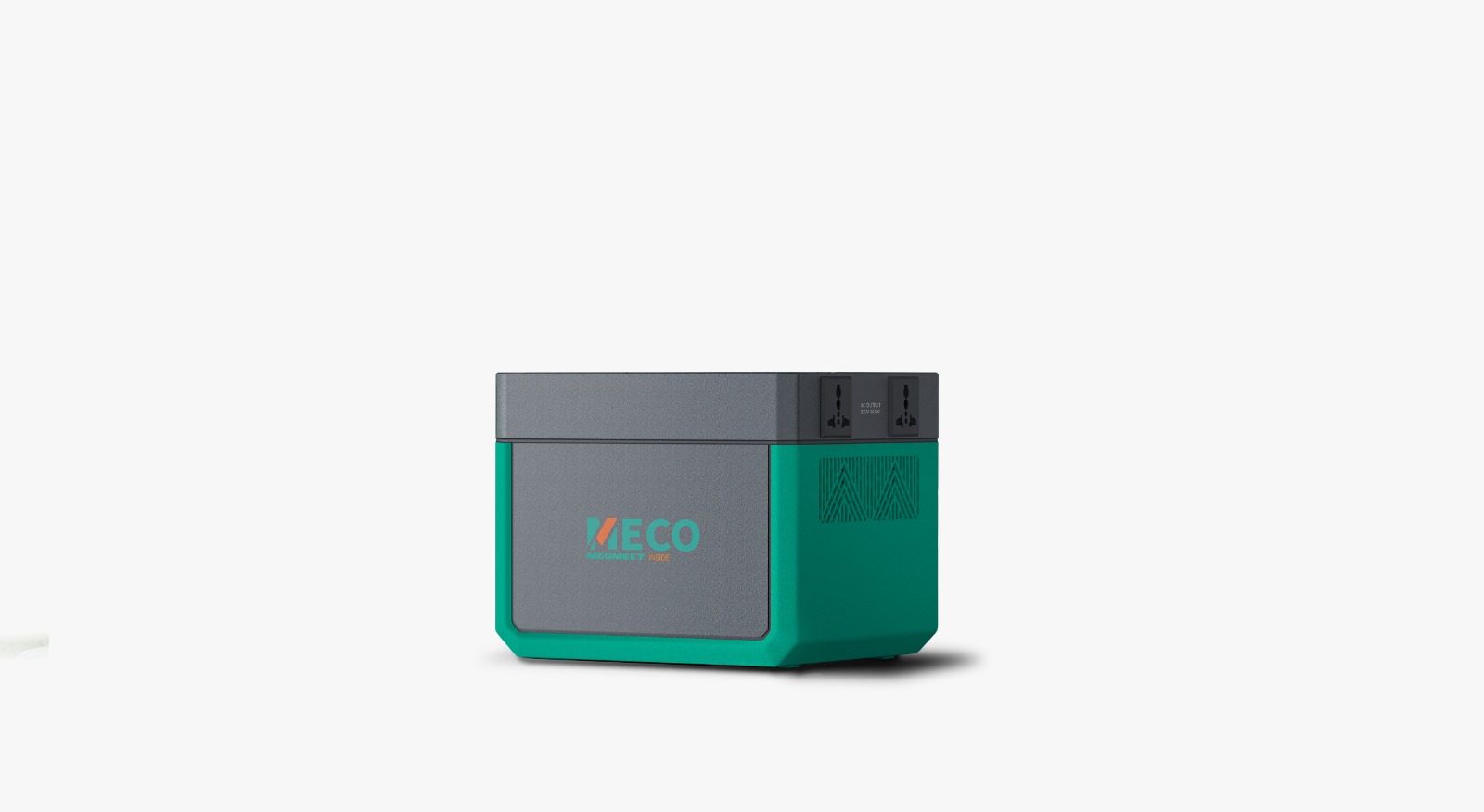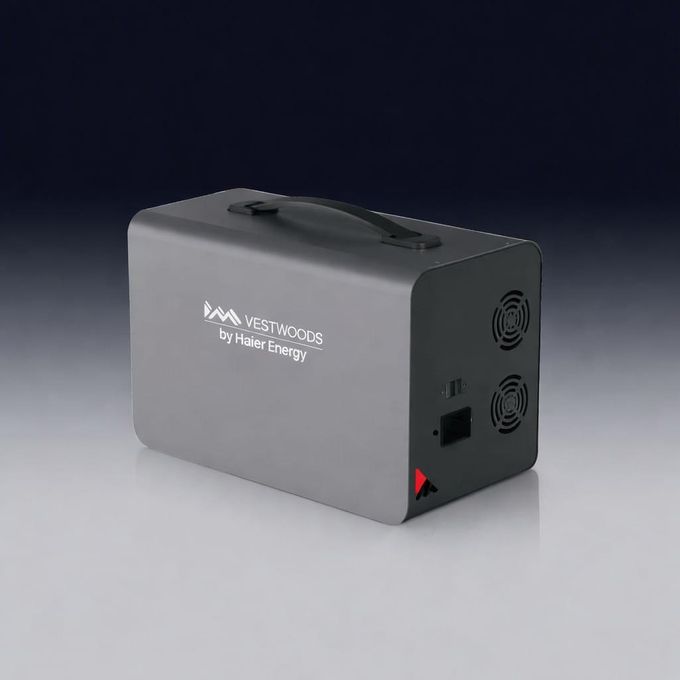
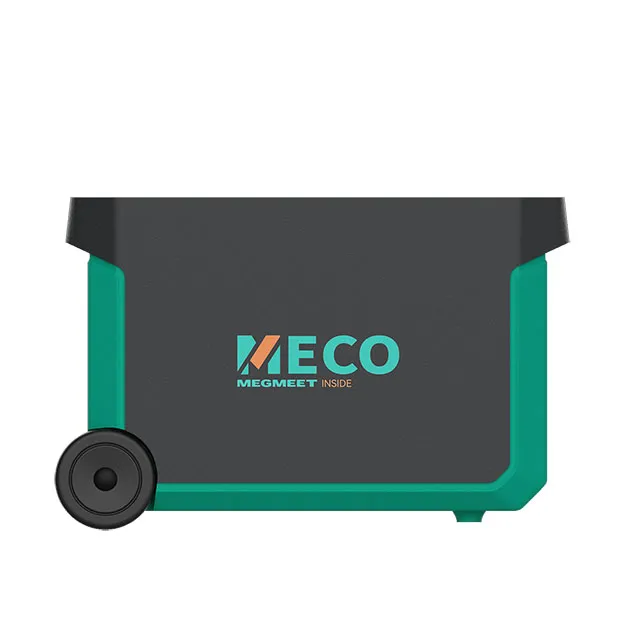
Description
MECO 3.6kWh Pro: The Point Where a Power Station Becomes a Solar System
Two numbers on this specification sheet put the MECO 3.6kWh Pro Portable Power Station in a different category from everything below it in the range. The first is 3000W of output, which is enough to boil a kettle, run an iron, and use a microwave, the appliances that every smaller unit has to refuse. The second is 4000W of solar input across a 60V to 400V window, which is not a folding panel socket but a genuine high voltage string input of the kind found on wall mounted hybrid inverters.
Put those together and the description on the box undersells what you are buying. A portable power station implies something you carry to a campsite. This weighs 36kg, accepts a rooftop array, and can carry a household’s cooking. It is closer to a plug and play hybrid solar system that happens to have a handle.
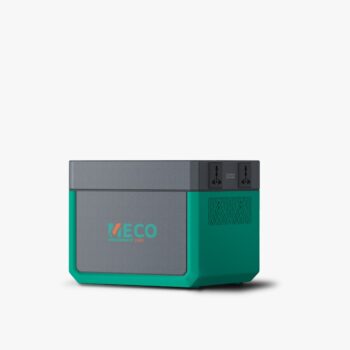
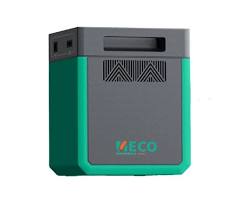
Made by Shenzhen MECO New Energy on Megmeet core technology, it integrates an MPPT solar controller, an inverter, the battery and a battery management system into one enclosure with no installation and no wiring.
Bicity Solar Energy Suppliers publishes the constraints alongside the capabilities. Three matter here, and one of them will decide whether this unit is even legal to use where you live. All three are covered in full below.
Check your altitude before anything else
MECO specifies a maximum operating altitude below 2000 metres for this model. That single line disqualifies it for a meaningful part of Kenya, and no listing we have seen mentions it.
| Location | Approximate altitude | Within the Pro’s limit |
|---|---|---|
| Mombasa and the coast | Around 50m | Yes |
| Kisumu | Around 1,130m | Yes |
| Meru | Around 1,550m | Yes |
| Nyeri | Around 1,750m | Yes |
| Nairobi | Around 1,795m | Yes |
| Nakuru | Around 1,850m | Yes |
| Naivasha | Around 1,885m | Yes |
| Kitale | Around 1,900m | Yes |
| Nanyuki | Around 1,950m | Close to the limit |
| Eldoret | Around 2,085m | No, above the limit |
| Kericho | Around 2,100m | No, above the limit |
| Limuru | Around 2,200m | No, above the limit |
| Nyahururu | Around 2,360m | No, above the limit |
| Timau | Around 2,400m | No, above the limit |
| Molo | Around 2,500m | No, above the limit |
A note on the source, because MECO is not consistent. The 2000 metre figure comes from MECO’s own model specific datasheet PDF for the 3.6kWh Pro. MECO’s marketplace storefront states an altitude below 3000 metres as a feature of the 3.6kWh series generally. A model specific datasheet carries more weight than a series level marketing line, so we publish the stricter figure and plan around it, but you should know the manufacturer’s own materials disagree. We have asked for a definitive answer. Until it arrives, if your site is between 2000 and 3000 metres we recommend the standard 3.6kWh model, which is unambiguously rated for that height, rather than relying on the more permissive of two conflicting numbers.
Altitude limits on power electronics are not arbitrary. Thinner air carries heat away less effectively and insulates less well between conductors, so manufacturers derate equipment above a stated height. Running above the limit does not necessarily fail on day one. It shortens life, raises operating temperature and can void a warranty claim at the moment you most need it.
There is a useful wrinkle here, and it runs opposite to what most buyers would guess. MECO’s standard 3.6kWh model, with less output, is rated for use up to 3000 metres. The more capable Pro is the one restricted to below 2000 metres. So in Eldoret, Kericho, Limuru, Nyahururu or Molo, the smaller sibling is the correct specification and this one is not. Tell us where the unit is going and we will say which of the two fits.
3000W crosses the cooking line
Every power station below this size has the same conversation with its owner. It runs the lights, the fridge, the television and the internet beautifully, and then refuses the kettle. Heating appliances draw more than small inverters can supply, and no amount of battery capacity changes that.
At 3000W, that conversation changes.
| Appliance | Typical draw | On this unit |
|---|---|---|
| Electric kettle | 1500W to 2200W | Yes, the first in the range that can |
| Clothes iron | 1000W to 2000W | Yes |
| Microwave | 800W to 1200W | Yes |
| Single electric hotplate | 1000W to 2000W | Yes |
| Air conditioner, one horsepower | Around 850W running | Yes, with surge headroom |
| Washing machine, full cycle | 300W to 2000W | Yes, including the heating stage on many models |
| Rice cooker | 500W to 700W | Yes |
| Fridge or freezer | 100W to 200W running | Yes |
| Desktop, monitors, printer | 200W to 400W | Yes |
| Power tools, grinder, circular saw | 600W to 1800W | Yes |
| Water pump, half to one horsepower | 400W to 900W running | Yes, check the startup surge per pump |
| Whole house LED lighting | 30W to 60W | Yes, trivially |
| Instant shower or water heater | 3000W to 5500W | No |
| Full electric cooker with oven | 3000W to 8000W | No |
| Welding equipment | 3000W upward | No |
One caution on the kettle. Boiling a full kettle takes roughly three minutes at 2000W, which is about 100Wh, comfortably affordable from 3.6kWh. Running a kettle repeatedly all day is a different matter, because heating appliances consume energy quickly even when they run briefly. The unit permits cooking. It does not make cooking free.
The solar input is a string input, and that changes the panels you buy
This is the specification that most separates the Pro from smaller units, and it is where installers most often make an expensive mistake.
Small power stations accept low voltage solar, typically somewhere between 12V and 60V, which means one panel or several wired side by side in parallel. The Pro accepts up to 4000W across an operating window of 60V to 400V, with an open circuit ceiling of 450V. That is a string input, the same architecture used by wall mounted hybrid inverters, and it means panels are wired end to end in series to stack their voltages.
Two different voltage figures matter and they are easy to confuse. The operating window, 60V to 400V, is where the array works while producing power. The open circuit limit, 450V, is the absolute ceiling the array must never exceed, and panel voltage rises as temperature falls, so a string sits at its highest on a cold clear morning before the sun warms it. Size the string against the cold morning figure, not the midday one.
Working that through with the large panels common in Kenya, at roughly 42V operating and 50V open circuit each:
| Panels in series | Operating voltage | Open circuit | Array power | Suitable |
|---|---|---|---|---|
| 4 x 620W | Around 168V | Around 200V | 2,480W | Yes |
| 5 x 620W | Around 210V | Around 250V | 3,100W | Yes |
| 6 x 620W | Around 252V | Around 300V | 3,720W | Yes, the natural fit |
| 7 x 620W | Around 294V | Around 350V | 4,340W | Exceeds the 4000W input limit |
Six large panels in series is the natural array for this unit: comfortably inside both voltage limits and just under the power ceiling. That is a real rooftop array producing somewhere around 13 to 16 kilowatt hours on a clear Kenyan day, against 3.6kWh of storage. At that ratio the battery refills in a morning and the array carries the house directly through the afternoon.
Those figures are worked from typical values for panels of that class. Always check the actual open circuit voltage on the datasheet of the panels you buy, because it varies between models and it is the number that protects the equipment.
How long it lasts, with the arithmetic shown
MECO publishes runtime figures. We recalculate them, and we publish both.
Converting stored direct current into alternating current costs energy as heat. MECO states its own conversion efficiency at 92%, using gallium nitride electronics. Against 3600Wh of storage that leaves roughly 3,310Wh reaching appliances. The published runtimes divide the full nominal capacity by the appliance wattage with no loss applied, which makes them optimistic by about 8% across the board.
| Load | Draw | MECO published | Recalculated at 92% |
|---|---|---|---|
| Fan | 30W | 120 hours | About 110 hours |
| Laptop | 60W | 60 hours | About 55 hours |
| Television | 100W | 36 hours | About 33 hours |
| Fridge, if it ran continuously | 150W | 24 hours | About 22 hours |
| Hair dryer, low setting | 200W | 18 hours | About 17 hours |
| Washing machine | 300W | 12 hours | About 11 hours |
| Rice cooker | 600W | 6 hours | About 5.5 hours |
| Large television | 700W | 5 hours | About 4.7 hours |
| Air conditioner, one horsepower | 850W | 4.2 hours | About 3.9 hours |
| At full rated output | 3000W | Not published | About 1.1 hours |
One entry in that table is misleading in the opposite direction. The fridge line assumes the compressor runs without stopping, which no fridge does. Fridges cycle, working roughly a third of the time, so a 150W fridge averages nearer 50W in practice. Against 3,310Wh delivered that is around 66 hours, not 24. Anything thermostatically controlled behaves the same way.
UPS operation
The datasheet lists two separate AC input specifications: 220V for appliance input, and a 90V to 280V range labelled for UPS use. That second line is the one worth noticing, because it tells you the unit is designed to sit permanently between the grid and your equipment, passing power through and taking over when supply fails.
The width of that 90V to 280V window is worth dwelling on. Kenyan mains rarely sits politely at 240V. Voltage droops when demand climbs, and the further you are from the transformer the more it droops, which is why lamps dim in the early evening in some neighbourhoods. Fussier equipment simply refuses to charge under those conditions. This unit carries on, and the hours when it is still working are precisely the hours a stricter device would sit idle.
MECO does not publish a switchover time for this model, so we do not quote one. If the speed of changeover is critical for your application, ask us and we will get the figure from the supplier before you order.
What is actually inside
MECO publishes battery capacity as 280Ah and describes itself as a pioneer of large cell home energy storage. The company does not publish a cell count for this model, so here is the arithmetic rather than a claim: MECO’s standard 3.6kWh page states 3584Wh, and 3584Wh at 280Ah gives a nominal 12.8V, which is four times the 3.2V of a single lithium iron phosphate cell. That is consistent with a small number of very large cells rather than an assembly of many small ones, which is the approach MECO uses across its range.
The practical benefit of building from few large cells is that there is very little room for the gradual imbalance between cells that limits the life of conventional packs, where total capacity ends up dictated by whichever cell weakens first. Fewer internal connections also means fewer points of failure. The trade is that the capacity in the box cannot be expanded later.
Charging
From the grid, 2200W, which fills the battery from empty in roughly two hours. That is a meaningful step up from the 1200W charging on the 2kWh model and it matters when outages are frequent: a two hour window of supply is enough to refill completely before the next cut.
From solar, up to 4000W through the built in MPPT controller. With the six panel array described above, a full recharge takes roughly an hour and a half of strong sun, and thereafter the array runs the house directly while the battery sits full.
Honest limitations
The altitude limit below 2000 metres. Covered above. Check this before anything else, because it is the one constraint that cannot be worked around.
IP20, indoors only. Protected against solid objects larger than 12mm and against water not at all. Not rain, not splashes, not damp. The words portable and generator both suggest otherwise, and that assumption ruins units.
36kg is not portable. This is a two person lift. It moves into position and stays there. Anyone imagining carrying it to a campsite should look at a smaller model.
No instant shower, no full cooker. At 3000W the heavy heating loads are still out of reach. An instant shower alone will exceed the rating.
Which MECO model fits
| Decision factor | 2kWh | 3.6kWh standard | 3.6kWh Pro, this product |
|---|---|---|---|
| Rated output | 1200W | 2200W | 3000W |
| Stored energy | 2009.6Wh | 3584Wh | 3.6kWh |
| Boils a kettle | No | Marginal | Yes |
| Runs an iron | No | Smaller models only | Yes |
| Solar input | 600W at 12V to 60V | 3000W at 60V to 400V | 4000W at 60V to 400V |
| Grid charging | 1200W | 1380W | 2200W |
| Grid input range | 90V to 280V | 170V to 280V | 90V to 280V |
| Altitude limit | Up to 3000m | Up to 3000m | Below 2000m |
| Operating temperature | 0C to 40C | 0C to 40C | 0C to 45C |
| Weight | 16.5kg or 19kg by source | 32kg | 36kg |
Read that altitude row carefully. In the highland towns listed earlier, the standard 3.6kWh is the correct choice and the Pro is not, despite being the more capable machine. Below 2000 metres, the Pro gives more output, far quicker charging and a wider grid input window for the same battery size.
Who this suits
- Households below 2000 metres that want to keep cooking. Kettle, microwave, iron and a hotplate through an outage, not just lights and a fridge.
- Properties building toward energy independence. With six large panels on the string input this runs as a small hybrid system rather than a backup box.
- Small businesses with real equipment loads. Salons with dryers, workshops with power tools, kitchens, print shops.
- Clinics and dispensaries. Refrigeration, sterilising equipment, lighting and devices, with UPS operation so nothing interrupts.
- Homes with air conditioning. A one horsepower unit runs for around four hours, which covers the hot part of a night.
- Anyone tired of a generator. Comparable useful output for a household, without fuel, fumes, noise or servicing.
- Sites with frequent short outages. 2200W charging means a two hour window of supply refills the unit completely.
Full specifications, as published by the manufacturer
| Specification | Value |
|---|---|
| Brand | Meco Power, Shenzhen MECO New Energy Co., Ltd |
| Model | Meco 3.6kWh Pro, listed on the datasheet as 3.6kWh/3000W |
| Battery chemistry | LiFePO4 (lithium iron phosphate) |
| Rated battery capacity | 3.6kWh |
| Battery capacity, as published | 280Ah |
| Battery lifespan | 8,000 cycles |
| Rated output power | 3000W |
| Output waveform | Pure sine wave |
| AC output voltage | 220V, range 200V to 240V |
| Operating frequency | 50Hz or 60Hz |
| AC input voltage, appliances | 220V |
| AC input voltage, UPS | 90V to 280V |
| AC input frequency | 45Hz to 65Hz |
| AC charging power | 2200W |
| PV input voltage, operating | 60V to 400V |
| PV open circuit voltage limit | 450V |
| Maximum PV input power | 4000W |
| Conversion efficiency | 92%, gallium nitride electronics |
| Integrated components | MPPT controller, inverter, battery, BMS |
| Dimensions | 440 x 285 x 360mm |
| Weight | 36kg |
| Ingress protection | IP20, indoor use only |
| Operating temperature | 0C to 45C |
| Operating altitude | Below 2000m |
| Humidity | Up to 90% |
| Shelf time when fully charged | 1 year |
| Certification | UN38.3 and IEC62368 |
| Protections | AC input over and under voltage, AC output over current, PV reverse connection, PV input power limiting, over charge, over discharge, cell high and low temperature, over temperature, short circuit |
Getting the most out of it
Confirm your altitude first. If the site is above 2000 metres, this is the wrong model and we will say so.
Size the solar string against cold morning voltage. Panel voltage peaks when it is cold, and the 450V open circuit ceiling must never be crossed. Six large panels in series is the natural array.
Use cooking appliances deliberately. Boiling a kettle costs roughly 100Wh, which is nothing. Leaving a hotplate on for an hour costs closer to 1500Wh, which is nearly half the battery.
Leave it in UPS operation. Its value is highest sitting permanently between the grid and your circuits, not stored in a cupboard for emergencies.
Position it once. At 36kg you will not want to move it twice. Choose somewhere indoors, ventilated, off the floor and close to both the incoming supply and the solar entry point.
Start motors one at a time. Pumps, compressors and fridges draw several times their running current at the instant of starting. Bringing them up individually rather than together keeps that surge inside the rating.
Tell us your town and what you need running, and we will tell you whether this is the right MECO model or whether the standard 3.6kWh suits your altitude better.
We will also size the solar string properly against your panels’ actual open circuit voltage rather than a rule of thumb. To work out what a whole property needs, start with the Solar Calculator. When you are ready, My Quote takes your details and we will put together a full costing, unit, panels, mounting and transport included, before you commit to anything.