Description
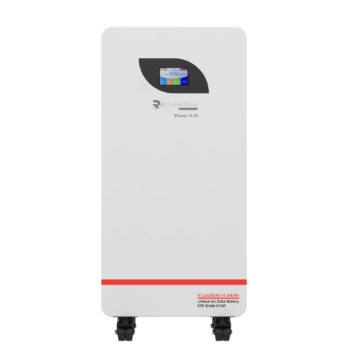
Renergy iPower 10.24 kWh Lithium Battery — 51.2V LiFePO4 Wall or Ground Mount Solar Storage from a British Battery Brand
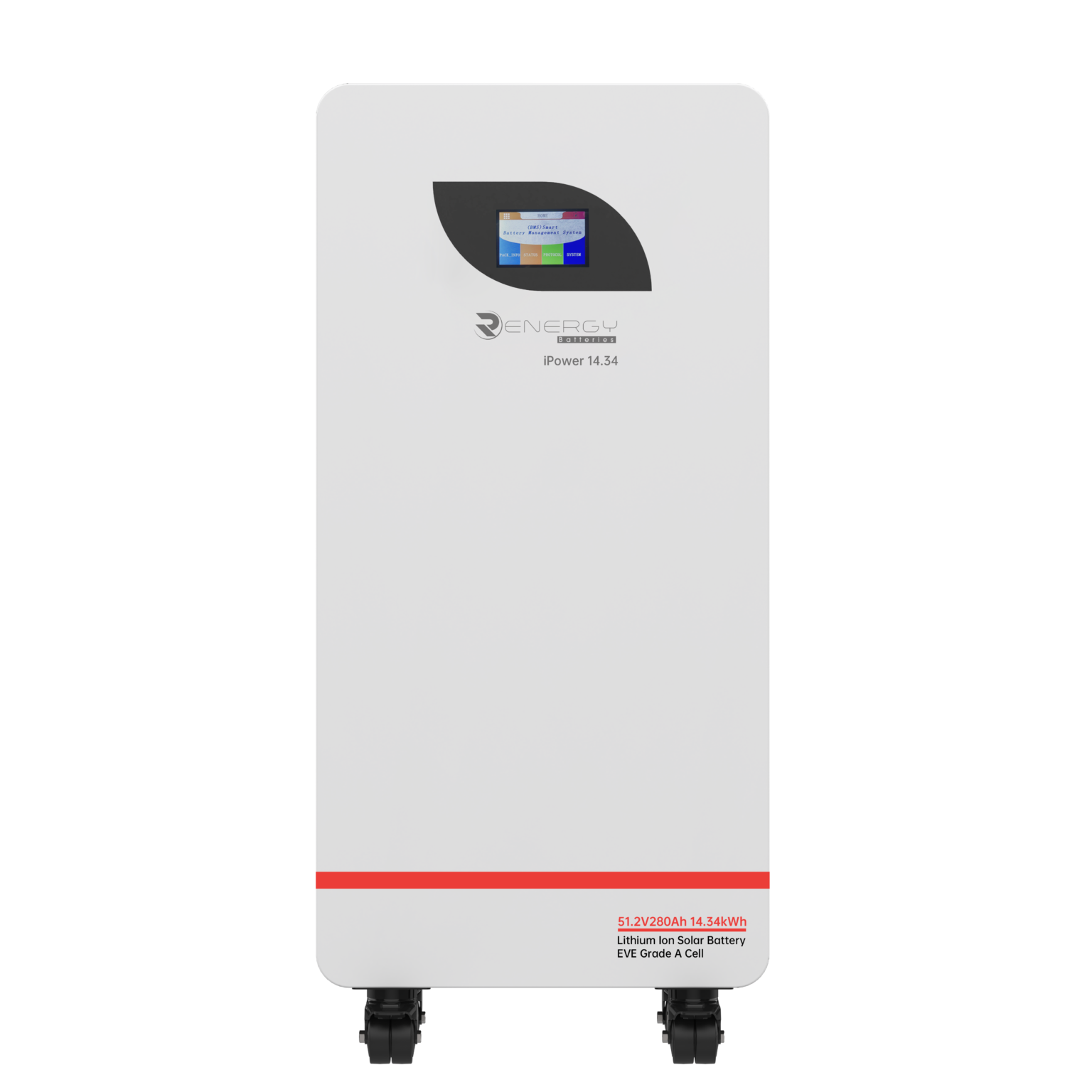
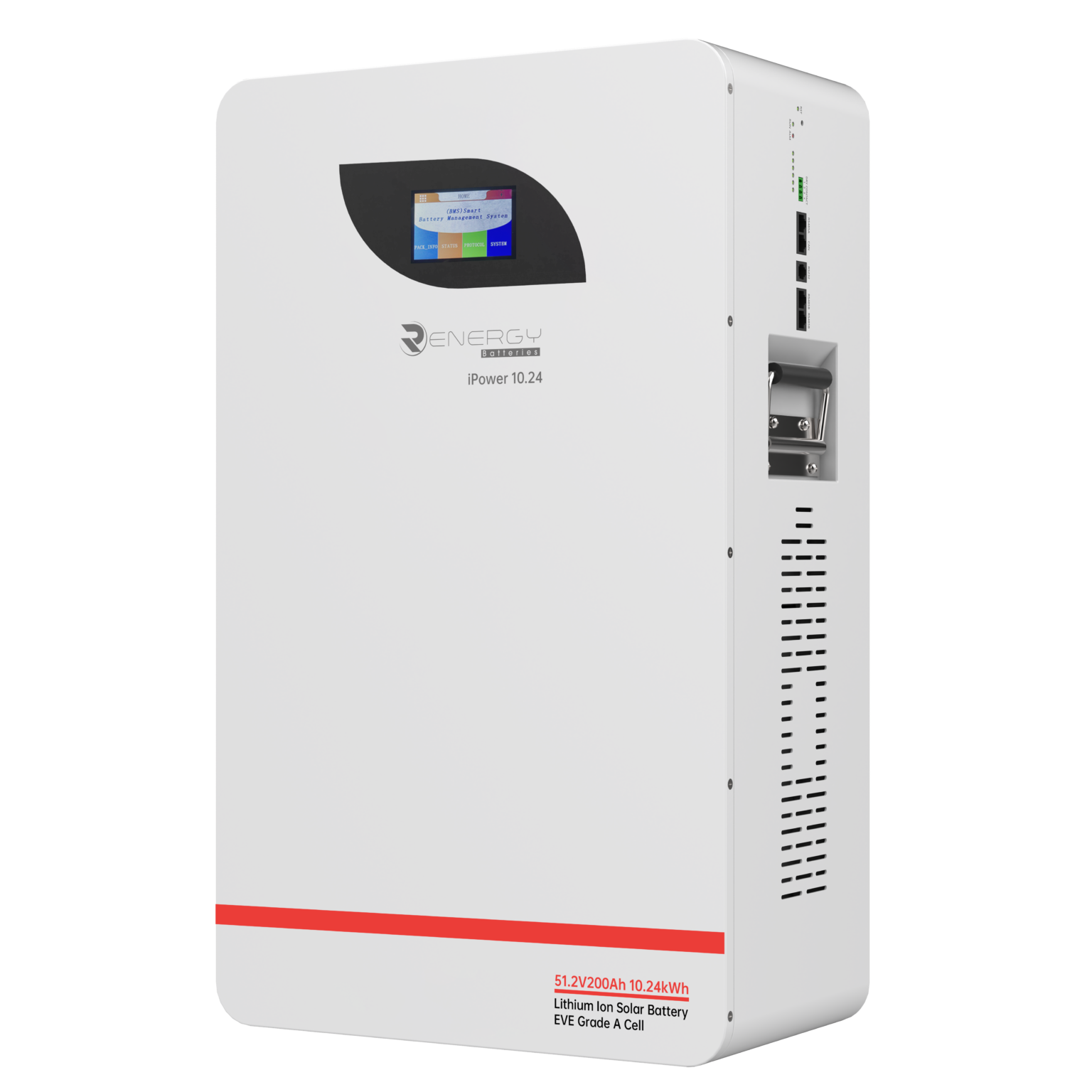
The 10 kWh capacity bracket in Kenyan solar storage occupies an awkward space. Above it sit the commercial-tier single-unit batteries at 15-16 kWh that suit dedicated commercial premises and larger off-grid lodges. Below it sit the residential workhorse units at 4-5 kWh that cover typical mid-sized Kenyan homes. The middle bracket — installations consuming 6-10 kWh during the backup window — has historically been served either by stretching residential units toward their capacity ceiling or by buying commercial capacity that overshoots actual demand. The Renergy iPower 10.24 kWh Lithium Battery targets this middle bracket directly with a 10.24 kWh single-unit at 51.2V system architecture. Common references for this product include Renergy iPower 10.24, the Renergy 10 kWh battery, the iPower 10.24, the Renergy 200Ah lithium, and the Renergy 51.2V 10 kWh storage unit.
Where the iPower 10.24 differs architecturally from the more popular iPower 5.12 is at the cell-capacity level: the 10.24 carries 200Ah of cell capacity per series cell, against the 5.12’s 100Ah per cell. Both batteries use the same 16-cell series stack at 51.2V; the doubled energy storage comes from doubled per-cell capacity rather than from two parallel-stacked smaller batteries. Practically this means one BMS managing one set of cells with one communication interface to the inverter, instead of two smaller batteries running master-slave coordination to deliver the equivalent storage. For installations targeting the 10 kWh tier, the single-unit architecture removes a layer of operational complexity that parallel-stacking smaller units introduces.
The British corporate brand association applies consistently across the iPower family. Renergy Power Limited — registered in England and Wales under company number 10115425 with corporate offices in the United Kingdom — applies the same product engineering standards, warranty channel infrastructure, and brand accountability to the 10.24 as to the rest of the iPower lineup. Buyers acquiring the iPower 10.24 access the same warranty support pathway, the same technical documentation, and the same brand continuity expectations that Renergy delivers across every model from the 2.56 kWh entry through to the largest commercial units. For long-horizon residential and commercial installations at the 10 kWh capacity tier, this brand consistency matters in ways that show up only over the 10-15 year operational life.
Where the iPower 10.24 fits in the broader Bicity battery range
The Bicity catalog covers residential through commercial-tier storage. The iPower 10.24 specifically fills the 10 kWh single-unit gap between the established Vestwood 9.6 kWh option and the Suness commercial-tier 15.36 kWh option:
| Approximate capacity | Product | Typical buyer at this tier |
|---|---|---|
| 1.28–2.56 kWh (small) | Vestwood 12V/24V LFP series, Suness EV-2.56N, Renergy iPower 2.56 | Off-grid homesteads, marine, RV, telecom, security backup |
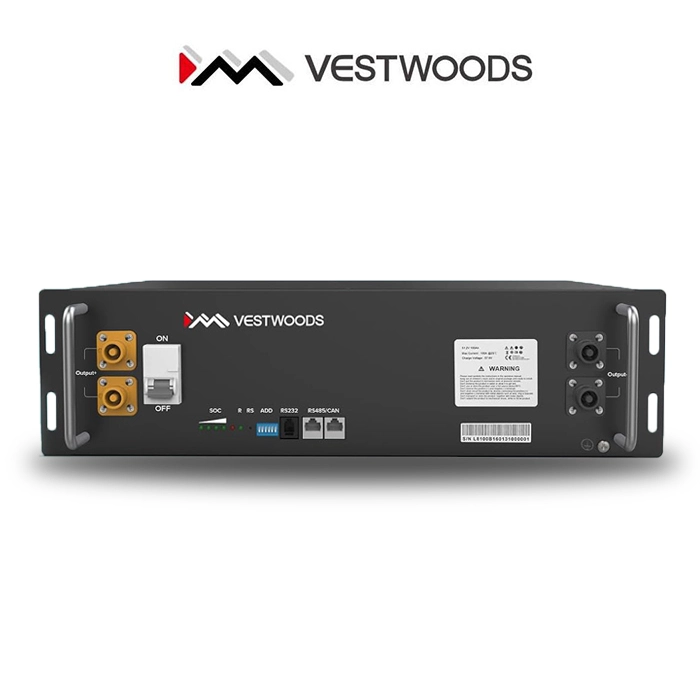
| 4.8 kWh (entry hybrid) | Vestwood 48V 100Ah, Jinko JKS-B48100-HI | Modest residential hybrid with 4-5 kWh daily backup demand |
| 5.12 kWh (mainstream residential) | Renergy iPower 5.12, Vestwood 51.2V 100Ah | Typical Kenyan suburban home with standard appliance load |
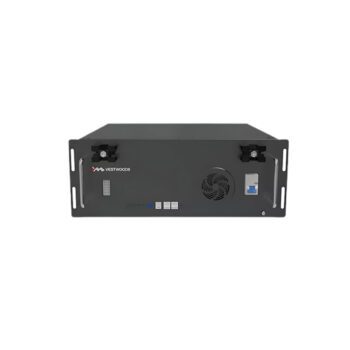
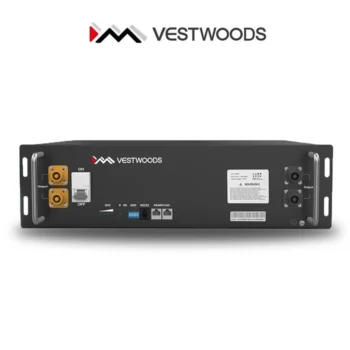
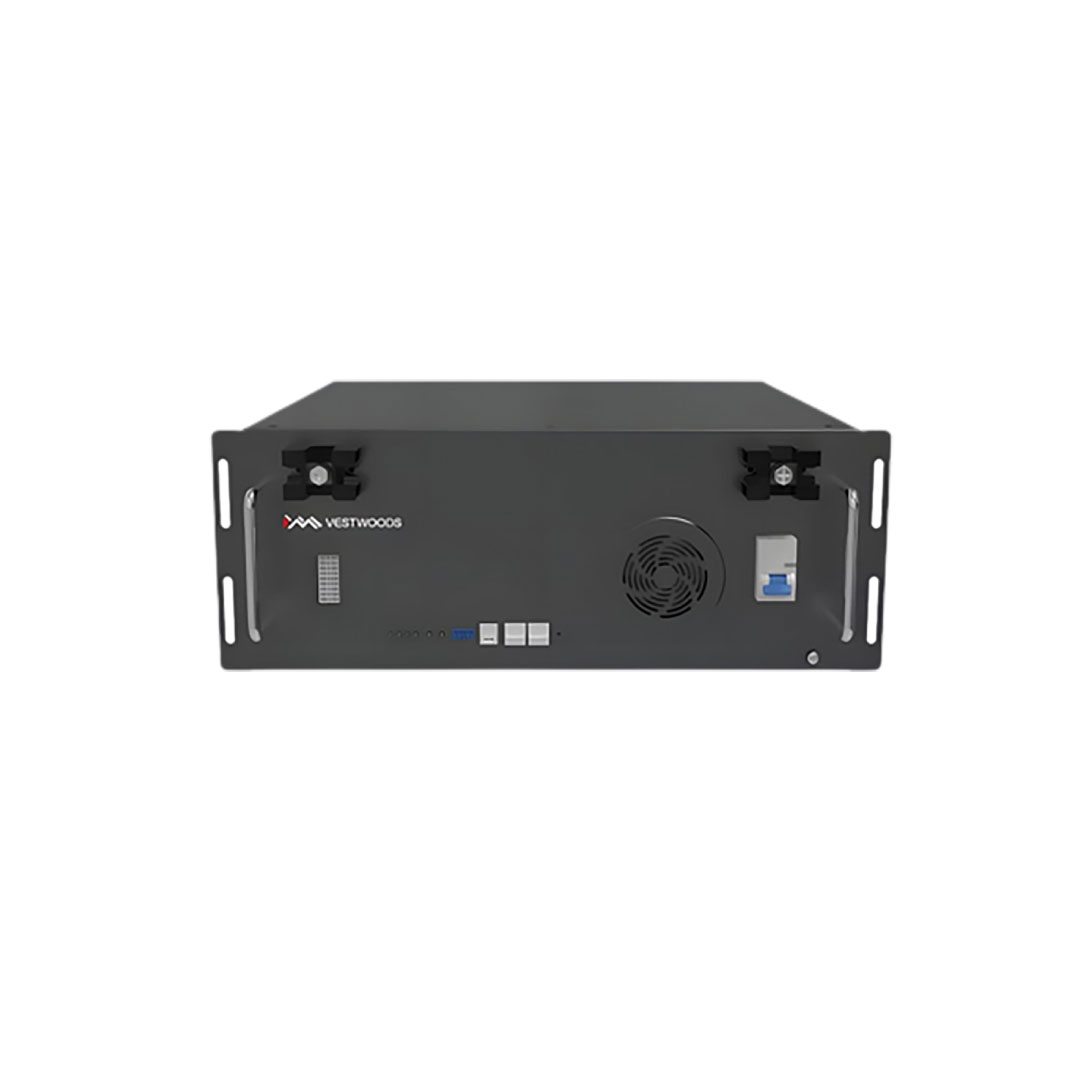
| 9.6 kWh (larger Vestwood) | Vestwood 48V 200Ah | Value-tier path to higher residential capacity |
| 10.24 kWh (premium residential / light commercial) — this product | Renergy iPower 10.24 | Larger residential, premium suburban, smaller commercial backup |
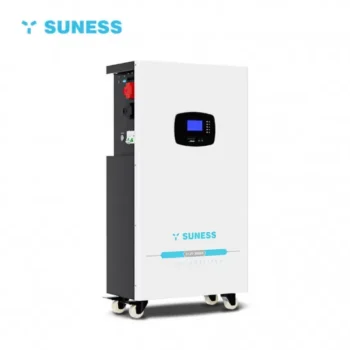
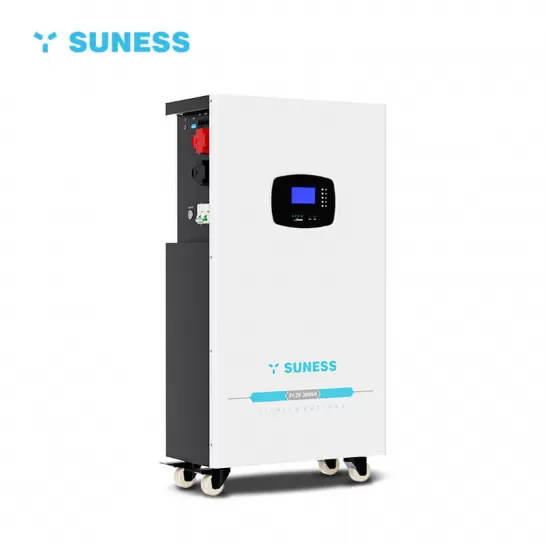
| 15.36 kWh (commercial single-unit) | Suness EV-15.36N | Commercial premises, larger lodges, dedicated commercial backup |
The Vestwood 9.6 kWh and the iPower 10.24 cover roughly similar capacity territory but serve different buyer priorities. The Vestwood option carries value-tier acquisition pricing and broader Vestwood ecosystem alignment with Vestwood hybrid inverters. The iPower 10.24 carries the British brand backing under Renergy’s UK corporate registration plus the wall-or-ground mount flexibility that Vestwood does not match. Buyers prioritising lower acquisition cost or Vestwood ecosystem alignment choose the 9.6 kWh Vestwood; buyers prioritising British brand backing and mounting flexibility choose the iPower 10.24.
The 10 kWh tier buyer — three profiles where this capacity is exactly right
The first profile is the larger Kenyan residential home consuming meaningfully more than typical suburban demand. Properties in Karen, Runda, Spring Valley, Muthaiga, Tigoni country properties, premium coastal homes at Diani and Watamu, and equivalent upmarket residential locations frequently include electric water heating (significantly elevating daily consumption above standard households), electric vehicle charging infrastructure, multi-zone air conditioning, multiple refrigeration units, swimming pool pump cycles, irrigation system pumping, and substantial lighting loads. Evening-and-overnight consumption in these homes reaches 6-10 kWh — exceeding the practical envelope of a single 5 kWh battery but staying below the commercial 15 kWh tier. The iPower 10.24 covers this consumption envelope as a single unit with operating margin.
The second profile is the smaller commercial buyer running modest backup-load requirements rather than full operational continuity. Smaller offices, professional services premises, single-clinic medical operations, smaller retail establishments, religious institution facilities with modest electrical load — commercial premises consuming 4-8 kWh during evening hours plus some weekend backup demand. One iPower 10.24 covers single-night backup with substantial margin; two units in parallel reach 20.48 kWh for installations needing multi-day autonomy through extended grid outages. The 51.2V system voltage matches the dominant commercial hybrid inverter tier, simplifying inverter pairing decisions.
The third profile is the off-grid installation requiring more storage than typical residential capacity but operating below commercial scale. Smaller hospitality operations (boutique cabin retreats, smaller guest houses, conservancy ranger camps), agricultural processing sites with modest electrical demand, remote office installations supporting fly-in commercial operations, smaller mission stations and faith-based facility installations. These sites operate entirely on solar-plus-storage without national grid backup, so the storage carries the full overnight load plus any cloudy-day deficit recovery. Two-unit parallel installations (20.48 kWh) cover typical smaller off-grid commercial profiles; three-to-four-unit installations (30-40 kWh) cover the larger off-grid scenarios that don’t quite justify commercial single-unit pricing.
Scenarios where stepping up or down makes more economic sense
Three scenarios where the 10 kWh capacity tier is the wrong match. Buyers running typical Kenyan suburban homes with 3-5 kWh daily evening consumption — the dominant residential profile — are over-served by 10.24 kWh of capacity. The iPower 5.12 or Vestwood equivalents at the 5 kWh tier deliver appropriate sizing at substantially lower acquisition cost; specifying the 10.24 for this consumption profile means buying storage that the household will not practically use during normal operation. The oversized battery only earns its place if the buyer anticipates substantial load growth over 3-5 years or specifically values the multi-day autonomy that excess capacity provides through extended grid outages.
Buyers running dedicated commercial premises with 12-18 kWh of evening operational demand are better served by the Suness EV-15.36N at single-unit commercial capacity. The 10.24 forces parallel-stacking (two units at 20.48 kWh, with one undersized for the load profile or oversized for the wall space) where one Suness commercial unit delivers the correct capacity in one enclosure. The commercial single-unit approach simplifies BMS communication architecture, reduces wall-mounting footprint, and matches commercial inverter sizing decisions more cleanly than residential battery parallel-stacking does.
Smaller off-grid installations supporting modest load profiles benefit from staying at the 5 kWh single-unit tier rather than stepping up to the 10.24. Small rural off-grid homesteads, country cabins with modest electrical demand, and similar installations consuming 2-4 kWh nightly will run the 10.24 at 20-40% DOD daily — operating below the cycle life optimisation point and paying for capacity that delivers no practical operational benefit. The iPower 5.12 or even smaller alternatives cover these scenarios at appropriate sizing economics.
Six engineering decisions behind the 200Ah single-cell architecture
- 200Ah per cell rather than 100Ah parallel-stacked: The 200Ah cell capacity in the iPower 10.24 represents a single-cell engineering choice rather than internal parallel-stacking of smaller cells. The architectural difference matters because parallel-stacked cells inside a single battery enclosure introduce current-balancing complexity that single-cell stacks avoid. Cells matched at the manufacturing stage operate within tight tolerances; cells parallel-stacked carry small mismatches that compound over cycle life, reducing pack capacity faster than single-cell stacks. The 200Ah single-cell choice carries the cell-sourcing advantage of avoiding parallel-stacking mismatches at the price of needing higher-capacity individual cells.
- Doubled stored energy inside one BMS oversight scope: One Battery Management System monitors the 16 series cells and presents a single communication interface to the connected inverter. Compared to parallel-stacking two iPower 5.12 units to reach roughly the same total energy, the single-BMS architecture removes the master-slave coordination layer that parallel installations require. Communication failure modes reduce from three potential failure points (BMS-A, BMS-B, and the coordination link) to one (the single BMS-to-inverter link). Configuration complexity reduces correspondingly.
- Same Renergy three-tier cycle life rating across DOD profiles: Cycle life at 50% DOD reaches 8,000 cycles; at 80% DOD reaches 6,000 cycles; at 100% DOD reaches 4,000 cycles — all at 0.2C rate and 25°C reference temperature per the Renergy datasheet. At daily cycling the 50% DOD figure equates to about 21.9 years; the 80% DOD figure to about 16.4 years; the 100% DOD figure to about 11 years. Larger residential buyers cycling 6-8 kWh from the 10.24 kWh capacity operate at roughly 60-80% DOD — falling between the 80% DOD test point and the 50% DOD point, with realised cycle life in the 6,000-8,000 cycle range.
- Greater than 98% round-trip efficiency at 200Ah scale: Maintaining the iPower family’s >98% efficiency rating at doubled cell capacity is non-trivial because higher-capacity cells typically carry slightly higher internal resistance that reduces efficiency at the cell level. The 10.24 preserves the family efficiency rating through the same cell-quality standards (Grade A LFP) and BMS engineering that the smaller iPower models use, scaled appropriately for the higher cell capacity.
- Wall OR ground mount flexibility from a single product: The iPower 10.24 is the only model in the residential iPower wall-mount family that explicitly supports both wall-mount and ground-mount installation modes. Ground-mount installation suits installations where wall space is unavailable, where the structural wall capacity won’t safely support the 86 kg unit weight, or where the equipment room layout favours free-standing positioning. Wall-mount installation suits typical residential utility room layouts where vertical wall space is available. The dual-mode flexibility reduces installation planning constraints compared to wall-only or ground-only alternatives.
- Single colour touch LCD oversight for 10.24 kWh of storage: The local user interface uses the same colour touch LCD approach as the smaller iPower models — but the buyer now monitors twice the energy through one screen rather than two screens (which two parallel-stacked smaller batteries would require). The operational simplification matters for buyers who actively monitor their storage system; the single-screen presentation reduces the cognitive load of tracking system performance.
What the wall-or-ground mount flexibility actually solves
The mounting-mode flexibility deserves specific attention because it solves real installation constraints in Kenyan deployment scenarios. Wall-mount installations require solid structural wall capacity to support the 86 kg unit weight safely — masonry, concrete, or properly reinforced framing. Many Kenyan residential properties have lightweight stud-wall construction or hollow blockwork without the structural capacity to take the load. For these properties, wall-mount alternatives require reinforcing the wall section before installation — adding cost and project timeline.
Ground-mount installation eliminates the wall-structure dependency. The unit sits on a solid floor surface (concrete slab, tile flooring on solid sub-floor, or purpose-built equipment platform) with no structural wall load. Installation logistics simplify because the two-person lift transports the unit onto a horizontal surface rather than positioning it vertically against a wall. Maintenance access also simplifies — the front face and side panels remain accessible for service work without requiring scaffolding or working at height.
The flexibility also supports installation environments that wall-mount alternatives cannot handle. Outdoor equipment enclosures (purpose-built battery sheds, dedicated storage cabins) often have limited wall mounting capacity but ample floor space. Commercial equipment rooms organised around floor-mounted electrical distribution panels prefer ground-mount battery installation that fits the room layout convention. Conservation-area installations where the structural building options are constrained by environmental regulation benefit from ground-mount flexibility that wall-mount alternatives cannot match.
Hybrid inverter compatibility at the 51.2V architecture
The iPower 10.24 communicates with hybrid inverters through standard RS485 and CAN bus protocols — the same dual-protocol approach used across the iPower family. The 51.2V system voltage aligns with the dominant residential and commercial hybrid inverter brands operating in the Kenyan market — the 48V/51.2V tier that covers the majority of installation specifications. Inverter pairing parameters depend on the specific brand’s documented battery compatibility list; the installer should verify pairing through the inverter manufacturer’s compatible battery section before commissioning.
For installations targeting matched-brand operation, the Vestwood hybrid inverter range provides ecosystem alignment if Vestwood is selected for the inverter. Renergy also produces hybrid inverters in their own product range (the RPI-LV series) that pair natively with the iPower battery family — most appropriate for installations where complete single-brand ecosystem operation matters operationally. For mixed-brand installations where the inverter is from a different manufacturer than the battery, the dual RS485/CAN protocol availability covers virtually all major hybrid inverter brands available in the Kenyan market.
Where the iPower 10.24 deploys across Kenyan installations
- Premium residential properties with elevated electrical demand: Larger homes in Karen, Runda, Spring Valley, Muthaiga, premium suburban areas in Mombasa and Kisumu, premium coastal properties, highland country estates — installations consuming 6-10 kWh during evening hours from substantial whole-building electrical demand.
- Smaller commercial premises with modest backup requirements: Smaller offices in Westlands, Upper Hill, Kilimani business parks, and equivalent commercial districts across major Kenyan urban centres — commercial buyers using one or two iPower 10.24 units to cover evening operations and weekend backup demand.
- Single-clinic medical operations and smaller healthcare facilities: Private dental practices, optometry clinics, single-doctor medical practices, smaller veterinary operations — healthcare installations using the iPower 10.24 for critical-load backup at a capacity tier appropriate to the smaller-clinic operational scale.
- Boutique hospitality operations at the lodge and guest house scale: Smaller country lodges, boutique guest houses at coastal and highland locations, conservancy ranger accommodation, mission station residential blocks — hospitality operations where the storage carries evening guest operational loads but at sub-commercial scale.
- Off-grid installations bridging residential and commercial tiers: Sites operating entirely on solar-plus-storage without national grid backup — typically 2-4 unit parallel installations covering 20-40 kWh of total system capacity, sized to match overnight consumption plus cloudy-day deficit recovery.
- Larger residential installations with electric vehicle charging infrastructure: Properties combining typical residential evening loads with overnight EV charging — adding 5-10 kWh of nightly charging demand that pushes total consumption into the 10 kWh storage envelope that single 5 kWh batteries cannot cover.
- Religious institution facility installations: Larger churches, mosques, faith-based community centres, theological colleges, mission-affiliated school buildings — religious institution installations where the campus electrical demand combines worship-space operation with associated residential or institutional facilities.
- Properties with structural constraints favouring ground-mount installation: Buildings with lightweight wall construction, dedicated outdoor equipment sheds, purpose-built solar plant rooms organised around floor-mounted electrical infrastructure — installations where wall-mount alternatives are impractical and the 10.24’s ground-mount option solves the structural constraint.
- Staged capacity expansion from initial residential installation: Buyers starting with one iPower 10.24 for 10.24 kWh of immediate capacity, anticipating expansion to 2-3 units over 3-5 years as household electrical demand grows through appliance additions, electric mobility adoption, or family scale changes.
Specifications — from the official Renergy iPower 10.24 datasheet
| Specification | Value |
|---|---|
| Bicity SKU | BC-BAT-RENERGY-10.24 |
| Brand | Renergy Power Limited (UK) |
| UK corporate registration | Company number 10115425, registered in England and Wales |
| Product family | iPower Residential wall-or-ground mount |
| Model | iPower 10.24 |
| Cell chemistry | LFP (Lithium iron phosphate) — Grade A cells |
| Cell configuration | 16 cells in series at 200Ah per cell |
| Rated voltage | 51.2V |
| Rated capacity | 200Ah |
| Rated energy | 10.24 kWh |
| Output voltage range | 43.2V – 58.4V |
| Charging voltage | 57.6V – 58.4V |
| Cut-off voltage | 43.2V |
| Maximum charging current | 100A |
| Recommended charging current | 50A |
| Maximum discharge current | 100A |
| Continuous power output (51.2V × 100A) | Approximately 5.12 kW |
| Round-trip efficiency | Greater than 98% |
| Cycle life at 50% DOD | 8,000 cycles (0.2C, 25°C) |
| Cycle life at 80% DOD | 6,000 cycles (0.2C, 25°C) |
| Cycle life at 100% DOD | 4,000 cycles (0.2C, 25°C) |
| Design life | Greater than 10 years |
| Dimensions (L × W × H) | 680 × 412 × 231 mm |
| Weight | ~86 kg |
| Mounting modes | Wall-mount or ground-mount |
| Charging temperature range | 0°C to 55°C |
| Discharging temperature range | -20°C to 60°C |
| Storage temperature range | -10°C to 30°C |
| Operating humidity | 5% to 95% relative humidity |
| Local user interface | Colour touch LCD screen |
| Wireless connectivity | Bluetooth and WiFi |
| Inverter communication | RS485 and CAN bus |
| Parallel scaling | Up to 16 units (~164 kWh total at 51.2V) |
| Operating mode selection | Touch screen menu interface |
| BMS monitoring scope | Cell temperature, current, voltage, State of Charge, State of Health |
| Inverter compatibility | Wide range of hybrid inverter brands supporting RS485 or CAN bus protocols at 48V/51.2V architecture |
Installation logistics for the 86 kg unit weight
The iPower 10.24 installation workflow carries weight-and-mounting considerations that smaller iPower units don’t impose. An EPRA-registered electrician with experience in larger residential battery installation handles the work scope effectively. Three primary considerations drive the deployment approach:
Two-person handling discipline. The 86 kg unit weight rules out single-person installation. Two trained installers handle the positioning with appropriate lifting technique — the unit dimensions (680 × 412 × 231 mm) allow comfortable two-person grip on the long axis. For longer-distance transport from delivery vehicle to installation position, a trolley or wheeled platform substantially reduces the handling effort. Installation positions reached through staircases or narrow corridors require pre-planning the access route before delivery to confirm the unit physically fits the available path.
Mounting-mode decision before installation. The wall-or-ground mounting flexibility is decided before installation begins, based on the specific installation site’s structural and layout characteristics. Wall-mount requires solid masonry or concrete construction with documented load-bearing capacity at the mounting position; plasterboard or lightweight stud walls need reinforcement before the wall-mount approach becomes safe. Ground-mount requires a solid floor surface (concrete slab, properly supported tile flooring, purpose-built equipment platform) with the structural capacity to support the 86 kg point load. Some installations benefit from a wheeled or skid-mounted ground configuration that allows the unit to be repositioned if equipment-room layouts change over time.
Cable preparation for the 100A current envelope at 51.2V. The DC cables between battery and hybrid inverter need to handle 100A maximum continuous current. Solar PV stranded copper at 25-35 mm² cross-section handles typical residential cable run lengths (2-5 metres) after ambient temperature derating; longer cable runs or commercial-scale installation routing requires larger conductor cross-sections. Crimping terminals to the battery DC terminal block requires the appropriate crimp tool and ring terminal sizing — typical residential battery installation tools handle the work, but improvised crimping causes voltage-drop failures that are difficult to diagnose later.
Three additional commissioning steps support reliable operation. First, the inverter manufacturer’s documented battery compatibility list should be verified against the iPower 10.24 specification before final wiring — protocol selection (RS485 versus CAN) and any specific configuration parameters need to be set correctly on first power-on. Second, the colour touch LCD menu navigation should be verified during commissioning — checking that the State of Charge display reads accurately, that the cycle count starts at zero for new installations, that the alarm and protection mode indicators are clear before handing the installation over to the buyer. Third, the Bluetooth and WiFi pairing should be completed during commissioning rather than leaving these wireless features unconfigured — pairing the buyer’s smartphone to the battery’s Bluetooth, configuring WiFi to the buyer’s home network, and verifying the Renergy monitoring app connectivity before final handover.
Building a larger residential or smaller commercial solar installation where the 5 kWh tier is undersized and the 15 kWh tier overshoots actual demand? Specifying a 10 kWh single-unit battery that needs ground-mount flexibility because wall structure won’t take the load? Planning staged expansion from 10 kWh of initial capacity toward 20-30 kWh over multiple years?
The Renergy iPower 10.24 kWh Lithium Battery fills the capacity bracket that residential and commercial single-unit alternatives have historically missed, delivering 10.24 kWh inside one Battery Management System with wall-or-ground mount flexibility, the British brand backing of Renergy Power Limited’s UK corporate registration, and the three-tier cycle life rating across the 50/80/100% DOD operational range. Use the Solar Calculator to size your installation against your daily kWh load profile, then submit your specification through My Quote for a complete bill of materials including the right iPower 10.24 quantity, compatible hybrid inverter selection, DC protection components matched to the 100A continuous current envelope, and installation logistics planning for the 86 kg per-unit handling and wall-or-ground mounting workflow.