Description
A Different Kind of 12kW: The Solis Approach to Commercial Hybrid
Solis (NASDAQ: GNNE) is the inverter division of Ginlong Technologies, one of the top five global solar inverter manufacturers by shipment volume. They’ve shipped over 60GW of inverters to more than 150 countries since the company was founded in 2005. Unlike some brands that entered hybrid inverters as an afterthought, Solis built its reputation on grid-tied commercial installations — and brings that large-system engineering heritage into every hybrid model they make.
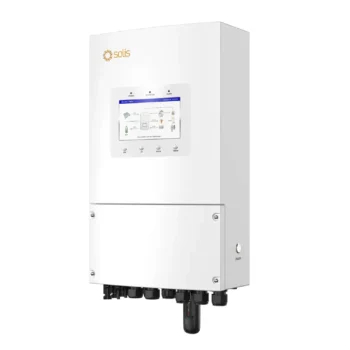
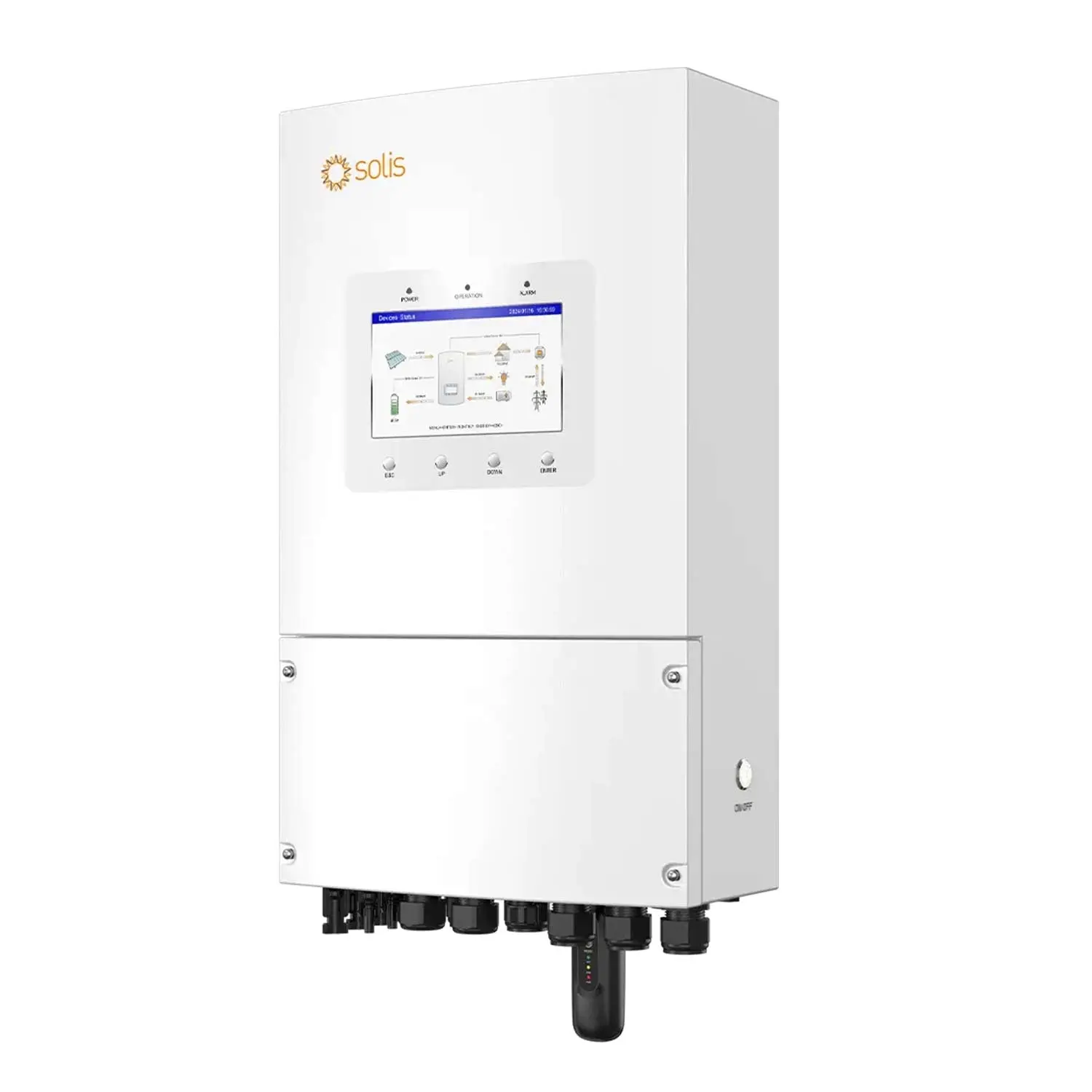
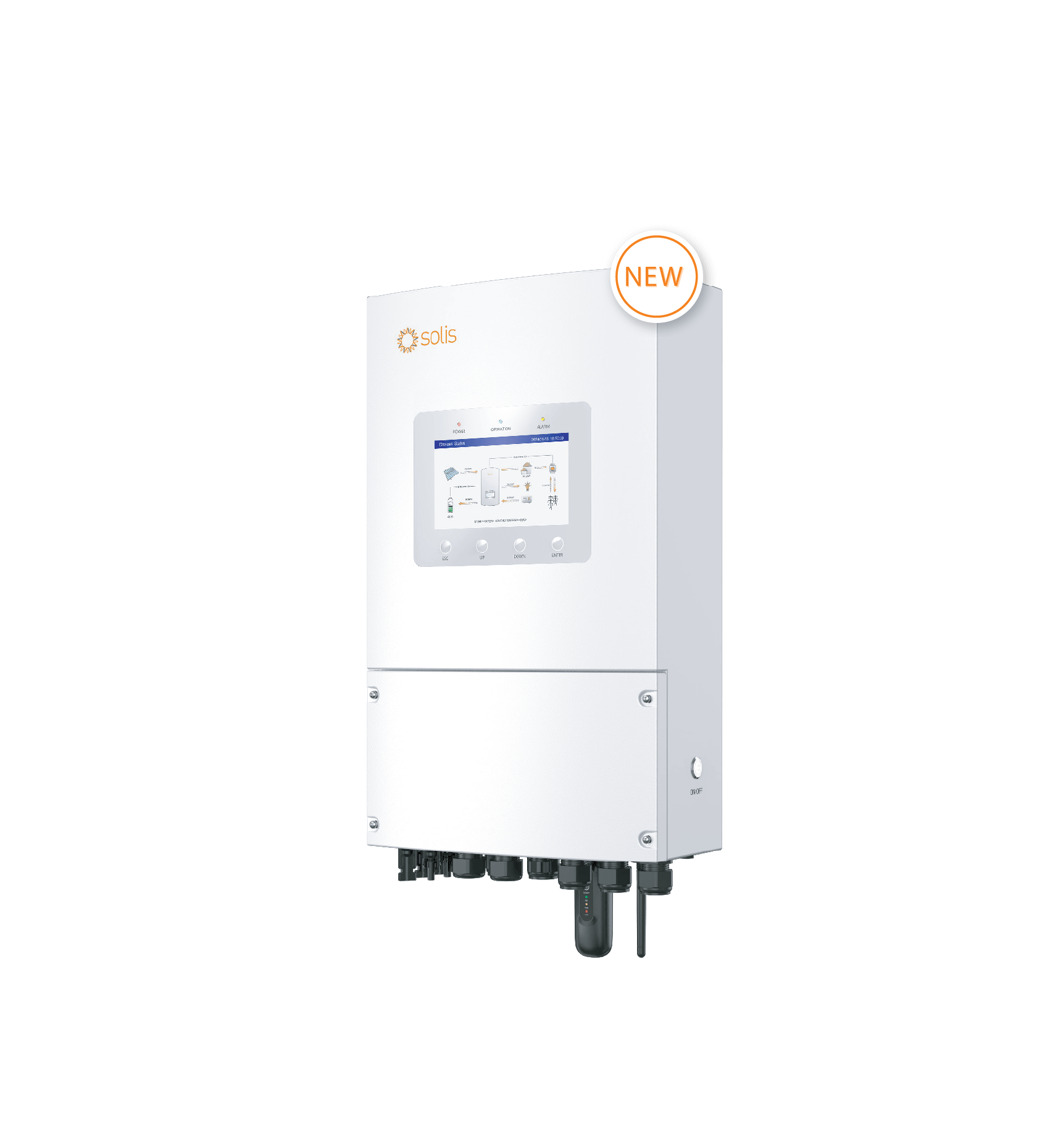
The S6-EH3P12K02-NV-YD-L is the 12kW variant of the S6-EH3P series, a three-phase low-voltage (48V) hybrid inverter designed from the ground up for Kenyan commercial applications: shops, offices, agricultural operations, small factories, and multi-tenant properties on three-phase utility supply.
What Sets the Solis Apart at 12kW
If you’re shopping for a 12kW three-phase hybrid inverter in Kenya, you have options. Here’s what makes the Solis S6-EH3P12K02-NV-YD-L technically distinct from other 12kW inverters on the market:
- 19.2kW PV input capacity. This is the headline number. Where most competing 12kW inverters cap PV input around 15–16kW (a 1.3× DC/AC ratio), the Solis allows 19.2kW — a 1.6× ratio. In practice, this means you can install up to 33 panels of 580W class on this inverter. The extra DC headroom ensures the inverter reaches full 12kW output during more hours of the day, not just during the brief peak-noon window. It also allows for significant future panel additions without replacing the inverter.
- Dual independent battery ports. Most 12kW inverters have a single battery connection. The Solis has two separate ports, each capable of 150A, for a combined 250A charge/discharge current. This means you can connect two separate battery banks (or two different battery brands) simultaneously — useful for phased battery expansion where you add a second bank months after the first.
- IP66 protection. The standard in this class is IP65. The Solis goes one step higher with IP66, which means it’s protected against powerful water jets, not just low-pressure spray. For Kenyan installations exposed to heavy tropical rain, dust storms, or coastal salt spray (Mombasa, Malindi), this extra protection extends component life.
- 1,000V maximum PV voltage. Most 48V-class hybrid inverters cap at 500–800V on the PV side. The Solis accepts up to 1,000V, which allows longer string configurations with fewer combiner boxes — reducing balance-of-system cost on commercial installations.
- SolisCloud monitoring platform. Unlike some competitor apps that feel like afterthoughts, SolisCloud is Solis’s flagship remote monitoring system used across their entire commercial portfolio. Real-time solar generation, battery state, grid import/export, and historical performance data accessible via the 7″ built-in LCD, Bluetooth connection, or smartphone app from anywhere.
The Dual Battery Port Advantage
This feature deserves its own section because it changes how commercial customers plan their battery investment. With two independent battery ports rated at 150A each:
- Phase your battery investment. Install a 10kWh lithium battery bank on port 1 today. Six months later, when cash flow permits, add a second 10kWh bank on port 2. No rewiring, no reconfiguration — just plug and commission.
- Mix battery capacities. Port 1 can run a 15kWh bank while port 2 runs a 10kWh bank. Each port communicates independently with its battery’s BMS via CAN or RS485.
- Separate critical vs non-critical storage. Allocate one battery bank for essential backup loads (refrigeration, security, servers) and the other for general self-consumption optimisation.
Our Jinko, Renergy, and Vestwood lithium battery ranges all work with the Solis S6-EH3P12K02-NV-YD-L via standard CAN/RS485 protocols.
Solar Panel Pairing at 19.2kW DC
The 19.2kW PV input window is enormous for a 12kW inverter. Practical panel counts:
- Jinko Tiger Neo 580W: up to 33 panels (19.14kW DC) across 3 strings
- Canadian Solar 550W HiKu6: up to 34 panels (18.7kW DC)
- Canadian Solar 670W HiKu7: up to 28 panels (18.76kW DC)
The 200–850V MPPT range combined with 1,000V maximum PV voltage allows longer strings (up to 14–16 panels per string depending on module Voc), which reduces the number of string runs back to the inverter and simplifies cable management on large commercial rooftops. Browse our full solar panel catalogue for compatible modules.
Commercial Use Cases in Kenya
Three real-world scenarios built around the S6-EH3P12K02-NV-YD-L:
Scenario A — Medium retail operation with expansion plans: 28 × 550W Canadian Solar panels (15.4kW DC) + S6-EH3P12K02-NV-YD-L + 15kWh lithium battery on port 1 (Jinko, Renergy, or Vestwood). Year 2: add 6 more panels (now 18.7kW DC) and a second 10kWh battery on port 2. No inverter replacement needed — the 19.2kW input window accommodates the expansion.
Scenario B — Agricultural cold storage and pumping: 24 × 670W Canadian Solar HiKu7 panels (16.08kW DC) + S6-EH3P12K02-NV-YD-L + 25kWh lithium battery bank split across both ports. Powers cold room compressor, borehole pump, packhouse lighting, and office. The 24kW peak surge handles motor starting loads comfortably.
Scenario C — Multi-tenant office building: 30 × 580W Jinko Tiger Neo panels (17.4kW DC) + S6-EH3P12K02-NV-YD-L + 20kWh lithium battery. Serves 40+ staff across multiple offices: computers, servers, commercial AC, kitchen, lighting, printing, and security systems. SolisCloud monitoring gives the building manager real-time visibility into energy allocation across the three phases.
Monitoring and Smart Energy Management
The S6-EH3P12K02-NV-YD-L comes with a 7-inch colour LCD touch display on the unit itself, plus Bluetooth connectivity for local configuration via smartphone. For remote monitoring, SolisCloud provides a web and mobile dashboard showing real-time PV generation, battery state of charge, grid import/export per phase, backup load consumption, and historical energy reports. AI-assisted time-of-use optimisation automatically adjusts battery charging and discharging schedules based on tariff periods — particularly useful for businesses on commercial differential tariffs.
Electrical Specifications at a Glance
PV Input (DC Side)
| Parameter | Value |
|---|---|
| Max. DC Input Power | 19,200 W |
| Max. Input Voltage | 1,000 V |
| Rated Voltage | 550 V |
| Start-up Voltage | 160 V |
| MPPT Voltage Range | 200 – 850 V |
| Max. Input Current | 20 A + 40 A |
| Max. Short-Circuit Current | 30 A + 50 A |
| Number of MPPTs / Strings | 2 MPPTs / 3 strings |
| DC/AC Ratio | 1.6× |
AC Output (Grid Side)
| Parameter | Value |
|---|---|
| Rated Output Power | 12,000 W |
| Max. Apparent Output Power | 12 kVA |
| Rated Grid Voltage | 3/N/PE, 220V/380V or 230V/400V |
| Rated Grid Frequency | 50 Hz / 60 Hz |
| Rated Output Current per Phase | 18.2 A / 17.3 A |
| Max. Continuous AC Pass-Through | 50 A |
| Power Factor | >0.99 (0.8 leading – 0.8 lagging) |
| THDi | <3% |
| Unbalanced Output | Up to 50% rated per phase |
Backup / Off-Grid Output
| Parameter | Value |
|---|---|
| Rated Backup Power | 12,000 W |
| Peak Backup Power (10s) | 24,000 W (2× rated) |
| Backup Switchover Time | <10 ms |
| Backup Output Voltage | 3/N/PE, 220V/380V or 230V/400V |
| Backup Frequency | 50 Hz / 60 Hz |
| Three-Phase Unbalanced Backup | Supported |
Battery
| Parameter | Value |
|---|---|
| Battery Type | Li-ion (LiFePO4) / Lead-acid |
| Battery Voltage Range | 40 – 60 V (48V nominal) |
| Number of Battery Ports | 2 independent |
| Max. Charge / Discharge Current per Port | 150 A |
| Max. Combined Charge / Discharge Current | 250 A |
| BMS Communication | CAN / RS485 |
Generator Input
| Parameter | Value |
|---|---|
| Max. Generator Input Power | 12 kW |
| Rated Input Voltage | 3/N/PE, 220V/380V or 230V/400V |
| Rated Input Frequency | 50 Hz / 60 Hz |
| Reverse Current Protection | Integrated |
Efficiency
| Parameter | Value |
|---|---|
| Max. Efficiency | 97.5% |
| European Efficiency | 96.4% |
| Battery Charge Efficiency (PV → Battery) | 95.0% |
| Battery Discharge Efficiency (Battery → AC) | 94.5% |
Protection
| Feature | Status |
|---|---|
| Anti-islanding Protection | Yes |
| Output Over-current Protection | Yes |
| Short-circuit Protection | Yes |
| DC Reverse-polarity Protection | Yes |
| Surge Protection | DC Type II / AC Type II |
| Integrated DC Switch | Yes |
| AFCI 2.0 | Optional |
Physical & Environmental
| Parameter | Value |
|---|---|
| Dimensions (W × H × D) | 430 × 660 × 305 mm |
| Weight | 42 kg |
| Ingress Protection | IP66 |
| Cooling | Intelligent fan cooling |
| Operating Temperature | -25°C to +60°C |
| Max. Operating Altitude | 4,000 m |
| Topology | Non-isolated |
| Night Self-Consumption | <30 W |
Interface & Communication
| Parameter | Value |
|---|---|
| Display | 7″ LCD + Bluetooth + App |
| Standard Communication | CAN, RS485, Ethernet |
| Optional Communication | Wi-Fi, Cellular, LAN |
| DC Connection | MC4 quick-connect (PV) + screw terminal (battery) |
| AC Connection | Screw terminal |
| Remote Monitoring Platform | SolisCloud (web + mobile app) |
What You Need for a Full Installation
A commercial Solis installation requires: solar panels from our panel catalogue (typically 24–33 modules), lithium batteries from our Jinko, Renergy, or Vestwood ranges, DC circuit breakers and string combiner hardware, three-phase AC breakers, earthing and surge protection, commercial mounting hardware, and installation by an EPRA-licensed technician.
Request a commercial quote or WhatsApp 0794 917 789 for a site-specific consultation. Use our Solar Calculator for an initial sizing estimate.
Solis 12kW Three-Phase: Buyer Questions Answered
Why choose Solis over other inverter brands at 12kW?
Solis (Ginlong Technologies, NASDAQ: GNNE) is a top-five global inverter manufacturer with over 60GW shipped across 150+ countries. Their specific advantage at 12kW three-phase is the 19.2kW PV input window (30–60% larger than competing models), dual independent battery ports for phased expansion, IP66 weatherproofing, and the SolisCloud monitoring platform. The brand is widely used in commercial installations across East Africa, the Middle East, and Southern Africa.
What does “LV” mean in the product name?
LV stands for Low Voltage, referring to the 48V battery system. Solis also makes HV (High Voltage) versions that work with 100–600V battery systems. The LV version is the standard in Kenya because 48V lithium batteries are widely available, more affordable, and easier to source locally. All lithium batteries stocked at Bicity Solar are 48V nominal and compatible with this inverter.
How does the 19.2kW PV input benefit me practically?
It means you can install up to 60% more solar panels than the inverter’s AC output rating. In Kenya’s real-world conditions — where panels produce 75–85% of their STC rating due to temperature, dust, and angle losses — this oversizing ensures the inverter reaches full 12kW output during more hours of the day. It also future-proofs the system: you can add panels later without replacing the inverter.
Can I connect two separate battery banks to this inverter?
Yes. The S6-EH3P12K02-NV-YD-L has two independent battery ports, each rated at 150A. You can connect different battery banks (even different capacities) to each port. This is ideal for phased investment — install one battery bank now, add a second later without any rewiring.
Is the Solis 12kW compatible with Jinko, Renergy, and Vestwood batteries?
Yes. The inverter communicates with lithium batteries via standard CAN and RS485 BMS protocols, which are supported by all three brands we stock. Lead-acid batteries are also supported using voltage-based charging profiles.
What’s the difference between IP65 and IP66?
IP65 protects against low-pressure water jets. IP66 protects against powerful water jets — think heavy tropical downpour hitting the unit directly, or a pressure washer at close range. For outdoor installations in Kenya’s rainy seasons, especially in coastal areas (Mombasa, Malindi, Lamu) or highland regions with intense rainfall, the IP66 rating provides a measurable durability advantage.
Does the inverter support generator backup?
Yes. The S6-EH3P12K02-NV-YD-L accepts three-phase generator input up to 12kW. It intelligently detects AC voltage from the generator and prevents reverse current that could damage the generator. This allows hybrid operation: solar + battery + generator for sites needing extended backup beyond what battery alone provides.
How does SolisCloud monitoring work?
SolisCloud is Solis’s proprietary monitoring platform accessible via web browser or smartphone app. It shows real-time solar generation, battery state of charge, grid import/export per phase, backup load consumption, and historical energy data. AI-assisted scheduling can automatically optimise battery charge/discharge cycles based on your commercial tariff structure.
Can multiple Solis inverters operate together?
Yes. The S6-EH3P series supports parallel operation to form a microgrid. Multiple inverters can operate together for increased capacity, making it suitable for phased commercial expansion or larger installations that exceed the 12kW single-unit rating.
What warranty does Solis provide and where can I buy in Kenya?
Solis provides a 5-year standard manufacturer warranty on the S6-EH3P12K02-NV-YD-L. Bicity Solar Energy Suppliers stocks this inverter with manufacturer warranty and delivery to all 47 counties. WhatsApp 0794 917 789 or request a quote for current pricing and availability.