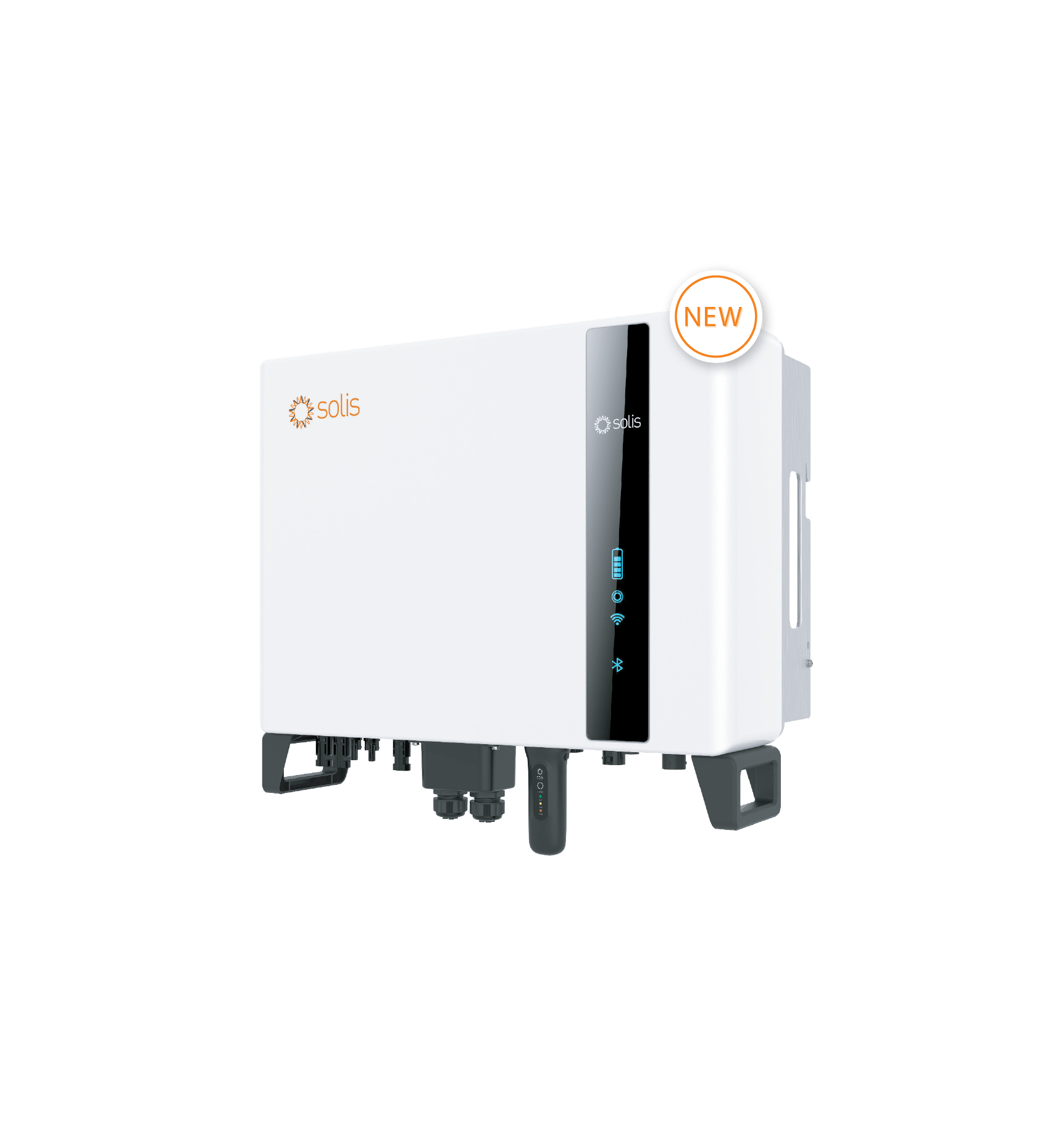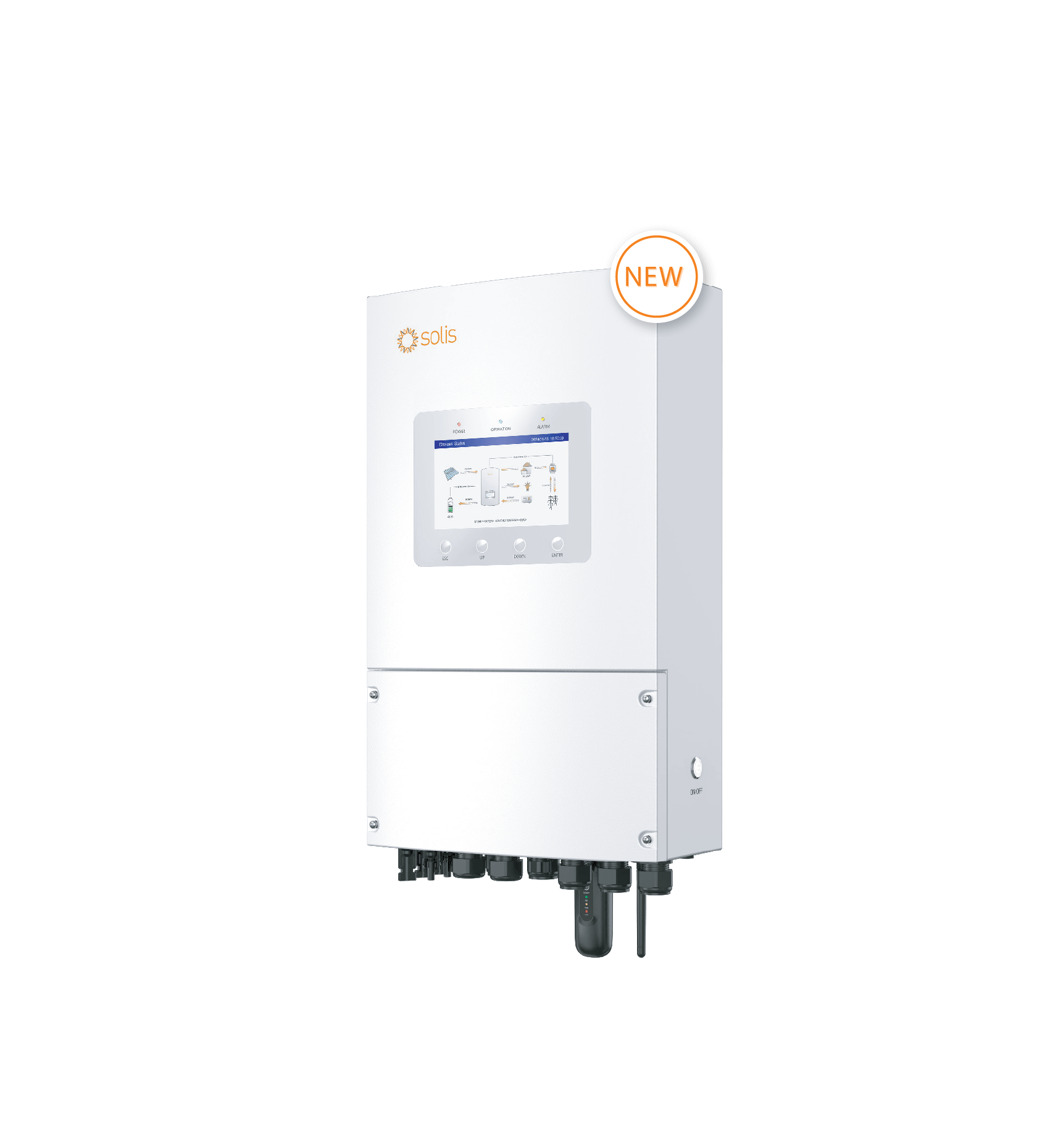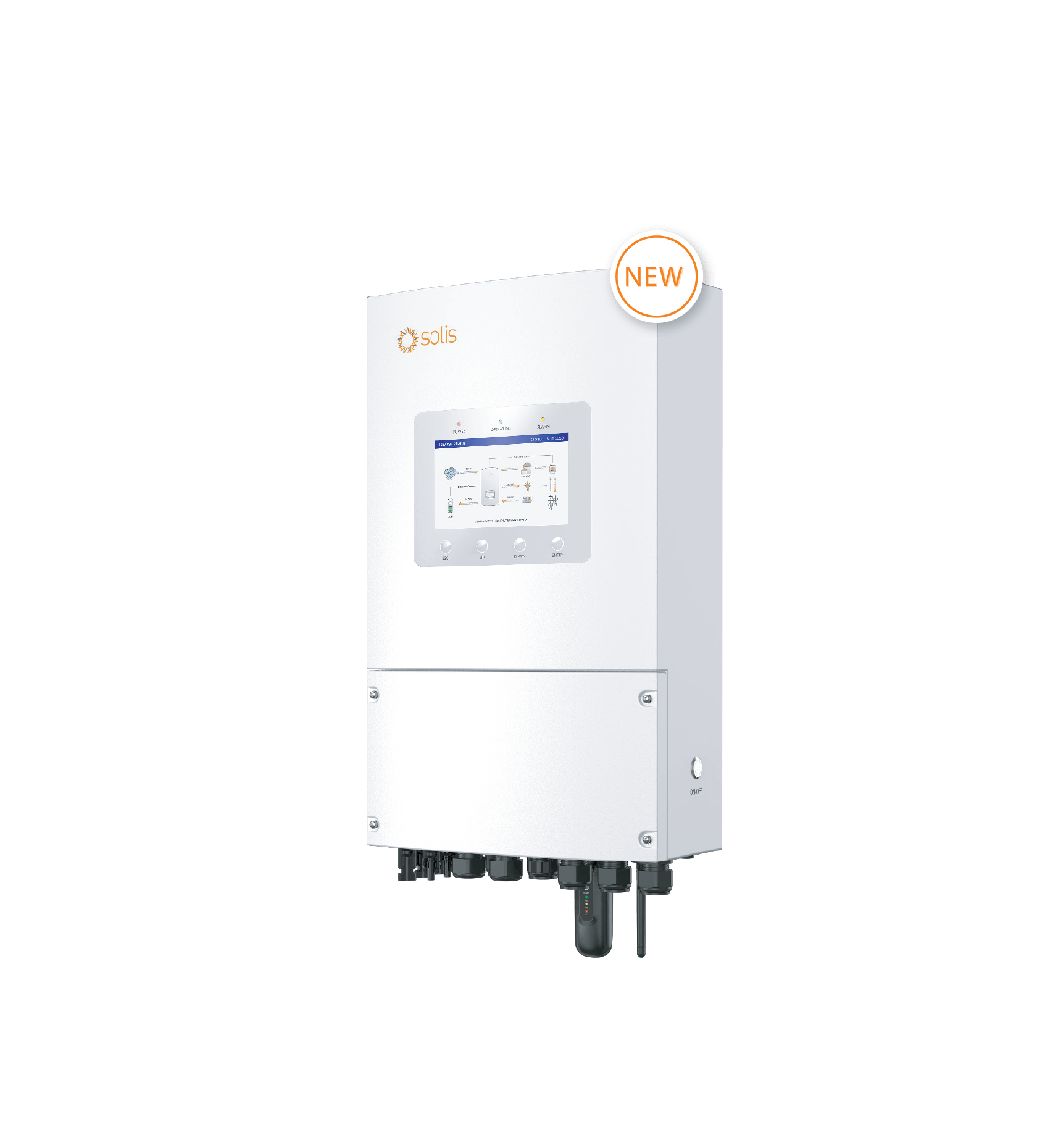
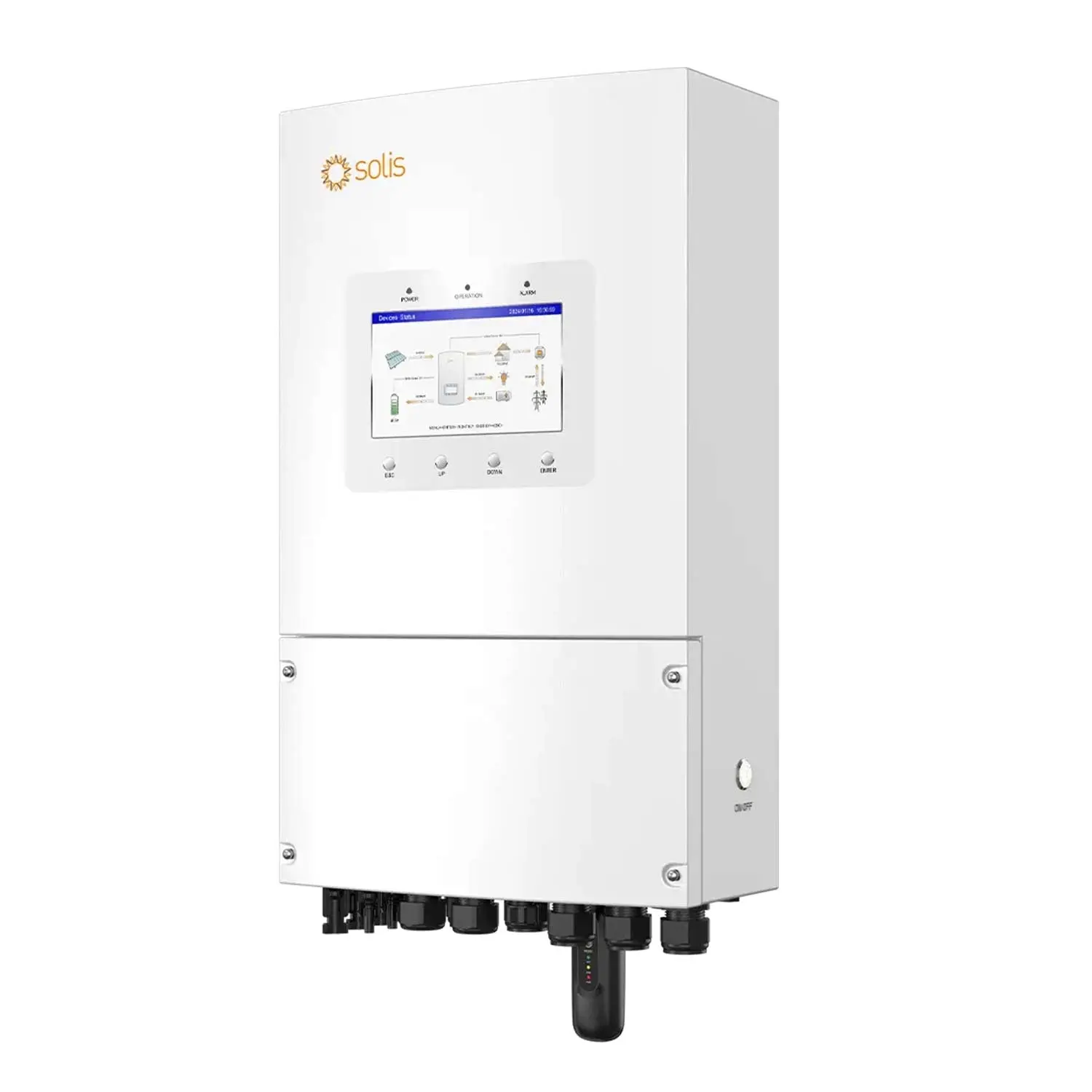
Description
Where High-Voltage Batteries Replace 48V on Serious Commercial Systems
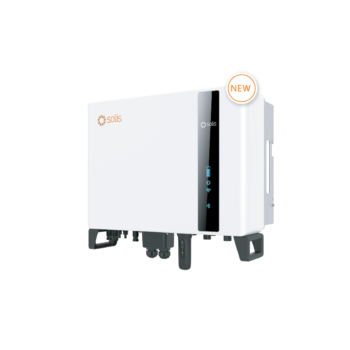
Every Solis hybrid inverter previously covered on this site uses 48V “low-voltage” lithium battery banks — the standard format for residential and small commercial Kenyan installations. The S6-EH3P20K-H is fundamentally different. It uses high-voltage (HV) battery storage in the 120–800V range, and that single architectural choice changes the economics, scalability, and physical installation of large commercial systems.
This inverter exists for commercial Kenyan buyers who’ve outgrown 48V systems — typically anyone deploying 20kW or more of inverter capacity with substantial battery backup. At this scale, HV battery storage isn’t just an option; it’s often the more practical engineering choice.
Why High-Voltage Batteries Matter at 20kW
To understand why this inverter exists, it helps to understand the physics. When you transmit electrical power, current causes resistive losses in cables (I²R losses). At higher voltages, the same power flows at lower current — meaning less loss, smaller cables, and lower copper costs.
For a 20kW battery system, this comparison is illustrative:
- 48V LV battery system: 20kW ÷ 48V = 417A peak current. Requires very heavy DC cables (typically 70–95mm² copper), large DC breakers (400A+), and significant heat dissipation hardware. Cable runs longer than 3–4 metres become impractical.
- 400V HV battery system (typical for this inverter): 20kW ÷ 400V = 50A peak current. Standard 16mm² cable handles this with ample margin. Smaller breakers, less heat, longer cable runs feasible.
The economic implication: at 20kW+, the cost savings on DC infrastructure (cables, breakers, busbars, terminals, heat management) often exceed the price premium of HV battery hardware over LV equivalents. This is why commercial-scale solar moves to HV battery systems globally.
Who Should Specify the 20kW HV Variant
This isn’t a residential product. The S6-EH3P20K-H is built for these specific Kenyan commercial profiles:
- Mid-sized supermarkets and hypermarkets: Multiple refrigeration banks, freezers, full shop lighting, checkout systems, CCTV, office equipment, kitchen, and air conditioning. Daily consumption often 100–180 kWh on three-phase supply.
- Hotels and resort properties (20+ rooms): Room electronics, commercial kitchens, laundry, pool/spa equipment, common areas, water heating, and security infrastructure. The HV battery format suits the larger backup banks (40kWh+) that hospitality applications demand.
- Small manufacturing operations: Light industrial machinery, compressors, welders, production lines, and supporting infrastructure on three-phase commercial supply.
- Commercial agriculture and packhouses: Cold storage facilities, packing equipment, grain processing, irrigation pumping, and dairy operations with substantial three-phase loads.
- Educational institutions and large training facilities: Computer labs, classroom infrastructure, administrative buildings, dormitory facilities, and water systems for boarding schools and colleges.
- Healthcare facilities (clinics with diagnostic equipment): Larger medical practices and small hospitals with imaging equipment, sterilisation, multiple cold-chain units, and continuous backup requirements.
- Office complexes and commercial buildings: Multi-tenant office spaces, shopping arcades, business parks, and similar mixed commercial premises.
The 4-MPPT Architecture: Why It Matters at 32kW PV Input
At 32kW maximum usable PV input, you’re looking at 50–60 solar panels — which on a commercial rooftop almost never fit on a single orientation. The 4-MPPT design (the only Solis model in this catalogue with four independent trackers) gives commercial installers genuine layout flexibility:
- True multi-orientation support: Run one MPPT on the east-facing roof section, one on west-facing, one on south-facing, and one on a flat-roof or carport array. Each tracker independently optimises its own string.
- Mixed module installations: Some commercial sites combine roof-mounted panels with carport-mounted panels, or different panel models from different procurement waves. Each MPPT handles its own configuration.
- Phased commercial installation: Install one string today (one MPPT), add subsequent strings on the remaining MPPTs over 6–18 months as project budget releases.
- Shading isolation: Commercial rooftops often have HVAC equipment, parapets, or chimneys creating partial shading. Isolate shaded sections to their own MPPT so the shading doesn’t drag down unshaded sections.
HV Battery Compatibility: Brand Flexibility
The S6-EH3P20K-H supports lithium batteries across a wide voltage window of 120–800V, making it compatible with virtually all commercial HV battery systems. Communication uses standard CAN/RS485 protocols, which are universal across the major HV battery brands.
For Kenyan commercial installations, your battery procurement isn’t locked into a single manufacturer. Common HV battery options include modular stack systems where you build the bank to the desired capacity (typical 20–80kWh for this inverter class). The dual backup port architecture combined with HV battery flexibility lets you allocate critical loads to one circuit and non-critical to another, with smart load shedding based on battery state of charge.
Three Realistic 20kW Commercial Installations
Profile A — Medium supermarket with cold chain: 50 × Canadian Solar 550W HiKu6 panels (27.5kW DC) split across 4 MPPT trackers + S6-EH3P20K-H + 40kWh HV lithium bank. Powers refrigeration, freezers, shop lighting, POS, CCTV, AC, kitchen, and office. Critical backup ensures cold chain continuity for hours during grid outages. Daily consumption typically 100–150 kWh.
Profile B — Small hotel or guesthouse (25 rooms): 48 × Jinko Tiger Neo 580W panels (27.84kW DC) + S6-EH3P20K-H + 50kWh HV lithium bank. Covers room electronics, hot water systems, commercial kitchen, laundry, pool pump, lighting, and security. The 40kW peak surge handles concurrent compressor startups from multiple cooling systems.
Profile C — Light manufacturing workshop: 56 × Canadian Solar 550W HiKu6 panels (30.8kW DC) + S6-EH3P20K-H + 30kWh HV lithium bank. Powers production machinery, air compressors, welders, lighting, and office. The four MPPT trackers handle a complex roof with sections on different orientations cleanly.
AC Coupling: Retrofit Path for Existing Commercial Solar
Many Kenyan commercial sites installed grid-tied solar systems years ago without battery storage. The S6-EH3P20K-H supports AC coupling, which means it can be added to an existing commercial PV installation without removing or replacing the original grid-tied inverter. The Solis manages battery storage and backup while the existing inverter continues handling solar generation.
For commercial customers facing increasingly common grid instability and rising tariffs, this retrofit path lets you add battery backup and time-of-use optimisation to existing solar investments — typically with payback periods under 4 years for the battery addition alone.
Specifications
PV Input (DC Side)
| Parameter | Value |
|---|---|
| Recommended Max. PV Array Size | 40,000 W |
| Max. Usable PV Input Power | 32,000 W |
| Max. DC Input Voltage | 1,000 V |
| Rated DC Voltage | 600 V |
| Start-up Voltage | 160 V |
| MPPT Voltage Range | 200 – 850 V |
| Max. Input Current per MPPT | 20 A |
| Max. Short-Circuit Current per MPPT | 30 A |
| Number of MPPTs / Strings | 4 MPPTs / 4 strings |
| DC/AC Ratio | Up to 1.6× |
| PV Connection | MC4 connectors |
| Integrated DC Switch | Yes |
AC Output (Grid Side)
| Parameter | Value |
|---|---|
| Rated Output Power | 20,000 W |
| Max. Apparent Output Power | 20 kVA |
| Rated Grid Voltage | 3/N/PE, 220V/380V or 230V/400V |
| Rated Grid Frequency | 50 Hz / 60 Hz |
| Rated Output Current per Phase | 30.4 A / 28.9 A |
| Three-Phase Unbalanced Output | Up to 40% rated per phase |
| Power Factor | >0.99 (0.8 leading – 0.8 lagging) |
| THDi | <3% |
Backup / Off-Grid Output
| Parameter | Value |
|---|---|
| Rated Backup Power | 20,000 W |
| Peak Backup Power (10s) | 40,000 W (200% surge) |
| Backup Switchover Time | <10 ms |
| Number of Backup Ports | 2 (critical + non-critical) |
| Smart Load Management | Auto-disconnect non-critical at low SOC |
| Three-Phase Unbalanced Backup | Supported up to 40% per phase |
Battery (High-Voltage)
| Parameter | Value |
|---|---|
| Battery Type | High-voltage Li-ion (LFP / NMC compatible) |
| Battery Voltage Range | 120 – 800 V |
| Max. Charge / Discharge Current | 50 A |
| Max. Charge / Discharge Power | 20 kW |
| BMS Communication | CAN / RS485 |
| Battery Connection | OT terminals |
| Time-of-Use Scheduling | 6 customisable periods |
Generator Input & AC Coupling
| Parameter | Value |
|---|---|
| Max. Generator Input Power | 20 kW |
| Generator Input Current | 30.4 A / 28.9 A |
| Generator Auto Voltage Detection | Yes |
| Reverse Current Protection | Integrated |
| AC Coupling | Supported (retrofit grid-tied PV) |
Efficiency
| Parameter | Value |
|---|---|
| Max. Inverter Efficiency | 97.7% |
| European Efficiency | 97.5% |
| PV to Battery Max Efficiency | 98.5% |
| Battery to AC Max Efficiency | 97.2% |
Parallel Operation & Operating Modes
| Parameter | Value |
|---|---|
| Parallel Operation | Up to 6 units (microgrid formation) |
| Working Modes | Self-use / Feed-in priority / Peak-shaving / Off-grid |
| Peak Shaving Modes | Self-use mode + Generator mode |
| SG Heat Pump Compatibility | Supported |
Protection
| Feature | Status |
|---|---|
| Anti-islanding Protection | Yes |
| Output Over-current Protection | Yes |
| Short-circuit Protection | Yes |
| DC Reverse-polarity Protection | Yes |
| PV Over-voltage Protection | Yes |
| Battery Reverse Protection | Yes |
| Surge Protection | DC Type II / AC Type II |
| Integrated DC Switch | Yes |
Physical & Environmental
| Parameter | Value |
|---|---|
| Dimensions (W × H × D) | 563 × 546 × 250 mm |
| Weight | ~32 kg |
| Ingress Protection | IP66 |
| Cooling | Intelligent fan cooling |
| Operating Temperature | -25°C to +60°C |
| Topology | Transformerless / Non-isolated |
| Noise Level | <65 dB(A) |
Interface & Communication
| Parameter | Value |
|---|---|
| Display | 7″ colour LCD + Bluetooth + App |
| Standard Communication | CAN, RS485, Wi-Fi |
| Optional Communication | LAN, Cellular |
| Remote Monitoring | SolisCloud (web + mobile app) |
| Remote Firmware Updates | OTA via SolisCloud |
Building a 20kW Commercial HV System
This is a serious commercial project. You’ll need solar panels (45–60 modules of 550W–670W class), a high-voltage lithium battery bank (typically 30–60kWh of HV-rated modules — different from the 48V LV ranges that pair with our other Solis inverters), commercial-grade DC protection rated for 600–800V, commercial three-phase AC breakers, professional earthing and surge protection, commercial mounting hardware, and EPRA-licensed installation by a contractor experienced specifically with HV battery commercial systems.
HV battery installations are technically more demanding than 48V systems. We strongly recommend a site visit and detailed engineering review before procurement. Request a commercial quote or WhatsApp 0794 917 789 to arrange consultation.
Solis 20kW Three-Phase HV: Buyer Questions
What does HV mean and why does it matter at 20kW?
HV stands for High-Voltage battery — the inverter uses lithium batteries operating in the 120–800V range instead of the 48V “low-voltage” batteries used by all our other Solis inverters. At 20kW continuous power, HV batteries pull only 50A (versus 417A on a 48V system). This dramatically reduces required cable size, breaker ratings, heat generation, and overall installation cost on commercial systems. HV is the standard architecture for serious commercial solar globally.
Can I use my existing 48V batteries with this inverter?
No. The S6-EH3P20K-H requires HV-rated lithium batteries (120–800V range). Your existing 48V battery bank cannot be used. If you have an existing 48V system you want to expand to 20kW capacity, the Solis 12kW Single Phase or Solis 12kW Three Phase LV models are better choices since they retain 48V battery compatibility.
Why is this listed as 4 MPPTs when the smaller Solis models only have 2 or 3?
Commercial rooftops at the 30kW+ panel scale rarely fit on a single orientation — most have multiple roof sections, sometimes combined with carport arrays. The 4-MPPT design lets each section run independently at peak efficiency. Lower-MPPT inverters force compromises that reduce total daily energy yield by 8–15% on complex layouts.
How much solar can I install on this inverter?
Up to 32,000W usable PV input (with recommended max array of 40,000W). That’s approximately 55 panels of 580W, 58 panels of 550W, or 48 panels of 670W class. Requires substantial commercial roof or ground-mount space — typically 200+ square metres of clear, well-oriented mounting area.
What HV battery brands work with this inverter?
Any compliant HV-rated lithium battery operating in the 120–800V range with CAN or RS485 BMS communication. Specific brand availability varies — please contact us with your project requirements and we’ll confirm currently stocked options. HV battery procurement is a different supply chain from the 48V LV batteries we stock under our Jinko, Renergy, and Vestwood ranges.
Is this inverter overkill for my business?
Possibly. The S6-EH3P20K-H makes commercial sense at daily consumption above 80–100 kWh on three-phase supply. For lower commercial loads, the Solis 12kW Three Phase LV or Solis 10kW Three Phase LV are more cost-effective options. The HV battery infrastructure adds engineering complexity that’s only justified at the larger system scale.
Can I add more capacity later by paralleling units?
Yes. Up to 6 units of the S6-EH3P20K-H can be paralleled to form a microgrid, giving theoretical maximum capacity of 120kW three-phase. This makes the platform suitable for phased commercial expansion where you start with one 20kW unit and add more as your operations grow.
Does AC coupling work with my existing grid-tied solar?
Yes. The S6-EH3P20K-H accepts AC coupling input, allowing you to add this inverter to an existing grid-tied commercial PV system without replacing the original inverter. The Solis manages battery storage and backup while your existing inverter continues handling solar generation. Particularly useful for commercial sites adding battery backup to existing investments.
What about generator integration?
The inverter accepts up to 20kW three-phase generator input with intelligent voltage detection and reverse-current protection. For commercial sites with existing diesel backup generators, this allows hybrid operation: solar + battery + generator for extended outages beyond what battery alone provides. Generator auto start/stop is supported via SolisCloud.
Is professional commercial installation required?
Yes, absolutely. HV battery installations require EPRA-licensed installers specifically experienced with commercial HV systems. The 600–800V battery DC voltage requires specialised safety procedures, insulation testing equipment, and arc-flash protection that aren’t needed on 48V LV systems. Combined with the 20kW three-phase AC infrastructure, proper earthing, and commercial code compliance, this is not a DIY-feasible installation.
What warranty does Solis provide and where do I buy in Kenya?
Solis provides a 5-year standard manufacturer warranty on the S6-EH3P20K-H. Bicity Solar Energy Suppliers stocks this inverter with delivery to all 47 counties. Given the commercial complexity, we strongly recommend contacting us directly for HV battery system procurement. WhatsApp 0794 917 789 or request a commercial quote for current pricing and engineering consultation.