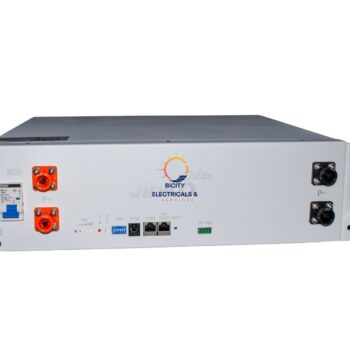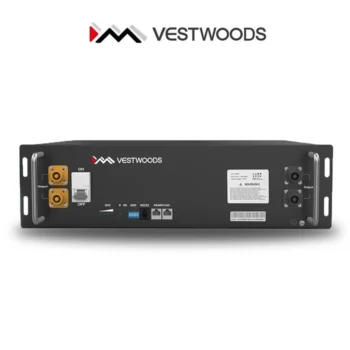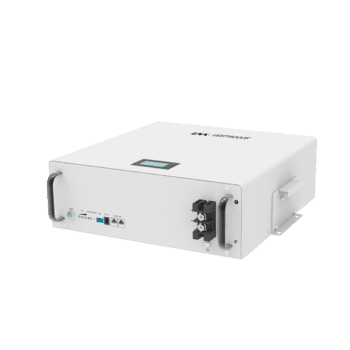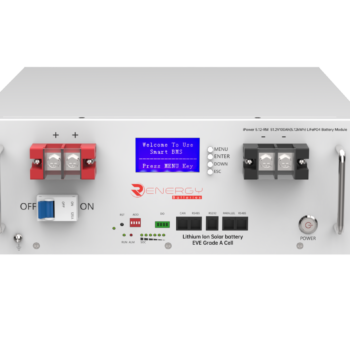
Description
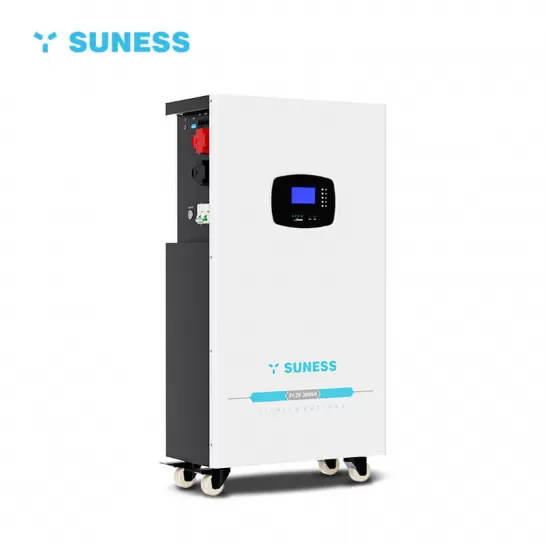
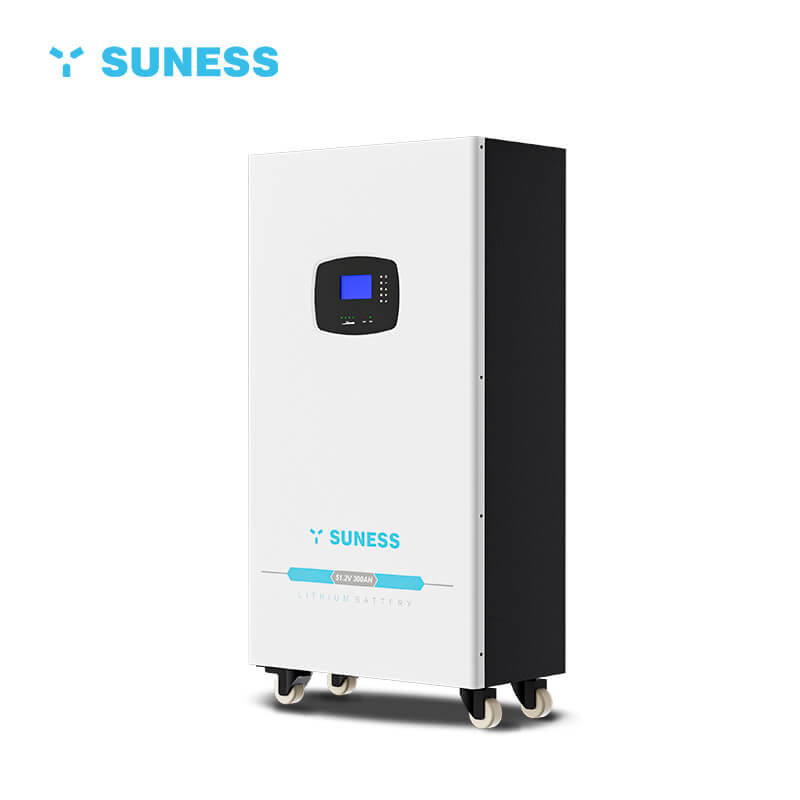
Suness 15.36 kWh Lithium Battery — EV-15.36N Single-Unit LFP Commercial Solar Storage for Kenya
At 15.36 kWh delivered from a single wall-mounted enclosure, the Suness 15.36 kWh Lithium Battery sits at a specific architectural point in the Kenyan solar storage market: the capacity tier where buyers face a choice between one large device and three smaller devices in parallel. The product is the EV-15.36N from Shenzhen Youess Energy Storage Technology — a Chinese manufacturer trading globally under the Suness brand, with Kenyan distribution through the authorised local channel at sunesskenya.com. Kenyan installers reference the product under several names: Suness EV-15.36N, the Suness 300Ah Lithium Battery, the Suness 48V Power Wall, the Youess EV-15.36N, and informally as the “Suness commercial unit”.
What the EV-15.36N is built around — and what justifies its position in the Bicity catalog — is a single-unit architecture decision. Most Kenyan installations reaching 15+ kWh of LFP storage do so by parallel-stacking three or more residential-tier 5 kWh batteries. The EV-15.36N reaches the same capacity inside one enclosure with one Battery Management System, one set of DC terminals, and one communication link to the inverter. That single-unit approach changes installation logistics, commissioning workflow, BMS communication complexity, and long-term maintenance economics in ways that matter measurably at the commercial and large-residential scale.
The manufacturer’s cell choice supports the commercial positioning. Suness specifies A+ grade LiFePO4 cells — the highest tier in the LFP cell grading hierarchy where cells are sorted at factory based on capacity, voltage consistency, internal resistance, and self-discharge rate. A+ cells pass all manufacturer specifications on first inspection; A-grade cells have minor deviations; B-grade cells have more significant deviations; reclaimed cells come from disassembled battery packs and appear in the cheapest budget batteries. The grade designation matters because cycle life ratings (the manufacturer-claimed ≥8,000 cycles at 80% DOD for the EV-15.36N) are achievable only with cells meeting the rated quality bar.
Where this product sits in the Bicity Solar Batteries range
The Bicity battery catalog covers small 12V backup units through to commercial-tier 15+ kWh storage. The EV-15.36N occupies the largest single-unit position currently available:
| Battery | System V | Energy | Where it fits |
|---|---|---|---|
| Vestwood 12V 100Ah | 12V | 1.28 kWh | Smallest backup; phone, lighting, single-fridge off-grid |
| Vestwood 12V 200Ah | 12V | 2.56 kWh | Doubled 12V; small cabin or telecom site |
| Suness EV-2.56N 12V 200Ah | 12V | 2.56 kWh | Suness-brand 12V LFP at >90% DOD |
| Vestwood 24V 100Ah | 24V | 2.56 kWh | Stepped-up off-grid bus voltage |
| Vestwood 48V 100Ah | 48V | 4.8 kWh | First hybrid-residential tier (value) |
| Jinko JKS-B48100-HI | 48V | 4.8 kWh | Tier 1 PV maker’s residential storage option |
| Renergy iPower 5.12 | 48V / 51.2V | 5.12 kWh | British-brand premium residential workhorse |
| Vestwood 51.2V 100Ah | 51.2V | 5.12 kWh | Value-tier residential workhorse |
| Vestwood 48V 200Ah | 48V | 9.6 kWh | Bridge between residential and light commercial |
| Suness EV-15.36N — this product | 48V | 15.36 kWh | Largest single-unit device; commercial-tier; parallel-scalable to ~240 kWh |
What sets the EV-15.36N apart in this lineup is not chemistry (all the lithium options are LFP) and not the broad voltage architecture (it shares 48V with the Renergy iPower, Vestwood 5.12, and Jinko options). It is the capacity-per-enclosure ratio: one EV-15.36N replaces three Renergy iPower 5.12 units or three Vestwood 5.12 kWh units operating in parallel. Buyers choosing the EV-15.36N over parallel-stacked alternatives are buying installation simplicity, fewer BMS communication touch-points, and a cleaner mounting footprint — at acquisition cost that’s typically higher than three smaller batteries combined.
Where the EV-15.36N is the right battery
Three Kenyan buyer profiles consistently reach this product. The first is the commercial premises owner — typically running 10-30 kW of rooftop PV, with daily building loads in the 30-80 kWh range, and an evening backup requirement of 8-15 kWh. One EV-15.36N covers the evening backup envelope with margin; the 150A continuous discharge (delivering roughly 7.68 kW continuously) handles concurrent operation of typical commercial equipment groups — office cooling plus refrigeration plus lighting plus computing infrastructure. The 200A peak discharge handles the motor-inrush events that commercial loads create whenever HVAC compressors, water pumps, or commercial refrigeration kick on.
The second profile is the larger Kenyan residential property where whole-building electrical demand exceeds typical residential norms. Homes in Karen, Runda, Spring Valley, Muthaiga, Tigoni country properties, and similar upmarket residential locations frequently include electric water heating systems, electric vehicle charging infrastructure, central air-conditioning across multiple zones, multiple refrigeration appliances, and substantial lighting load. Evening consumption in these homes reaches 10-15 kWh — too much for a single 5 kWh battery to cover, but well within the EV-15.36N’s envelope. The single-unit approach also delivers cleaner installation aesthetics than three batteries mounted side-by-side, which matters in premium residential contexts.
The third profile is the off-grid commercial site — tourism lodges in Maasai Mara, Amboseli, Tsavo, Laikipia, Lewa Conservancy, or coastal locations like Diani and Watamu; remote conservancy installations; mission hospitals operating outside reliable grid coverage; agricultural processing sites with cooling or pumping requirements. These sites have no grid connection to fall back on, so the battery system carries the full overnight load plus any cloudy-day deficit. Multi-unit parallel installations using 2-4 EV-15.36N units (30-60 kWh total) are common in this segment.
When this battery is the wrong choice
Several scenarios where a smaller battery serves better than the EV-15.36N. Buyers running a typical residential home with 3-6 kWh of nightly consumption are dramatically over-served by 15.36 kWh of capacity — the right fit is a Renergy iPower 5.12, Vestwood 5.12 kWh, or Jinko JKS-B48100-HI 4.8 kWh at much lower acquisition cost. Buyers operating small off-grid setups at 12V or 24V system voltage need batteries matched to that architecture, not the 48V EV-15.36N which would require additional infrastructure (matched 48V inverter, 48V charge controller) just to use the battery at all.
Buyers operating at the 30+ kWh single-unit scale (industrial sites, larger commercial premises, mid-scale C&I storage) often find better economics in high-voltage rack-mounted alternatives. Suness itself offers the iRack-HVS series at 614V nominal voltage and 60+ kWh single-unit capacity for these applications. The EV-15.36N parallel-stacks well to roughly 80-120 kWh practical commercial sizes, but beyond that point high-voltage architectures become more efficient. Buyers needing more than 15 kWh but anticipating staged expansion over several years benefit more from parallel-stacking smaller batteries (start with one, add more as load grows) than from committing to the full 15.36 kWh capacity at initial purchase.
Six features that justify the commercial positioning
- 15.36 kWh inside one Battery Management System: The integrated BMS oversees all 16 LiFePO4 cells in series, balances them automatically, and presents one communication interface to the connected inverter. Equivalent capacity through parallel-stacking smaller batteries means three or more BMS units talking to each other in a master-slave network plus one talking to the inverter — more communication paths, more failure modes, more configuration complexity. Single-unit architecture removes those overhead failure modes.
- ≥8,000 cycles at 80% DOD per manufacturer manual: The official EV-15.36N user manual specifies cycle life of ≥8,000 cycles at 25°C, 0.5C rate, 80% Depth of Discharge, and 60% End-of-Life capacity retention. At one cycle per day the rating translates to about 21 years of daily cycling before the battery reaches the 60% capacity retention threshold. In commercial deployment where the battery may cycle once daily under typical solar-plus-storage operation, the cycle-life envelope comfortably exceeds the 15-year commercial project horizon.
- 200A peak discharge for motor surge events: While continuous discharge tops out at 150A, the EV-15.36N handles surge currents up to 200A. This matters because commercial loads — HVAC compressors, water pumps, commercial freezers, commercial fryers, industrial motors — draw inrush currents 3-7× their steady-state rating during the first 50-500 milliseconds of operation. Batteries rated only at their continuous discharge often trip protection during these surge events, particularly when multiple motor loads start simultaneously after a grid outage. The 200A surge headroom prevents these nuisance trips.
- 10-year manufacturer warranty per the EV-15.36N user manual: The official Suness warranty for the EV-15.36N is 10 years, as documented in the manufacturer user manual. This is competitive with — and in some cases exceeds — the warranty terms offered by premium Western-brand LFP competitors. The warranty terms cover manufacturing defects and product performance against the published cycle life and capacity specifications; standard exclusions apply for misuse, improper installation, or damage from external causes. Buyers should request the current Suness Kenya warranty documentation at the time of purchase for region-specific terms.
- SUNESS app for both Android and iOS: Suness provides a native monitoring app for Android (installable via QR code scan from the manual) and iOS (installable from the App Store). The app shows real-time State of Charge, voltage, current, cycle count, alarm status, protection status, and cell-level data. The app also handles inverter type selection during commissioning — selecting the correct inverter brand from a menu pre-configures the CAN communication parameters for that brand. This reduces commissioning time compared to manually configuring communication parameters through DIP switches alone.
- 16-unit parallel scaling via DIP switch addressing: Parallel deployment uses a 6-position DIP switch on each battery. Bit1-Bit5 set the slave address (1-15) or the number of slaves in parallel (for the host); Bit6 distinguishes host (ON) from slave (OFF). The addressing scheme supports 1 stand-alone unit through 16 parallel units — taking total system capacity from 15.36 kWh to approximately 245 kWh using the same product. The DIP switch approach is more reliable than software-based addressing because it survives BMS firmware updates without re-configuration.
Inverter compatibility — CAN at 500K, RS485 at 9600
The EV-15.36N communicates with the connected hybrid inverter through CAN bus at 500K baud rate. Host monitoring (PC-based commissioning tools or the SUNESS cloud platform) operates over RS485 at 9600 baud rate. Both protocols are industry-standard for the major hybrid inverter brands deployed in the Kenyan commercial solar market. The SUNESS app menu lists supported inverter brands during commissioning — selecting the inverter brand auto-configures the protocol parameters for that brand, reducing manual configuration to a single menu selection.
Major commercial hybrid inverter brands compatible with the Suness LFP communication protocols include the dominant names in the Kenyan installer ecosystem. Verify the specific protocol pairing through the SUNESS app inverter selection menu against the inverter manufacturer’s documented battery compatibility list before commissioning. For installations where deeper single-brand ecosystem integration is preferred, the Vestwood battery series running with Vestwood hybrid inverters provides matched-brand operation at the residential and lighter commercial scale, though the Vestwood family does not currently extend to single-unit 15+ kWh storage.
Where the EV-15.36N gets deployed across Kenya
- Smaller hotels and lodges (Nairobi suburbs, coastal hospitality, highland boutique stays): 10-25 kW PV systems pairing with 1-2 EV-15.36N units to cover evening guest loads (lighting, in-room amenities, restaurant operations, water pumping) plus night-time critical loads (refrigeration, security, communication infrastructure).
- Medical facility critical-load backup (private clinics, dental practices, optometry, smaller hospitals): Healthcare installations using 1-3 EV-15.36N units to maintain medical refrigeration, monitoring equipment, basic ventilation, and emergency lighting through national grid outages. The 200A peak handles centrifuge starting and other motor-driven medical equipment.
- Office buildings and professional services premises (Westlands, Upper Hill, Kilimani, Mombasa Road business parks): Commercial offices using 1-2 EV-15.36N units for evening-hours operation and weekend backup — typically pairing with 10-20 kW rooftop solar systems.
- Religious institution facilities (larger churches, mosques, faith-based hospital systems, theological colleges): Religious campus installations where the facility electrical load combines worship-space operation with broader institutional functions like residence halls, kitchens, or attached schools.
- Educational institution larger commercial deployments (private schools, college campuses, vocational training institutions): Educational facility solar-plus-storage where the EV-15.36N supports campus continuity during grid outages.
- Agricultural processing sites (dairy collection points, grain processing, tea/coffee factories, poultry operations): Productive equipment loads — cooling systems, processing machinery, ventilation — drive commercial-tier battery requirements often met by 2-4 unit EV-15.36N parallel installations.
- Off-grid tourism lodges in conservation areas (Maasai Mara, Amboseli, Tsavo, Laikipia, Lewa, Samburu, coastal beach lodges): Sites without national grid where 30-60 kWh of LFP storage (2-4 EV-15.36N units) supports overnight guest operations and cloudy-day deficit recovery.
- Large residential whole-building backup (premium Nairobi suburbs, premium coastal homes, premium highland country estates): Single-unit installations where one EV-15.36N covers whole-building evening consumption rather than parallel-stacking three smaller batteries.
- Staged commercial capacity expansion (commercial buyers anticipating load growth over 3-5 years): Initial installation with 1-2 units, planned expansion to 4-8 units as commercial operations scale.
Specifications — verified from the manufacturer’s EV-15.36N user manual
| Specification | Value |
|---|---|
| Bicity SKU | BC-BAT-SUNESS-15.36 |
| Manufacturer brand | Suness — Shenzhen Youess Energy Storage Technology Co., Ltd. |
| Parent corporate entity | Ningbo Fangzheng Group (Shenzhen Stock Exchange listed company 300998) |
| Manufacturer head office | 5/F, Building A, Darxun Science and Technology Industrial Park, Pinghu Street, Shenzhen, Guangdong, China |
| Manufacturer phone | +86 198 7671 5506 |
| Manufacturer website | www.suness.com |
| Kenyan distribution channel | Suness Kenya (sunesskenya.com) |
| Product model | EV-15.36N |
| Cell chemistry | LiFePO4 (Lithium Iron Phosphate) with A+ grade cells |
| Cell configuration | 16 cells in series (16S) |
| Nominal voltage | 48V |
| Nominal capacity | 300Ah |
| Nominal energy | 15.36 kWh |
| Maximum charging voltage | 57.6V |
| Floating charging voltage | 57.6V |
| Cut-off voltage | 48V |
| Maximum continuous charge current | 150A |
| Maximum continuous discharge current | 150A |
| Peak discharge current | 200A |
| Continuous discharge power (48V × 150A) | Approximately 7.68 kW |
| Peak discharge power (48V × 200A) | Approximately 9.6 kW |
| Cycle life | ≥8,000 cycles @ 25°C, 0.5C, 80% DOD, 60% End-of-Life capacity retention |
| Manufacturer warranty | 10 years (per manufacturer user manual) |
| Net weight | 120 kg |
| Physical dimensions (L × W × H) | 905 × 470 × 250 mm |
| Charging temperature range | 0°C to +55°C |
| Discharging temperature range | -10°C to +55°C |
| Maximum installation altitude | 3,000m |
| Operating humidity | 5% to 95% relative humidity |
| Inverter communication | CAN bus at 500K baud |
| Host monitoring communication | RS485 at 9600 baud |
| Maximum parallel units | Up to 16 (approximately 245 kWh total) |
| Parallel addressing | 6-position DIP switch (Bit1-Bit5 address, Bit6 host/slave flag) |
| Local monitoring | Integrated LCD display with menu navigation buttons |
| Mobile monitoring | SUNESS app for Android (QR scan) and iOS (App Store) |
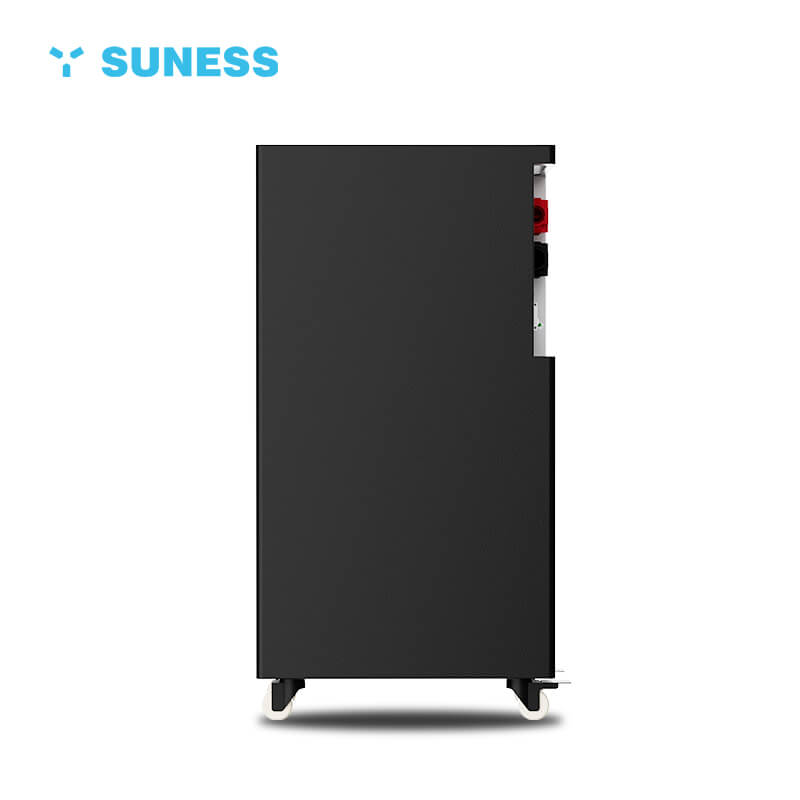
| Form factor | Wall-mount with casters for handling logistics |
| Integrated controls | Power Breaker, Power Switch, ADD addressing switch, GND terminal |
| Interface protections | Over-voltage, over-current, external short-circuit, reverse polarity, ground fault, over-temperature, surge current |
| Internal cell protections | Internal short-circuit, over-voltage, over-current, over-temperature, under-voltage |
| LED indicators | 4 white-green SOC capacity LEDs, 1 red alarm LED, 1 white-green RUN operational LED |
| Long-term storage SOC recommendation | 25%-60% SOC for storage between -10°C and +35°C; not allowed below -10°C or above +55°C ambient |
What the installer needs to know before commissioning
The EV-15.36N installation procedure requires an EPRA-registered electrician with formal commercial battery installation experience. Five technical requirements drive the commissioning workflow:
Requirement one — solid mounting surface. Per the manufacturer’s installation requirements section, the battery must mount against concrete or masonry construction. The 120 kg unit weight rules out plasterboard partitions, lightweight stud walls, or hollow blockwork without structural reinforcement. Casters fitted to the battery base assist handling during positioning but must be physically locked before the wall connection completes.
Requirement two — indoor installation only. The manufacturer explicitly states the installation location must be indoors. Outdoor mounting voids warranty regardless of secondary weatherproofing. For Kenyan installations this means dedicated indoor equipment rooms — typically a utility space, plant room, or purpose-built electrical enclosure with adequate ventilation. The installation room must remain inaccessible to children, away from open flame or flammable substances, and shielded from direct sunlight on the battery enclosure itself.
Requirement three — environmental envelope discipline. Ambient temperature at the installation location must fall between -10°C and +55°C; relative humidity must stay within 5-95% RH; installation altitude must remain below 3,000m. The wider envelope covers virtually all Kenyan installation locations including high-altitude sites at Eldoret, Nyandarua, Mount Kenya foothills, plus coastal hot-and-humid environments at Mombasa and Diani. For maximum cycle life across the rated 8,000-cycle envelope, equipment room temperatures benefit from staying in the 15-30°C range through ventilation.
Requirement four — DIP switch configuration before power-on. For multi-unit parallel installations, the 6-position DIP switch must be set on each battery before any electrical connection completes. The host battery (one per parallel group) gets Bit1-Bit5 set per the host setting table according to the number of slaves, plus Bit6 fixed ON. Each slave battery gets Bit1-Bit5 set per the slave setting table for its specific address (1-15), plus Bit6 fixed OFF. Wrong DIP settings cause communication failure that cannot be diagnosed remotely and requires return to site for correction.
Requirement five — proper turn-on sequence. The manufacturer specifies a two-step power-on: first switch the Power Breaker to the ON position, then press and hold the Power button for 1 second. The battery performs internal self-test before output enables; the LCD then shows the State of Charge. Skipping either step or reversing the order produces unreliable startup. Turn-off reverses the sequence: hold Power button for 1 second to shut down, then switch the Power Breaker to OFF.
Cable sizing for the 150A continuous discharge envelope requires substantial commercial-grade conductor cross-section. Solar PV stranded copper at 35-50 mm² minimum sizes appropriately for typical commercial installation cable run lengths after ambient temperature derating. Residential cable sizes (4-16 mm²) are dramatically undersized and create voltage-drop plus thermal-management failures under sustained commercial-duty discharge.
Communication cable preparation follows the pin definitions documented in Section 7.4 of the manufacturer user manual. The PCS network port connects to the inverter; the BMS network port chains to additional parallel batteries. Pin assignments differ between CAN and RS485 protocols, and getting them wrong creates non-obvious communication failures that masquerade as battery faults. Reference the manual pin diagram during termination and verify communication establishment through the LCD display before commissioning the inverter integration.
Considering one EV-15.36N versus three parallel-stacked 5 kWh batteries? Building a 30-60 kWh commercial backup system from 2-4 units? Designing an off-grid lodge installation where the storage carries the full overnight envelope?
The Suness 15.36 kWh Lithium Battery delivers single-enclosure storage at the commercial scale where parallel-stacking smaller batteries adds complexity rather than capacity advantage. Use the Solar Calculator to size your PV system against your daily kWh load, then send your final specification through My Quote for a commercial bill of materials including the right EV-15.36N quantity, DC protection components matched to the 150A continuous current envelope, inverter selection from the Suness-compatible brand list, and installation logistics planning for the 120 kg per unit mounting and parallel configuration requirements.