Description
When 10kW Isn’t Quite Enough and 15kW Is Too Much
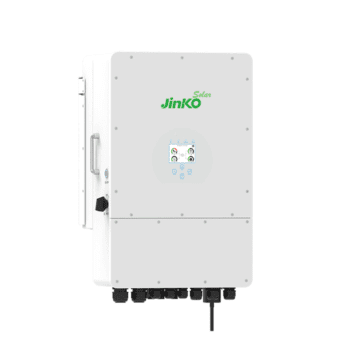
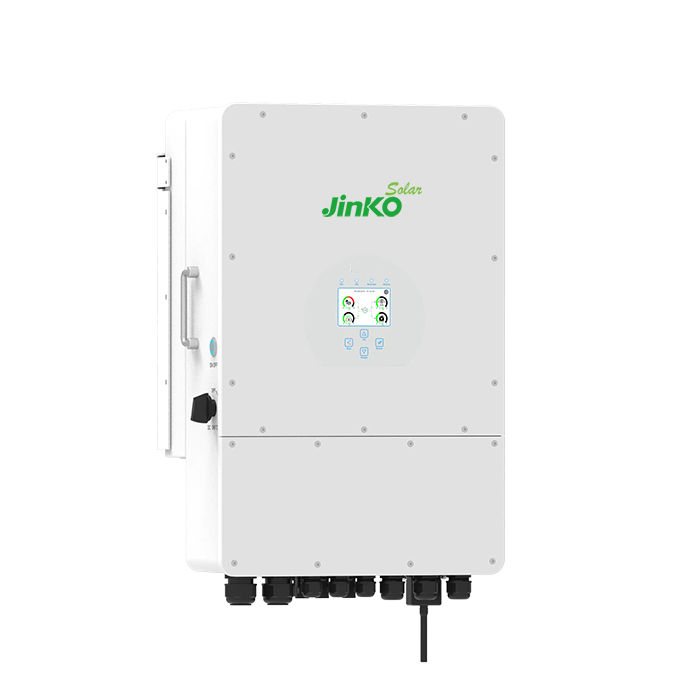
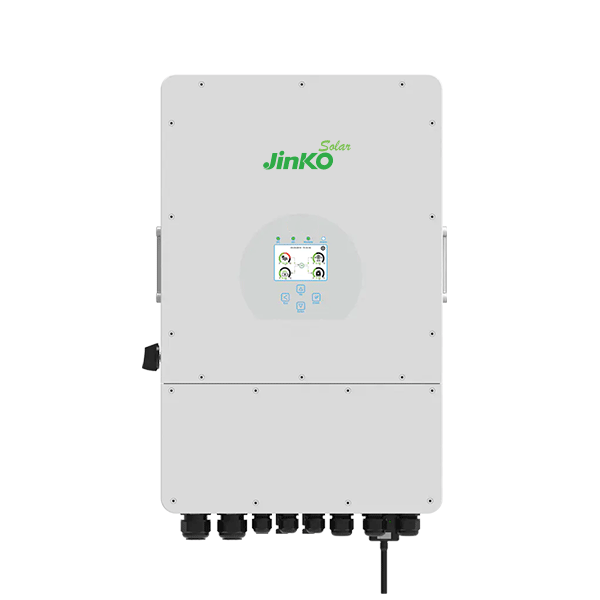
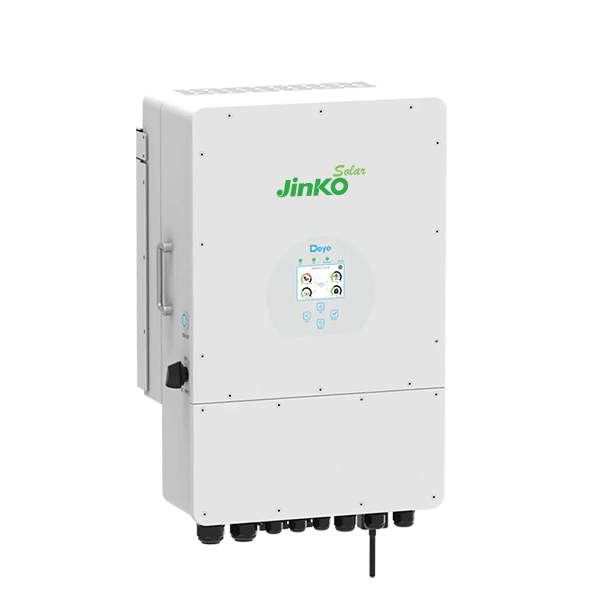
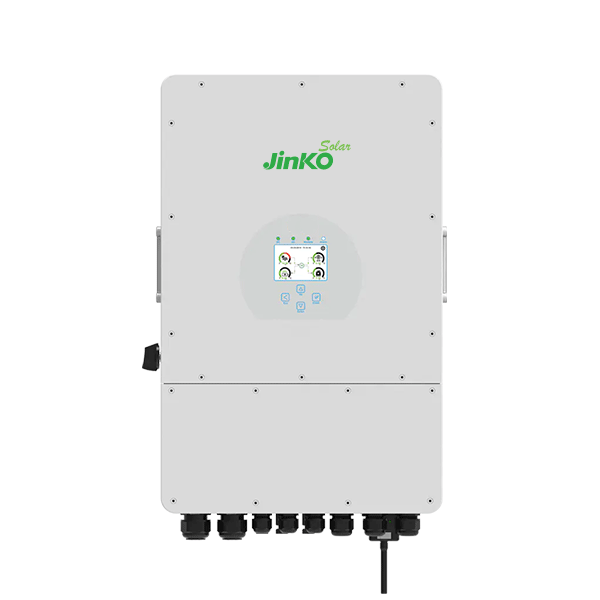
The Jinko 12kW three-phase hybrid (JKS-12K-SG04LP3-EU) solves a very specific problem: commercial solar buyers whose load calculations keep landing between the 10kW and 15kW inverter classes. That’s a surprisingly common position in the Kenyan market, and choosing the wrong direction costs real money — either in undersized capacity that limits your system’s productive hours, or in oversized hardware you paid for but never fully use.
This is the inverter for the SME that runs a medium shop, a small factory, a busy workshop, a multi-tenant office, or a large agricultural operation, and whose load calculations show they need roughly 11–13kW of steady output with comfortable overhead for growth. It’s built on the same proven Deye-platform SG04LP3-EU architecture as the 10kW model you may have considered, but with notably more DC input headroom and stronger peak capability.
The Case for Stepping Up From 10kW
If you’ve already been pricing the 10kW three-phase inverter, here’s why buyers commonly make the extra investment:
- 20% more DC input capacity. The 12kW accepts up to 15.6kW of solar panels versus 13kW on the 10kW model. In a Kenyan climate where real-world panel output typically sits at 75–85% of STC ratings, that extra DC headroom converts directly into more usable AC output during morning, late-afternoon, and cloudy-day hours.
- Symmetric MPPT input. The 12kW has 26A available on both MPPT trackers (2+2 string configuration) rather than the 10kW’s asymmetric 26A+13A. For commercial rooftops with balanced east-west or north-south layouts, this eliminates design compromises.
- Larger peak power capability. 24,000W surge capability versus 20,000W — matters when starting heavy motor loads, compressors, or multiple three-phase machines simultaneously.
- Future-proofing against load growth. Most SMEs add equipment and staff over time. Starting with 12kW instead of 10kW gives you approximately 2kW of unused capacity that accommodates growth without a hardware replacement.
When the 10kW Is Actually the Right Choice Instead
In fairness, the 12kW isn’t always the better option. Stay with the 10kW if:
- Your load calculation comes in under 9kW and isn’t projected to grow
- Your budget is tight and the extra capacity of the 12kW would sit unused
- Your rooftop can’t physically accommodate more than 14–16 panels
- You’re planning to add a second inverter in the next 12–24 months anyway (in which case two 10kW units in parallel gives more flexibility than a single 12kW)
Businesses That Typically Specify the 12kW
Real-world installations of the JKS-12K-SG04LP3-EU tend to fall into specific categories:
- Medium supermarkets and hardware stores — multiple refrigeration units, extensive shop lighting, POS systems, CCTV, office equipment, and occasionally workshop tools
- Small manufacturing workshops — light industrial equipment, air compressors, welders, small production machinery running during business hours
- Busy offices with 30–50 staff — computers, servers, commercial air conditioning, kitchen facilities, printers, networking equipment
- Agricultural enterprises — grain drying, milk chilling, borehole pumps, irrigation systems, packhouse operations
- Boutique hotels and guesthouses — room electronics, commercial kitchen equipment, laundry, pool pumps, common-area lighting
- Schools and training institutions — computer labs, classroom lighting, projectors, administrative offices, water pumping
Real Installation Profiles
Three actual use-case builds around the JKS-12K-SG04LP3-EU:
Profile 1 — Medium supermarket (Thika, Nakuru, Eldoret-style urban location): 24 × Canadian Solar 550W HiKu6 panels (13.2kW DC) + JKS-12K-SG04LP3-EU + 25kWh lithium bank from our Jinko, Renergy, or Vestwood range. Runs 6–8 refrigeration units, full shop lighting, checkout equipment, CCTV, and office backup. Daily consumption typically 70–90 kWh across three phases.
Profile 2 — Agricultural packhouse with cold storage: 22 × Jinko Tiger Neo 580W panels (12.76kW DC) + JKS-12K-SG04LP3-EU + 30kWh lithium bank (Jinko, Renergy, or Vestwood). Supports milk chiller or fruit cold room, packing line equipment, borehole pump, lighting, and office. Three-phase output is essential for the cold-room compressor and pump motors.
Profile 3 — Small manufacturing workshop: 20 × Canadian Solar 670W HiKu7 panels (13.4kW DC) + JKS-12K-SG04LP3-EU + 20kWh lithium bank. Powers welders, air compressor, CNC or lathe equipment, overhead lighting, and administrative office. The 24kW peak power rating specifically targets motor inrush from industrial machinery.
The Scalability Path for Growing Businesses
Businesses often underestimate how quickly their electricity needs grow once they install solar and realise how much grid cost they were absorbing. The JKS-12K-SG04LP3-EU anticipates this by supporting parallel operation of up to 10 units — giving a theoretical ceiling of 120kW of combined three-phase capacity. In practice, this means you can:
- Start with a single 12kW inverter today sized for current load with modest growth headroom
- Add a second 12kW unit in 12–24 months when expansion takes you past 10kW of real-world demand
- Scale to 36kW or 48kW as a fully paralleled system without replacing any original hardware
This matters because the typical Kenyan SME doesn’t have the capital to build a 50kW commercial system on day one. The phased growth path lets you start at a justifiable investment level and expand as profits permit.
Technical Specifications Summary
PV input: 15,600W max DC | 800V max / 550V MPPT ceiling | 150V MPPT floor | 160V startup | 26A + 26A max input current | 2 trackers, 2 strings each
AC output: 12,000W rated / 13,200W max continuous / 24,000W 10-second peak | 380/400V three-phase + neutral | 21.7A rated / 23.9A max per phase | 50A continuous pass-through per phase | supports unbalanced phase loading | THD below 3%
Battery: 48V nominal (40–60V range) | 210A max charge | 210A max discharge | LiFePO4 via CAN/RS485 BMS | lead-acid supported via voltage-based charging | 6 time-of-use periods programmable
Performance: 97.6% max efficiency | 97.2% European efficiency | 99.9% MPPT tracking | grid-to-off-grid under 10 milliseconds | zero export capable | peak shaving | generator auto-start/stop
Communication: 2× CAN (BMS + parallel) | 1× RS485 | 1× RS232 | 1× DRM | optional Wi-Fi, LAN, or 4G data loggers
Protections: PV lightning surge | anti-islanding | PV reverse polarity | insulation resistance detection | residual current monitoring | DC input disconnect | over-current / over-voltage / short-circuit / over-temperature | ground fault detection
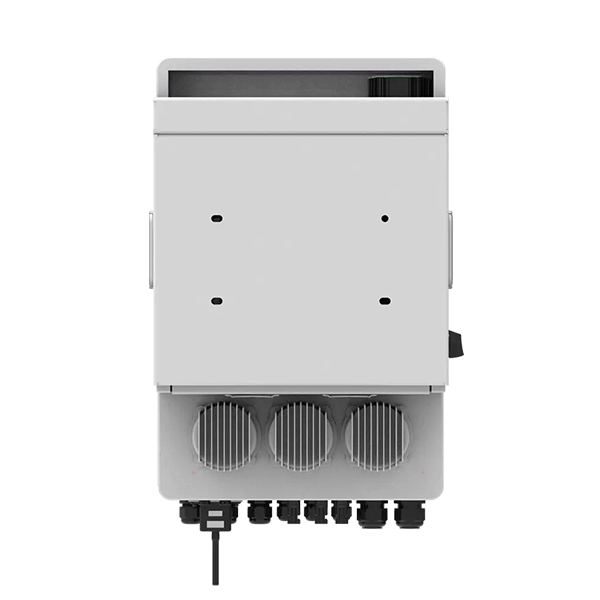
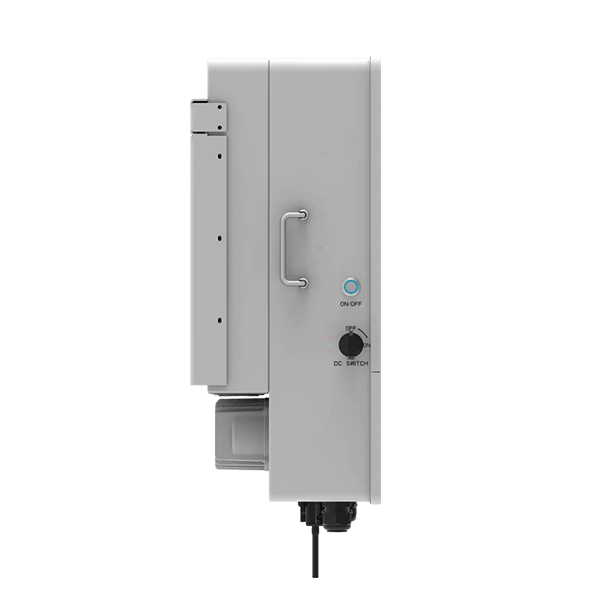
Physical: 540 × 670 × 220mm | approximately 40 kg | IP65 rated | smart fan cooling | colour LCD touch display | wall-mounted | -25°C to +60°C operating range
Building a Complete Commercial Installation
A 12kW three-phase installation is a proper commercial project — not a DIY undertaking. Beyond the inverter you’ll need 20–24 solar panels from our panel catalogue, a substantial lithium battery bank from our Jinko, Renergy, or Vestwood ranges (typically 20–30kWh for commercial backup), DC protection and string combiner boxes, three-phase AC breakers and distribution hardware, proper earthing and surge protection (essential and legally required), commercial-grade mounting hardware, professional installation by an EPRA-licensed commercial installer, and if exporting surplus — a net metering application to the utility.
For commercial quotes, we strongly recommend a site visit rather than relying on online sizing. Request a commercial quote or WhatsApp 0794 917 789 to arrange a consultation.
Common Questions About the Jinko 12kW Three-Phase Inverter
Should I buy the 12kW or the 10kW three-phase inverter?
Buy the 12kW if your load calculation comes in between 11–13kW, you expect business growth, or you want balanced 2+2 string MPPT configuration for your rooftop layout. Buy the 10kW if your calculated load is genuinely below 10kW with no expected growth, or if budget is constrained. The 12kW provides 20% more DC input capacity and 20% more peak surge handling, but costs more — the decision should be based on real load analysis, not general preference.
What types of businesses typically use this inverter?
Medium supermarkets, small manufacturing workshops, busy offices with 30–50 staff, agricultural operations with cold storage or pumping, boutique hotels, guesthouses, schools, and training institutions. Essentially any SME on a three-phase utility supply with daily consumption in the 60–90 kWh range.
Can this inverter handle three-phase motor-driven equipment?
Yes, and this is actually one of its strongest use cases. The 24,000W peak power rating specifically addresses motor starting inrush currents — which can briefly spike to 3–6 times the running current on equipment like compressors, cold-room condensers, borehole pumps, and industrial machinery. Standard single-phase inverters can’t handle these surges; three-phase inverters like the JKS-12K-SG04LP3-EU absorb them cleanly.
How many solar panels fit on this inverter?
Up to 15,600W of DC input. Practical panel counts: approximately 27 panels of 580W, 28 panels of 550W, or 23 panels of 670W. The balanced 2+2 string configuration supports commercial rooftop layouts without design compromises.
What battery bank size makes sense for a 12kW commercial system?
20–30kWh lithium bank for most commercial applications. The 210A charge/discharge capacity means the inverter can genuinely deliver its full 12kW output from battery alone — useful during extended grid outages. Our Jinko, Renergy, and Vestwood lithium ranges all communicate via CAN/RS485 BMS protocols supported by this inverter.
Can I add more 12kW units later if my business grows?
Yes. Up to 10 units can operate in parallel, giving a theoretical maximum of 120kW combined. Each additional unit synchronises automatically and shares load proportionally. Many Kenyan SMEs use this path — start with one 12kW today, add a second when revenue supports it, scale to 36kW or 48kW over several years.
Does it support time-of-use scheduling for commercial tariffs?
Yes. Six programmable time periods let you control when the battery charges (cheap off-peak hours, midday solar surplus) and when it discharges (expensive peak-rate evenings). This directly reduces your commercial electricity bill if you’re on a differential tariff.
What about unbalanced loads across the three phases?
The JKS-12K-SG04LP3-EU fully supports unbalanced three-phase output. A shop that has heavy refrigeration on phase 1, lighter lighting on phase 2, and medium POS/equipment load on phase 3 will operate cleanly — unlike some cheaper three-phase inverters that fault when phases become unbalanced.
How fast does it switch to backup during an outage?
Under 10 milliseconds — fast enough that commercial equipment including POS terminals, servers, refrigeration controllers, CCTV systems, and office electronics experiences no interruption. Only specialist laboratory equipment or medical-grade systems require faster transitions.
Is professional installation mandatory?
Yes, for both legal and practical reasons. A 12kW three-phase commercial installation requires EPRA-licensed installers, proper earthing, surge protection, commercial-grade circuit protection, and compliance with Kenya Bureau of Standards electrical codes. DIY installation voids the warranty, creates serious safety risk, and may invalidate your commercial insurance. Bicity Solar Energy Suppliers arranges certified installation with every commercial inverter sale.
Warranty and purchase details?
Jinko provides a 5-year standard manufacturer warranty on the JKS-12K-SG04LP3-EU. Extended commercial warranty options may be available for qualifying projects. Bicity Solar Energy Suppliers stocks this inverter with manufacturer warranty and delivery to all 47 counties. WhatsApp 0794 917 789 or request a commercial quote for current pricing.