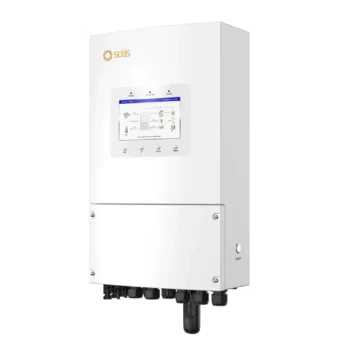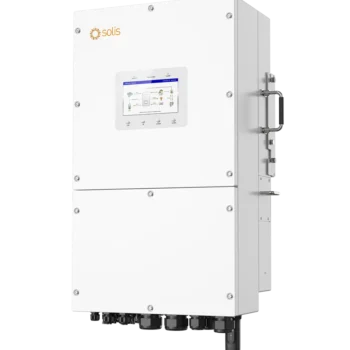
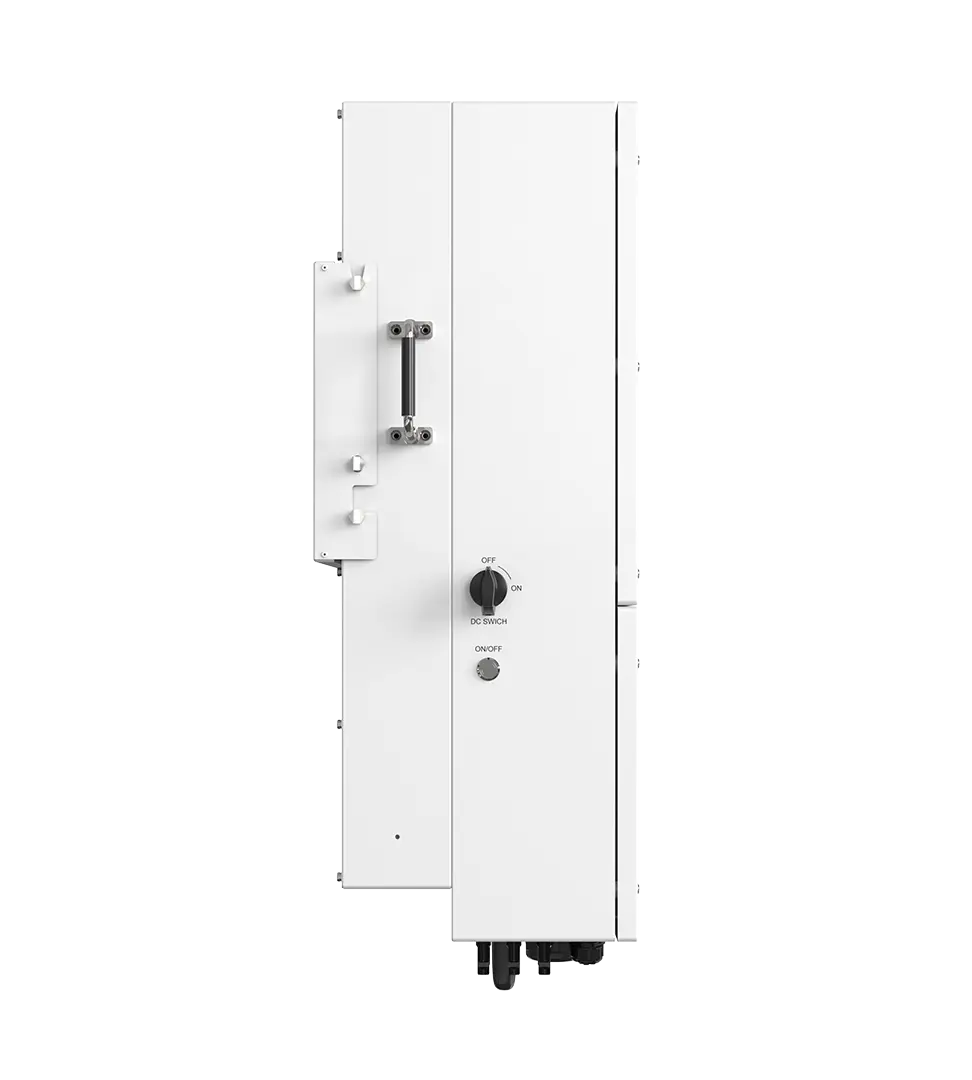
Description
Maxing Out Your Single-Phase Connection With 16kW of Hybrid Capacity
Single-phase utility connections in Kenya are typically capped at around 23kVA — the maximum draw the utility allows on a single-phase supply before requiring a three-phase upgrade. For most homes that’s massive headroom. But for the rare properties that actually approach that limit — substantial multi-storey homes with multiple AC zones, mixed-use residential-commercial buildings, agricultural homesteads with significant processing equipment — the question becomes: how do you build a solar system that genuinely matches your real consumption?
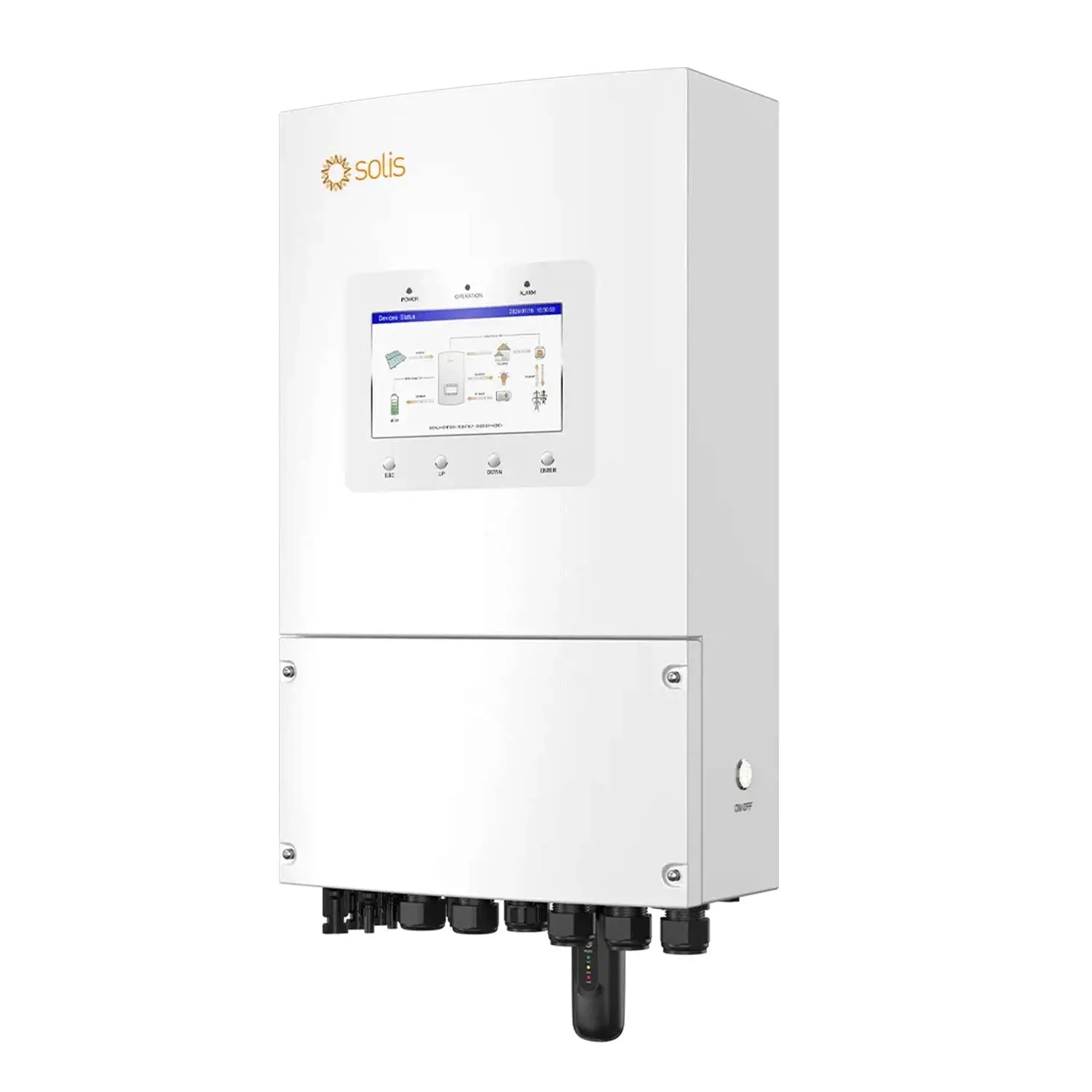
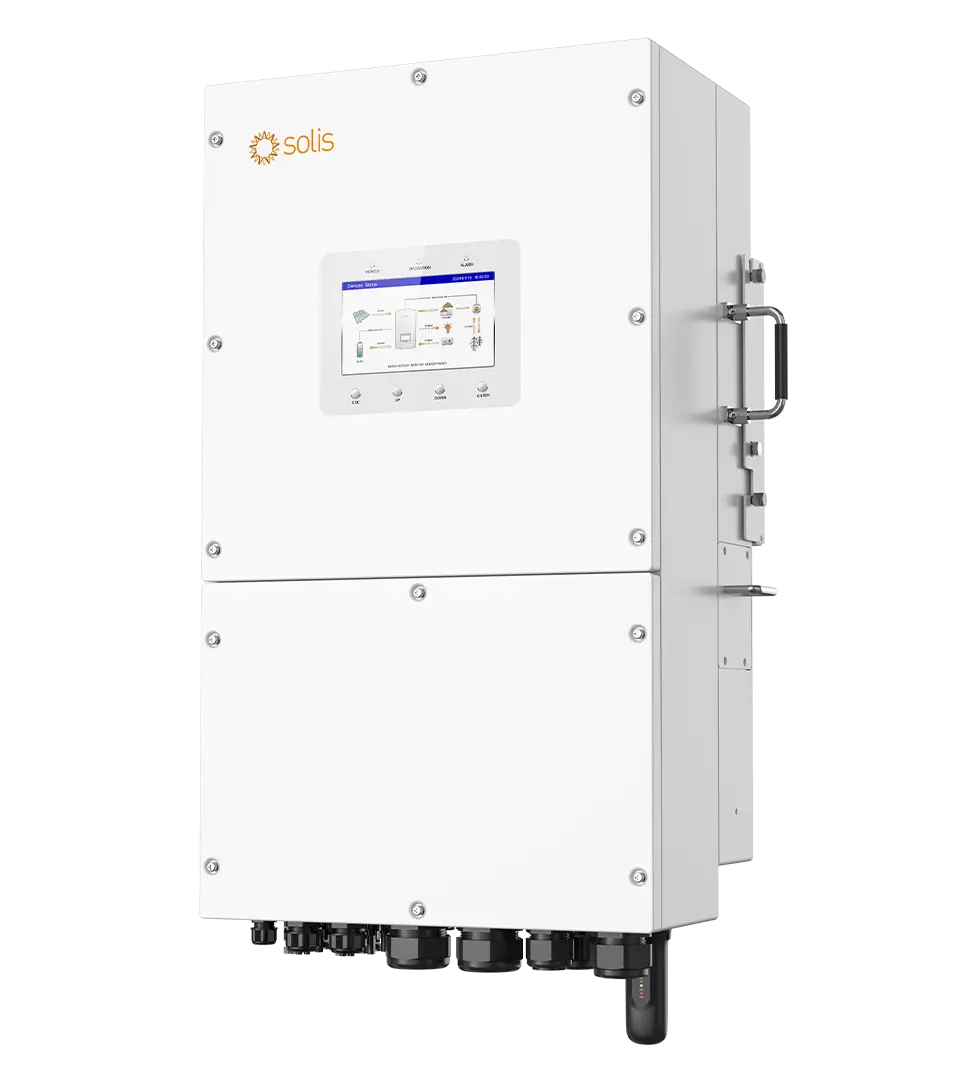
The Solis S6-EH1P16K03-NV-YD-L answers this question. It’s the highest-capacity single-phase hybrid inverter in mainstream Kenyan distribution, designed specifically for properties where the single-phase supply is fully utilised and the solar system needs to match that scale.
The Specific Buyer Profile for 16kW Single-Phase
This isn’t a mass-market product. The S6-EH1P16K03-NV-YD-L makes commercial sense for a narrow but real set of Kenyan properties:
- Substantial multi-storey homes with comprehensive AC coverage: 6+ bedrooms across multiple floors, central or zoned air conditioning serving the whole house, electric water heating throughout, swimming pool with substantial pump and filtration loads, and outdoor entertainment areas. Peak demand approaching 14–16kW is realistic.
- Mixed-use residential-commercial properties: A house with a ground-floor shop, salon, pharmacy, or office. The combined residential plus commercial loads exceed normal home consumption but the building is on a single-phase supply.
- Agricultural homesteads with processing equipment: Farm houses combined with milk chillers, grain processing, irrigation pumping, and cold storage — all running off the single-phase residential supply because three-phase isn’t available in the area.
- Lodges and guesthouses with extensive amenities: Properties with 15+ rooms, swimming pools, full commercial kitchens, water heating across all rooms, and substantial common-area infrastructure.
- Large rural compounds with multiple buildings: Main house, staff quarters, workshop or storage buildings, and outbuildings all sharing the single utility connection.
- Educational institutions in single-phase service areas: Boarding schools, training centres, and small educational facilities in areas where three-phase utility supply isn’t available.
What Specifically Differentiates 16kW From the 12kW Single-Phase
The S6-EH1P16K03-NV-YD-L sits on the same hardware platform as the Solis 12kW single-phase but with meaningfully expanded capacity. Direct comparison:
- 33% more rated output: 16kW vs 12kW continuous
- 33% more PV input window: 25.6kW max usable vs 19.2kW
- 16% more battery charge/discharge current: 290A vs 250A
- 33% more peak backup capability: 32kW vs 24kW for 10-second surge
- Same physical chassis: Identical mounting footprint, same installation procedure, same SolisCloud integration
The shared platform means installers familiar with the 12kW model can deploy the 16kW with no learning curve — and that any additional inverters added in parallel later (whether 12kW or 16kW units) integrate seamlessly into the same system.
Why You Wouldn’t Just Buy a Three-Phase Inverter Instead
This question matters because three-phase inverters at the 15–20kW level are common and often cheaper per kilowatt than this single-phase model. Honest reasons to choose the 16kW single-phase anyway:
- Your utility connection is single-phase and upgrading is impractical. Utility three-phase upgrades in Kenya cost several hundred thousand shillings, require utility surveys, sometimes new transformer infrastructure, and months of waiting. If your existing supply works, leveraging it is faster and cheaper than upgrading.
- Three-phase isn’t available in your area. Many rural and peri-urban Kenyan locations have only single-phase distribution. Three-phase isn’t an option regardless of cost.
- Your existing wiring is single-phase throughout. Converting an existing building from single-phase to three-phase wiring means rewiring the entire distribution system, plus replacing distribution boards, circuit breakers, and any three-phase-incompatible loads. The cost can exceed the inverter savings.
- You want a single-vendor solution. One inverter, one SolisCloud dashboard, one warranty, one set of installation parameters. Multiple smaller inverters paralleled to reach 16kW means more complexity in monitoring and servicing.
The 290A Battery Current: Heavy-Duty Energy Throughput
This is the specification that matters most for users with substantial backup requirements. With 290A maximum charge/discharge current at 48V, the S6-EH1P16K03-NV-YD-L can:
- Fully charge a 30kWh lithium bank in under 2 hours during strong midday solar (assuming adequate panel capacity)
- Deliver the full 16kW rated output from battery alone during cloudy periods or extended outages — no derating
- Handle peak surge events from heavy motors (cold-room compressors, borehole pumps, large AC compressors) drawing from battery without throttling
- Support battery banks of 30–50kWh comfortably — the inverter’s current capacity isn’t the bottleneck
Lower-current inverters in this size class (220–250A) become the bottleneck on heavy battery banks: even though the battery has the energy stored, the inverter can’t pull it out fast enough to meet peak loads.
3-MPPT Architecture for Large Roof Layouts
At 25.6kW maximum PV input, you’re typically installing 40+ panels — and at that scale, your roof layout matters enormously. The 3-MPPT design with 6 string inputs lets you handle complex layouts:
- Multi-orientation rooftops: One MPPT for east-facing arrays, one for west-facing, one for north or flat-roof sections. Each tracker independently optimises its own string set.
- Phased installation: Install 3 strings (one per MPPT) initially. Add the second string to each MPPT later as budget permits — total grows to 6 strings without rewiring.
- Mixed panel installations: Different panel models or orientations on different MPPTs, each at peak efficiency.
- Shading mitigation: If part of your roof has tree shading or chimney shadows during certain hours, isolate those panels on their own MPPT so the shading doesn’t drag down unshaded sections.
Realistic 16kW Single-Phase Configurations
Configuration A — Substantial luxury home: 36 × Jinko Tiger Neo 580W panels (20.88kW DC) split across 3 MPPT trackers + S6-EH1P16K03-NV-YD-L + 30kWh lithium battery from our Jinko, Renergy, or Vestwood range. Backup Port 1 covers fridges, security, lighting, water pump, networking. Backup Port 2 covers HVAC, pool pump, water heating. Suitable for daily consumption of 80–130 kWh.
Configuration B — Mixed-use residential-commercial property: 40 × Canadian Solar 550W HiKu6 panels (22kW DC) + S6-EH1P16K03-NV-YD-L + 35kWh lithium bank (Jinko, Renergy, or Vestwood). Residential side and commercial side both run from the unified system, with smart load management ensuring critical commercial loads stay powered during outages.
Configuration C — Agricultural homestead with processing: 32 × Canadian Solar 670W HiKu7 panels (21.44kW DC) + S6-EH1P16K03-NV-YD-L + 40kWh lithium battery. Powers main house, milk chiller, irrigation pump, grain processing equipment, and cold storage. Heavy 290A battery current handles motor inrush from agricultural equipment cleanly.
Specifications
PV Input (DC Side)
| Parameter | Value |
|---|---|
| Recommended Max. PV Power | 32,000 W |
| Max. Usable PV Input Power | 25,600 W |
| Max. Input Voltage | 550 V |
| Rated Voltage | 380 V |
| Start-up Voltage | 100 V |
| MPPT Voltage Range | 80 – 520 V |
| Full Load MPPT Voltage Range | 160 – 450 V |
| Max. Input Current per MPPT | 40 A |
| Max. Short-Circuit Current per MPPT | 50 A |
| Max. Power per MPPT | 12 kW |
| Number of MPPTs / Strings | 3 MPPTs / 6 strings |
| DC/AC Ratio | 1.6× |
AC Output (Grid Side)
| Parameter | Value |
|---|---|
| Rated Output Power | 16,000 W |
| Max. Apparent Output Power | 16 kVA |
| Operation Phase | 1/N/PE (single-phase) |
| Rated Grid Voltage | 220 V / 230 V |
| Grid Voltage Range | 187 – 253 V |
| Rated Grid Frequency | 50 Hz / 60 Hz |
| Rated Output Current | 72.7 A / 69.6 A |
| Power Factor | >0.99 (0.8 leading – 0.8 lagging) |
| THDi | <3% |
| Grid Types Supported | TN-S, TN-C, TN-C-S, TT |
Backup / Off-Grid Output (Dual Port)
| Parameter | Value |
|---|---|
| Rated Backup Power | 16,000 W |
| Peak Backup Power (10s) | 32,000 W (200% surge) |
| UPS Switchover Time | <4 ms |
| Number of Backup Ports | 2 (critical + non-critical) |
| Smart Load Management | Auto-disconnect non-critical at low SOC |
Battery
| Parameter | Value |
|---|---|
| Battery Type | Li-ion (LiFePO4) / Lead-acid |
| Battery Voltage Range | 40 – 60 V (48V nominal) |
| Max. Charge / Discharge Current | 290 A |
| Max. Charge / Discharge Power | 16 kW |
| Battery Switch | Integrated |
| BMS Communication | CAN / RS485 |
| Time-of-Use Scheduling | 6 customisable periods |
Generator & AC Coupling
| Parameter | Value |
|---|---|
| Generator Interface | Independent dedicated interface |
| Generator Auto Start/Stop | Supported |
| AC Coupling | Supported (retrofit grid-tied PV) |
| Reverse Current Protection | Integrated |
Efficiency
| Parameter | Value |
|---|---|
| Max. Efficiency | 97.5% |
| European Efficiency | 97.0% |
| MPPT Efficiency | 99.9% |
| Battery Charge Efficiency (PV → Battery) | 95.0% |
| Battery Discharge Efficiency (Battery → AC) | 94.5% |
Parallel & Operating Modes
| Parameter | Value |
|---|---|
| Parallel Operation | Multiple units form microgrid |
| Three-Phase System Formation | Supported with multi-unit configuration |
| Working Modes | Self-use / Feed-in priority / Peak-shaving / Off-grid |
Protection
| Feature | Status |
|---|---|
| Anti-islanding Protection | Yes |
| Output Over-current Protection | Yes |
| Short-circuit Protection | Yes |
| DC Reverse-polarity Protection | Yes |
| Surge Protection | DC Type II / AC Type II |
| Integrated DC Switch | Yes |
| Battery Multiple Protection | Integrated |
| Weak Grid / Generator Stability | Maintains stable load supply |
Physical & Environmental
| Parameter | Value |
|---|---|
| Ingress Protection | IP66 |
| Cooling | Intelligent fan cooling |
| Operating Temperature | -25°C to +60°C |
| Topology | Non-isolated |
| Mounting | Wall-mounted vertical |
Interface & Communication
| Parameter | Value |
|---|---|
| Display | 7″ colour LCD + Bluetooth + App |
| Standard Communication | CAN, RS485, USB |
| Wireless | Wi-Fi, Bluetooth (built-in) |
| Optional Communication | LAN, Cellular |
| Remote Monitoring | SolisCloud (web + mobile app) |
| Remote Firmware Updates | OTA via SolisCloud |
System Requirements for a 16kW Installation
This is a serious commercial-grade installation. You’ll need solar panels (32–44 modules of 550W–670W class), a substantial lithium battery bank from our Jinko, Renergy, or Vestwood ranges (30–50kWh recommended), heavy-duty DC protection, 80A+ single-phase AC breakers, proper earthing and surge protection, commercial-grade mounting hardware, and EPRA-licensed installation by a contractor experienced with large single-phase systems.
Because of the scale, we strongly recommend a site visit before procurement. Request a quote or WhatsApp 0794 917 789 to arrange consultation.
Solis 16kW Single-Phase: Buyer Questions
Why does anyone need a 16kW single-phase inverter?
The market exists because Kenya’s single-phase utility connections allow up to ~23kVA — meaning properties on single-phase supply can legitimately draw 16kW or more of continuous load. For these properties (substantial multi-storey homes, mixed-use commercial-residential buildings, agricultural homesteads with processing equipment, large lodges), matching the solar inverter to actual peak demand is essential. The S6-EH1P16K03-NV-YD-L is the largest single-phase hybrid widely available in Kenya for these scenarios.
What’s the difference between this and the 12kW Solis single-phase?
The 16kW provides 33% more rated output, 33% more PV input capacity (25.6kW vs 19.2kW), 16% more battery charge/discharge current (290A vs 250A), and 33% more peak surge capability (32kW vs 24kW). Both share the same hardware platform, IP66 rating, dual backup ports, 4ms UPS switchover, 3-MPPT design, and SolisCloud monitoring. Choose the 16kW if your audited peak demand is genuinely above 12kW.
Should I buy this or a three-phase inverter at this size?
Three-phase inverters at 15–20kW are common and often cheaper per kilowatt — but only relevant if you have or can obtain a three-phase utility connection. Choose the 16kW single-phase if: your utility supply is single-phase only, three-phase isn’t available in your area, or your existing wiring is single-phase and rewiring would exceed the inverter price difference.
Can I really put 32–44 solar panels on this inverter?
Yes. With 25.6kW maximum usable PV input across 3 MPPT trackers (6 strings total), the inverter accepts up to 44 × 580W panels, 46 × 550W panels, or 38 × 670W panels. This requires substantial roof space — typically 100–150 square metres of clear, well-oriented mounting area.
What battery bank size is appropriate for 16kW?
30–50kWh lithium for typical applications. The 290A battery current capacity supports banks at this scale without becoming the bottleneck. Critical: this isn’t an inverter to pair with a small 10kWh battery — that would dramatically underutilise the inverter’s discharge capability. Jinko, Renergy, and Vestwood lithium ranges all pair correctly via CAN/RS485 BMS.
How does AC coupling save money for existing solar customers?
If you already have a grid-tied solar system installed and want to add battery backup, AC coupling lets you keep your existing PV inverter while the Solis 16kW handles battery and backup functions. You don’t pay to replace working hardware. Combined with the 25.6kW PV input window for any future panel additions, this is the most upgrade-friendly large single-phase inverter available.
Is one of these inverters enough for my whole property, or do I need multiple?
For most properties operating at the upper limit of single-phase supply, one S6-EH1P16K03-NV-YD-L is sufficient. If you genuinely need more than 16kW, multiple Solis units can be paralleled to form a microgrid — though at that scale, a three-phase utility upgrade often becomes the more cost-effective long-term solution.
What batteries pair best?
48V LiFePO4 lithium with CAN or RS485 BMS. Recommended capacity 30–50kWh. Our Jinko, Renergy, and Vestwood lithium ranges all pair correctly. For battery banks of this size, modular stackable lithium systems are typically the practical choice (start with 20kWh, expand to 40kWh+ over time).
Is professional installation absolutely required?
Yes, without exception. A 16kW single-phase installation involves 70+ amps of AC current, 290A of DC battery current, and substantial PV string voltages. EPRA-licensed installation, proper earthing, commercial-grade circuit protection (80A+ AC breakers), and DC cable sizing for high-current battery feeds are all mandatory. DIY installation at this scale creates serious fire and electrocution risks, voids the warranty, and may violate utility connection regulations.
Warranty and where to buy in Kenya?
Solis provides a 5-year standard manufacturer warranty on the S6-EH1P16K03-NV-YD-L. Bicity Solar Energy Suppliers stocks this inverter with delivery to all 47 counties. WhatsApp 0794 917 789 or request a quote for current pricing and a commercial site consultation.