Description
Solar 1P DC Surge Protector Kenya
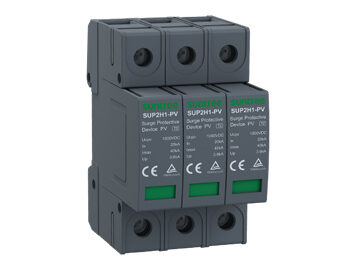
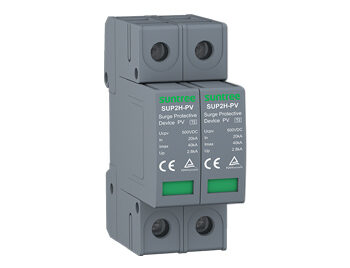
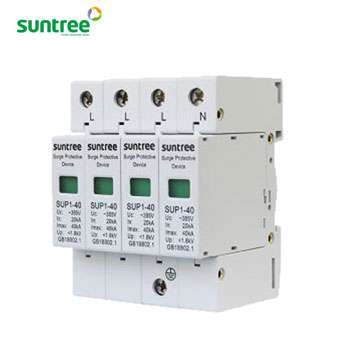
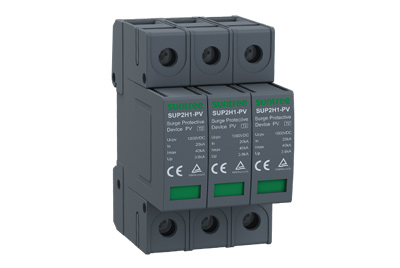
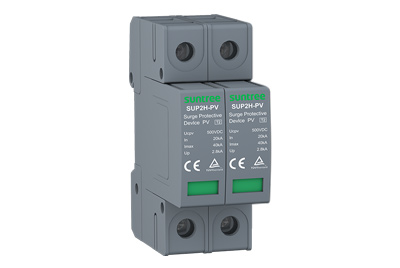
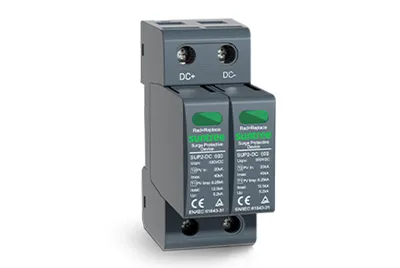
The Solar 1P DC Surge Protector from Suntree — known across the Kenyan solar specialty market under several names including Suntree SUP1-PV40 1P 600VDC DC SPD, the Single Pole DC Surge Protector, the 1P Solar Lightning Arrester, the Single-Pole PV Surge Protective Device, and the 1P 40kA Auxiliary SPD — is the specialty variant within the SUP1-PV40 family for circuits that need protection on just one conductor rather than two or four. It is the smallest, slimmest, and least expensive member of the family — designed for the specific applications where single-conductor protection suffices and where the larger pole variants would simply be over-specification.
This 1-pole variant serves a narrower band of applications than its 2P and 4P siblings — but the applications it serves are real, recurring needs in Kenyan solar that deserve their own variant rather than forcing buyers to oversize with a 2P. Off-grid cabin systems with earthed-neutral 48V architecture. Solar water pumps where the negative is bonded to the pump body earth. Solar streetlight DC bus circuits running between the charge controller and the lamp head. Telecom backup battery installations where standard telecom engineering practice earths the negative rail. Sensor and monitoring DC supply circuits within larger solar systems. Each of these specialty applications has its own buyer, and each is better served by the 1P variant than by an oversized 2P or 4P.
Buyers reaching this product page generally know they need single-pole protection — they have an established system architecture, an installer who has specified 1P, or a specialty application like solar pumping or streetlighting where the topology is clearly single-conductor. If you are buying for general residential solar (3-12 kW Vestwood hybrid pairing), the 2P 600V variant is what you actually need; if you are buying for commercial 1000V solar, the 4P 1000V variant is the right answer. The 1P is for the specialty cases where the system genuinely uses single-conductor architecture.
When 1P single-conductor protection is genuinely the right answer
The 1P SPD covers a clearly defined set of applications. Six scenarios where single-pole protection is appropriate from the SUP1-PV40 family:
- Earthed-neutral 48V off-grid systems: Small off-grid solar installations using 48V battery architecture with the negative rail bonded to the system earth. Only the positive rail carries voltage relative to earth, so only the positive rail needs SPD protection. The 1P SPD protects this positive rail; the earthed negative rail does not need additional clamping.
- Solar water pump DC circuits: Solar pumping systems (Lorentz, Grundfos, Shakti, and other pump systems common in Kenyan agriculture and water supply) frequently use single-conductor DC architecture where the pump body provides the earth return. The 1P SPD installs at the pump distribution panel protecting the single positive feed from the panels through the pump control electronics.
- Solar streetlight DC bus protection: Solar streetlights deployed by county governments, SACCOs, residential estates, and commercial premises use single-line DC architecture between the rooftop or pole-mounted panel and the lamp head with integrated battery. The 1P SPD installs at the lamp head distribution to protect the lighting electronics from surges induced on the connecting cable.
- Telecom backup battery installations: Telecommunications tower backup systems traditionally use earthed-neutral 48V architecture per international telecom engineering standards. The 1P SPD protects the positive battery rail at the tower installations where solar provides primary or backup power for the radio equipment.
- Charge controller output protection in smaller off-grid systems: The DC output of MPPT charge controllers feeding earthed-neutral DC loads benefits from 1P SPD protection on the output side. The protection scheme handles surges that propagate through the charge controller from the array side to the load side.
- Sensor and monitoring DC supply circuits: Larger solar installations include sensor and monitoring DC supply circuits (typically 12V or 24V) feeding meteorological sensors, security cameras, monitoring electronics, and similar auxiliary loads. The 1P SPD protects these auxiliary supply circuits separately from the main solar DC bus.
When the 1P is not the right choice from the family
The 1P is the most specialised variant in the SUP1-PV40 family, and its specialisation makes it wrong for several common applications. Four scenarios where you should select a different variant from the same family:
- Standard residential solar on 550V bipolar architecture: The dominant residential application — 3-12 kW solar with Vestwood 5kW or 6kW Hybrid Inverter pairing — uses bipolar two-conductor architecture without earth-bonded neutral. Both positive and negative rails carry voltage relative to earth and both need SPD protection. Use the 2P 600V variant for this dominant residential market.
- Commercial solar on 1000V bipolar architecture: Commercial systems (8-30 kW) use 1000V bipolar architecture with four conductors needing protection. Use the 4P 1000V variant. The 1P 600V would be both wrong voltage class and wrong pole count for commercial deployments.
- Grounded mid-point bipolar commercial systems: Specific commercial inverter architectures with grounded mid-point bipolar DC systems use three-conductor protection requiring the 3P 1000V variant. Use the 3P variant; the 1P does not cover the topology.
- Larger off-grid systems with non-earthed-neutral architecture: Off-grid systems above approximately 5 kW capacity often use bipolar architecture without earth-bonded neutral for efficiency reasons. These systems need the 2P variant rather than the 1P, even though they fall under the “off-grid” label that often suggests 1P. Verify the actual architecture before specifying.
The SUP1-PV40 family — where the 1P sibling fits
| SPD Variant | Voltage Class | Pole Count | Typical Application |
|---|---|---|---|
| Solar 1P DC Surge Protector — this product | 600V DC | 1-pole | Single-conductor auxiliary circuits — solar pumps, streetlights, telecom backup, small off-grid 48V earthed-neutral systems, charge controller outputs |
| Solar 2P DC Surge Protector | 600V DC | 2-pole | Residential solar on 550V bipolar architecture (the largest Kenyan solar segment) |
| Solar 3P DC Surge Protector | 1000V DC | 3-pole | Three-conductor commercial systems with bonded mid-point bipolar topology |
| Solar 4P DC Surge Protector | 1000V DC | 4-pole | Larger commercial installations using floating bipolar 1000V solar (8-30 kW capacity range) |
The 1P specialty position means the 1P variant has the lowest volume sales but the highest specificity per buyer. Customers reaching the 1P product page already know they need single-pole protection — they have an established specialty application, a knowledgeable installer who has correctly identified the topology, or a specific equipment manufacturer requirement that calls for 1P SPD specification. The 1P is rarely a casual purchase; it is generally a deliberate engineering decision.
How surge events affect single-conductor DC circuits
Single-conductor DC circuits face the same fundamental surge risks as bipolar DC circuits but with simpler propagation patterns. Five surge sources affect the specialty applications that use 1P SPD protection:
- Lightning-induced voltage on cable runs to remote loads: Solar pumps, streetlights, and remote monitoring equipment typically sit at the end of moderately long DC cable runs from the panel array or charge controller. Lightning strikes near the cable route induce voltage on the single conductor that propagates to the load equipment unless an SPD intercepts.
- Direct strikes on exposed solar streetlight poles: Streetlight poles in open areas (parking lots, road verges, parks) are more lightning-exposed than rooftop arrays. The pole structure attracts strikes; the resulting surge propagates down the pole through the lighting electronics. The 1P SPD provides essential protection in this exposure category.
- Telecom tower lightning exposure: Telecom installations sit on the tallest structures in their local area by design — radio coverage requirements drive antenna elevation. The combination of height and metalwork makes telecom towers extremely lightning-attractive. Solar backup systems on telecom infrastructure face severe surge exposure requiring rigorous SPD protection on all DC circuits.
- Solar pump motor switching transients: Solar pump systems generate transients during pump motor starting and stopping cycles. The transients propagate back through the DC supply circuit, affecting both the pump electronics and any other equipment sharing the supply. The 1P SPD on the pump supply circuit absorbs these self-generated transients alongside externally induced surges.
- Off-grid charge controller switching transients: MPPT charge controllers generate small transients during their switching operations. The transients are normally within equipment tolerance but can accumulate or coincide with externally induced surges to exceed component thresholds. SPD protection on charge controller output provides margin for combined surge events.
Kenyan deployment contexts for the 1P 600V variant
- Agricultural water pumping in productive regions: Solar water pumps in Kerio Valley, Kibos sugar belt, Mwingi semi-arid agriculture, Loitokitok horticulture, Yatta plateau farming, and emerging horticultural greenbelt areas across the country. Each pump installation typically needs 1P SPD protection on the pump distribution panel.
- County government and SACCO solar streetlights: Solar streetlights deployed by county governments under their development programmes, residential estate SACCO infrastructure investments, and commercial premises perimeter lighting. Major deployments include Nairobi metropolitan area outer estates, Kisumu and Mombasa county initiatives, Nakuru town lighting, and emerging coastal town deployments.
- Northern Kenya pastoral and conservation infrastructure: Off-grid solar at remote locations in Marsabit, Wajir, Mandera, Turkana, and Samburu counties — including community boreholes with solar pumps, conservation tourism camps in northern protected areas, ranger station solar backup, and remote health facility solar.
- Telecommunications backup at tower sites: Solar backup systems at telecom tower installations across the country supporting cellular network coverage, including high-elevation sites in central highlands, lake region tower clusters, coastal coverage towers, and northern Kenya rural network infrastructure.
- Small remote site solar at conservation, health, and education facilities: Off-grid solar at conservation area headquarters, ranger stations, remote primary schools, rural health facilities, and mission outposts. These smaller installations frequently use earthed-neutral architecture suiting the 1P SPD specifically.
Components the 1P 600V SPD protects in specialty applications
- Solar water pump controllers: The pump controller electronics in solar pumping systems (Lorentz PS series, Grundfos SQF series, Shakti pump controllers, and equivalent systems) contain MPPT circuitry and motor drive electronics sensitive to surge events. Controller replacement costs substantially more than the SPD device that prevents the damage.
- Solar streetlight lamp head electronics: Integrated lamp head units contain LED drivers, charge controllers, battery management electronics, and motion sensors that all face surge damage from cable-induced transients.
- MPPT charge controllers in off-grid systems: Off-grid charge controllers (Victron MPPT series, Steca Tarom, Morningstar TriStar, Outback FlexMax, and equivalent units) contain MPPT input electronics that surge events damage first.
- Telecom equipment power supplies and rectifiers: Telecom backup installations use specialised power supply equipment matching telecom engineering standards. Power supply failures take radio equipment offline; the SPD provides the protection that keeps telecom infrastructure operational through lightning events.
- Sensor power supplies and monitoring electronics: Sensor power supply circuits in larger solar installations feed meteorological monitoring, performance monitoring, security camera networks, and similar auxiliary loads. The 1P SPD on these supply circuits prevents the propagation of surge damage through the auxiliary load network.
Technical Specifications
| Specification | Value |
|---|---|
| Bicity SKU | BC-SPD-600V-40KA-1P |
| Manufacturer | Suntree (XinChi Electric Group) — SUP1-PV series, 1-pole specialty variant |
| Device category | DC Surge Protective Device (SPD) — 1-pole single-conductor variant |
| SPD Type | Type 2 (T2) classified under IEC 61643-31 |
| Maximum continuous operating voltage (Uc) | 600V DC steady-state rating |
| Absolute maximum voltage (Umax) | Peak 750V DC tolerance |
| Pole configuration | 1-pole — single-conductor protection to earth |
| Protection mode | L/PE (line to protective earth) |
| Nominal discharge current (In) | 20 kA at 8/20µs impulse |
| Maximum discharge current (Imax) | 40 kA at 8/20µs impulse |
| Voltage protection level (Up) | Less than 2.5 kV residual after clamping |
| Response time | Less than 25 nanoseconds |
| Status indication | One visible green window — Green present = module functional; Green absent = module needs replacement |
| Module design | One pluggable replaceable module on common base |
| Internal protection | Encapsulated zinc oxide varistor (MOV) core with integrated thermal disconnect |
| Operating temperature | -40°C to +85°C in service |
| Storage temperature | -40°C to +85°C de-energised |
| Mounting | 35mm DIN rail snap-on attachment |
| DIN rail width | 1 module (18mm footprint — slimmest in the SUP1-PV40 family) |
| Terminal capacity | Solar PV stranded copper conductor 2.5mm² through 6mm² |
| Earth terminal | Dedicated earth terminal for protective bonding conductor up to 6mm² |
| Compliance | IEC 61643-31 plus CE mark and TUV certification |
| Service life (no surge events) | Indefinite under normal use — varistor degradation occurs only during actual surge events |
| Service life (after surge events) | Approximately 40 kA cumulative discharge before module replacement needed |
| Net weight | Approximately 0.10 kg |
Engineering Features Specific to the 1P 600V Variant
- Single-pole single-conductor topology: Direct one-MOV protection of the protected conductor to earth — matched precisely to the single-conductor architecture of earthed-neutral systems, solar pumps with body-earth return, streetlight DC bus circuits, and similar specialty applications.
- 18mm DIN footprint — slimmest in the family: Single-module width that fits cleanly in compact distribution panels at solar pumps, streetlight lamp heads, telecom backup installations, and small auxiliary circuit distribution. Saves space in installations where DIN rail real estate matters.
- 600V envelope for specialty 48V to 550V circuits: Operating voltage rating that comfortably covers small off-grid systems (12V, 24V, 48V architectures) up through small to mid-range solar circuits at 350-550V.
- 40 kA Imax for specialty surge environments: Substantial discharge capacity matched to the specialty surge events these applications face. Telecom tower sites, streetlight poles in open areas, and pump installations near tall structures all face concentrated surge exposure that justifies the 40 kA rating.
- Less than 25 nanosecond response time: Fast enough to intercept lightning-induced surge events before they reach the specialty load electronics.
- Sub-2.5kV voltage protection level: The residual voltage after clamping stays well within the transient tolerance envelope of solar pump controllers, streetlight electronics, telecom equipment, and similar specialty loads.
- Pluggable single module for simple specialty maintenance: The single module can be replaced individually without rewiring the SPD base — making maintenance practical even at remote specialty installations where minimising service time matters.
- Single visible green status window: At-a-glance verification of protection status during routine inspection of specialty installations. Green present means active protection; green absent means module replacement needed.
- Internal thermal disconnect: The encapsulated MOV core carries a built-in thermal cut-out that opens the circuit if sustained heating ever develops from a varistor reaching end-of-life — closing off the failure mode where an aging MOV could otherwise become a steady leakage path. Particularly valuable in specialty installations where service access is limited.
- Lowest cost in the SUP1-PV40 family: The single-module design and single-conductor topology result in the most economical variant in the family — appropriate for the specialty applications where over-specification with 2P or 4P would be wasteful.
- IEC 61643-31 specialty PV certification: Same PV-specific SPD certification as the larger variants in the family — applicable to specialty solar applications in addition to the more mainstream residential and commercial deployments.
Typical Kenyan Specialty Installation Scenarios for the 1P 600V Variant
- Solar water pump installations at small to mid-scale agricultural sites — Kerio Valley horticulture, Kibos sugar belt outgrower farms, Mwingi semi-arid drip irrigation, Loitokitok horticulture, Yatta plateau cropping, Naivasha flower farms outer plots
- Community borehole solar pumping in pastoral counties — Marsabit, Wajir, Mandera, Turkana, Samburu, Isiolo, Garissa, Tana River — where solar pumping provides community water supply at remote borehole locations
- Solar streetlights deployed by Nairobi metropolitan area county governments at outer residential estates, neighbourhood roads, school perimeters, and community facility access roads
- SACCO residential estate solar streetlight deployments at gated communities, residential complex perimeter security lighting, internal road lighting in larger estates
- Commercial premises perimeter lighting at hotel approaches, hospital compound roads, school grounds, religious institution car parks, and conservation facility access
- Telecommunications tower backup solar at rural cellular coverage sites — Mt Elgon area towers, central highlands tower clusters, lake region tower installations, coastal coverage points, northern Kenya rural network nodes
- Conservation area off-grid solar at Maasai Mara, Tsavo East, Tsavo West, Amboseli, Samburu, Lake Nakuru, Aberdares ranger stations, conservation field stations, and remote monitoring infrastructure
- Remote tourism camp solar at Maasai Mara conservancies, Lewa Conservancy, Ol Pejeta, Lake Bogoria area camps, Kakamega Forest eco-lodges, Maralal area camps — where small off-grid systems support cabin-scale operations
- Mission hospital and rural health facility off-grid solar at remote health centres operated by faith-based organisations and NGOs across rural Kenya, particularly in northern and pastoral counties
- Off-grid primary school solar at remote rural schools in pastoral counties, conservancy schools, and forest-area institutions where solar provides the only electricity
- Sensor and monitoring DC supply circuits within larger solar installations — protecting auxiliary 12V/24V monitoring circuits separately from the main solar DC bus
- Small commercial solar pump installations at fish farms (Lake Victoria area aquaculture), poultry operations (water cooling and processing), dairy operations (water supply and milking), and horticultural operations (greenhouse fans and irrigation)
- Workshop and small industrial off-grid solar at remote workshops, agricultural processing centres, smaller dairy collection points, and remote commercial sites operating below the residential capacity threshold
Pairing the 1P 600V SPD with Bicity Solar ecosystem components
- Solar water pump installation: 1P SPD at the pump distribution panel: A solar pump installation typically includes 2-4 panels feeding through a SISO DC isolator and a 2P 550VDC DC MCB into the pump controller. The 1P SPD installs at the pump distribution panel protecting the pump controller from surges induced on the cable run between the panels and the pump location.
- Solar streetlight installation: 1P SPD at the lamp head: Solar streetlights with pole-mounted panels and integrated lamp head electronics use the 1P SPD inside the lamp head distribution. The SPD protects the lamp head electronics — LED drivers, charge controller, battery, motion sensors — from surges induced on the pole cable run.
- Telecom tower backup solar: 1P SPD on the earthed-neutral 48V battery rail: Telecom backup installations use earthed-neutral 48V architecture per telecom engineering standards. The 1P SPD installs on the positive battery rail protecting the rectifier output and the radio equipment power feed from surge events propagating through the solar charge path.
- Off-grid cabin or remote facility 1-3 kW: 1P SPD at the charge controller output: Smaller off-grid installations using a charge controller feeding earthed-neutral 48V loads install the 1P SPD between the charge controller output and the load distribution. The SPD protects the load electronics from surges that propagate through the solar charge path to the load side of the system.
Installation Notes for 1P Specialty SPD Deployment
The 1P 600V SPD’s effectiveness in specialty installations depends on installation quality matching the specialty application requirements. Installation must be performed by an EPRA-registered electrician with appropriate experience in the specific specialty domain — pump installers for pump applications, streetlight contractors for streetlight applications, telecom infrastructure specialists for telecom backup applications. Six practical considerations apply specifically to 1P SPD installations:
First, verification that the application genuinely uses single-conductor architecture before installing the 1P variant. The 1P SPD only protects one conductor; it provides no protection at all on the second conductor if the application turns out to be bipolar after all. Misapplied 1P SPDs leave half the system unprotected — install the 2P variant if there is any uncertainty about the architecture.
Second, specialty earth resistance verification at the installation site. Specialty installations frequently sit in challenging soil conditions — rocky northern Kenya pastoral soils, sandy coastal soils, dry semi-arid soils, shallow soil over bedrock at hill installations. Verify that the local earth electrode achieves under 10 ohms resistance before relying on the SPD for protection.
Third, connection lead management at the specialty installation. Keep the SPD’s connection wires running as short as the panel geometry allows; lengthy leads add inductance that slows down the device response and degrades the protection it can actually deliver to the load.
Fourth, single-conductor connection verification. Wire the protected rail (typically the positive feed in earthed-neutral applications) into the SPD line terminal, then run the protective earth conductor into the dedicated earth port at the bottom of the device. Specialty applications may have less standard labelling than residential or commercial installations — verify connection identity by tracing the cable to its source.
Fifth, specialty enclosure considerations. The 1P SPD’s compact 18mm width fits in the small distribution panels typical of specialty installations, but heat dissipation during surge events still requires modest clearance from adjacent devices. Plan the specialty distribution layout to maintain adequate clearance even in space-constrained applications.
Sixth, specialty operator briefing on the visual inspection routine. Pump operators, streetlight maintenance crews, telecom infrastructure technicians, and conservation facility managers should know the single green window indication — green present means active protection; green absent means module replacement needed.
Specifying solar protection for a water pump, streetlight, telecom backup, or small off-grid system with earthed-neutral architecture?
Add the Solar 1P DC Surge Protector (Suntree SUP1-PV40 1P 600VDC 40kA Type 2 SPD) to the specialty installation protection scheme. Combine with appropriate DC isolators, single-pole DC MCBs, and specialty equipment pairings for the complete specialty protection — open the Solar Calculator to scope your specialty application requirements, or describe your project through My Quote for a complete specialty bill of materials including earth resistance verification and the right architecture confirmation before specifying 1P versus higher-pole variants.