Description
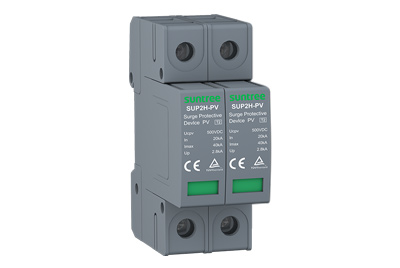
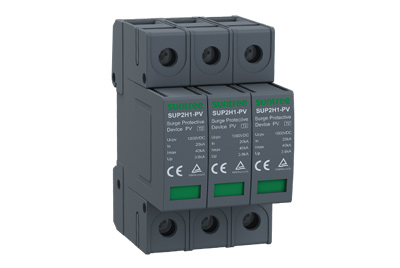
Solar 3P DC Surge Protector Kenya — Suntree SUP1-PV40 3P 1000VDC 40kA Type 2 DC SPD for Grounded Mid-Point Commercial Systems
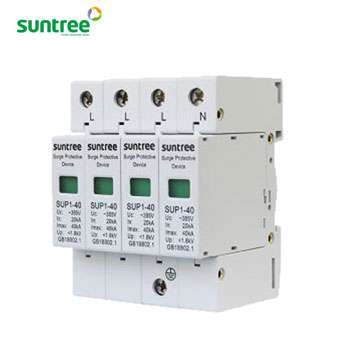
The Solar 3P DC Surge Protector from Suntree — known across the Kenyan specialty commercial solar market under several names including Suntree SUP1-PV40 3P 1000VDC DC SPD, the Three Pole DC Surge Protector, the 3P Solar Lightning Arrester, the Triple-Pole Commercial PV Surge Protective Device, and the 3P 40kA Three-Conductor SPD — is the narrowest-application variant in the SUP1-PV40 family. It exists for one specific commercial solar architecture: grounded mid-point bipolar systems where the system mid-point is bonded to the protective earth as part of the inverter design and where three conductors carry voltage relative to earth requiring three independent protection paths.
Most commercial Kenyan solar installations use floating bipolar 1000V architecture where the system mid-point floats relative to earth — these installations use the 4P 1000V variant from this same family. A smaller subset of commercial installations use grounded mid-point architecture for specific regulatory, safety, or inverter-design reasons; those installations need this 3P variant rather than the 4P. The architectural distinction is small but consequential: matching the SPD pole topology to the actual DC bus topology is essential for the SPD to provide its intended protection.
Buyers landing on this product page typically arrive after consultation with their commercial inverter manufacturer’s documentation, after EPRA-registered installer assessment of the specific inverter architecture, or as part of a commercial system design that explicitly specifies grounded mid-point operation. The 3P is rarely a default specification — it is generally selected because something specific in the installation design demands it. If you arrived here uncertain about whether you need 3P or 4P, read the architectural verification section below before placing an order.
When the 3P 1000V variant is genuinely the right answer
The 3P SPD covers a clearly bounded set of commercial applications. Five scenarios where three-pole protection from the SUP1-PV40 family is appropriate:
- Commercial inverters specifying grounded mid-point bipolar DC architecture: Certain commercial string inverters and central inverters from specific manufacturers use grounded mid-point bipolar architecture as their design topology. The inverter datasheet or installation manual will explicitly call for grounded mid-point operation and may specifically reference three-conductor SPD protection. Match the SPD pole count to the documented inverter requirement.
- Regulatory-mandated grounded mid-point commercial installations: Some jurisdictions and some specific commercial installation contexts (hospital settings, certain industrial premises, particular utility-tied configurations) require grounded mid-point bipolar operation for regulatory or safety reasons. Where regulatory authority specifies grounded mid-point as part of the installation approval, the 3P SPD matches the regulatory requirement.
- Transformer-isolated commercial systems with deliberate mid-point grounding: Commercial installations with transformer-isolated DC architectures sometimes bond the mid-point of the isolated DC bus to earth for safety or system reference purposes. The grounded mid-point in these transformer-isolated architectures requires three-conductor SPD protection covering the positive line, negative line, and the grounded mid-point itself.
- Specific battery-tied commercial configurations: Some commercial battery storage architectures use grounded mid-point on the battery DC bus for cell balancing reference or for safety isolation purposes. The 3P SPD on this grounded mid-point battery bus provides appropriate protection for the specific architecture.
- Legacy commercial installations using older 3-wire DC topologies: Some older commercial solar installations completed before floating bipolar became the dominant architecture used 3-wire DC topologies with various grounding schemes. Retrofit SPD installation on these legacy commercial systems may require the 3P variant to match the existing architecture rather than forcing a topology change.
When the 3P is the wrong answer — verify your architecture before ordering
The 3P variant is the narrowest-application member of the family, and misapplying it to systems with different architecture creates real protection gaps. Four scenarios where you should select a different variant:
- Standard commercial solar on floating bipolar 1000V architecture: Most commercial Kenyan solar installations (8-30 kW capacity using 12-15 panel strings) use floating bipolar architecture where the positive and negative rails float relative to earth and only the two rails plus protective earth need SPD protection. Use the 4P 1000V variant for this dominant commercial architecture. The 4P provides full protection coverage suitable for both floating and grounded mid-point architectures (when in doubt, the 4P is the safer default).
- Residential solar on 550V bipolar architecture: Residential systems (3-12 kW capacity with Vestwood 5kW or 6kW Hybrid Inverter pairings) use 550V bipolar architecture rather than 1000V commercial architecture. Use the 2P 600V variant for residential installations. The 3P 1000V is both wrong voltage class and wrong pole count for residential deployments.
- Single-line specialty applications: Solar pumps with body-earth return, solar streetlights with single-line DC bus, telecom backup with 48V earthed-neutral architecture, and similar single-conductor specialty applications use the 1P 600V variant. The 3P is dramatic over-specification for these single-line applications.
- Uncertain commercial architecture: If you are designing or specifying a commercial installation and the inverter documentation doesn’t explicitly call for grounded mid-point operation, the system probably uses floating bipolar architecture (the more common default). In this case, the 4P 1000V variant is the correct choice, not the 3P. Where genuine uncertainty exists, defaulting to the 4P provides complete protection coverage suitable for any commercial 1000V architecture.
The SUP1-PV40 family — where the 3P sibling fits
| SPD Variant | Voltage Class | Pole Count | Application |
|---|---|---|---|
| Solar 1P DC Surge Protector | 600V DC | 1-pole | Single-line specialty applications — solar pumps, streetlights, telecom backup, earthed-neutral 48V systems |
| Solar 2P DC Surge Protector | 600V DC | 2-pole | Standard Kenyan home solar at 550V bipolar architecture — the dominant residential application |
| Solar 3P DC Surge Protector — this product | 1000V DC | 3-pole | Commercial grounded mid-point bipolar systems — specialty commercial architecture where the system mid-point is bonded to earth |
| Solar 4P DC Surge Protector | 1000V DC | 4-pole | Commercial solar on floating bipolar 1000V architecture (the dominant commercial Kenyan deployment) |
The 3P specialty commercial position means low volume but high specificity per buyer. Customers reaching the 3P product page typically arrive after detailed commercial system design work that has identified grounded mid-point operation as the architecture for their specific installation. The 3P selection is generally not a casual decision — it reflects either explicit inverter manufacturer requirement, regulatory specification, or deliberate design choice for transformer-isolated or battery-tied architectures.
Architectural verification — how to confirm you actually need the 3P
Before ordering the 3P variant, verify that your commercial installation genuinely uses grounded mid-point bipolar architecture rather than the more common floating bipolar topology. Three diagnostic questions help confirm the architecture:
- Does your commercial inverter documentation explicitly specify grounded mid-point operation? Open the inverter installation manual or technical datasheet and search for terms like “grounded mid-point”, “bonded mid-point”, “earthed mid-point”, “3-wire DC”, or similar terminology. If the documentation explicitly calls for grounded mid-point operation, the 3P SPD is the appropriate match. If the documentation describes the inverter as supporting “floating DC” or “isolated DC bus” without mid-point bonding, the 4P SPD is what you need.
- Has your EPRA-registered installer specifically assessed the architecture as grounded mid-point? Commercial solar installation requires assessment by an EPRA-registered installer with documented commercial installation experience. The installer should confirm the architecture as part of system design. If the installer hasn’t specifically identified the architecture as grounded mid-point, the system most likely uses floating bipolar architecture (the more common default).
- Does your commercial installation involve transformer-isolated DC architecture or specific regulatory requirements mandating mid-point grounding? Transformer-isolated commercial systems and installations subject to specific regulatory requirements may use grounded mid-point operation. If neither condition applies to your installation, the system most likely uses floating bipolar architecture requiring the 4P variant.
If the three diagnostic questions clearly point to grounded mid-point architecture, the 3P variant is the appropriate choice. If any answer is uncertain or points to floating bipolar architecture, specify the 4P variant instead — the 4P provides complete commercial 1000V protection coverage suitable for either floating or grounded mid-point architectures.
How three-conductor protection works in grounded mid-point systems
Grounded mid-point bipolar architecture creates a specific DC bus topology where three conductors carry voltage relative to earth. The positive rail sits at approximately +500V relative to earth (half the system voltage). The negative rail sits at approximately -500V relative to earth (the other half). The bonded mid-point sits at earth potential but carries the protective bonding that establishes the architecture reference. Each of these three conductors can carry induced surge voltage from lightning events; each needs an independent SPD module providing its own clamping path to earth.
The 3P SPD provides one MOV module for each of the three conductors. During a surge event, all three modules can clamp independently or simultaneously depending on the surge propagation pattern. The three independent protection paths cover the three propagation modes that affect grounded mid-point systems: positive rail to earth, negative rail to earth, and mid-point conductor to earth.
The 4P variant in the same family adds a fourth module covering an additional protection mode that floating bipolar systems require but grounded mid-point systems do not need (because the mid-point in grounded systems is already at earth potential and does not need separate protection). The 3P variant is appropriately sized for grounded mid-point architecture; the 4P variant on grounded mid-point systems works correctly but includes a fourth module providing redundant protection on the already-grounded mid-point.
Technical Specifications
| Specification | Value |
|---|---|
| Bicity SKU | BC-SPD-1000V-40KA-3P |
| Manufacturer | Suntree (XinChi Electric Group) — SUP1-PV series, 3-pole specialty commercial variant |
| Device category | DC Surge Protective Device (SPD) — 3-pole three-conductor variant |
| SPD Type | T2 per IEC 61643-31 (Type 2 classification) |
| Maximum continuous operating voltage (Uc) | 1000V DC under continuous service |
| Absolute maximum voltage (Umax) | 1200V DC peak handling |
| Pole configuration | 3-pole — three independent protection modules covering positive line, negative line, and bonded mid-point conductor |
| Protection mode | L+/PE, L-/PE, M/PE (three-conductor coverage for grounded mid-point bipolar systems) |
| Nominal discharge current (In) | 20 kA per module on the 8/20µs impulse waveform |
| Maximum discharge current (Imax) | 40 kA per module on the 8/20µs impulse waveform |
| Voltage protection level (Up) | Under 4 kV residual after the surge clamps |
| Response time | Sub-25 nanosecond switching from high to low resistance |
| Status indication | Three visible green status windows — one per module; green visible = active protection; green absent = module needs replacement |
| Module design | Three pluggable replaceable modules on a shared base |
| Internal protection | Encapsulated zinc oxide MOV cores per module with integrated thermal cut-out |
| Operating temperature | Service rating -40°C to +85°C |
| Storage temperature | -40°C to +85°C de-energised storage range |
| Mounting | 35mm DIN rail snap-fit attachment |
| DIN rail width | 3 modules occupying 54mm footprint |
| Terminal capacity | Solar PV stranded copper conductor 2.5mm² up to 16mm² |
| Earth terminal | Dedicated earth port sized for protective bonding conductor up to 16mm² |
| Compliance | Certified to IEC 61643-31, carries CE mark, TUV verified |
| Service life (no surge events) | Open-ended under normal operating conditions — varistors only degrade when actively clamping surge events |
| Service life (after surge events) | Each module rated for roughly 40 kA accumulated discharge before replacement |
| Net weight | Approximately 0.25 kg |
Engineering Features Specific to the 3P 1000V Variant
- Three-pole three-conductor topology: Independent MOV protection for each of the three conductors in grounded mid-point bipolar DC systems — positive line, negative line, and bonded mid-point conductor each receive their own clamping path to earth.
- 54mm DIN footprint between 2P and 4P: Three-module width positioned between the residential 2P (36mm) and the commercial 4P flagship (72mm). Fits commercial combiner boxes and DC distribution enclosures designed for the 1000V architecture class.
- 1000V envelope for commercial grounded mid-point operation: Operating voltage rating that comfortably handles commercial 1000V architecture with cold-morning peaks approaching 1000V. The 1200V absolute maximum provides operating margin throughout the commercial envelope.
- 40 kA Imax per module for commercial surge environments: Substantial energy-handling capacity per module — appropriate for the commercial surge environment that grounded mid-point installations face in Kenyan commercial deployments.
- Less than 25 nanosecond response time: Three independent fast-switching MOV modules ensure all three conductors reach clamping voltage simultaneously before the surge wave reaches the protected commercial equipment.
- Sub-4kV voltage protection level: Residual voltage after clamping stays within the transient tolerance envelope of commercial solar inverters operating on grounded mid-point architecture.
- Three pluggable modules for commercial maintenance discipline: Individual module replacement supports the maintenance routine commercial installations require. A single damaged module pulls out and a replacement plugs in without disturbing the other two functioning modules.
- Three independent green status windows: At-a-glance visual inspection of each module’s health status during routine commercial service. The three-window design identifies which specific module needs replacement after surge events that affected only certain conductors.
- Internal thermal disconnect per module: Each of the three encapsulated MOV cores includes its own thermal cut-out that opens the connection if sustained heating develops from a varistor reaching end-of-life — closing off failure modes that could otherwise affect adjacent modules.
- Specialty commercial pricing tier: Three-module design positions the 3P at the mid-point of the SUP1-PV40 family pricing — above the 2P residential variant but below the 4P commercial flagship. Appropriate for the specialty commercial niche the variant serves.
- IEC 61643-31 commercial PV certification: Same PV-specific SPD certification across the SUP1-PV40 family — applicable to grounded mid-point commercial architectures as well as the more mainstream floating bipolar commercial deployments that use the 4P variant.
Kenyan Installation Scenarios for the 3P 1000V Variant
- Commercial solar installations where the specific commercial inverter manufacturer documentation explicitly specifies grounded mid-point bipolar DC architecture — verify by reading the inverter installation manual and looking for terms like “grounded mid-point”, “bonded mid-point”, or “3-wire DC operation”
- Hospital and medical facility commercial solar where regulatory authority or facility design specifies grounded mid-point operation for safety isolation purposes — typically larger private hospital installations and specialist medical centres where commercial 1000V solar feeds critical-load circuits
- Industrial premises commercial solar at manufacturing facilities, processing plants, and industrial parks where transformer-isolated DC architecture with deliberate mid-point grounding is part of the installation design — typically larger commercial installations integrated with industrial electrical systems
- Utility-tied commercial installations subject to specific regulatory requirements mandating grounded mid-point operation — typically commercial installations operating under power purchase agreements or specific utility interconnection requirements that specify the DC architecture
- Commercial battery storage installations using grounded mid-point on the battery DC bus for cell balancing reference, safety isolation, or specific BMS architecture reasons — typically larger commercial installations with substantial lithium battery banks operating on 1000V architecture
- Specialty commercial solar at university research facilities, institutional research centres, and pilot project installations where the architecture choice serves specific research, demonstration, or educational purposes — typically smaller commercial deployments within larger institutional contexts
- Retrofit installations on legacy commercial solar systems that were originally completed using older 3-wire DC topologies — typically older commercial installations from earlier solar deployment eras where retrofit SPD upgrade needs to match the existing architecture rather than forcing a topology change
- Larger commercial inverter installations where the inverter manufacturer’s regional distributor recommends the 3P variant based on specific local deployment experience — typically newer commercial inverter brands entering the Kenyan market with grounded mid-point architectures
Pairing the 3P 1000V SPD with Bicity Solar ecosystem components
The specialty commercial 3P 1000V SPD integrates with several Bicity Solar commercial products to build the complete grounded mid-point protection scheme. Three standard integration patterns appear across the specific commercial deployments using grounded mid-point architecture:
- Grounded mid-point commercial inverter input: 3P SPD at the inverter DC distribution: Commercial installations using grounded mid-point bipolar inverters install the 3P SPD at the inverter DC input or inside the inverter’s DC distribution. The SPD protects all three conductors of the grounded mid-point architecture before the surge can reach the inverter MPPT input electronics. Earth conductor sizing matches commercial requirements at 16mm² or larger.
- Grounded mid-point commercial combiner output: 3P SPD inside the SHLX 1000V commercial combiner: Larger commercial installations with multiple parallel strings combining at a SHLX 1000V combiner box use the 3P SPD inside the combiner alongside the main 4P 1000V DC MCB and per-string fuses. The 3P SPD on the combiner output protects the cable run from the combiner to the grounded mid-point inverter.
- Grounded mid-point commercial battery storage: 3P SPD on the battery DC bus: Commercial installations with substantial lithium battery banks using grounded mid-point architecture on the battery DC bus install the 3P SPD between the battery bank and the inverter battery input. The three-conductor protection covers the specific bus topology that grounded mid-point battery architecture creates.
Installation Notes for 3P 1000V Specialty Commercial Deployment
The 3P 1000V SPD requires installation by an EPRA-registered commercial solar electrician with documented experience in grounded mid-point commercial architectures. The variant is sufficiently specialised that not every commercial installer is familiar with its appropriate deployment context. Seven practical considerations apply to 3P commercial SPD installations:
First, architecture verification before installation begins. Confirm through the commercial inverter documentation and the EPRA-registered installer assessment that the system genuinely uses grounded mid-point bipolar architecture rather than the more common floating bipolar topology. Installing the 3P on a floating bipolar system leaves protection gaps; installing the 4P on a grounded mid-point system works correctly but includes redundant protection on the mid-point conductor.
Second, commercial earth resistance verification at the installation site. Commercial installations targeting grounded mid-point architecture require lower earth resistance than the residential threshold — the mid-point earth bonding plus the SPD earth diversion both depend on effective earth electrode performance. Target earth resistance under 5 ohms for commercial 3P installations, with verification through calibrated commercial-grade test equipment.
Third, three-conductor connection sequence verification. Connect the positive rail to the SPD positive terminal, the negative rail to the negative terminal, the mid-point conductor to the mid-point terminal, and the protective earth conductor to the earth terminal. The three-conductor sequence is more complex than 2P or 1P installations; verify each connection by tracing the cable to its source before commissioning.
Fourth, mid-point bonding integrity verification. The grounded mid-point architecture depends on the system mid-point being bonded to protective earth at exactly one defined location. Verify that the mid-point bonding exists and is at the designed location; multiple bonding points or missing bonding both create architecture problems that affect the SPD’s protective function.
Fifth, commercial-grade earth conductor sizing. The earth conductor from the 3P SPD to the main commercial earth bar should be sized at 16mm² minimum, 25mm² for larger commercial installations and lightning-exposed regions. The conductor should run as a continuous installation without splices wherever practical, terminating at the main commercial earth bar rather than at any secondary local earth point.
Sixth, three-module physical positioning within the commercial enclosure. The 54mm DIN footprint requires adequate clearance from adjacent commercial DIN rail devices to support heat dissipation during surge events. Plan the commercial combiner or DC distribution layout to accommodate the three-module width plus at least one module width clearance.
Seventh, commercial inspection routine documentation. Brief the commercial facility manager on the three visible green status windows — all three green indicators visible means full grounded mid-point protection is active, and any module showing the green window missing should trigger a same-day call to the EPRA-registered installer for assessment. Recommend a monthly visual check schedule for commercial 3P deployments, with a formal annual professional walkthrough integrated into the broader commercial solar service routine.
Specifying a commercial solar installation that uses grounded mid-point bipolar DC architecture?
Add the Solar 3P DC Surge Protector (Suntree SUP1-PV40 3P 1000VDC 40kA Type 2 SPD) where your commercial inverter documentation explicitly calls for three-conductor protection. Combine with 4P 1000V DC MCBs, SHLX 1000V commercial combiner boxes, and the grounded mid-point inverter pairing your design specifies — open the Solar Calculator to scope your specialty commercial requirements, or send your project details via My Quote for a tailored commercial bill of materials covering architecture verification, earth resistance testing protocols, and final confirmation that the 3P is the correct match rather than the more common 4P commercial flagship.