Description
Solar 4P DC Surge Protector Kenya — Suntree SUP1-PV40 4P 1000VDC 40kA Type 2 DC SPD for Commercial Solar
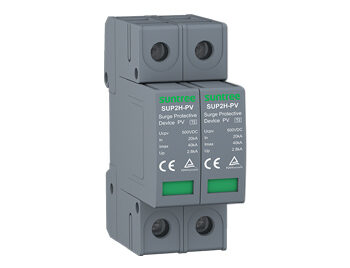
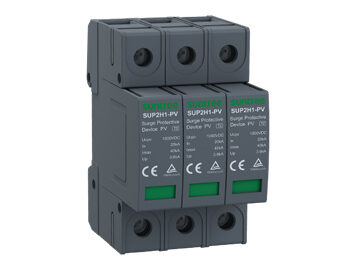
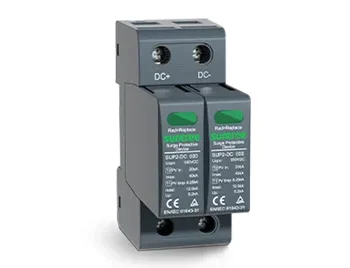
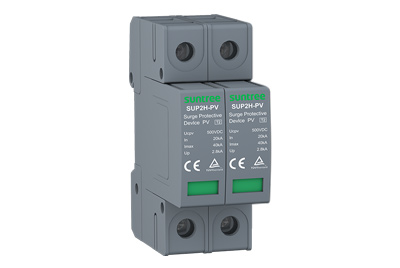
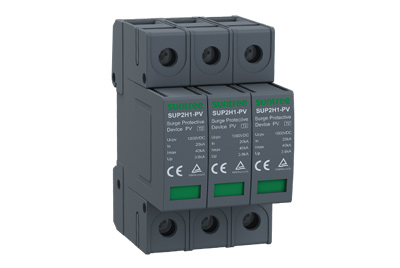
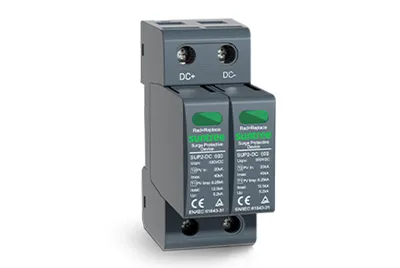
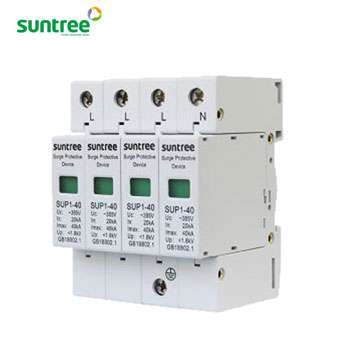
The Solar 4P DC Surge Protector from Suntree — distributed across the Kenyan solar market under several names including Suntree SUP1-PV40 4P 1000VDC DC SPD, the 4 Pole DC Surge Protector, the Commercial DC Lightning Arrester, the Quad-Pole Solar Surge Protective Device, and the 4P 40kA DC SPD — is the sacrificial protective device for commercial solar installations operating on 1000V DC architecture. It sits in the protection scheme between commercial array voltage and the sensitive electronics of larger commercial inverters, battery management systems, and charge controllers — diverting transient voltage surges safely to earth before they can damage equipment that costs fifty to a hundred times more than the SPD itself.
This 4-pole variant within the SUP1-PV40 family is purpose-built for commercial 1000V solar architecture. Smaller residential installations on 550V architecture use the 2P variant in the same family; the 4P configuration becomes necessary at the commercial voltage class where the bipolar 1000V system has four conductors needing protection: positive line, negative line, system midpoint (where present in grounded mid-point inverter architectures), and protective earth. Each of the four poles protects one conductor through its own MOV core, with all four pluggable modules sharing the common base of the SPD device.
Commercial Kenyan solar installations face concentrated surge risk because of three factors that residential installations face only partially: the longer DC cable runs from rooftop array to ground-floor inverter (30-50 metres typical, versus 15-25 metres residential) act as substantially better antennas for lightning-induced surges; the higher capacity (8-30 kW) means more expensive equipment downstream where surge damage costs more to repair; and the formal EPRA inspection and commercial insurance documentation increasingly require explicit SPD specification with certification evidence rather than the casual approach acceptable on smaller residential installations.
What pushes specification toward the 4P 1000V variant in the SUP1-PV40 family
The decision between the four pole variants in the SUP1-PV40 family follows the voltage class of the protected circuit and the conductor topology of the system. Six specific scenarios push the answer toward this 4P 1000VDC variant:
- Commercial solar installations on 1000V DC architecture: The defining condition for selecting this variant. Commercial systems using panel strings of 12-15 modern modules in series produce bus voltages of 600-800V continuous with cold-morning peaks approaching 1000V — exactly the operating envelope this SPD is designed for. The 4P configuration matches the bipolar architecture these systems use.
- Larger commercial inverter DC input protection: Inverters in the 10-30 kW commercial class (Sungrow SG10K through SG30K range, Solis commercial models, Huawei SUN2000 commercial range, GoodWe MT G2 commercial range, Growatt MID commercial range) standardise on 1000V DC input architectures. The 4P 1000V SPD at the inverter DC input provides equipment-side surge protection matching the inverter’s design voltage class.
- Commercial multi-string combiner output protection: Commercial installations with 2-4 parallel strings combining at a SHLX 1000V combiner box use the 4P 1000V SPD inside the combiner alongside the main DC MCB and fuses. The combined high-current 1000V output benefits from surge protection right at the combiner before the cable run to the inverter.
- Commercial battery storage DC bus protection: Hybrid commercial installations with 20-40 kWh lithium battery banks operating at 1000V architecture use the 4P 1000V SPD on the battery DC bus, protecting the BMS electronics from surges propagating through the battery cables.
- EV charging infrastructure DC-side protection: Solar-fed EV charging stations (workplace chargers, hotel forecourts, fuel retailer pilots) on commercial 1000V architecture use the 4P SPD at multiple protection positions: PV-side at the combiner, battery-side at the lithium bank, and on the DC bus before the inverter feeding the charger.
- Microgrid commercial installations: Larger commercial sites adopting microgrid architecture — integrated solar, battery, grid, and dedicated critical-load circuits — use the 4P 1000V SPD at multiple isolation and protection positions within the microgrid DC bus.
When the 4P 1000V SPD is the wrong choice from the family
Right-sizing matters even for SPDs because mismatched voltage class either compromises protection or wastes capital. Three scenarios where this 4P 1000V variant is the wrong answer within the SUP1-PV40 family:
- Residential solar installations on 550V architecture: Residential systems using 6-8 panel strings within the 550V envelope (the dominant Kenyan residential configuration) are correctly protected by the 2P 600VDC variant in the same family at significantly lower cost. The 4P 1000V SPD is over-specified for these installations — buying it for residential applications wastes money without adding protection benefit.
- Auxiliary DC circuits and small off-grid systems: Single-conductor protection on small auxiliary circuits (12V, 24V, or 48V battery systems with one earthed conductor, charge controller outputs feeding earthed-neutral DC loads) uses the 1P 600VDC variant. The 4P 1000V is dramatic over-specification.
- Three-conductor grounded-midpoint commercial systems: Some commercial inverter architectures use grounded mid-point bipolar systems with three conductors (L+, L-, and bonded midpoint). These specific architectures use the 3P 1000VDC variant rather than the 4P. Check the inverter documentation; if the manufacturer specifies grounded mid-point operation, use the 3P variant in this family.
The Suntree SUP1-PV40 family — pole configuration siblings
The complete SUP1-PV40 family covers four pole configurations across two voltage classes, each addressing a specific solar architecture. Selecting the right sibling within the family depends on the operating voltage and conductor topology of your specific installation:
| SPD Variant | Voltage Class | Pole Count | Application Tier | Bicity SKU |
|---|---|---|---|---|
| Solar 1P DC Surge Protector | 600V DC | 1-pole | Auxiliary DC circuits, smaller off-grid systems | BC-SPD-600V-40KA-1P |
| Solar 2P DC Surge Protector | 600V DC | 2-pole | Residential solar 550V architecture (most common Kenyan residential) | BC-SPD-600V-40KA-2P |
| Solar 3P DC Surge Protector | 1000V DC | 3-pole | Commercial grounded mid-point bipolar systems | BC-SPD-1000V-40KA-3P |
| Solar 4P DC Surge Protector — this product | 1000V DC | 4-pole | Commercial solar 1000V architecture, full bipolar protection | BC-SPD-1000V-40KA-4P |
All four sibling variants share the same fundamental technology: same MOV cores, same 40 kA maximum discharge current, same Type 2 classification per IEC 61643-31, same response time, same status indication, same module replaceability, and same TUV and CE compliance certifications. The siblings differ only in voltage rating (600V vs 1000V), pole count, DIN rail footprint, and terminal capacity. Match the variant to your installation architecture.
What causes DC surges in commercial Kenyan solar installations
Commercial Kenyan solar installations face transient surge events from several sources that vary by region and season. Understanding the surge environment helps explain why proper SPD specification matters at the commercial 1000V class. Five categories of surge events affect commercial solar:
- Direct lightning strikes on or near the commercial roof array: A direct strike on a commercial rooftop solar array causes catastrophic damage that no SPD can fully prevent — the surge energy exceeds what any reasonable protective device can divert. The SPD’s role in direct-strike scenarios is to protect downstream commercial equipment from the residual surge that propagates past whatever physical damage occurs at the strike point.
- Indirect lightning strikes within 1-2 kilometres of the commercial premises: By far the most common and most consequential surge source for commercial installations. A lightning strike a kilometre away still induces substantial voltage on the long commercial DC cables — the cables act as antennas picking up the electromagnetic field from the strike. Commercial cable runs of 30-50 metres collect more induced surge energy per strike event than shorter residential runs.
- National grid switching transients on hybrid commercial systems: For grid-tied and hybrid commercial solar installations, the national grid is itself a source of surge events. When the utility switches substations, restores power after outages, or experiences faults, rapid voltage spikes propagate through the grid and into connected commercial installations. The DC side of larger commercial inverters can see these surges through electromagnetic coupling and through the inverter’s internal AC-DC interface.
- Switching surges from large commercial loads: Commercial premises with substantial motor loads, refrigeration banks, HVAC systems, or industrial processing equipment generate back-EMF transients when these large loads start or stop. The transients can propagate into the solar DC system through electromagnetic coupling within the building electrical infrastructure.
- Electrostatic discharge during dry-season conditions: Dry-season conditions in arid and semi-arid Kenyan commercial sites can generate substantial electrostatic charge accumulation on commercial solar arrays. Discharge events through the DC system create transient voltages that affect commercial equipment despite being smaller than lightning surges.
Why commercial Kenyan installations face higher surge risk
Three regional factors elevate the surge risk for commercial Kenyan solar installations beyond residential exposure levels:
- Lake Victoria basin commercial sites: Western Kenya commercial centres — Kisumu, Kakamega, Bungoma, Busia urban commercial premises — sit within the Lake Victoria basin lightning corridor where annual flash density reaches several times the global average. Commercial installations in this region without proper SPD protection experience surge-related equipment failure at substantially elevated rates compared to commercial installations in less lightning-active regions.
- Central highlands commercial corridors: The Aberdares, Mount Kenya foothills, and central highlands commercial centres (Nyeri town, Embu town, Meru town, Karatina, Murang’a) experience intense afternoon thunderstorm activity through the rainy seasons. Commercial premises with rooftop solar in these elevated commercial zones face additional surge exposure from the orographic lightning patterns the mountains generate.
- Rift Valley commercial centres: The Rift Valley commercial corridor — Nakuru CBD, Naivasha town, Eldoret town centre, Kericho, Bomet — experiences strong convective thunderstorm activity affecting commercial installations regularly. Combined with the substantial agricultural and manufacturing activity in this region creating its own electromagnetic environment, commercial solar installations face concentrated surge events.
National grid instability adds another layer affecting commercial installations everywhere in Kenya. Voltage fluctuations during load shedding, switching events at urban substations serving commercial districts, and recovery transients after outage restoration all push surge events onto grid-tied and hybrid commercial solar systems. The 4P 1000V SPD provides the protective barrier between these grid-side events and the sensitive DC-side electronics of larger commercial inverters and battery management systems.
Components the 4P 1000V SPD protects in commercial solar systems
The 4P 1000V SPD installs to protect a specific list of expensive downstream components from surge damage. Five commercial-tier component categories represent the major investment the SPD safeguards:
- Larger commercial string inverters: The most expensive component in commercial solar systems. Commercial 10-30 kW inverter replacement costs substantially more than residential inverter replacement, with longer lead times for procurement and more complex installation work. The inverter’s MPPT input circuitry contains the sensitive electronics that surge events damage first.
- Commercial MPPT charge controllers: Commercial off-grid and hybrid systems with separate larger charge controllers contain similar surge-vulnerable electronics to inverter inputs, with higher replacement costs reflecting the larger current and voltage handling capacity.
- Commercial battery management systems (BMS): Commercial lithium battery banks of 20-40 kWh capacity contain sophisticated BMS electronics managing cell balancing across many parallel modules, sophisticated charge/discharge protocols, temperature monitoring, and communication with the inverter. Commercial BMS failure may render the entire substantial battery bank inoperative until specialist replacement.
- Commercial solar panel banks: Larger commercial arrays with 30-60+ modern panels face panel-level surge damage that may manifest as bypass diode failure within individual modules. Replacing failed panels in commercial arrays involves matching production years, electrical characteristics, and frequently large-quantity procurement — substantially more difficult than residential panel replacement.
- Commercial monitoring and management systems: Commercial solar systems include sophisticated monitoring (Wi-Fi modules, RS485 buses, cellular modems, energy management gateways, remote monitoring platforms) for the operational visibility commercial customers expect. These electronics fail under surge events even when main power electronics survive.
How the 4P 1000V SPD diverts surge energy
The internal operation of the 4P 1000V variant relies on metal oxide varistor (MOV) technology. Under normal commercial operating conditions at the 1000V DC continuous rating, the four varistors present effectively infinite resistance to the bus; commercial current flows through the protected circuit normally without leakage into the SPD. When a surge event drives the voltage above the protection threshold, all four varistors switch within nanoseconds to very low resistance, providing simultaneous conductive paths from the surge-elevated bus to the earth conductor across all four protected conductors.
The diverted surge energy passes through the four MOV cores into the protective earth system, dissipating as heat in the earth electrode and surrounding soil. The protected downstream commercial equipment sees only the residual voltage above the clamping threshold — the voltage protection level (Up) of less than 4 kV for the SUP1-PV40 — rather than the full surge voltage that could exceed 10-20 kV without the SPD intervention. Modern commercial solar inverters and battery management systems tolerate transients up to approximately 4-6 kV; the SPD reduces incoming surge voltages to this tolerated range, preventing damage.
The four MOV cores are sacrificial — each diversion event degrades the varistor material slightly. The four-pole arrangement provides redundancy in some surge scenarios where only certain conductors carry the surge (allowing the unaffected modules to continue providing protection while the affected modules age toward replacement), but the full four-pole protection requires all four modules functional. The visible green status windows on all four pluggable modules indicate health: any module with its green window absent has reached end-of-life and requires replacement.
Technical Specifications
| Specification | Value |
|---|---|
| Bicity SKU | BC-SPD-1000V-40KA-4P |
| Manufacturer brand | Suntree — registered trademark of XinChi Electric Group |
| Product family | SUP1-PV series modular DC surge protective devices |
| Device category | DC Surge Protective Device (SPD) — sacrificial transient voltage diverter, 4-pole variant |
| SPD Type | Type 2 (T2) per IEC 61643-31 |
| Maximum continuous operating voltage (Uc) | 1000V DC sustained |
| Absolute maximum voltage (Umax) | 1200V DC peak |
| Pole configuration | 4-pole — full bipolar protection covering positive line, negative line, midpoint, and protective earth |
| Protection mode | L+/PE, L-/PE, L+/L-, and L+/L-/midpoint (Y-configuration for commercial bipolar DC systems) |
| Nominal discharge current (In) | 20 kA at 8/20µs test waveform per module |
| Maximum discharge current (Imax) | 40 kA at 8/20µs test waveform per module |
| Voltage protection level (Up) | Less than 4 kV residual voltage after clamping |
| Response time | Less than 25 nanoseconds from surge onset to clamping action |
| Status indication | Four visible green windows — one per pluggable module; Green visible = normal; Green absent = module fault requires replacement |
| Module design | Four pluggable replaceable modules on common base |
| Internal protection | Four encapsulated zinc oxide varistor (MOV) cores; non-extinguishing design with internal thermal disconnect on each module |
| Operating temperature | -40°C through +85°C |
| Storage temperature | -40°C through +85°C |
| Mounting | Standard 35mm DIN rail click-mount |
| DIN rail width | 4 modules wide (72mm footprint — same width as 4P 1000VDC DC MCBs for clean distribution-board layout) |
| Terminal capacity | Solar PV stranded copper conductor 2.5mm² through 16mm² |
| Earth terminal | Dedicated earth terminal sized for protective bonding conductor up to 16mm² |
| Compliance standards | IEC 61643-31 (PV-specific SPD standard); CE marked; TUV certified |
| Service life (no surge events) | Indefinite — varistors degrade only through actual surge clamping events |
| Service life (after surge events) | Cumulative 40 kA discharge capacity per module before replacement required |
| Net weight | Approximately 0.32 kg |
Engineering Features Specific to the 4P 1000V Variant
- Four-pole bipolar commercial protection: Full coverage of all four conductors in commercial 1000V bipolar DC systems — positive line to earth, negative line to earth, midpoint to earth, and line-to-line modes. Lower-pole variants in the family cover fewer conductors and are inappropriate for full bipolar commercial architectures.
- 1000V DC envelope for commercial architecture: Designed for commercial solar systems operating on 1000V DC architecture (12-15 panel strings producing 600-800V continuous with cold-morning peaks approaching 1000V). The 1200V absolute maximum provides margin above the operating envelope.
- 40 kA Imax per module for commercial-grade surge handling: Substantial energy-handling capacity per module. With four modules handling different conductor protection, the device collectively handles substantial cumulative surge energy across typical commercial lifetime exposure.
- Less than 25 nanosecond response time: Faster response than the rise time of typical lightning-induced surges. The four modules reach clamping voltage simultaneously before the surge wave reaches commercial inverter MPPT inputs or battery BMS electronics.
- Sub-4kV voltage protection level for commercial equipment tolerance: The residual voltage after clamping stays within the transient tolerance envelope of modern commercial solar inverters and battery management systems, ensuring downstream commercial equipment survives surge events the SPD intercepts.
- Four pluggable modules for commercial maintenance efficiency: Individual module replacement supports the maintenance discipline commercial installations require. A single damaged module can be replaced without disturbing the other three functioning modules — particularly valuable in commercial installations where the SPD location may be inside a sealed commercial combiner box requiring careful service work.
- Four independent green status windows: Visual inspection of each module’s health status during routine commercial service work. The four-window design lets the inspector verify each pole’s protection state independently, identifying which specific module needs replacement after surge events.
- Internal thermal disconnect per module: Each of the four encapsulated MOV cores includes thermal disconnect that opens the connection if varistor failure produces sustained heat. The per-module thermal protection prevents the failure mode where a single degraded MOV could cause issues affecting the other three modules.
- Compatible with Sungrow SG10-30K and equivalent commercial inverters: Voltage envelope and 4-pole protection topology line up with what the larger Sungrow commercial range, the equivalent Solis commercial models, the corresponding Huawei SUN2000 commercial sizes, plus comparable units from GoodWe and Growatt all require for DC-side surge protection across the 10-30 kW commercial bracket on 1000V architecture.
- 72mm DIN footprint matching 4P 1000VDC DC MCBs: Same physical footprint as the BC-DCB-1000V-* commercial breakers, allowing clean side-by-side mounting in commercial combiner boxes and DC distribution architecture.
- IEC 61643-31 PV-specific certification for commercial EPRA compliance: The 61643-31 standard specifically addresses surge protection for photovoltaic applications — the standard EPRA inspectors look for in commercial solar inspection documentation.
Typical Kenyan Installation Scenarios for the 4P 1000V Variant
- Commercial solar installations at supermarket chains, hardware mega-stores, and larger retail premises across Nairobi Westgate, Two Rivers, The Hub, Junction Mall, Sarit Centre, Mombasa Nyali Centre, Kisumu West Mall, Nakuru Westside Mall, and Eldoret Rupa Mall in the 10-30 kW commercial capacity band
- Larger hotel solar at coastal and inland properties using commercial 1000V architecture — Mombasa Nyali Beach hotels, Diani resort properties, Watamu beach hotels, Malindi seafront establishments, Maasai Mara safari camps, Naivasha lakeside hotels, Aberdares lodges, Nanyuki hotel area, Lake Nakuru hospitality properties
- Restaurant chain solar at multi-outlet operators (larger Java House, ArtCaffe, Galitos, KFC sites) where 10-30 kW commercial capacity solar feeds kitchen, refrigeration, lighting, and HVAC loads
- Hospital and larger medical facility solar at private hospitals across Nairobi (Nairobi West, Karen, Westlands clusters), Mombasa region, Kisumu and Nakuru major medical centres, and Eldoret tertiary hospitals where commercial-tier solar supports diagnostic imaging, laboratory equipment, and medical refrigeration with surge-protected battery backup
- University and tertiary college solar at higher-education campuses across the country — including private universities, public university constituent colleges, technical training institutes, and teacher training colleges — where 10-30 kW commercial systems power lecture-hall blocks, library facilities, laboratory wings, and student services buildings
- Religious institution solar at the largest commercial-scale Kenyan worship facilities — major cathedrals, central mosques, regional Hindu temples — where the substantial weekend congregational electrical demand justifies 10-30 kW capacity with battery storage and corresponding surge protection
- Corporate campus solar at office park installations in Westlands, Upper Hill, Karen-Lavington commercial corridor, Two Rivers Office Park, Garden City complex where 10-30 kW commercial systems power building operations
- Telecommunications backup solar at substantial tower sites and operations centres at the regional level where 10-30 kW capacity supports continuous operations through extended national grid outage scenarios
- Light industrial solar at larger food processing facilities, agricultural processing centres (medium tea factories, coffee processing plants, dairy operations, horticultural pack-houses), and small manufacturing premises
- Microgrid commercial installations at consolidated commercial sites where the solar generation, lithium storage, grid tie, and dedicated critical-circuit feeds all converge into a managed microgrid architecture built on the commercial 1000V DC bus
- Larger telecommunications backup solar at substantial tower sites and regional operations centres where 10-30 kW capacity supports continuous operations through extended outage scenarios
- Off-grid larger commercial installations at remote tourism camps, larger eco-tourism lodges with substantial hospitality operations, mission and rural hospitals in remote locations, NGO compound headquarters, and conservation facility operations centres using 1000V commercial architecture for component cost optimisation across the long DC cable runs typical of remote commercial sites
Pairing the 4P 1000V SPD with Bicity Solar ecosystem components
The 4P 1000V SPD integrates with several Bicity Solar commercial products to build the complete surge protection scheme. Four standard integration patterns appear across commercial Kenyan installations:
- Commercial 8-15 kW: Two 4P SPDs in the double-guard scheme: One SUP1-PV40 4P inside the SHLX 1000V combiner box at the array side (protecting against surges entering the system from the commercial panel array); one SUP1-PV40 4P at the commercial inverter DC input (protecting against any residual surge plus national grid switching transients on hybrid systems). The 4P configuration matches the commercial 1000V architecture throughout.
- Larger commercial 15-30 kW multi-string: Multiple 4P SPDs across the protection architecture: Larger commercial installations with 3-4 parallel strings use multiple 4P SPDs — one per combiner box serving each parallel string section, plus one at the consolidated DC bus before the larger commercial inverter. Multi-MPPT commercial inverters use one 4P SPD per MPPT input.
- Hybrid commercial with substantial battery storage: Commercial hybrid installations with 20-40 kWh lithium battery banks add a third 4P SPD position on the battery DC bus between the lithium bank and the inverter battery input. The third position protects the BMS from surges propagating through the battery cables.
- Solar-fed EV fast-charge stations: Emerging EV fast-charge installations where this 4P SPD installs at several DC isolation points across the architecture — at the PV array feed entering the inverter, on the battery side where the lithium storage meets the inverter battery input, and where dedicated DC distribution feeds any fast-charge interface electronics. Each isolation point requires its own dedicated 4P SPD unit.
Installation Notes for Commercial 4P 1000V SPD Deployment
The 4P 1000V SPD’s effectiveness in commercial installations depends as much on installation quality as on the device specification itself. Installation must be performed by an EPRA-registered solar electrician with documented commercial installation experience and familiarity with surge protection principles at the commercial voltage class. Eight practical considerations apply specifically to 4P 1000V SPD installations:
One — commercial earth resistance verification. The 4P 1000V SPD diverts surge energy into the commercial earth electrode system, and commercial installations require lower earth resistance than residential to handle the larger surge energies. Target earth resistance is less than 10 ohms; commercial installations in lightning-exposed regions warrant testing to under 5 ohms where soil conditions permit. Have the earth resistance measured and recorded by an EPRA-registered installer using calibrated commercial-grade test equipment before SPD installation.
Two — connection lead length minimisation at the four terminals. The connection wires from each of the four SPD terminals to the active conductors and earth electrode must be as short as physically possible — ideally under 0.5 metres total combined length per pole, certainly under 1.0 metre maximum. Longer leads add inductance delaying the SPD’s clamping action; surges arrive at commercial equipment before the SPD has effectively responded. With four poles to terminate, careful planning of the SPD mounting position relative to the conductors matters more than with simpler SPD installations.
Three — commercial double-guard installation pattern. Install one 4P SPD at the array side (inside the commercial SHLX 1000V combiner box) protecting against surges originating at or near the commercial panel array. Install a second 4P SPD at the equipment side (at the commercial inverter DC input or inside the inverter cabinet’s DC distribution) protecting against residual surges plus grid-side transients. Single-position SPD installations provide partial commercial protection only.
Four — four-terminal connection sequence verification. Connect the positive bus to the positive SPD terminal, the negative bus to the negative terminal, the system midpoint (if present in grounded mid-point architectures) to the midpoint terminal, and the earth conductor to the earth terminal. Mistaken cross-connection of any of the four terminals prevents the SPD from functioning properly during surge events. Check all four terminations twice before commissioning.
Five — commercial-grade conductor sizing for the protective earth path. The earth conductor from the 4P SPD to the main commercial earth electrode must handle the surge current the SPD diverts. Sized at 16mm² minimum for commercial installations, 25mm² for larger commercial; the conductor must be a continuous run without splices wherever practical, and must connect to the main commercial earth bar rather than to a local secondary earth point.
Six — physical positioning within the commercial enclosure. Mount the 4P SPD with adequate clearance from adjacent DIN rail devices to support the heat dissipation that occurs during surge events. The 72mm DIN footprint requires at least one module width separation from adjacent commercial devices in the combiner box or DC distribution. Plan commercial combiner box layout to accommodate the four-module width plus separation.
Seven — commercial inspection routine documentation. Brief the commercial facility manager on the four visible green status windows — explain that all four green indicators visible means full protection active, any window without green means immediate professional inspection required. Recommend monthly visual checks at commercial installations (vs quarterly at residential), with formal annual professional inspection as part of commercial solar system service.
Eight — commercial spare module stock management. The pluggable module design supports quick replacement after surge events. Commercial installations should keep at least one spare module on site for each SPD position deployed, ensuring that surge damage to the SPD doesn’t leave the commercial system unprotected for the duration of replacement procurement. The commercial inventory cost of spare modules is minor compared to the equipment value being protected.
Specifying a 10-30 kW commercial solar installation, EV fast-charge infrastructure, or commercial microgrid system on 1000V DC architecture in Kenya?
Specify the Solar 4P DC Surge Protector (Suntree SUP1-PV40 4P 1000VDC 40kA Type 2 SPD, SKU BC-SPD-1000V-40KA-4P) at both the commercial combiner box array side and the commercial inverter equipment side following the double-guard installation pattern. Combine with DC isolator switches, 4P 1000V DC MCBs, commercial combiner boxes, and commercial inverter pairings for the complete surge-resistant commercial system — open the Solar Calculator to scope the commercial surge protection requirements for your installation location, or describe your project through My Quote for a complete commercial bill of materials with surge protection positioning recommendations and earth resistance verification protocols.