Description
MECO 1kWh Portable Power Station: What It Runs, and What It Will Not
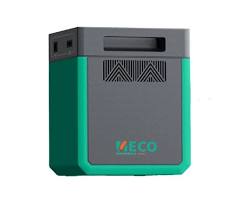
The number that sells a portable power station is its capacity. The number that decides whether you are happy with it is its output. The MECO 1kWh Portable Power Station holds 1004.8Wh of energy and delivers a maximum of 500W at any one moment, and of those two figures the 500W is the one that will shape your experience of owning it. Get that straight before buying and this is a genuinely useful piece of equipment. Miss it and you will plug in a kettle on the first evening and conclude the unit is faulty.
Bicity Solar Energy Suppliers sells this unit because the demand it answers is real. Households want something that keeps the lights, the router and the laptop running through an outage without a full solar installation, without wiring, and without a generator sitting outside burning fuel. That is exactly what this does. What it is not is a replacement for mains power in a kitchen.
This page sets out both sides. There is a table further down listing what the unit will and will not run, with the reasoning, because a buyer who understands the 500W ceiling before purchase is a buyer who stays satisfied afterwards.
The 500W ceiling, in Kenyan appliances
Capacity and output measure different things. Capacity, in watt hours, is how much energy is stored. Output, in watts, is how fast the unit can deliver it. A useful comparison is a water tank: capacity is how many litres it holds, output is how wide the tap is. A large tank with a narrow tap still fills a bucket slowly.
The MECO holds a reasonable amount of energy and has a fairly narrow tap. 500W continuous covers a surprising amount of a modern household, because electronics have become efficient. What it does not cover is anything that makes heat. Heating elements are the heavy consumers in any Kenyan home, and they are all well above 500W.
| Appliance | Typical draw | On this unit |
|---|---|---|
| LED lighting, whole house | 30W to 60W | Yes, easily |
| WiFi router and modem | 10W to 20W | Yes, easily |
| Laptop | 45W to 90W | Yes |
| Television, 32 inch LED | 40W to 60W | Yes |
| Standing or ceiling fan | 40W to 75W | Yes |
| Phone and tablet charging | 10W to 25W | Yes, many times over |
| CCTV recorder and cameras | 40W to 80W | Yes |
| Small fridge | 80W to 150W running | Yes, see the note below on startup surge |
| Blender | 300W to 600W | Marginal, only smaller models |
| Microwave | 800W to 1200W | No |
| Electric kettle | 1500W to 2200W | No |
| Clothes iron | 1000W to 2000W | No |
| Electric hotplate or cooker | 1000W to 2500W | No |
| Instant shower or water heater | 3000W to 5500W | No |
| Hair dryer | 1200W to 2000W | No |
The pattern is consistent and it is worth naming plainly: if the appliance works by getting hot, this unit will not run it. If it works by processing information, lighting a room, or moving air, it will.
How long it lasts on a charge
From 1004.8Wh of stored energy, expect roughly 800Wh to reach your appliances. The difference goes to converting the battery’s direct current into the alternating current your appliances expect, which is a loss no power station of any brand avoids. Working from that figure:
| What you are running | Approximate load | Roughly how long |
|---|---|---|
| Router only, keeping the house online | 10W | Around 3 days |
| Five LED bulbs | 50W | About 16 hours |
| Television | 50W | About 16 hours |
| Laptop working | 65W | About 12 hours |
| CCTV system overnight | 60W | About 13 hours |
| Small fridge, cycling on and off | 40W average | About 20 hours |
| Lights, TV, router and phone charging together | Around 100W | About 8 hours |
| At the full rated output | 500W | About 1 hour 35 minutes |
The realistic evening for most households is the second from last line. Lights on, television running, router up, phones charging, roughly 100W in total, and about eight hours of it. That covers an evening outage comfortably and a full night if the load is kept modest.
The single cell design, and why it is unusual
Look at the specification sheet and one figure stands out as if it were a misprint: nominal battery voltage, 3.2 volts. It is not a misprint, and understanding it tells you a great deal about how this product is built.
Almost every lithium battery you encounter is an assembly. Cells are wired in series to raise voltage and in parallel to raise capacity, and the resulting pack needs a Battery Management System to watch every cell, balance charge between them, and disconnect the pack if any one cell misbehaves. A 51.2V wall mounted home battery is sixteen cells in series with exactly that supervision on top.
The MECO takes the opposite approach. It uses one very large cell: 3.2V, 314Ah, which multiplies out to the 1004.8Wh on the label. The manufacturer, Shenzhen Megmeet Electrical, states plainly that this large cell design removes the need for a separate battery management system and for parallel cell connections, and that this reduces cost while keeping the unit safe.
Three consequences follow, and buyers deserve all three rather than only the flattering ones.
Cell imbalance cannot happen. In a multi cell pack, cells drift apart over years of cycling. One weakens, the balancing circuit works harder, and eventually pack capacity is limited by the worst cell in the group. With one cell there is nothing to drift against. This is a genuine durability advantage and it is part of why an 8000 cycle rating is credible on a unit at this price.
There are fewer things to fail. No balancing circuitry, no inter cell welds, no series connections. In a portable product that gets carried, set down and knocked about, fewer internal connections is a real reliability benefit.
You cannot expand it, and there is no cell level monitoring. The trade is real. Power stations built from many small cells can sometimes be opened and rebuilt. This cannot. And because there is no cell level supervision, the protection is at unit level: overpower, overcurrent and short circuit. That is adequate for the way this product is used, but it is a simpler safety net than a large home battery carries, and it is a fair reason to keep the unit within its stated temperature range rather than leaving it in a hot car.
The UPS function, which is the feature most buyers underuse
The unit supports automatic UPS switching. Leave it plugged into a wall socket with your equipment plugged into it, and it passes grid power through while keeping itself charged. When the grid drops, it takes over the load automatically, fast enough that connected equipment does not notice.
In much of Kenya, where supply is present but interrupted, this is more useful day to day than the portability. A desktop computer that shuts down mid document, a network switch that drops a video call, a CCTV recorder that loses footage during exactly the minutes you would want it: these are the small losses that an unnoticed outage causes, and the UPS mode removes them.
Worth knowing: running permanently in UPS mode means the unit is always at or near full charge. That is normal and expected for this chemistry, which tolerates it far better than older battery types did, but it is a different duty cycle from occasional portable use and it is worth mentioning to anyone planning to leave it plugged in permanently.
Charging: from the grid, or from the sun
From a wall socket, the unit draws 500W and accepts anything from 90V to 280V at 45Hz to 65Hz. That very wide input range matters more in Kenya than it might elsewhere, because it means the unit keeps charging through the voltage sags common at the end of a long feeder, where equipment with a narrower window simply stops. A full charge from empty takes roughly two to two and a half hours.
From solar, it accepts up to 300W through an MPPT controller rated at 99% efficiency or better, with a panel voltage window of 11V to 55V and a 10A charge ceiling. MPPT means the controller continuously hunts for the panel’s most productive operating point rather than accepting whatever it happens to be producing, which matters most on partly cloudy days and in early morning and late afternoon light.
On the panel side, that 11V to 55V window is broad enough for a single portable folding panel or one or two standard rigid panels. In Kenyan sun, a 300W panel array will typically return around 4 to 6 hours to a full charge from empty. Note the 10A ceiling: at lower panel voltages the current limit bites before the 300W does, so a higher voltage panel makes fuller use of the input than a low voltage one.
Honest limitations
Bicity Solar publishes the constraints alongside the features on every product. Six apply here.
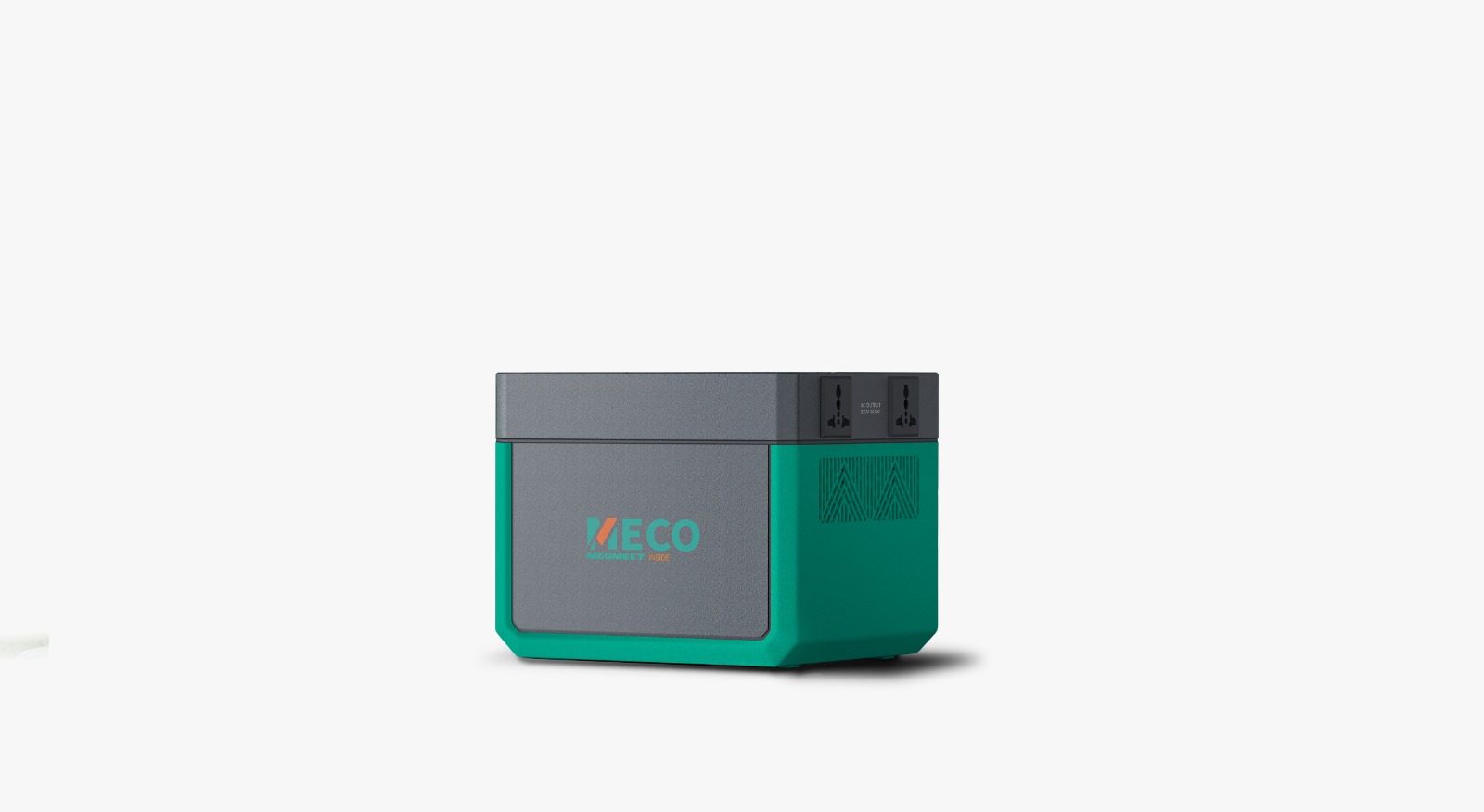
One AC socket. A single outlet for everything mains powered. Any realistic use of this unit involves an extension strip, so factor one in. The two USB ports are separate and additional.
IP20 means indoors. This is the limitation most likely to cause an expensive mistake, because “portable” suggests outdoor use. IP20 protects against fingers and large objects and offers no protection against water at all. It is fine inside a tent, under a shelter, in a car, or in a house. It is not fine in rain. Kenyan highland weather turns quickly, and a wet unit is not a warranty claim.
Peak power is for starting, not running. The 1000W peak lasts 15 seconds. That window exists so motor driven appliances can get through the brief surge they draw at startup. It is not a mode you can run in.
Output sits at 210V to 230V. Kenyan mains is nominally 240V. Most modern equipment is specified across a wide range and is entirely happy here. Older or more voltage sensitive equipment, and anything with a motor, is worth checking against its own rating plate.
The fan is audible. Under 55dB is a normal conversation, not silence. Under load and while charging the fan will run and you will hear it. Quieter than any generator, louder than nothing, and worth considering before putting it beside a bed.
11kg is portable, not light. It carries comfortably in one hand for short distances and is a two handed job for longer ones. At 300 x 200 x 150mm it fits in a car boot or a cupboard easily enough.
Who this suits
- Households wanting the essentials through an outage. Lights, television, router and phones, without a generator and without an installation.
- Anyone working from home. The UPS function protects a desktop and keeps the connection up through the outages that would otherwise cost you a meeting.
- Small shops, salons and kiosks. Lighting, a point of sale terminal, a card machine and phone charging keep trading through an outage. Anything with a heating element does not.
- CCTV owners. Security recording is worth least during exactly the hour the power is out. This covers a typical system overnight.
- Camping, field work and travel. Charging cameras, drones, laptops and lights well away from a socket. Keep it dry.
- Rural properties and health posts. Lighting, communications and device charging where the grid is distant or unreliable, with solar recharging during the day.
- Students and anyone studying at home. A laptop and a desk lamp for twelve hours covers the kind of outage that otherwise ends an evening’s work.
Who should buy something else
If you want to cook, boil, iron or heat water during an outage, no 500W unit of any brand will do it and a larger power station or a proper hybrid installation is the answer. If you need to carry a whole house including a large fridge and several rooms of equipment, the capacity here is too small. And if you want a permanent whole house solution that charges from a roof array and runs the property every evening, that is a hybrid inverter with wall mounted batteries, which is a different product and a different budget. Bicity Solar will tell you which of the three you actually need rather than selling you the one you first asked about.
Full specifications
| Specification | Value |
|---|---|
| Brand | MECO, by Shenzhen Megmeet Electrical |
| Battery chemistry | LiFePO4 (lithium iron phosphate) |
| Cell configuration | Single large cell, no series or parallel assembly |
| Nominal battery voltage | 3.2V |
| Nominal energy | 1004.8Wh, approximately 1kWh |
| Rated output power | 500W continuous |
| Peak output power | 1000W for 15 seconds |
| Output voltage range | 210V to 230V AC |
| AC outlets | 1 socket |
| USB outputs | 2 |
| UPS function | Supported, automatic switching |
| Maximum PV input power | 300W |
| PV input voltage range | 11V to 55V |
| Maximum charge current | 10A |
| MPPT efficiency | 99% or better |
| AC input power | 500W, plus or minus 5% |
| AC input voltage | 90V to 280V, plus or minus 5V |
| Input frequency | 45Hz to 65Hz |
| Cooling | Air cooling |
| Noise | Under 55dB |
| Weight | 11kg, plus or minus 0.5kg |
| Dimensions | 300 x 200 x 150mm |
| Ingress protection | IP20, indoor use only |
| Operating temperature | -10C to 45C |
| Operating humidity | 20% to 90% |
| Protections | Overpower, overcurrent, short circuit |
| Warranty | 2 years |
Getting the most out of it
Work out your evening load before you buy. Add the wattage printed on each thing you intend to run. If the total sits under about 150W you will get a long, comfortable evening. Close to 500W and you have well under two hours.
Plug the fridge in first, alone. A fridge compressor draws several times its running wattage for the first moment it starts. That surge is what the 1000W peak is for. Starting it on its own, before other loads, gives it the most headroom.
Leave it in UPS mode. The most common mistake is keeping it in a cupboard for emergencies. Plugged in with your router, computer and CCTV connected, it earns its place every week rather than a few times a year.
Buy the extension strip at the same time. One socket, several things to run. Obvious afterwards, annoying on the first evening.
If you add a panel, pay attention to voltage. The 10A charge limit means a higher voltage panel inside the 11V to 55V window delivers closer to the full 300W than a low voltage panel will.
Keep it dry and ventilated. IP20 and air cooling together mean indoors, off the floor, with space around the vents.
Not sure whether a power station this size covers what you need, or whether you should be looking at a full installation instead?
Send us the list of what you want running during an outage and for how long, and we will tell you plainly whether this unit covers it, whether you need a larger one, or whether your situation calls for a hybrid inverter and wall mounted batteries instead. To size a permanent whole property system, start with the Solar Calculator. For this unit, a larger power station, or a panel to charge it from, send your requirements through My Quote and we will come back with a costed package including the solar panel option and delivery to your county.