Description
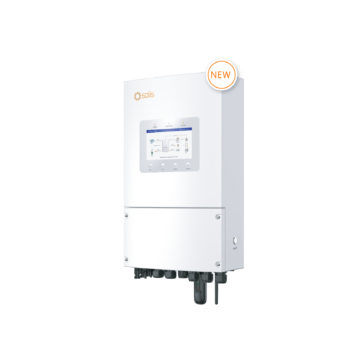
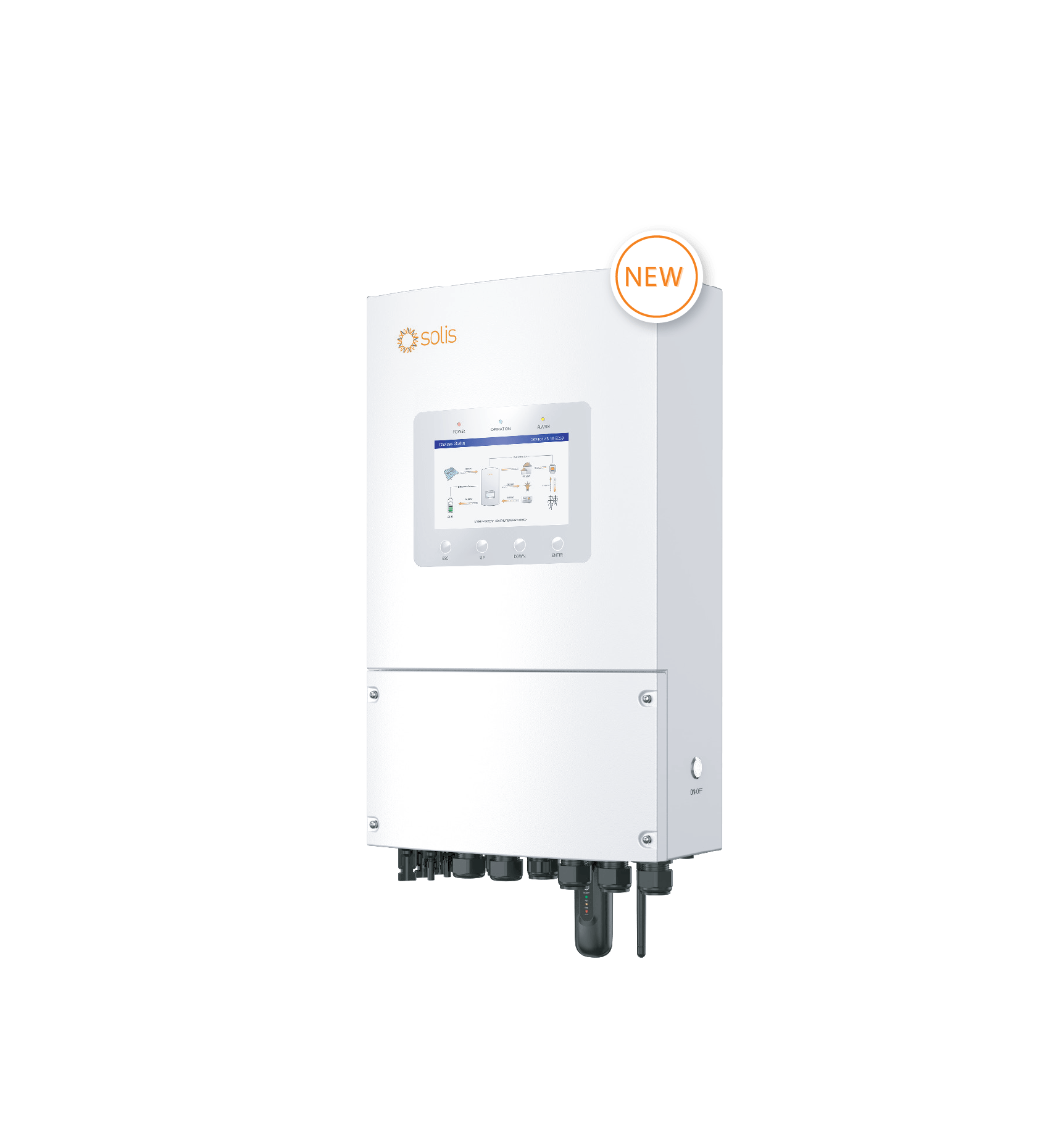
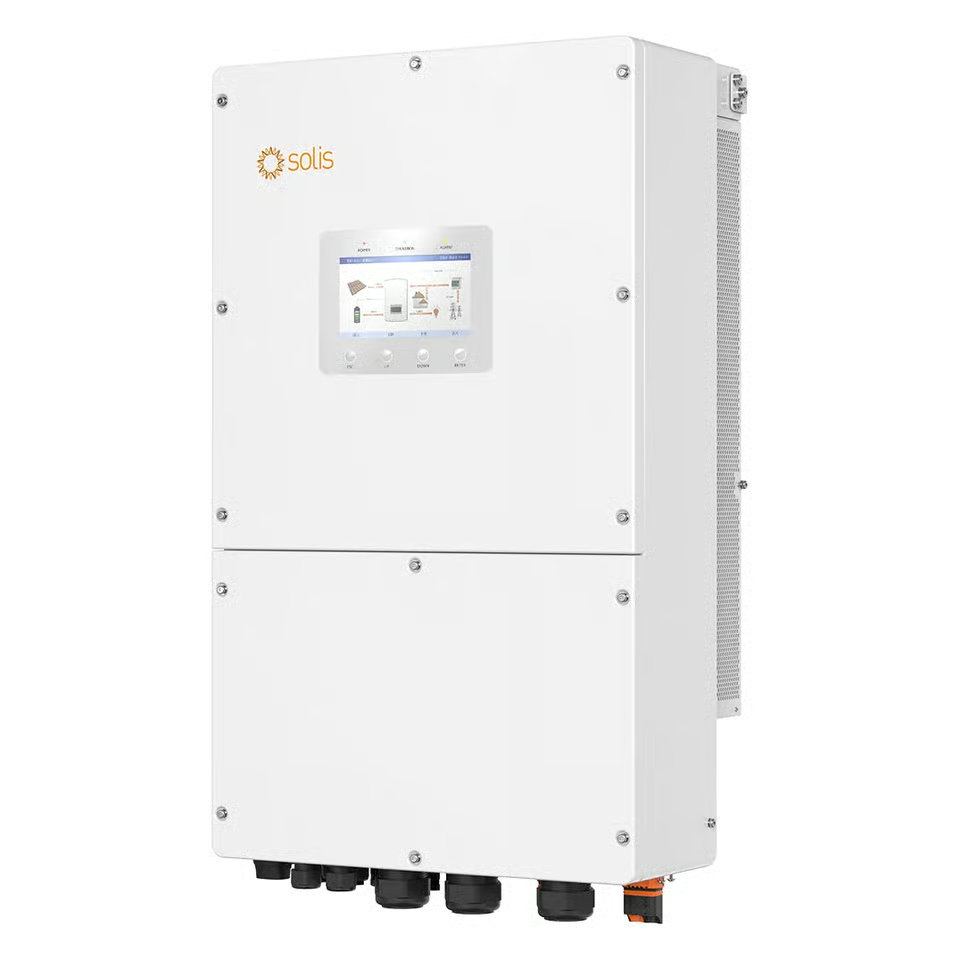
The Solis S6-EH3P50K-H 50kW Three Phase Hybrid Inverter is the largest machine in its family, carrying a solar array of up to 100kW and a high voltage battery stack between 150V and 800V. It belongs on industrial sites: manufacturing, cold storage, hospitals, campuses and commercial estates.
Three things about it shape how a system gets designed, and all three are easy to overlook.
Storage is rated by power, not by current. The battery stage passes 55kW against an inverter that produces 50kW, so the full output is genuinely available from the stack. Each of the two inputs, though, is capped at 40kW. Wire one and the system tops out at four fifths of its rating regardless of how much storage sits behind it.
The stack needs enough voltage. The two inputs together carry 140 amperes, and at 50kW that arithmetic demands a stack above roughly 360V. The battery range begins at 150V, so a low stack will physically connect and then quietly cap the whole installation.
Strings have to be long. Full output arrives only once string voltage reaches 600V, which on a hot roof means a considerably longer string than most installers expect.
Get those three right and it is a straightforward machine. Get any one wrong and the site runs well below what was paid for.
1. System Architecture and Configuration
Hybrid Energy Core
- 50kW rated and 50kVA apparent, across three phases
- Three live conductors with neutral and earth, 380V or 400V line to line
- 76A per phase at 380V, 72.2A per phase at 400V
- Eighty kilowatts available for a two second burst
- Power factor held above 0.99, grid current distortion under 3%
- Backup voltage distortion under 2% on linear load
- Operates as a plain grid tied inverter when no battery is fitted
Solar Charging System
- Four trackers carrying eight strings, two on each
- A 100kW array allowance against a 96kW conversion ceiling
- Input rated to 1000V, tracking from 150V to 850V, designed around 600V
- Full output available once the string reaches 600V
- Each tracker accepts 40A with 60A of short circuit current
- No single string may exceed twenty amperes
- Tracking wakes at 180V
Battery Integration
- Lithium stack anywhere from 150V to 800V
- 55kW of charge and discharge in total, above what the inverter produces
- Two independently controlled inputs, 40kW and 70A on each
- 140 amperes when both inputs run together
- Stack data over CAN or RS485
- Storage can be installed in two tranches, one input at a time
Protection and Cooling
- Sealed to IP66, rated for indoor or outdoor mounting
- Redundant fan cooling, so a single fan failure does not stop the machine
- Arc fault detection fitted as standard, switched on during commissioning
- Type II surge arrest on both the array and the AC side
- Anti islanding, output overcurrent and short circuit protection
- Reverse polarity blocking on the solar input
- An internal DC switch is available as an option rather than fitted as standard
2. Technical Specifications
| Parameter | Specification |
|---|---|
| Rated output power | 50kW |
| Maximum apparent power | 50kVA |
| Overload capability | 1.6 times rated power for 2 seconds |
| Operation phase | Three phase with neutral and earth |
| Rated grid voltage | 220V/380V or 230V/400V |
| Rated grid frequency | 50Hz or 60Hz |
| Rated output current | 76A per phase at 380V, 72.2A at 400V |
| Power factor | Above 0.99, adjustable 0.8 leading to 0.8 lagging |
| Current distortion | Under 3% |
| Maximum AC passthrough | 152A at 380V, 144.4A at 400V |
| Backup output | 50kW |
| Backup switch time | Under 10ms |
| Backup voltage distortion | Under 2% at linear load |
| Generator maximum input | 50kW, 76A per phase at 380V |
| Battery type | Lithium ion, high voltage |
| Battery voltage range | 150V to 800V |
| Maximum charge and discharge power | 55kW in total |
| Power per battery input | 40kW |
| Maximum charge and discharge current | 70A per input, 140A together |
| Battery inputs | 2 |
| Battery communication | CAN or RS485 |
| MPPT quantity | 4 trackers, 8 strings |
| Recommended maximum array | 100kW |
| Maximum usable PV input power | 96kW |
| Maximum PV voltage | 1000V DC |
| Rated PV voltage | 600V |
| Start-up voltage | 180V |
| MPPT voltage range | 150V to 850V |
| Full output voltage range | 600V to 850V |
| Maximum input current | 40A per tracker, 20A per string |
| Maximum short circuit current | 60A per tracker |
| Maximum efficiency | 97.8% |
| European weighted efficiency | 97.4% |
| Battery charged from solar | Up to 98.5% |
| Battery charged and discharged to AC | Up to 97.5% |
| Night self consumption | Under 25W |
| Topology | Transformerless |
| Cooling | Intelligent redundant fan cooling |
| Protection rating | IP66, indoor or outdoor |
| Operating temperature | -25C to +60C, 0 to 95% humidity |
| Maximum altitude | 4000m |
| Dimensions and weight | 530 x 880 x 290mm, 73kg |
| Connections | MC4 on the array, terminal connector for the stack, terminal block for AC |
| Display | LCD with Bluetooth and app |
| Communication | CAN, RS485 and Ethernet, with WiFi, cellular and LAN available |
| Parallel operation | Up to 6 units, on grid and off grid |
3. Key Features
- Battery stage rated above the inverter, so storage carries the full 50kW
- Two independently controlled battery inputs, allowing storage to grow in stages
- Four trackers and eight strings, the widest array flexibility in the range
- An array allowance of double the output, carried on a 1000V input
- 97.8% peak and 97.4% weighted conversion
- Under 25W drawn when the sun is down and nothing is converting
- Arc fault detection included rather than charged for separately
- Runs as a grid tied inverter with no battery connected
- Multi input generator connection with automatic starting and stopping
- Peak shaving available in both self consumption and generator modes
- Six units in parallel, on grid or off
- The same 73kg chassis as the 30kW, carrying two thirds more output
- Matched to the distribution you already run, and serviced from Kenya
4. Applications and Use Cases
- Manufacturing plants: production lines, compressed air and extraction
- Cold storage and packhouses: refrigeration that cannot be interrupted
- Hospitals: theatres, imaging suites and laboratory cold chain
- Hotels and conference centres: kitchens, laundries, lifts and guest floors
- Universities and large schools: several buildings under one installation
- Commercial irrigation: pump houses running through daylight hours
- Tea and coffee factories: withering, drying and milling plant
- Data and telecoms facilities: continuous supply with a generator behind it
5. Installation and Engineering Notes
Devices below sit a quarter above the steady current of each circuit, then step up to a size that exists on the shelf. Route length, bunching and ambient heat all move the final choice.
| Circuit | Design current | Device | Cable, short run |
|---|---|---|---|
| PV, per string | 20A | 32A DC, rated beyond 1000V | 4mm² solar cable |
| Battery, per input | 70A | 100A DC, rated beyond 800V | 25mm² per input |
| AC output | 76A per phase | 125A, 4 pole | 35mm² |
| Grid input and passthrough | 152A per phase | 200A, 4 pole | 95mm² |
String length is nearly fixed on this machine
Tracking starts at 150V, but nothing like full output appears until the string reaches 600V. Module voltage falls by roughly an eighth when the cells are hot, which is the middle of the day, so the check has to be made against the hot figure.
| 620W modules per string | Moderate conditions | Hot roof | Cold dawn, open circuit | Verdict |
|---|---|---|---|---|
| 15 | Around 630V | Around 557V | Around 825V | Falls below the floor in heat |
| 16 | Around 672V | Around 594V | Around 880V | Still just under the floor |
| 17 | Around 714V | Around 631V | Around 935V | Works |
| 18 | Around 756V | Around 668V | Around 990V | Too near the 1000V limit |
With a 620W module there is effectively one usable string length, and it is seventeen. That matters for a second reason. Eight strings of seventeen comes to about 84kW, which leaves the 96kW conversion ceiling short. A higher wattage module closes the gap: at 700W the same eight strings of seventeen reach roughly 95kW while the voltages stay in the same window, because wattage rises through current rather than voltage. On a site this size, choosing the module and the string length together is worth doing before anything is ordered.
- Wire both battery inputs wherever the stack can supply more than 40kW
- Choose a stack above 360V so the 140 ampere limit does not cap the output
- Specify an external DC isolator, since the internal switch is an option rather than standard fitment
- Switch on arc fault detection at commissioning, because it is fitted but not active out of the box
- Every device on the array side needs a rating beyond 1000V, and on the stack side beyond 800V
- The AC side needs serious switchgear: 152A of passthrough calls for a 200A four pole device
- Seventy three kilograms means lifting gear and a wall rated to hold it
- Leave breathing space around the enclosure for the cooling air
- Fan noise makes a plant room the right home for it
- Frequent storms call for separate arrestors and a proper earthing electrode
- A high voltage stack holds lethal potential whether or not the inverter is running
- Commissioned and certified by our licensed engineers
6. Care, Maintenance and Operations
- Confirm both battery inputs are carrying load rather than one doing the work
- Check that the cooling fans all run up as output climbs
- Verify arc fault detection is still enabled after any firmware change
- Clear the air intakes of lint, chaff and nests, especially in processing plants
- Compare present generation with the commissioning benchmark
- Read module balance and temperatures from the battery itself
- Go over the array connectors at the end of each rainy period
- Install firmware updates as they are issued
- Work through the isolation steps in order before touching DC
7. Do’s and Don’ts
Do
- Connect both battery inputs when the installation is meant to reach 50kW from storage
- Check the stack voltage against the 140 ampere limit before ordering
- Build strings of seventeen 620W modules, or choose a higher wattage module
- Budget an external DC isolator into the quotation
- Enable arc fault detection and record that it was done
- Treat the stack as live whatever the inverter is doing
- Document the protected circuit list before the job closes
Don’t
- Assume one battery input will carry the full rating, because it stops at 40kW
- Specify a low voltage stack and expect 50kW out of it
- Build sixteen module strings, which sit under the floor exactly when the sun is strongest
- Push a string toward 1000V on the coldest morning of the year
- Assume a DC switch is built in
- Leave arc fault detection switched off after commissioning
- Mount it against a wall shared with offices or patient areas
8. Compatibility
- High voltage lithium stacks from 150V to 800V, ideally above 360V, over CAN or RS485
- Solar arrays up to 100kW across eight strings
- Generator sets up to 50kW, with multi input connection and automatic control
- Existing export arrays, kept running through an AC side connection
- A meter or CT set, so demand reduction works off recorded figures
- Monitoring over a wired network, or wirelessly where that suits better
- Operation with no battery at all while the grid is present
Approval is granted per stack model and per firmware version, and that register has nothing in common with the one used for 48V products. We settle the pairing at quotation stage and deliver stack and inverter together.
9. Performance Table
| Load | Estimated backup runtime on a 100kWh high voltage stack |
|---|---|
| 10kW | Around 8.5 to 9 hours |
| 20kW | Around 4.3 hours |
| 30kW | Around 2.9 hours |
| 40kW | Around 2.1 hours |
| 50kW | Around 1.7 hours |
Based on 90kWh available from a 100kWh stack at 90% depth, after conversion losses. Daylight extends every line. These figures hold right down the discharge, since the inverter never asks the stack for more than it comfortably supplies.
10. What It Runs, and Where the Limits Sit
At this size the inverter is rarely the thing that runs out. Three phase plant draws from all three conductors together, the battery stage is rated above the inverter, and the array allowance is double the output.
The limits that do apply are the ones already described, and they are design decisions rather than operating constraints.
| Situation | What governs it | Outcome |
|---|---|---|
| Production line and compressors, 38kW, grid present | Total rating | Comfortable, 12kW still free |
| The same plant on a long outage | Battery stage, 55kW | Unchanged, storage carries it |
| Cold room compressors starting together | Overload margin | Eighty kilowatts available for two seconds |
| Only one battery input wired | Input power cap | Capped at 40kW, a fifth of the rating unused |
| Stack sitting at 200V | 140 ampere limit | Capped near 28kW whatever the capacity |
| Sixteen module strings in midday heat | Full output floor | Array present but not delivering everything |
Single phase loads still draw from one phase only, so on a site that has grown by addition it is worth counting what sits on each before the installation is designed. On most industrial sites the heavy plant is three phase and this never arises.
11. Mini FAQ
Does one battery input carry the full output?
No. Each input stops at 40kW. Both together pass 55kW, which is how the inverter reaches its 50kW rating from storage.
What stack voltage should I choose?
Above 360V. The two inputs carry 140 amperes between them, so a lower stack caps the system no matter how much capacity it holds.
How long do the strings need to be?
Full output starts at 600V, which with a 620W module means seventeen per string. Sixteen falls below the floor on a hot roof and eighteen comes too close to the 1000V ceiling at dawn.
Can I fill the 96kW with 620W modules?
Not quite. Eight strings of seventeen reach about 84kW. A higher wattage module closes the gap while keeping the same string voltages.
Is a DC isolator built in?
No, it is an option on this series, so an external isolator belongs in the specification.
Is arc fault detection extra?
No, it is fitted. It does have to be switched on during commissioning rather than arriving active.
Can it run before the battery arrives?
Yes. With the grid present it works as an ordinary grid tied inverter, so the array can earn from day one and the stack can follow.
How many can work together?
Six in parallel, on grid or off grid.
12. Why Buy From Bicity Solar
- Authentic equipment, certification traceable to the unit you receive
- Plain figures, with the qualifications stated rather than buried
- Stack voltage checked against the inverter’s current limit before anything is ordered
- Both battery inputs specified and wired so the full rating is reachable
- Module and string length chosen together, against the 600V floor
- External DC isolation and AC switchgear costed into the proposal, not added later
- Arc fault detection enabled and recorded at handover
- Installation and sign off carried out under licence
- Manufacturer registration filed inside the qualifying window
- We deal with the distributor on any warranty question
- Transport arranged anywhere in Kenya, with spares held behind it
Three decisions determine whether this inverter reaches its rating: the stack voltage, whether both battery inputs are wired, and how long the strings are. All three are settled on paper, before anything is bought.
Send us a month of meter readings, the plant list with the three phase items marked, and the roof area available. We will establish what the site draws at its busiest, choose a stack that clears the 140 ampere limit, and set out eight strings above the 600V floor. Try the figures in our Solar Calculator, or send the site details to My Quote and we will cost the project.