Description
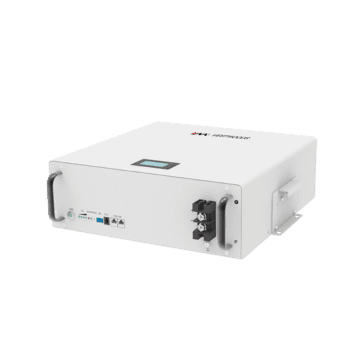
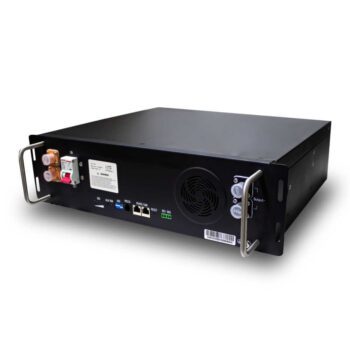
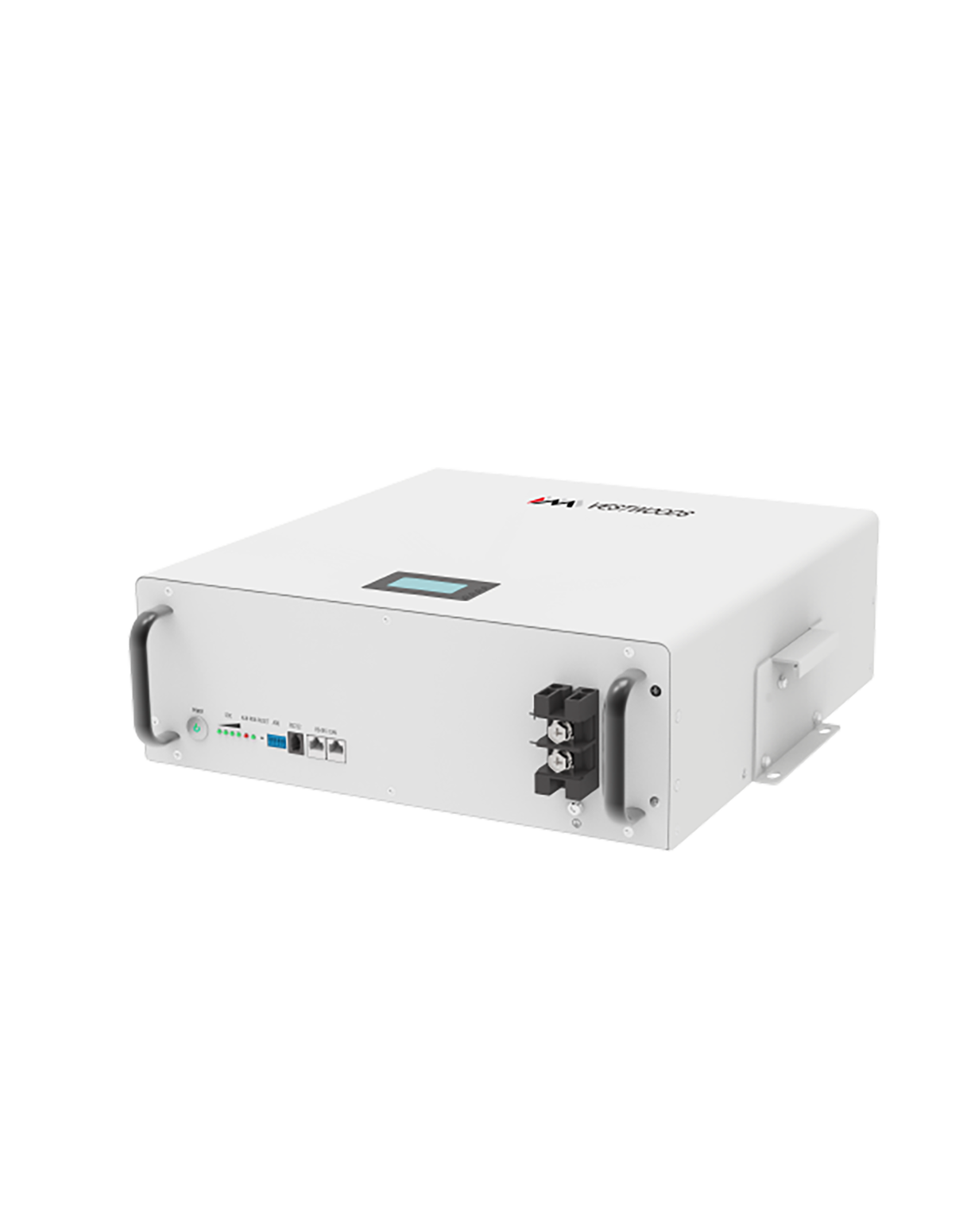
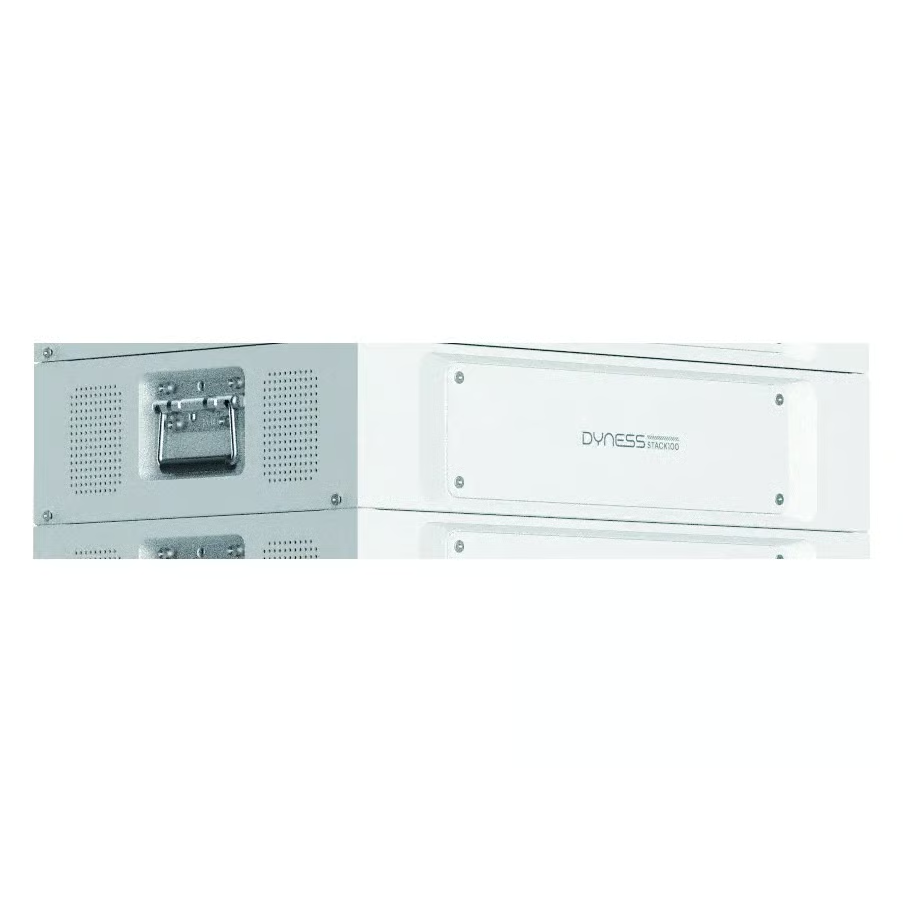
The Dyness Stack100 is a high voltage lithium iron phosphate battery assembled from 5.12 kilowatt hour modules that stack directly on one another. A system runs from 15.36 kilowatt hours up to 76.8 in a single stack, and up to 921.6 kilowatt hours with twelve stacks working in parallel.
One point before anything else, because it affects what you can order. A single 5.12 kilowatt hour module is not a working battery. The design requires a minimum of three modules, so the smallest system that can actually be supplied and commissioned is 15.36 kilowatt hours. The module figure describes the building block, not the product.
What makes this battery behave differently from the wall mounted units is how those modules are joined.
They sit in series, not in parallel. On a wall mounted 48 volt battery, adding a module adds current while the voltage stays at 51.2. Here, adding a module adds voltage while the current stays at 100 amperes. The stack starts at 134 volts with three modules and reaches 864 volts with fifteen.
That has a consequence worth understanding, because it removes a problem rather than creating one. Power is voltage multiplied by current, and the current here is fixed. So every module you add contributes exactly 5.12 kilowatts of power alongside its 5.12 kilowatt hours of storage. Three modules give 15.36 kilowatt hours and 15.36 kilowatts. Fifteen give 76.8 of each. The two figures move together and always have, so a stack can never be sized correctly for energy and wrongly for power.
This is also the battery for large three phase inverters. Machines at 30 kilowatts and above generally need a high voltage bank rather than a 48 volt one, and no number of wall mounted modules will serve them because parallel modules add capacity without adding voltage. A stack of these does exactly what those inverters are built around. Section nine works out the module count for each.
Two practical matters deserve settling early: it is IP20 and fan cooled, so it belongs in a dry indoor plant room rather than a living space, and a tall stack puts a serious load on the floor beneath it. Section five covers the second in detail, because it is the thing most likely to be discovered too late.
Dyness Stack100 Specifications and High Voltage Inverter Pairing
1. System Architecture and Configuration
Module and Stack
- Each module 51.2 volts and 100 ampere hours, which is 5.12 kilowatt hours
- Forty seven kilograms a module
- Between three and fifteen modules joined in series to form one stack
- System energy from 15.36 up to 76.8 kilowatt hours in a single stack
- Stack voltage from 134 up to 864 volts depending on module count
- Twelve stacks able to work in parallel, reaching 921.6 kilowatt hours
- Ninety five percent depth of discharge throughout
Charge and Discharge
- One hundred amperes maximum in either direction, which is the full 1C rate
- Fifty amperes recommended for continuous working
- A two minute burst of 125 amperes permitted at 25C
- Current unchanged by module count, since the modules are in series
- Power therefore rising by 5.12 kilowatts with every module added
- Charge accepted from 0C upward, or from -20C with self heating specified
- Discharging across the full -20C to 55C span
Safety and Management
- An aerosol extinguishing system that detects and suppresses within five seconds
- Battery data carried over CAN or RS485
- A wireless module built in, with firmware updated through the application
- Approved to IEC 62619, 63056, 62477 and 62040, plus the European marks and UN38.3
Assembly and Cooling
- Stack type assembly with no rack or cabinet required
- No wiring between modules, which is where most assembly errors occur
- About thirty minutes to put one stack together
- Modules of different ages able to be mixed within a three year window
- Forced air cooling, so there are fans and they are audible
- An IP20 enclosure, meaning a dry interior position and nothing else
2. Technical Specifications
| Parameter | Value |
|---|---|
| Battery type | Lithium iron phosphate |
| Module voltage and capacity | 51.2V, 100Ah, which is 5.12kWh |
| Module weight | 47kg |
| Modules per stack | 3 to 15, connected in series |
| System energy range | 15.36kWh to 76.8kWh per stack |
| Operating voltage | 134V to 864V |
| Recommended charge and discharge current | 50A, which is 0.5C |
| Maximum charge and discharge current | 100A, which is 1C |
| Peak discharge current | 125A for 2 minutes at 25C |
| Depth of discharge | 95% |
| Parallel capability | 12 stacks, reaching 921.6kWh |
| Communication | CAN or RS485 |
| Wireless | Built in module, with updates through the app |
| Cycle life | 8000 cycles or more, quoted alongside 10 years |
| Charge temperature range | 0C to 55C, or -20C to 55C with self heating |
| Discharge temperature range | -20C to 55C |
| Stack dimensions | 590mm wide, 390mm deep, and 233mm plus 133mm for each module |
| Protection level | IP20, indoor positions only |
| Fire protection | Aerosol extinguisher, suppressing within 5 seconds |
| Installation method | Stack type, rackless |
| Cooling method | Forced air |
| Module mixing | Permitted within three years |
| Certification | CE-EMC, CE-RED, IEC 62619, IEC 63056, IEC 62477, IEC 62040, UN38.3 |
Cycle life is quoted at a 0.2C charge and discharge rate, 25C and 95% depth of discharge. Note that this sheet does not state the remaining capacity at which that count is measured, where some other batteries in the range publish seventy percent, so the figures are not directly comparable without asking.
3. Key Features
- Power and storage rising together, 5.12 kilowatts and 5.12 kilowatt hours a module
- High voltage output, which is what large three phase inverters are designed around
- A system range from 15.36 to 76.8 kilowatt hours in one stack
- Twelve stacks in parallel for installations reaching beyond nine hundred kilowatt hours
- Rackless assembly, with no cabinet and no cabling between modules
- Roughly half an hour to build a stack
- Modules of differing ages permitted together inside three years
- Fire detection and suppression inside five seconds
- Ninety five percent of what is on the label available in practice
- A quarter of a square metre of floor regardless of how tall the stack grows
- Self heating available where charging below freezing is required
- Floor loading and module count checked by Bicity Solar before quotation
4. Applications and Use Cases
- Large three phase installations: the main case, where a 48 volt bank cannot serve
- Factories and processing plants: storage matched to a 30 or 50 kilowatt inverter
- Tea and coffee works: heavy daytime processing with evening carryover
- Cold stores: compressors supported through outages
- Hospitals and larger clinics: substantial storage in a small floor area
- Campuses and institutions: stacks sized to each building
- Sites short of floor space: capacity grows upward rather than outward
- Phased commercial projects: modules added later inside the three year window
- Premises with a plant room: which the fan cooling and IP20 rating both call for
5. Installation and Engineering Notes
Check the floor before you order the stack
This is the finding most likely to be discovered too late, and it follows from a footprint that never changes. The stack occupies 590 by 390 millimetres whatever its height, which is about a quarter of a square metre, while the weight climbs by 47 kilograms with every module.
| Modules | Energy | Module weight | Load on the floor | Height |
|---|---|---|---|---|
| 3 | 15.36kWh | 141kg | Around 610kg per square metre | 632mm |
| 7 | 35.84kWh | 329kg | Around 1,430kg per square metre | 1,164mm |
| 10 | 51.2kWh | 470kg | Around 2,040kg per square metre | 1,563mm |
| 15 | 76.8kWh | 705kg | Around 3,060kg per square metre | 2,228mm |
For comparison, an ordinary domestic floor is commonly designed for something in the region of 150 to 200 kilograms per square metre spread across it. A full stack concentrates more than three tonnes per square metre into a quarter of a square metre of floor.
The practical conclusion is straightforward. A ground floor slab is the right place for anything beyond a few modules, and any position above ground level needs a structural opinion before the order is placed, not after the pallet arrives. The weights above are the modules alone; the base unit and controller add more, so treat them as a starting figure rather than the total.
Height, access and ceiling
- A fifteen module stack stands 2,228 millimetres tall, so ceiling height becomes a limit
- Allow working room above the stack to place the topmost module
- Check door heights and any overhead pipework on the route in
- Modules arrive individually at 47 kilograms, which is a two person lift each
- Lifting the upper modules into position is the awkward part of the job
- Two shorter stacks are sometimes easier than one tall one, and give the same total
A dry indoor plant room
Two rows point the same way. The IP20 rating offers no water protection at all, not even against dripping, and the cooling is by forced air, which means fans that will be heard. Together they describe a plant room rather than a utility cupboard or anywhere people work quietly.
- A dry indoor space with air able to circulate freely
- Clear of dust, or in its own ventilated enclosure where dust is unavoidable
- Away from offices, wards and sleeping areas
- Clearance maintained around the stack for the cooling to work
- Nothing stored against the stack or on top of it
Circuit sizing
Current is fixed at 100 amperes regardless of stack height, which makes the DC side unusually simple at this scale. Voltage is what changes, and it changes the class of component required.
| Circuit | Design current | Device | Cable, short run |
|---|---|---|---|
| One stack to the inverter | 125A | 125A DC, rated above the stack voltage | 35mm² |
| Two stacks in parallel | 250A | 250A DC at the combining point | 95mm² |
- Rate every DC device above the stack’s maximum voltage, which reaches 864 volts on a full stack
- A 1000 volt class component is the sensible choice for taller stacks
- Check the device will carry 125 amperes for two minutes without tripping
- High voltage direct current is less forgiving than 48 volts, so terminations matter more
- Where stacks are paralleled, give each its own run and keep the lengths matched
- Establish communications and verify the inverter is reading the stack, not guessing from voltage
- Isolate and prove dead before any work, since these voltages are hazardous
- Assembly and commissioning by a licensed technician familiar with high voltage storage
6. Care, Maintenance and Operations
- Keep the fan intakes clear, as forced cooling depends on unobstructed airflow
- Note any shift in the sound of the fans, which typically precedes a failure
- Keep the room dry, since the stack resists no moisture at all
- Check the suppression system indicator at each service visit
- Watch per module data in the application rather than the stack total
- Note the date of any module added later, as the mixing window runs three years
- Keep the area around and above the stack clear
- Record commissioning figures so later decline has a baseline
7. Do’s and Don’ts
Do
- Confirm the floor can carry the stack before the order goes in
- Put anything beyond a few modules on a ground floor slab
- Measure ceiling height against the stack you intend to build
- Rate every DC component above the full stack voltage
- Work the module count from the inverter’s published voltage window
- Use the three year mixing window if the project is being phased
- Put it in a plant room, given the fans and the lack of water protection
- Treat the DC side as genuinely hazardous at these voltages
Don’t
- Expect to buy a single 5.12 kilowatt hour unit, because three is the minimum
- Place a tall stack on a suspended floor without a structural opinion
- Pair it with a 48 volt inverter, which cannot accept these voltages
- Use 600 volt class DC components on a stack that reaches 864
- Block the airflow around the stack
- Assume modules can be mixed indefinitely, as the window is three years
- Place it where damp can reach, as IP20 stops no water at all
8. Compatibility
- High voltage inverters whose battery window covers the stack voltage you build
- The larger three phase Solis machines, from 30 kilowatts upward
- Growatt inverters on a high voltage battery platform
- Most major inverter manufacturers, subject to confirming the exact model
- Communication by CAN or RS485
- Systems from one stack to twelve stacks working together
- Monitoring through the built in wireless module and application
- Sites requiring charging below freezing, where self heating is specified
It will not serve a 48 volt inverter. The wall mounted batteries in our range are the ones for those, and no arrangement of these modules produces 51.2 volts: three is the minimum and three already gives 153.6 volts nominal. Confirm the inverter’s published battery voltage window before specifying a stack height, and check the exact model against the manufacturer’s compatibility list rather than relying on the brand.
9. Module Count for High Voltage Solis Inverters
The stack height is set by the inverter’s battery voltage window, and the rule is that the stack must stay inside that window across its whole discharge range rather than only at nominal voltage. That is what fixes both the minimum and the maximum.
| Inverter | Battery window | Modules permitted | Sensible build | Energy and power |
|---|---|---|---|---|
| 30kW three phase | 150V to 800V | 4 to 13 | 6 modules | 30.72kWh, 30.72kW |
| 50kW three phase | 150V to 800V | 4 to 13 | 10 modules | 51.2kWh, 51.2kW |
| 80kW three phase | 300V to 950V | 7 to 15 | 2 stacks of 8 | 81.92kWh, 81.92kW |
| 125kW three phase | 300V to 950V | 7 to 15 | 2 stacks of 13 | 133.1kWh, 133.1kW |
Two of those limits are worth explaining. Six modules fall to 269 volts when nearly empty, which is below the 300 volt floor on the larger machines, so seven is the minimum there. Fourteen modules reach 806 volts when full, above the 800 volt ceiling on the 30 and 50 kilowatt machines, so thirteen is the maximum for those. The 80 kilowatt case also deserves a note: a single stack of fifteen modules tops out at 76.8 kilowatts, about four percent below that inverter’s rating, which is why two stacks of eight is the better answer rather than one tall one.
10. High Voltage or Wall Mounted: Which Side Are You On
This is decided by the inverter, not by preference, and getting it wrong means hardware that cannot be connected at all.
| Consideration | This stacking system | Our wall mounted batteries |
|---|---|---|
| Voltage | 134V to 864V | 51.2V nominal throughout |
| Modules joined | In series, adding voltage | In parallel, adding current |
| Each module adds | 5.12kWh and 5.12kW together | Energy and current, at fixed voltage |
| Suits inverters | 30kW and above, three phase | Up to 18kW, on a 48V platform |
| Smallest system | 3 modules, 15.36kWh | One module |
| Largest system | 921.6kWh across 12 stacks | Several hundred kWh in parallel |
| Cooling | Forced air, with fans | No fans fitted |
| Footprint | Fixed, grows upward | Grows along the wall or floor |
Start from the inverter. If its published battery window is in hundreds of volts, this is the only one of the two that can be used. If it expects 40 to 60 volts, the wall mounted units are, and no quantity of these modules will substitute.
Where a site has not yet bought the inverter, the choice runs the other way and is worth taking deliberately, because it commits the whole storage side for the life of the system.
11. Mini FAQ
Can I buy a single 5.12kWh unit?
No. That is one module, and a stack needs at least three, so the smallest system is 15.36kWh.
Why does adding modules increase the power as well?
Because they sit in series. Current stays at 100 amperes while voltage rises, so each module brings 5.12kW with it.
Will it work with a 48 volt inverter?
No. Even the smallest stack is 153.6 volts nominal. Our wall mounted batteries are the ones for those.
How much floor does it need?
590 by 390 millimetres whatever the height, but a full stack puts over three tonnes per square metre on it.
How tall does it get?
A fifteen module stack stands 2,228 millimetres, so check the ceiling before specifying one.
Can I add modules later?
Yes, and unusually, modules of different ages may be mixed within three years.
Does it have fans?
Yes, it uses forced air cooling, which is one reason it belongs in a plant room.
How large can a system get?
Twelve stacks in parallel, reaching 921.6 kilowatt hours.
12. Why Buy From Bicity Solar
- Module count worked from your inverter’s published voltage window, across its whole range
- Floor loading calculated before the order rather than discovered on delivery
- Ceiling height and access route checked against the stack you intend to build
- Honest guidance when two shorter stacks beat one tall one
- DC components specified for the voltage your stack actually reaches
- A clear answer when your inverter cannot take a high voltage bank at all
- The three year mixing window explained if the project is being phased
- Positioning assessed against a unit with fans and no water protection
- Communications set up and demonstrated working at handover
- Authentic stock, its paperwork matching what is delivered
- Installed and certified on a valid EPRA licence, by technicians experienced with high voltage storage
- Warranty matters taken up with the supplier by us
- Delivered countrywide, with spares and advice continuing
Start with two questions. Does your inverter want a high voltage bank, measured in hundreds of volts rather than around fifty? And what is underneath the floor where the stack would stand? The first decides whether this battery can be used at all, and the second decides how tall it can be.
Send us the inverter model with its battery voltage window, where the stack would stand and what is beneath that floor, and the energy you need carried overnight. We set the module count from the voltage window across the full discharge range, calculate what the stack will put on the floor, check height and access, and say plainly if a wall mounted battery is what your inverter actually needs. Work your loads through the Solar Calculator, or send the site to us through My Quote.