Description
Renergy iPower 16.07 kWh Lithium Battery — 51.2V Wheeled or Wall-Mount LiFePO4 Flagship from a British Battery Brand
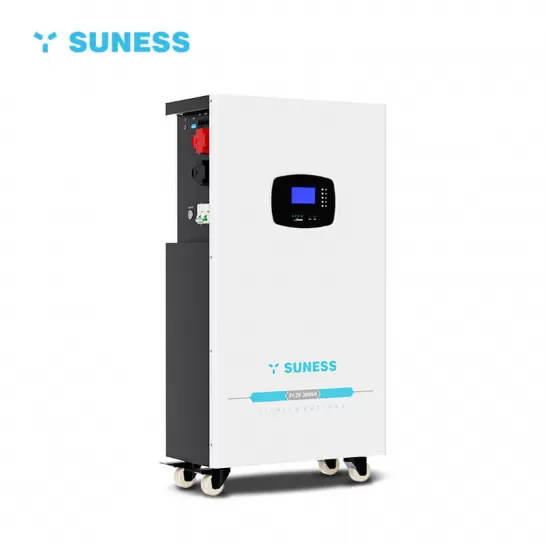
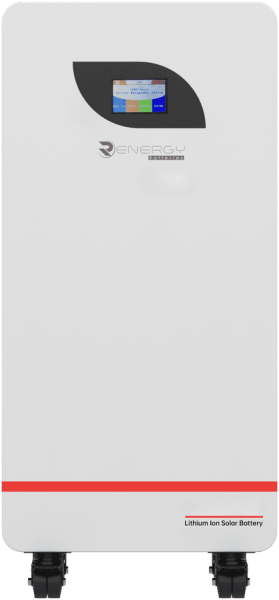
A pair of wheels at the base of an 110 kg battery changes how the installation conversation runs. The Renergy iPower 16.07 kWh Lithium Battery is the only residential iPower model in the Renergy family with built-in mobility — wheels integrated into the enclosure base allowing the unit to be rolled into position, repositioned within an equipment room as electrical infrastructure changes around it, or relocated to a new mounting point without requiring lifting equipment or a four-person crew. For the Kenyan installer working in rented commercial premises, staged residential construction, or facilities where the equipment room layout may change over time, this mobility feature solves a constraint that purely wall-mount alternatives at this capacity simply cannot address. Local references to the unit include Renergy iPower 16.07, the Renergy 16 kWh battery, the iPower 16.07, the Renergy 314Ah lithium, and the Renergy 51.2V flagship storage.
Sitting at the top of the Renergy residential single-unit range, the iPower 16.07 caps the wall-mount family before architecture steps up to the high-voltage commercial iPower variants. The 16.07 kWh capacity exceeds every other Kenyan single-unit residential battery currently available, including the commercial-positioned alternatives. For a Bicity Solar buyer specifying single-unit storage at the top tier — premium residential whole-building backup, smaller commercial backup requiring single-enclosure simplicity, off-grid commercial sites in the 15-20 kWh load bracket — this is the unit that delivers the largest single-enclosure capacity from a British corporate brand.
What distinguishes the iPower 16.07 from the smaller residential iPower models is the cell capacity choice. Where the popular iPower 5.12 uses 100Ah per cell across 16 cells in series, and the iPower 10.24 uses 200Ah per cell, the iPower 16.07 reaches its 16.07 kWh capacity through 314Ah cells in the same 16-cell series configuration. The unusual 314Ah cell capacity — neither 300Ah nor 400Ah — reflects the specific cell engineering choice that achieves the 16.07 kWh target inside the 825 × 413 × 233 mm enclosure dimensions. This is closer to commercial-grade cell sourcing than typical residential battery cell capacities, while remaining within the operational envelope appropriate to residential single-unit deployment.
Why 150A continuous current changes what loads the unit can handle
The smaller iPower residential models operate at 100A maximum continuous current. The iPower 16.07 carries 150A — a 50% step-up in current capability that opens deployment scenarios the smaller siblings cannot reach. At 51.2V system voltage, the 150A continuous rating delivers approximately 7.68 kW of continuous power output, supporting concurrent operation of substantial load groups that 100A-rated alternatives would struggle with.
For practical Kenyan installation contexts, this matters in three specific scenarios. Premium residential homes operating multiple high-draw appliances simultaneously (electric water heating plus central air conditioning plus refrigeration plus electric vehicle charging plus lighting) can exceed 5 kW of concurrent demand during evening peak — the 16.07’s 7.68 kW continuous output handles this with margin while a 100A-rated battery would trip protection or curtail output. Smaller commercial premises running concurrent equipment groups (office HVAC plus computing infrastructure plus refrigeration plus lighting) similarly benefit from the higher current envelope. Off-grid commercial sites with motor-driven loads (water pumping, processing equipment, refrigeration compressors) draw motor-start inrush currents that 150A handles within continuous rating where 100A would require entering surge territory.
The cycle life characteristics improve correspondingly. Operating any battery at currents well below its continuous rating typically extends realised cycle life beyond the rated figure; the iPower 16.07’s larger continuous envelope means typical residential and light-commercial duty cycles operate at 40-60% of the current rating, well inside the conservative operating zone that protects long-term capacity retention.
Comparing the iPower 16.07 against the Bicity catalog single-unit options
| Storage tier | Bicity option at the tier | Capacity | Continuous current |
|---|---|---|---|
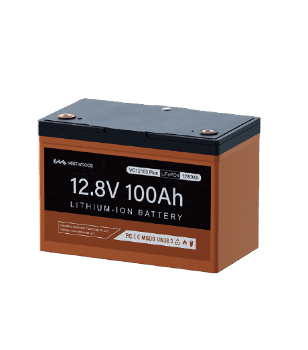
| Small backup | Vestwood 12V, Suness EV-2.56N, iPower 2.56 | 1.28-2.56 kWh | ~100A at low voltage |
| Entry hybrid 48V | Vestwood 48V 100Ah, Jinko JKS-B48100-HI | 4.8 kWh | 100A at 48V |
| Mainstream residential | Renergy iPower 5.12, Vestwood 51.2V 100Ah | 5.12 kWh | 100A at 51.2V |
| Larger residential | Vestwood 48V 200Ah | 9.6 kWh | 100A at 48V |
| Capacity bridge | Renergy iPower 10.24 | 10.24 kWh | 100A at 51.2V |
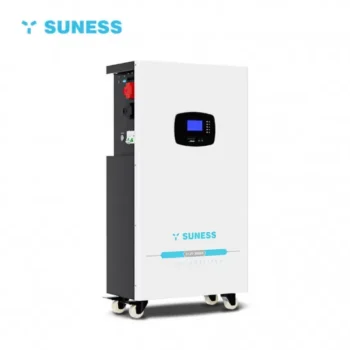
| Commercial single-unit | Suness EV-15.36N | 15.36 kWh | 150A continuous / 200A peak at 48V |
| Top residential flagship — this product | Renergy iPower 16.07 | 16.07 kWh | 150A at 51.2V |
At 16.07 kWh in a single enclosure, the iPower 16.07 delivers slightly more capacity than the Suness EV-15.36N commercial unit at a comparable continuous current envelope. Where the Suness offers a 200A peak discharge for surge events, the iPower 16.07 matches the 150A continuous figure but is not specified for peak surge above this level. Where the Suness carries Chinese corporate brand backing under a Shenzhen-listed parent, the iPower carries British corporate brand backing under UK Companies House registration. The choice between the two top-tier units becomes a brand-and-features comparison rather than a capacity comparison.
Three deployment scenarios where the iPower 16.07 is the right choice
Premium Kenyan residential whole-building backup at the top of the demand curve. Properties in Karen, Runda, Spring Valley, Muthaiga, Tigoni country estates, premium Mombasa coastal villas, Naivasha lakeside homes — these residential installations frequently combine electric water heating across multiple bathrooms, central air conditioning serving multiple zones, electric vehicle charging at one or two parking positions, multiple refrigeration appliances, swimming pool circulation pumping, irrigation system pumping, and substantial lighting plus entertainment plus computing load. Evening-and-overnight consumption in these homes reaches 10-15 kWh, requiring storage capacity that the typical 5 kWh tier cannot deliver and that two parallel 5 kWh units handle only by introducing master-slave BMS coordination complexity. One iPower 16.07 covers this consumption with operational margin and zero parallel-stacking complexity.
Smaller commercial premises and clinics with substantial concurrent backup load. Stand-alone dental surgeries, eye-care clinics, sole-practitioner GP practices, smaller animal-care surgeries, and similar healthcare contexts — these commercial installations consume 6-12 kWh during their operational window plus standby loads outside operational hours. One unit handles the full commercial daily backup envelope including the motor-start surge events from clinical equipment, refrigeration compressors, and office HVAC. Two-unit parallel installations reach 32.14 kWh for installations needing multi-day autonomy through extended grid outages.
Off-grid sites bridging residential and commercial operational scales. Boutique guest houses, conservancy ranger camps, smaller mission station residential blocks, agricultural processing operations with modest electrical demand, smaller country lodges — off-grid installations operating entirely on solar-plus-storage at consumption levels above typical residential homesteads but below dedicated commercial premises. The 16.07’s 150A continuous current handles the irregular load patterns these sites generate (cooking equipment, refrigeration cycling, water pumping cycles, lighting plus entertainment plus communication infrastructure) within continuous rating rather than requiring repeated entries into surge operation.
When the iPower 16.07 is over-specified or under-specified
For typical Kenyan suburban residential homes consuming 3-6 kWh during evening hours, the 16.07 kWh capacity dramatically overshoots actual demand. Operating the unit at 25-40% DOD daily delivers maximum cycle life but represents storage capacity that the household will not practically use. Buyers in this consumption profile should step down to the iPower 5.12 (5.12 kWh) for a more appropriate sizing match, or to the iPower 10.24 (10.24 kWh) if they specifically value the future-proofing margin or wall-or-ground mount flexibility.
For dedicated commercial premises consuming 20+ kWh during operational hours, the 16.07 single-unit is undersized — covering only part of the operational window without parallel-stacking. Two iPower 16.07 units in parallel reach 32.14 kWh, which suits many commercial scenarios; for larger commercial installations consistently consuming 30+ kWh, the Renergy commercial HV series (operating at higher voltage architectures) typically delivers better economics than residential-tier parallel-stacking.
For installations where the wheeled mobility is irrelevant — fixed-location mounting in purpose-built equipment rooms with no anticipated relocation requirement — the mobility feature represents capability that the buyer is paying for but not using. These scenarios may favour the iPower 10.24 (which lacks built-in wheels but offers wall-or-ground mounting at lower capacity) if the smaller capacity matches the load profile, or the high-voltage Renergy commercial variants if the load justifies stepping out of the residential tier entirely.
What the built-in wheels actually solve
Wheeled mobility at the 110 kg single-unit weight changes installation logistics in ways that fixed-mount alternatives cannot replicate. Three specific operational scenarios benefit:
Repositioning during initial installation. Equipment room layouts often need adjustment during commissioning — discovering that the inverter mounting position blocks ventilation airflow to the battery, that cable routes work better from a different battery position, or that the equipment room layout drawn on paper doesn’t match the structural reality on site. With fixed-mount alternatives, repositioning means breaking down the wall mount, lifting the unit out, and remounting at the new position. Wheeled mobility means rolling the unit to its new position in minutes without breaking down any mounting infrastructure.
Relocation during property changes. Kenyan commercial premises operate frequently under rental rather than ownership arrangements. Solar installations at rented premises face the question of what happens to the storage system when the tenancy ends. Fixed-mount installations face permanent attachment to the property; wheeled installations can be wheeled out and into the new premises without major disassembly. For commercial buyers anticipating possible relocation, the mobility feature protects the investment value of the storage system.
Maintenance access in tight equipment rooms. Service work on the battery, surrounding inverter equipment, or wall infrastructure behind the battery often benefits from moving the battery out of the way temporarily. Wheeled positioning makes this trivial — roll the battery to one side, complete the service work, roll it back into position. Fixed-mount installations require either working around the battery (compromising service quality) or breaking down the mount to relocate temporarily (compromising service efficiency).
Hybrid inverter pairing at 51.2V architecture
Inverter communication operates through RS485 or CAN bus protocols on the iPower 16.07 — the same dual-protocol approach used across the Renergy iPower family. Battery output sits at the 51.2V nominal level that mainstream Kenyan hybrid inverter products are engineered around, so most off-the-shelf 48V/51.2V hybrid units in the local distributor network handle the pairing without unusual configuration. The 150A continuous current rating means inverter selection should support battery input currents up to this level; most modern hybrid inverters in the residential and light-commercial range handle this comfortably, but the specific inverter manufacturer’s battery compatibility section should be verified before commissioning.
Renergy produces hybrid inverters in their own range (the RPI-LV and RPI-HV series) that pair natively with the iPower battery family. For installations targeting complete single-brand ecosystem alignment, the matched Renergy battery plus Renergy inverter combination simplifies the warranty channel, technical support escalation, and operational documentation. For mixed-brand installations using other hybrid inverter manufacturers, the dual-protocol availability covers virtually all mainstream brands available in the Kenyan distributor network.
Specifications confirmed from the Renergy iPower 16.07 datasheet
| Specification | Value |
|---|---|
| Brand | Renergy Power Limited (United Kingdom) |
| UK Companies House registration | Company number 10115425, registered in England and Wales |
| Product family | iPower Residential Wheeled/Wall-Mount |
| Model | iPower 16.07 |
| Cell technology | LFP (Lithium iron phosphate), Grade A quality tier |
| Cell configuration | 16 cells in series at 314Ah per cell |
| Rated voltage | 51.2V |
| Rated capacity | 314Ah |
| Rated energy | 16.07 kWh |
| Output voltage range | 43.2V to 58.4V |
| Charging voltage | 57.6V to 58.4V |
| Cut-off voltage | 43.2V |
| Maximum charge current | 150A |
| Recommended charge current | 50A |
| Maximum discharge current | 150A |
| Continuous power output (51.2V × 150A) | Approximately 7.68 kW |
| Round-trip efficiency | Greater than 98% |
| Cycle life at 50% DOD | 8,000 cycles (tested at 0.2C, 25°C) |
| Cycle life at 80% DOD | 6,000 cycles (tested at 0.2C, 25°C) |
| Cycle life at 100% DOD | 4,000 cycles (tested at 0.2C, 25°C) |
| Design life | Greater than 10 years |
| Enclosure dimensions (L × W × H) | 825 × 413 × 233 mm |
| Net weight | Approximately 110 kg |
| Mobility | Built-in wheels at base for mobility and repositioning |
| Mounting modes | Wheeled standing or wall-mount |
| Charging temperature | 0°C to 55°C |
| Discharging temperature | -20°C to 60°C |
| Long-term storage temperature | -10°C to 30°C |
| Operating humidity | 5% to 95% relative humidity |
| Local interface | Colour touch LCD screen |
| Wireless connectivity | Bluetooth and WiFi |
| Inverter communication | RS485 and CAN bus |
| Parallel scaling | Up to 16 units (approximately 257 kWh aggregate at 51.2V) |
| Operating mode selection | Touch screen menu |
| BMS monitoring scope | Cell temperature, current, voltage, State of Charge, State of Health |
| Inverter compatibility | Wide range of hybrid inverter brands supporting RS485 or CAN bus at 51.2V architecture |
Where the iPower 16.07 typically deploys
- Top-end Kenyan residential whole-building installations: Premium residential properties in Karen, Runda, Spring Valley, Muthaiga, Tigoni country estates, and equivalent upmarket locations across Mombasa and Naivasha — homes consuming 10-15 kWh during evening hours from combined electric water heating, central air conditioning, electric vehicle charging, multi-appliance refrigeration, swimming pool pumping, irrigation pumping, and substantial lighting plus entertainment load.
- Single-clinic medical operations and smaller healthcare facilities: Stand-alone dental surgeries, eye-care clinics, sole-practitioner GP practices, smaller animal-care surgeries, mid-sized physiotherapy practices, and ambulatory-care satellite facilities — healthcare contexts where one substantial backup unit covers the full operating-day load plus night-time refrigeration, monitoring equipment, and security infrastructure.
- Boutique hospitality at the smaller lodge and guest house scale: Smaller country lodges, conservancy ranger accommodation, boutique guest houses, mission station residential blocks — hospitality operations carrying evening guest loads plus night-time refrigeration and security loads within the 16 kWh single-unit envelope.
- Smaller commercial premises with elevated backup load profiles: Smaller offices with full-day operational requirements during grid outages, professional services premises with substantial computing infrastructure, smaller retail establishments with refrigeration plus point-of-sale plus lighting loads.
- Off-grid sites at the residential-commercial bridge: 2-3 unit parallel installations reaching 32-48 kWh of total system storage — covering smaller off-grid commercial operations, larger residential off-grid sites, and similar bridge-scale installations.
- Religious institution facilities with full-campus electrical demand: Larger churches, mosques, faith-based community centres, theological colleges, mission-affiliated school buildings, and similar religious institution installations where the campus electrical demand combines worship-space operation with residential and institutional functions.
- Tenant-installed commercial backup systems in rental premises: Commercial tenants installing solar-plus-storage in rented premises where the wheeled mobility protects the investment value of the storage system if the tenancy ends and the equipment needs relocating to a new premises.
- Premium homes specifying electric vehicle integration: Properties combining typical residential evening loads with substantial overnight EV charging demand — adding 8-12 kWh of nightly charging that pushes total daily consumption into the 16 kWh storage envelope that smaller batteries cannot cover.
Installation considerations specific to the wheeled flagship
The iPower 16.07 installation workflow incorporates the wheeled mobility feature into the deployment approach. An EPRA-registered electrician with experience in larger residential and light-commercial battery installation handles the work effectively. The wheels simplify some installation steps but introduce considerations that fixed-mount alternatives don’t have:
Floor surface preparation for wheeled positioning. The floor at the installation location needs to be reasonably level and structurally capable of supporting the 110 kg point load distributed across the wheel contact points. Concrete slab flooring, tile flooring on solid sub-floor, or purpose-built equipment platforms all suit; suspended timber flooring or thin tile over inadequate sub-floor may flex under the load over time. Floor surface levelness matters because the colour LCD touch interface assumes a more-or-less vertical orientation of the front face; substantially uneven floors may cause minor display angle issues.
Wheel locking mechanism engagement before electrical connection. Once the battery is rolled to its operating position, the wheel locking mechanisms should engage before electrical cables are connected. Loose wheels allow the unit to roll under cable tension or accidental contact, potentially stressing the cable connections or pulling cables loose. The locked-wheel state turns the wheeled unit into a stationary installation for operational purposes while preserving the relocation capability for future repositioning.
Wall-mount option still available where structural capacity permits. Buyers preferring wall-mount installation can use the iPower 16.07 in this mode, gaining the floor-space saving of vertical mounting at the price of giving up the mobility feature. Wall mounting requires solid masonry or concrete construction documented to support the 110 kg unit weight safely; plasterboard partitions or lightweight stud walls need substantial reinforcement before wall mounting becomes safe at this weight. The decision between wheeled standing and wall-mount installation is made before commissioning and is generally not changed during the operational life of the installation.
Cable routing accommodating future repositioning. If the buyer plans to retain the option to reposition the unit during operational life, cable routing should include service slack and routing flexibility rather than minimum-length permanent runs. A few extra metres of cable length at installation makes future repositioning trivial; minimum-length cable runs lock the battery into its initial position even though the wheels would otherwise allow relocation. This is a small consideration at installation but a significant operational benefit later.
Two-person handling for initial positioning despite the wheels. While the wheeled design makes positioning much easier than lifting an 110 kg unit, the initial positioning still benefits from two-person handling — one person guiding the battery into position while the other manages cable routing, environmental protection of the connection points, and final levelling. The wheels reduce the heavy-lifting requirement to nil but don’t eliminate the value of a second person during the commissioning workflow.
Communication and connectivity commissioning following standard iPower procedures. Once positioned and electrically connected, the commissioning workflow for inverter pairing, BMS configuration, parallel-stack addressing if applicable, Bluetooth pairing to the installer’s or buyer’s smartphone, WiFi connection to the buyer’s home or office network, and final LCD touch-screen menu navigation follows the same standard procedures as other iPower family members. The mobility feature affects only the physical positioning workflow, not the electrical or communication commissioning.
Specifying single-unit storage at the top tier of Kenyan residential or smaller commercial backup? Installing in rented premises where the storage may need to relocate when the lease ends? Building a premium home with whole-building electrical demand consistently exceeding 10 kWh during evening hours?
The Renergy iPower 16.07 kWh Lithium Battery delivers the largest single-unit capacity in the residential iPower family — 16.07 kWh inside one enclosure with built-in wheels for mobility and 150A continuous current handling for whole-building electrical demand. Run your daily kWh load through the Solar Calculator to confirm the sizing match, then drop the final design into My Quote and our team returns a costed package covering the battery quantity, a compatible Renergy or third-party hybrid inverter pairing, DC protection sized for the 150A envelope, and the installation logistics workflow that the wheeled-mobile or wall-mount deployment mode requires.