Description
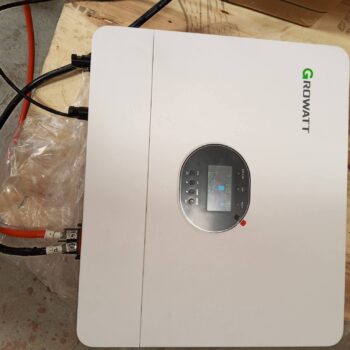
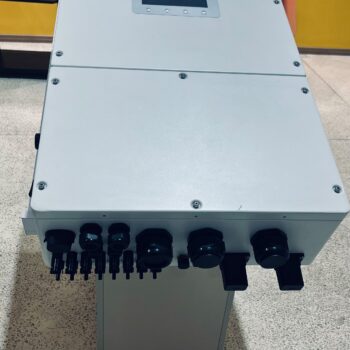
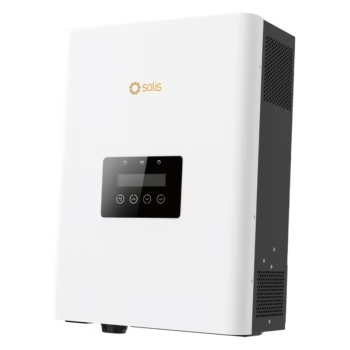
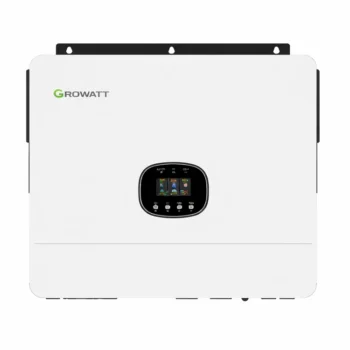
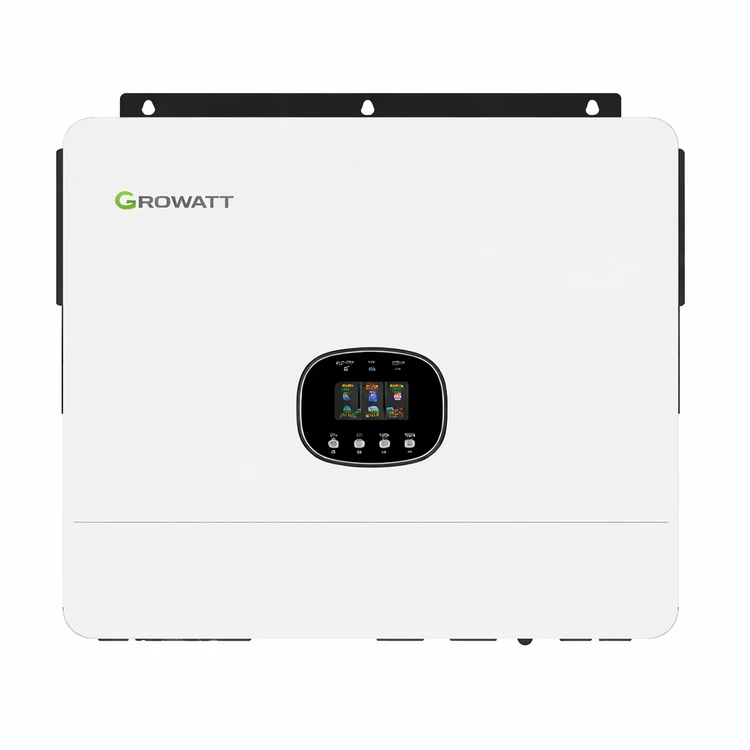
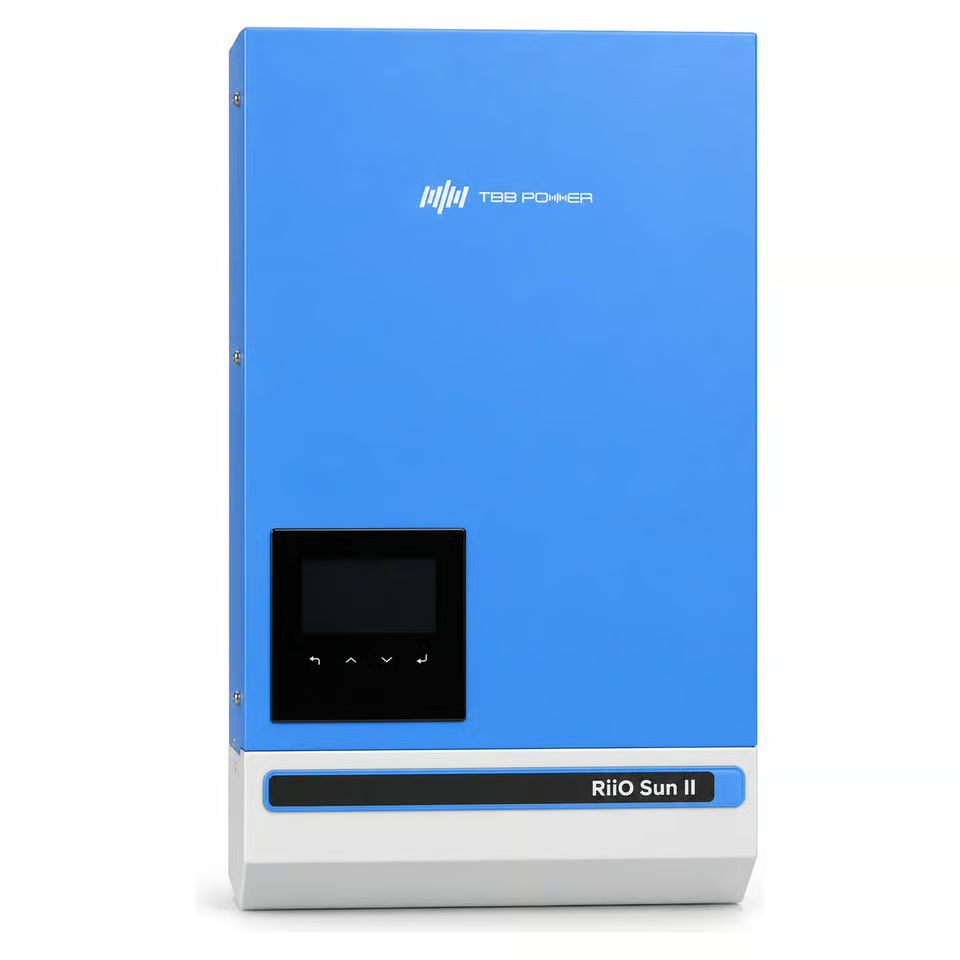
The TBB RiiO Sun II 3KVA-M is the 24 volt member of the RiiO Sun II hybrid range, delivering 3000 VA at 230 volts with a transformer based output stage. It combines an inverter, a 70 ampere mains charger and a solar charge controller in one wall mounted unit.
Two things about it are worth understanding before you commit, and neither appears on a feature list.
First, the output rating is honest. Continuous output is quoted as 3000 VA and 3000 W, and those are the same figure because the power factor is unity. A good many inverters sold as 3kVA deliver only 2400 watts of real power. Here the volt amperes and the watts agree, so a 3kVA rating means three kilowatts of actual work.
Second, a 24 volt bus at this output means a great deal of current. At full load the unit draws roughly 137 amperes from the battery, and around 275 amperes on surge. The 48 volt version of the same inverter draws about half that for identical output. This single fact governs your cable size, your fuse rating and, most importantly, whether the battery you have in mind can actually supply it.
- 3000 VA and 3000 W continuous at 25 degrees, with 6000 W peak
- About 137 amperes drawn continuously from a 24 volt bank
- 70 ampere charger, equivalent to roughly 2000 watts of charging
- 2300 watts of solar into the battery, from a single tracker
- 150 volt maximum array voltage, which limits string length
- 18 kilograms, IP21, forced fan cooling
TBB RiiO Sun II 3kVA 24V Hybrid Inverter: Current, Array Limits and Siting
1. What A 24 Volt Bus Costs You In Current
Power is voltage multiplied by current. Fix the power at three kilowatts and halve the voltage, and the current doubles. That is the whole story of this inverter, and it is the thing that decides whether an installation works or runs warm and disappoints.
Accounting for the 91 percent conversion efficiency, the unit pulls about 3,297 watts from the bank when it is delivering 3,000 to the load.
| Battery voltage | Condition | Continuous current | Current at 6kW surge |
|---|---|---|---|
| 28.8V | Absorption, battery full | About 115A | About 229A |
| 25.6V | Lithium nominal | About 129A | About 258A |
| 24.0V | Nominal | About 137A | About 275A |
| 21.0V | At the low voltage cutoff | About 157A | About 314A |
What follows from those numbers
- Battery cable must be sized for sustained current, not for the surge alone
- Runs should be as short as the layout allows, because length costs voltage
- The DC protective device sits well above a hundred amperes
- Lugs must be crimped properly, since a poor joint at this current heats quickly
- Terminal bolts need checking at commissioning and again at the first service
- The battery itself has to be able to deliver it, which is the next section
2. Whether Your Battery Can Actually Supply It
This is where 24 volt systems most often disappoint, and the failure is quiet rather than dramatic: the inverter shuts down on low voltage long before the battery is empty, and everyone blames the inverter.
A 24 volt lithium battery of 100 ampere hours asked for 137 amperes is being worked at roughly 1.4 times its capacity per hour. Most are rated for half to one times capacity continuously, so such a battery is outside its rating whenever the inverter runs near full output.
What to look for on the battery specification
- Continuous discharge current, in amperes, not just the kilowatt hour figure
- Whether that figure is continuous or a short term peak
- The low voltage cutoff, and how it compares with the inverter’s 21 volts
- Peak discharge current and the duration it is allowed for
- How many units in parallel, where each adds its own current capability
Practical guidance
- At 200 ampere hours the same draw is a far more comfortable rate
- Two 100 ampere hour units in parallel share the current and achieve the same end
- Lead acid banks need generous sizing, since high draw cuts their usable capacity
- If the load never approaches 3kW, the requirement eases in proportion
- Size the bank against your actual peak demand rather than the inverter’s badge
A sensible question to ask is whether you need three kilowatts at 24 volts at all. Section ten looks at that honestly.
3. Technical Specifications
| Parameter | Value |
|---|---|
| Model | RiiO Sun II 3KVA-M |
| Nominal battery voltage | 24V |
| Battery input range | 21V to 34V |
| Continuous output at 25C | 3000 VA and 3000 W |
| Peak power | 6000 W |
| Maximum efficiency | 91 percent |
| Zero load power | 17 W |
| AC output voltage | 220, 230 or 240 VAC, within 2 percent |
| AC output frequency | 50 or 60 Hz, within 0.1 percent |
| Output waveform | Pure sine wave |
| Harmonic distortion | Below 2 percent |
| AC input range | 175 to 265 VAC, 45 to 65 Hz |
| AC input current | 32 A |
| Transfer time | 4 ms, or under 15 ms in weak source mode |
| Maximum AC charge current | 70 A |
| Charge voltage, absorption | 28.8 V |
| Charge voltage, float | 27.6 V |
| Battery types | Lithium, AGM, gel, OPzV, lead carbon, flooded, traction |
| Temperature compensation | Yes |
| Solar controller output current | 80 A |
| Maximum array open circuit voltage | 150 V |
| MPPT voltage range | 40 V to 145 V |
| Number of trackers | 1 |
| Maximum array input current | 36 A |
| Maximum array short circuit current | 40 A |
| Maximum solar charge power | 2300 W at 28.8 V |
| Allowable array power | 3600 W |
| Controller conversion efficiency | 98 percent |
| MPPT tracking efficiency | Above 99.5 percent |
| Communication | RS485 |
| Configurable relay | One, 30 VDC at 3 A or 250 VAC at 3 A |
| Parallel capability | Up to 3 units single phase, 9 three phase, module required |
| Operating temperature | minus 20C to 65C |
| Maximum altitude | 2,000 metres |
| Dimensions | 499 by 272 by 144 mm |
| Net weight | 18 kg |
| Cooling | Forced fan |
| Protection index | IP21, indoor and dry positions only |
| Safety standards | EN-IEC 62477-1, 62109-1 and 62109-2 |
What comes in the box
- The inverter itself, with its wall mounting bracket
- Expansion bolts and screws for mounting
- An earthing terminal for the ground conductor
- The wireless monitoring module, supplied as standard rather than as an extra
- The user manual
The wireless module is worth noting, since remote monitoring on many competing inverters is a separately priced accessory. Here it is part of the standard packing list.
4. Key Points
- Volt amperes and watts are the same figure, so 3kVA means 3kW of real power
- Six kilowatts of surge, which starts motors a smaller unit would refuse
- Around 137 amperes drawn continuously from the 24 volt bank
- A 70 ampere charger restores roughly two kilowatts from grid or generator
- 2300 watts of solar into the battery through a single tracker
- The array ceiling is 150 volts, which is the tightest constraint on panel choice
- Transfer in four milliseconds, so most equipment never notices an outage
- Seventeen watts consumed simply by being switched on
- Peak efficiency of 91 percent, the deliberate cost of the transformer
- Pure sine wave output with harmonic distortion below two percent
- Wireless monitoring module included rather than sold separately
- Rated to 2,000 metres, which several Kenyan highland towns exceed
5. Sizing The Solar Array
Two separate limits apply and most buyers only hear about one of them.
The power limit
- The controller will put at most 2300 watts into the battery
- The allowable array is 3600 watts, which is an oversizing allowance
- Fitting the full 3600 watts means around a third is clipped at peak
- Oversizing still helps in early morning, late afternoon and cloud
- It is a deliberate choice rather than a fault, provided you know you are making it
The voltage limit, which decides your panel choice
The array must never exceed 150 volts open circuit, and cold mornings push open circuit voltage above the figure printed on the panel. Working on roughly ten percent above label, the number of panels you may put in series depends on the panel you choose, and the answer is counterintuitive.
| Panel | Typical open circuit | Panels in series | Strings within 36A | Array reached |
|---|---|---|---|---|
| 550 W | About 49.5 V | 2 | 2 | About 2,200 W |
| 450 W | About 41 V | 3 | 2 | About 2,700 W |
| 400 W | About 37.5 V | 3 | 2 | About 2,400 W |
The smaller panel builds the larger array. A 550 watt module has too high an open circuit voltage to put three in series under a 150 volt ceiling, so you are stuck with pairs, and pairs make a low voltage high current string that runs into the 36 ampere input limit quickly. A 450 watt module lets you stack three, which lifts the string voltage, lowers the current and lets you fit more total wattage within the same constraints.
That reverses the instinct most buyers arrive with. Confirm the actual open circuit figure on the panel being quoted rather than relying on the table, since panels of the same wattage differ.
6. Grid Charging, Generators And Power Assist
- The charger draws up to 70 amperes, which is close to two kilowatts of charging
- Input accepts 175 to 265 volts, so it tolerates a sagging or variable supply
- Frequency tolerance of 45 to 65 hertz suits a generator that wanders
- Power assist lets the battery top up a limited supply rather than tripping it
- That allows a smaller generator or a lighter incoming breaker to carry more
- Charge current should be set to suit the battery, not left at maximum
The power assist behaviour is the useful part for Kenyan sites on a small supply. Where the incoming breaker or the generator cannot carry a surge, the inverter contributes the shortfall from the battery instead of letting the supply trip.
7. Operating Modes, And Why They Decide Your Savings
The setting that governs where power comes from is the one most often left on its factory value, and it quietly determines whether the system saves you anything. The unit offers five arrangements.
| Mode | What it does | Suits |
|---|---|---|
| USB | Solar charges the battery first and serves loads with whatever is left over, while the mains supplements both charging and the loads. This is the factory default. | Unreliable supply where keeping the battery full matters most |
| SUB | Solar serves the loads first and charges the battery with the surplus. The mains supplements the loads, and only charges the battery once it falls to the low warning level. | Getting the most value out of generation during the day |
| SBU | With the grid present, stored and generated power serve the loads first, and the grid fills the shortfall. | Maximising self consumption where the tariff is the main concern |
| SB | The unit stays off the mains entirely until the battery reaches the low warning, or it overheats or overloads. | Running as close to off grid as the battery allows |
| TC | Time control, running in USB inside a chosen window and in SB outside it. | Sites with cheaper hours, or scheduled generator running |
The distinction between USB and SUB is the one worth dwelling on, because the names are easy to confuse and the behaviour is almost opposite. In USB the generation goes to the battery before the loads. In SUB the generation goes to the loads before the battery. A household that runs most of its demand during daylight will usually do better on SUB, while a site that needs a full battery before each evening outage is better served by the default.
The time control window cannot be set from the front panel; it requires the manufacturer’s software or its monitoring platform. We set the mode to suit how you actually use power and write it into the handover notes, rather than leaving the default in place and hoping.
8. Feeding Energy Back To The Grid
The unit can export, and the manual is careful about it, so we will be too.
- Feed-in is enabled in the settings, and an external meter can limit the power
- The manufacturer asks you to confirm local grid rules before switching it on
- In the mode that runs without a battery, export is capped at half the rated solar charging power
- For this model that works out at about 1,150 watts
- That mode also requires the matching monitor and meter, and specific wiring conditions
In Kenya exporting is not simply a setting. It requires an arrangement with the distributor under the net metering framework, and under those rules a consumer receives a credit for exported energy equal to fifty percent of the unit exported. The grid codes the unit is declared against are European and South African rather than Kenyan, so treat export as something to arrange properly rather than enable on the screen. For most installations here, using the generation on site is worth more than exporting it.
9. Siting, Altitude And Ventilation
Where it can go
- Indoors only, as IP21 offers no protection against driven rain
- On a solid wall, since the unit weighs 18 kilograms
- Somewhere dust is manageable, because cooling is by forced fan
- With clear space around it for air, and the fan outlet unobstructed
- Never inside a sealed compartment that contains the batteries
- Out of reach, since the case and heat sink run hot in service
- Not on a flammable surface, and away from stored fuels
- Within easy reach of the bank, to keep the heavy cable short
The altitude limit, which matters in parts of Kenya
The stated maximum operating altitude is 2,000 metres. Thinner air cools less effectively, so equipment is normally derated above its stated figure rather than simply failing.
- Nairobi, at roughly 1,795 metres, sits below the limit
- Kericho and Kipkelion are close to it
- Eldoret at roughly 2,100 metres is above it
- Limuru, Nyahururu, Timau and Molo are all higher again
- For a site above the limit, ask the supplier for the derating factor in writing
- Plan the continuous load below the badge rating where that applies
10. Should You Be On 24 Volts At All
Three kilowatts is near the top of what a 24 volt bus handles comfortably, and the same inverter exists as a 48 volt model. The honest comparison is worth having before you buy.
| Consideration | This 24V model | The 48V equivalent |
|---|---|---|
| Current at full output | About 137A | About 67A |
| Current on surge | About 275A | About 134A |
| Battery cable | Heavy, and sensitive to run length | Roughly half the copper |
| Demand on the battery | High, so capacity must be generous | Easier for a given capacity |
| Maximum array voltage | 150 V | 250 V |
| Solar charge power | 2300 W | 3450 W |
| Peak efficiency | 91 percent | 93 percent |
| Suits | An existing 24V bank, or modest loads | New builds and future expansion |
When 24 volts is the right answer
- You already own a 24 volt bank worth keeping
- Existing 24 volt equipment on site must stay in service
- Real loads are well below three kilowatts and the headroom is for starting surges
- The battery sits close enough that cable length is not an issue
When to choose 48 volts instead
- You are starting from nothing and can pick either
- The system is likely to grow
- The battery cannot be mounted close to the inverter
- You want more array voltage so panel choice is not constrained
11. The Transformer Trade, Explained Honestly
Ninety one percent peak efficiency is lower than a modern transformerless hybrid, which typically reaches the middle nineties. At full output this unit turns about 297 watts into heat where a 95 percent machine would lose around 158. That is a real difference and we will not dress it up.
What the transformer buys in return is robustness.
- Six kilowatts of surge, twice the continuous rating
- Motor and compressor starting that lighter designs refuse
- Galvanic separation between the battery side and the output
- Tolerance of poor incoming supply across a wide input window
- A reputation for surviving conditions that stress electronics
If your loads are small and steady, that trade is a poor one and a high frequency inverter will serve you better. If you are starting a borehole pump, a welder, a workshop compressor or a deep freezer, the surge headroom is exactly what you are paying for and the efficiency gap is the price of admission.
12. Care And Operations
- Keep the fan intake and outlet clear, and clean dust from them regularly
- Check terminal bolts for tightness at commissioning and at the first service
- Watch for heat or discolouration at the DC lugs, which signals a poor joint
- Set the charge profile to the battery in use rather than leaving defaults
- Set charge current to what the bank accepts, not to the 70 ampere maximum
- After three overload shutdowns in succession the unit needs restarting by hand
- Keep the room dry, as the enclosure resists dripping water only
- Record the settings applied, because the next technician will need them
13. Why Buy From Bicity Solar
- The right model confirmed, since three different units are all called 3kVA
- Battery current calculated for your loads before a bank is quoted
- Batteries proposed that can actually deliver the current this inverter draws
- DC cable and protection sized for sustained current, not just for surge
- Panel choice worked against the 150 volt ceiling before an array is ordered
- Clipping explained if we recommend oversizing, rather than discovered later
- Altitude derating raised where your site sits above the stated limit
- Honest advice when 48 volts would serve you better than 24
- Honest advice when a lighter inverter would suit your loads
- Export discussed in terms of what is actually permitted here
- Charge profile configured for your battery chemistry at commissioning
- Settings documented and handed over with the system
- EPRA licensed installation, with support afterwards countrywide
Before ordering, settle two things. Can your battery deliver about 137 amperes continuously, and do the panels you have in mind stay under 150 volts open circuit on a cold morning? Those two answers decide whether this inverter performs or frustrates, and neither appears on a feature list.
Send us your heaviest loads, what starts on the system, the battery you own or intend to buy, your panel model and the altitude of the site. We will confirm the bank can carry the current, work the string layout against the voltage ceiling and say plainly if a 48 volt unit would serve you better. Size the system in the Solar Calculator, or send your details through My Quote.