Description
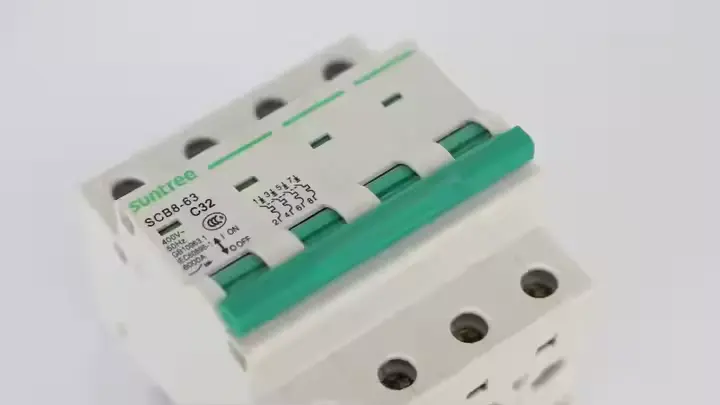
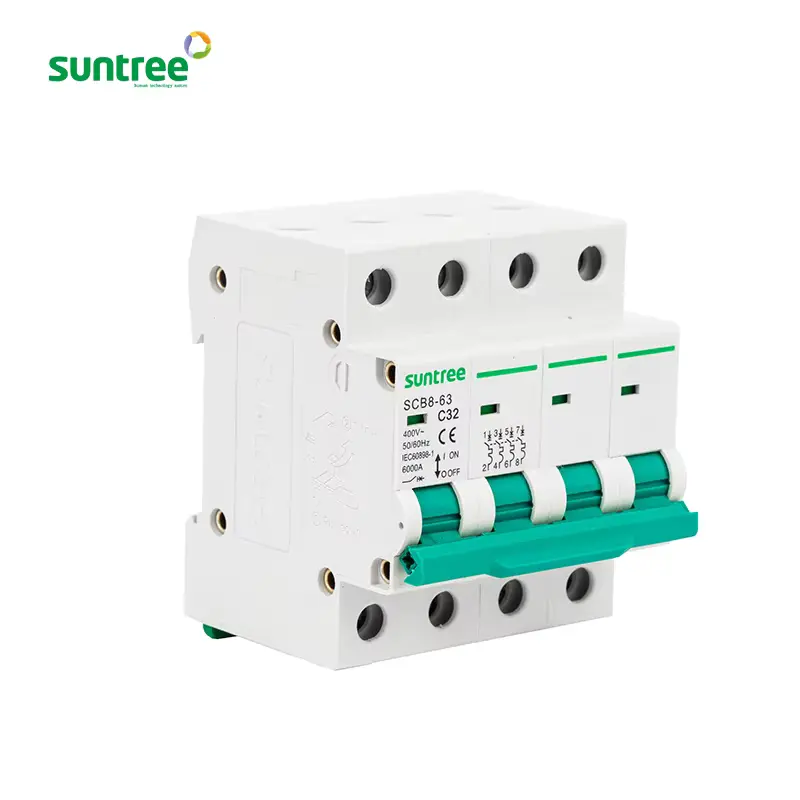
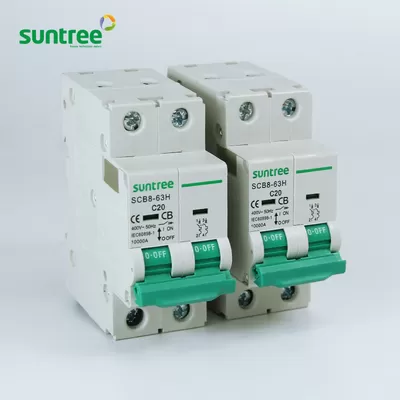
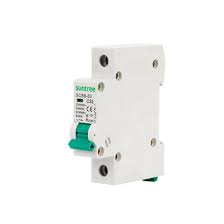
Single Pole MCB 10A — SCB8-63 1P 230V/400VAC Lighting & Small-Load Circuit Breaker
The Single Pole MCB 10A is the smallest commonly-installed circuit breaker in Kenyan domestic and small-commercial wiring. At ten amperes nominal trip, it is purpose-built for the low-current branches that fill the bottom rows of almost every consumer unit — lighting loops, security camera cabinets, alarm system controllers, electric gate motors, doorbell transformers, individual TV and computer points, and the dedicated small-power feeds that keep modern smart-home installations alive.
Because the 1P configuration switches only the live conductor, this breaker occupies just one 18-millimetre module on the DIN rail. That compactness matters: a typical residential lighting design needs four to eight separate lighting circuits across a property — entrance, lounge, bedrooms, kitchen, exterior, outbuildings — and dedicating a 1P breaker per zone uses panel space that would be wasted by oversized double-pole devices.
Where this breaker fits in your installation
- Domestic lighting zones: One 10A 1P per area (lounge, bedrooms, kitchen, hallway, bathroom, garden) gives clean fault isolation when a single fitting fails.
- Exterior security lighting: Floodlights, PIR-activated fittings, and dusk-to-dawn perimeter lamps around the compound.
- CCTV and alarm cabinets: The 230V feed powering a DVR, NVR, or central alarm panel along with its low-voltage power-supply unit.
- Electric gate motors: Sliding and swing-gate drives drawing roughly four to seven amperes during the brief opening cycle.
- TV and computer outlets: A dedicated point per major audio-visual or home-office position, ahead of a surge protection strip.
- Doorbells, intercoms, and gate phones: Small transformers feeding 24V or 12V doorbell, video-intercom, and biometric access systems.
- Servant-quarter, gatehouse, and guard-room circuits: Lighting and a single socket inside compounds.
- Small inverter and UPS feeds: Backup units below 1.5 kW capacity that draw under nine amperes from the AC input.
Why a single pole is the right choice for these circuits
The conversation in Kenyan electrical installations sometimes pushes installers toward double-pole devices for every circuit. For sockets and high-energy loads that is a reasonable instinct — fully isolating live and neutral matters when servicing kettles, heaters, and motors. For lighting circuits and small electronic loads, single-pole protection is universally accepted as adequate. The neutral remains bonded to the supply, the live conductor is interrupted on fault, and the energy levels involved are low enough that a touched neutral after a fault does not present a meaningful shock risk. Reserving 2P breakers for socket and appliance circuits, and using 1P breakers for lighting and ancillary loads, is the standard layout convention found in every EPRA-compliant consumer unit specification in the country.
Technical Specifications
| Property | Rating |
|---|---|
| Series / Frame | SCB8-63 |
| Trip Current | 10 amperes (In) |
| Pole Arrangement | 1P single-pole switching |
| Working Voltage Range | 230V phase-to-neutral / 400V phase-to-phase |
| Rated Frequency Compatibility | 50 Hertz and 60 Hertz |
| Curve Designation | C — instantaneous trip between 5× and 10× nominal |
| Short-Circuit Interrupt | Six kiloamperes per IEC 60898-1 |
| Insulation Voltage Rating (Ui) | Five hundred volts |
| Pollution Class Allowance | Class 2 (sealed indoor panel) |
| Mechanical Operation Cycles | Twenty thousand minimum |
| Loaded Switching Cycles | Four thousand under rated current |
| DIN Rail System | Standard 35mm symmetric clip-on |
| Panel Footprint | One 18mm module (half the width of a 2P) |
| Conductor Opening | Up to 16mm² stranded copper accepted |
| Recommended Wire for Lighting | 1.5mm² typical; 2.5mm² where multiple zones combine |
| Temperature Operating Band | Minus five up to plus forty degrees Celsius |
| Indicator on Front Face | Coloured flag showing closed / open / tripped |
| Reference Compliance | IEC 60898-1 (residential and similar) |
Notable Features
- Slim single-module body — packs eight lighting zones into the same panel space that four double-pole breakers would consume, freeing modules for RCDs and main switches.
- C-curve trip characteristic — handles the brief inrush from electronic ballasts and LED drivers without false tripping, while still clearing genuine short circuits inside the first half-cycle.
- Visible coloured indicator — at-a-glance verification that a lighting zone is OFF before changing a damaged ceiling rose or replacing a faulty light fitting.
- Wide cable mouth — comfortable termination of 1.5mm² and 2.5mm² conductors typical of lighting and small-load wiring.
- Heat- and tracking-resistant moulded housing — proven against the dust and humidity found in older Kenyan distribution boards.
- Snap-fit DIN rail mount — replace an aged breaker on a live panel (after upstream isolation) in well under thirty seconds.
- Common platform — identical depth and front-face profile as the 2P, 3P, and 4P variants in the same SCB8-63 family, giving a uniform panel appearance.
- Reliable mechanical reset — twenty thousand operations of guaranteed life cover several decades of routine homeowner use.
Common Installation Scenarios Across Kenya
- Up-country home wiring with separate lighting circuits for indoor zones and external security lights
- Apartment unit lighting protection inside a multi-storey residential block consumer unit
- Kiosk, salon, and barbershop lighting and till-point feeds inside shopping arcades
- CCTV head-end cabinets at commercial premises, schools, and church compounds
- Sliding electric gates and roller-shutter motors at residential and small business properties
- Alarm system enclosures inside both domestic and commercial security installations
- Greenhouse ventilation fans, hydroponic timers, and small horticultural control panels
- Caretaker and gate-house lighting and TV feeds in larger Nairobi suburb compounds
Installation Notes
Three points matter most when installing a 10A single-pole breaker. First, the cable feeding it must be 1.5mm² minimum copper for a pure lighting circuit, stepping to 2.5mm² when the circuit carries a single small appliance alongside lights or when the cable run exceeds twenty metres. Second, the live conductor lands on the breaker’s incoming terminal — neutral and earth bypass the breaker entirely and connect directly to the panel’s neutral and earth bars. Third, no permanent loads above eight amperes should sit on a 10A circuit; modern LED lighting almost never approaches that limit, but an installer should still verify the total VA load of all fittings on the zone before commissioning. For mixed lighting-and-socket zones (common in older Kenyan installations), the 16A 1P variant on a related product page may be more appropriate.
This breaker is overcurrent protection only; it does not detect earth-leakage faults. Modern best practice places every lighting circuit in a Kenyan home behind an upstream 30mA RCD or 100mA RCD depending on the zone, giving combined shock-and-overcurrent protection. The single-pole MCB is paired with the RCD on the same busbar, never installed alone where shock protection is required.
Planning a new build, rewire, or smart-home upgrade?
Use our Solar Calculator to size the whole installation including lighting loads, or describe your lighting zones through My Quote and we will return a panel schedule with every MCB, RCD, and cable specification ready for your electrician.