Description
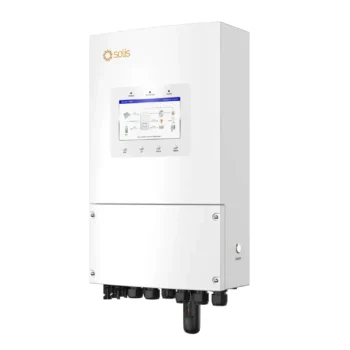
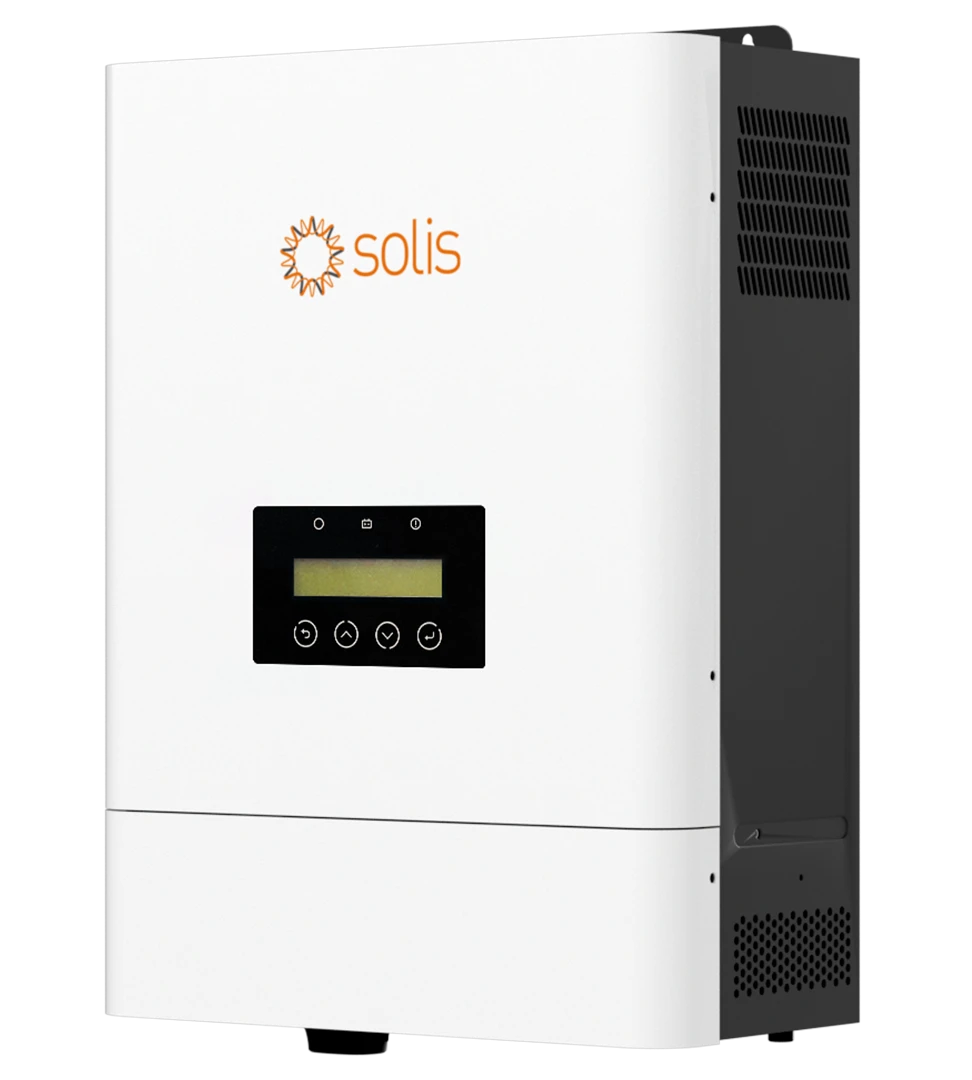
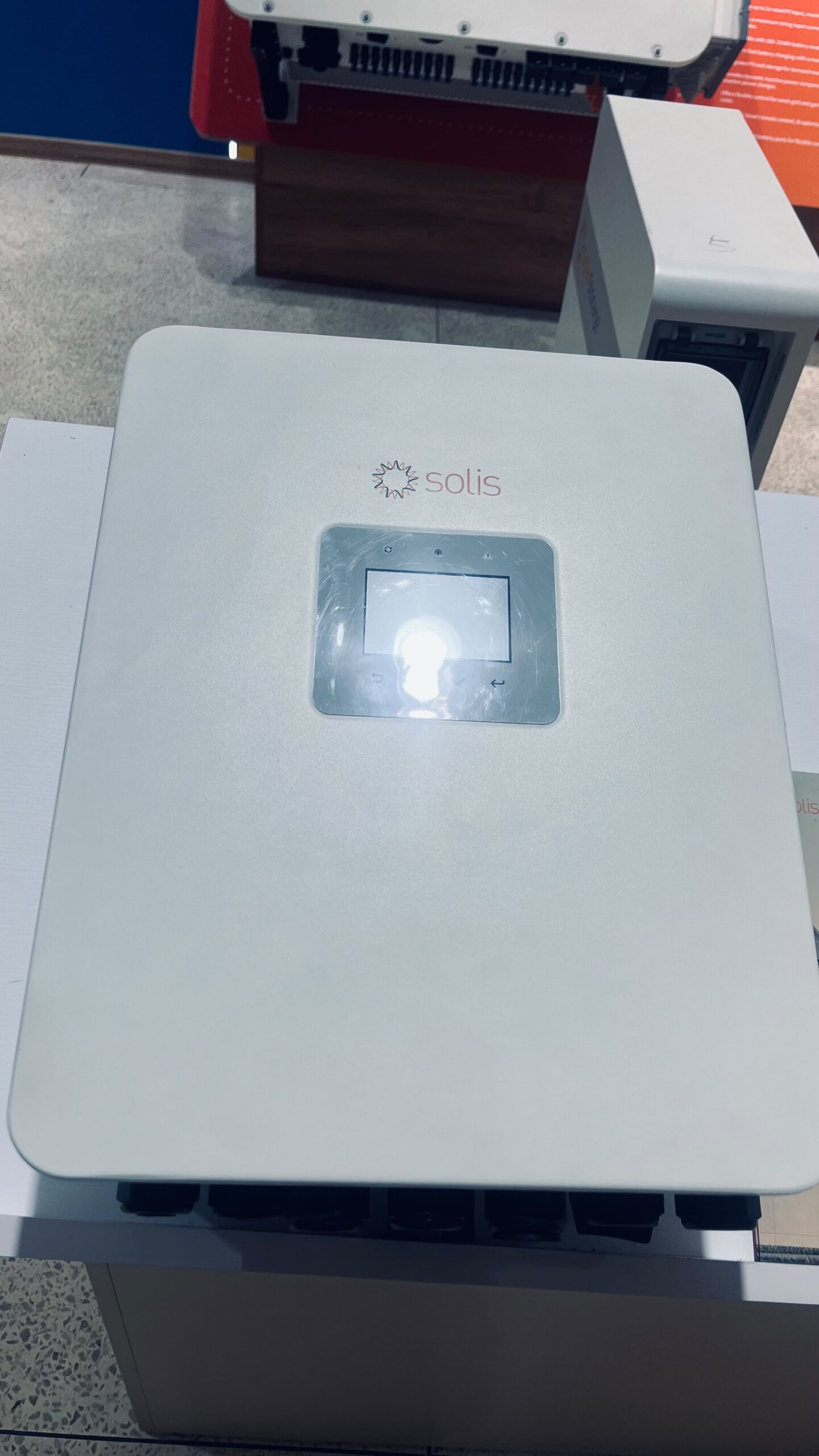
Solis S6-EH1P5K-L-PLUS 5kW 48V Hybrid Inverter: Whole Home Backup With Under 4ms Switchover
Executive Summary and Core Highlights
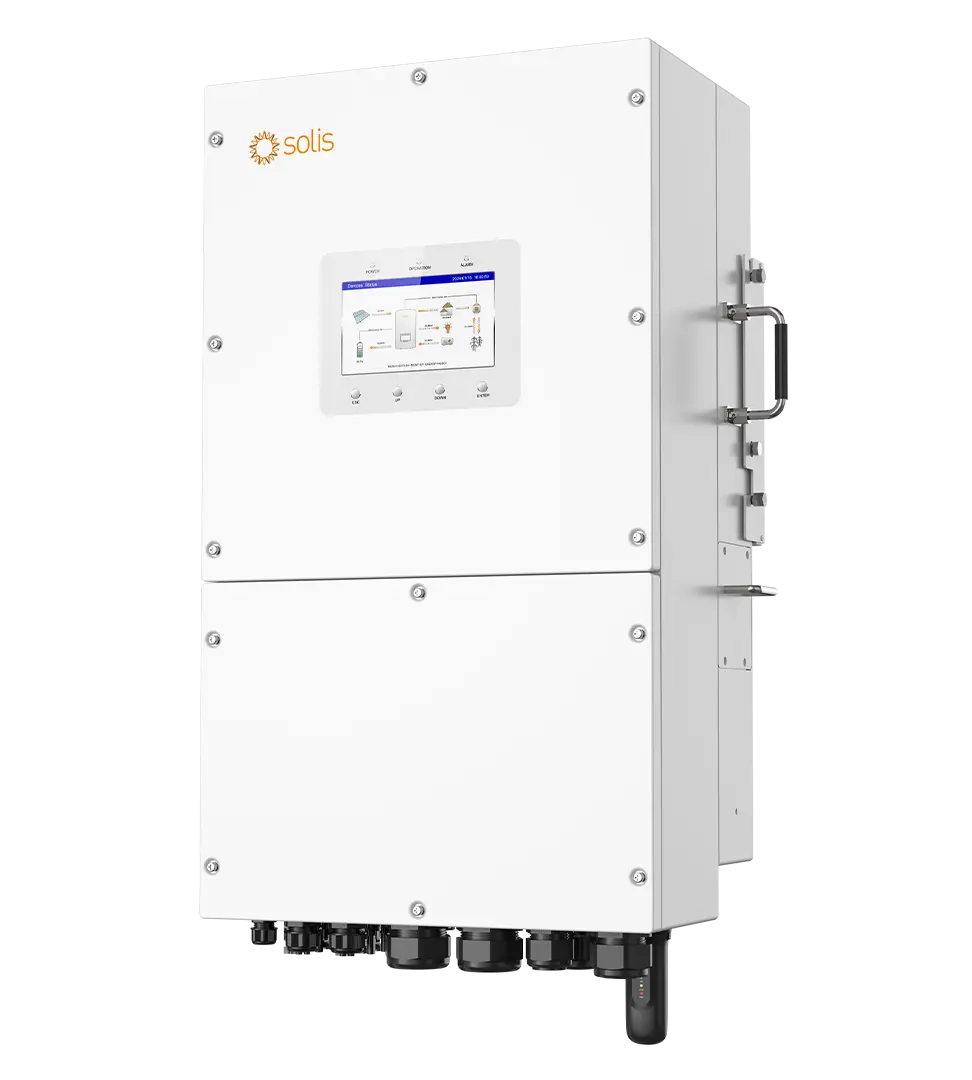
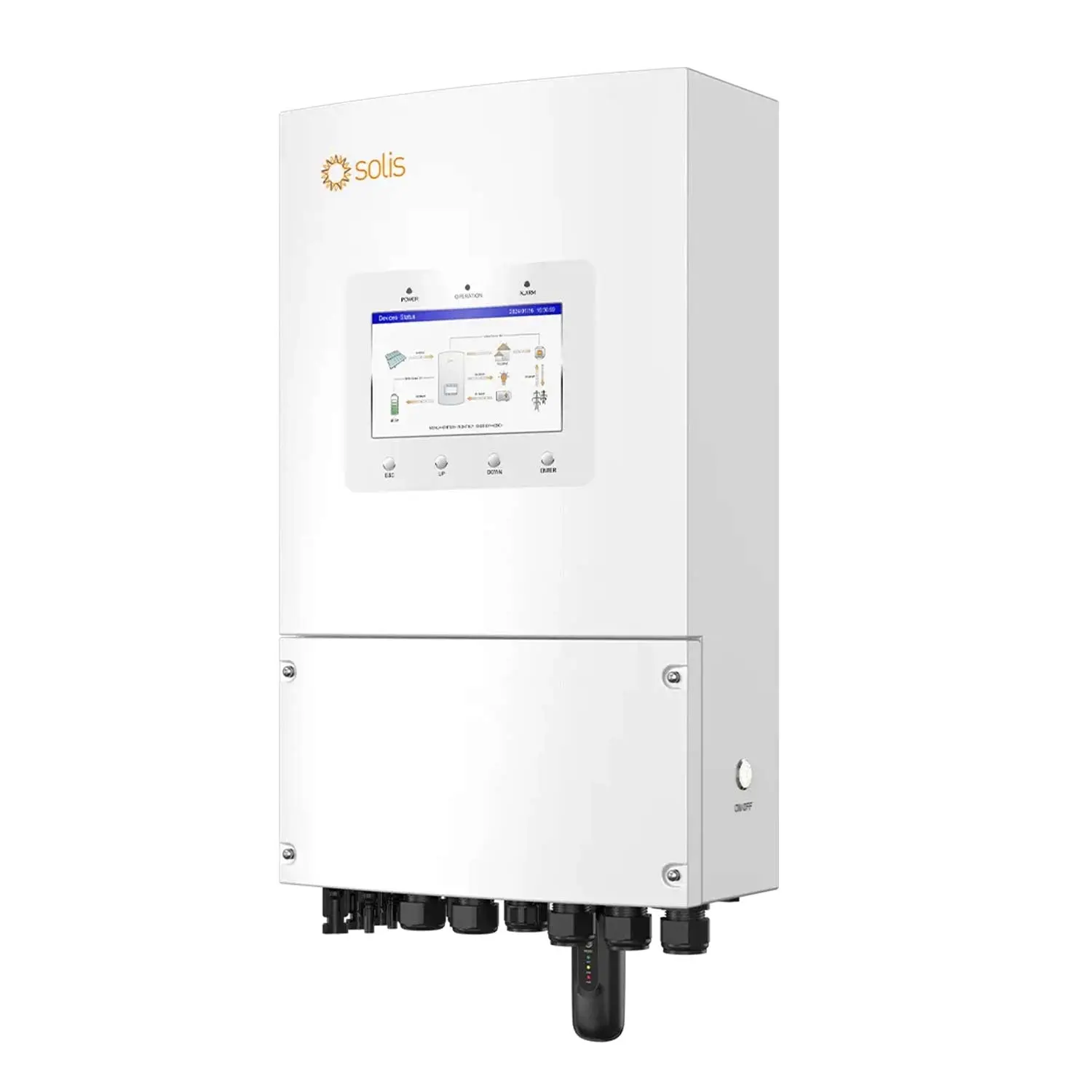
The Solis S6-EH1P5K-L-PLUS is a single phase hybrid inverter delivering 5000W from a 48V battery, built for homes and small commercial premises that want solar, storage and genuine uninterruptible backup from one unit.
Four characteristics define how it behaves on a Kenyan installation.
It starts generating at 90V and tracks from 90V. A low MPPT floor keeps short strings viable on small or awkward roofs and puts the inverter to work during the weak first hour after sunrise, which a higher floor device misses every day.
It permits a 10kW array against 5kW of output. A two to one ratio is deliberate oversizing, and it is what fills the production curve at the edges of the day and under cloud.
It transfers to backup in under 4 milliseconds. A mains cycle lasts 20 milliseconds, so this is a fifth of one cycle, faster than the hold up time of virtually any switched mode power supply. Computers, tills, recorders and medical equipment do not notice the grid failing.
Its 112A battery rating actually matches its output. Delivering 5kW requires roughly 98A at 51.2V and 114A at a deeply discharged 44V, so the battery bank is sized by the energy you want stored rather than forced large by current the inverter demands.
Complete Technical Specifications Matrix
Solar PV Input Parameters
| Parameter | Value |
|---|---|
| Recommended maximum PV array size | 10kW |
| Maximum usable PV input power | 8kW |
| Maximum input voltage | 500V |
| Rated voltage | 330V |
| Start-up voltage | 90V |
| MPPT voltage range | 90V to 435V |
| Maximum input current | 16A per tracker |
| Maximum short circuit current | 20A per tracker |
| MPP trackers and strings | 2 trackers, 2 strings |
Two separate PV figures apply here. The 10kW recommended array size is how much panel you may install. The 8kW usable input is how much the inverter converts at any instant. The gap is deliberate, because a 10kW array rarely produces 10kW once heat, dust, haze and panel angle are accounted for, and in Kenyan conditions high cell temperature alone costs ten percent or more against the standard test rating. Size toward the 10kW allowance rather than toward the 5kW output, because an array matched to the output leaves the inverter idle for most of the day.
String configurations, assuming 620W panels at roughly 42V operating and 50V open circuit:
| Panels in series | Operating voltage | Open circuit | Likely on a cold dawn | Two strings | Verdict |
|---|---|---|---|---|---|
| 4 x 620W | Around 168V | Around 200V | Around 220V | 4,960W | Works, suits a small roof |
| 6 x 620W | Around 252V | Around 300V | Around 330V | 7,440W | Comfortable |
| 8 x 620W | Around 336V | Around 400V | Around 440V | 9,920W | Best fit, near the 10kW allowance |
| 9 x 620W | Around 378V | Around 450V | Around 495V | 11,160W | At the ceiling, verify panel figures |
| 10 x 620W | Around 420V | Around 500V | Over 500V | 12,400W | Exceeds the limit when cold |
Eight panels per string across two strings is the configuration we specify for most installations. Current is never the constraint: a 620W panel draws around 14.8A at maximum power against a 16A tracker limit, which also means there is no headroom to parallel a second string onto the same tracker.
AC Output and Backup Power Capacities
| Parameter | Value |
|---|---|
| Rated output power | 5kW |
| Maximum apparent output power | 5kVA |
| Operation phase | Live, neutral and earth |
| Rated grid voltage | 220V or 230V |
| Rated grid frequency | 50Hz or 60Hz |
| Rated grid output current | 22.8A at 220V, 21.8A at 230V |
| Power factor | Above 0.99, adjustable 0.8 leading to 0.8 lagging |
| Current distortion | Under 2% |
| Grid input voltage range | 187V to 253V |
| Grid maximum input current | 32A |
| Grid frequency range | 45Hz to 55Hz, 55Hz to 65Hz |
| Backup rated output power | 5kW |
| Backup maximum apparent power | Twice rated power for 10 seconds |
| Backup switch time | Under 4ms |
| Backup rated output voltage | 220V or 230V, live, neutral and earth |
| Maximum AC passthrough current | 40A |
| Backup voltage distortion at linear load | Under 2% |
The 187V to 253V grid input window matters in Kenya, where supply droops during evening peak at the end of long distribution feeders. An inverter with a narrow acceptance range stops drawing from the grid during exactly those hours.
48V Battery Management and BMS Communication Specifications
| Parameter | Value |
|---|---|
| Battery type | Lithium ion or lead acid |
| Battery voltage range | 40V to 60V |
| Maximum charge and discharge power | 5kW |
| Maximum charge and discharge current | 112A |
| Battery ports and BMS ports | 1 and 1 |
| Communication protocols | CAN or RS485 |
| Charge and discharge scheduling | 6 programmable periods |
The 112A rating is matched to full output. On many larger inverters the battery current ceiling falls short of what the inverter can deliver, forcing a large bank purely to supply current. Here the figures line up: 5kW needs about 98A at 51.2V, 104A at 48V and 114A at 44V, and the 112A rating covers full output across essentially the whole usable discharge range. A single 51.2V lithium battery rated around 100A continuous supports close to full output, and two in parallel comfortably exceed it.
Always connect the BMS. Running the CAN or RS485 link lets the inverter read true state of charge, cell temperatures and the battery’s own current limits, rather than estimating from terminal voltage. At 112A, voltage is a poor proxy for anything, and the difference shows in both charging behaviour and battery lifespan.
Mechanical, Environmental and Efficiency Ratings
| Parameter | Value |
|---|---|
| Maximum efficiency | 96.2% |
| European weighted efficiency | 94.7% |
| Protection degree | IP66, indoor or outdoor |
| Operating temperature | -40C to +60C |
| Maximum altitude | 3000m |
| Dimensions | 335 x 560 x 253mm |
| Weight | 23kg |
| Topology | Transformerless |
| Parallel expansion | Up to 48kW |
The European weighted efficiency of 94.7% is the more realistic planning figure, because it accounts for performance across a range of operating loads rather than at the single best point, and an inverter spends most of its life at partial load.
The 3000m altitude rating covers every location in Kenya, including Eldoret, Kericho, Limuru, Nyahururu, Timau and Molo, which sit above the 2000m ceiling that limits some imported equipment. IP66 means fully dust tight and protected against powerful water jets, so an external wall is a legitimate mounting position. Shading that position is still worthwhile, since direct afternoon sun raises internal temperature and heat costs output.
Real-World Appliance Compatibility and System Load Limits
Rated output is 5000W continuous, with twice that available for ten seconds to start motors.
| Appliance | Typical draw | On this inverter |
|---|---|---|
| Whole house LED lighting | 30W to 80W | Yes |
| Router, television, laptops | 10W to 150W each | Yes |
| Fridge and chest freezer together | 200W to 400W running | Yes, surge well covered |
| Desktop computers and monitors | 200W to 400W | Yes |
| Washing machine, full cycle | 300W to 2000W | Yes |
| Rice cooker | 500W to 700W | Yes |
| Borehole pump, 1hp | 750W running, around 3000W starting | Yes, this is what the surge is for |
| Microwave | 800W to 1500W | Yes |
| Air conditioner, 1hp | Around 850W running | Yes |
| Clothes iron | 1000W to 2000W | Yes |
| Electric kettle | 1500W to 2200W | Yes |
| Single electric hotplate | 1000W to 2000W | Yes |
| Instant shower | 3000W to 5500W | Smaller units only, not alongside other heavy loads |
| Electric cooker with oven | 3000W to 8000W | Smaller models only |
| Several heating appliances at once | Above 5000W combined | No, this is the real ceiling |
In practical terms, this inverter runs a complete Kenyan household, cooking and water heating included, provided those heavier loads are taken in sequence rather than all at once. What decides whether 5kW fits a given home is not total daily consumption but the largest realistic combination of things running at the same moment. Where cooking, water heating and air conditioning might genuinely coincide, two units in parallel or a larger single inverter is the better specification.
Operational Modes and Smart Energy Management
On-Grid, Off-Grid and Self-Consumption Configurations
Self consumption is the default and the right mode for most Kenyan installations. Solar serves the load first, surplus charges the battery, and the grid covers whatever remains. It minimises what you buy without depending on any export arrangement.
Backup, or off grid operation, takes over automatically when the grid fails, supplying the backup output from battery and solar in under 4 milliseconds. The inverter also operates without a grid connection at all for genuinely off grid sites.
Grid charging allows the battery to be filled from mains within the 187V to 253V input window, which matters where outages are frequent and the windows of good supply between them are short.
Mode selection is configured at commissioning and changed in the app afterwards. The distinction worth understanding is that self consumption reduces your bill while backup protects against outages, and this unit does both from the same hardware.
Peak Shaving and Time-of-Use Programming
The inverter supports six separately configurable charge and discharge windows across the day, which is the mechanism behind both peak shaving and time of use operation.
Peak shaving means covering the hours of highest demand from battery and solar rather than from the grid, which reduces the maximum power drawn at the meter. On premises where tariff structure or a supply limit penalises high draw, this is the setting that pays.
Time of use programming means charging the battery during hours when supply is reliable or cheap, and reserving it for hours when outages are likely or consumption is highest. On a Kenyan site with predictable evening load shedding, scheduling a full charge beforehand converts an outage from a disruption into a non event.
Most installations are commissioned on default settings and never revisited. Spending twenty minutes matching these six windows to how the building actually uses power is among the cheapest performance gains available on any hybrid system, and it costs nothing in hardware.
Generator Integration and Automatic Signal Control
The inverter is generator compatible, which extends backup duration through outages longer than the battery alone can cover.
A generator connects to the AC input and is accepted within the same 187V to 253V window as the grid. Because the inverter charges from that input at up to 32A, a generator run does more than serve loads while it happens to be running: it can bulk charge the battery at the same time, so a short run buys hours of quiet operation afterwards.
Pairing generator operation with the scheduling windows above is where the value sits. Scheduling a deliberate charge to coincide with a generator run means fuel is converted into stored energy rather than merely into whatever is switched on at that moment.
Automatic generator start signalling depends on the generator having a compatible remote start input and on the control wiring being installed. Confirm your generator’s start capability before assuming automatic operation, since many smaller units sold in Kenya are manual start only.
Installation, Cable Sizing and Protection Guidelines
Recommended AC and DC Circuit Breakers and Cable Cross Sections
These figures are derived from the datasheet currents using the standard approach of rating the protective device at or above 1.25 times the continuous current, then taking the next standard size. They are a starting point for design, not a substitute for an installer calculating against your actual run lengths, ambient temperature and local regulations.
| Circuit | Design current | Protective device | Cable, short run |
|---|---|---|---|
| PV string, per tracker | 16A, 20A short circuit | 20A DC, rated above 500V | 4mm² double insulated solar cable |
| Battery to inverter | 112A, rising as voltage falls | 160A DC | 35mm² |
| AC output to loads | 22.8A | 32A, 2 pole, Type C | 6mm² |
| AC input from grid | 32A | 40A, 2 pole | 10mm² |
| Backup output passthrough | 40A | 50A, 2 pole | 10mm² |
Two details decide whether the protection actually works.
The DC voltage rating on PV breakers. A string of eight 620W panels sits near 440V open circuit on a cold morning. A breaker rated for 250V DC will not safely interrupt that, whatever its current rating says. Specify DC devices rated above 500V for this inverter.
Battery cable length. At 112A, every 0.01 ohm of circuit resistance costs more than a volt, and volts lost before the inverter are output you never see. Keep the battery run as short as the installation allows, ideally under two metres, use correctly crimped lugs, and torque the terminals to specification.
Combiner Box and Built-in Safety Protections
The inverter integrates a substantial protection set, which reduces what has to be built externally.
| Protection | Status |
|---|---|
| Integrated PV switch | Yes |
| DC reverse polarity protection | Yes |
| Surge protection | Yes |
| Output over current protection | Yes |
| Residual current detection | Yes |
| Insulation resistance monitoring | Yes |
| Anti islanding protection | Yes |
| Integrated AFCI 2.0 | Optional |
AFCI 2.0 is optional on this model, not standard. Arc fault detection identifies the arcing that develops at a loose or corroded DC connection before it starts a fire, and it is the protection most worth having on a roof array. Confirm whether the specific unit you are buying includes it.
An integrated PV switch does not remove the case for a combiner box on a larger array. Where strings run a long way from the inverter, a combiner box at the array end gives you a disconnection point at the roof, somewhere to mount DC surge protection close to where surges arrive, and a tidy transition into the main run. On a short two string installation feeding an inverter with its own switch, it is reasonable to omit it.
Internal surge protection handles transients, not strikes. The protection built into the inverter is designed for the voltage spikes that travel along a circuit, not for direct or nearby lightning energy. On sites in the Lake Victoria basin, the highlands and anywhere with frequent seasonal thunderstorm activity, external surge protection and proper earthing remain necessary alongside what the inverter provides.
Lithium Battery Compatibility, CAN Bus and RS485 Protocols
The inverter communicates with a battery over either CAN or RS485, and Solis maintains an approved battery list for the S6-EH1P(3-8)K-L-PLUS series running to well over a hundred brands. That breadth is a practical advantage: you are not locked into a single manufacturer’s storage, and a battery replacement years from now is a normal purchase rather than a specialist order.
Brands on the approved list that are realistically available in Kenya and across Africa include Pylontech, BYD, Dyness, Felicitysolar, Hubble, Freedom Won, LG Energy Solution, Vestwoods, Narada, Shoto, Oliter, Taico, BSLBATT, Soluna and Sunwoda.
Three things decide whether a given battery will work properly.
The exact model, not just the brand. Approval is granted per model and the list is revised as products change. A brand appearing somewhere on it does not mean every battery that brand sells is covered.
The communication protocol and pinout. Some batteries speak CAN, others RS485, and the cable pinout differs between manufacturers. Getting this right is what allows the inverter to read true state of charge, cell temperatures and the battery’s own current limits. Without it the inverter falls back to estimating from terminal voltage, which at 112A is an unreliable guide and shortens battery life.
Firmware and region. Some approvals apply to particular markets and specific inverter firmware versions.
Solis is explicit that pairing a non approved battery can damage equipment and void warranty cover, so this is worth settling before purchase rather than at commissioning. Bicity Solar verifies the pairing, supplies the correct communication cable and configures the protocol as part of installation.
Lead acid batteries are also supported. There is no BMS communication in that case, so the inverter charges on voltage alone, which makes correct charge parameter configuration considerably more important and is a further reason to have the system commissioned properly.
Monitoring, Configuration and Smart App Setup
Monitoring is through the SolisCloud platform, with a datalogger connecting the inverter to your network and the app giving remote visibility of solar generation, battery state of charge, household consumption and grid interaction.
What is worth doing at commissioning, beyond simply confirming the app connects:
Set the six charge and discharge windows to match the building rather than leaving defaults in place.
Verify the BMS link is actually communicating, not merely that the cable is plugged in. The app should display real battery data including cell level information. If it shows only a voltage derived estimate, the link is not working.
Confirm which circuits are on the backup output. The under 4ms switchover only benefits what is physically connected to those terminals, and this is decided by distribution board wiring rather than by any setting.
Record the baseline. Note what the system produces on a clear day shortly after commissioning. Without that figure, gradual underperformance from soiling, shading growth or a developing fault is very difficult to detect later.
Confirm with your supplier whether a datalogger is included with the unit you are buying or supplied separately, since this varies by distribution channel.
Certifications, Compliance and Grid Standards
The S6-EH1P5K-L-PLUS carries European CE marking, and the series holds G98 and G99 grid connection compliance along with MCS certification for the United Kingdom market. Those are demanding grid codes, and equipment engineered to pass them is built to a standard well above the minimum.
Built-in compliance features reflect that engineering. Anti islanding protection disconnects the inverter when the grid fails, so it cannot energise lines that someone may be working on. Residual current detection and insulation resistance monitoring run continuously. Adjustable power factor from 0.8 leading to 0.8 lagging, current distortion under 2% and voltage distortion under 2% at linear load mean the power it produces is clean enough for sensitive equipment.
For a Kenyan installation, two further pieces of documentation matter: Energy and Petroleum Regulatory Authority requirements where the system connects to the national grid, and the KEBS standards mark position for the consignment. Compliance documentation attaches to shipments rather than to model numbers, so Bicity Solar provides the paperwork for the specific unit you receive.
Installation is carried out by EPRA certified technicians to EPRA requirements, which is itself a condition of a compliant grid connected system in Kenya.
Package Contents
The inverter ships with its wall mounting bracket and fixings, DC connectors for the PV inputs, and the installation documentation.
Four items vary by supply channel and are worth confirming on any quotation, because assuming them is how an installation day stalls:
- WiFi datalogger. Required for SolisCloud monitoring and remote configuration. Sometimes bundled, sometimes a separate line item.
- Energy meter or current transformer. Needed for consumption monitoring and for peak shaving to work against real household demand rather than an estimate.
- Battery communication cable. The one most often missed. Pinouts differ between battery brands, so a cable that works with one manufacturer’s battery will not necessarily work with another’s, and a generic lead frequently will not work at all.
- Printed manual. Increasingly supplied as a download rather than in the box.
Bicity Solar Energy Suppliers confirms exactly what ships with your unit before you order, and supplies the correct battery communication cable, terminated for whichever battery you are pairing it with, as part of the package.
Warranty Terms, Local Technical Support and Registration
Solis is manufactured by Ginlong Technologies, a publicly listed company and one of the longer established inverter manufacturers. That matters for the practical question behind any warranty: whether the company will still be there, and still supporting this product, in year eight.
Warranty length for this model varies by region and supply channel, so Bicity Solar confirms the exact period and terms in writing on your invoice. Three things we establish for every inverter we supply:
What the cover includes. Parts, labour, and whether a replacement unit is issued while a failed one is assessed or the site waits.
Whether registration is required. Several manufacturers require an installation to be registered within a defined window for the full term to apply. An unregistered unit can fall back to a shorter standard period, and discovering that during a claim is expensive. We register installations where the manufacturer requires it.
Who handles a claim locally. A manufacturer warranty is only worth the local route to exercising it. We assess failed units, handle the claim on your behalf, and deal with the distributor directly so you are not shipping equipment abroad or negotiating with a factory.
Technical support runs beyond the warranty question. Commissioning settings, battery protocol configuration, firmware updates and fault diagnosis are all handled locally by EPRA certified technicians.
The question worth answering before buying any 5kW hybrid is whether 5kW covers your largest realistic combination of simultaneous loads, and how much roof you actually have to fill the 10kW allowance.
Send us what needs running at once, a rough idea of usable roof area, and the panels and battery you are considering, and we will confirm the string design against their real datasheet figures, verify battery compatibility and protocol, and tell you honestly whether 5kW is enough. For a full property assessment, start with the Solar Calculator. Costed proposals covering inverter, battery, array, protection and installation come back through My Quote.