Description
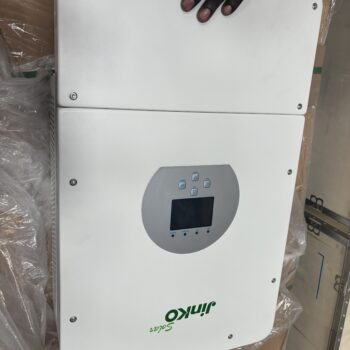
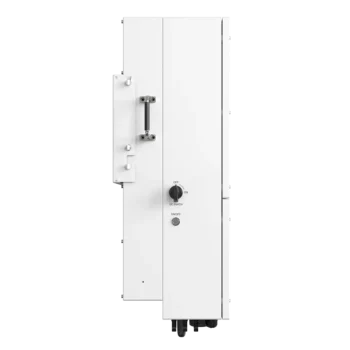
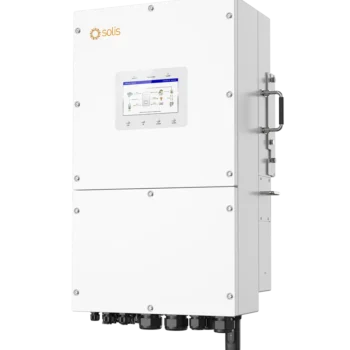
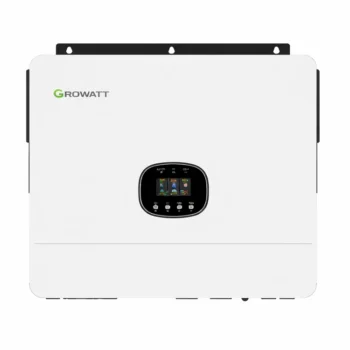
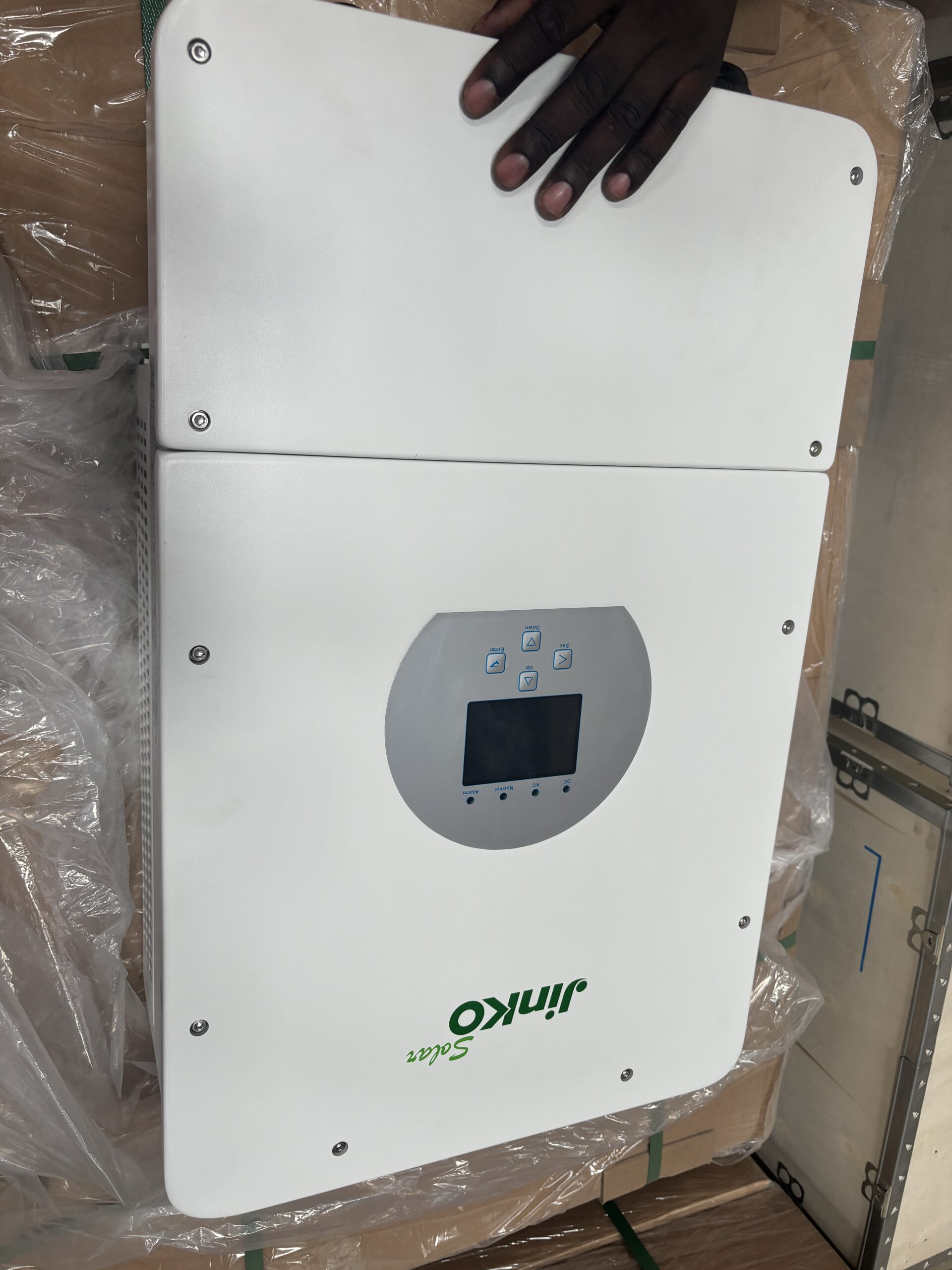
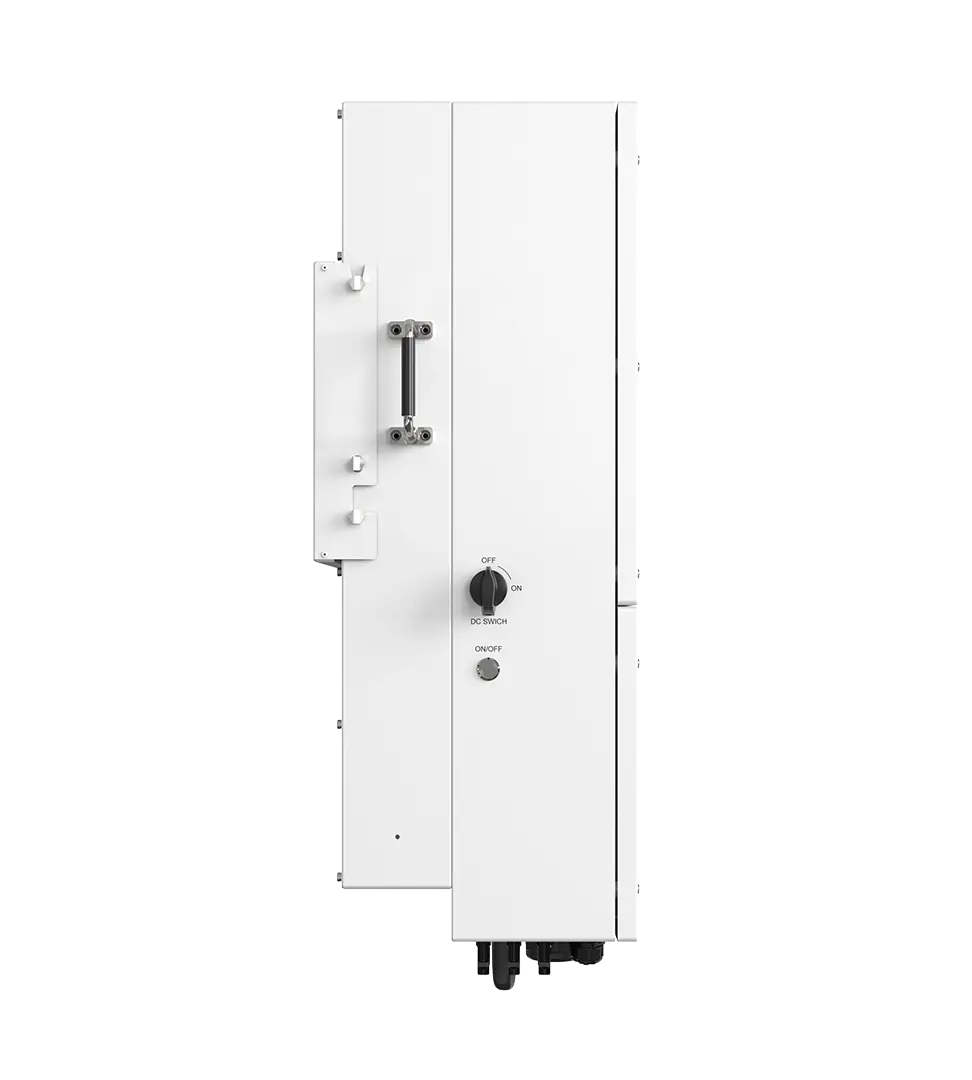
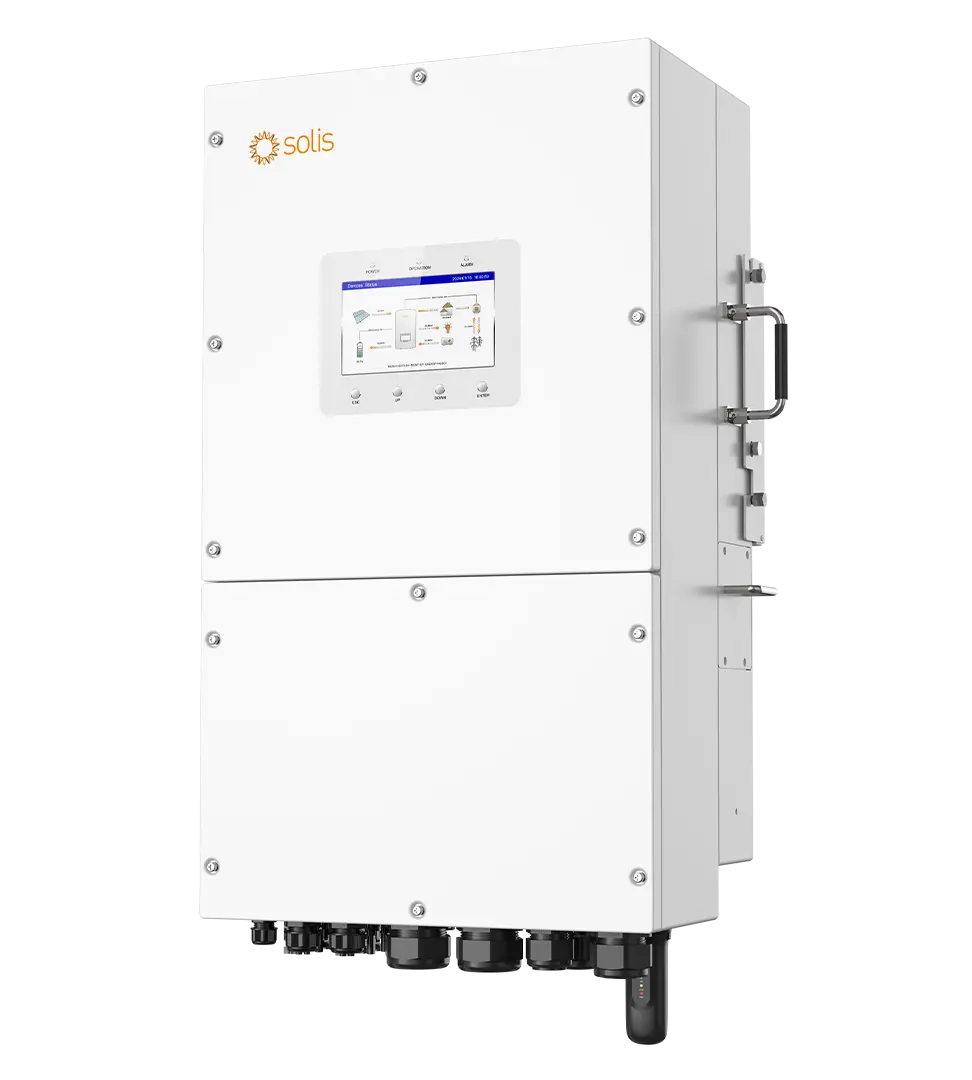
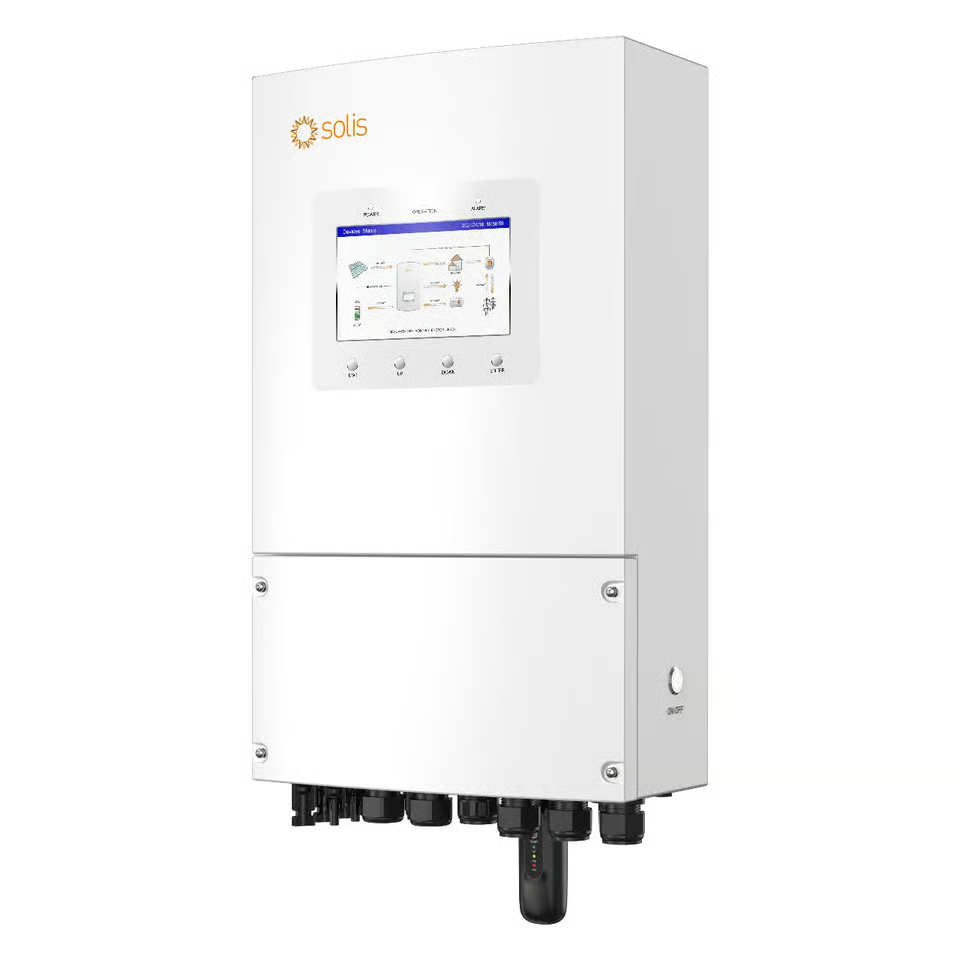
The Solis S7-EH1P6K02-NV-YD-L produces 6000W from a single phase and a 48V battery, carrying an array of up to 12kW. It is the newer of the two 6kW hybrids in the Solis range, and the differences between them are worth understanding before choosing.
The one that matters most is on the solar input.
Each string input accepts 21 amperes. The previous generation stops at 16. That gap decides which panels can be used, because module current has been climbing steadily while module voltage has stayed much the same. A high output panel bought today can easily operate near 18 amperes, which a 16 ampere input cannot accept at all.
Around that sit the other gains. Conversion reaches 97.0%, and the whole thing weighs 14.5kg in a notably shallower body, light enough for one person to lift onto a wall. Wireless monitoring is included rather than bought separately, and the altitude rating extends to 4000m.
It is not better in every respect, and the places where it is not are set out in section ten rather than left for you to discover.
Solis S7 6kW Hybrid Inverter Specifications, String Current and Installation
1. System Architecture and Configuration
Hybrid Energy Core
- 6kW rated output on one phase, at 220V or 230V
- Delivering 27.3 amperes on a 220V supply, 26.1 on a 230V one
- Double output for ten seconds, covering pump and compressor starting
- Hands over to backup inside 10 milliseconds
- Power factor above 0.99, with current distortion under 3%
- Runs with an existing grid tied array for export control or off grid use
Solar Charging System
- Two trackers, one string on each
- 21 amperes accepted per input, with 24 amperes of short circuit headroom
- A 12kW array allowance against a 9.6kW conversion ceiling
- Input rated to 500V, tracking from 90V to 435V, designed around 330V
- Tracking begins at 100V
- Room for module currents that older inputs cannot accept
Battery Integration
- Any bank between 40V and 60V, lithium or lead acid
- 135 amperes of charge and discharge through a single port
- Live pack figures over CAN or RS485
- A backup level you set yourself, reserved for interruptions
- Load management that keeps the important circuits running longest
Protection and Cooling
- IP65 enclosure, sealed against dust and protected against water jets
- Redundant fan cooling, typically under 50 dB(A)
- Integrated PV switch on the array input
- Continuous insulation and earth leakage monitoring
- Polarity protection on the array, plus Type II arrest on the DC and AC sides
- Anti islanding and output overcurrent protection
- Class I protection, with category III applied at the mains, backup and generator connections
- Arc fault detection can be added as an option
2. Technical Specifications
| Parameter | Specification |
|---|---|
| Rated output power | 6kW |
| Overload capability | Twice rated power for 10 seconds |
| Operation phase | Single phase, live neutral and earth |
| Rated grid voltage | 220V or 230V |
| Rated grid frequency | 50Hz or 60Hz |
| Rated output current | 27.3A at 220V, 26.1A at 230V |
| Power factor | Above 0.99, adjustable 0.8 leading to 0.8 lagging |
| Current distortion | Under 3% |
| Grid input range | 187V to 253V |
| Maximum grid input current | 40A |
| Maximum AC passthrough | 40A |
| Backup output | 6kW, twice rated for 10 seconds |
| Backup switch time | Under 10ms |
| Backup voltage distortion | Under 3% at linear load |
| Generator maximum input | 6kW, 27.3A at 220V |
| Battery type | Lithium ion or lead acid |
| Battery voltage range | 40V to 60V |
| Maximum charge and discharge current | 135A |
| Battery and BMS ports | 1 of each |
| Battery communication | CAN or RS485 |
| MPPT quantity | 2 trackers, one string each |
| Recommended maximum array | 12kW |
| Maximum usable PV input power | 9.6kW |
| Maximum PV voltage | 500V DC |
| Rated PV voltage | 330V |
| Start-up voltage | 100V |
| MPPT voltage range | 90V to 435V |
| Maximum input current | 21A per input |
| Maximum short circuit current | 24A per input |
| Maximum efficiency | 97.0% |
| European weighted efficiency | 96.5% |
| Battery charged from solar or grid | Up to 96.0% |
| Battery discharge efficiency | Up to 96.0% |
| Self consumption | Under 20W |
| Topology | Transformerless |
| Cooling and noise | Intelligent redundant fan cooling, under 50 dB(A) |
| Protection rating | IP65 |
| Protection class and category | Class I, category II on PV and battery, III on mains, backup and generator |
| Operating temperature | -25C to +60C |
| Maximum altitude | 4000m |
| Dimensions and weight | 354 x 454 x 174mm, 14.5kg |
| Connections | MC4 on the array, terminal block for battery and AC |
| Display | 4.3 inch touchscreen with Bluetooth and app |
| Communication | WiFi, LAN and Bluetooth included, with 4G available |
| Parallel operation | Up to 6 units |
3. Key Features
- 21 amperes per string, accepting module currents that older inputs cannot
- 97.0% peak and 96.5% weighted conversion
- Under 20W drawn when the array is idle, which over a year is a figure worth having
- 14.5kg, so a single installer can hang it without lifting gear
- A compact 354 by 454 by 174mm body that fits where larger units do not
- A generator port of its own, wired several ways, starting and stopping by itself
- 4.3 inch touchscreen, sized to suit a compact body
- WiFi, LAN and Bluetooth all included as standard
- Works alongside an existing grid tied array for export control or off grid running
- A battery reserve level you choose, plus load prioritising for critical circuits
- Any 40V to 60V bank accepted, lithium or lead acid
- Six units in parallel as demand grows
- Matched to your panels and installed by Bicity Solar
4. Applications and Use Cases
- Family homes: cooking, hot water, pumping and electronics together
- New installations using current generation panels: where module current rules out older inputs
- Shops and small offices: refrigeration, lighting, tills and computers
- Salons and small workshops: dryers, compressors and hand tools
- Rental and guest units: where a compact, quiet unit matters
- Sites with a small generator: the set brought under the inverter’s control
- Retrofits: added behind an existing grid tied array
5. Installation and Engineering Notes
Devices start a quarter above the continuous current of each circuit and round up to a manufactured size. Run length, bunching and ambient heat move the final choice.
| Circuit | Design current | Device | Cable, short run |
|---|---|---|---|
| PV, per string | 21A | 32A DC, rated beyond 500V | 4mm² solar cable |
| Battery | 135A | 200A DC | 50mm² |
| AC output | 27.3A | 40A, 2 pole, Type C | 6mm² |
| Grid input and passthrough | 40A | 63A, 2 pole | 16mm² |
String design and why the panel choice comes first
There is one string on each tracker, so the array is built as two strings and each must sit inside both the current limit and the voltage window.
| 620W modules per string | Operating voltage | Cold dawn, open circuit | Two string array | Verdict |
|---|---|---|---|---|
| 6 | Around 252V | Around 330V | 7.4kW | Comfortable |
| 7 | Around 294V | Around 385V | 8.7kW | Comfortable |
| 8 | Around 336V | Around 440V | 9.9kW | Fills the conversion ceiling |
| 9 | Around 378V | Around 495V | 11.2kW | Too near the 500V limit |
Eight modules per string is the practical maximum on a 620W panel, which puts a two string array at about 9.9kW and meets the 9.6kW conversion ceiling neatly. The 12kW array allowance is reached with higher output modules rather than longer strings, and that is precisely where the 21 ampere input earns its place: a panel delivering more watts usually does so through more current, which an older 16 ampere input would refuse.
- Check the operating and short circuit current of the panel being bought against the 21 and 24 ampere limits
- Take the open circuit reading on a cold morning and leave room beneath 500V
- Array protection needs a 500V class rating; 250V devices will not do
- All 135 amperes pass through one port, so lugs want the proper die and terminals the stated torque
- Keep the battery cable short, two metres or less if the layout permits
- At 14.5kg one person can mount it, though a second pair of hands makes alignment easier
- Give the enclosure room to breathe, as a fan moves the heat
- An integrated PV switch is fitted, so no separate array isolator is needed at the unit
- Storm prone districts still need external arrestors and a properly made earth
- Where a generator is present, run the control wiring at installation rather than returning for it
- Installed and signed off by licensed technicians
6. Care, Maintenance and Operations
- Keep the fan intake clear, since a compact enclosure has less thermal mass to fall back on
- Retighten the battery terminals annually at this current
- Confirm the touchscreen still reports live pack data rather than a voltage estimate
- Compare monthly generation against the figure taken at handover
- Wash the array once the dry months have finished
- Keep firmware up to date as releases appear
- Revisit the reserve level if the pattern of interruptions changes
- Check the generator control wiring and start settings once a year
7. Do’s and Don’ts
Do
- Choose the panel and the inverter together, checking module current against the 21 ampere input
- Build two strings of six to eight 620W modules
- Specify a battery that genuinely sustains 135 amperes
- Connect the BMS so the inverter reads the pack rather than guessing
- Mount it somewhere with airflow and away from bedrooms
- Run generator control wiring during installation
- Write out the protected circuit list at handover
Don’t
- Buy panels first and discover the current afterwards
- Run nine 620W modules in a string, which approaches 500V on a cold morning
- Fit 250V DC protection to a 440V array
- Assume a single 100 ampere battery will support full output
- Treat IP65 as equivalent to a fully pressure sealed enclosure
- Expect silence, because this model is fan cooled
- Expect it to be silent, since the older 6kW is the naturally cooled one
8. Compatibility
- Any 40V to 60V battery, lithium or lead acid, over CAN or RS485
- Solar arrays up to 12kW on two strings, with 9.6kW converted at any instant
- Current generation modules operating up to 21 amperes
- Generator sets up to 6kW, with automatic control
- An existing grid tied array, for export control or off grid operation
- Energy meters and current transformers for demand management
- SolisCloud over WiFi, LAN or Bluetooth, with 4G available
- Approved packs held locally include Pylontech, Hubble, Dyness, Vestwoods and Felicitysolar
Battery approval is granted per model and per firmware version, and communication pinouts vary between manufacturers. We check the pairing and make up the lead before delivery.
9. Performance Table
| Load | Estimated backup runtime on a 15kWh lithium bank |
|---|---|
| 500W | Around 26 hours |
| 1kW | Around 13 hours |
| 2kW | Around 6.5 hours |
| 4kW | Around 3.2 hours |
| 6kW | Around 2.1 hours |
Based on 13.5kWh available from a 15kWh bank at 90% depth, after conversion losses. Daylight extends every line. Producing 6kW calls for about 117 amperes from a bank at rest, comfortably inside the 135 ampere limit, so these figures hold through the discharge.
10. How It Compares With the Previous 6kW
Both units produce 6kW from a 48V bank and both accept a 12kW array. Choosing between them comes down to a handful of real differences, and three of them favour the older model.
| Consideration | This model | The earlier 6kW |
|---|---|---|
| Current per string | 21A | 16A |
| Short circuit headroom | 24A | 20A |
| Peak efficiency | 97.0% | 96.2% |
| Weighted efficiency | 96.5% | 96.1% |
| Weight | 14.5kg | 23kg |
| Footprint | 354 x 454 x 174mm | 335 x 560 x 253mm |
| Altitude | 4000m | 3000m |
| Connectivity | WiFi, LAN and Bluetooth included | RS485 and CAN, wireless optional |
| Screen | 4.3 inch touchscreen | 7 inch touchscreen |
| Enclosure | IP65 | IP66 |
| Battery stage | Transformerless | Galvanically isolated |
| Cooling | Fan, under 50 dB(A) | Natural, completely silent |
| Switchover | Under 10ms | Under 10ms |
| Generator input | Dedicated, 6kW | Dedicated, 6kW |
| Battery current | 135A | 135A |
| Array allowance | 12kW, 9.6kW usable | 12kW, 9.6kW usable |
Four rows at the bottom of that table are identical. Both transfer within 10 milliseconds, both take a dedicated 6kW generator input, both draw 135 amperes from the battery and both carry the same array. So the choice is not about capability in those areas.
Choose this one when the modules you want carry high operating current, which is the decisive difference and rules the older unit out entirely above 16 amperes. Choose it too where the lighter, shallower body helps, where wireless monitoring should be included rather than added, or where the site sits above 3000m.
Choose the earlier one when the inverter goes somewhere people are, because natural cooling makes it completely silent and there is no intake to collect dust. Its sealing is a step higher at IP66, its screen is larger, and its battery stage is galvanically isolated rather than transformerless. On efficiency the gap is narrower than it first appears: four tenths of a point on the weighted figure, not the margin the peak numbers suggest.
11. Mini FAQ
Why does 21 amperes matter?
Because module current has been rising while module voltage has not. A high output panel today can operate near 18 amperes, which a 16 ampere input simply cannot accept.
How many panels can it take?
Up to 12kW of array on two strings, with 9.6kW converted at any instant. Eight 620W modules per string is the practical maximum, giving about 9.9kW.
Can it give full output from the battery?
Yes. Producing 6kW needs about 117 amperes from a bank at rest, against a 135 ampere rating.
How fast does it switch?
Under 10 milliseconds, half a mains cycle, which carries household and office equipment through without interruption. The earlier 6kW transfers in the same time.
Is it noisy?
It is fan cooled at under 50 dB(A), which is quiet but not silent. A utility area suits it better than a bedroom wall.
Can one person install it?
The lift, yes, at 14.5kg. The electrical work still belongs to a licensed technician.
Does it work with a generator?
Yes, through a dedicated input taking the full 6kW, with automatic control and several connection methods.
What battery suits it?
Any 40V to 60V bank, lithium or lead acid, able to sustain 135 amperes.
12. Why Buy From Bicity Solar
- Panels and inverter matched on current, not just on wattage
- Specifications given with their qualifications rather than only the headline
- Battery chosen on sustained current so the rating is reachable in an outage
- String lengths worked against the 500V ceiling at dawn, not at noon
- Generator control wiring run at installation rather than on a return visit
- Authentic equipment with documentation matched to the unit delivered
- Installed and signed off by licensed technicians
- Manufacturer registration filed where it affects the warranty term
- Claims and distributor correspondence handled by us
- Delivery countrywide, with parts and support afterwards
If you have not yet bought panels, choose them at the same time as the inverter. Module current now decides compatibility more often than module wattage does.
Send us the panel you are considering, or the roof dimensions if you have not chosen one, together with your heaviest simultaneous load. We will confirm the module works within 21 amperes, set the two strings against the 500V ceiling, and size a bank that holds 135 amperes. Try the figures in our Solar Calculator, or send the details to My Quote for a costed proposal.