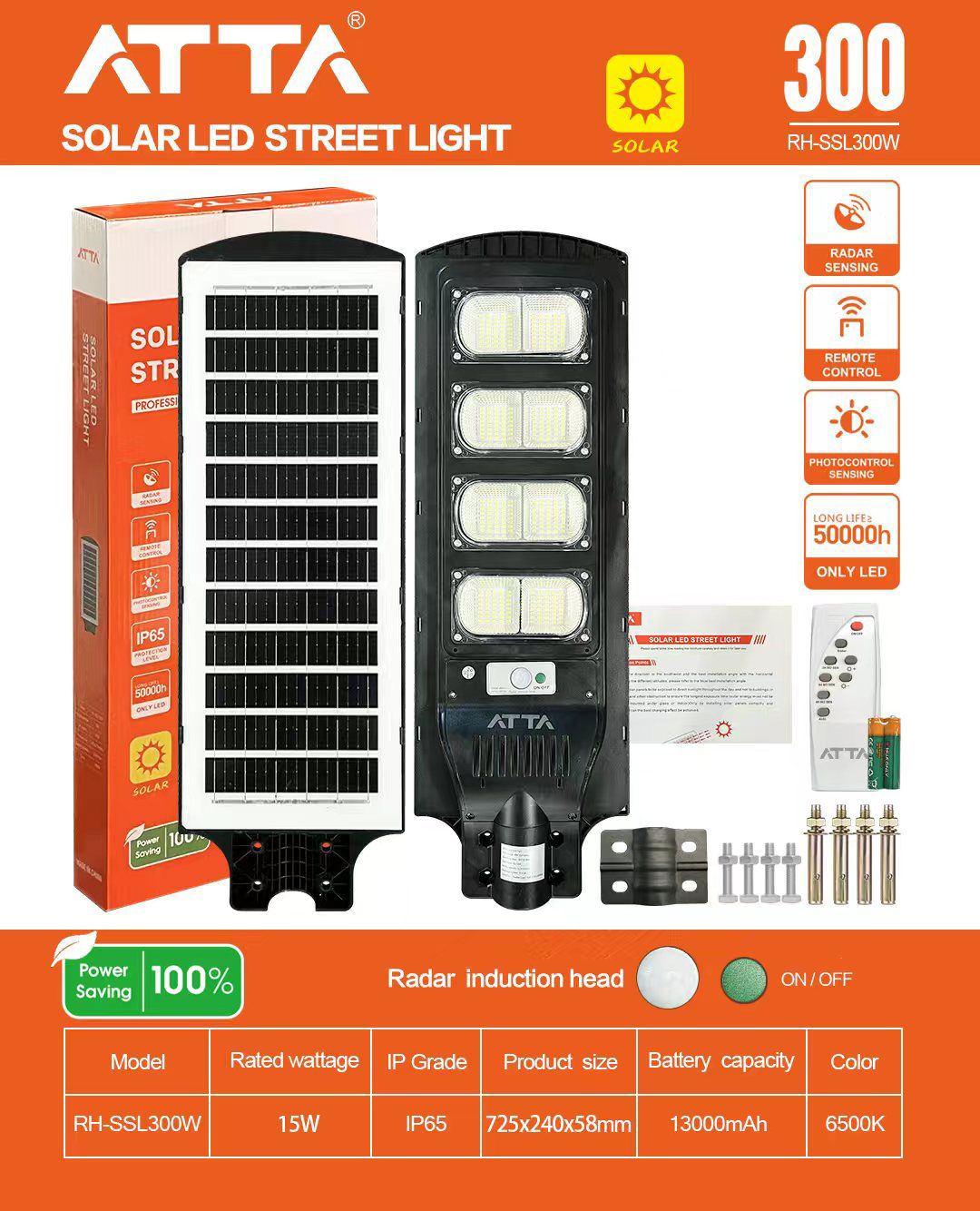
Description
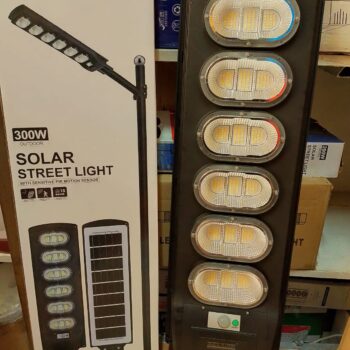
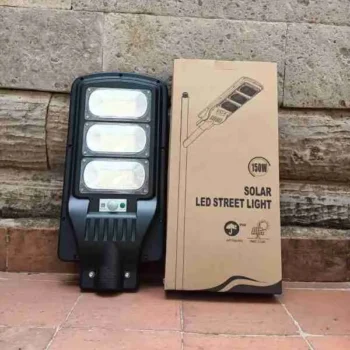
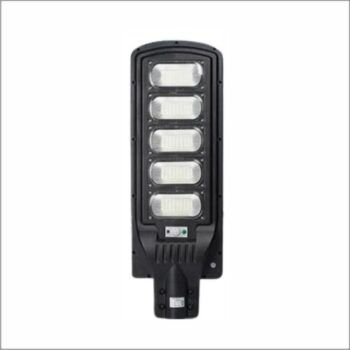
ATTA 300W Solar LED Street Light: RH-SSL300W All-in-One Solar Security Lighting for Kenya
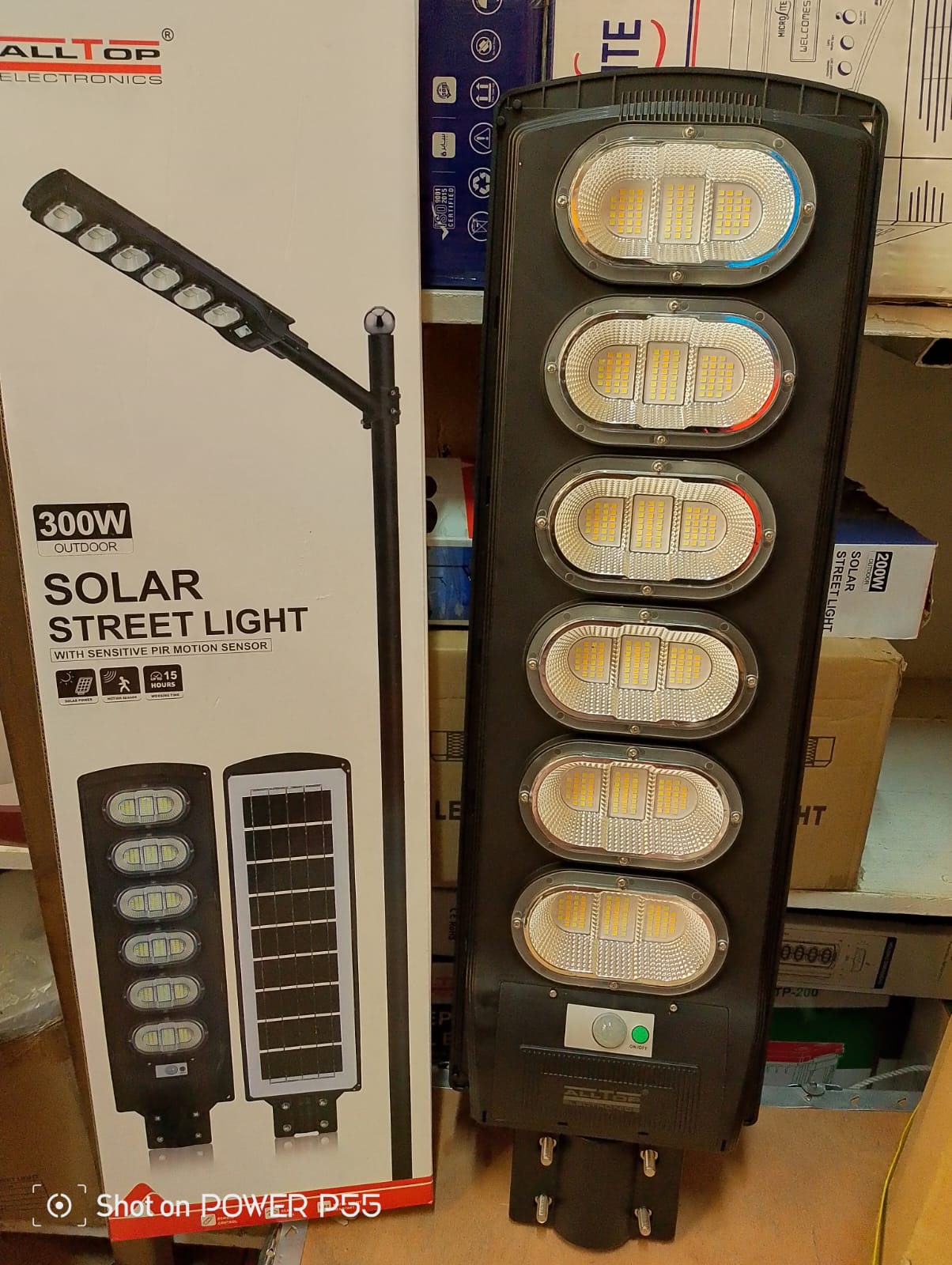
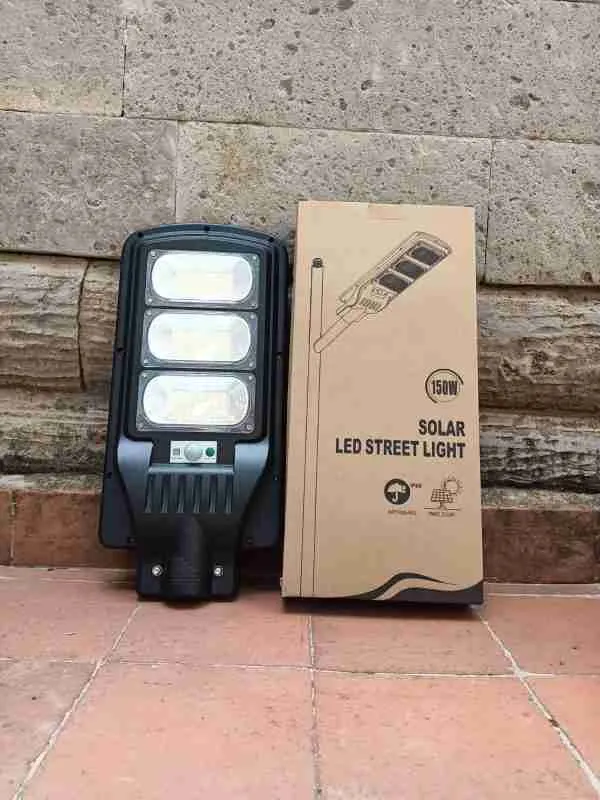
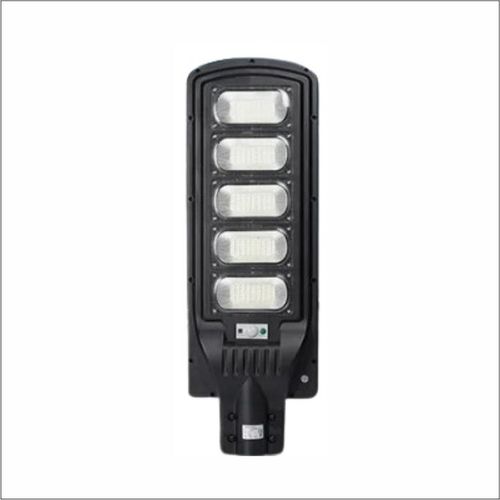
Most product listings for solar street lights in the Kenyan market advertise wattage numbers that don’t match the actual power consumption of the LED chips inside. The ATTA 300W Solar LED Street Light, model RH-SSL300W, is no exception to this industry convention, but the honest technical position deserves upfront disclosure: the “300W” designation printed on the packaging refers to a category label used across the Chinese all-in-one solar street light industry to indicate the illumination class rather than the actual LED power draw, which the same packaging specification table lists as 15W. Kenyan installer references for this product include ATTA solar street light, the ATTA 300W solar security light, the RH-SSL300W, the ATTA outdoor solar lamp, and the ATTA all-in-one solar street light.
The reason this disclosure matters for buyers is that the 15W actual LED consumption combined with the 13,000 mAh integrated battery capacity produces a specific operational envelope that determines whether the fixture will meet a particular installation’s lighting requirements. A 15W LED delivering equivalent brightness to what older mains-electric street lights produced at 100W-150W represents genuine progress in lighting efficiency, but understanding what the fixture will actually do at your specific installation site requires clarity on the underlying specifications rather than accepting the “300W” marketing number at face value.
Within Bicity Solar’s product philosophy of honest technical disclosure and buyer education, the ATTA RH-SSL300W earns its place in the catalog as a competitively-priced all-in-one solar security lighting solution appropriate for specific Kenyan use cases where the integrated design, motion-activated dimming, and dusk-to-dawn automation align with the buyer’s actual lighting requirements. Buyers who understand the operational envelope and specify the fixture for appropriate applications find the ATTA RH-SSL300W delivers reliable outdoor security lighting at a fraction of the cost of professional-grade commercial solar street lights while eliminating mains electricity costs entirely.
Understanding what “300W solar street light” actually means in the Kenyan market
Every all-in-one solar street light widely sold across the Kenyan retail landscape uses wattage designations that don’t correspond directly to LED power consumption. Chinese manufacturers established this convention through the 2010s and 2020s as an industry shorthand for illumination category, and it has propagated through every retail channel from the large online marketplace listings through to physical retail shops in Nairobi CBD, Mombasa, Kisumu, and other commercial centres. When a Kenyan buyer searches for “300W solar street light” they are typically looking for a fixture in the mid-tier all-in-one category rather than literally a 300W-consuming LED assembly.
The convention broadly works as follows across the Kenyan solar street light market: 60W to 100W designations indicate the smallest all-in-one fixtures with 5-10W actual LED consumption, appropriate for small residential compound entrances and garden lighting; 200W to 300W designations indicate mid-tier fixtures with 15-25W actual LED consumption, appropriate for residential compound security lighting, small commercial premises, and typical driveway illumination; 500W to 1000W designations indicate larger all-in-one fixtures with 40-80W actual LED consumption, appropriate for larger commercial premises, road-side security lighting, and area illumination.
The ATTA RH-SSL300W sits in the mid-tier at 15W actual consumption within the “300W” category, matching typical Kenyan residential compound security lighting requirements and small commercial premises security applications. Buyers seeking genuine 300W-equivalent brightness to older mains-electric high-pressure sodium or metal halide street lights should look at commercial-grade solar street lights with 40-80W LED consumption and separate solar panel plus battery components, which sit at substantially higher price points and require dedicated pole mounting infrastructure.
The all-in-one design philosophy and where it works
All-in-one solar street lights combine the solar photovoltaic panel, LED lighting module, rechargeable battery pack, electronic control circuitry, and sensor systems into a single enclosure. This design approach delivers three practical advantages that matter for Kenyan buyers: installation simplicity because no wiring between separate components is required beyond mounting the single unit to a wall or pole; cost economy because the manufacturer packages all components together rather than distributing them across separate parts that would each carry separate assembly and packaging costs; and weatherproofing consistency because the entire electrical assembly sits inside one IP65-rated enclosure rather than requiring weatherproof connections between separate components.
The trade-off with all-in-one design is that the solar panel size is physically constrained by the fixture form factor, and the battery capacity is limited by what fits within the enclosure. The ATTA RH-SSL300W measures 725 × 240 × 58 mm which accommodates a solar panel of approximately 150 square centimetres surface area and a 13,000 mAh battery pack. These are modest specifications appropriate to the 15W LED consumption but insufficient for higher-power LED assemblies that would exceed both the solar charging capacity and the battery storage capacity during Kenyan overnight operation.
For applications where the all-in-one form factor matches the lighting requirement, this design approach is genuinely appropriate. For applications requiring higher continuous brightness, longer nightly operation without motion-triggered dimming, or larger area coverage, separate solar panel and battery configurations with commercial-grade LED heads deliver the correct capability at correspondingly higher acquisition cost.
How the radar sensor and photocontrol actually work together
Two automated control features shape how the ATTA RH-SSL300W operates through a typical Kenyan night, and understanding their interaction helps buyers set correct expectations for the fixture behaviour.
The photocontrol sensor is the daily on/off switch. Built into the fixture underside, this small photoelectric sensor measures ambient light levels continuously through the day. At sunset when ambient light drops below the internal trigger threshold (typically around dusk when useful daylight has faded), the sensor activates the fixture. At sunrise when ambient light rises above the trigger threshold, the sensor deactivates the fixture. This dusk-to-dawn automation eliminates the need for manual switching and ensures the fixture activates reliably every night without requiring buyer intervention.
The radar sensor is the brightness control during operational hours. Once the photocontrol has activated the fixture at sunset, the radar sensor takes over managing the LED output. In the default operating mode, the LED runs at reduced brightness (typically 20% to 40% output) when no motion is detected within the radar sensing range, providing enough ambient lighting for the area to remain lit without consuming the full 15W of LED power continuously. When the radar sensor detects motion (a person walking, a vehicle approaching, an animal moving through the sensing area), the LED brightens to full output (100% at 15W) for a preset duration, typically 20-60 seconds depending on the mode setting. After the motion timeout elapses without further motion detection, the LED returns to the reduced-brightness idle state.
This motion-plus-dimming operation is why the 13,000 mAh battery capacity delivers a full night of operation from the modest energy storage. At sustained 15W full-brightness output, the raw battery capacity would deliver only 3-5 hours of operation depending on the battery voltage configuration. With smart dimming reducing average consumption to 3-5W across the night and only spiking to 15W during motion events, the effective nightly operation extends to 10-12 hours which comfortably covers Kenyan dusk-to-dawn hours across all seasons.
Kenyan installation scenarios where the ATTA RH-SSL300W fits well
- Residential compound gate and driveway lighting: Single-unit installation at the main compound gate provides motion-triggered full-brightness illumination when family members, visitors, or vehicles arrive at the gate, while maintaining ambient dimmed lighting through the rest of the night for security visibility. The 6500K daylight colour temperature enhances CCTV camera performance where household security cameras are installed alongside the light.
- Perimeter security lighting along compound walls and fences: Multiple-unit deployment along boundary walls or perimeter fences at 8-15 metre spacing provides overlapping coverage of the property perimeter. Each unit operates independently through its own photocontrol and radar sensor, brightening in the specific zone where motion is detected while adjacent units remain in dimmed idle state.
- Farm and homestead entrance lighting: Rural and peri-urban installations where mains electricity is either unavailable or subject to frequent grid outages. The solar operation eliminates dependency on the national grid and provides consistent nightly lighting through the year.
- Small commercial premises security lighting: Small retail shops, kiosks, professional service premises, and similar commercial installations where 24-hour security lighting matters but where commercial-grade solar street light budgets exceed the operational requirement.
- Church, mosque, and religious institution compound lighting: Religious facility installations where evening service parking areas, entrance paths, and boundary security lighting benefit from motion-activated dusk-to-dawn illumination without ongoing mains electricity costs.
- School and educational institution perimeter lighting: Primary schools, secondary schools, and vocational training institutions where boundary security lighting supports both night-time security and any evening activities on the school compound.
- Livestock enclosure and agricultural facility lighting: Dairy operations, poultry facilities, cattle enclosures, and similar agricultural installations where livestock monitoring benefits from area lighting during night-time and where motion-triggered brightening provides visual alerts to any activity near the enclosure.
- Rural community lighting projects: Community-organised installations at public gathering points, water collection points, market areas, and similar communal spaces where solar operation eliminates the need for grid connection and where the motion-triggered operation provides area lighting during the hours of actual use.
- Coastal residential and holiday property installations: Properties at Diani, Watamu, Kilifi, Malindi, Lamu, and equivalent coastal locations where the IP65 weather protection handles the humid marine environment and where intermittent property occupation makes solar operation more practical than mains-electric fixtures requiring standby power consumption.
Applications where the ATTA RH-SSL300W is not the right fit
Buyers requiring high-intensity area lighting at commercial or industrial scale should not specify all-in-one solar street lights regardless of manufacturer. Large parking areas, warehouse compounds, industrial facility perimeters, and similar commercial installations need commercial-grade solar street lights with 40-80W LED heads, separately-sized solar panels (typically 100W to 200W modules), and separate battery banks (typically 12V or 24V lithium banks at 100Ah or higher). The ATTA RH-SSL300W’s 15W actual LED consumption cannot deliver the equivalent brightness these commercial applications require, regardless of what the “300W” packaging designation suggests.
Buyers requiring guaranteed sustained brightness through the full night without motion-triggered dimming should also look at commercial-grade alternatives. The all-in-one design achieves its nightly operation partly through the smart dimming behaviour that reduces LED output during idle periods. Applications requiring continuous full-brightness through the night (some agricultural monitoring applications, specific security compliance requirements, applications where dimmed lighting would compromise the fixture’s purpose) cannot use the ATTA RH-SSL300W operational profile effectively.
Installations at mounting heights exceeding 5-6 metres benefit from purpose-designed commercial pole lights rather than all-in-one fixtures. The ATTA RH-SSL300W’s beam angle and brightness profile are optimised for the typical 3-5 metre residential and small commercial mounting height range; higher mounting positions distribute the fixture’s brightness across a larger area with correspondingly reduced illumination density on any given point.
Two very different products both called “300W” in the Bicity catalog
Bicity Solar stocks two outdoor lighting products carrying a 300W label, and they are not variants of each other. Buyers who order the wrong one end up with a fixture that cannot do the job they bought it for, so the distinction is worth setting out plainly.
| Point of difference | ATTA RH-SSL300W (this product) | 300W LED Solar Flood Light |
|---|---|---|
| What the 300W refers to | Category label; LED draws 15W | Actual electrical draw of the fixture |
| Light output class | Roughly 2,000 to 2,400 lumens | Tens of thousands of lumens |
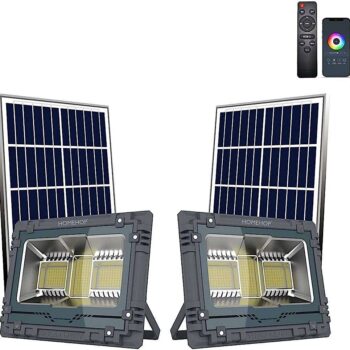
| Power source | Self-contained; panel and battery built in | Requires a separately sized solar system with its own panels, battery bank, and controller |
| Housing | Moulded polymer, all-in-one enclosure | Cast aluminium industrial housing with heat sink fins |
| Installation | Four expansion bolts, no wiring | Wired DC installation by a qualified electrician |
| Typical setting | Compound gate, driveway, boundary wall, farm entrance | Factory yard, billboard, sports area, large commercial compound |
| Brightness behaviour | Dims when idle, brightens on radar trigger | Sustained output for the full operating period |
If the requirement is security lighting over a compound gate, a driveway, or a boundary wall, and the appeal is that nothing needs wiring, the ATTA RH-SSL300W on this page is the correct product. If the requirement is genuine high-intensity illumination across a factory yard, a billboard face, a sports area, or a large commercial compound, the all-in-one form factor cannot deliver it at any brand and the 300W LED Solar Flood Light is the fixture to specify, paired with a solar system sized to carry its overnight load.
How the ATTA RH-SSL300W sits against the wider Kenyan market
Solar street lights in Kenya span a wide range, and the pricing spread reflects genuinely different product classes rather than the same product at different margins. Understanding the tiers helps buyers judge whether any given listing represents value or a compromise they have not been told about.
Listings on the large Kenyan classified and e-commerce platforms start at very low prices for the smallest all-in-one fixtures, with hundreds of competing listings using inflated wattage labels and rarely disclosing actual LED consumption, battery chemistry, or panel rating. Buyers at this tier are largely buying blind on specification, and replacement within a couple of seasons is common.
Mid-tier all-in-one fixtures from identifiable brands, the tier the ATTA RH-SSL300W occupies, typically sit in the mid-thousands of shillings. At this tier buyers get a named brand with a model number, a printed specification panel, radar and photocontrol automation as standard, remote control included, and IP65 sealing. The trade-off remains the modest actual LED wattage and the reliance on idle-state dimming to reach full-night runtime.
Above that sit commercial-grade solar street lights, generally from the low tens of thousands of shillings upward, using LiFePO4 battery banks with multi-night autonomy, higher-grade LED packages, IP66 or IP67 sealing, and separately sized panels. These are the fixtures specified for estate roads, county road projects, and large commercial compounds where sustained brightness across the whole night is a requirement rather than a preference.
The ATTA RH-SSL300W is competitively positioned within its tier and honestly specified against it. What it is not, and what no all-in-one fixture at this size is, is a substitute for the commercial tier. Bicity Solar would rather a buyer arrive at the correct tier than sell them a fixture that disappoints on site.
The IP65 rating and Kenyan weather tolerance
The IP65 ingress protection rating on the ATTA RH-SSL300W specifies two separate protection categories through the IEC 60529 international standard. The first digit (6) indicates complete protection against dust ingress, so no dust particles can enter the enclosure regardless of duration of exposure. The second digit (5) indicates protection against water jets from any direction. The enclosure withstands water projected from a 6.3 mm nozzle at 12.5 litres per minute from a distance of 2.5-3 metres without harmful ingress.
For Kenyan installation environments, the IP65 rating covers virtually every outdoor exposure condition that residential and light commercial installations encounter. Long rain seasons across the highland regions (Kiambu, Nyeri, Nyandarua, Meru, Kericho), coastal humidity through Mombasa, Diani, Watamu, and Kilifi, dust exposure in northern and rift valley regions (Marsabit, Wajir, Turkana, parts of Baringo), and combined rain-plus-dust conditions during transitional seasons all sit within the IP65 protective envelope.
The one Kenyan environment that stresses IP65-rated fixtures is direct saltwater spray exposure at coastal installations positioned within a few metres of the high tide line. IP65 protection covers water jets but not immersion, and salt-water aerosol at close range accelerates corrosion of the mounting hardware and any exposed metal components even where the primary enclosure remains sealed. For installations at this coastal proximity, IP66 or IP67 rated fixtures with marine-grade stainless steel mounting hardware deliver longer service life than standard IP65 units.
Specifications printed on the ATTA RH-SSL300W packaging
Every value in the table below is taken directly from the manufacturer specification panel on the ATTA retail box. Bicity Solar publishes manufacturer-stated figures separately from category estimates so buyers can see exactly which numbers carry manufacturer backing.
| Specification | Manufacturer-stated value |
|---|---|
| Brand | ATTA (registered trademark) |
| Model | RH-SSL300W |
| Marketing wattage designation | 300W (category label printed on packaging front) |
| Rated wattage | 15W |
| IP grade | IP65 |
| Product size | 725 × 240 × 58 mm |
| Battery capacity | 13,000 mAh |
| Colour | 6500K |
| LED lifespan | Greater than 50,000 hours |
| Motion detection | Radar sensing (radar induction head) |
| Ambient light control | Photocontrol sensing |
| Remote control | Included, with batteries supplied |
| Manual on/off | On-unit switch alongside the radar induction head |
| LED array layout | Four-cluster SMD LED module |
| Package contents | Light unit, remote control with batteries, mounting bracket, four expansion bolts, user manual |
| Country of origin | China |
Category-typical figures the packaging does not state
The values below are not printed on the ATTA specification panel. They reflect what all-in-one solar street lights in this size and wattage class typically deliver across the Kenyan market, and Bicity Solar publishes them as planning estimates rather than manufacturer commitments. Where an installation depends on a specific figure, confirm the requirement with Bicity before ordering rather than designing around an estimate.
| Parameter | Category-typical estimate |
|---|---|
| Solar panel type | Integrated module across the fixture top face. ATTA does not state the cell type for this model, and Bicity Solar does not publish an unverified figure. Confirm with us if the cell type matters to your specification. |
| Charging time | Approximately 6 to 8 hours of direct sunlight |
| Nightly runtime | Full dusk-to-dawn operation with radar dimming active |
| Recommended mounting height | 3 to 5 metres above ground |
| Beam distribution | Wide-angle area distribution rather than narrow-beam projection |
| Enclosure material | Moulded polymer housing with a transparent lens cover |
| Light output at full brightness | Roughly 2,000 to 2,400 lumens based on typical SMD LED efficacy |
| Ground coverage at 3 to 4 metres | Roughly 30 to 50 square metres at security lighting brightness |
| Battery service life before replacement | Typically 3 to 5 years under Kenyan outdoor conditions |
Installation guide for Kenyan mounting scenarios
The ATTA RH-SSL300W installation follows a straightforward workflow that most competent DIY installers can complete without professional electrician assistance, though for installations at height (above 3 metres) or in commercial contexts, using an EPRA-registered electrician is recommended for safety and any relevant compliance requirements.
Site selection for optimal solar charging. The fixture depends entirely on solar charging through the integrated PV panel on its top face, so mounting position must allow direct sunlight exposure on the panel for at least 6-8 hours daily. Buildings, trees, walls, or other obstructions that shade the fixture between roughly 8 AM and 4 PM will substantially reduce the battery charging and the resulting nightly operation. For Kenyan installations, positioning the fixture where north-facing exposure receives full afternoon sun typically delivers the best charging profile (Kenyan latitudes place the sun in the northern sky through most of the year).
Mounting height and angle. Residential compound and small commercial installations typically mount the fixture at 3-4 metres above ground on a wall or pole. Higher mounting positions extend the illumination coverage area but reduce brightness intensity at ground level. Lower mounting positions concentrate the brightness but reduce coverage area. For gate lighting, 3 metres works well; for perimeter fence lighting, 4 metres provides better coverage between adjacent fixtures. The fixture should tilt slightly forward (typically 10-15 degrees) to direct the LED output toward the ground rather than the horizon.
Mounting hardware and bracket use. The included wall-mount bracket accommodates masonry, concrete, or brick wall installation using the four expansion bolts supplied with the fixture. For pole mounting on steel or aluminium poles, additional pole-mount hardware (typically U-bolts or specific pole brackets, sold separately) may be required beyond what the standard package includes. Verify the mounting surface’s structural capacity to support the fixture weight plus any wind loading that the flat panel surface will experience. Kenyan highland areas with strong afternoon winds impose greater loading than sheltered residential compounds.
Solar panel exposure verification. Once the fixture is mounted, verify the solar panel receives direct sunlight through the intended peak charging hours. Shadows cast by adjacent buildings during morning or afternoon hours may not be obvious during a midday installation check. If possible, revisit the installation site in the morning and afternoon to verify the panel remains sun-exposed through both charging halves of the day.
Initial commissioning and testing. After mounting, the fixture typically arrives with an initial battery charge sufficient for testing but not for full nightly operation. Cover the solar panel briefly (or wait until dusk) to trigger the photocontrol and verify the LED activates. Walk through the sensing area to verify the radar sensor triggers full brightness. Use the remote control to verify mode switching functions correctly. Allow the fixture to charge for a full sunny day before expecting full nightly operational capability.
Remote control operation. The included handheld remote provides manual override of the automatic operation. Buttons typically include on/off control, brightness level selection (usually 30%, 60%, and 100% output modes), motion sensor timing adjustment (typically 20 seconds, 40 seconds, and 60 seconds hold times), and mode switching between motion-activated and continuous operation. The remote uses standard AAA batteries which are included with the fixture; replacement batteries can be sourced from any Kenyan retail store.
Looking for reliable outdoor solar security lighting for your Kenyan residential compound, small commercial premises, farm entrance, or rural installation without ongoing electricity bills? Comparing all-in-one solar street lights across Kenyan retail channels and want to understand what the wattage numbers actually mean before committing to a purchase?
The ATTA 300W Solar LED Street Light delivers competitive all-in-one solar security lighting with the radar motion sensor, dusk-to-dawn photocontrol, IP65 weather protection, 6500K daylight LED output, and 13,000 mAh battery capacity that Kenyan residential and light commercial security lighting requires. For larger area lighting requirements exceeding what the all-in-one 15W actual LED consumption can deliver, use the Solar Calculator to size a proper commercial solar street light system with separate panels, batteries, and higher-wattage LED heads. For single-unit or multi-unit ATTA RH-SSL300W orders including recommended mounting hardware, wall or pole bracket options, and delivery logistics across Kenya, submit your requirement through My Quote for a costed package matched to your specific installation context.