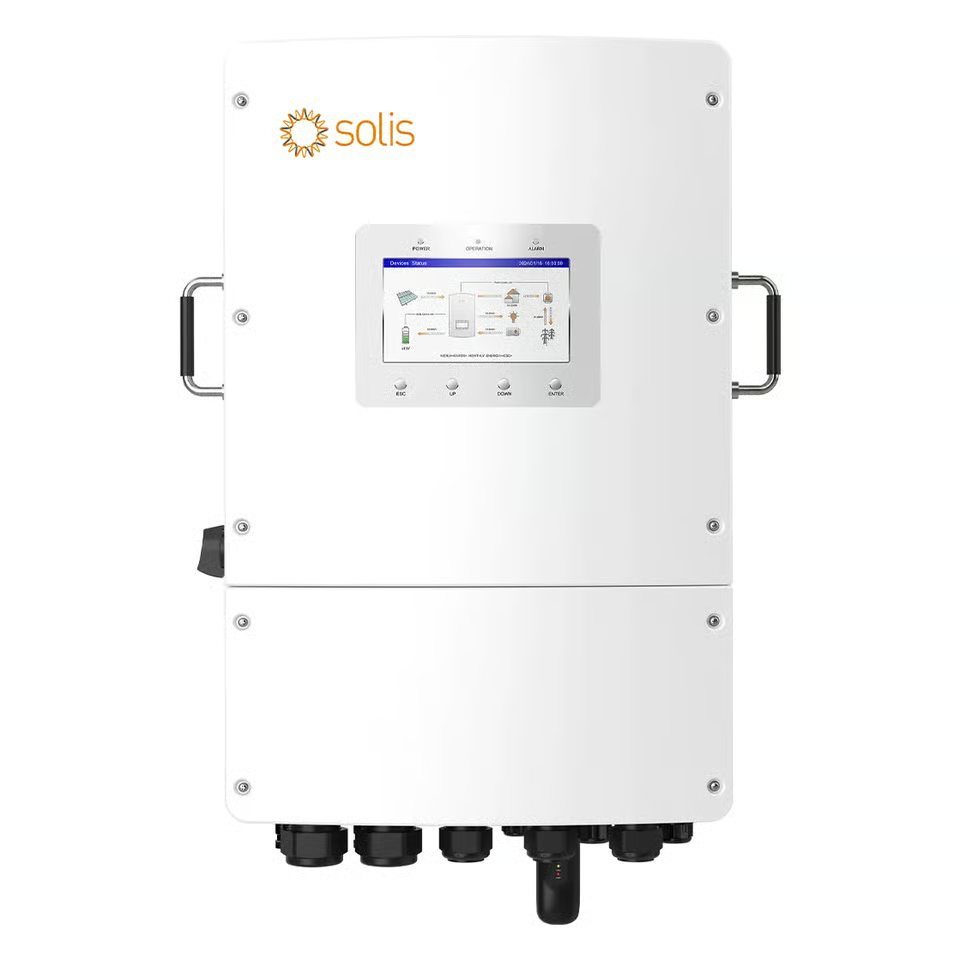
Description
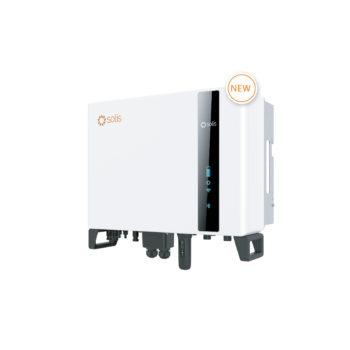
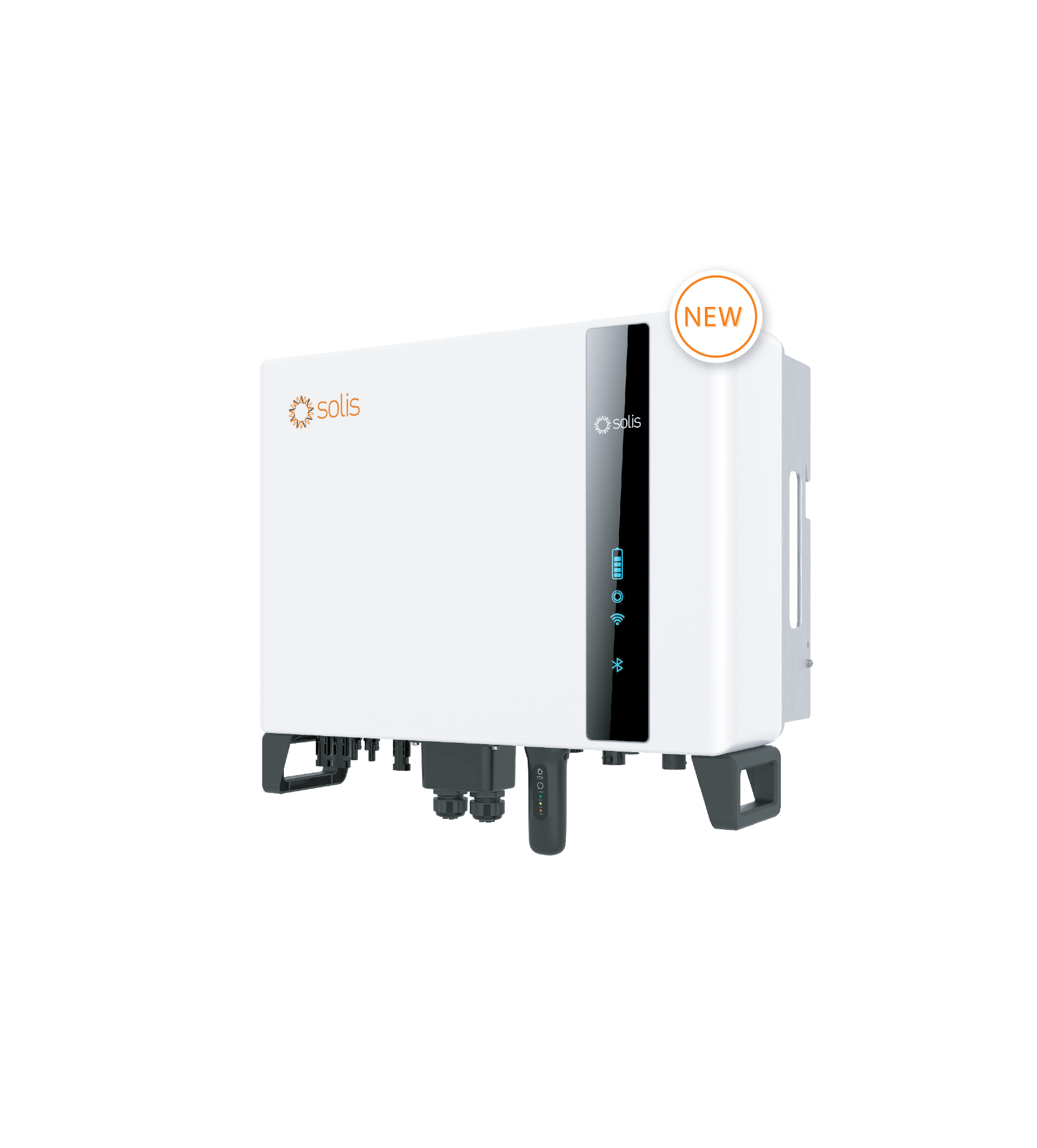
The Solis S6-EH3P15K02-NV-YD-L 15kW Three Phase Hybrid Inverter delivers 15000W across three phases from a 48V battery and an array of up to 30kW. It is aimed at premises already fed by a three phase connection: workshops, farms, schools, guest houses, clinics and estates.
Two things set it apart from the single phase machines of similar capacity.
It splits the load three ways. Delivering 15kW on three phases draws only 22.8A from each one. A single phase inverter producing comparable power pulls more than sixty amperes through a single conductor. The consequence shows up in the cable schedule, where 6mm squared replaces 25mm squared, and in the board, where a 32A device replaces an 80A one.
It does this on 48V batteries. Most three phase hybrids at this capacity expect a high voltage battery stack. This one takes the same 48V lithium used across smaller systems, so a site moving up to three phase keeps its existing storage platform rather than replacing it.
1. System Architecture and Configuration
Hybrid Energy Core
- 15kW rated output, 15kVA apparent, across three phases
- Three phases with neutral and earth, at 220V/380V or 230V/400V
- Unbalanced output supported, up to 7.5kW on any one phase
- 22.8A per phase at 380V, 21.7A per phase at 400V
- Twice rated power for ten seconds on backup
- Transfer to backup in under 10 milliseconds
- Displacement factor better than 0.99 with harmonic current held below 3%
Solar Charging System
- Two trackers carrying four strings, two on each
- 30kW recommended array against a 24kW conversion ceiling
- A 1000V platform, tracking from 200V to 850V, rated at 550V
- 40A per tracker and 50A of short circuit current, so 20A per string
- Generation starts at 160V
- Long strings mean fewer of them, and less cable on the roof
Battery Integration
- Ordinary 48V architecture, accepting anything from 40V to 60V
- 290A of charge and discharge current
- Lithium and lead acid both supported
- Pack data over CAN or RS485, giving true charge state and cell temperatures
- Scheduling windows for charge and discharge
Protection and Cooling
- IP66 enclosure for indoor or outdoor mounting
- Intelligent fan cooling, typically under 65 dB(A)
- Integrated DC switch on the solar input, so no separate isolator is needed at the unit
- Anti islanding, so the array cannot energise a dead network
- Output overcurrent and short circuit protection
- DC reverse polarity protection and Type II surge protection on the solar side
- Insulation resistance monitoring and residual current detection
- Arc fault detection offered as an option
2. Technical Specifications
| Parameter | Specification |
|---|---|
| Rated output power | 15kW |
| Maximum apparent power | 15kVA |
| Surge capability | 30kVA for 10 seconds |
| Operation phase | Three phase with neutral and earth |
| Rated grid voltage | 220V/380V or 230V/400V |
| Rated grid frequency | 50Hz or 60Hz |
| Rated output current | 22.8A per phase at 380V, 21.7A at 400V |
| Maximum power per phase | 50% of rated power, so 7.5kW |
| Power factor | Above 0.99, adjustable 0.8 leading to 0.8 lagging |
| Current distortion | Under 3% |
| Grid input range | 323V to 437V on a 380V system, 340V to 460V on a 400V system |
| Maximum grid input power | 22.5kW |
| Maximum grid input current | 34.2A at 380V, 32.5A at 400V |
| Maximum AC passthrough | 50A |
| Backup output | 15kW, twice rated for 10 seconds |
| Backup switch time | Under 10ms single unit, under 20ms in parallel |
| Backup voltage distortion | Under 3% at linear load |
| Generator maximum input | 15kW, 22.8A |
| Battery voltage | 40V to 60V, 48V nominal |
| Battery type | Lithium ion or lead acid |
| Maximum charge and discharge | 290A total |
| Battery ports | 2 battery ports and 1 BMS port, 150A per port |
| MPPT quantity | 2 trackers, 4 strings |
| Recommended maximum array | 30kW |
| Maximum usable PV input power | 24kW |
| Maximum PV voltage | 1000V DC |
| Rated PV voltage | 550V |
| Start-up voltage | 160V |
| MPPT voltage range | 200V to 850V |
| Maximum input current | 40A per tracker |
| Maximum short circuit current | 50A per tracker |
| Maximum efficiency | 97.5% |
| European weighted efficiency | 97.0% |
| Battery charged from solar | Up to 95.0% |
| Battery charged from AC | Up to 94.4% |
| Battery discharged to AC | Up to 94.5% |
| Night self consumption | Under 30W |
| Topology | Non isolated on the solar side, isolated on the battery side |
| Cooling and noise | Intelligent fan cooling, under 65 dB(A) |
| Protection rating | IP66, indoor or outdoor |
| Operating temperature | -25C to +60C, 0 to 100% relative humidity |
| Maximum altitude | 4000m |
| Dimensions and weight | 430 x 660 x 305mm, 42kg |
| Communication | WiFi, LAN and Bluetooth as standard, with CAN for the battery, RS485 for metering and cellular as an option |
| Display | 7 inch LCD with Bluetooth and app |
| Parallel operation | Up to 6 units of the same model |
| Warranty | 5 years standard, extendable to 20 |
3. Key Features
- 15kW three phase output drawn from an ordinary 48V lithium bank
- 22.8A per phase, which keeps conductors and switchgear modest for the power delivered
- A 1000V solar platform, so strings run long and the roof carries fewer cable runs
- 30kW of array against a 15kW nameplate, double the inverter rating
- 97.5% peak and 97.0% European weighted efficiency
- Under 30W drawn overnight when nothing is being converted
- Integrated DC switch, so no separate isolator is needed at the inverter
- Generator input accepting the full 15kW
- Retrofit beside an existing grid tied array through AC coupling
- Rated to 4000m and down to -40C
- Six units can be paralleled, provided they are the same model
- Smart load management, so lower priority circuits shed first and critical ones run longer
- A reserve level you set yourself, below which the battery is held back for outages
- Designed around your existing board and supported from Kenya by Bicity Solar
4. Applications and Use Cases
- Workshops and light industry: three phase motors run as intended, not through a converter
- Farms: irrigation pumps, milking plant, cold rooms and grain handling
- Schools: kitchens, laboratories, boarding blocks and administration under one system
- Clinics: imaging, sterilisers and cold chain on a supply that does not drop
- Guest houses and lodges: laundry, kitchen and guest rooms across separate phases
- Estates and apartment blocks: common services and shared borehole supply
- Retail premises: refrigeration, lighting and tills through daily interruptions
5. Installation and Engineering Notes
Ratings start at a quarter above the steady current each circuit carries, then round to a size that exists on the shelf. Installed values depend on how far the cable runs, how it is bundled and how warm it gets.
| Circuit | Design current | Device | Cable, short run |
|---|---|---|---|
| PV, per string | 20A | 25A DC, rated beyond 1000V | 4mm² solar cable |
| Battery | 290A | 400A DC | 120mm², or paired 70mm² runs |
| AC output | 22.8A per phase | 32A, 4 pole, Type C | 6mm² |
| Grid input | 34.2A per phase | 50A, 4 pole | 10mm² |
| Backup passthrough | 50A | 63A, 4 pole | 16mm² |
The array platform is 1000V, not 500V. Fifteen panels in series approach 825V once the glass has cooled overnight, and every isolator, breaker and surge device on the solar side has to be rated for that. Components bought for a low voltage single phase system will not do.
- Balance single phase loads across the three phases at the board, which decides how much of the 15kW is genuinely usable
- Ten to twelve panels per string suits the 30kW allowance, giving four strings of twelve for about 29.8kW
- Keep cold open circuit voltage below 1000V with real margin, measured at dawn and not at noon
- Two battery ports, each carrying 150A, so reaching the full 290A means wiring both rather than one
- Battery conductors are heavy at this current: die crimped lugs, torqued terminations, both poles matched in length
- Hold the battery run under two metres where the layout allows
- An integrated DC switch is fitted, so a separate inverter side isolator is not required
- A combiner enclosure still earns its place where strings arrive from more than one roof plane
- Counties that take heavy lightning want arrestors outside the unit and an earth built for the job
- The unit weighs 42kg, so mount on masonry or a fixed frame with two people
- Keep it clear of occupied rooms, since cooling is by fan
- Handover performed by regulator licensed staff on our own team
6. Care, Maintenance and Operations
- Check phase balance annually, since load patterns drift as a building changes use
- Retighten battery terminations to torque, because 290A finds every loose joint
- Keep fan intakes clear of dust, chaff and insect nests, particularly on farms
- Compare generation against the figure recorded at handover
- Read cell spread and thermal figures off the battery management system
- Inspect roof side string connectors after each long rains
- Apply firmware revisions when the manufacturer issues them
- Revisit charge windows if the local interruption pattern changes
7. Do’s and Don’ts
Do
- Spread single phase loads evenly across all three phases at the distribution board
- Put the heaviest single phase appliance on the lightest loaded phase
- Specify a bank that holds 290A, which usually means four packs
- Verify the pack is reporting live values rather than an estimate from voltage
- Buy solar side protection rated for 1000V
- Confirm the premises actually has a three phase supply before ordering
- Wire both battery ports when the bank is sized for the full 290A
- Write down which ways are wired to backup before leaving site
Don’t
- Assume 15kW is available to one single phase appliance, because no phase exceeds 7.5kW
- Put two instant showers on the same phase
- Let cold open circuit voltage approach 1000V
- Fit 500V rated DC devices to an 850V array
- Parallel this model with a different model from the same series
- Combine packs of differing age, size or cell type on one busbar
- Site it against a bedroom wall or a quiet office
8. Compatibility
- 48V lithium iron phosphate banks communicating over CAN or RS485
- Lead acid banks, running without a data link
- Solar arrays up to 30kW, with 24kW converted at any instant
- Generator input taking the full 15kW with automatic control
- Existing grid tied arrays, kept in service through AC coupling
- Current transformers or a meter, so peak shaving acts on real readings
- SolisCloud over Ethernet, WiFi, cellular or LAN
- Approved packs stocked in this market include Dyness, Felicitysolar, Pylontech, Vestwoods and Hubble, combined until 290A is available
A brand appearing on the register does not make its whole catalogue approved; individual models and firmware builds are listed. Wiring pinouts differ between makers too, so we check the pairing and build the lead to suit.
9. Performance Table
| Load | Estimated backup runtime on a 30kWh lithium bank |
|---|---|
| 2kW | Around 12 to 13 hours |
| 5kW | Around 5 hours |
| 8kW | Around 3 hours |
| 12kW | Around 2 hours |
| 15kW | Around 1.5 hours |
Worked from 27kWh of usable energy, being 90% of a 30kWh bank, multiplied by the published battery to AC figure. Daylight generation extends every line, and a bank sized to supply 290A arrives at roughly this capacity anyway.
10. What It Runs, and the Per Phase Limit
Three phase inverters usually insist on balanced loads. This one does not. It supports unbalanced three phase output, with any single phase able to deliver up to half the rated power, which is 7.5kW, provided the three phases together stay inside 15kW.
That tolerance matters in Kenyan buildings, where the heavy appliances are single phase. An instant shower, a cooker or a water heater connects between one phase and neutral and draws entirely from that phase. On a machine demanding balance, one such appliance can be enough to cause trouble. Here there is room for it.
There is still a ceiling, and knowing where it sits is the useful part.
| Situation | Load on the busiest phase | Outcome |
|---|---|---|
| Three phase borehole or workshop motor, 7kW | Shared across all three | Comfortable, over half the rating still free |
| One instant shower, 4.5kW | 4.5kW | Well inside the 7.5kW phase ceiling |
| A shower and a kettle on the same phase | 6.5kW | Still fits, with a little left |
| Two instant showers on the same phase | 9kW | Exceeds the phase ceiling, though the total is only 9kW |
| Two showers split across two phases | 4.5kW | Comfortable, and the total is well inside 15kW |
| Shower, cooker and kettle all on one phase | 9.5kW | Exceeds the phase ceiling |
| Kitchen, laundry and offices spread evenly | Around 5kW | Fully loaded and correctly arranged |
Two limits apply at once, then: no phase above 7.5kW, and no more than 15kW in total. Reaching the total means spreading load reasonably evenly, since three phases at their individual ceilings would come to 22.5kW, which the inverter will not produce.
Where a three phase system disappoints, an overloaded single phase is the usual reason. The cure is redistribution at the distribution board rather than a larger machine.
11. Mini FAQ
Can one appliance draw the full 15kW?
Only a three phase appliance. A single phase load sits on one phase, where the ceiling is 7.5kW, half the rating.
Does it need a special high voltage battery?
No. It runs on ordinary 48V lithium, the same platform used on smaller single phase systems.
Can it deliver 15kW from the battery?
Very nearly. Reaching 15kW at a 51.2V resting bank calls for 293A against a 290A rating, giving about 14.85kW, which is 99% of nameplate. Full output returns once the bank sits above roughly 51.7V, where a well charged pack spends most of its time.
Why is the cable so much smaller than a single phase unit?
Because 15kW split three ways is only 22.8A per phase. A single phase machine of similar output pushes over sixty amperes through one conductor.
How many panels does it take?
Up to 30kW of array across four strings, with 24kW converted at any instant. Four strings of twelve 620W panels comes to about 29.8kW.
Why do the DC components cost more?
This is a 1000V solar platform rather than a 500V one. Isolators, breakers and surge devices all have to carry that rating.
How fast does it switch during an outage?
Under 10 milliseconds, which is half a mains cycle and short enough that lighting, refrigeration and electronics carry straight through.
Do I need a three phase supply to use it?
Yes. Confirm the premises is actually fed three phase before ordering, since many are not.
12. Why Buy From Bicity Solar
- Authentic Solis hardware, with the certification that shipped alongside your serial number
- Every rating here stands up to scrutiny, including the ones that are not flattering
- Phase balance assessed at the board, not left for you to discover
- Storage chosen so the 290A draw is met rather than approximated
- Solar side components correctly rated for a 1000V platform
- Licensed installation and commissioning
- Warranty filed promptly enough to secure the longer cover where it is offered
- Claims and distributor dealings handled locally
- Shipping anywhere in Kenya, with aftercare and component supply thereafter
Before specifying a three phase inverter, two things decide whether it will work: that the premises is genuinely fed three phase, and that the heavy single phase loads are spread across all three.
Send us a photograph of your distribution board and a list of the heavy appliances with the phase each sits on. We will tell you whether the board needs rebalancing, size the array across four strings inside the 1000V platform, and specify a bank that holds 290A. Model a whole site with our Solar Calculator, or submit the details through My Quote for a costed proposal.