Description
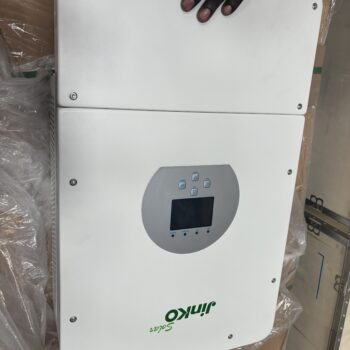
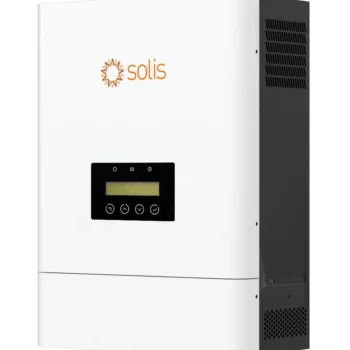
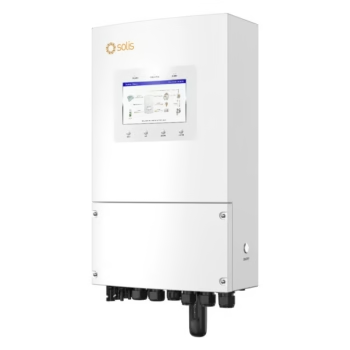
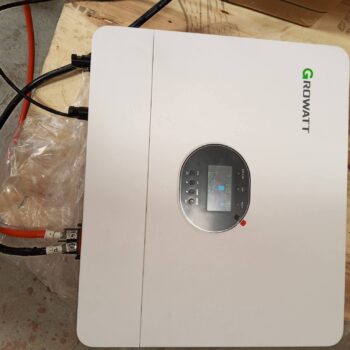
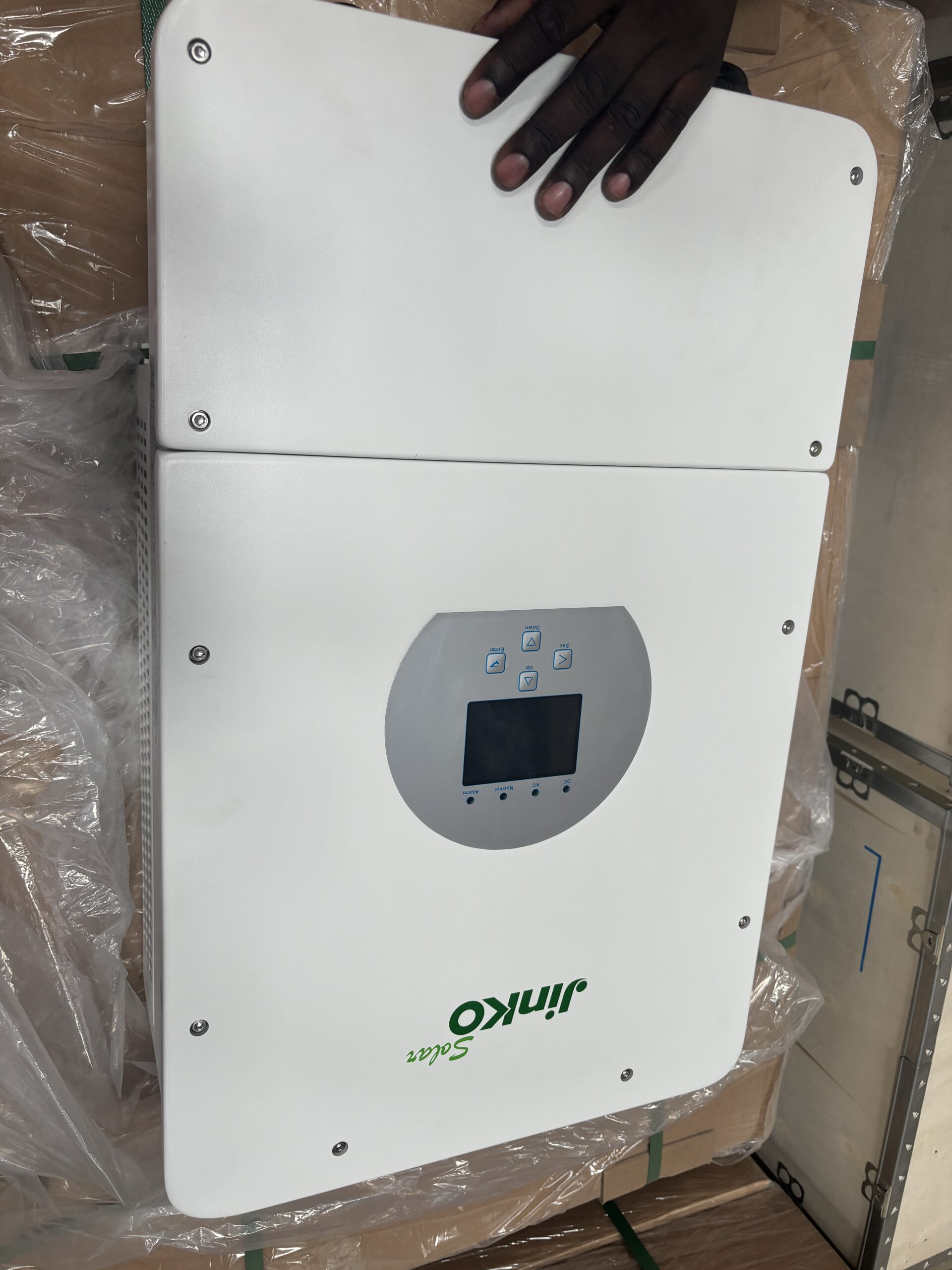
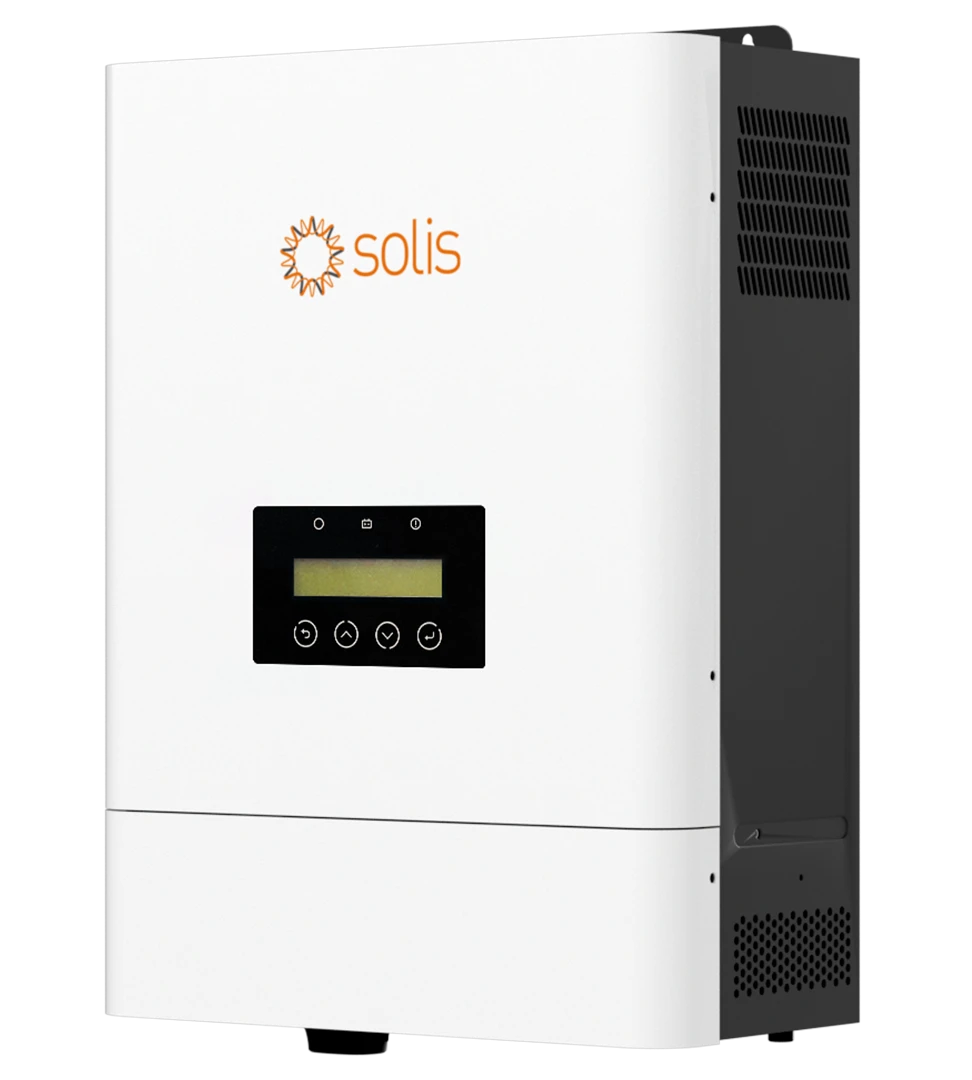
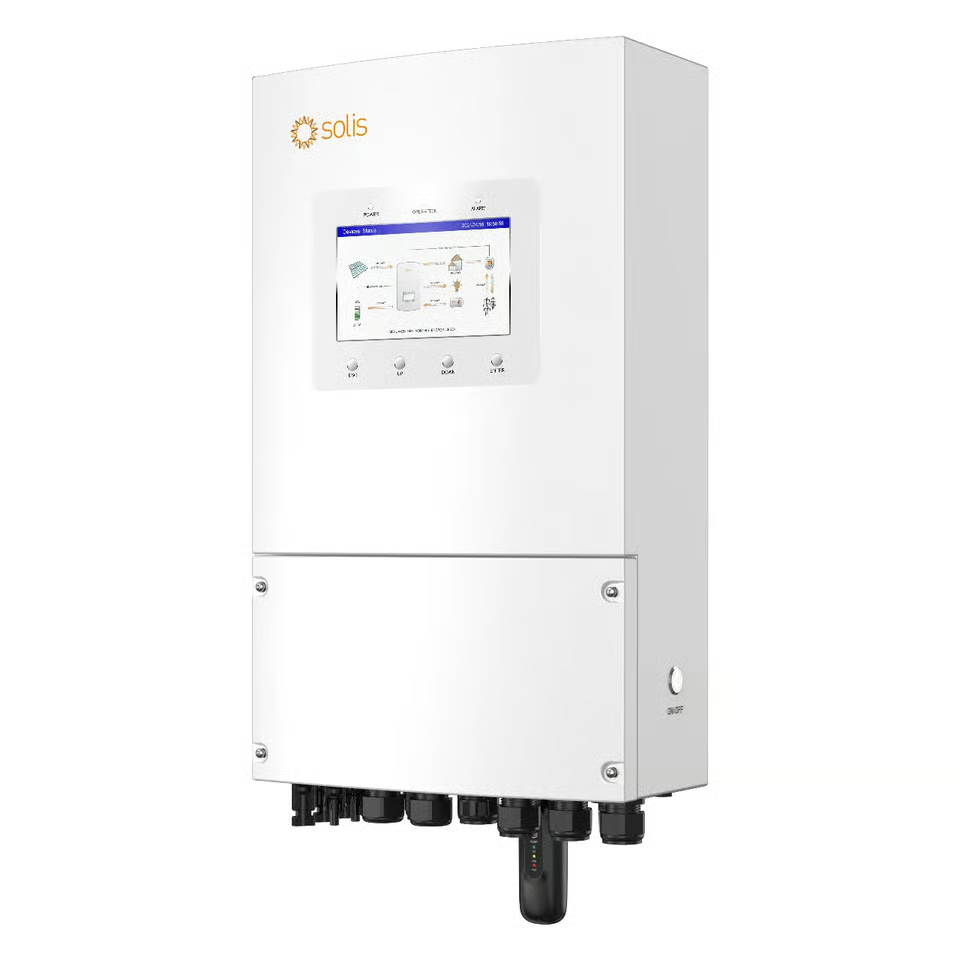
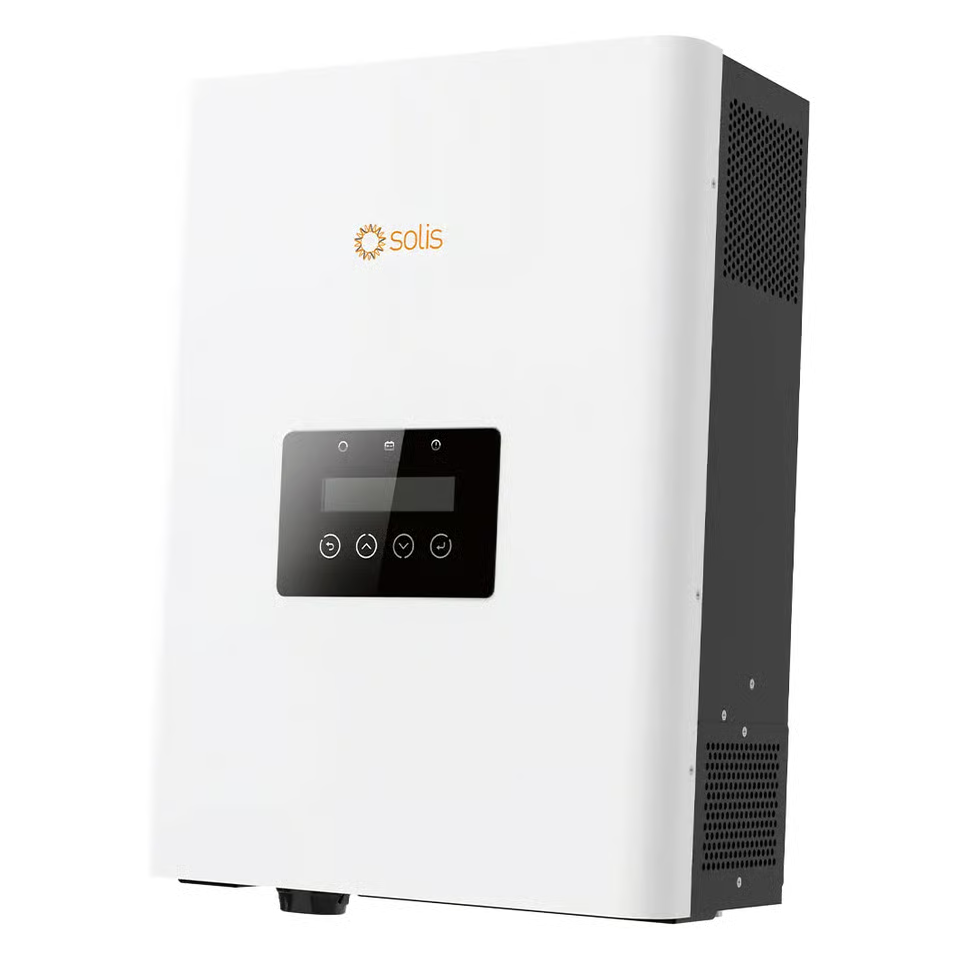
The Solis S6-EO1P5K-48 produces 5000W from a 48V battery and a solar array, and it is built for premises that run without a utility connection or treat the utility as nothing more than a way to charge the battery.
That makes it a different proposition from the hybrids, and two of its figures need settling before anything else.
It is rated to 2000m. In most countries that would be a footnote. In Kenya it is a real question, because a good part of the Rift Valley highlands sits above that line while the coast, the lake basin and much of central Kenya sit below it. Section five has the detail, and the answer for a particular site is a short check rather than a guess.
It carries IP21, which means indoors. Not a sheltered veranda, not a roofed outbuilding open at the sides, and not a dusty workshop without a cabinet. The enclosure resists fingers and water dripping straight down, and nothing more than that.
Clear those two and what remains is a capable off grid machine with one unusual strength: it will accept a charging supply between 90V and 280V, which is a far wider window than a hybrid allows. On a weak rural line, or behind a generator that sags under load, that tolerance is the difference between charging and not charging.
1. System Architecture and Configuration
Inverter Output
- 5kW and 5kVA, delivered as a pure sine wave
- Single phase at 230V, held within one percent
- Frequency at 50Hz or 60Hz, held within a tenth of a percent
- 25 amperes of output current
- Ten kilovolt amperes of surge for ten seconds
- Transfer in 10 milliseconds typically, 20 at the outside
- Voltage distortion under 3% on a linear load
- Two separate load outputs, so the important circuits can be kept running longer
Solar Charger
- One tracker carrying two strings
- 6.5kW of usable solar input
- A ceiling of 500V, a tracking window of 90V to 430V, nominally 360V
- Sixteen amperes per string, forty amperes of short circuit current
- Up to 100 amperes of charge current from solar
- Generation starts at 90V
Battery and Charging
- Lead acid or lithium, anywhere inside the 40V to 60V band
- One hundred amperes in either direction, 5kW each way
- Packs without communication supported through a quick configuration routine
- CAN for packs that do communicate
- Charging input accepting anything between 90V and 280V
- Up to 80 amperes of charge current from that input
- A one touch fast charge mode for when a generator is already running
- Six windows you can programme for charging and for drawing down
Protection
- Output overvoltage and overcurrent protection
- Short circuit protection
- Surge protection
- Temperature protection
- Optional arc fault detection, orderable with the unit
2. Technical Specifications
| Parameter | 5kW model | 4kW model |
|---|---|---|
| Rated output power | 5kVA, 5kW | 4kVA, 4kW |
| Surge capacity | 10kVA for 10 seconds | 8kVA for 10 seconds |
| Maximum output current | 25A | 20A |
| Operation phase | Single phase, live neutral and earth | |
| Rated output voltage | 230V, within 1% | |
| Rated frequency | 50Hz or 60Hz, within 0.1% | |
| Output waveform | Pure sine wave | |
| Transfer time | 10ms typical, 20ms maximum | |
| Voltage distortion at linear load | Under 3% | |
| Maximum usable PV input power | 6.5kW | 5.5kW |
| Maximum PV input voltage | 500V | |
| Rated PV voltage | 360V | |
| Start-up voltage | 90V | |
| MPPT voltage range | 90V to 430V | |
| Maximum input current | 16A per string | |
| Maximum short circuit current | 40A | |
| Maximum solar charge current | 100A | |
| Trackers and strings | 1 tracker, 2 strings | |
| Battery type | Lithium ion or lead acid | |
| Rated battery voltage | 40V to 60V | |
| Maximum charge and discharge power | 5kW | |
| Maximum charge and discharge current | 100A | |
| Battery communication | CAN | |
| Maximum AC input power | 7kW | 6kW |
| Maximum AC input current | 30A | 26A |
| Maximum AC charge current | 80A | 60A |
| Rated AC input voltage | 230V | |
| Selectable input voltage range | 90V to 280V | |
| AC frequency range | 50Hz or 60Hz | |
| Peak efficiency, solar to AC | 96.6% | |
| Topology | High frequency, non isolated | |
| Protection rating | IP21, indoor mounting only | |
| Operating temperature | -10C to +60C | |
| Storage temperature | -25C to +60C | |
| Relative humidity | 5% to 95%, non condensing | |
| Maximum altitude | 2000m | |
| Dimensions and weight | 340 x 480 x 170mm, 13.8kg | |
| Connections | Terminal connectors on both DC and AC | |
| Display | LCD | |
| Communication | CAN, BMS, dry contact and Bluetooth, with WiFi available | |
| Parallel capability | 6 units | |
| Safety standards | IEC 62109, IEC 61000, CISPR 11 | |
3. Key Features
- A charging input spanning 90V to 280V, far wider than a hybrid will accept
- Eighty amperes of charge current from the grid or a generator
- One touch fast charging, for topping up while a set is already running
- Six time of use windows for charging and discharging
- Two load outputs, letting non essential circuits be shed first
- Batteries without communication accepted through a quick setup routine
- Two hundred percent overload for ten seconds, enough for pump and motor starting
- Parallel operation and AC coupling, so capacity can grow later
- Pure sine wave output held inside one percent of 230V
- 13.8kg in a 340 by 480 by 170mm body, which one person can mount
- Site altitude and mounting position checked by Bicity Solar before quotation
4. Applications and Use Cases
- Homes with no utility connection: where a grid tie would serve no purpose
- Premises on a weak line: where voltage wanders too far for a hybrid to accept
- Generator backed sites: the set charges fast, then shuts down
- Farm buildings and stores: provided the inverter itself sits indoors
- Boreholes and pump houses: motor starting covered by the surge rating
- Shops and kiosks beyond the network: refrigeration and lighting
- Sites using non communicating batteries: older lead acid banks included
5. Installation and Engineering Notes
Two site conditions decide whether it can be used at all
Altitude is capped at 2000m. Thinner air carries heat away less effectively, so equipment is rated for the height at which it can still shed what it generates. Most inverters in this class reach 3000m. This one does not, and Kenya has enough high ground for that to matter.
| Roughly where the line falls | Approximate elevation |
|---|---|
| Mombasa, Malindi and the coast | Near sea level |
| Kisumu and the lake basin | Around 1100m |
| Thika, Meru, Machakos, Kisii, Nyeri | 1500m to 1800m |
| Nairobi | Around 1800m |
| Nakuru | Around 1850m |
| Kitale | Around 1900m |
| Kericho | Around 2000m, right on the limit |
| Eldoret | Around 2200m, and higher in the surrounding country |
| Nyahururu | Around 2300m |
| Molo | Around 2500m |
Those figures are approximate and a particular compound can sit well above or below the nearest town. Where a site is anywhere near the line, the hybrid equivalent is rated to 3000m and removes the question entirely. We check the elevation before quoting rather than afterwards.
The enclosure is IP21, which means indoors. That rating covers intrusion by solid objects larger than about twelve millimetres and water falling vertically. It does not cover dust, it does not cover rain blown sideways, and it does not cover a hose. An exterior wall is out of the question, and so is an open sided store or a workshop with grinding dust in the air unless the unit goes in its own cabinet.
Circuit sizing
Devices sit a quarter above the continuous current each circuit carries, then round to a manufactured size. Measured runs, bunching and ambient heat move the final choice.
| Circuit | Design current | Device | Cable, short run |
|---|---|---|---|
| PV, per string | 16A | 25A DC, rated beyond 500V | 4mm² solar cable |
| Battery | 100A | 125A DC | 35mm² |
| AC output | 25A | 32A, 2 pole, Type C | 6mm² |
| AC charging input | 30A | 40A, 2 pole | 10mm² |
- Both strings share a single tracker, so they must match in orientation, tilt and module type
- Splitting an array across two roof faces needs two trackers, which this does not have
- Five to six 620W modules per string suits the 6.5kW conversion ceiling
- Eight modules is the voltage maximum, reaching about 440V open circuit on a cold morning
- DC protection must carry a 500V class rating
- A 100 ampere battery circuit wants properly crimped lugs and torqued terminals
- Decide at the outset which loads go on which of the two outputs
- Mount indoors, in a dry room, with air around the casing
- Where a generator is present, wire the control connection during installation
- Commissioned and signed off by licensed personnel
6. Care, Maintenance and Operations
- Keep the room dry, since the enclosure offers no protection against moisture beyond dripping
- Wipe dust from the casing and check nothing is stacked against it
- Retighten the battery terminals annually at 100 amperes
- Review which loads sit on each output as the household changes
- Confirm the fast charge setting still suits the generator in use
- Wash the array once the dusty months are over
- Check the time of use windows against the current pattern of generator running
- On a lead acid bank, verify electrolyte levels and charge settings at each visit
7. Do’s and Don’ts
Do
- Confirm the site sits below 2000m before ordering
- Mount it indoors, in a dry room
- Match both strings in orientation and tilt, since they share one tracker
- Use the wide input range to accept a supply a hybrid would refuse
- Assign loads to the two outputs deliberately
- Set the time of use windows around when the generator actually runs
- Choose a bank that genuinely sustains 100 amperes
Don’t
- Mount it outside, under an open shelter, or anywhere dusty
- Install it in the highlands without checking the elevation first
- Split the array across two roof faces, because there is only one tracker
- Expect it to export to the grid, which it cannot do
- Assume full 5kW once the bank falls below about 50V
- Build a string of nine modules at 620W, which crowds the voltage limit
8. Compatibility
- Banks rated between 40V and 60V, in either chemistry
- Packs with CAN communication, and packs with none at all
- Solar arrays up to 6.5kW of usable input on two matched strings
- Generators connected through the shared charging port
- Grid connections of poor quality, anywhere from 90V to 280V
- AC coupling with an existing array, and parallel operation to six units
- Monitoring over Bluetooth, with WiFi available
- Dry contact signalling for generator start and stop
Because packs without communication are supported, this unit suits older lead acid banks and budget lithium that a communicating hybrid would reject. Where the pack does speak CAN, the inverter reads it directly.
9. Performance Table
| Load | Estimated runtime on a 10kWh lithium bank |
|---|---|
| 300W | Around 28 hours |
| 600W | Around 14 hours |
| 1.2kW | Around 7 hours |
| 2.5kW | Around 3.4 hours |
| 5kW | Around 1.7 hours |
Based on 9kWh available from a 10kWh bank at 90% depth, allowing for conversion losses. Daylight extends every line. Note that reaching the full 5kW calls for close to 100 amperes, so output eases back once the bank drops below roughly 50V.
10. How It Differs From the 5kW Hybrid
Bicity stocks a 5kW hybrid as well, and the two are easily confused because the output figure is identical. They are not alternatives for the same site.
| Consideration | This off grid unit | The 5kW hybrid |
|---|---|---|
| Grid export | Not possible | Supported |
| Mounting | IP21, indoors only | IP66, indoors or outdoors |
| Altitude | 2000m | 3000m |
| Operating temperature | -10C to +60C | -25C to +60C |
| Charging input range | 90V to 280V | 187V to 253V |
| AC charge current | 80A | Lower |
| Trackers | 1, with 2 strings | 2 |
| Usable solar input | 6.5kW | 8kW |
| Battery current | 100A | 112A |
| Non communicating batteries | Supported | Communication preferred |
| Weight | 13.8kg | 23kg |
This one suits a site with no utility connection, or one where the supply is too unstable for a hybrid to accept, or where a generator does most of the charging and needs to do it fast. The wide input window and the 80 ampere charge rate are built for exactly that.
The hybrid suits anywhere with a usable grid connection, anywhere the inverter has to live outdoors, anywhere above 2000m, and any array split across more than one roof face.
11. Mini FAQ
Can it be mounted outside?
No. IP21 covers dripping water and nothing more, so it needs a dry indoor position.
Will it work in the highlands?
Only below 2000m. Eldoret, Nyahururu and Molo sit above that line and Kericho sits on it, so the hybrid is the safer choice in those areas.
Can it sell power back to the grid?
No. It is an off grid inverter, and its AC connection is a charging input rather than a grid tie.
Will it charge from a weak supply?
Yes, anywhere between 90V and 280V, which is considerably more tolerant than a hybrid.
How fast will a generator charge it?
Up to 80 amperes, with a one touch fast charge mode for when the set is already running.
Can the array face two directions?
No. Both strings share a single tracker, so they must match in orientation and tilt.
Does it need a communicating battery?
No. Packs without communication are supported through a quick configuration routine, which suits older lead acid banks.
Does it give the full 5kW from the battery?
Above roughly 50V, yes. Below that the 100 ampere limit eases output back.
12. Why Buy From Bicity Solar
- Site elevation confirmed against the 2000m limit before anything is quoted
- Mounting position assessed, because this unit cannot go outdoors
- Honest comparison with the hybrid, including when the hybrid is the right answer
- Array planned for a single tracker, with both strings matched
- Generator charging configured rather than left on default settings
- Load allocation across the two outputs agreed at commissioning
- Authentic stock, with documentation matching the serial number supplied
- Installation carried out under a current EPRA licence
- Warranty claims pursued on your behalf rather than handed back to you
- Delivered countrywide, with spares and support continuing afterwards
Two questions decide whether this is the right inverter: is your site below 2000m, and is there a dry indoor wall for it? If either answer is no, the hybrid version is what you want.
Tell us where the site is and where the unit would be mounted, along with what you run and whether a generator is involved. We confirm the elevation, check the position against an indoor rating, and size a bank that holds 100 amperes. The Solar Calculator lets you work the loads yourself; My Quote gets it costed.