Description
DC Circuit Breaker 4P 1500VDC 80A Kenya — Utility-Scale Solar DC Isolation Switch
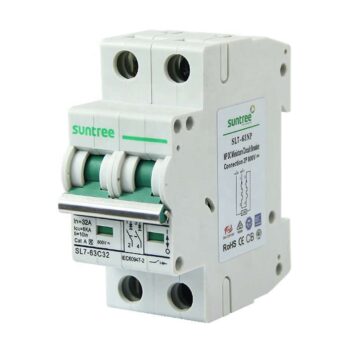
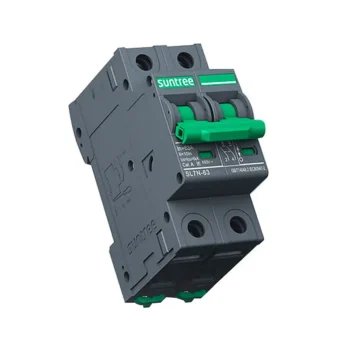
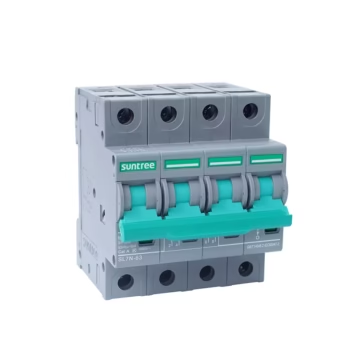
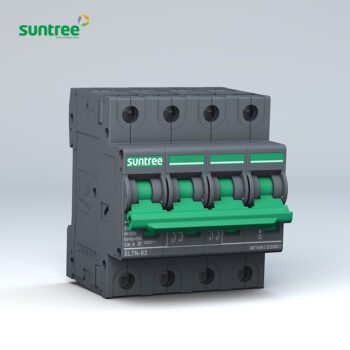
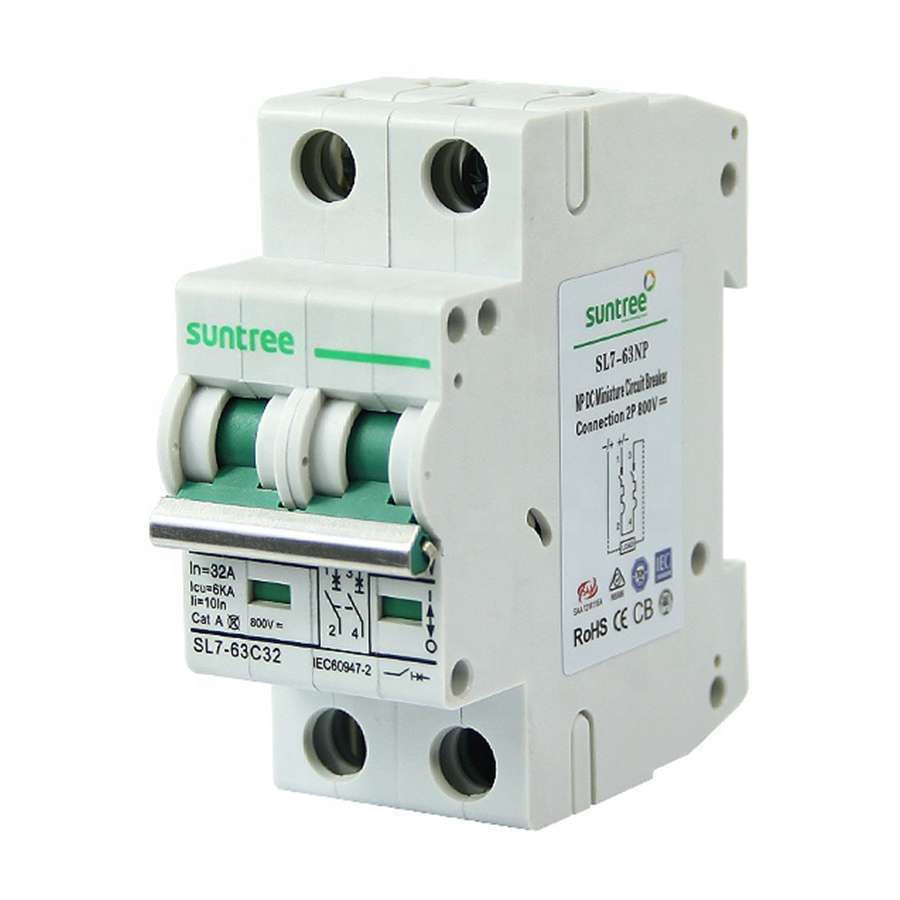
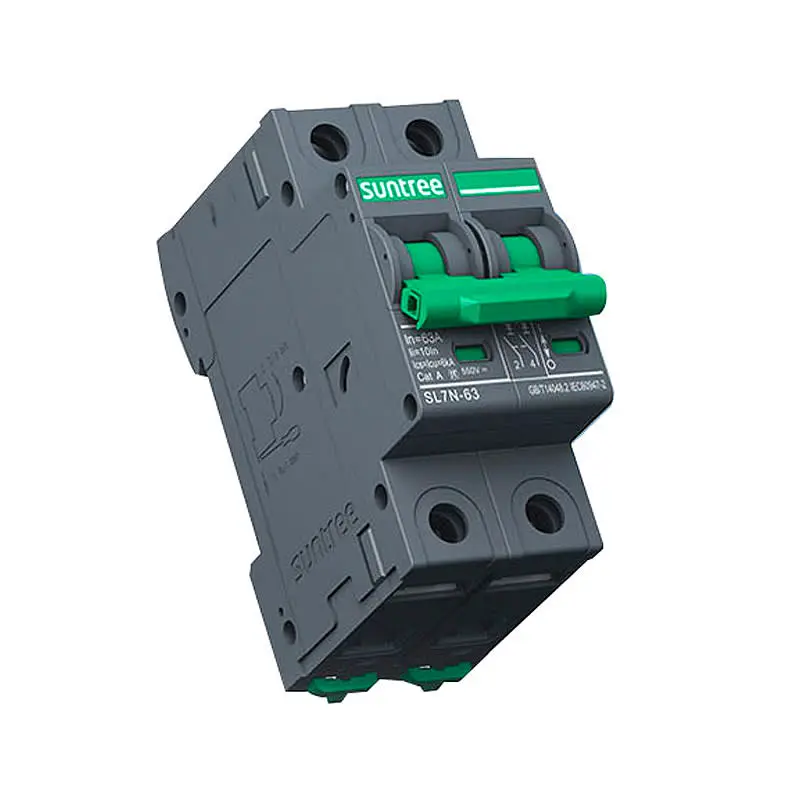
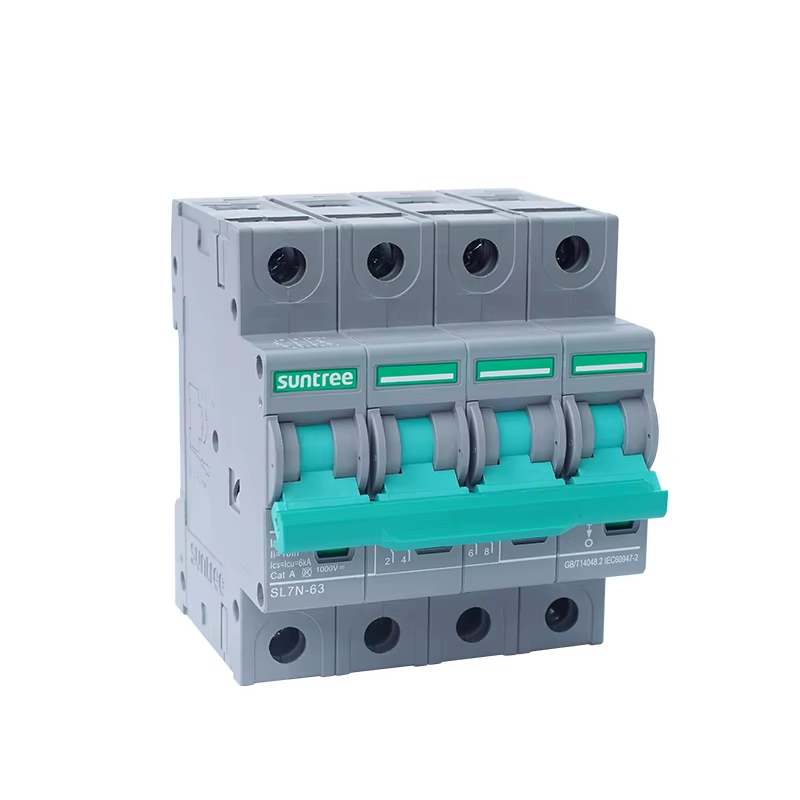
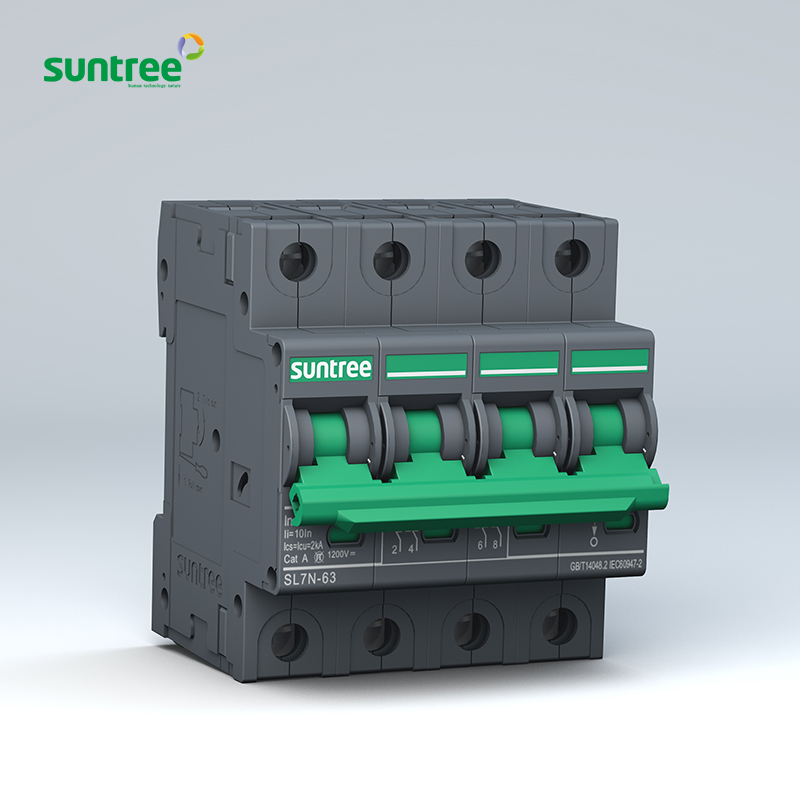
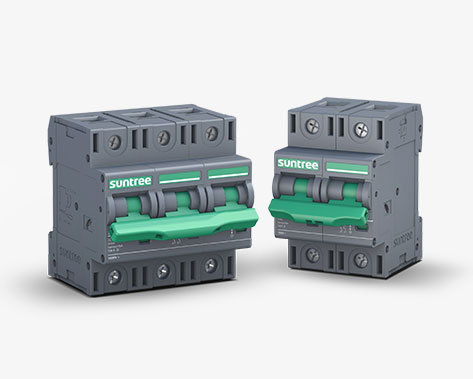
The DC Circuit Breaker 4P 1500VDC 80A — also called the 4-Pole 1500V DC Isolator, the Utility-Scale DC Breaker, or the High-Voltage Solar Disconnect Switch — is the highest-voltage, highest-current DC breaker specification in the Bicity Solar protection range. Rated for 1500V DC continuous service at up to 80 amperes, with a 4-pole common-trip mechanism switching all four conductors simultaneously, it is the appropriate DC isolation device for utility-scale solar installations, large commercial PV systems using modern 1500V architecture, solar-plus-battery storage installations, DC microgrids, and the high-voltage DC backbones of EV charging infrastructure.
This is not a residential breaker. The 1500V voltage rating, 80A current rating, and 4-pole DC-rated arc-clearance geometry place it firmly in the commercial and utility-scale tier where modern Kenyan solar projects are increasingly heading. Specifying this breaker correctly — and understanding why it differs fundamentally from generic AC-rated breakers and from lower-voltage DC breakers — matters for the long-term safety and performance of any installation that genuinely needs 1500V protection.
Why utility-scale solar has moved to 1500V architecture
The largest solar installations worldwide have systematically migrated from 600V and 1000V DC architectures to 1500V DC over the past decade. Kenyan utility-scale projects, large commercial rooftops, and emerging solar-plus-storage installations are following the same trajectory. Five engineering and economic factors drive the move:
- Cable cost reduction: A 100 kW solar array operating at 600V draws 167A on the DC bus; the same 100 kW array at 1500V draws only 67A. The 60% current reduction translates directly into smaller cable cross-sections, lower copper costs, and reduced cable mass to support and route. Across a typical utility-scale Kenyan project, the cable cost savings run into millions of shillings.
- Lower transmission losses: Cable resistance dissipates power as heat proportional to the square of current. Cutting current from 167A to 67A reduces cable losses by 84% for the same power transmission. Over a 25-year project life, the additional harvested energy from this loss reduction represents substantial revenue.
- Longer panel strings: The 1500V envelope accommodates strings of 25-30 modern panels in series, compared to 15-18 panels in the 1000V envelope. Longer strings mean fewer parallel circuits to combine, fewer combiner boxes to deploy, and simpler array architecture overall.
- Smaller combiner counts: A utility-scale array using 1500V strings needs roughly half the number of combiner boxes that the same array would need at 1000V. Fewer combiners means lower equipment cost, less installation labour, and fewer points of failure.
- Modern inverter alignment: Utility-scale string inverters from manufacturers like Sungrow, Huawei, Solis, and others have standardised on 1500V DC input architectures, with MPPT voltage ranges extending to 1300-1400V continuous operation. The 1500V breaker class provides the protective rating these inverters require.
For installations that genuinely operate at 1500V, the breaker rating is non-negotiable — lower-rated breakers cannot safely clear DC arcs at the higher voltage and will fail under fault conditions, potentially catastrophically. The 4P 1500VDC 80A is what makes the 1500V architecture safely deployable.
The DC arc challenge at 1500V
The fundamental engineering distinction between AC-rated and DC-rated breakers is how each handles the arc that develops when the contacts open under load. In AC circuits, the current passes through zero 50 times per second at standard mains frequency; the arc naturally extinguishes at each zero-crossing without requiring sophisticated quench mechanisms. AC-rated breakers exploit this physics — their contact geometry is designed to interrupt the arc at the next zero-crossing, which arrives within 10 milliseconds of any opening event.
DC circuits have no zero-crossing. The current flows continuously in one direction, leaving the arc that develops at parting contacts with no natural moment of self-extinction. The breaker must force the arc to die in one of two ways. Option one: extend the arc physically until the voltage available cannot sustain ionisation along its length — usually by accelerating the contacts apart fast enough that the gap grows beyond the arc’s voltage-supporting capacity. Option two: deflect the arc magnetically into a stack of arc-splitter plates, where the arc is divided into many shorter sub-arcs and cooled until conduction collapses. Each technique has a ceiling: at some bus voltage, the arc grows energetic enough that no realistic gap or plate stack can interrupt it before the contacts are destroyed.
A breaker engineered for 1000V DC sizes its quench geometry for that voltage envelope. Push the same device to 1500V and the geometry runs out of headroom — under fault current the arc can hold across the gap indefinitely, contacts weld, and the protective function is gone. This is not a marginal performance reduction — it is a fundamental safety failure mode. The 1500VDC 80A breaker uses specifically engineered arc-quench geometry sized for the higher voltage envelope, with margin to handle the cold-temperature voltage peaks that push solar arrays above their nominal operating voltage.
Why the 4-pole common-trip design matters at 1500V
The 4-pole configuration is not optional at 1500V — it is engineering necessity. The breaker’s four poles are arranged as two pairs in series, with each pair seeing half the bus voltage (750V) during opening. This series arrangement halves the per-pair arc length, allowing the quench geometry to operate within its safe envelope even at the full 1500V bus voltage. The common-trip mechanism ensures all four poles open together when the breaker is operated manually or trips automatically on fault current, providing complete galvanic isolation of both DC rails simultaneously.
For solar installations, the 4-pole isolation of both positive and negative rails is operationally critical. Solar arrays are bipolar — fault scenarios can develop where one rail leaks to earth through a damaged panel or chafed cable insulation, and isolating only the other rail leaves the faulted side energised. The 4-pole common-trip removes both rails together, eliminating any backfeed path and creating a genuinely safe working environment for service personnel.
Where the 4P 1500VDC 80A breaker belongs in Kenyan solar installations
- Utility-scale solar farms — solar IPPs (Independent Power Producers) and large grid-tied installations in the 1-10 MW capacity band using 1500V string architecture
- Large commercial rooftop solar — factories, distribution warehouses, large hotels, and shopping centres in the 50-500 kW capacity band that have moved to 1500V architecture for cable cost optimisation
- Solar-plus-storage installations — hybrid systems where 1500V DC links connect large PV arrays to battery storage banks and grid-tied inverters
- DC microgrids — emerging Kenyan microgrid projects at remote sites, off-grid commercial operations, and rural electrification programmes using 1500V DC architecture for inter-system connections
- EV charging infrastructure backbones — DC fast charger installations where the upstream solar generation feeds a 1500V DC bus serving multiple charging points
- Industrial PV installations — manufacturing facilities with substantial solar capacity (200 kW+) using modern 1500V string inverters from Sungrow, Huawei, Solis, and similar utility-class manufacturers
- Agricultural processing facilities — large tea, coffee, and dairy processing facilities with multi-hundred-kW solar arrays serving substantial daytime electrical demand
- Telecommunications and data centre backup — large-scale solar installations supporting hyperscale data infrastructure or critical communications backup at the 100-500 kW capacity tier
- Water infrastructure projects — municipal water treatment and large irrigation pumping installations where solar capacity exceeds 100 kW and the array uses 1500V architecture
- Solar carport installations at scale — shopping centres and large parking facilities with carport arrays exceeding 100 kW capacity
Technical Specifications
| Specification | Value |
|---|---|
| Product Type | DC-rated moulded-case circuit breaker |
| Rated Operating Voltage (Ue) | 1500V DC |
| Rated Insulation Voltage (Ui) | 1500V DC minimum |
| Rated Current (Ie) | 80A continuous |
| Pole Configuration | 4-pole common-trip (two pairs in series) |
| Internal Arc Arrangement | Series voltage division — each contact pair sees ~750V |
| Tripping Characteristic | Thermal-magnetic, suitable for solar DC service |
| Mechanical Endurance | ~20,000 operating cycles |
| Electrical Endurance | ~10,000 operating cycles at rated current |
| Mounting Method | Standard 35mm DIN rail clip-on |
| Terminal Type | Box terminals for solid or stranded conductor |
| Acceptable Cable Size | 10mm² to 25mm² stranded copper (depending on installation current) |
| Operating Temperature | -25°C to +70°C ambient |
| Storage Temperature | -40°C to +80°C |
| Compliance Standards | IEC 60947-2 (DC-rated circuit breakers) |
| Pollution Degree | 2 (industrial environment) |
| Insulation Class | II (double insulated construction) |
| Status Indication | Visible ON/OFF position window on front face |
| Auxiliary Function | Manual isolation, fault current interruption, lock-off provision |
Engineering Features for Utility-Scale Deployment
- 1500V DC continuous rating: The highest voltage class in commercial DC breaker availability, supporting modern utility-scale solar architecture where lower-voltage breakers cannot safely operate.
- 4-pole series arc-clearance: Series-arranged contact pairs split the bus voltage during opening, providing reliable arc interruption at the full 1500V envelope where 2-pole or single-pole devices would fail.
- 80A continuous current capacity: Sized for the high current carrying capability needed in utility-scale and large commercial installations where combined string currents reach 60-75A continuous operating load.
- Thermal-magnetic tripping: Combined thermal element (for overload protection on sustained moderate overcurrents) and magnetic element (for short-circuit protection on rapid high-current faults) — both calibrated for DC service.
- DIN rail compatibility: Standard 35mm DIN rail clip-on mounting allows installation in commercial distribution boards, combiner box enclosures, or dedicated DC isolation cabinets without specialised mounting hardware.
- Lock-off provision: Hole through the operating handle accepts a standard padlock for safe isolation during maintenance — essential for commercial lockout/tagout procedures required by occupational safety regulations.
- Visible position indication: Front face window clearly shows ON/OFF state, allowing visual verification of isolation status without needing to operate the handle.
- Box terminals for heavy cable: Terminal blocks accept up to 25mm² copper conductor, accommodating the heavier cable cross-sections typical of utility-scale and large commercial installations.
- Wide ambient temperature range: -25°C to +70°C operation supports both cold highland morning starts and hot lowland midday operation across Kenya’s full climate range.
- IEC 60947-2 compliance: Tested to the international standard for industrial circuit breakers including type tests for breaking capacity at full DC voltage, supporting commercial inspection and insurance documentation requirements.
Typical Kenyan Installation Scenarios
- Utility-scale solar IPP projects in Garissa, Marsabit, Turkana, and Kajiado where large ground-mount arrays use 1500V architecture for cable cost optimisation
- Large commercial rooftop installations on factory premises along Mombasa Road, Industrial Area, Athi River EPZ, Ruiru, and Thika manufacturing zones
- Solar-plus-storage installations at telecom tower sites where DC links between PV arrays and battery storage banks operate at 1500V
- Microgrid installations at remote sites — humanitarian compounds, refugee operations, remote tourism lodges, conservation facilities — using 1500V DC interconnections
- EV charging hub installations along major Kenyan highways where solar generation feeds a 1500V DC bus serving multiple DC fast chargers
- Industrial solar installations at tea processing factories in Kericho, Bomet, Nandi, Murang’a, and Meru where multi-hundred-kW arrays power daytime processing operations
- Coffee processing facility solar installations in Kiambu, Nyeri, Embu, and Machakos with substantial daytime electrical demand
- Hotel and hospitality solar at large coastal resorts in Diani, Watamu, and Malindi using 1500V architecture for the larger PV capacities involved
- Government and institutional solar installations on university campuses, large hospital compounds, and national stadium facilities
- Solar carport installations at major shopping centres in Nairobi, Mombasa, and Kisumu where canopy arrays exceed 100 kW capacity
- Backup solar installations at large data centre facilities supporting Kenya’s growing technology infrastructure
Installation Notes for Commercial Kenyan Conditions
The 4P 1500VDC 80A breaker is industrial-grade DC equipment and the installation work it demands sits firmly in the commercial electrical contractor tier. Only an EPRA-licensed installer with documented utility-scale or large commercial solar experience should commission this device. Six practical considerations apply specifically to 1500V installations.
First, voltage envelope verification — calculate the upstream DC source’s worst-case open-circuit voltage at the coldest expected ambient temperature, and confirm it sits below 1500V with adequate safety margin (typically 5-10% headroom). For a 28-panel string of modern 50V-Voc panels, rated Voc is 1400V with cold-morning peaks reaching 1490V — within the breaker rating with thin margin. For 30-panel strings, the cold-morning peak exceeds 1500V and the breaker cannot safely protect the circuit.
Second, polarity orientation — DC breakers are polarity-sensitive; the upstream and downstream conductor connections must match the manufacturer’s marked terminal orientation. Reverse-polarity installation can damage the internal arc-quench geometry on the first fault event, leading to failed clearance and potential breaker destruction. Verify polarity with a meter before energising.
Third, terminal torque application — at 80A continuous and 1500V, loose terminal connections generate measurable resistive heating that progressively degrades the joint and can lead to thermal runaway in the worst cases. Apply manufacturer-specified torque to every terminal, document the torque value in commissioning records, and re-torque after the first 6 months of operation to catch any settlement.
Fourth, DIN rail and enclosure selection — the breaker mounts on standard 35mm DIN rail but must be housed in an enclosure rated for the operating voltage and environmental conditions. Standard residential consumer units are not appropriate for 1500V DC service; use a properly-rated industrial enclosure with adequate spacing between the breaker and adjacent conductive surfaces.
Fifth, cable sizing for sustained 80A operation — the upstream and downstream cables must be sized for continuous 80A current with appropriate voltage drop margin. Typical sizing is 16-25mm² stranded copper depending on the specific run length and ambient temperature. Cable insulation must be rated for 1500V DC service — standard 600/1000V building cable is not adequate. Use solar-PV-rated cable (marked PV or TUV) with appropriate voltage class.
Sixth, commissioning documentation — large commercial and utility-scale installations require formal commissioning documentation including insulation resistance testing at the operating voltage, polarity verification on each pole, manual operation testing under no-load conditions, trip characteristic verification through controlled overload testing where practical, and earth-loop impedance measurement on the protective circuit. Retain documentation for the system warranty period and for any future fault investigation or insurance claim.
Planning a utility-scale solar project, large commercial PV installation, or solar-plus-storage system in Kenya?
Match the protection scheme to your specific 1500V DC architecture — start with our Solar Calculator for capacity sizing and protection coordination, or describe your commercial project through My Quote for a complete commercial system specification with DC breakers, combiner protection, cable schedule, and commissioning documentation.