Description
Solar 2 Pole DC MCB 32A Kenya — Suntree SL7N-63 2P 550VDC DC Circuit Breaker for Larger Residential PV & Hybrid Systems
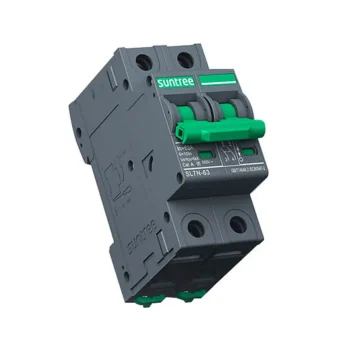
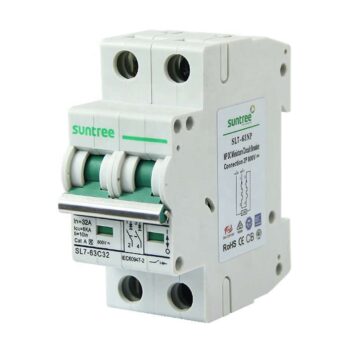
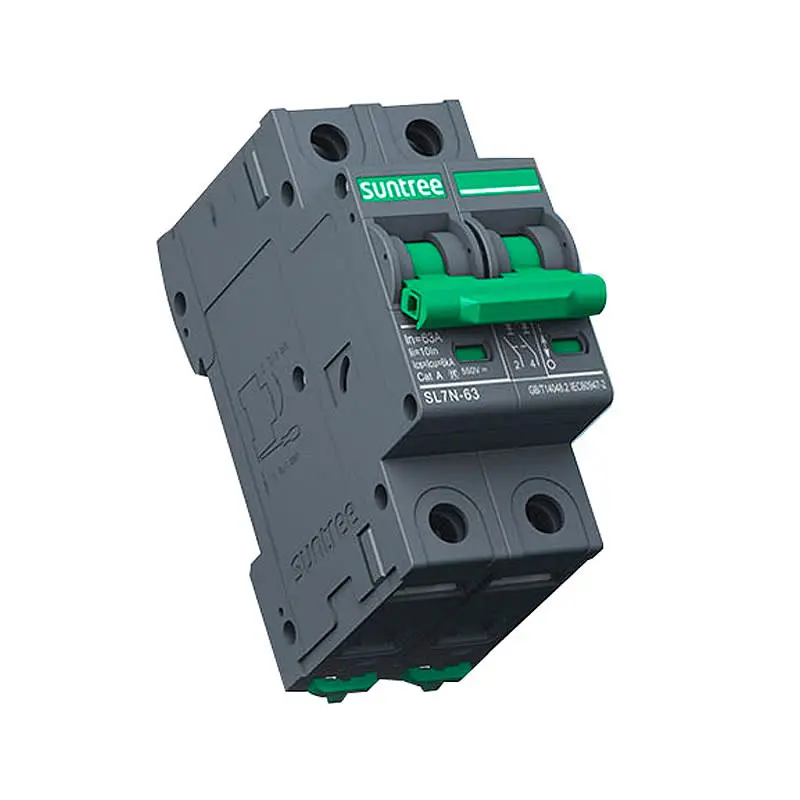
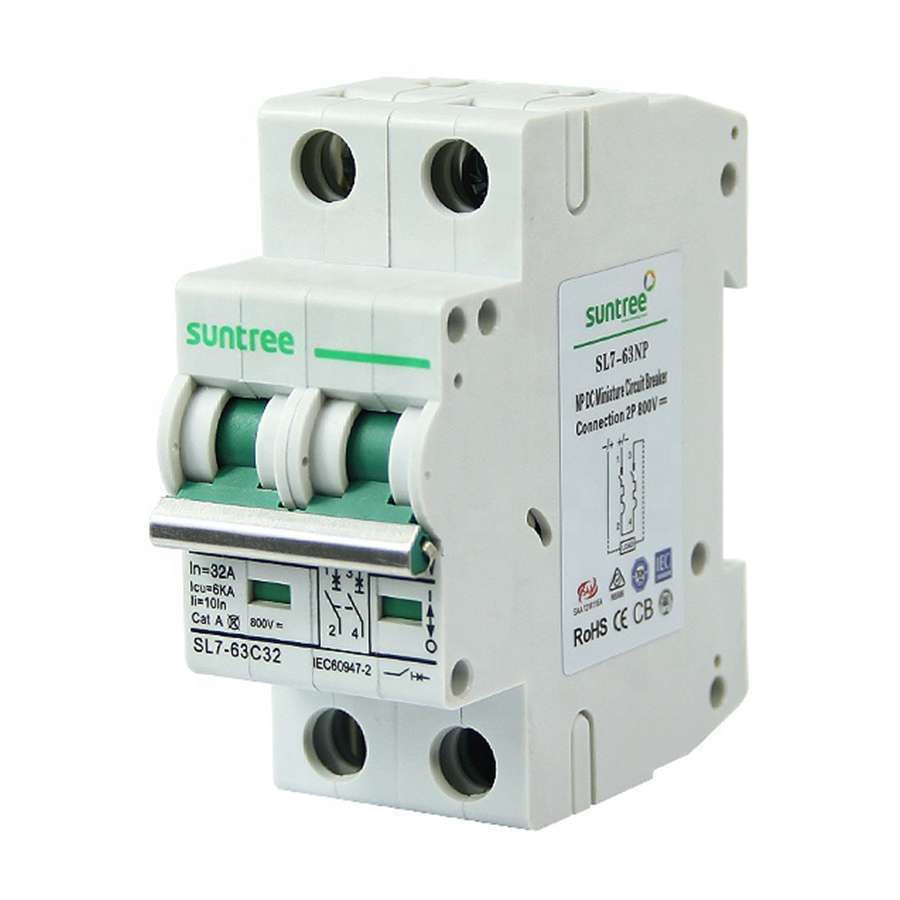
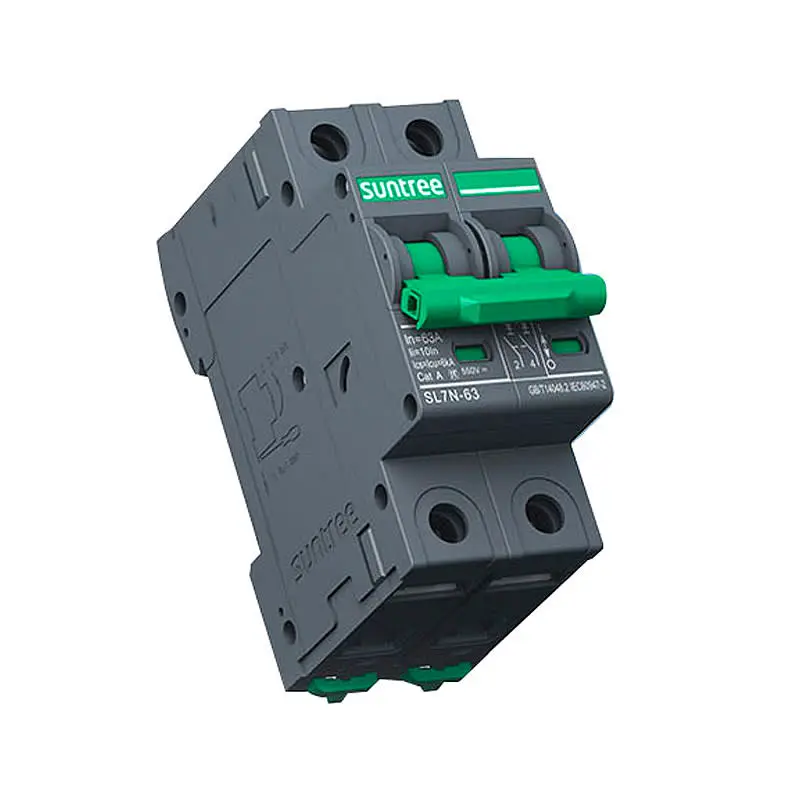
The Solar 2 Pole DC MCB 32A from Suntree — known across the Kenyan solar market as the Suntree SL7N-63 2P 550VDC 32A DC Circuit Breaker, the Suntree Solar DC MCB 32A, or the 32A Double-Pole Solar Breaker — is the natural protective device for residential and small commercial solar installations that have outgrown the entry-level 20A variant but don’t yet need the heavier 63A. It sits at the most useful midpoint in the SL7N-63 2-Pole DC MCB family: enough current capacity to handle modern high-output panels and small commercial loads, while retaining the cost-effective 2-pole 550V architecture that suits everything below utility scale.
Where the 20A variant targets entry residential systems built around 580-600W panels and the Vestwood 5kW Hybrid Inverter, this 32A variant handles a different tier — installations using the newer 600-650W high-output modules (with short-circuit currents reaching 18-26A), residential systems in the 5-8 kW capacity band paired with the Vestwood 6kW Hybrid Inverter, hybrid solar-plus-storage installations where the DC bus carries higher currents on the battery side, and small commercial installations on shops, salons, clinics, and retail premises across Kenya. The same 550V DC envelope handles residential string voltages from 6-8 modern panels in series. Only the current rating moves up to give buyers genuine headroom for the larger systems they’re actually building.
Most Kenyan installers default to the 20A breaker on every residential job simply because they’re familiar with it. That’s fine for 3-5 kW installations using older panels — but it’s the wrong choice when the system uses modern 625W modules pulling 18A short-circuit, or when a hybrid battery bank delivers 25-30A at the inverter DC input. The 32A variant is the right specification for the larger residential and small commercial tier where 20A leaves no margin and 63A is over-specified.
When 32A becomes the right specification rather than 20A
The boundary between “use 20A” and “use 32A” matters financially and operationally. Five specific scenarios push the right answer toward this 32A variant:
- Modern high-output panels with Isc above 16A: Newer N-type TOPCon and HJT panels in the 600-650W class often have short-circuit currents of 17-26A. Applying the 1.25× sizing rule pushes the required breaker rating to 21-33A — beyond the 20A envelope but well within 32A.
- Vestwood 6kW Hybrid Inverter installations: The 6kW Vestwood handles slightly higher DC input current than the 5kW model. Pairing it with a 32A breaker provides operating margin that the 20A variant cannot match.
- Hybrid solar-plus-battery system battery-side isolation: In hybrid systems where a lithium battery bank feeds the inverter DC bus, the battery-side current can reach 25-30A continuous in 5-8 kW systems. The 32A breaker provides appropriate protection on this battery circuit where 20A would nuisance-trip and 63A would be uneconomical.
- Multi-string residential installations: Some residential systems use two parallel strings of 6-8 panels each, with the strings combining inside a small junction box or combiner before the inverter. The combined current of two strings reaches 24-32A, requiring the 32A breaker on the combined output.
- Future expansion accommodation: Homeowners who anticipate growing their solar system over the next 2-5 years (adding panels, expanding battery capacity, upgrading inverter) benefit from installing the 32A breaker initially. This avoids replacing the breaker when capacity grows — the cost difference between 20A and 32A at installation is minimal compared to retrofitting after the system is energised.
Where this 32A 2P 550VDC breaker actually belongs in Kenyan solar installations
This specific variant — 2-pole, 550V DC, 32A current — addresses a clearly defined band of Kenyan residential and small commercial solar systems. Nine specific application contexts make up the bulk of buyer use cases:
- Vestwood 6kW Hybrid Inverter DC string isolation: Between the residential PV array (typically 7-12 modern panels in one or two strings) and the Vestwood 6kW Hybrid Inverter DC input terminals, providing local isolation for inverter service while leaving the array intact.
- Hybrid solar battery-side DC isolation: Between the lithium battery bank and the hybrid inverter on the DC bus, where battery output currents in 5-8 kW systems frequently reach the upper end of the 20A envelope. The 32A breaker provides comfortable continuous-duty operation on the battery circuit.
- Larger residential PV strings using modern 600-650W panels: Newer high-output panels with Isc of 17-22A in 6-8 panel strings — the 32A breaker handles their continuous current with appropriate 1.25× sizing margin.
- Multi-string residential array combining: Installations where two parallel strings of 6-8 panels each combine into a single inverter input. The combined current reaches 24-32A continuous, matching the 32A breaker capacity.
- Small commercial solar on shops, salons, clinics (3-6 kW): Retail premises in Nairobi CBD, Westlands, Kilimani, Hurlingham, Lavington, Mombasa Nyali, Kisumu town centre, Nakuru CBD, and Eldoret town requiring the larger current capacity for higher daytime load profiles.
- SHLX 550V combiner box as upsized main MCB: Inside SHLX 550V combiner boxes for installations where larger panel currents warrant the 32A main MCB instead of the standard 20A — particularly common in coastal and lowland installations using the latest high-Isc panel types.
- Off-grid charge controller DC side on larger systems: Between solar panel arrays and MPPT charge controllers on 5-8 kW off-grid installations where the panel string current and the charge controller input rating both warrant the 32A breaker.
- Expansion-ready installations: New residential systems sized for 5 kW initially but designed for later expansion to 8-10 kW. Installing the 32A breaker at initial commissioning leaves capacity headroom for the future additions without requiring breaker replacement.
- EPRA-compliant solar with safety margin: Installations where the EPRA inspector or the homeowner specifically wants protective devices sized above the minimum 1.25× Isc requirement, providing additional margin for future panel deterioration or system modification.
Positioning the 32A among the full Suntree SL7N-63 protection range
| SL7N Variant | Pole Count | Voltage Rating | Current Rating | Target Application |
|---|---|---|---|---|
| SL7N-63 single-pole 250VDC 10A | 1P | 250V | 10A | Low-voltage DC work — LED lighting, CCTV, 12V/24V/48V battery loads, off-grid components |
| SL7N-63 dual-pole 550VDC 20A | 2P | 550V | 20A | Entry residential solar (3-5 kW) with Vestwood 5kW Hybrid |
| SL7N-63 dual-pole 550VDC 32A — this product | 2P | 550V | 32A | Larger residential (5-8 kW), Vestwood 6kW Hybrid pairing, hybrid battery isolation, small commercial |
| SL7N-63 dual-pole 550VDC 63A | 2P | 550V | 63A | Largest residential systems and small-to-medium commercial battery banks |
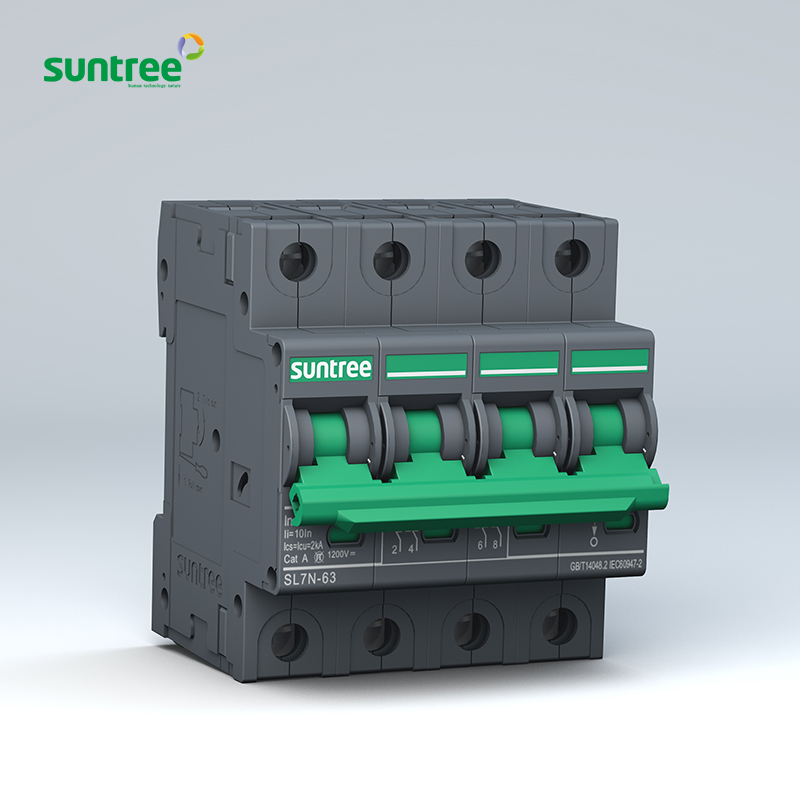
| SL7N-63 quad-pole 1000VDC 20A | 4P | 1000V | 20A | Light commercial PV with 12-15 panel strings on 1000V architecture |
| SL7N-63 quad-pole 1000VDC 32A | 4P | 1000V | 32A | Medium commercial solar systems running higher-current 1000V strings |
| SL7N-63 quad-pole 1000VDC 63A | 4P | 1000V | 63A | Larger commercial PV plus commercial battery bank isolation duty |
| SL7N-125D quad-pole 1500VDC 80A | 4P | 1500V | 80A | Utility-scale solar farms and the largest commercial rooftop installations |
The 32A 2P 550VDC sits at the volume sweet spot for Kenyan residential and small commercial solar — large enough for modern panel installations and hybrid battery banks, small enough to remain cost-effective for the residential tier. For installations approaching 8 kW capacity with higher continuous currents, step up to the 63A variant; for installations using longer 12-15 panel strings reaching 1000V architecture, move to the 4P 1000VDC variants instead.
Why Suntree SL7N-63 outperforms the cheap alternatives in Kenyan solar service
Solar DC MCBs sold in the Kenyan market range from genuine engineered devices down to relabelled AC mechanisms in DC-branded enclosures. The Suntree SL7N-63 sits firmly in the former category — and the construction differences matter for protection devices that may sit unused for years before being called upon to clear their first major fault. Four specific quality factors separate the SL7N-63 from cheap alternatives:
- Purpose-built DC arc chamber: The internal arc-quench chamber inside the SL7N-63 is engineered specifically to break DC arcs at the marked voltage. Contact geometry, magnetic blowout coils, and labyrinth arc-chute placement are all tuned for DC service. Cheap imports rebrand AC breaker bodies as DC — the relabelled device cannot reliably interrupt DC at full operating voltage when the actual fault arrives.
- Symmetric magnetic design for either polarity: Suntree builds the SL7N-63 internal magnetic blowout symmetric so current can flow either direction without compromising arc clearance. Competing DC breaker brands typically need the installer to orient positive and negative according to printed markings — connect the wrong way around and the device fails on its first opening. The SL7N-63 tolerates wiring mistakes that are otherwise unrecoverable.
- Independent test verification by TUV Germany: The SL7N-63 carries TUV verification — independent third-party testing that the device performs to the published specifications under actual DC fault conditions. Budget alternatives often display only manufacturer-claimed specifications with no independent test evidence.
- Type-tested to IEC 60947-2: The international standard for industrial circuit breakers includes a type-test regime demonstrating safe DC interrupting capacity at the device’s rated voltage. EPRA inspectors and insurance assessors recognise IEC 60947-2 compliance as evidence that the protective scheme is properly specified and tested.
Technical Specifications
| Specification | Value |
|---|---|
| Manufacturer Brand | Suntree Electric Group |
| Product Family | SL7N-63 series solar PV DC MCB |
| Device Category | Solar-rated DC miniature circuit breaker |
| Operating Voltage Ue | Up to 550V DC continuous |
| Continuous Current Ie | 32A — 60% above the 20A variant |
| Pole Count | Two poles linked through a single common-trip handle |
| Polarity Tolerance | Bi-directional installation — either current direction |
| Trip Curve | Combined thermal element plus magnetic element, tuned for solar PV duty |
| Breaking Capacity Icu | 6 kA at full rated DC voltage |
| Mechanical Life | Approximately 20,000 on-off cycles |
| Electrical Life | Approximately 10,000 cycles at rated current load |
| Contact Separation | Greater than 9 mm contact gap on opening |
| Arc Quenching Method | Labyrinth arc-chute design with magnetic blowout |
| Installation | Snaps onto standard 35mm DIN rail |
| Cable Acceptance | Solar PV cable from 4mm² up to 16mm² stranded copper |
| Working Temperature | -25°C through +70°C ambient |
| Storage Temperature | -40°C through +80°C de-energised |
| Type Test Compliance | IEC 60947-2 industrial; TUV (Germany) and CE marks |
| Environmental Rating | Pollution Degree 2 industrial environments |
| Insulation Class | Class II double-insulated construction |
| Position Window | Front-face indicator clearly shows ON or OFF |
| Lockout Feature | Padlock hole through the operating handle |
| DIN Rail Width | 2 modules wide (36mm total footprint) |
| Approximate Weight | 0.32 kg |
Engineering Features That Matter for Kenyan Solar PV Installations
- 2-pole common-trip linkage: Both DC conductor pairs open together simultaneously when the breaker is operated manually or trips automatically — providing complete isolation of the bipolar solar circuit downstream.
- 32A continuous current capacity: Sized specifically for modern 600-650W panels (Isc 17-22A) with 1.25× margin, and for hybrid system battery-side currents that frequently reach 25-30A in the 5-8 kW residential tier.
- 550V DC voltage envelope: Accommodates residential solar PV strings of 6-8 modern panels with comfortable cold-morning safety margin while staying within the cost-effective residential breaker category.
- Bi-directional installation: Field installation in either polarity orientation without performance compromise — eliminates the most common DC breaker installation error and the device damage it causes.
- Larger cable terminals (up to 16mm²): Accommodates the heavier solar PV cable cross-sections that 32A continuous duty in long cable runs may require, particularly in installations with rooftop-to-ground-floor inverter cable runs exceeding 25 metres.
- Vestwood 6kW Hybrid Inverter compatible: Voltage envelope, current capacity, and DC arc-clearance specification all match the Vestwood 6kW Hybrid Inverter requirements for DC input protection.
- SHLX 550V combiner box compatible: Drops into SHLX-series combiner box internal architecture when the installation warrants the upsized 32A main MCB instead of the standard 20A.
- Labyrinth arc chamber with magnetic blowout: Internal arc-quench geometry deliberately engineered for DC service, capable of interrupting fault currents up to 6 kA at full rated 550V.
- Padlock provision for lockout: Operating handle accepts a standard padlock, supporting the lockout/tagout discipline required during commercial solar installation maintenance and service work.
- EPRA-recognised compliance documentation: IEC 60947-2 type-test certification supports the inspection documentation that residential and commercial Kenyan solar installations require.
Typical Kenyan Installation Scenarios for the 32A Variant
- Larger residential solar installations across Karen, Runda, Muthaiga, Spring Valley, Lavington, Westlands, Lower Kabete, and Kileleshwa where 5-8 kW systems power upmarket properties with substantial daytime consumption
- Vestwood 6kW Hybrid Inverter residential installations across Kiambu, Limuru, Tigoni, Ridgeways, and Mountain View suburbs where the larger inverter handles daytime self-consumption plus battery charging
- Hybrid solar-plus-battery installations at residential properties where the battery bank delivers higher current on the DC bus, requiring the 32A protection on the battery side
- Coastal residential solar in Mombasa Nyali, Bamburi, Diani, and Watamu properties where higher year-round irradiance combined with 600W+ modern panels produces sustained higher operating currents
- Lake Victoria basin residential solar in Kisumu Milimani, Mamboleo, and Riat Hills where 5-8 kW systems power lakeside homes and small businesses
- Small commercial solar installations on retail shops, beauty salons, barbershops, butcheries, and hardware stores across Kenyan town centres in the 3-6 kW capacity band
- Religious institution solar at larger churches and mosques across Nairobi, Mombasa, Kisumu, Nakuru, and Eldoret where weekend congregations require substantial AC capacity backed by daytime solar generation
- School and educational institution solar at private academies and tertiary colleges with 5-8 kW capacity systems
- Medical facility solar at private clinics, dental practices, and small hospitals where reliable backup power matters operationally
- Small office solar at professional service businesses (accounting, legal, IT consultancies) in shared commercial buildings with metered roof access
- Multi-roof residential installations where two or three roof sections each carry a separate panel string, combining into a single inverter through this 32A breaker
- Off-grid weekend home solar at larger Naivasha, Nanyuki, Mt Kenya foothills, Aberdares, and Maasai Mara properties needing 5-8 kW capacity to support full residential loads without grid backup
- Solar carport residential installations at upmarket properties using full residential-grid replacement systems with carport-mounted PV plus battery storage
Pairing the 32A 2P 550VDC with Bicity Solar ecosystem products
This breaker integrates with several Bicity Solar products in the residential and small commercial solar ecosystem. Three integration patterns appear repeatedly across Kenyan installations:
- String + 32A MCB + Vestwood 6kW Hybrid Inverter: The most common architecture for 5-8 kW residential installations. A single string of 7-8 modern panels feeds through this 32A breaker into the Vestwood 6kW Hybrid Inverter DC input. The breaker provides the manual disconnection point and the overcurrent protection for the entire DC path.
- String + SHLX 550V Combiner + 32A MCB + Inverter (upsized configuration): Where the panel array uses higher-Isc modules requiring the upsized 32A main MCB inside the SHLX combiner box, replacing the standard 20A. Provides combined fuse + breaker + SPD protection on the array side with the higher current envelope.
- Battery bank + 32A MCB + Hybrid Inverter battery input: In hybrid solar-plus-battery systems, this breaker isolates the battery bank from the inverter DC input. Battery currents in 5-8 kW hybrid systems frequently reach 25-30A continuous, requiring the 32A capacity that the 20A variant cannot deliver.
Installation Notes for Kenyan Larger Residential and Small Commercial Solar
This breaker handles solar service work at the residential and small commercial scale that the SL7N-63 family targets. The installation must be executed by an EPRA-registered solar electrician with documented commissioning experience. Seven practical considerations apply specifically to 32A installations:
First, current rating verification — calculate the actual continuous current of the protected circuit from the panel string Isc or the battery bank discharge specification. For solar PV string protection, multiply panel Isc by 1.25 to find the required breaker rating; for battery-side protection, calculate from the maximum continuous discharge current of the battery bank. The 32A breaker is appropriate for circuits drawing 21-26A continuous; for circuits drawing closer to 30A continuous, evaluate whether the 63A variant provides better operating margin.
Second, voltage envelope verification — confirm the protected circuit voltage stays below 550V continuous under worst-case cold-morning conditions. For solar PV strings of 6-8 modern panels, the rated Voc plus cold-morning peak sits well within this envelope. For battery-side installations the operating voltage is much lower (typically 48V nominal) and voltage compliance is automatic.
Third, cable sizing for 32A continuous duty — the upstream and downstream cables must be sized for sustained 32A operation with appropriate voltage drop margin. Solar PV cable in 6mm² stranded copper handles 32A comfortably for runs up to 20 metres; longer runs above 20 metres typical of larger residential installations warrant 10mm² to limit voltage drop and reduce I²R losses. The breaker’s larger terminals accept conductors up to 16mm² to accommodate these heavier cable requirements.
Fourth, polarity orientation — the SL7N-63 family is bi-directional; the breaker installs safely regardless of current direction. However, professional installation practice still labels positive and negative consistently across the entire system for clear future maintenance and fault diagnosis. Maintain consistent labelling even when the breaker itself tolerates either orientation.
Fifth, terminal torque application — apply manufacturer-specified torque to all four terminal positions during installation. At 32A continuous duty, loose terminal joints generate measurable resistive heating that progressively damages the joint over months and may eventually compromise cable insulation around the breaker terminals. Document torque values in the commissioning record and re-torque annually as part of EPRA-recommended maintenance.
Sixth, enclosure selection — mount the breaker in an IP65 sealed enclosure for outdoor combiner deployment (typical for array-side mounting), an IP54 enclosure for protected outdoor locations, or an IP20 box inside the inverter cabinet for indoor protected installations. The 2-module DIN rail footprint allows clean integration alongside other DC protective devices and AC consumer unit breakers in residential distribution boards.
Seventh, commissioning documentation — larger residential and small commercial installations subject to EPRA inspection require documented commissioning covering insulation resistance testing of the protected DC circuit, polarity verification at the breaker terminals, manual operation testing under no-load conditions, and earth-loop impedance measurement on the protective conductor path. Hold the commissioning paperwork on file throughout the warranty interval and beyond — it becomes essential evidence if later fault analysis is needed or if an insurer requests records.
Building a 5-8 kW residential solar system, hybrid solar-plus-battery installation, or small commercial PV project in Kenya?
Match the Solar 2 Pole DC MCB 32A (Suntree SL7N-63 2P 550VDC) to your panel array, battery configuration, and inverter capacity together with appropriate cabling, lightning protection, and grounding architecture — get started with the Solar Calculator to size the larger-residential protection scheme, or send your installation details through My Quote to receive a full EPRA-compliant DC protection bill of materials.