Description
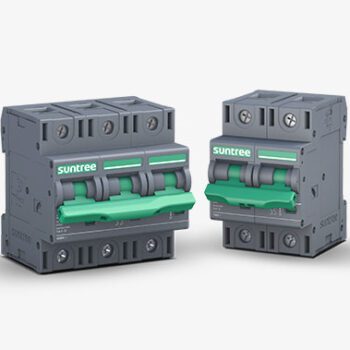
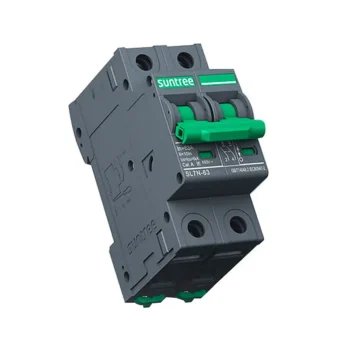
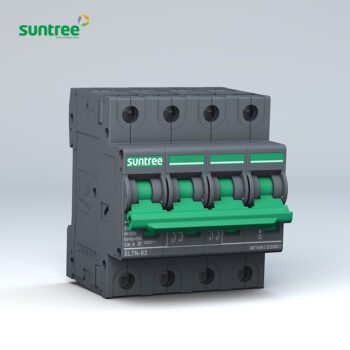
Solar 4 Pole DC MCB 63A Kenya — Suntree SL7N-63 4P 1000VDC DC Circuit Breaker for Larger Commercial Solar & EV Fast Charging
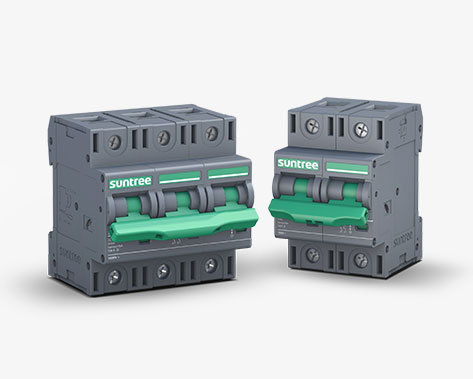
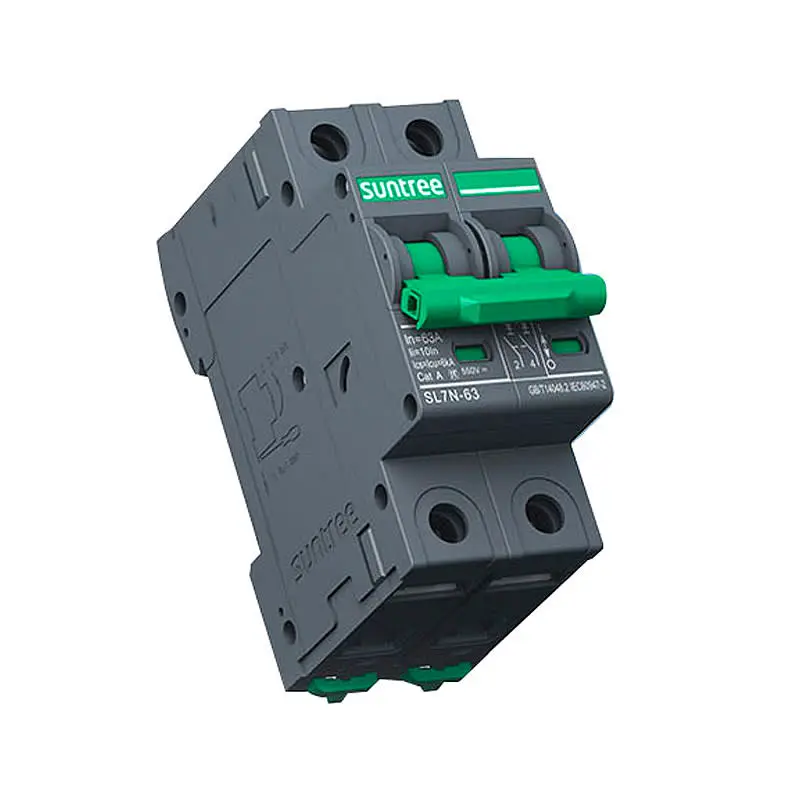
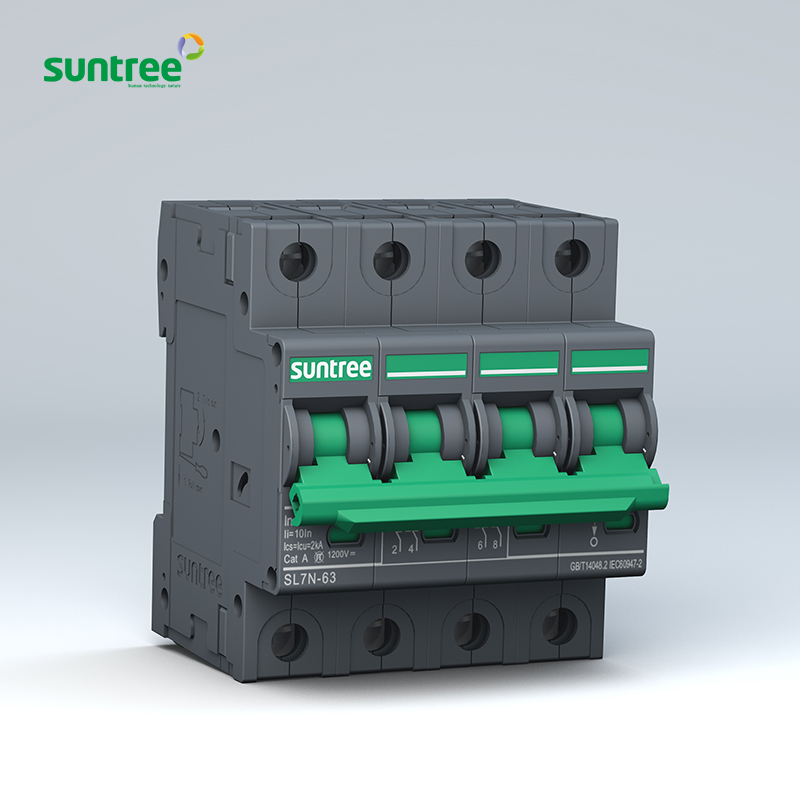
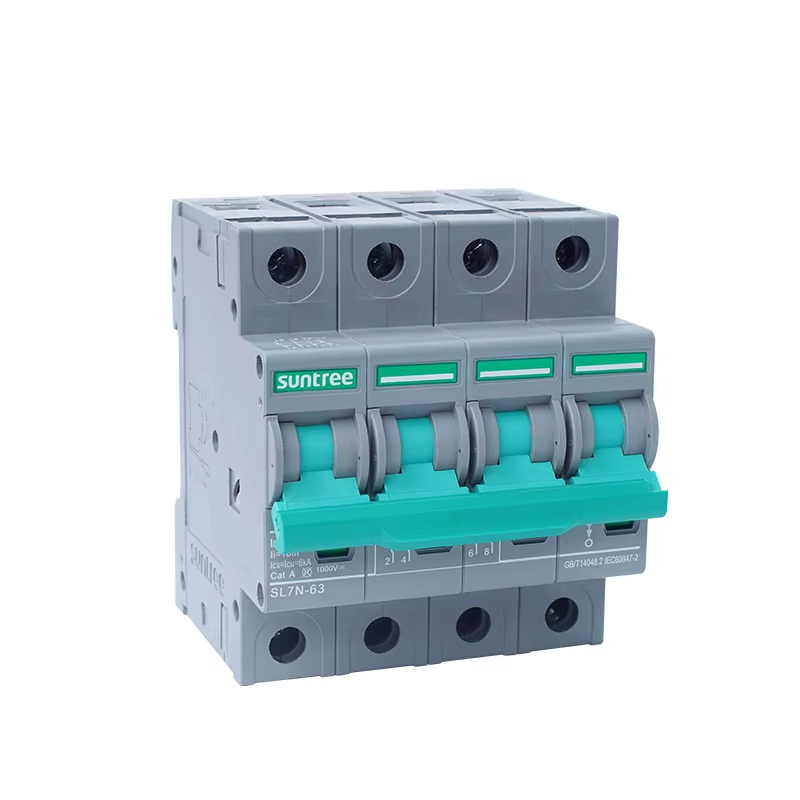
The Solar 4 Pole DC MCB 63A from Suntree — distributed across the Kenyan solar market under several product names including Suntree SL7N-63 4P 1000VDC 63A DC Circuit Breaker, Suntree Quad-Pole DC MCB 63A, the 63A Four-Pole 1000V Solar Breaker, and the Larger Commercial Solar DC Breaker — sits at the top of the commercial protection range. It addresses Kenyan solar installations that have grown beyond the residential and small-commercial tiers covered by the 2P 550V variants, beyond the entry and mid-commercial tiers covered by the 20A and 32A 4P 1000V variants, and into the larger commercial installations where continuous DC currents reach 35-50A in routine operation.
This is the breaker for serious commercial Kenyan solar buyers — businesses operating at capacity that genuinely justifies the larger 4P 1000V protection device. Larger retail premises, restaurants and hotels with substantial daytime electrical loads, hospitals and medical facilities with continuous diagnostic equipment operation, larger educational facilities with weekday and weekend congregational peaks, and the emerging EV fast-charge infrastructure where DC-side currents reach the high-current range that smaller variants cannot handle. The 63A capacity within the 4P 1000V architecture provides the protective backbone that this larger commercial tier requires while remaining within the commercial 1000V envelope rather than escalating to utility-scale 1500V protection.
Most installations that genuinely need 63A 4P 1000V protection have moved past first-attempt commercial solar adoption. The buyer profile is established small-to-medium Kenyan businesses making considered solar investments — hotels expanding restaurant kitchens and air-conditioning loads, retail chains rolling out solar across multiple branches, religious institutions building larger congregational capacity, hospitals adding diagnostic capability that warrants reliable daytime power, and entrepreneurs deploying EV charging infrastructure ahead of the emerging Kenyan electric vehicle market.
What pushes specification from the 32A toward this 63A variant
The decision between 32A 4P 1000V and 63A 4P 1000V follows the same 1.25× continuous-current rule that governs the rest of the family. Seven specific scenarios push the answer toward this 63A variant:
- Larger commercial solar in the 18-30 kW capacity band: Commercial installations at this capacity routinely pull 30-45A continuous from the inverter side during midday operation, requiring the 63A breaker for proper sizing margin. The 32A variant would nuisance-trip during sustained high-irradiance periods.
- Three or four parallel strings combining at the inverter: Larger commercial roofs accommodate 3-4 parallel strings of 12-15 modern panels each. Combined string currents reach 39-54A continuous — within the 63A rating but well beyond the 32A envelope. Each individual string can use smaller 20A breakers upstream within the combiner.
- Commercial lithium battery banks (20-40 kWh capacity): Larger commercial battery storage delivers continuous discharge currents in the 35-50A range during sustained high-load periods. The 63A breaker handles this duty cycle with appropriate operating margin while still clearing on genuine fault currents.
- EV fast-charge stations (50+ kW DC chargers): The emerging Kenyan EV fast-charge infrastructure pairs solar generation with battery storage to support DC fast chargers that draw 35-50A continuous from the supply bus during charging operation. The 63A 4P 1000V provides DC-side protection on these high-current emerging installations.
- Larger commercial string inverter DC isolation: Inverters in the 20-30 kW commercial class (Sungrow SG20-30K, Solis 25K commercial, Huawei SUN2000 25-30 kW range, GoodWe larger commercial) handle DC input currents that approach 45-55A continuous at maximum operating point. The 63A breaker matches their operating envelope.
- Microgrid commercial installations: Larger commercial sites adopting microgrid architecture — integrated solar generation, battery storage, grid interconnection, and dedicated critical-load circuits — use the 63A breaker at multiple isolation points within the microgrid DC bus.
- Industrial DC equipment protection at scale: Light industrial Kenyan facilities (larger food processing operations, agricultural processing centres, manufacturing facilities with DC drives) where DC-side currents on the 1000V architecture reach 35-50A continuous during normal operation.
When the 63A 4P 1000V is wrong-specified
Right-sizing matters at the larger commercial tier because the protection device represents a meaningful cost component and improper specification creates either gaps in protection or wasted capital. Four scenarios where this variant is the wrong answer:
- Mid-commercial installations under 18 kW: Installations drawing 20-26A continuous fit the 32A 4P 1000V variant cleanly. The 63A breaker may technically work but creates a gap: short-circuit fault currents below 32A would not trigger the 63A trip threshold reliably, leaving downstream cables potentially unprotected.
- Small commercial single-string installations under 15 kW: Entry commercial systems running a single 12-15 panel string get correct protection from the 20A 4P 1000V variant at significantly lower cost.
- Residential systems on 550V architecture: Even larger residential installations at 8-12 kW capacity typically use 550V architecture rather than 1000V — the 2P 550V 63A variant is the correct match for these residential applications, not the 4P 1000V variant.
- Utility-scale installations exceeding 30 kW continuous: Installations above 30 kW typically migrate to 1500V architecture (where modern utility-scale solar lives), beyond the 1000V envelope. The SL7N-125D 4P 1500VDC 80A handles these utility-scale circuits; the 4P 1000V family stops at this 63A variant.
The 63A 4P 1000V within the broader SL7N protection lineup
The Suntree SL7N protection range covers eight distinct variants spanning low-voltage DC auxiliary circuits through utility-scale solar farms. Pole configuration and voltage class together identify the application class; current rating then defines capacity within that class. The position of the 63A 4P 1000V variant — the top of the commercial 1000V tier — becomes clear when mapped against the full lineup:
| Voltage Class | Pole Configuration | Current Ratings Available | Application Tier |
|---|---|---|---|
| 250V DC | 1P single-pole | 10A | Low-voltage DC auxiliary — LED, CCTV, battery isolation |
| 550V DC | 2P dual-pole | 20A, 32A, 63A | Residential solar PV — 3-12 kW capacity band |
| 1000V DC | 4P quad-pole | 20A, 32A, 63A — this product is the 63A top variant | Commercial solar PV — 8-30 kW capacity band |
| 1500V DC | 4P quad-pole (SL7N-125D) | 80A | Utility-scale solar and the largest commercial rooftop installations |
Within the 4P 1000V commercial tier, the three current ratings (20A, 32A, 63A) cover progressively larger commercial installations. The 20A handles entry commercial single-string installations of 8-15 kW. The 32A handles mid-commercial two-string installations of 10-18 kW with emerging EV charging applications. This 63A handles the upper commercial tier of 18-30 kW with three-or-more parallel string combining, larger battery banks, and DC fast-charge infrastructure.
DC fast-charge stations: emerging Kenyan application at scale
The Kenyan EV market has moved into a new phase over the past 12 months. Where workplace Level 2 chargers (7-22 kW AC) dominated the earlier rollout, DC fast-charge stations (50+ kW DC) have begun appearing at major highway corridors, fuel retailer forecourts, and dedicated charging network locations. These installations represent a substantial capacity step up from Level 2 charging and require correspondingly larger DC-side protection on the solar-plus-battery infrastructure that backs them.
DC fast-charge architectures vary by manufacturer but typically combine: a solar generation array sized for daytime charging plus building baseline load (often 20-40 kW capacity); a substantial lithium battery bank (40-100 kWh) handling evening and night-time charging plus outage backup; a commercial hybrid inverter or grid-tie inverter managing the AC supply; and the DC fast charger itself drawing power from the AC supply with internal AC-to-DC conversion. The protective devices on the DC side of the solar and battery infrastructure handle continuous currents in the 35-50A range during sustained fast-charge events.
The 63A breaker installs at multiple isolation points within these EV fast-charge architectures: on the PV feed at the point where solar generation enters the supply inverter from the array (or from a multi-string combiner output); on the battery feed where lithium storage connects to the inverter battery terminal; and where present, on dedicated DC distribution serving any DC-coupled fast-charge interface electronics. Each isolation position calls for its own breaker — fast-charge stations typically end up running two or three of these 63A units across the full DC architecture.
Specific Kenyan deployment contexts for solar-backed EV fast-charge include: highway corridor service stops along major routes (Nairobi-Mombasa Highway, Nairobi-Nakuru-Eldoret corridor, Nairobi-Kisumu corridor, Nairobi-Mombasa via the Coast); fuel retailer forecourt pilot installations at major service stations; hotel and lodge installations along the major tourism routes; dedicated charging network sites at urban locations in Nairobi, Mombasa, Kisumu, Nakuru, and Eldoret; and corporate campus installations at larger office complexes and industrial parks. All of these contexts increasingly specify solar-plus-battery backup as standard, requiring the commercial-tier high-current DC protection that the 63A 4P 1000V breaker provides.
Three-string and four-string commercial array combining
Larger commercial Kenyan solar installations rarely fit on a single panel string. The roof areas available at commercial premises — warehouse roofs in industrial estates, restaurant building roofs, hotel main building plus annex roofs, multi-section office building roofs, retail building plus adjacent staff quarter roofs — frequently support 3-4 parallel strings of 12-15 panels each. The strings combine through a combiner box before feeding a single commercial inverter or through multiple inverter MPPT inputs.
Combined currents from three or four parallel strings reach substantial levels. Each individual string of 12-15 modern panels carries 13-15A Isc continuous; three parallel strings combined deliver 39-45A continuous; four parallel strings combined reach 52-60A continuous. The 63A breaker handles these combined currents with appropriate 1.25× sizing margin. The individual string breakers within the combiner can use smaller variants (20A for typical residential-scale strings, 32A for higher-Isc commercial strings) protecting each parallel circuit upstream of the combined-output breaker.
Specific multi-string architectures common in larger commercial Kenyan solar installations include: 3-string combiners feeding a single 25 kW commercial inverter at restaurants and hotels; 4-string combiners feeding parallel MPPT inputs on multi-MPPT commercial inverters at larger institutional facilities; multi-roof configurations where separate combiners on different roof sections each carry 2-3 strings, then combine through this 63A breaker on the unified DC bus before the inverter; and dedicated multi-inverter installations where parallel commercial inverters share a common combined-DC-bus protected by this 63A breaker.
Why the 4-pole arrangement is mandatory across the entire 1000V tier
The four-pole architecture in the 63A breaker addresses the same fundamental DC arc-interruption physics that all 4P 1000V variants handle. At 1000V circuit voltage, arc interruption requires series voltage division across multiple contact pairs because a single 2-pole arrangement cannot reliably extinguish arcs at this voltage class. The ionised path simply will not collapse across the gap a 2-pole device offers; the contacts stay electrically bridged through the plasma even after mechanically opening, and the device fails to deliver the isolation it is supposedly providing.
The 4-pole layout splits the 1000V across two pairs of contacts arranged in series. Each pair sees approximately 500V during opening — within the safe operating envelope of the labyrinth arc-chute and magnetic blowout geometry that interrupts the arc reliably. The common-trip linkage opens all four contacts together simultaneously, providing genuine galvanic isolation of the 1000V bus through the series-arranged contact pairs. This architecture applies across the entire 4P 1000V range (20A, 32A, 63A) because the underlying voltage-clearance physics is identical regardless of current rating.
The 63A current rating adds nothing to this fundamental requirement — it simply increases the continuous current capacity within the same 4-pole 1000V architecture. The contact mass, conductor bus cross-sections, and terminal capacity scale up to handle the higher continuous current while the pole arrangement and arc-quench geometry remain the same as the smaller variants in the family.
Technical Specifications
| Item | Specification |
|---|---|
| Bicity SKU code | BC-DCB-1000V-63A-4P |
| OEM brand | Suntree Electric Group (China) |
| Range | SL7N-63 commercial 1000V solar DC breaker platform — top current rating |
| Device classification | Miniature circuit breaker for commercial solar PV DC service at high-current envelope |
| Working voltage maximum | 1000V DC continuous load |
| Continuous current carrying | 63A thermal — top of the 4P 1000V family |
| Pole layout | Four poles with two pairs in series per polarity, common-trip linkage |
| Voltage per pole pair when opening | About 500V — sits inside the safe arc-quench envelope of each pair |
| Polarity requirement | None — bi-directional installation |
| Tripping behaviour | Thermal slow-overload element plus magnetic instant-trip element, tuned for solar and battery service |
| Icu (fault current interrupting) | 6 kA at full rated 1000V DC |
| Mechanical operations rating | Around 20,000 cycles end-of-mechanism life |
| Electrical operations rating | Around 10,000 cycles at full rated current |
| Contact gap separation per pair | Over 9 mm when open |
| Arc extinguishing approach | Magnetic blowout deflects arc into labyrinth chute geometry, sized per 500V pair |
| Mounting method | Snap-fit onto standard 35mm DIN rail |
| Terminal cable capacity | Solar PV stranded copper from 6mm² up to 25mm² (heavier terminals than smaller variants) |
| Ambient operating range | From -25°C through +70°C |
| Storage temperature | -40°C through +80°C de-energised |
| Type-test certification | IEC 60947-2 industrial; TUV Germany; European CE conformity |
| Environment classification | Pollution Degree 2 — industrial environments |
| Insulation construction | Class II — double-insulated housing |
| Front-face status indication | Window clearly displays OFF or ON position |
| Lockout-tagout provision | Padlock hole through operating handle |
| DIN rail width occupied | 4 modules (72mm) — same physical footprint as smaller variants in the family |
| Net weight (approx) | 0.56 kg |
Engineering Features That Matter at the 63A 1000V Combination
- Quad-pole common-trip for safe 1000V DC interruption: Two pairs in series handle the 1000V bus through voltage division — each pair within its safe arc-quench envelope, with all four contacts opening together to provide complete galvanic isolation.
- 63A continuous capacity at the commercial high-current tier: Heavy contact assembly, conductor bus, and terminal hardware all dimensioned to carry 63A continuously without thermal runaway across years of commercial duty.
- Heavy cable terminals (up to 25mm² conductor): Substantially larger terminal openings than the smaller 4P 1000V variants accommodate the heavier conductor cross-sections that 63A continuous duty in longer commercial cable runs requires — particularly important in commercial installations where roof-to-inverter cable runs may reach 40-60 metres.
- 1000V envelope for commercial 12-15 panel strings: Same voltage class as the smaller 4P 1000V variants — accommodates the standard commercial string voltage range from 600V rated up to 800V cold-morning peaks, with substantial safety margin to the 1000V envelope.
- Bi-directional installation flexibility: The breaker tolerates current in either direction without compromising fault interruption capability — important at the larger commercial scale where multiple high-current conductors converge at the same DIN rail.
- Compatible with Sungrow SG20-30K and equivalent larger commercial inverters: Voltage envelope and current capacity align with the protection requirements of larger commercial string inverters from Sungrow, Huawei, Solis, GoodWe, and Growatt at the 20-30 kW capacity range.
- EV fast-charge infrastructure DC-side protection: Suitable for the emerging Kenyan DC fast-charge market where commercial-tier protection at the high-current range supports 50+ kW chargers backed by solar plus battery storage.
- Industrial-grade lockout/tagout: Padlock provision through the operating handle supports the formal lockout discipline that larger commercial installations and EV charging infrastructure require during service work.
- 72mm DIN footprint: Same physical envelope as the smaller 20A and 32A 4P 1000V variants — simplifies distribution board layout when commercial installations use multiple breaker ratings across the protection scheme.
- EPRA documentation support: IEC 60947-2 type-test plus TUV and CE marks provide the verification evidence that EPRA inspectors and commercial insurance assessors look for in larger commercial installations.
Typical Kenyan Installation Scenarios for the 63A 4P 1000V Variant
- Larger commercial solar installations at substantial retail premises (supermarkets, larger electronics retailers, hardware mega-stores) across Nairobi Westgate area, Sarit Centre commercial zone, Junction Mall, The Hub Karen, Two Rivers Mall, Mombasa Nyali Centre, Kisumu West Mall, Nakuru Westside, and Eldoret Rupa Mall in the 18-30 kW capacity band
- Hospitality installations at larger hotels with substantial daytime operations across coastal corridor (Mombasa Nyali Beach hotels, Diani resort properties, Watamu beach hotels, Malindi seafront establishments), Maasai Mara safari camps and lodges, Naivasha lakeside hotels and conference facilities, Mount Kenya area lodges, and Lake Nakuru area hospitality properties
- Larger restaurant solar at commercial chains and multi-outlet operators (larger Java House outlets, ArtCaffe locations, Galitos branches, larger KFC and similar QSR sites) where kitchen equipment, refrigeration, and HVAC loads justify 18-30 kW capacity solar systems
- Hospital and medical facility solar at larger private hospitals and medical centres (Nairobi Hospital, Aga Khan University Hospital, MP Shah Hospital, Coast General Hospital, Kisumu County Hospital, larger Mediheal facilities) where 18-30 kW capacity solar supports diagnostic equipment and medical refrigeration with battery backup
- University and tertiary college solar at campuses with substantial daytime operations (USIU, Daystar, Strathmore, Multimedia University, JKUAT branch campuses, Maseno University, Egerton University, Moi University) where 18-30 kW systems power administrative and academic buildings
- Religious institution solar at the largest churches, mosques, and cathedrals (All Saints Cathedral, Nairobi Chapel, Mavuno Church, Citam Valley Road, Holy Family Basilica, Jamia Mosque, Hindu Mandir Westlands) where weekend congregational peaks require substantial AC capacity backed by solar generation
- EV fast-charge station solar at highway corridor service stops along Nairobi-Mombasa Highway, Nairobi-Nakuru-Eldoret corridor, Nairobi-Kisumu corridor, and emerging EV charging network sites in major urban centres
- Fuel retailer forecourt EV charging pilots at major service station chains where solar-plus-battery infrastructure backs the EV fast-charge offering
- Corporate campus solar at office park installations (Two Rivers Office Park, Garden City office complex, larger Westlands corporate buildings, Upper Hill office towers) where 18-30 kW systems power building operations with battery backup
- Light industrial solar at larger food processing facilities, agricultural processing centres (medium-sized tea factories, coffee processing plants, dairy operations, horticultural pack-houses), small manufacturing premises, and warehousing operations
- Microgrid commercial installations at integrated commercial sites where solar generation, battery storage, grid interconnection, and critical-load circuits combine into managed microgrid architecture
- Telecommunications backup solar at larger tower sites and operations centres where 18-30 kW capacity supports continuous operations with battery backup through extended outage scenarios
- Off-grid larger commercial installations at conservation facility headquarters, larger eco-lodges with full hospitality operations, mission hospitals in remote locations, and emergency response coordination centres where 18-30 kW with substantial battery backup replaces grid dependency entirely
Pairing the 63A 4P 1000V with Bicity Solar ecosystem components
This larger commercial breaker integrates with several Bicity Solar products across the upper commercial solar architecture. Four integration patterns dominate the 18-30 kW commercial installations:
- Three-string 1000V architecture + 63A combined output + larger commercial inverter: The classic upper-commercial architecture. Three parallel strings of 12-15 modern panels combine through a SHLX 1000V combiner box (with individual 20A or 32A breakers per string at the combiner inputs), with this 63A breaker on the combined output running to the larger commercial string inverter at 20-30 kW capacity.
- Commercial battery bank + 63A MCB + hybrid commercial inverter battery input: Hybrid commercial installations with 20-40 kWh lithium battery storage where battery-side currents during sustained high-load periods reach 35-50A continuous. This breaker provides battery isolation for service work and for emergency response.
- Multi-roof commercial array + multiple combiners + 63A unified bus breaker + inverter: Larger commercial premises with multiple separate roof sections each carrying their own combiner; the separate combiners then feed into a unified DC bus protected by this 63A breaker before the inverter input. Common in restaurant chains, hotel complexes, and multi-building institutional installations.
- EV fast-charge station + 63A MCB on solar feed + battery feed: Emerging EV fast-charge installations where this breaker provides DC-side protection at multiple positions: between solar array (or combiner output) and the supply inverter, and between battery bank and inverter battery input. Each position requires its own breaker — typical EV fast-charge installations use 2-3 of these 63A breakers across the DC architecture.
Installation Notes for Larger Commercial Kenyan Solar
The 63A 4P 1000V handles installations that operate clearly above small-commercial complexity. Commissioning must be performed by an EPRA-licensed solar electrician with demonstrable larger-commercial solar installation experience and appropriate test equipment for the higher voltage and current class. Eight practical considerations apply specifically to 63A 1000V architecture work:
One — actual continuous current calculation rather than estimation. For multi-string combiner outputs, sum the individual string Isc values and apply the 1.25× sizing factor. For battery-side protection, calculate from the maximum continuous discharge current of the battery bank during peak commercial operating periods. For EV fast-charge installations, work from the manufacturer’s specification for sustained DC-side current during normal charging operation rather than from the charger’s peak rating. The 63A breaker suits circuits drawing 35-50A continuous; circuits drawing less should use smaller variants; circuits drawing close to 63A may benefit from stepping to the 4P 1500VDC variant for additional margin.
Two — conductor sizing scaled for sustained high current operation. For 50A continuous duty over 40-60 metre commercial cable runs typical of larger commercial premises, 10mm² stranded copper PV cable handles the ampacity but with non-trivial voltage drop; 16mm² provides better economic performance over the project lifetime through reduced I²R losses. For very long cable runs above 60 metres, step up to 25mm² to limit losses; the breaker terminals accept conductors up to this size.
Three — terminal preparation at the high-current scale. Larger commercial installations frequently use crimped lug terminations rather than direct conductor insertion. Insulated crimp lugs matched to the conductor cross-section and the breaker terminal opening provide better mechanical security and lower joint resistance than direct stranded-conductor insertion at these higher currents. Crimped terminations also handle differential thermal expansion better over the daily heating-cooling cycles of commercial solar operation.
Four — torque application using calibrated tools. At sustained 50A operation in commercial premises that run from sunrise to sunset, joint resistance matters substantially. Apply manufacturer-specified torque using a calibrated torque wrench rather than feel-based tightening. Document torque values in commissioning records. Verify torque after the first six months of operation and annually thereafter.
Five — cable insulation voltage rating verification. The cables in the protected loop must carry explicit 1000V DC voltage rating in addition to ampacity rating. Solar-PV-rated cable (marked PV or TUV on the insulation) typically carries 1500V DC rating with substantial margin above the 1000V operating envelope. Standard building cable rated only for 600V DC is inadequate for 1000V architecture and creates a long-term insulation breakdown risk.
Six — bus arrangement in commercial distribution boards. The breaker’s 72mm DIN footprint integrates with commercial-grade distribution architecture but requires planning for the higher current and the larger conductor sizes converging at the device. Allow physical separation between this breaker and adjacent protective devices to support heat dissipation and to maintain insulation clearances. Consider dedicated enclosures for the high-current section of the distribution board rather than mixing 63A breakers with smaller residential-tier protective devices.
Seven — enclosure rating for the commercial installation environment. Outdoor combiner deployments at the array side require IP65 industrial-grade enclosures rated for direct outdoor mounting in Kenyan rainy season and high-UV exposure conditions. Protected outdoor positions can use IP54 enclosures. Indoor inverter cabinet installations use commercial-grade IP20 distribution boards rated for the 1000V operating voltage class.
Eight — formal commercial commissioning with documented records. Larger commercial installations face the strictest EPRA inspection and commercial insurance documentation requirements. Required commissioning records include insulation resistance testing at the 1000V class on the protected circuit, continuity and polarity verification at each of the four breaker terminations, manual operation testing verifying smooth four-pole common-trip action, current measurement under operating load comparing actual to design current, earth-loop impedance measurement on the protective conductor, and trip characteristic verification where test equipment supports it. Retain records through the system lifetime for warranty, insurance, fault investigation, and resale due diligence purposes.
Specifying an 18-30 kW larger commercial solar installation, EV fast-charge station infrastructure, or microgrid commercial system in Kenya?
Match the Solar 4 Pole DC MCB 63A (Suntree SL7N-63 4P 1000VDC, SKU BC-DCB-1000V-63A-4P) within a complete commercial protection scheme covering multi-string combiner architecture, solar-PV-rated cables sized for the 50A continuous duty, larger commercial inverter pairing, lithium battery bank isolation, and EPRA-ready commissioning documentation — open the Solar Calculator to scope the larger commercial protection requirements, or describe your specific project through My Quote for a complete commercial bill of materials with installation and commissioning guidance.