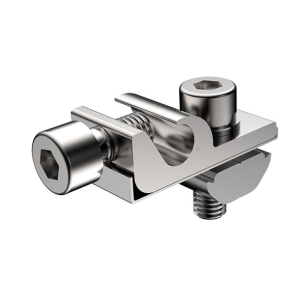
Description
The Connection That Makes a Solar Array Safe to Touch
Every metal part of a solar installation — the aluminium panel frames, the mounting rails, the structure — needs to be electrically connected to earth. The grounding lug is the component that makes that connection. It is a small metal terminal that bolts onto the rail or frame and provides a secure point to attach the earthing conductor, the wire that carries any stray or fault current safely down to the ground rod rather than leaving it sitting on the metalwork where a person could touch it.
It is easy to overlook because it is small and inexpensive, but the grounding lug performs a safety-critical job. Without proper earthing, a lightning strike near the array, an insulation fault in a panel, or static build-up can leave the mounting metalwork live at a dangerous voltage. The lug — and the earth wire it terminates — gives that energy a safe path away from people and equipment. This is why earthing is not optional on a properly engineered installation; it is a fundamental safety requirement.
Why a Lug, and Not Just a Bolt
A common shortcut on cheap installations is to wrap the earth wire under any convenient bolt and call it grounded. This fails for two reasons. First, aluminium rails and frames are anodised, and the anodised layer is an electrical insulator — a plain bolt clamped onto anodised aluminium often makes a poor electrical connection or none at all, even though it looks tight. Second, a wire trapped under an ordinary bolt works loose over years of thermal cycling and vibration, and a loose earth connection is no earth connection at all.
A purpose-made grounding lug solves both problems. It includes a serrated or star washer that bites through the anodised layer into the bare aluminium beneath, guaranteeing genuine metal-to-metal electrical contact. And it provides a proper clamped terminal that holds the earth conductor securely for the life of the installation. The small cost of a real lug buys a connection that actually works and stays working — which is the entire point of earthing.
Technical Specifications
| Specification | Detail |
|---|---|
| Type | Solar earthing / grounding lug |
| Function | Terminates the earth conductor on rails and panel frames |
| Material | Tin-plated copper or stainless steel |
| Anodising Penetration | Serrated washer bites through anodised layer for true contact |
| Conductor Range | Standard earthing cable sizes (approx. 4mm²–16mm²) |
| Mounting | Bolts to aluminium rail or panel frame |
| Electrical Role | Bonds metalwork to the earthing system / ground rod |
| Corrosion Resistance | Suitable for inland and coastal outdoor exposure |
| Service Life | 25+ years matching the array |
Where Grounding Lugs Go on an Array
An earthing system bonds all the metal parts of the array together and then connects that bonded network to a ground rod driven into the earth. Grounding lugs are the termination points in that system. Typical placement on a Kenyan installation:
- On each rail run: a lug terminates the earth conductor that bonds the rail to the earthing network
- Between bonded rails: where the earth conductor passes from one rail to the next across the array
- At the main earth take-off: the lug connecting the whole bonded array to the down-conductor that runs to the ground rod
- On the panel frames where required: bonding the frames into the earthing network alongside the rails
The exact number depends on the array size and the earthing design, but every compliant installation needs several. An EPRA-certified technician designs the earthing layout to suit the specific system.
Earthing and Compliance
Proper earthing is one of the clearest dividing lines between a professional, inspectable solar installation and a cut-corner one. A compliant installation has its metalwork bonded and earthed so that it can be safely inspected, certified, and connected — and so that it protects the people who live or work beneath it. Skipping the earthing saves a tiny amount on a few lugs and some cable, but it leaves the array electrically unsafe and the installation non-compliant. For any installation that matters — which is all of them — the grounding lug is a non-negotiable part of the bill of materials.
Cross-Sell: Complete the Earthing and Mounting System
- Earth clips: for bonding panel frames directly to the rail as the panels are clamped down
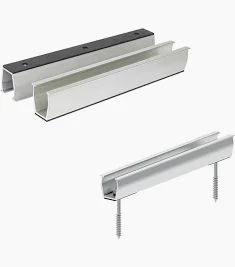
- Mounting rails: 4800mm and 4400mm rails that the lugs bond
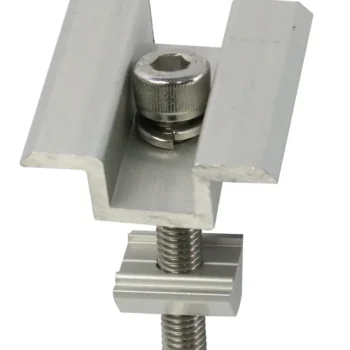
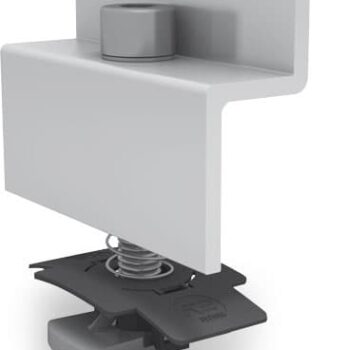
- Panel clamps: mid-clamps and end-clamps to secure the panels
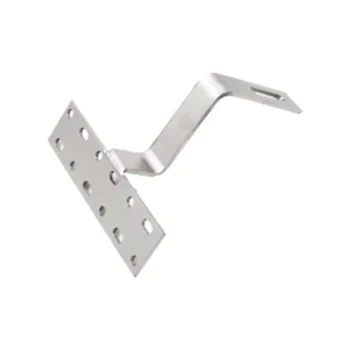
- Roof anchors: L-foot screw kit and tile roof hook
- Full bill of materials: use our solar calculator or request a quote