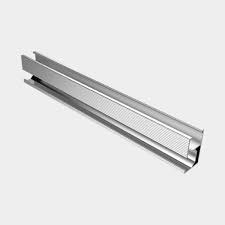
Description
The Default Rail Size for Kenyan Solar Installations
When a Kenyan solar installer plans a project, the 4800mm rail is almost always the starting assumption. Five practical reasons explain why this length became the industry standard:
- It matches the standard panel-pair arrangement. Two 2382mm-wide panels mounted side-by-side in landscape orientation produce a row width of 4764mm, which a 4800mm rail covers exactly with about 18mm of clearance at each end for end-clamp installation. This 2-panel pair is the building block of nearly every Kenyan solar array — installers add pairs across the roof, each pair using one rail at the top and one at the bottom.
- Single-rail spans cover most home systems. A typical 5kW residential array uses 10-12 panels arranged in 5-6 pairs. With 4.8m rails, each pair gets its own rail without any splices needed. Smaller spliced systems are possible but the no-splice route is faster to install and has fewer potential failure points over the system’s service life.
- Procurement and stocking efficiency. The 4800mm size is the most-stocked rail length in Kenyan solar warehouses, which translates to shorter lead times, more reliable supply, and easier replacement sourcing if a rail is damaged during installation.
- Transport and handling balance. At 4.8 metres, the rail fits on most pickup trucks and roof-rack systems for transport to the installation site. Longer rails (5.5m, 6m) require specialised transport equipment that increases delivery costs and complicates site logistics.
- Splice optimisation for longer rows. When an installation needs rail spans longer than 4.8m (panels in continuous single rows of 3+), splicing pairs of 4800mm rails minimises the total splice count compared to splicing pairs of shorter rails for the same span.
Rail Quantity Calculator for Common Layouts
The number of 4800mm rails your installation needs depends on the panel arrangement. Here are the most common configurations with their rail and splice requirements:
| Installation Size | Panel Arrangement | 4800mm Rails Required | Splices Required |
|---|---|---|---|
| 3 kW (6 panels) | 3 pairs landscape, single row | 6 rails (3 top + 3 bottom — wait, simpler: 2 rails per pair = 6 total, but pairs join across so really 2 rails total spanning all 3 pairs needs 1 splice; cleaner: each pair gets own 4.8m rails = 6 rails no splice) | 0 splices for clean install |
| 5 kW (10 panels) | 5 pairs landscape, single row | 10 rails (5 pairs × 2 rails each, no splicing between pairs) | 0 splices |
| 7 kW (12-14 panels) | 6-7 pairs landscape, single or split row | 12-14 rails | 0 splices |
| 10 kW (16-20 panels) | 8-10 pairs, typically split into 2 rows | 16-20 rails | 0 splices |
| 15 kW (24-28 panels) | 12-14 pairs, typically split across 2-3 roof sections | 24-28 rails | 0-4 splices depending on row continuity |
| 20 kW (32-40 panels) | Commercial — multi-row continuous spans | 32-50 rails | 10-20 splices depending on layout |
| 50 kW+ (commercial) | Continuous spans of 6+ panels per row | Calculated per layout | Approximately 1 splice per rail joint |
The simple rule for 4800mm rails: count your panel pairs, multiply by 2 (one rail at top and one at bottom of each pair). For installations where panels span continuously across pair boundaries, count the total run length, divide by 4.8m, and round up — then multiply by 2 for the two parallel rail directions. Each rail joint between continuous rail segments needs one CP-RS-A rail splice.
Technical Specifications
| Specification | Detail |
|---|---|
| Product Code | CP-NRA-4800 |
| Length | 4800mm (4.8 metres) |
| Material | Aluminium alloy Al6005-T5 (extruded, age-hardened) |
| Tensile Strength | 260 MPa typical (industry standard for solar mounting) |
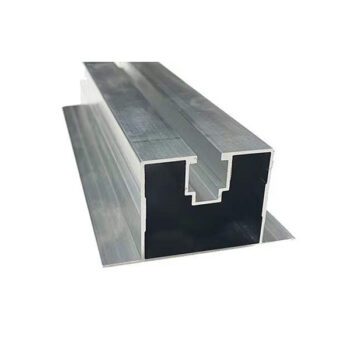
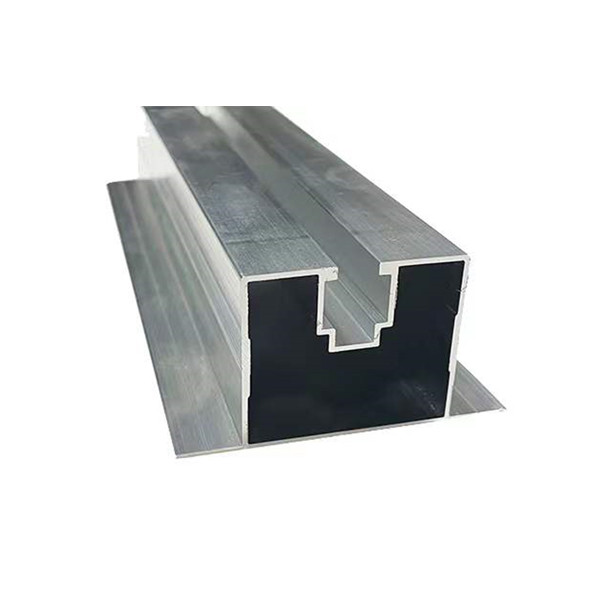
| Cross-Section Profile | Standard solar rail profile with internal T-channel for clamp engagement |
| Wall Thickness | 2.0mm |
| Weight Per Metre | Approximately 1.4 kg/m (so a 4800mm rail weighs ~6.7 kg) |
| Total Weight Per Rail | ~6.7 kg — single-person handling weight |
| Finish | Clean anodised silver, sealed oxide protection |
| Anodisation Thickness | 10–15 microns |
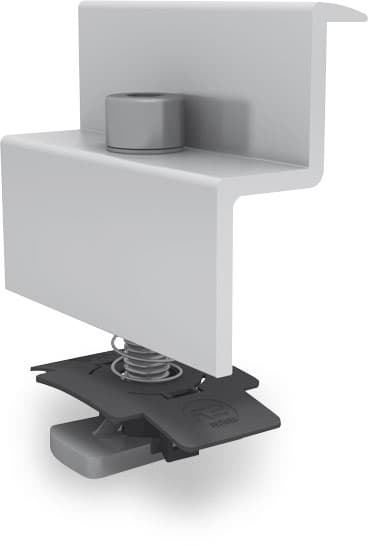
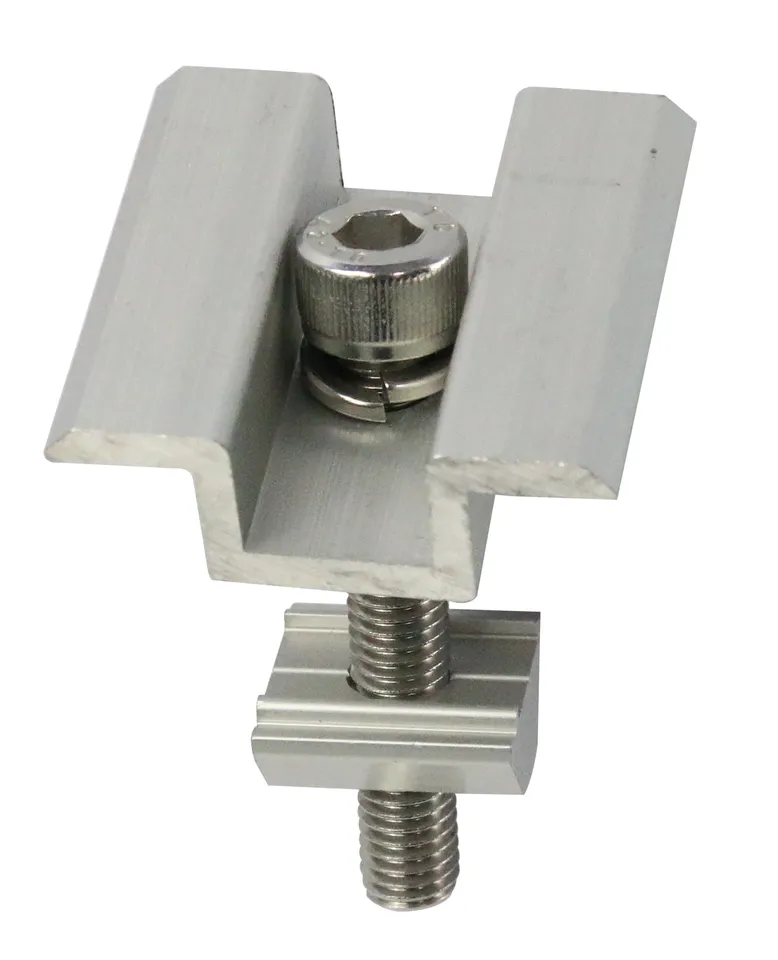
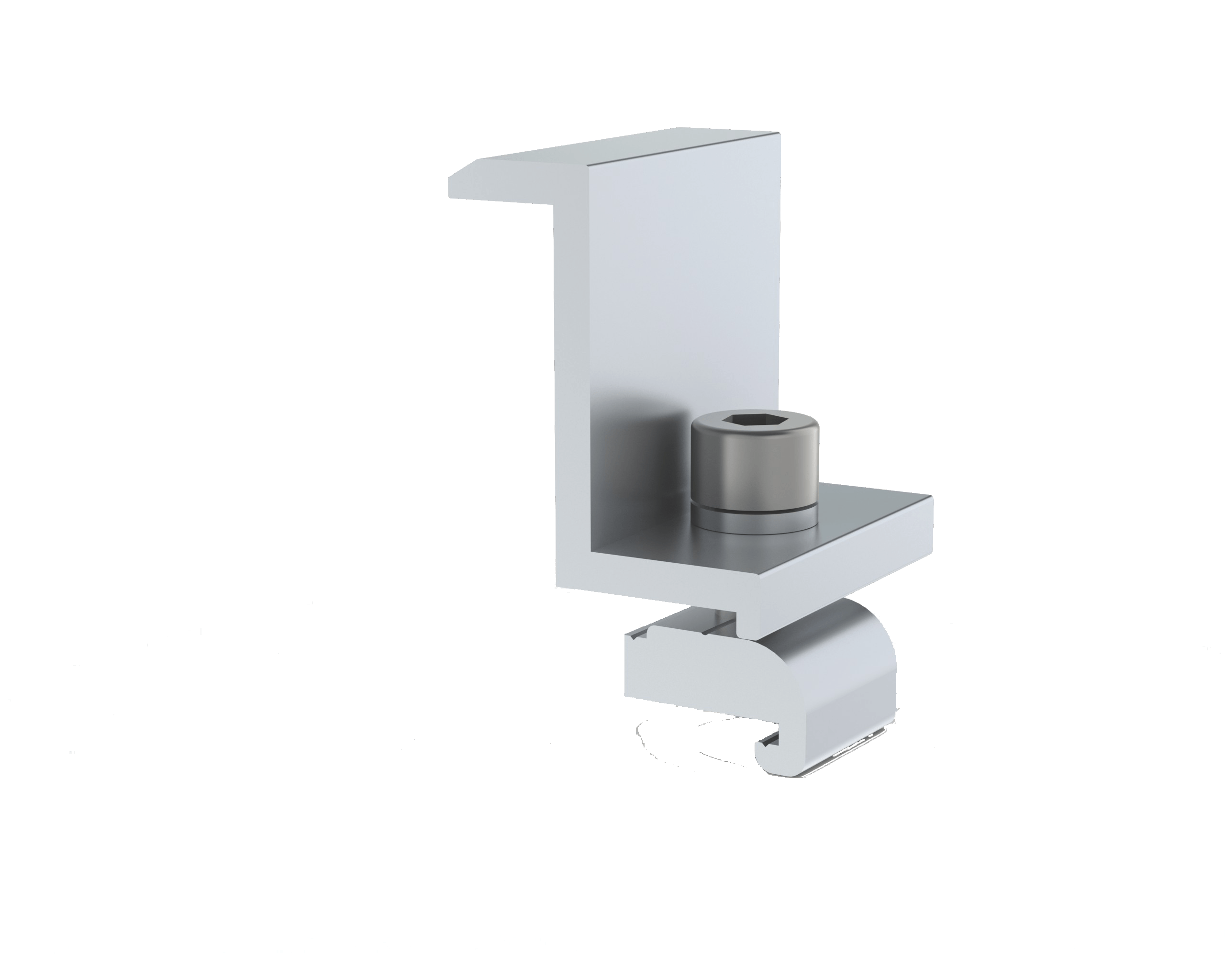
| Compatible Clamp Profiles | 30mm, 35mm, and 40mm mid clamps and end clamps |
| Compatible Splice | Standard 150mm internal-fit CP-RS-A splice |
| Wind Load Rating | Designed for installations up to 60 m/s wind speed when correctly anchored |
| Snow Load Capacity | 1.8 kN/m² (industry standard; not critical for Kenya but matters for high-altitude regions) |
| Operating Temperature | -40°C to +90°C |
| Corrosion Resistance | Inland and coastal-suitable (anodised finish on Al6005-T5) |
| Service Life | 25+ years matching standard solar panel warranty periods |
| Country of Origin | Manufactured to international solar mounting standards; imported for Kenyan market |
What Makes a Mounting Rail Worth Buying
Mounting rails look similar on the surface across vendors — all are silver anodised aluminium extrusions roughly 4-5 metres long. But the underlying specifications determine whether the rail performs reliably for 25 years or starts showing problems within 5-7 years. Three specifications separate quality rails from budget alternatives:
Wall thickness determines flexure under wind
A solar panel mounted on a rail spans approximately 2.4 metres between the two parallel rails. Wind loading on the panel creates upward and downward forces that the rails must transfer to the roof anchors. With 2.0mm wall thickness (this specification), the rail flexes minimally under wind — measured deflection at the rail mid-span typically stays under 5mm even at design wind speeds. Budget rails with 1.5mm walls can flex 10-15mm under the same wind loading, which over years of cycling creates fatigue stress at the anchor points.
Anodisation depth determines surface life
The anodised oxide layer protects the underlying aluminium from atmospheric corrosion. At 10-15 microns thickness (industry standard), this protection lasts the full 25-year service life of the installation under normal conditions. Budget rails sometimes have anodisation only 3-5 microns thick — visually identical at installation but the protection wears through within 5-8 years, after which the bare aluminium develops the white oxide deposits that signal early corrosion.
Alloy temper determines long-term strength retention
Al6005 aluminium gains its full strength through age-hardening (the “T5” designation). Properly aged Al6005-T5 rails maintain approximately 95% of their original tensile strength after 25 years of UV exposure and thermal cycling. Improperly tempered rails (or rails using cheaper alloys like Al6063) can lose 20-30% of their strength over the same period, which directly translates to increased flexure and eventually visible buckling under wind loading.
Installation Best Practices
Mounting rail installation in Kenya follows established practices regardless of rail length, but several specific points apply to 4800mm rails:
Use four L-feet per rail as the standard configuration
For a 4800mm rail, the recommended L-foot positions are: 200-300mm from each end, then two intermediate feet at approximately 1500mm and 3000mm from one end. This four-point support distributes the panel load evenly along the rail and prevents mid-span deflection under wind. Three L-feet per rail is acceptable for lighter panel loads but four is the safer specification for installations with 540W+ panels.
Allow 5-6mm thermal expansion at rail joints
If your installation uses splices to join multiple 4800mm rails into longer continuous runs, leave a 5-6mm expansion gap between adjacent rail ends. Aluminium expands approximately 1.2mm per metre per 50°C temperature swing — a 4800mm rail expands by 5-6mm across Kenyan annual temperature ranges, and this expansion must be accommodated at the joint, not absorbed by stress on the rails themselves.
Match the L-foot pattern to your roof structure
Pitched IBR sheet roofs typically use L-feet that bolt through the high points of the sheet ridges to the underlying purlins. Tile roofs use specialised tile-replacement hooks. Flat concrete roofs use anchor-bolted L-feet with appropriate sealant. Mabati (corrugated iron) roofs use L-feet with EPDM gaskets to prevent water ingress at the bolt point. Confirm the right L-foot type for your specific roof material before ordering.
String-line the rail array for alignment
For installations spanning multiple rail rows, use a string line to verify all rails sit on parallel lines within ±5mm tolerance. Misaligned rails create stress concentrations at the panel clamps that can crack panel frames over years of thermal cycling. The string-line check takes 10 minutes and prevents the most common long-term failure mode of poorly-installed solar arrays.
Plan splice positions before installation
For installations using splices, stagger the splice positions between the top and bottom rails of each panel row. If the top rail is spliced at position A (say, 4.8m from the start), the bottom rail should be spliced at a different position (say, 2.4m from the start). This staggering distributes structural discontinuity across the array rather than concentrating it at a single vertical line.
4800mm vs Other Available Rail Lengths
The Kenyan market offers solar mounting rails in several lengths. Here’s when each length is the right default:
| Rail Length | Best Application | Typical Layout Match |
|---|---|---|
| 3000mm (3.0m) | Mini installations, vehicle solar, custom small arrays | 1 panel landscape (2382mm) |
| 4200mm (4.2m) | Niche fit between smaller and standard sizes | 4-panel landscape with very narrow panels (~1000mm wide) |
| 4400mm (4.4m) | IBR truss-spaced installations, constrained roof segments | 4-panel landscape with mid-size panels (~1100mm wide) |
| 4800mm (4.8m) — this product | Standard residential and commercial installations | 2-panel landscape pairs with standard 2382mm panels |
| 4900mm (4.9m) | Specific extended layouts | 2-panel landscape with extra-long panels (~2440mm) |
For the vast majority of solar installations across Kenya, 4800mm is the right rail choice. The other lengths exist for specific layout edge cases — most installers stock 4800mm as their primary rail with one or two other lengths available for occasional special projects.
Components That Go With This Rail
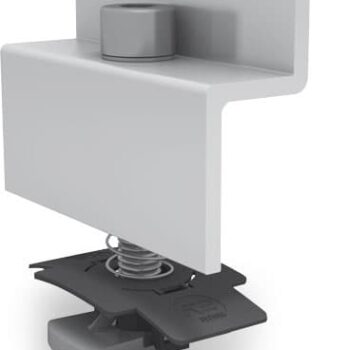
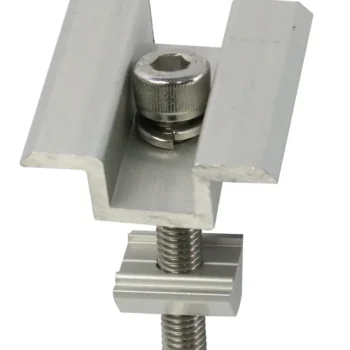
- Mid clamps for adjacent panels: 30mm, 35mm, and 40mm profiles available — match the clamp profile to your panel frame thickness
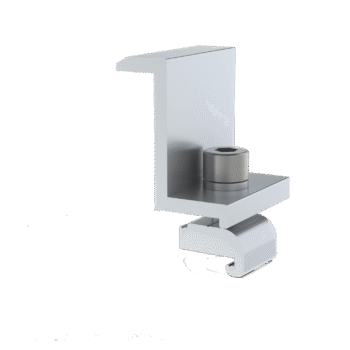
- End clamps for outer panel edges: 33mm and 40mm profiles
- Rail splice (CP-RS-A): Our 150mm internal-fit splice joins two 4800mm rails into one continuous span
- L-foot screw kits: complete solar L-foot screw kits with EPDM waterproofing for secure attachment to any roof type
- Niche-size alternative: 4400mm rail for IBR-truss-spaced installations or 4-panel landscape rows with narrower panels
- Bulk procurement: Use our solar calculator to estimate your full bill of materials, or submit a quote request for project pricing on 20+ rail orders