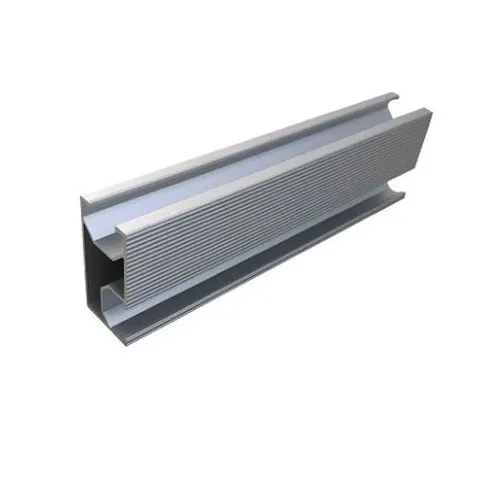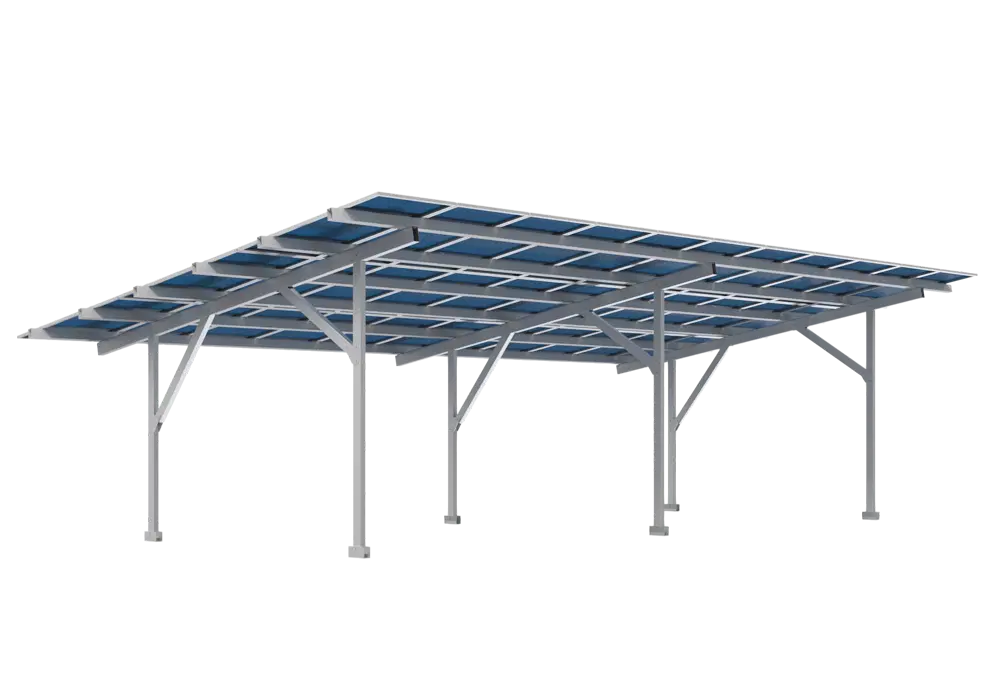
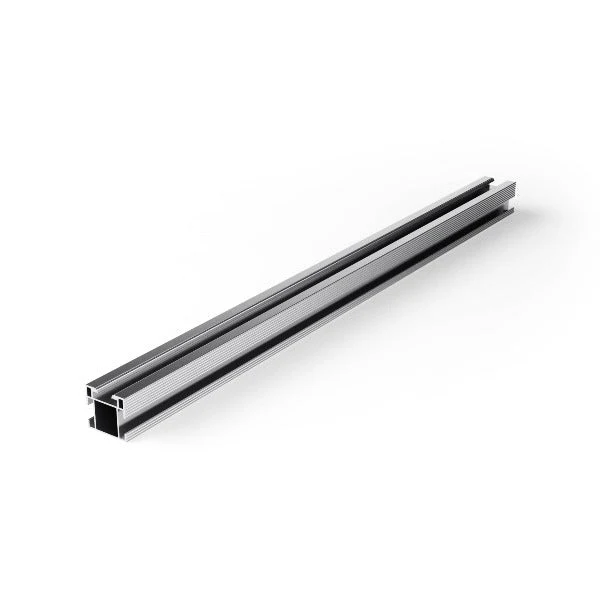
Description
When 4400mm Is the Right Rail Length
Most solar mounting projects in Kenya use 4.8m rails because that’s what fits the majority of standard residential and commercial panel arrangements. But not every installation matches the standard pattern. Some projects need exactly 4.4 metres — not 4.2m (which would leave gaps), not 4.8m (which would mean cutting waste off the end). The 4400mm rail exists specifically for those installations.
Three specific scenarios where 4400mm beats 4800mm cleanly:
- 4-panel landscape rows with mid-size panels. Panels around 1100mm wide (some 545W and 580W models) fit four-across into 4400mm with minimal overhang. A 4800mm rail in this configuration leaves 400mm of unused rail extending past the end panel — wasted material and visually untidy.
- IBR sheet roof installations with trusses at 4.4m spacing. Some Kenyan commercial buildings and modern residential designs use IBR sheet roofing with structural trusses spaced at approximately 4.4m centres. The mounting rail spans directly between trusses without requiring extension brackets when sized to match the truss span.
- Tight roof areas where 4.8m doesn’t physically fit. Roof segments bordered by valleys, chimneys, dormer walls, or solar geyser tanks sometimes have usable lengths around 4.4 metres. A 4.8m rail in these areas requires field-cutting (waste, weakened end), or going down to a 4.2m rail (leaving unsupported gaps at the panel edges).
If your project doesn’t match one of these specific scenarios, the standard 4.8m rail is the right default. The 4400mm length is a niche-fit product for installations where its specific dimension genuinely matters.
How Many 4400mm Rails Does Your Installation Need?
The rule for mounting rails is consistent across rail lengths: each row of panels needs two parallel rails — one above the panels (top rail) and one below (bottom rail). Both rails carry the panel weight and transfer wind loads to the roof structure.
| Panel Configuration | Rows | Rails Needed (4400mm) | Splices Required |
|---|---|---|---|
| 4 panels landscape, single row | 1 | 2 rails | 0 splices (one rail per direction fits) |
| 8 panels landscape, two rows of 4 | 2 | 4 rails | 0 splices |
| 12 panels landscape, three rows of 4 | 3 | 6 rails | 0 splices |
| 6 panels landscape, single long row | 1 | 4 rails (2 spliced runs) | 2 splices (one per rail direction) |
| 2 panels portrait, single row | 1 | 2 rails | 0 splices |
The 4400mm rail’s main advantage is in 4-panel landscape configurations where it eliminates the need for splices entirely. For 6+ panel single-row layouts, you’ll typically need our 4800mm rail for cleaner coverage or add rail splices (see our rail splice page) to join multiple 4400mm rails. For projects requiring extensive splicing, the 4800mm rail is usually the more economical choice because it reduces total splice count.
Technical Specifications
| Specification | Detail |
|---|---|
| Product Code | CP-NRA-4400 |
| Length | 4400mm (4.4 metres) |
| Material | Aluminium alloy Al6005-T5 (extruded) |
| Tensile Strength | 260 MPa typical (matching industry standard for Al6005-T5) |
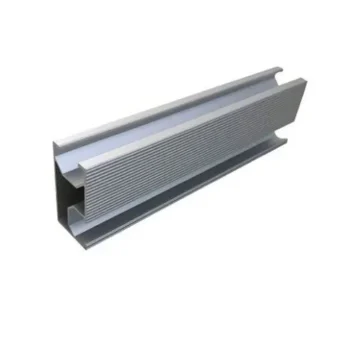
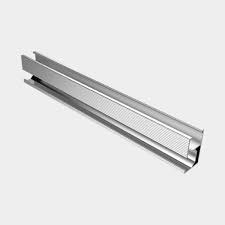
| Cross-Section Profile | Standard solar mounting rail profile (typically 35×42mm with internal T-channel) |
| Wall Thickness | 2.0mm typical (verify with specific batch documentation) |
| Weight Per Metre | Approximately 1.4 kg/m (so a 4400mm rail weighs ~6.2 kg) |
| Finish | Clean anodised silver, sealed oxide layer |
| Anodisation Thickness | 10–15 microns (matching industry standard) |
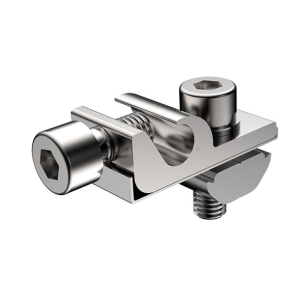
| Compatible Clamp Profiles | 30mm, 35mm, and 40mm mid clamps and end clamps |
| Compatible Splice | Standard 150mm internal-fit splice (CP-RS-A) |
| Wind Load Rating | Designed for installations up to 60 m/s wind speed when properly anchored |
| Operating Temperature | -40°C to +90°C (typical aluminium service range) |
| Corrosion Resistance | Suitable for inland, urban, and coastal humidity (anodised finish + alloy) |
| Service Life | 25+ years matching standard solar panel warranty periods |
| Country of Origin | Manufactured to international solar mounting standards; imported for Kenyan market |
Why Al6005-T5 Specifically (And Why It Matters For Rail Choice)
The aluminium alloy used in a mounting rail determines almost everything about how the rail performs over its service life. Three alloys appear in the Kenyan market for solar mounting:
| Alloy | Tensile Strength | Corrosion Resistance | Typical Use |
|---|---|---|---|
| Al6063 | ~170 MPa | Good | Window frames, general extrusions — too soft for solar |
| Al6005-T5 (this product) | ~260 MPa | Excellent | Solar mounting rails, structural extrusions |
| Al6082-T6 | ~310 MPa | Excellent | Heavy structural, marine — over-spec for solar mounting |
Al6005-T5 hits the sweet spot for solar mounting rails: enough tensile strength to handle wind loads on panels up to 670W in landscape orientation, enough corrosion resistance for 25-year coastal exposure, and reasonable extrusion cost that keeps the rail affordable. Cheaper rails sometimes use Al6063 (window-frame grade) which is approximately 35% weaker — these rails visibly flex under wind loading and develop fatigue cracks at the L-foot attachment points after 8-10 years.
The “T5” temper specification matters too. T5 aluminium is age-hardened, which means it develops its full strength gradually over the first few weeks after extrusion. Untempered or T4 aluminium loses 15-20% of its strength compared to T5, which doesn’t matter for window frames but becomes a real concern for solar rails carrying panels through 25 years of wind cycles.
Installation Notes for 4400mm Rails
Mounting rail installation in Kenya follows standard practice regardless of rail length. The specific notes that apply to 4400mm rails:
- Plan the L-foot positions before drilling. Most installations use 4 L-feet per rail (one near each end, two distributed across the span). For a 4400mm rail, typical L-foot spacing is 700mm from each end and 1500mm between intermediate points. Mark all positions on the roof before drilling any holes.
- Use anti-galvanic isolation strips on metal roofs. When mounting aluminium rails directly against IBR sheet or mabati roofing, place EPDM rubber strips between the rail and the roof surface. The strips prevent galvanic corrosion that would otherwise develop between the aluminium rail and steel roof sheet over years.
- Allow for thermal expansion gaps. Aluminium expands approximately 1.2mm per metre per 50°C temperature swing. A 4400mm rail in Kenyan conditions will expand and contract by about 6mm across the seasonal temperature range. Don’t anchor the rail with zero-tolerance fastening — leave the L-foot bolts at slight slip-fit tightness to accommodate this movement.
- Verify rail alignment with a string line. All rails in the same row should sit on a single straight line within ±5mm tolerance. Use a string line stretched between the two end L-feet during installation, then position intermediate L-feet to maintain the line. Misaligned rails create stress concentrations at panel clamps that can crack panel frames over years.
- Match the clamp profile to the panel frame thickness. Solar panels in Kenya use frames ranging from 30mm to 40mm thickness. Confirm your panel frame depth before ordering clamps — a 30mm clamp will not properly secure a 35mm panel frame, and vice versa.
When to Choose 4400mm Versus 4800mm
The decision between rail lengths comes down to which length covers your panel row with the least waste and the fewest splices:
| Your Situation | Recommended Rail | Reasoning |
|---|---|---|
| 4 panels of ~1100mm wide in landscape | 4400mm | Fits with ~50mm overhang at each end — clean coverage, no splice needed |
| 4 panels of ~1130mm+ wide in landscape | 4800mm | 4400mm becomes too tight for clamp positioning |
| 2 panels of ~2382mm landscape | 4800mm | Standard 2382mm panel width × 2 = 4764mm rail needed |
| 6 panels landscape single row | 4800mm + splice | Always needs splicing — 4800mm reduces total splice count |
| Roof segment between obstructions ~4.4m | 4400mm | Fits the available roof segment without field cutting |
| Truss spacing of 4.4m on IBR roof | 4400mm | Direct truss-to-truss span without extension brackets |
| Standard residential 5-7kW system | 4800mm | Industry-standard size, easier procurement |
For most standard installations, the 4800mm rail is the right default. For the specific niches described above, the 4400mm rail saves either splice cost (no joints needed) or material waste (no end overhang).
Cross-Sell: Components for a Complete Mounting Kit
- Mid clamps: Available in 30mm, 35mm, and 40mm profiles for securing adjacent panels along the rail
- End clamps: Available in 33mm and 40mm profiles for terminating the outer panel edges
- Rail splice (CP-RS-A): Our 150mm rail splice for joining 4400mm rails into longer spans when needed
- L-foot screw kits: Solar L-foot screw kits with M8 bolt and EPDM gasket for waterproof attachment to corrugated roofing
- Step-up to 4800mm: Our 4800mm rail for standard residential and commercial installations
- Project planning: Use our solar calculator to estimate the full bill of materials, or request a quote for project-scale procurement of mounting components